Open vs Closed Storage in Tiny Homes: Which Looks Better?
Small living spaces demand careful consideration for every wall and corner. Glass shelves display favorite blue pottery. Deep wooden drawers keep clutter hidden from view. Many tiny home owners ask about open versus closed storage. Owners want small rooms to feel expansive. A tall oak bookcase with no backing can make a wall feel lighter. Built-in cabinets made from painted pine offer a smooth, clean line. You must decide which storage method fits your style. Consider how each option changes the feeling and use of your compact home. Both storage types have clear advantages and disadvantages for your tiny home. Let’s look at the facts.
1. Integrated Living Room Cabinets
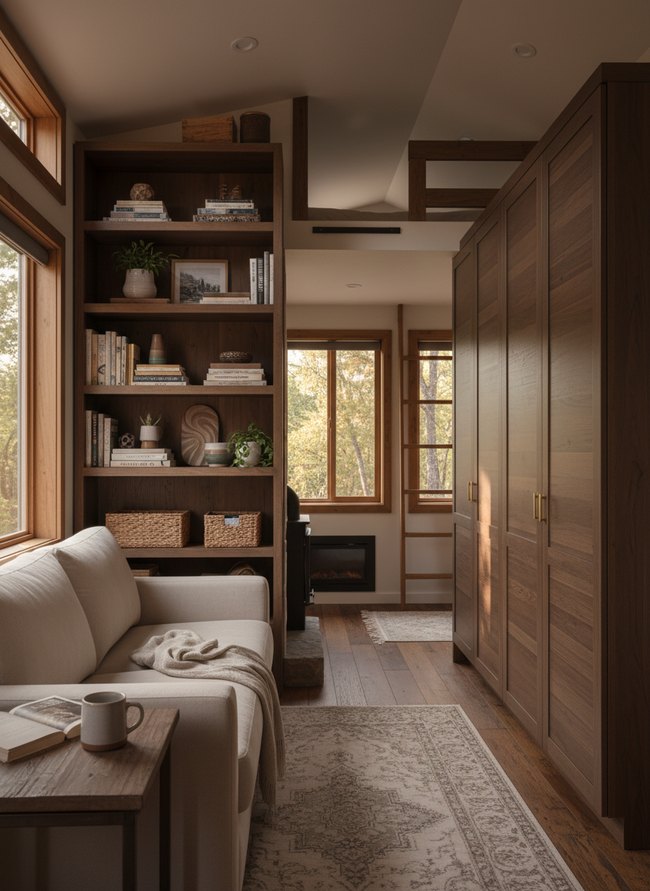
A wooden bookshelf with open shelves stands next to a cream sofa, displaying decorative items and books. Tall wooden cabinets with brass handles provide closed storage on the opposite wall in the tiny home. Designers mix both styles to keep some items visible and others neatly tucked away.
2. Loft Bedroom Cubby Contrast
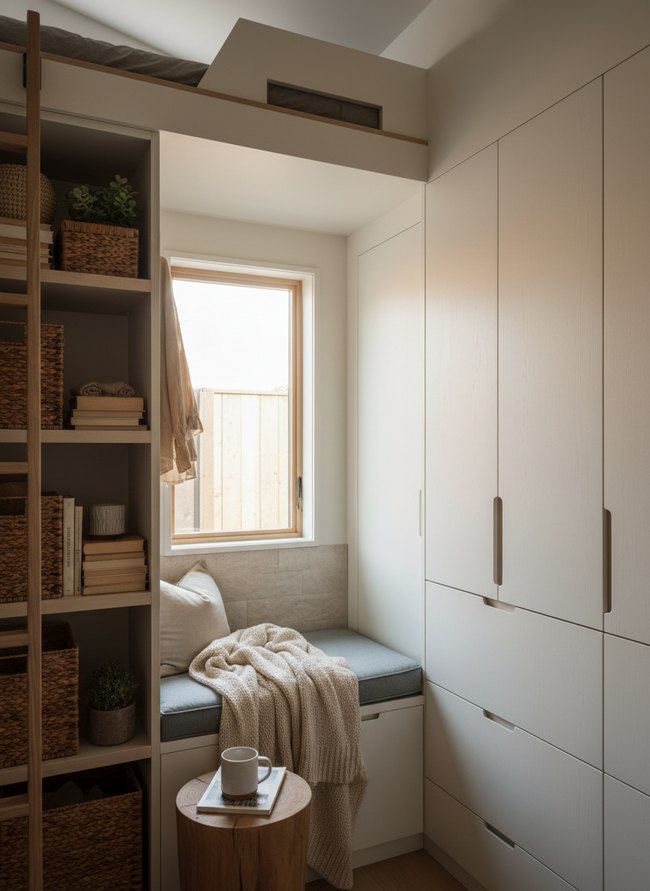
Tall white cabinets with flush doors and carved finger pulls stand beside a cozy window nook with a light gray cushion. Open shelving on the left holds woven baskets and stacks of books, showing off an open versus closed storage design. Mixing closed cupboards for clutter with open shelves for display items keeps the small space organized and visually interesting.
3. Compact Kitchen Shelf Array
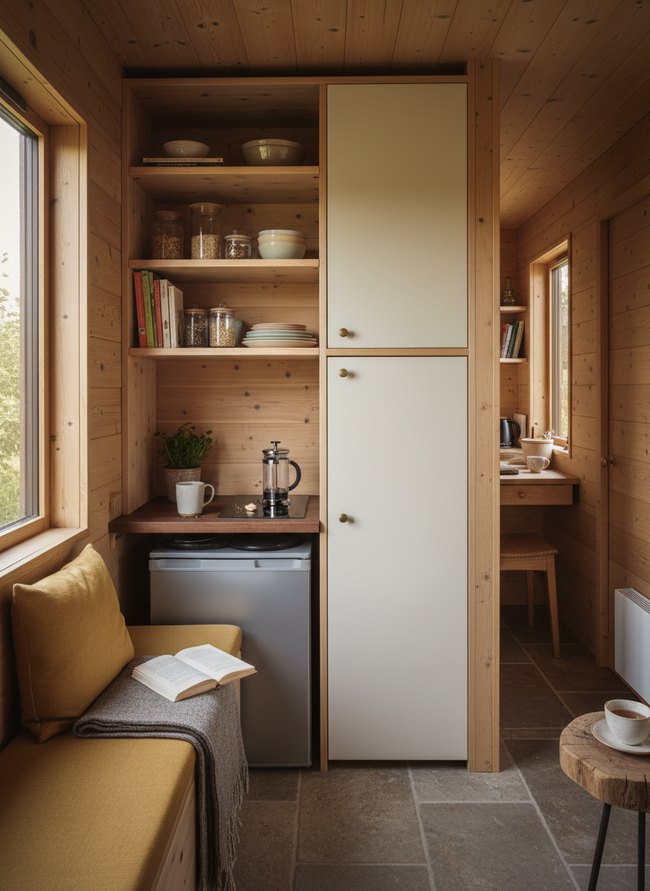
Natural wood planks cover the walls and ceiling, creating a warm, cohesive look in the compact kitchen area. Light cream cabinet doors hide supplies, while open wooden shelves display clear glass jars of food and colorful ceramic bowls. Homeowners can balance open and closed storage in a small home to keep things tidy and accessible.
4. Minimalist Bathroom Vanity Style
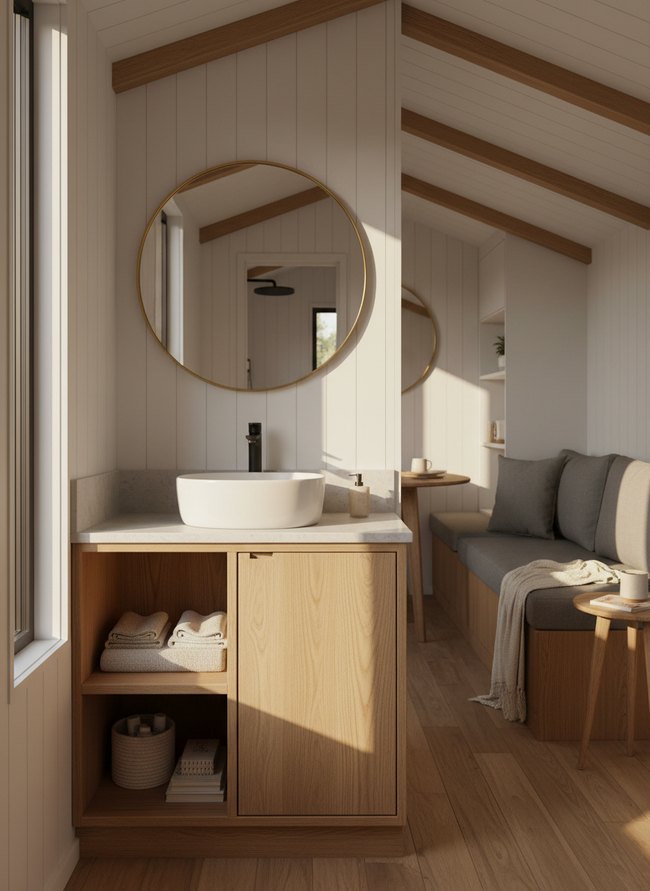
A light wood vanity in the small bathroom combines open and closed storage. Neatly folded cream towels rest on one open shelf, while a closed cabinet door hides other items. The open-and-closed storage setup offers a clean look with some things tucked away and others easily accessible.
5. Hidden Entryway Mudroom
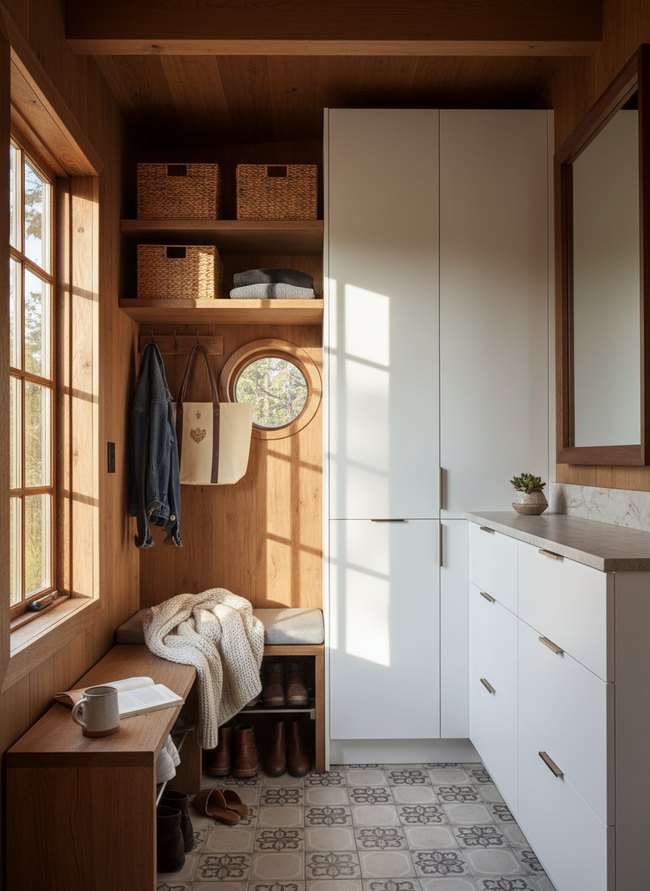
Warm, honey-toned wood walls and a built-in bench create a cozy nook. White cabinets with sleek brass hardware offer ample closed storage for the open-plan tiny home. A small, round window and a large, rectangular window let in natural light, making the space feel bigger.
6. Combined Desk Storage Solution
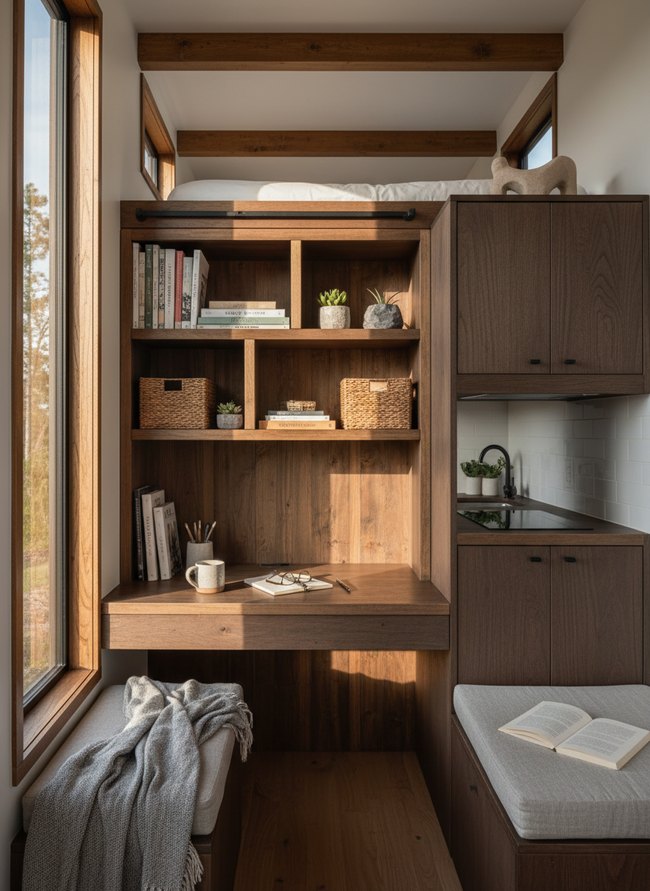
A rich brown wood desk and shelving unit defines the left side of the image, bathed in warm natural light from a tall window. Open shelves display books and small plants mixed with a closed cabinet above a compact kitchen sink, creating a clever open-versus-closed storage solution. The smart design makes the most of a small footprint.
7. Open Pantry Culinary Display
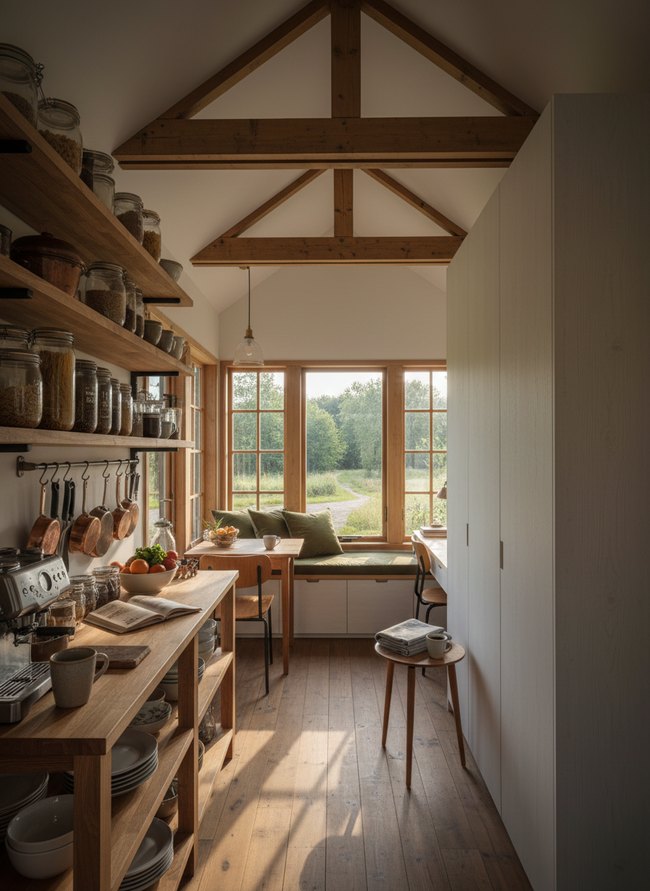
Honey-toned wooden shelves hold glass jars filled with various grains and dried goods above a natural wood countertop. Copper pots hang from a dark metal rail, creating a rustic culinary display. Open shelving showcases attractive kitchen items.
8. Sliding Panel Wardrobe System
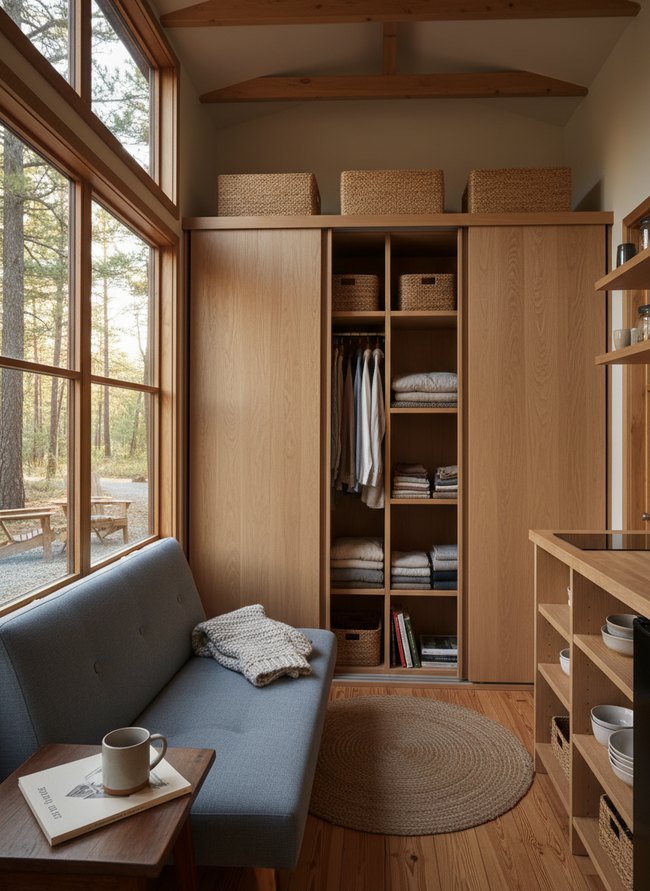
Light oak sliding panels create a versatile storage wall, neatly organizing clothes and woven baskets. The flexible system lets you hide away clutter or show off neatly folded items, a smart solution for an open versus closed storage tiny home. A sliding panel system adapts to evolving storage needs over time.
9. Under-Stair Book Nook
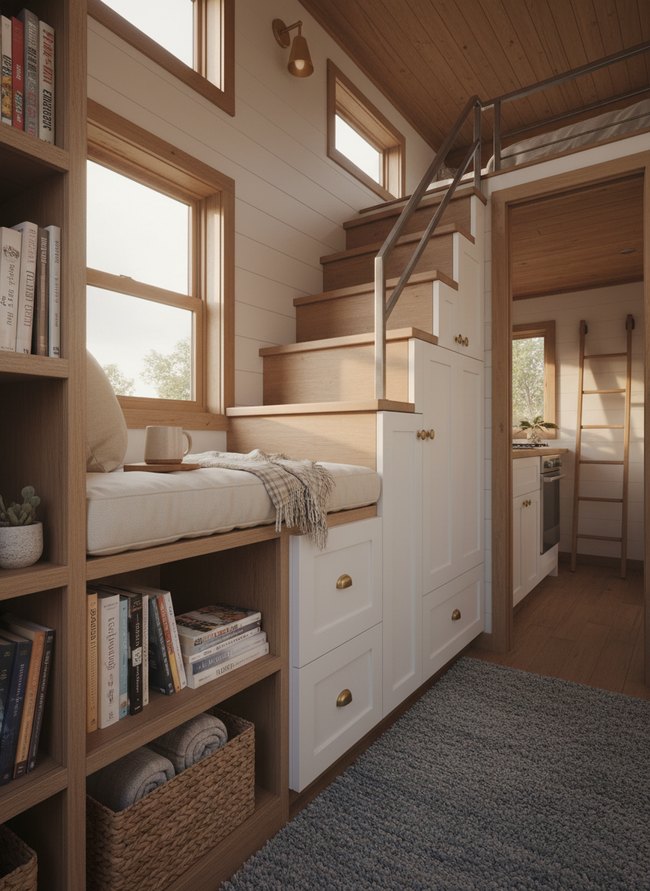
Light oak shelves line the wall, displaying books and a woven basket under a cream-colored window seat. White cabinets with brass pulls sit below the wooden stairs, offering closed storage in this tiny home. The area under the stairs provides both open and closed storage.
10. Flip-Up Countertop Compartment
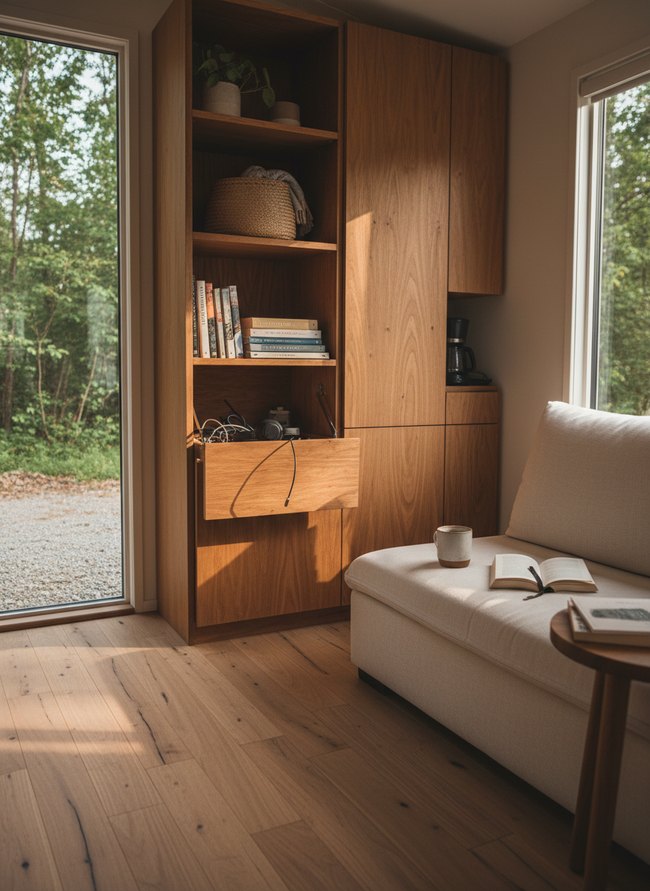
A tall wooden cabinet, built from light brown wood, features open shelves and closed doors. One lower compartment in the cabinet flips down, hiding its contents while serving as a small flat surface. Clever storage solutions like this keep a living space tidy.
11. Modular Wall Unit Blend
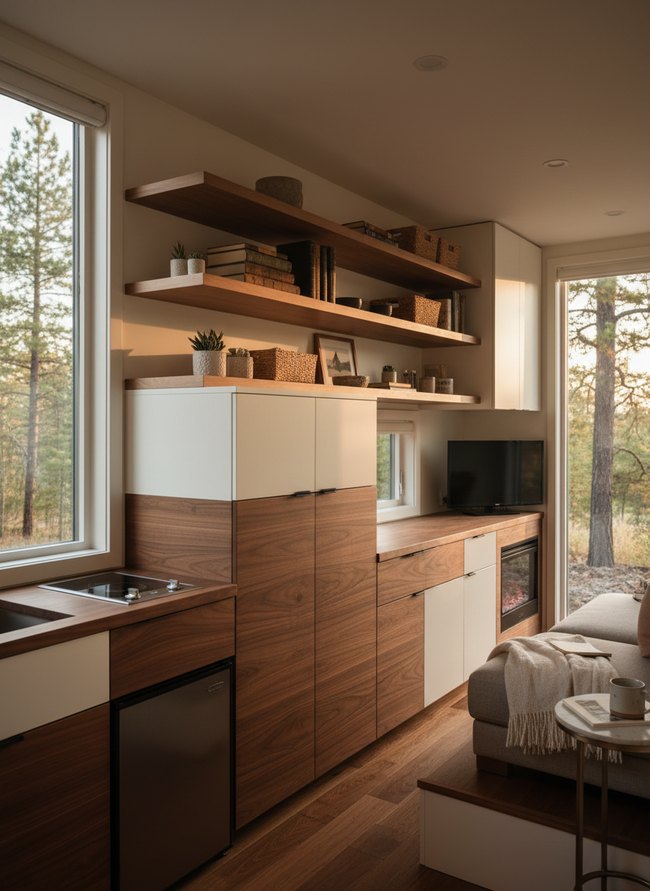
Walnut wood cabinets and floating shelves create a warm, organized open-concept tiny home. White upper cabinets contrast with the rich wood, providing clean, closed storage for items. Homeowners can mix open shelving for decorative pieces with closed cabinets for clutter to create a balanced look.
12. Pull-Out Appliance Garage
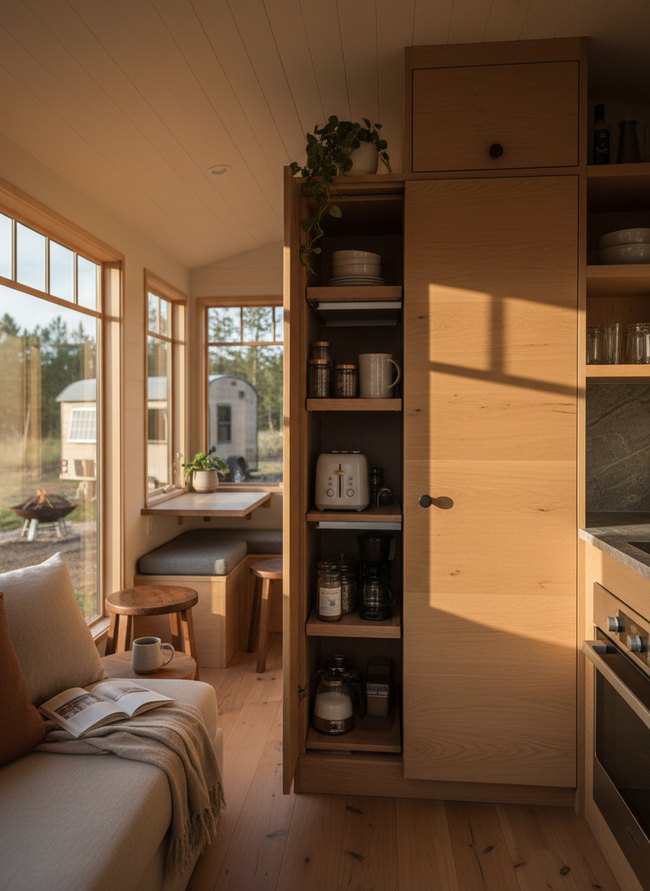
A tall oak cabinet stands open, revealing a clever pull-out appliance garage with a white toaster and coffee maker. The smart open-vs-closed storage solution keeps counter space clear. Homeowners can hide small kitchen appliances behind a solid oak door when not in use.
Beyond the Hype: Dispelling Open vs. Closed Storage Myths in Tiny Homes
Dust motes settle on a polished oak shelf, even with a glass cabinet door. Many people believe open shelves collect more dust, but a closed storage unit often has tiny gaps. Dust finds a way. Your cleaning routine matters more than the door style. A deep cherry wood cabinet with brass handles can still accumulate grime inside if you neglect it. Think about the things you store. Delicate ceramic plates display well on open floating shelves. However, stacks of plastic food containers look messy. Closed white shaker cabinets hide household clutter. Consider the visual weight of your possessions; a wall of bright yellow cereal boxes will always feel heavy. Wall-mounted baskets offer accessible storage. A woven seagrass basket holds fresh linens well. Large, dark appliances tucked behind a hinged pine door disappear from view. Ultimately, a tiny home needs smart storage.
The ‘Flexibility Factor’: How Adaptable is Your Storage Choice to Changing Needs?
Modular cube shelving offers unmatched versatility for your tiny home. Your needs shift. Open shelves reconfigure with ease. You can add a woven basket. Solid wood doors on closed cabinets stay fixed, a permanent installation. Think about future changes. A growing collection of ceramic mugs might need more visible space. Closed units hide clutter. However, they also lock you into a rigid layout. Metal rods and adjustable brackets let open systems adapt quickly. A deep storage drawer might become a shallow display shelf. You simply move the components. Fixed wall cabinets require more effort to alter. Changing your mind means unscrewing wooden panels. This takes time. Open shelving grants immediate visual access. You see everything at a glance.
Which Idea Will You Try First?
That’s 12 different takes on open vs closed storage tiny home. The best ideas above are usually the smallest moves — one material, one layout shift, one piece of furniture in the right place. Pick whichever room feels closest to your space and start there before tackling the rest.
Found an idea worth keeping? Save this post to your Pinterest board so it’s waiting for you when you’re ready to start your own project.