16 Industrial Tiny Home Kitchens with Urban Edge
Steel countertops and exposed brick walls offer rugged charm, but the raw style often means less hidden storage. Modern homes crave efficient layouts. An industrial tiny kitchen balances sleek, factory-inspired looks with smart, space-saving features. Polished concrete floors might feel cold without warmth from rich wood cabinets. The compact cooking area needs clever design choices. Each entry below presents a different blend of robust materials and clever solutions. The examples show how metal accents meet compact appliances in various ways. Every homeowner faces these decisions. We explore different ways to achieve both style and function.
1. Reclaimed Wood Urban Galley
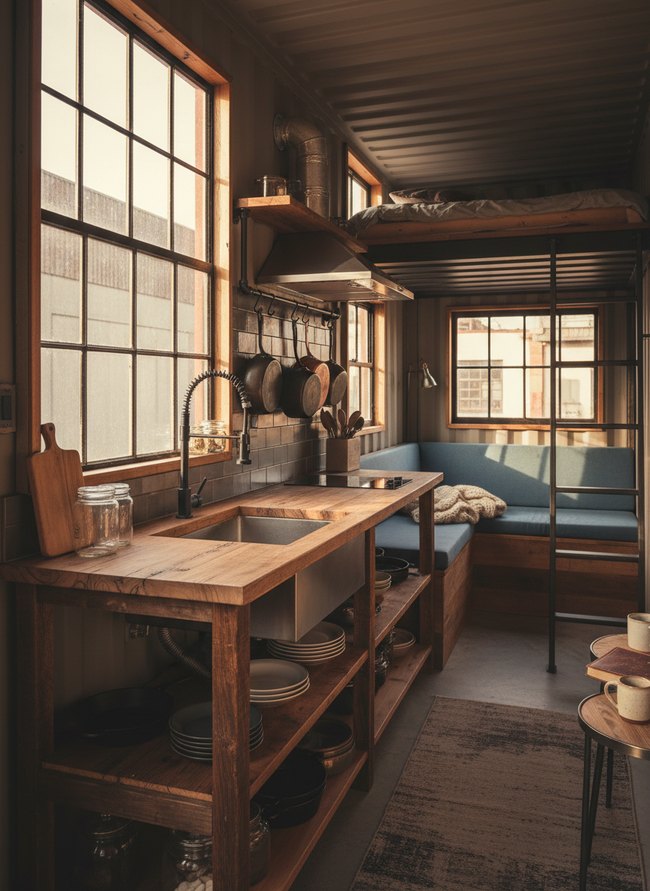
A thick wooden countertop offers a warm, rustic work surface for meal preparation. Open shelving beneath provides easy access to dishes, trading away hidden storage space. Metal pots hang from an industrial black rail against the dark subway tile backsplash, providing an urban edge.
2. Concrete Loft Kitchenette
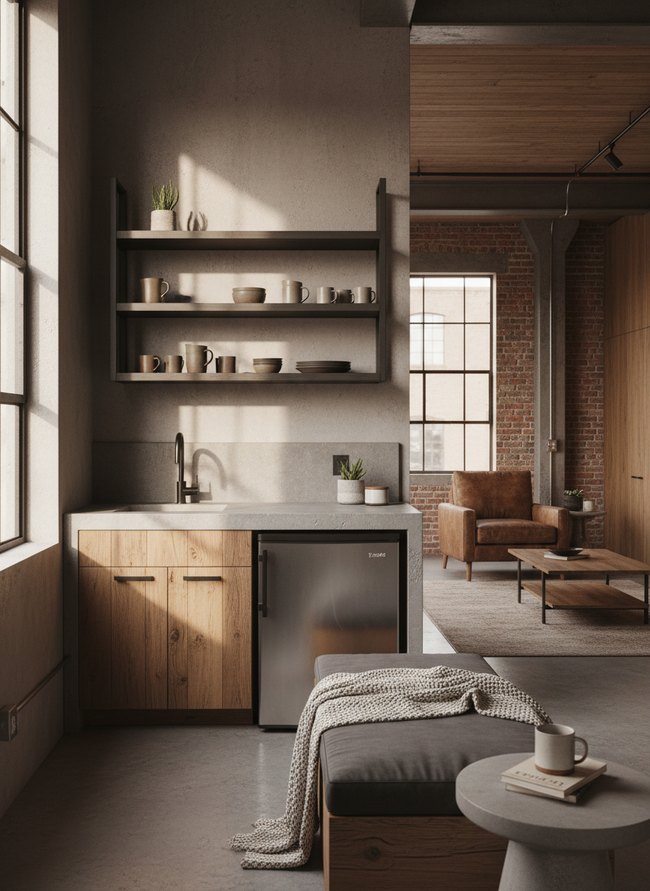
A dark metal shelving unit rises on the gray concrete wall, holding ceramic mugs and small green plants. Homeowners could select the compact kitchen for its streamlined footprint, trading expansive counter space for efficiency. Concrete countertops and a paneled wood base create a rugged, warm feel, making the small area feel grounded.
3. Steel Beam Compact Cookery
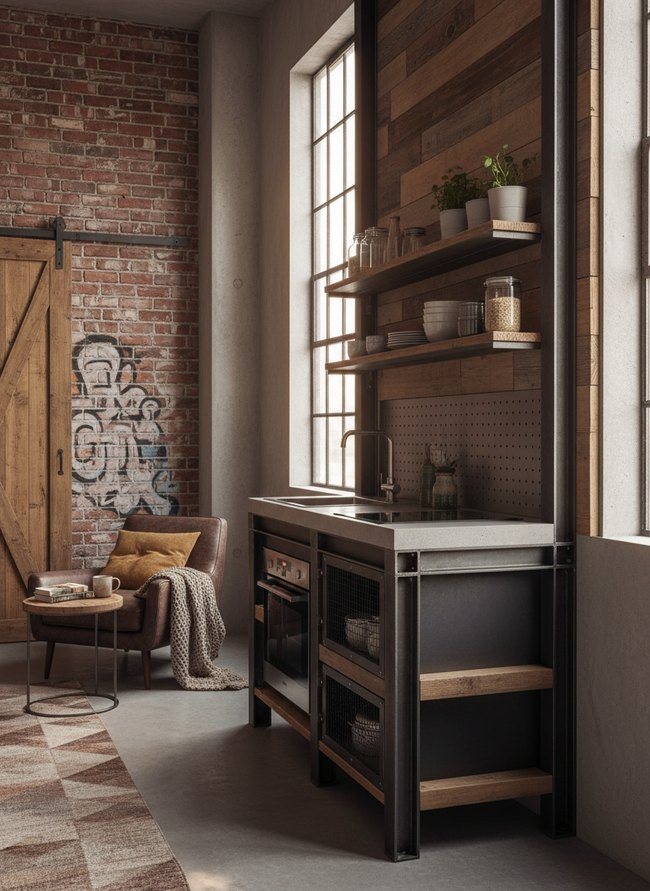
Black steel beams define the strong structure of the industrial tiny kitchen. Concrete countertops offer a durable work surface, sacrificing warmth for resilience. Wooden shelves above the sink add natural texture, softening the raw metal and stone.
4. Brick Wall Minimalist Prep
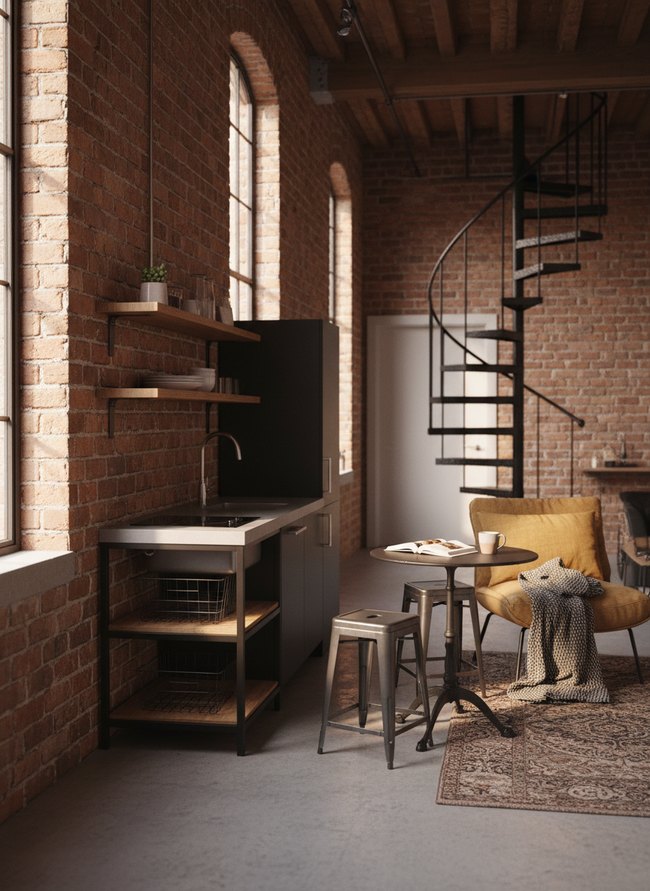
The long brick wall with its rough texture defines the cooking space. The industrial tiny kitchen offers a raw, exposed look, trading hidden storage for open shelving. Three light wooden shelves on black metal brackets hold white plates and clear glasses, giving a simple, clean display.
5. Copper Accent Loft Kitchen
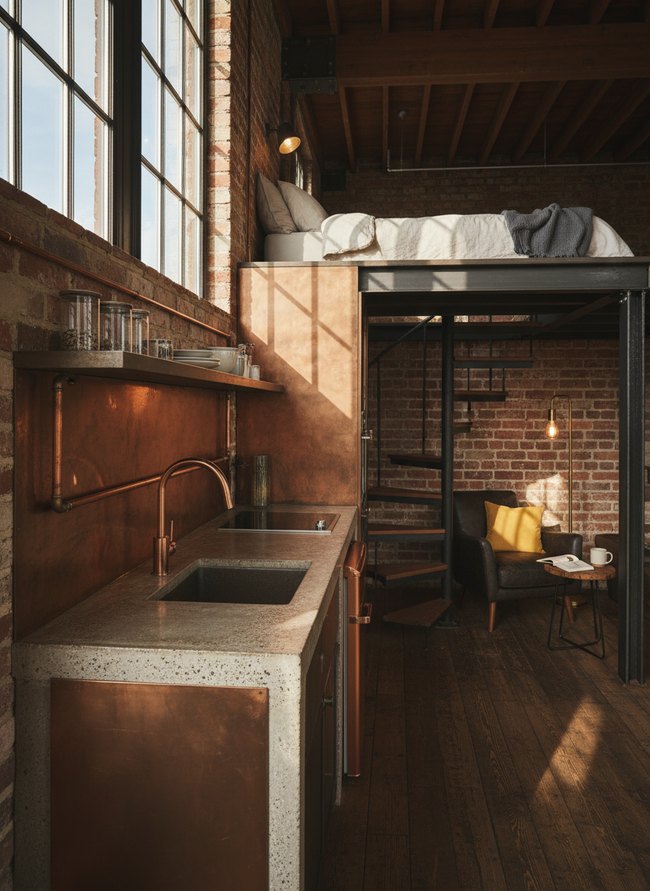
A polished copper backsplash provides a warm, reflective surface. An open floor plan trades a separate kitchen room for an airy, multi-functional space. Concrete countertops offer a durable, speckled work area.
6. Dark Metal Factory Style
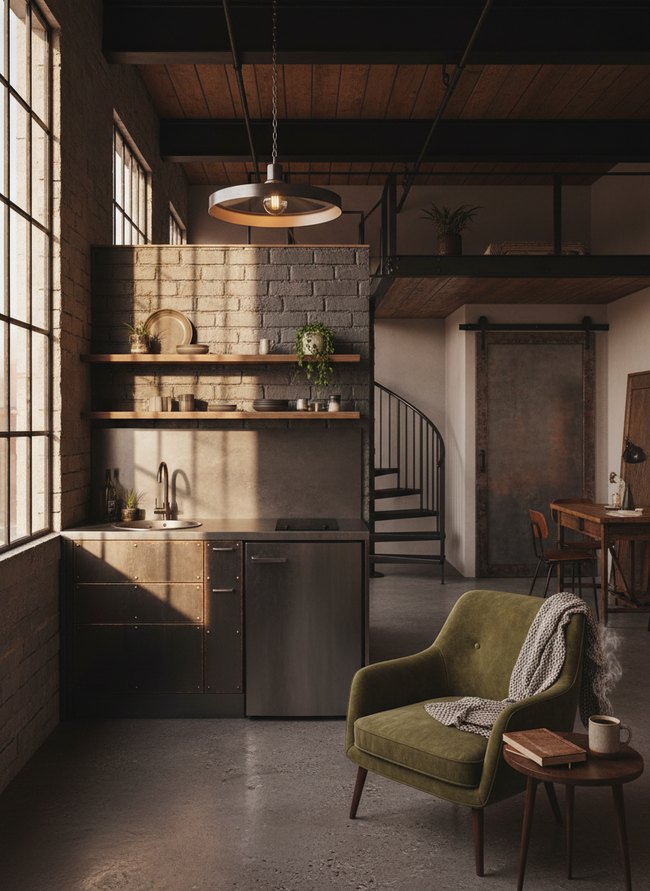
Dark metal kitchen cabinetry presents a bold, factory aesthetic. Selecting an industrial kitchen prioritizes raw material textures over polished surfaces. Exposed brick walls and concrete flooring complement the heavy metal finishes, creating a rugged, urban feel.
7. Exposed Ductwork Bistro
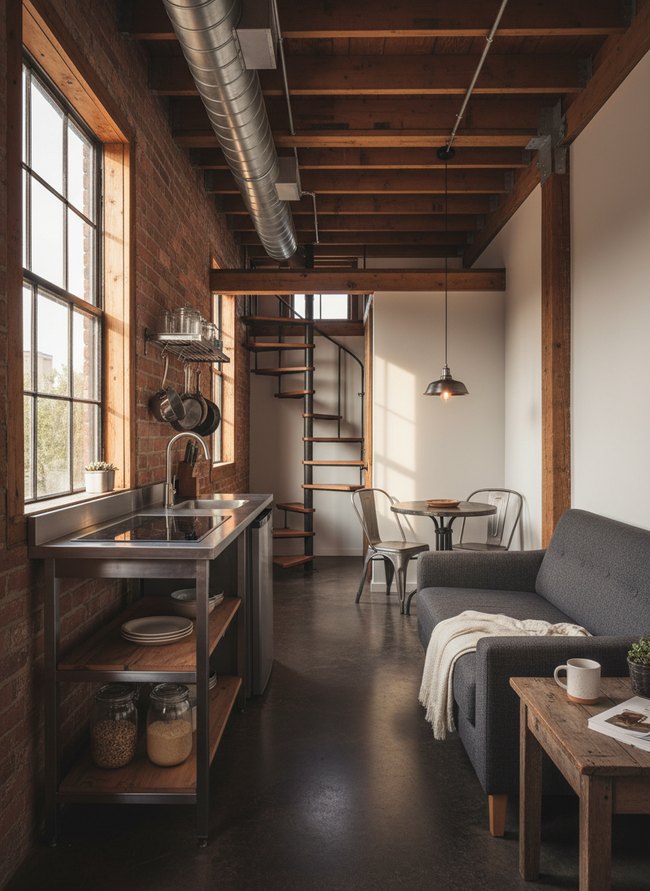
Galvanized steel ductwork runs across the wooden ceiling beams. Homeowners choose a compact industrial tiny kitchen like this to maximize living space, trading a large cooking area for more room to relax. A small stainless steel kitchen unit with open wooden shelves provides basic utility.
8. Grit Stone Industrial Hub
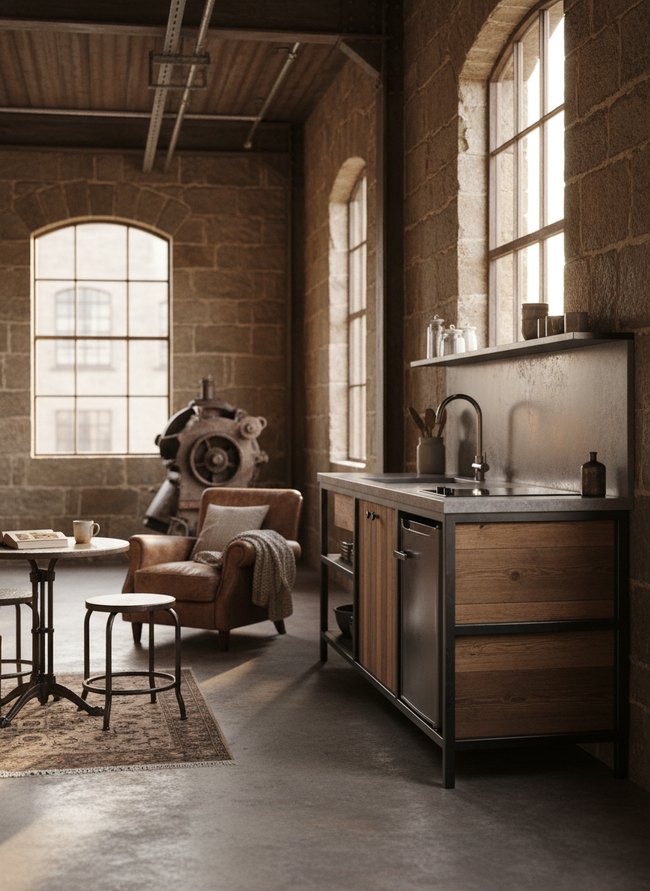
The dark metal frame of the kitchen unit suggests industrial strength. A compact cooking and cleaning station trades expansive counter space for a small footprint. Rough-hewn wooden panels on the cabinet doors bring a warm, earthy balance to the cool grey backsplash.
9. Patina Finish Micro Kitchen
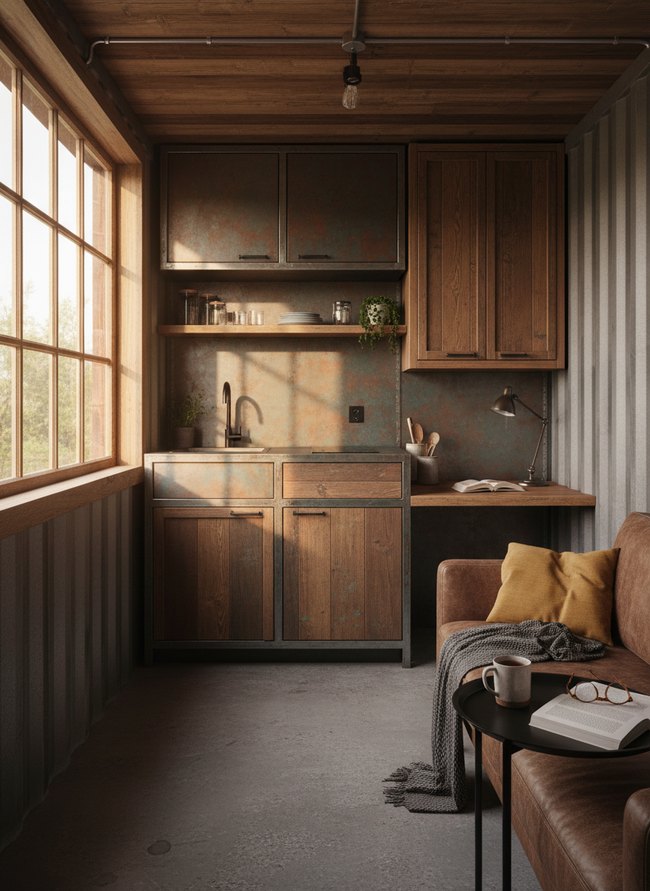
The weathered metal backsplash suggests an enduring character. You choose this industrial tiny kitchen for its rugged charm, trading sleek, polished surfaces for a rich, aged patina. Exposed conduit on the wooden ceiling adds an overhead metallic line, completing the urban edge.
10. Rivet Edge Butcher Block
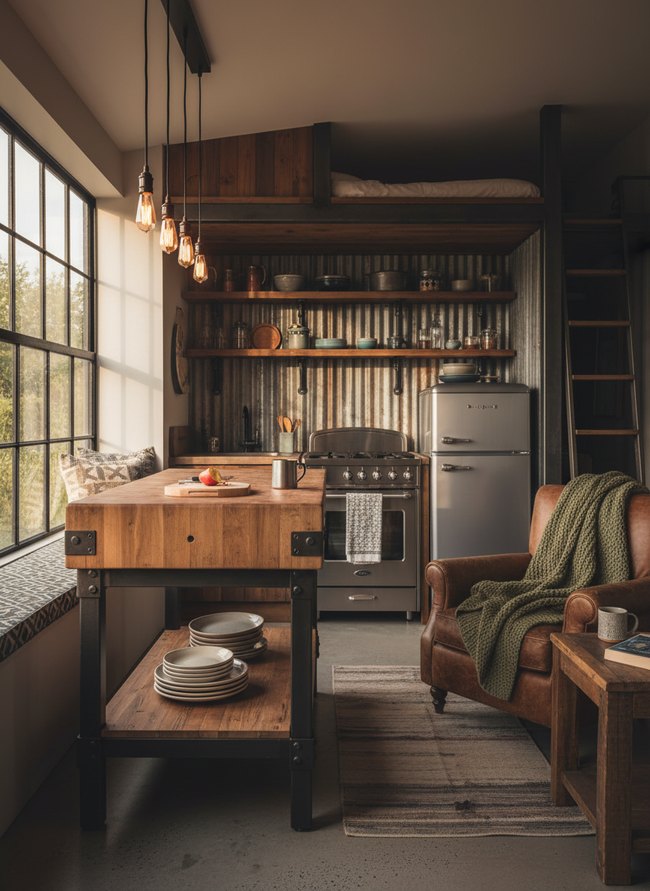
The heavy wooden butcher block island dominates the foreground. The central feature gains ample prep space, trading away a clear path through the room. Corrugated metal sheeting provides a raw, textured backdrop for the open wooden shelves, offering rustic charm over sleek, hidden storage.
11. Utility Cart Island Style
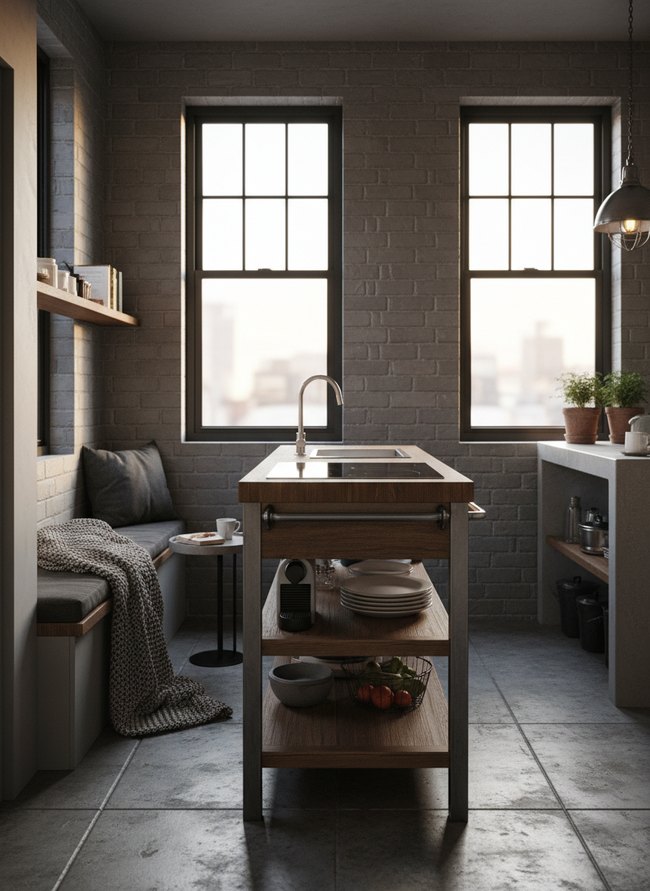
A wooden island with a black cooktop provides a central workstation for the industrial tiny kitchen. Homeowners choose the compact setup for flexibility, trading a fixed countertop for open floor space. A dark gray brick wall behind adds a rugged, urban feel.
12. Warehouse Chic Pantry
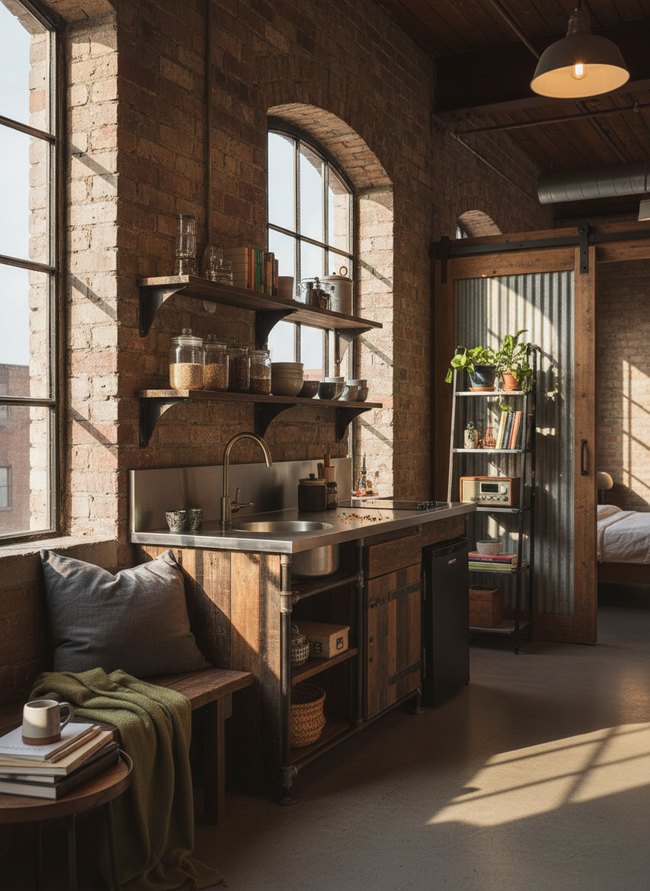
The stainless steel countertop offers a clean, robust surface for food preparation. Homeowners choose this industrial kitchen for its raw, exposed elements over a polished, hidden aesthetic. Rough-hewn wooden cabinets and shelving provide rustic storage, grounding the metal with earthy warmth.
13. Modular Iron Workstation
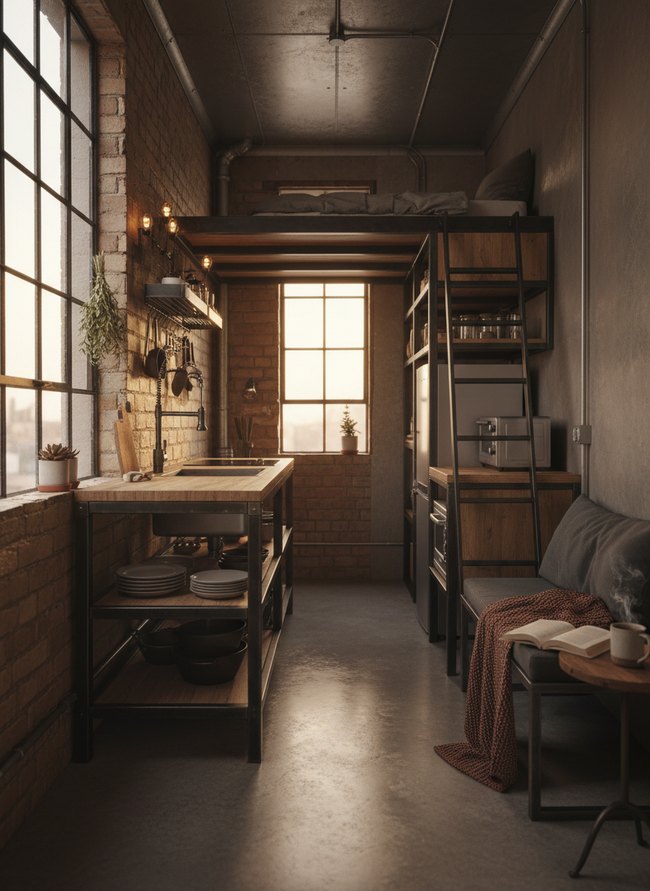
A dark gray workstation, with a natural wood countertop, offers a compact cooking space. The workstation provides robust storage and a durable work surface, but sacrifices extensive counter area. Exposed brick walls frame the industrial tiny kitchen, adding raw texture.
14. Corrugated Steel Modern
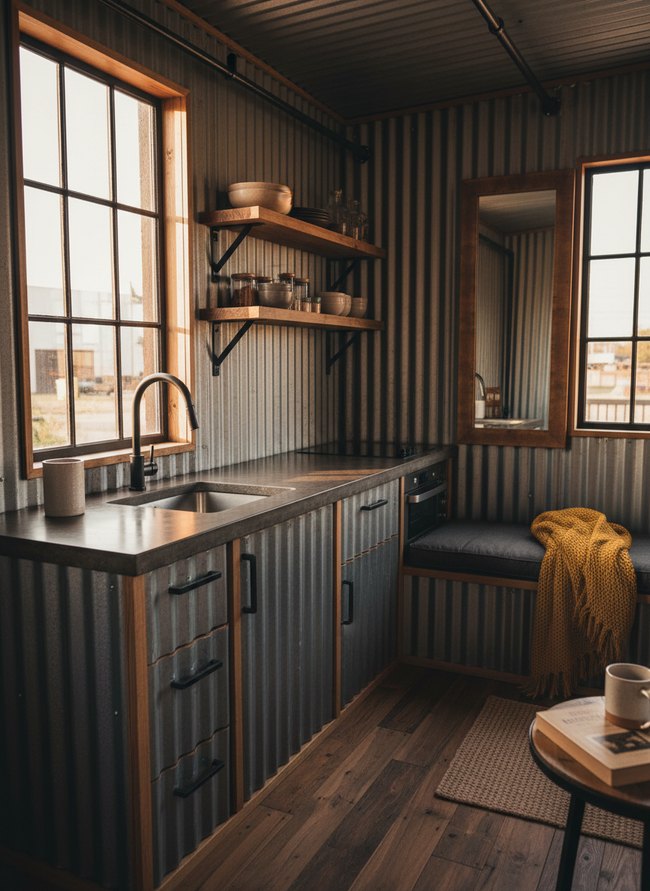
Corrugated steel panels form the kitchen’s walls and cabinets. The metal provides a rugged, low-maintenance surface, trading the softness of painted drywall. Warm wooden window frames and open shelving offer a natural touch against the metallic sheen.
15. Pipe Shelf Urban Kitchen
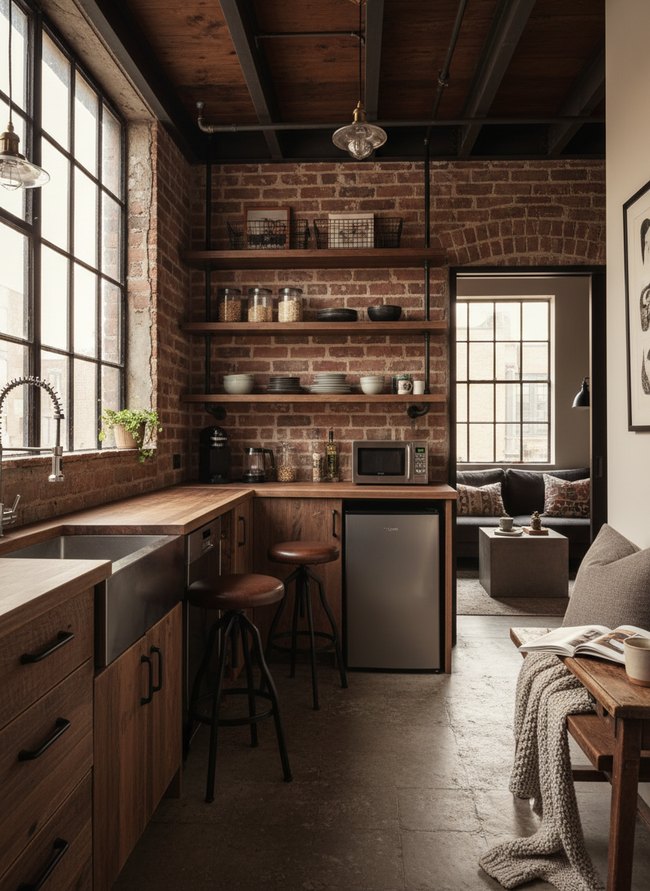
Raw brick walls present a textured backdrop for the industrial tiny kitchen. Dark metal pipe shelves provide open storage, trading away hidden cabinet space. Dark wood cabinets and a stainless steel sink ground the room with practical elements.
16. Blackened Steel Cooking Zone
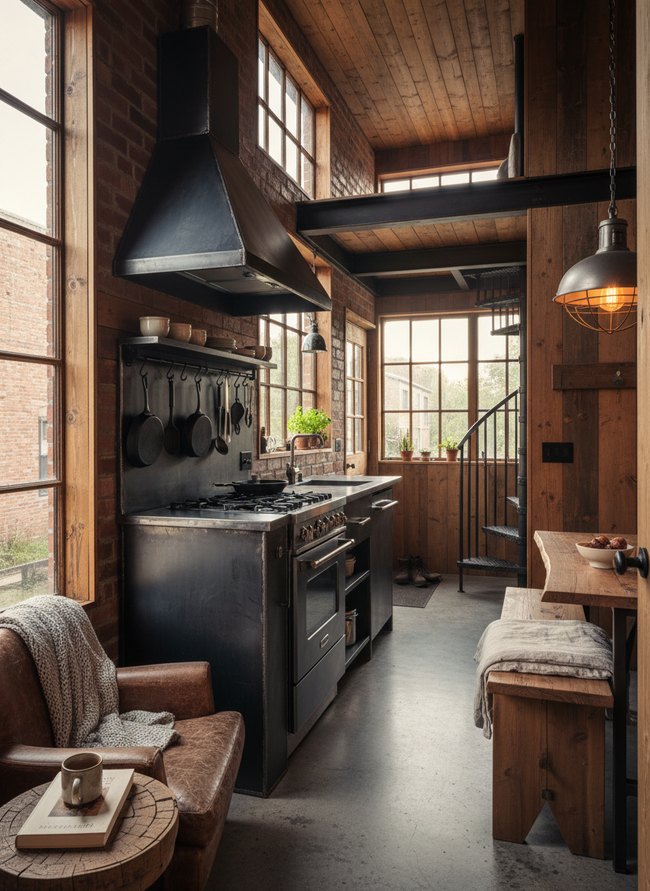
A large black metal range hood commands attention above a dark steel industrial kitchen. The robust cooking area trades away traditional kitchen softness. Exposed brick walls and warm wooden planks surround the dark metal appliances, creating contrasting texture.
Should I go for genuine reclaimed materials or high-quality reproductions for my industrial kitchen?
Weathered steel beams versus new metal with a distressed finish presents a clear choice for your kitchen. Old barn wood offers a rich, uneven patina that takes years to form. Fresh lumber with a gray wash creates a similar effect, but a close inspection reveals the difference. Real reclaimed materials carry higher costs; sourcing, cleaning, and sometimes modifying these pieces add to the expense. Replica surfaces often cost less upfront.
Authentic pieces sometimes bring hidden problems like rust or warping that require extra effort. New reproduction materials provide consistent sizing and predictable installation. You should choose genuine reclaimed elements if historical accuracy and tangible character stand as your top priorities. A rough-hewn timber countertop with deep axe marks tells a story. Select high-quality reproductions when budget constraints or a desire for easier maintenance guide your decision. A factory-pressed tin backsplash offers a uniform, clean appearance. Your personal preference for texture and narrative ultimately shapes your industrial kitchen.
Exposed Ductwork vs. Concealed Ventilation: What’s Right for My Kitchen’s Function and Aesthetic?
Shiny metal ductwork or a smooth ceiling finish, you must choose one. Visible industrial kitchen ventilation adds a raw, unfinished look. Exposed galvanized steel pipes bring an urban feel. Dust collects on rough metal surfaces, requiring frequent wiping. Concealed ventilation offers a cleaner, seamless appearance. Plastered ceilings hide the unseen ductwork. Installation costs often climb higher for hidden systems.
Consider your personal style. An exposed steel exhaust fan suits someone desiring a bold, factory floor aesthetic. This kitchen style embraces raw materials. Your design will feature visible pipes and hardware. A hidden range hood works for those preferring a streamlined, uncluttered space. These homeowners like clean lines. The drywall surface remains undisturbed. Visible ventilation creates a strong visual statement. Hidden air vents blend into the background. Choose what truly feels like home.
Which Idea Will You Try First?
That’s 16 different takes on industrial tiny kitchen. The best ideas above are usually the smallest moves — one material, one layout shift, one piece of furniture in the right place. Pick whichever room feels closest to your space and start there before tackling the rest.
Found an idea worth keeping? Save this post to your Pinterest board so it’s waiting for you when you’re ready to start your own project.