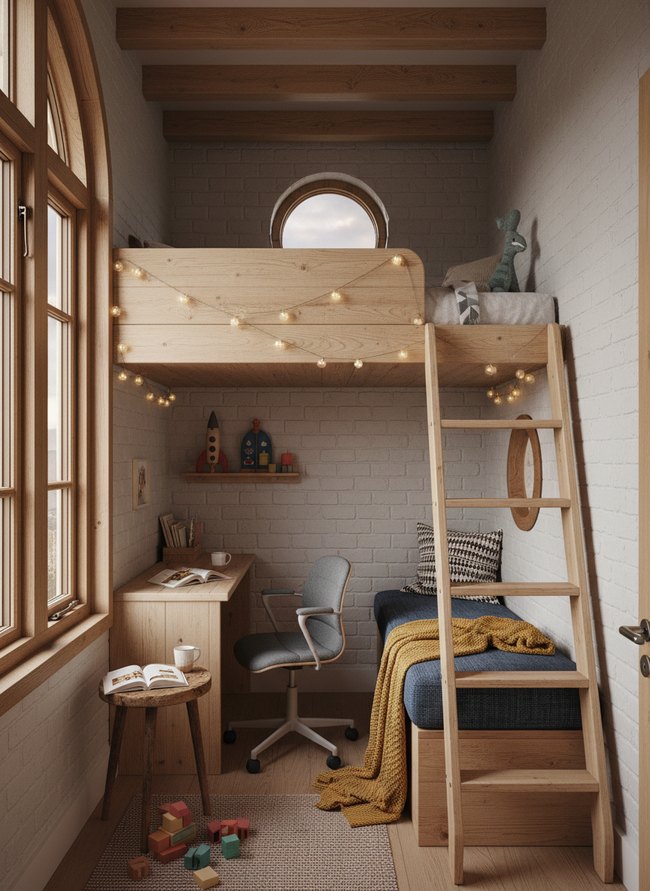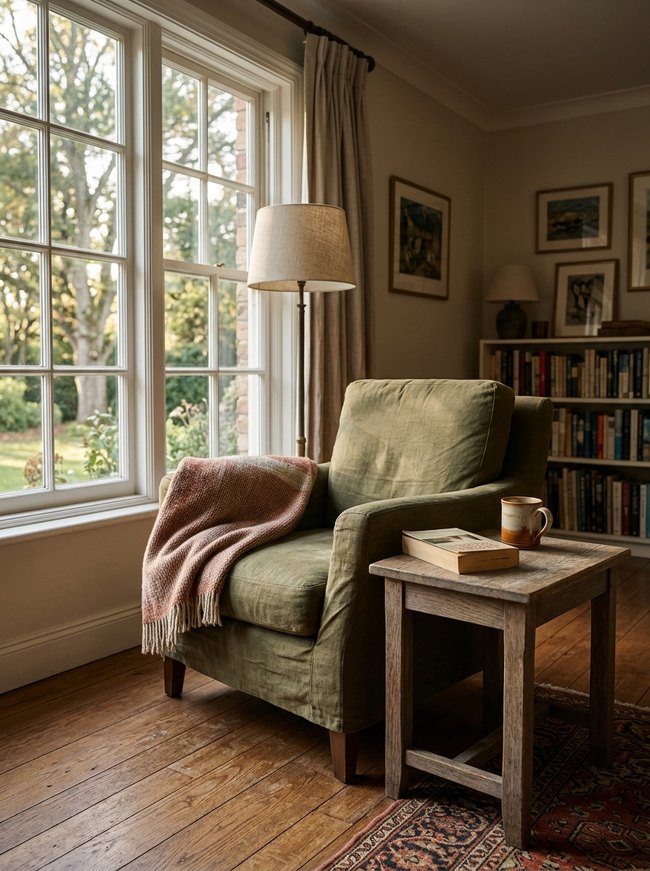
19 Open Concept Tiny Kitchen Layouts
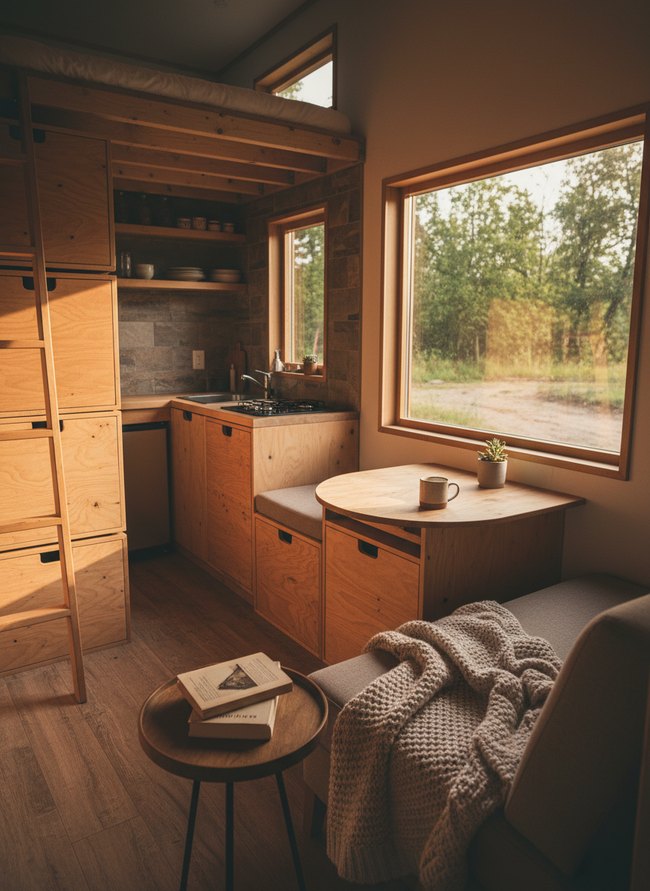
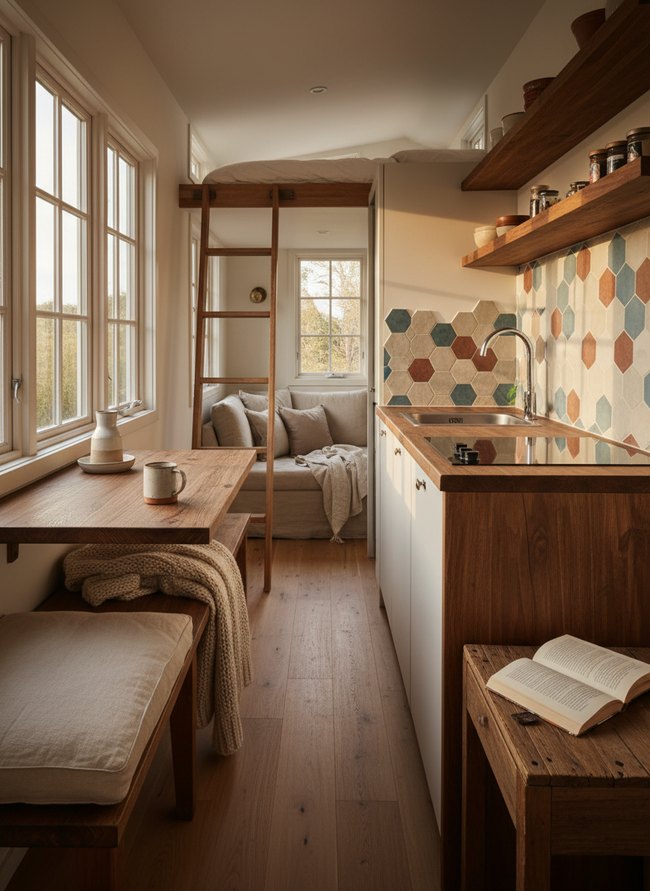
Copper pots hang from a sturdy ceiling rack, freeing up limited drawer space. The compact home offers a cozy footprint, yet a small cooking area can feel cramped. A spacious open concept tiny kitchen can make your whole living area feel larger, connecting distinct zones. Sacrificing wall space for an open flow means fewer upper cabinets and less concealed storage for your cookware. Design choices balance visual openness with practical storage needs. Each arrangement below shows a different way to handle this compromise. A light pine breakfast bar might divide the cooking space from your living room. Consider how each layout addresses your unique daily habits.
1. Minimalist Nordic Kitchenette
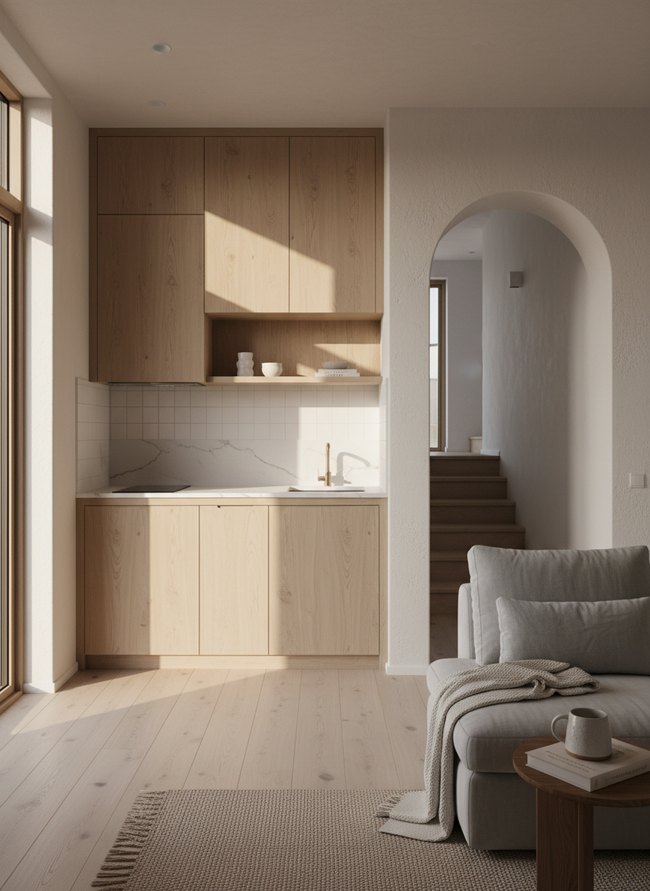
Blonde wood cabinetry offers a calm, uniform surface for the open concept tiny kitchen. White square subway tiles and a marble backsplash add texture and visual interest to the cooking area. A light gray sectional sofa and a small wooden side table create a comfortable living space adjacent to the kitchen.
2. Compact Urban Loft Kitchen
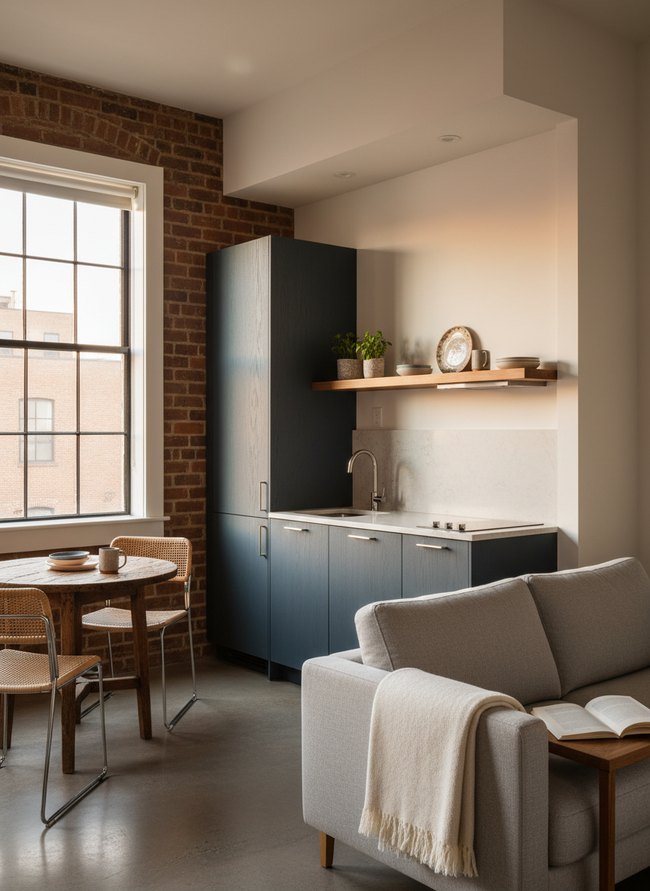
Matte navy cabinetry creates a clean, dark block against the off-white wall. A light gray upholstered sofa sits close, inviting conversation across the small, round wooden table. The open kitchen sacrifices sprawling counters for a shared, connected living space.
3. Streamlined RV Galley
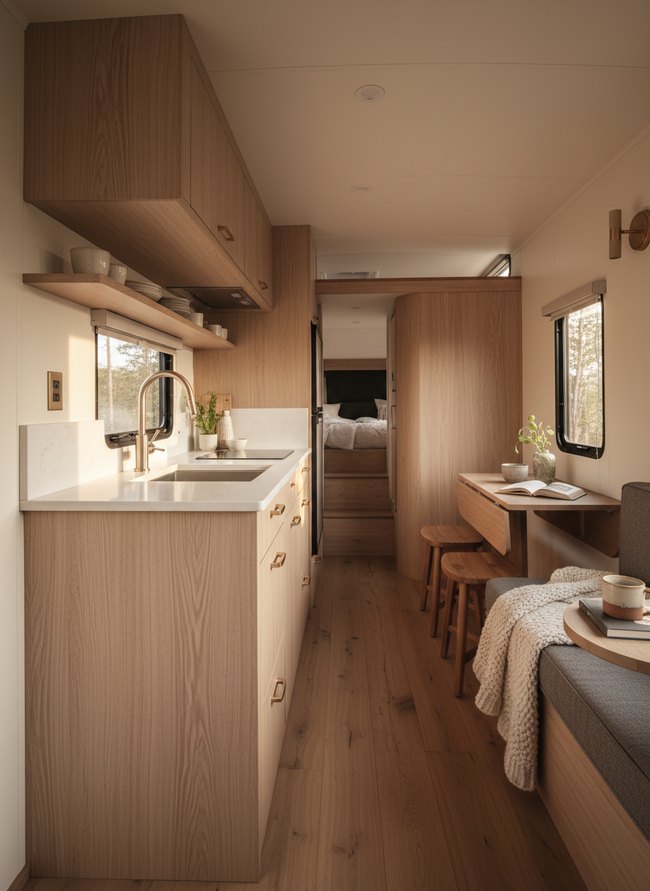
Light oak cabinetry defines the galley kitchen, stretching along one wall. The compact cooking space allows for more floor area, sacrificing a larger range for open movement. White quartz counters provide a clean surface, reflecting sunlight from the small window.
4. Rustic Farmhouse Kitchen Nook
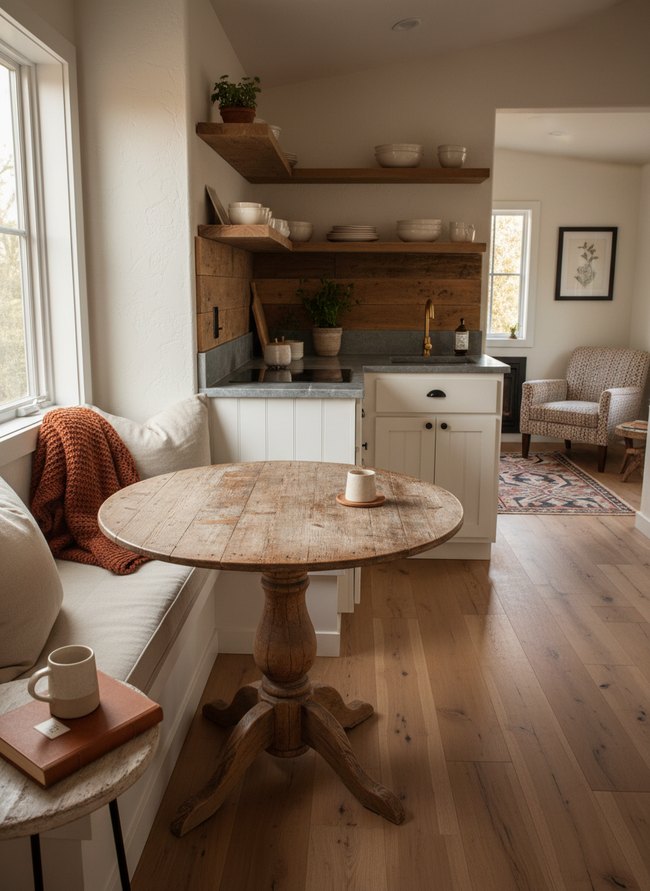
A round, weathered wooden table with a thick pedestal leg stands ready for a meal. The table creates a cozy dining spot connected to the cooking area, trading a larger, separate kitchen space. White shaker cabinets sit under a gray stone countertop, offering storage within this open-concept tiny kitchen.
5. Modern Industrial Mini Kitchen
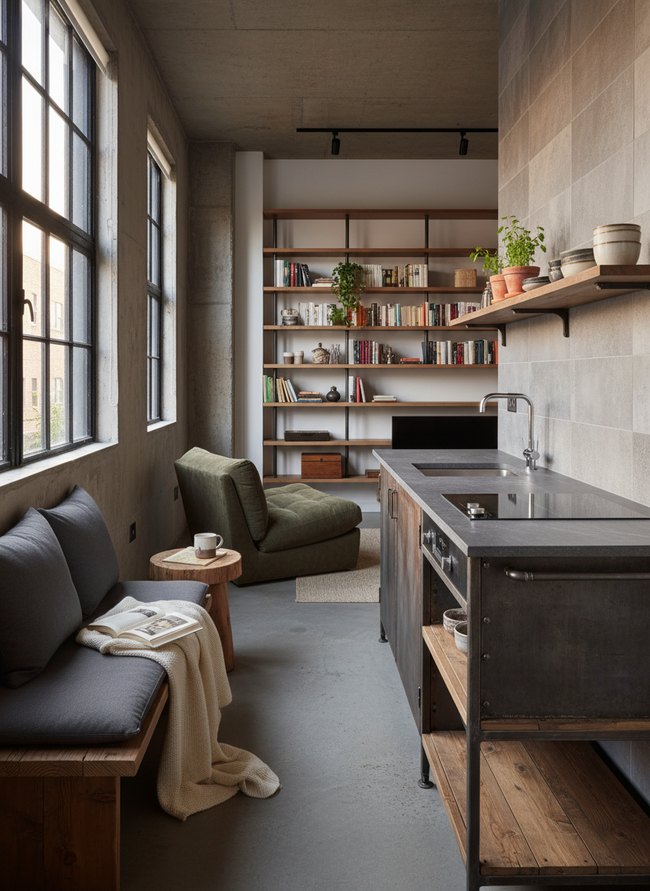
A dark charcoal countertop defines the cooking zone, offering a sleek surface for meal preparation. The open concept tiny kitchen offers streamlined aesthetics, but sacrifices extensive storage space. The industrial metal base with wooden planks provides sturdy support and a touch of raw warmth.
6. Bright Coastal Kitchen Pod
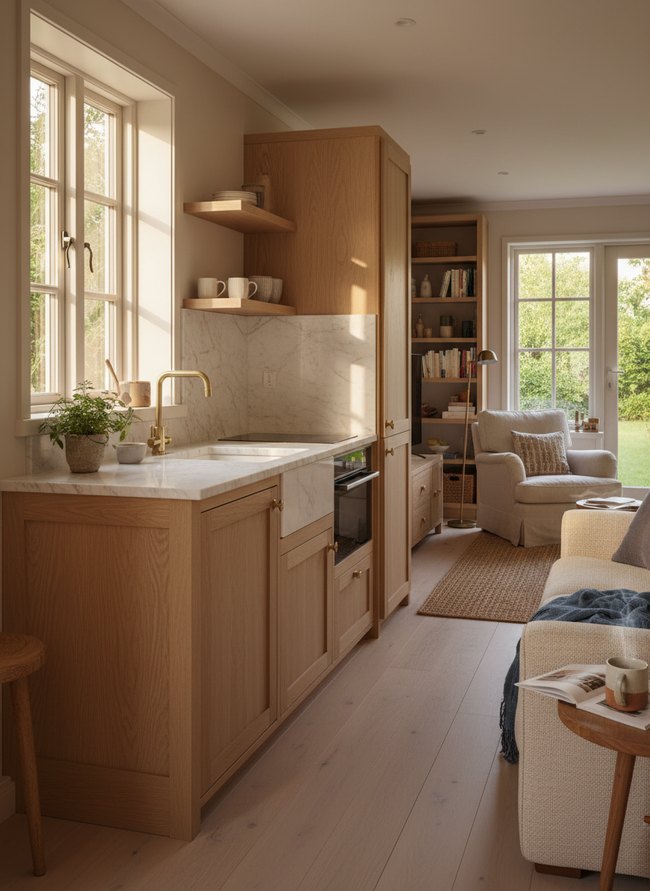
A white casement window brings in ample light, illuminating a compact cooking area. The open concept kitchen gains natural brightness while trading away extensive counter space. Light oak cabinets with brass pulls define the lower units, offering streamlined storage.
7. Fold-Away Studio Kitchen
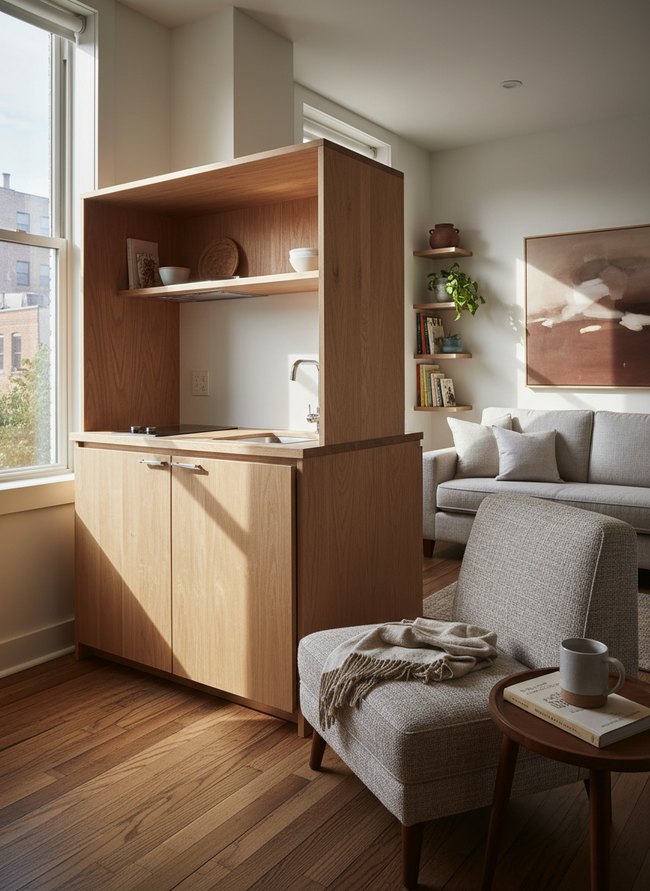
Light blonde oak cabinetry defines the compact cooking area, offering a clean, simple look. The open-concept kitchen trades a large, dedicated cooking space for more living room square footage. Warm wooden floors and a soft gray sofa make the small room feel inviting.
8. Under-Stair Storage Kitchen
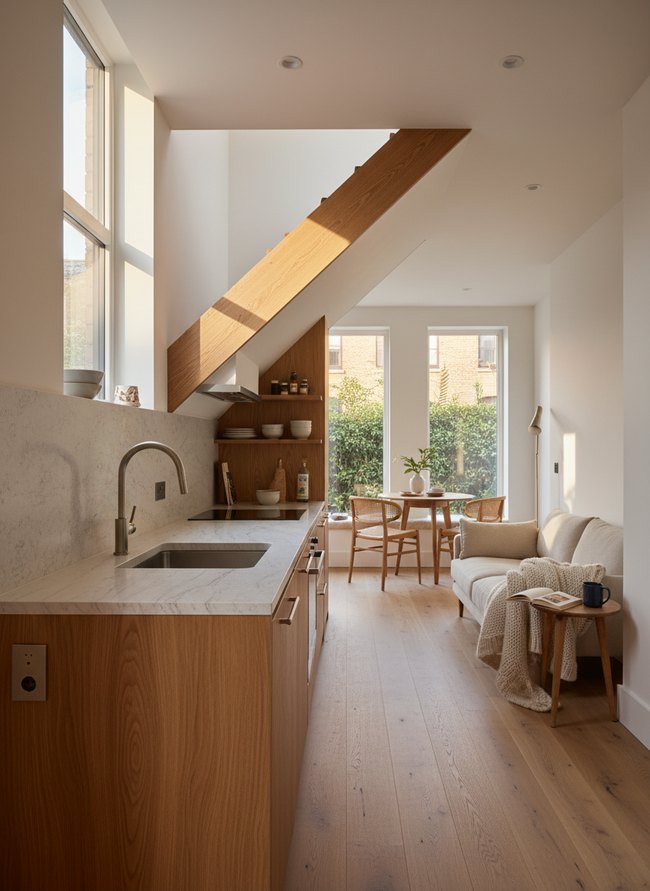
Honey-toned oak cabinetry defines the lower kitchen, running beneath a light gray marble countertop. The compact open concept tiny kitchen maximizes vertical space with under-stair shelving. White walls and wide plank wooden floors provide a bright, neutral shell for your compact living area.
9. High-Ceiling Micro Kitchen
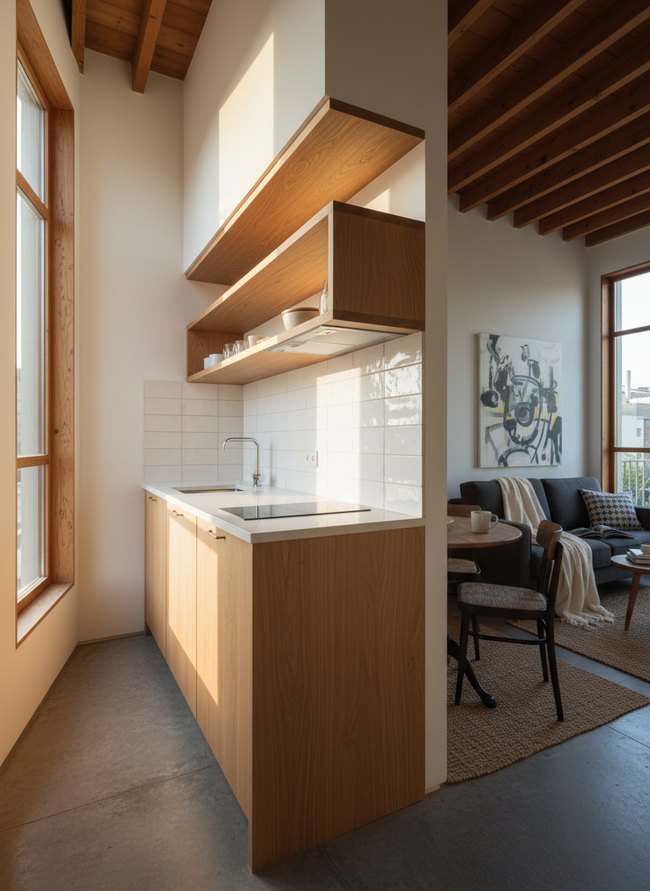
Warm wooden shelves float above a white tiled backsplash, catching golden afternoon sun. The compact open kitchen offers a minimal footprint, trading extensive counter space for a more expansive living area. Light wooden ceiling beams extend through the room, creating an airy, open feeling.
10. Convertible Island Kitchen
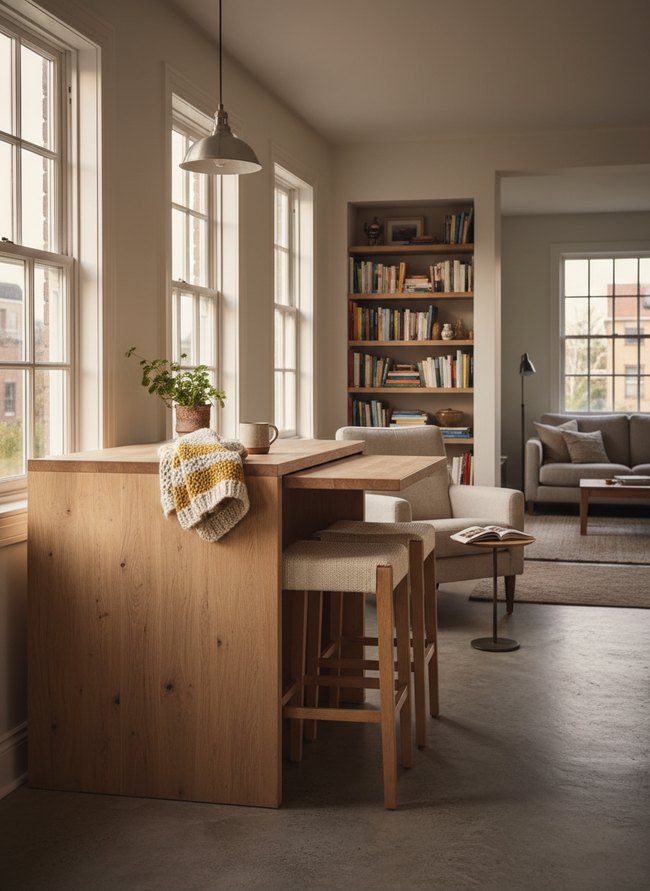
A warm honey-toned oak island features a sliding countertop section. The open concept kitchen design gives a flexible dining surface, but the island trades away permanent countertop space. Two oatmeal-colored bar stools tuck neatly underneath, ready for use or discreet storage.
11. Hidden Pantry Kitchen
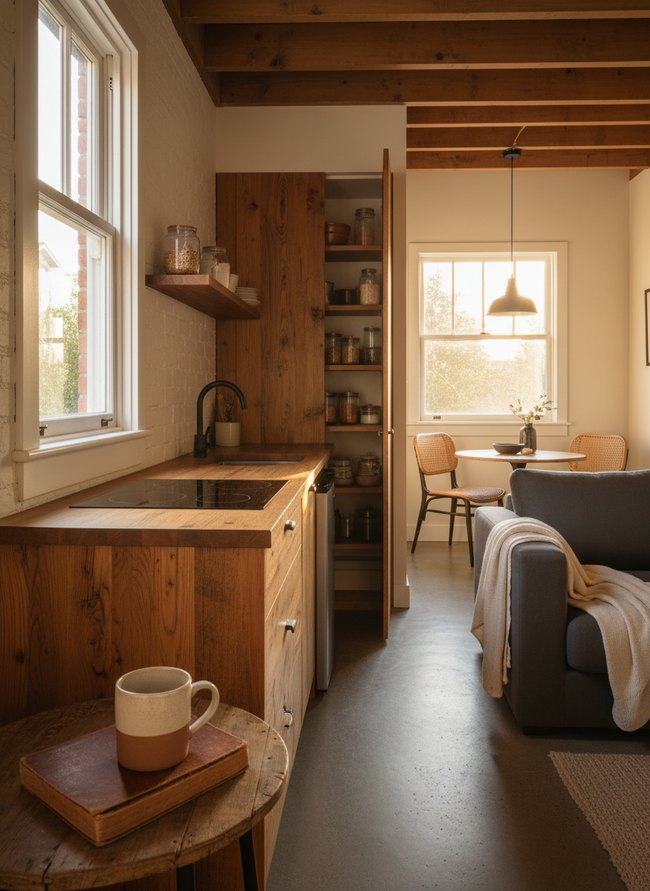
The rich, honey-toned wood of the tall pantry door hides storage for your staples. An open-concept tiny kitchen keeps dry goods out of sight, trading constant visual access for a clean, calm aesthetic. Natural light pours across the concrete floor from a large, white-framed window.
12. Integrated Appliance Kitchen
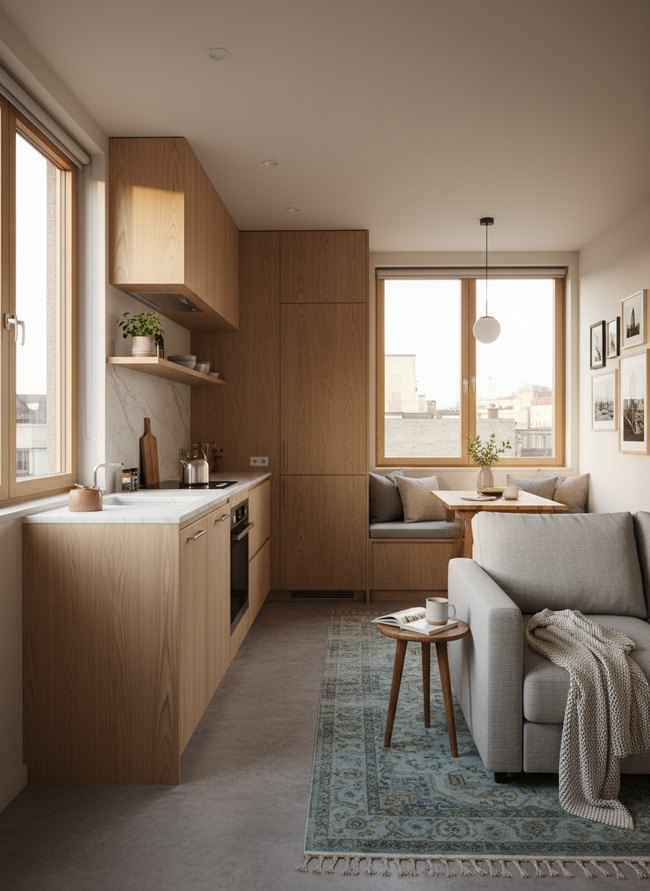
Pale oak cabinets line the left wall, extending from the floor to the ceiling. The open concept tiny kitchen offers continuous visual flow, trading away distinct boundaries between appliances. A small, round wooden table with a built-in bench seating nook sits under a large window, offering a compact dining area.
13. Wall-Mounted Shelf Kitchen
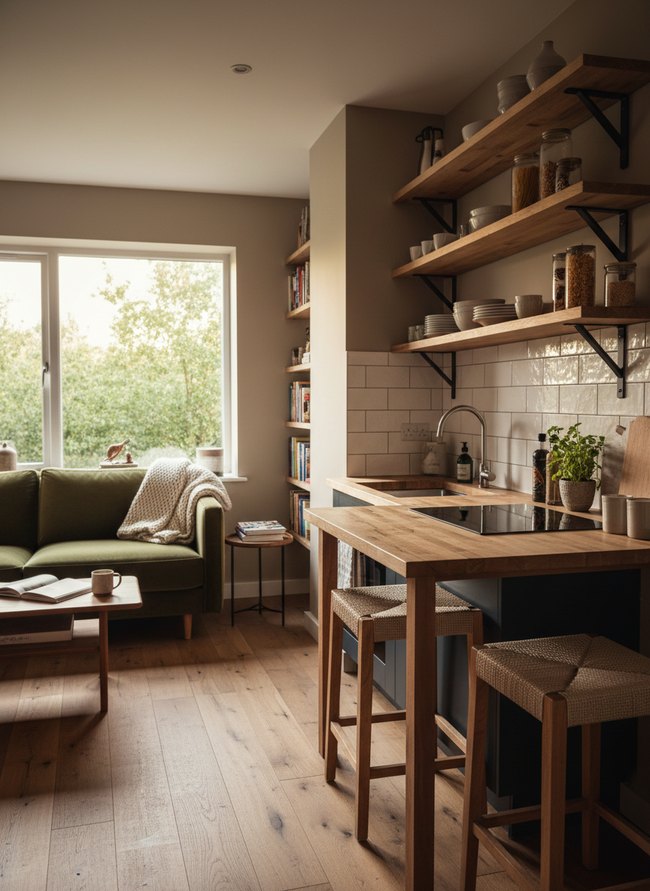
Long, honey-toned oak shelves line the wall, holding white ceramic dishes and clear glass jars. Open shelving offers easy access, trading concealed storage for visual lightness in the open concept tiny kitchen. Warm wooden stools with woven rush seats pull up to the dark countertop, offering a casual dining spot.
14. Corner Alcove Kitchen
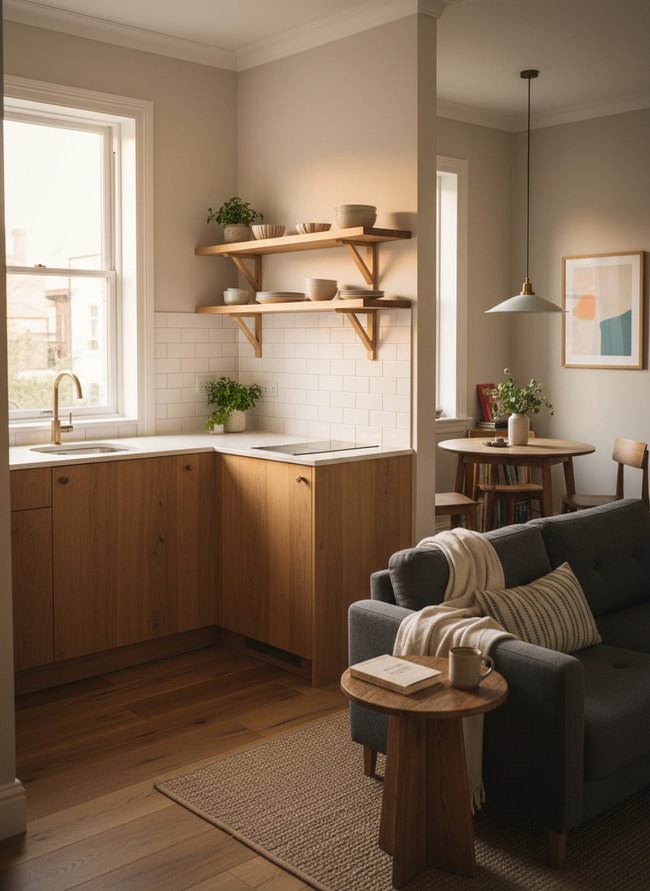
Honey-toned wooden cabinets define the corner alcove, offering a warm, grounded feel. Solid storage over open shelving creates a cleaner, less cluttered space. White subway tiles provide a bright, clean backdrop for the cooking area.
15. Mobile Cart Kitchen
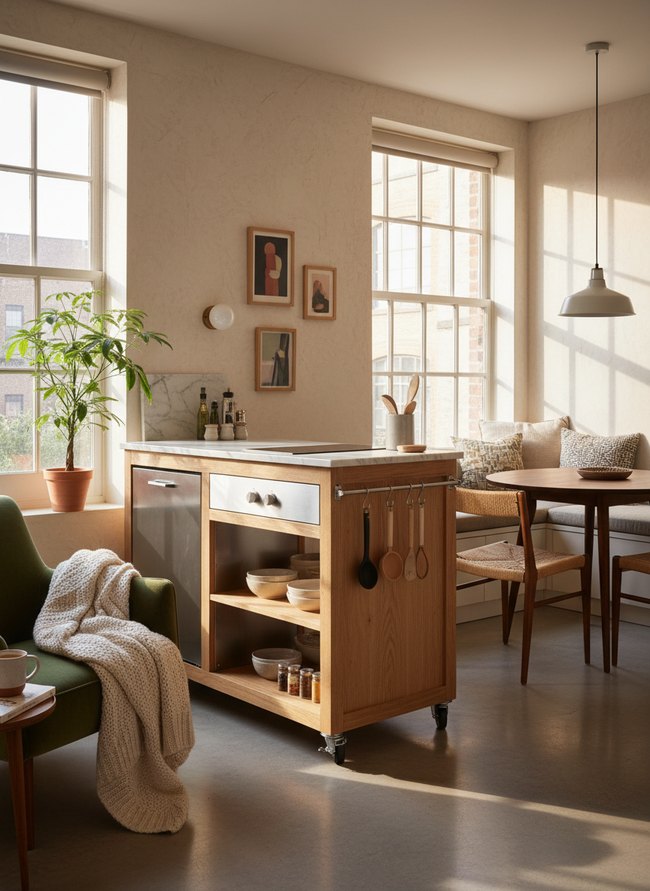
The light oak kitchen island rolls easily on industrial casters. A mobile open-concept kitchen provides flexible layout options. The wide marble countertop offers ample prep space, but the island trades away fixed plumbing connections like a built-in sink or dishwasher.
16. Sliding Door Kitchenette
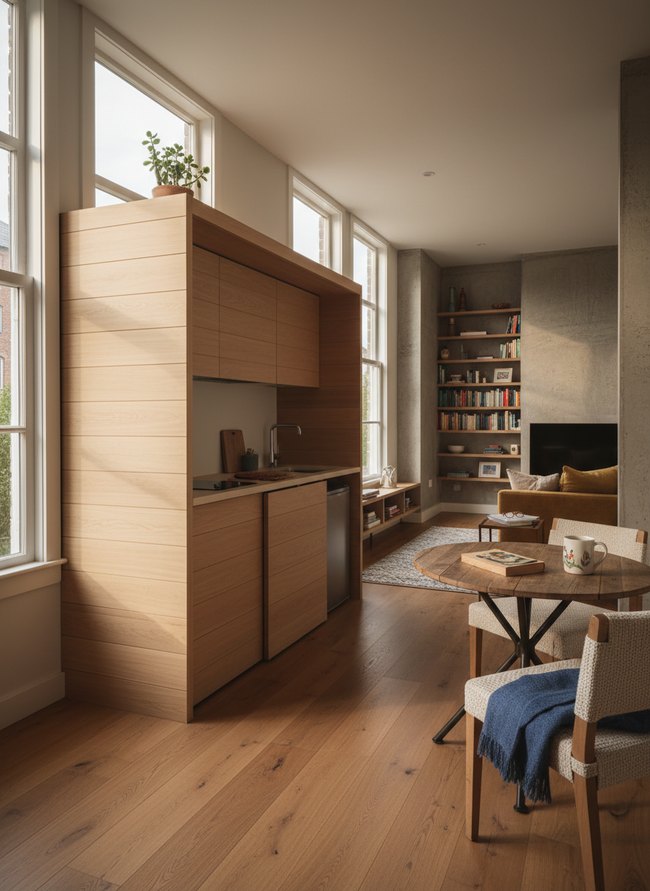
A light oak kitchenette stands tall near large white windows. The compact open-concept kitchen trades a large meal prep area for more living room floor space. Warm wood flooring stretches across the room, connecting the cooking zone with a small round dining table.
17. Window-Facing Prep Kitchen
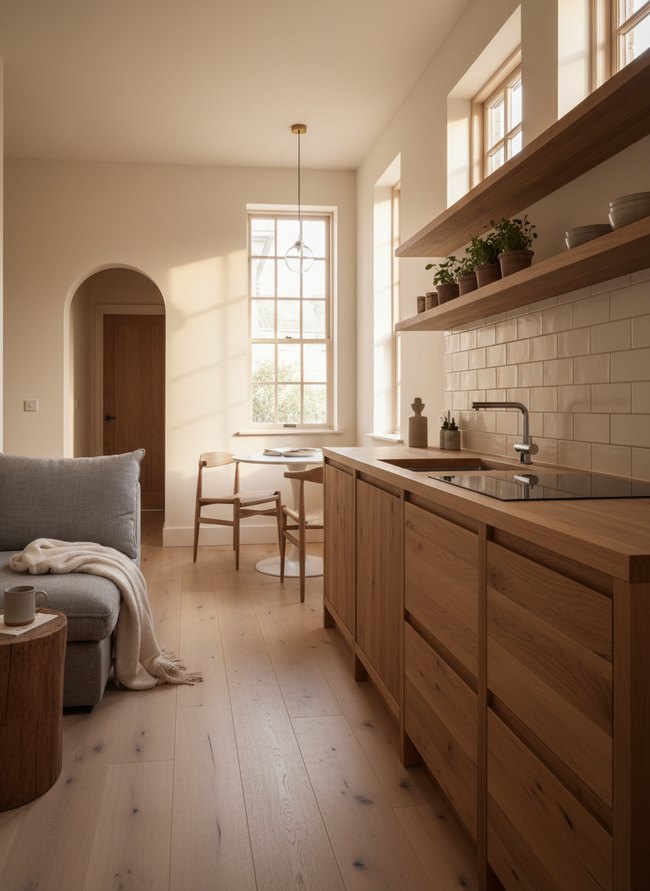
Blonde oak cabinetry stretches along one wall, providing ample storage and counter space. The open-concept tiny kitchen offers a sunlit prep area. However, the kitchen sacrifices the ability to hide cooking messes from view, as light wood floors flow continuously into the living area.
18. L-Shaped Efficiency Kitchen
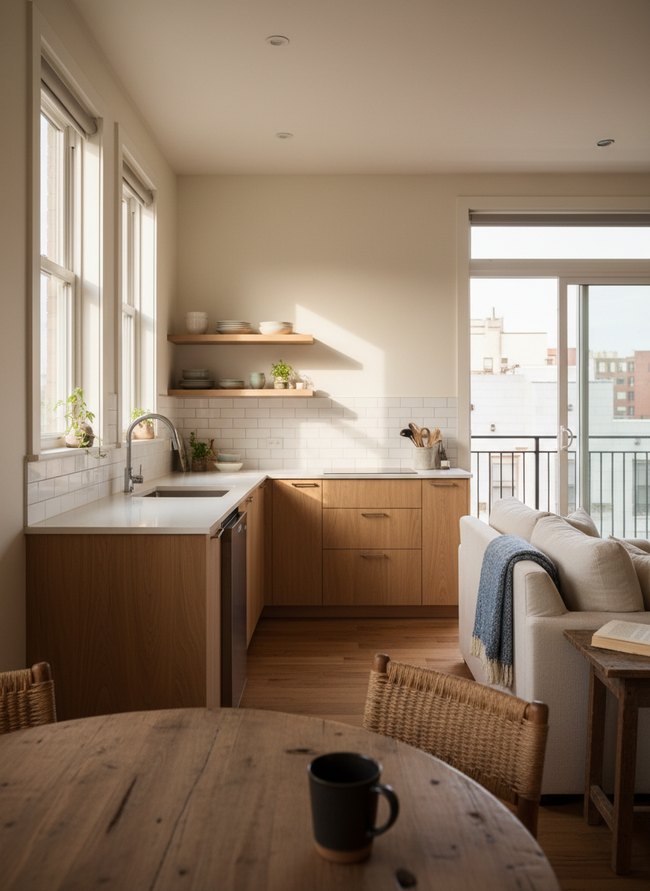
Light oak cabinetry wraps a corner, offering continuous counter space for meal prep. The open-concept kitchen provides a functional flow, trading closed storage for a visually expansive feel. Two blonde wood floating shelves above the subway tile backsplash provide quick access to dishes.
19. Sustainable Wood Kitchen
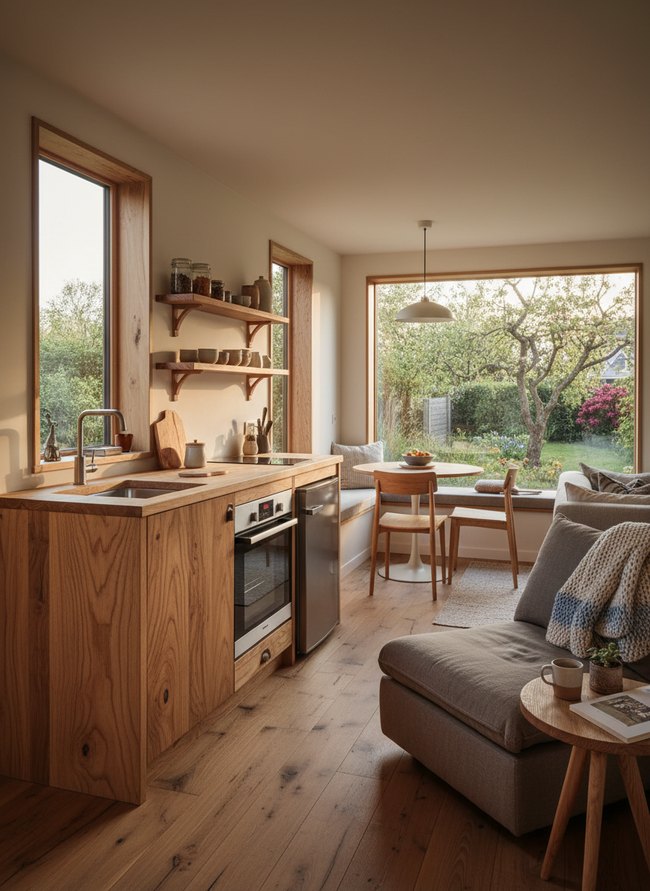
Rich, honey-toned oak cabinetry defines the compact cooking space. Homeowners might choose an open-concept kitchen, trading extensive storage for a bright, airy feeling. Light gray walls and natural wood floors keep the small room connected to the outdoor garden.
Should You Prioritize Sightlines or Storage in Your Open Kitchen?
Your open kitchen design requires a choice between clear sightlines and abundant storage. A clean countertop offers an unbroken view across your tiny house. However, a wide countertop with no upper cabinets means fewer places for dishes and pantry items.
Alternatively, tall wall cabinets give you ample room for kitchen gadgets. These upper boxes, though, will block sunlight and visual flow into your living area. That solid block of cabinetry makes the entire space feel smaller.
Homeowners who value an airy, expansive feeling above all else should pick the sightline layout. Small, hidden drawers and under-counter appliances become your friends. Minimalist cooks, those who own only a few copper pots and a single ceramic mug, will thrive with this approach.
However, families with many children and a full set of stoneware plates need the storage solution. Deep drawers below the counter and double-stacked wall cabinets become absolute necessities. A busy cook with many baking sheets and a stand mixer finds joy in organized cupboards, even if the kitchen feels less open.
Island or Peninsula: Which Layout Best Defines Your Space?
Island or Peninsula: Which Layout Best Defines Your Space?
A granite countertop, free-standing or wall-attached, shapes your open kitchen. Islands stand alone in the room’s center. Peninsulas connect to one wall, extending into the main area. Each design offers distinct benefits and drawbacks for your open concept tiny kitchen.
Your floor plan dictates the practical choice. A free-floating island demands generous walking paths, about 36 inches wide on all sides. This layout works well in wider, squarer rooms. Islands provide 360-degree access for cooking and dining. A floating oak island often includes deep drawers for storage. However, an island requires more square footage than a peninsula.
A fixed peninsula saves valuable floor space. The wall connection provides sturdy support for the counter. This design excels in narrower, rectangular tiny homes. A peninsula offers two or three accessible sides. A butcher block peninsula can define the kitchen boundary without blocking traffic flow. Peninsulas frequently provide more continuous counter space than islands. They often mean less flexible seating arrangements.
Consider your primary kitchen activities. Do you host large groups? An island provides a central gathering point. Do you prefer quiet, focused cooking? A peninsula offers a more tucked-away feel. The dark soapstone counter of a peninsula can visually anchor the kitchen within a larger living area.
Which Idea Will You Try First?
That’s 19 different takes on open concept tiny kitchen. The best ideas above are usually the smallest moves — one material, one layout shift, one piece of furniture in the right place. Pick whichever room feels closest to your space and start there before tackling the rest.
Found an idea worth keeping? Save this post to your Pinterest board so it’s waiting for you when you’re ready to start your own project.