Tiny Kitchen Math: How Much Counter Space Do You Really Need?
A polished quartz countertop stretches wide, offering ample room for food preparation, but a large surface often shrinks the walking path. Conversely, a compact chopping block provides easy movement, yet a small prep zone creates cramped cooking. Every home chef makes choices about the practical dimensions of a kitchen. Designs with a single butcher-block slab or options with expansive marble surfaces are available. Consider varying approaches to tiny kitchen counter space, each presenting a distinct balance between utility and roominess. The examples offer different solutions.
1. Compact Corner Prep Zone
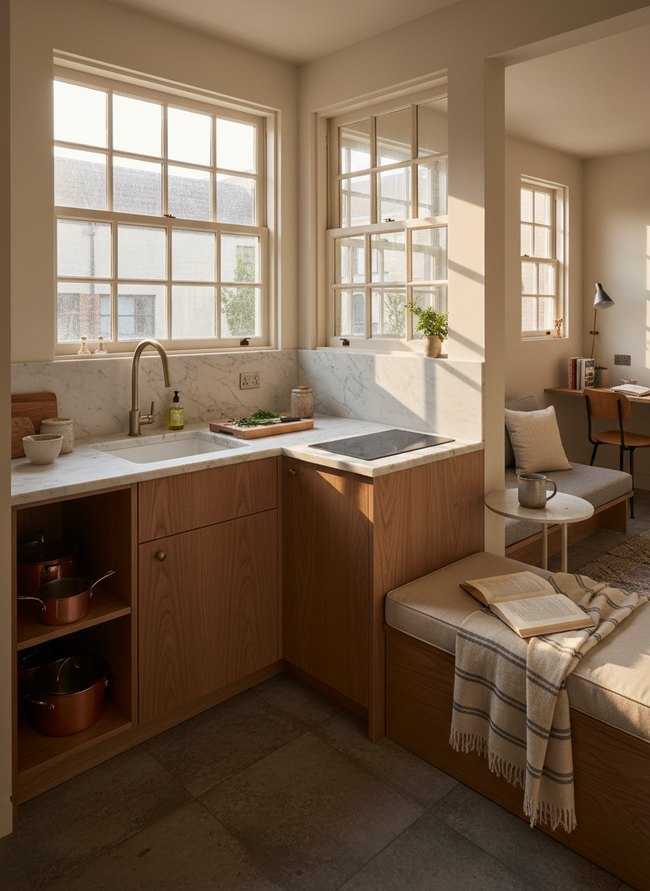
The light marble countertop wraps around a corner, offering a small, functional L-shaped kitchen counter. Homeowners could choose this compact layout, trading sprawling prep areas for a comfortable integrated bench seat. The design provides a clean cooking surface and a cozy reading spot.
2. Foldaway Extension Countertop
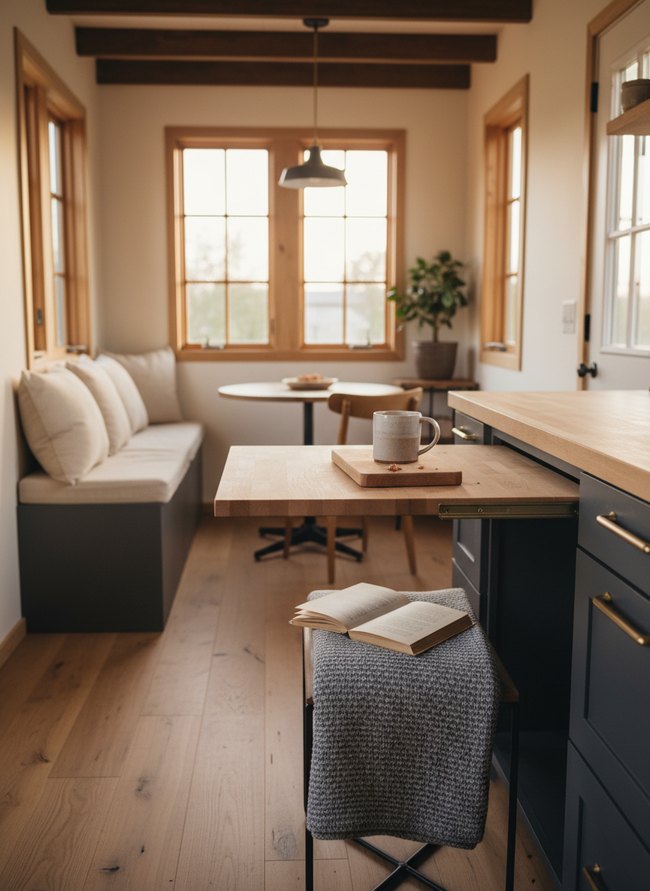
A light wooden counter pulls out from dark blue kitchen cabinets. Owners can choose a foldaway extension countertop for extra tiny kitchen counter space. The countertop trades a fixed surface for flexible utility, expanding the workspace as needed.
3. Pull-Out Work Surface
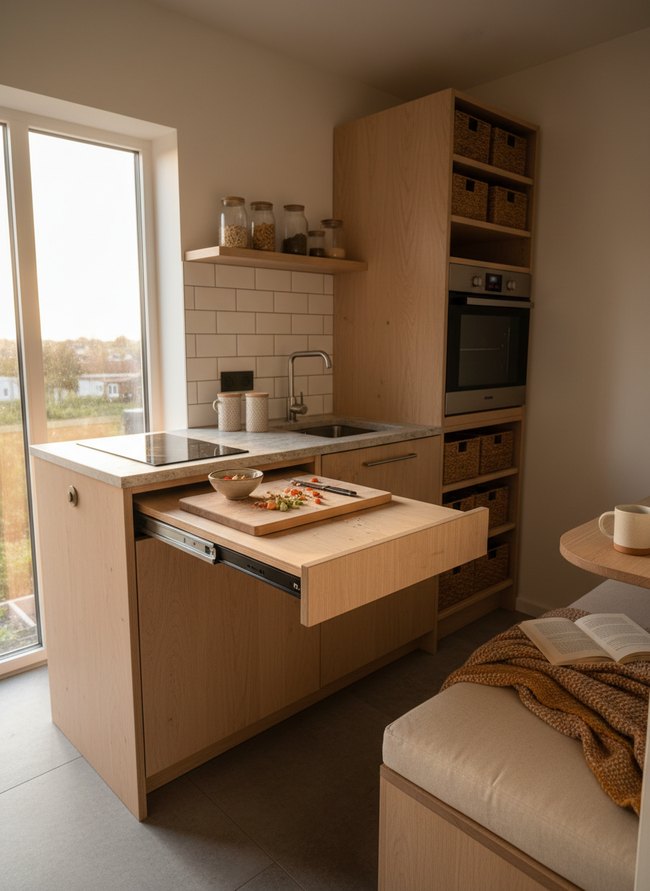
A light oak pull-out shelf extends smoothly from the base cabinet, providing a movable surface for food preparation. The clever design gains valuable tiny kitchen counter space, trading fixed square footage for flexible utility. A wooden cutting board with chopped vegetables sits ready on the sturdy pull-out.
4. Integrated Sink Cover Board
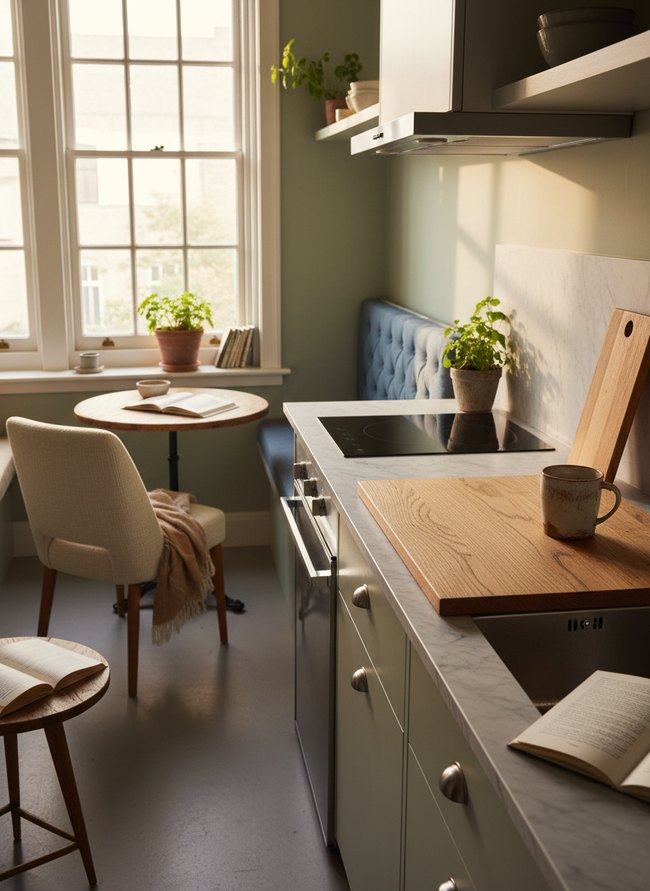
A light oak cutting board sits flat across a stainless steel sink basin. The board gains valuable work surface over losing immediate sink access. A small white ceramic mug rests on the wooden board, ready for use.
5. Slimline Appliance Dock
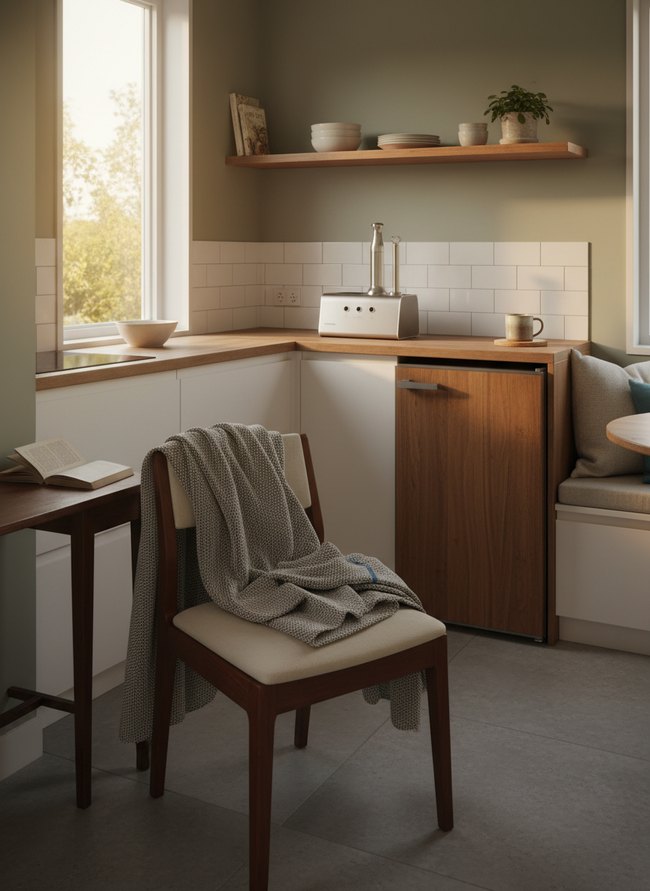
The warm, honey-toned wooden countertop forms a snug L-shape along two pale green walls. A compact appliance dock gains extra workspace in the small kitchen. A wooden floating shelf above the white tiled backsplash provides additional storage for dishes and a small green plant.
6. Floating Shelf Workspace
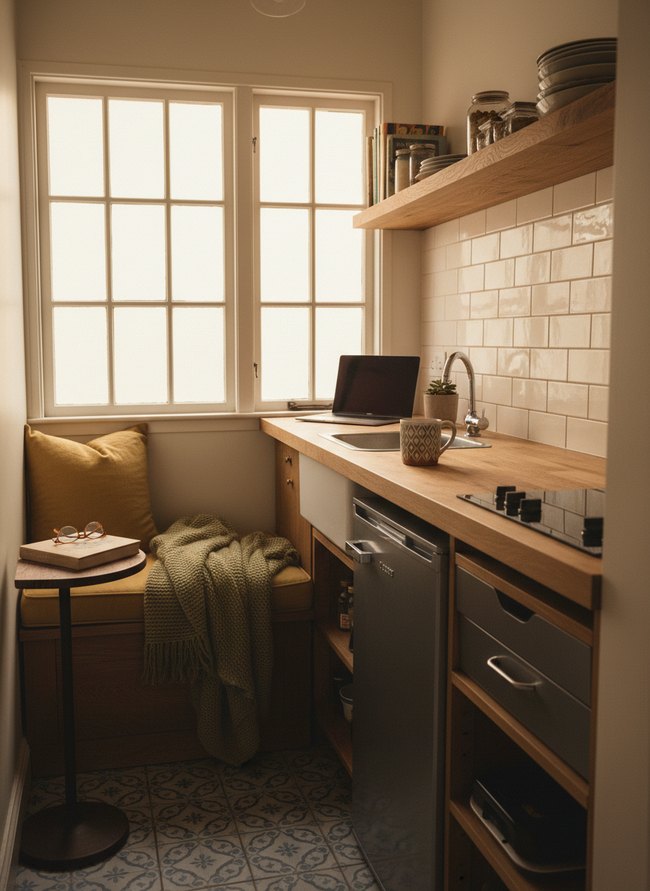
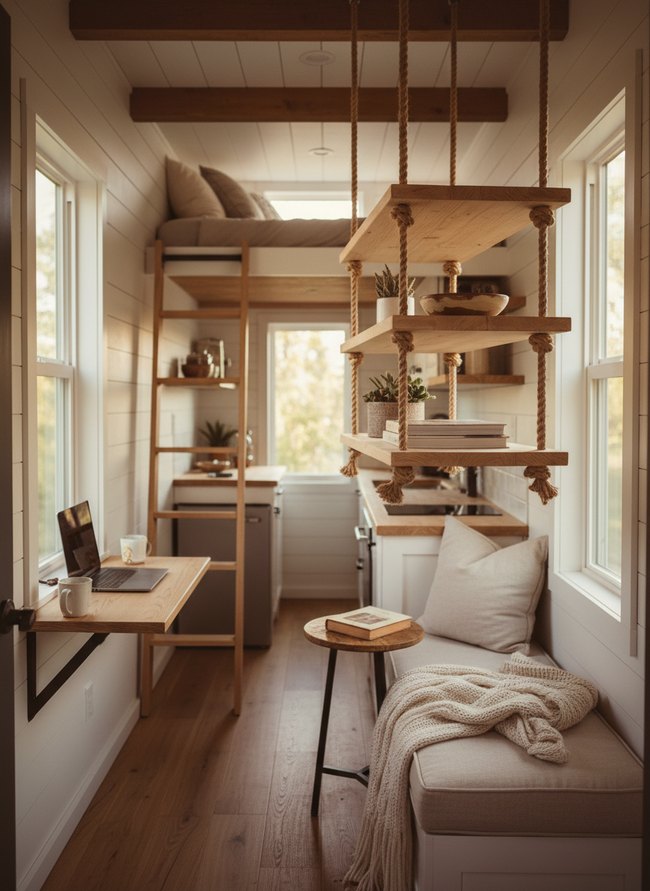
The wide wooden shelf offers a long, flat surface for many tasks. Homeowners could use the counter space for food prep, or they might choose to place a computer there instead. A built-in metal sink and an electric stovetop occupy part of the golden oak countertop.
7. Mobile Island Prep Space
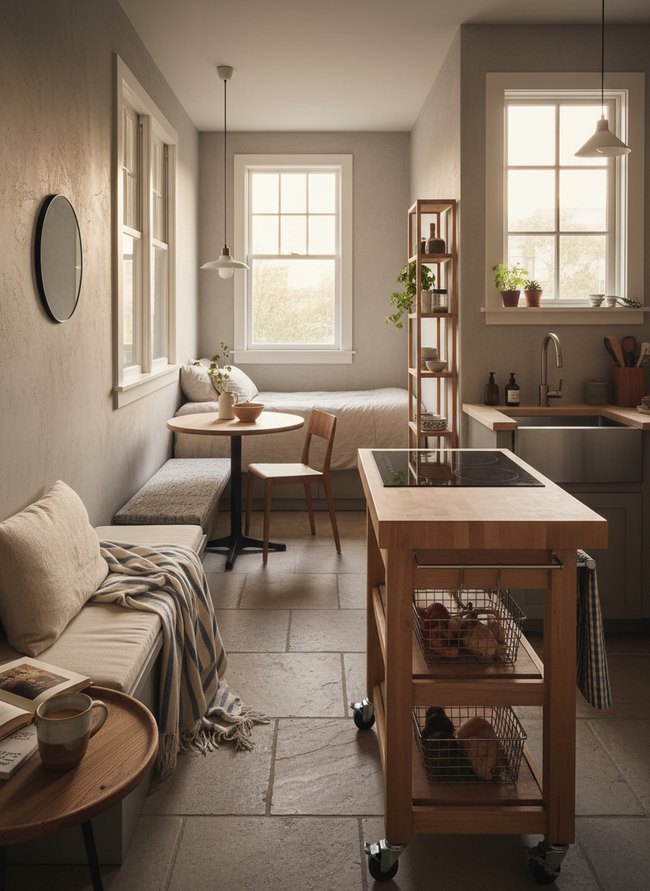
A rolling butcher block island provides a mobile cooking station. A compact tiny kitchen counter space is chosen over a fixed, sprawling countertop. The light wood block offers a smooth surface for meal preparation.
8. Under-Cabinet Slide Counter
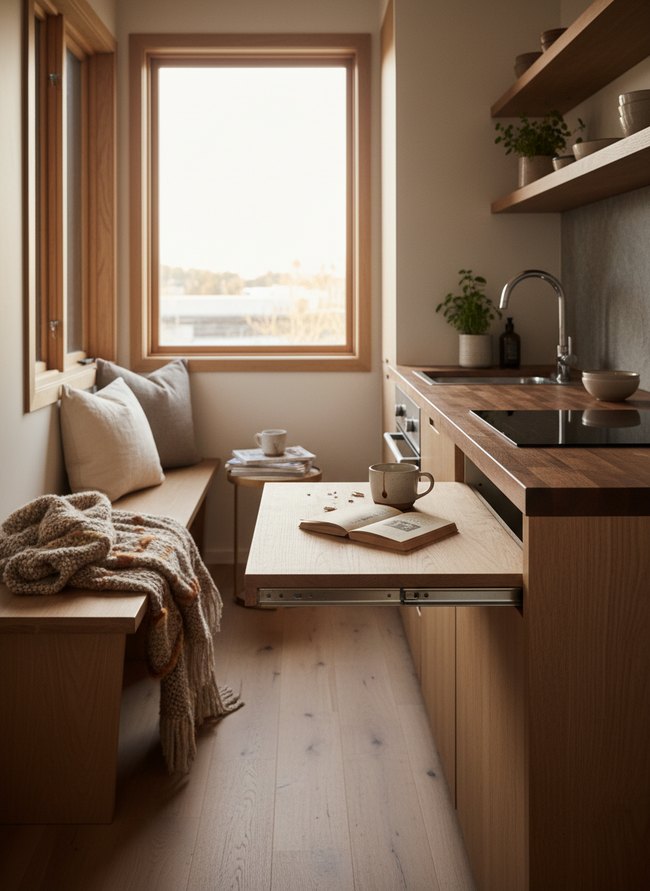
A light oak pull-out shelf extends from the main cabinetry. The shelf provides a temporary work surface, but it trades away permanent floor space. Blonde wood cabinets with dark counters line the wall, creating a streamlined look.
9. Nook Breakfast Ledge
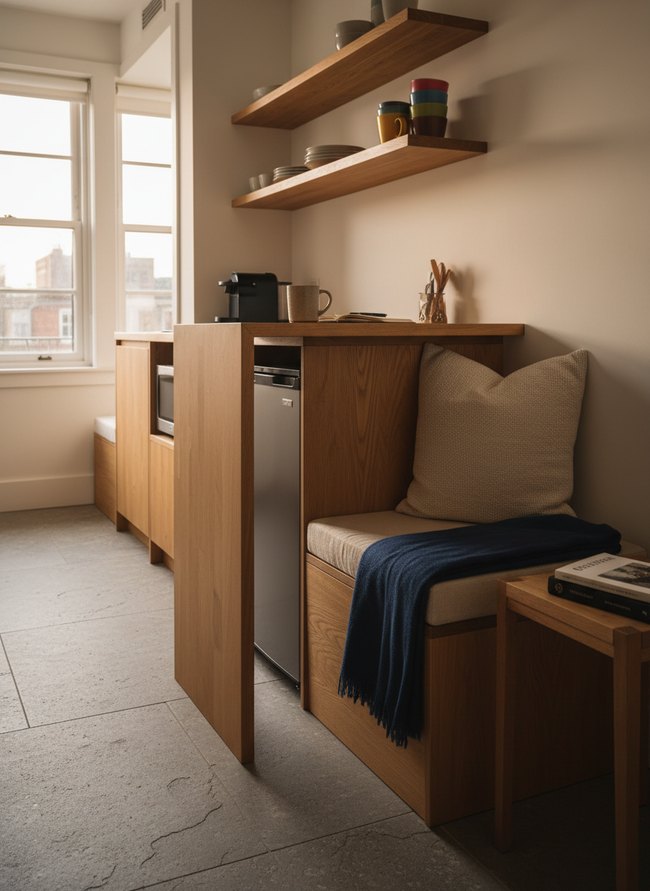
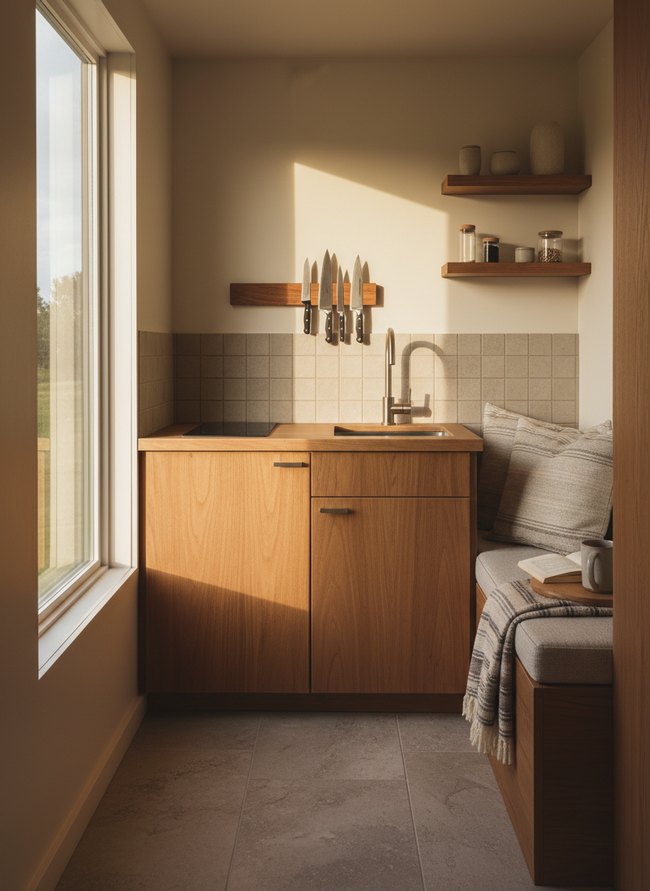
Light oak cabinetry defines a compact kitchen area with a built-in bench. A continuous countertop gains unbroken prep space but loses a cozy seating nook. The clever counter design integrates a small under-counter refrigerator, trading a larger appliance for a seamless, multi-functional zone.
10. Window Sill Counter Extension
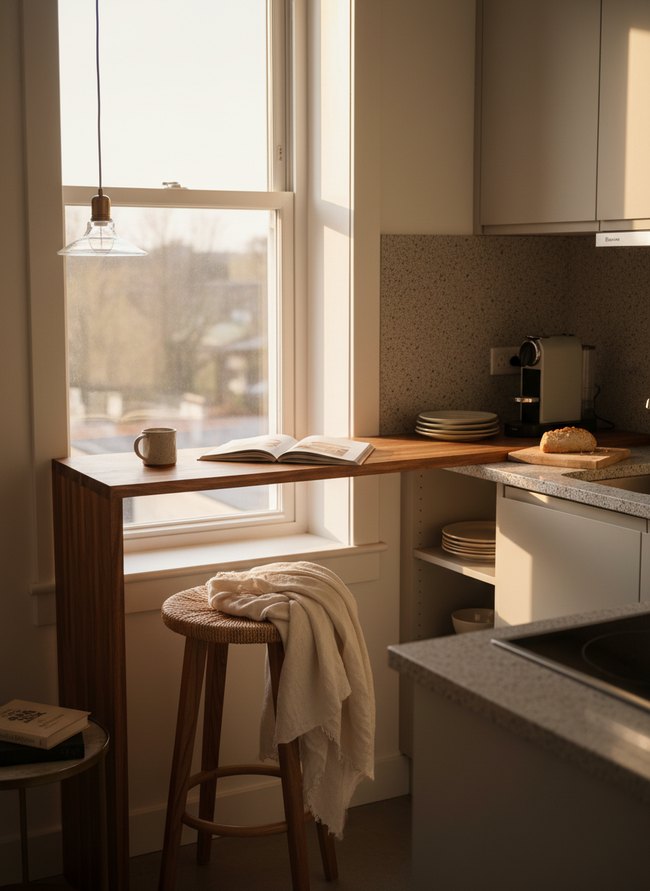
The smooth honey-toned wood counter extends from the white window frame, offering a clean surface. The slim wooden bar trades expansive food prep space for a sunny breakfast nook. A small, round woven stool sits ready, draped with a soft beige throw.
11. Recessed Cooktop Counter
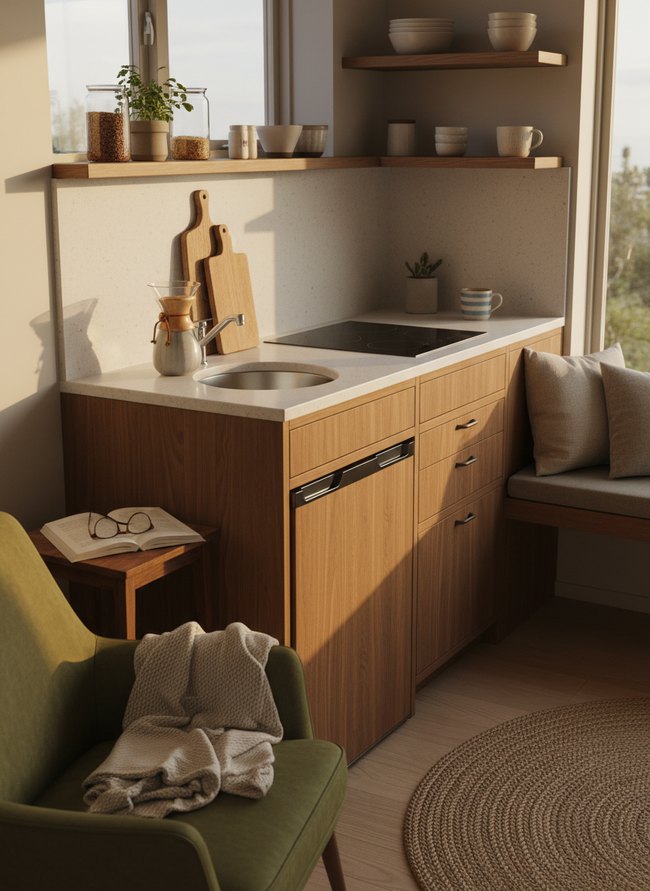
The white speckled countertop presents a smooth, unbroken surface. Recessing the two black cooking elements into the kitchen counter space leaves more room for food prep. The counter gains valuable work area over a traditional stovetop.
12. Tiered Corner Utility
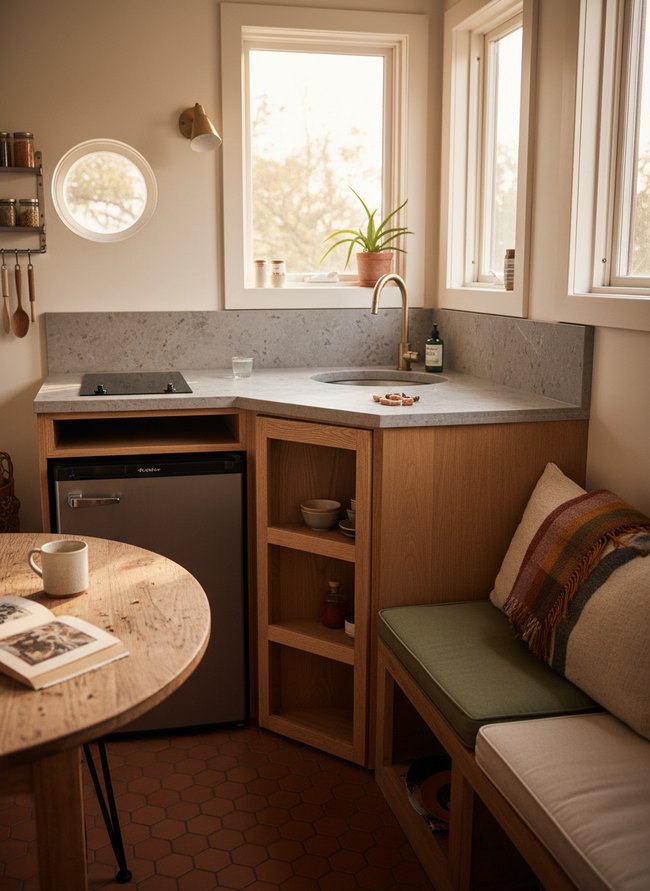
The gray speckled countertop turns a corner, offering both cooking and washing areas. A compact induction burner and a round basin trade expansive prep space for a snug, fitted design. Blonde wooden cabinets and open shelves sit below the counter, ready for small bowls and a refrigerator.
Should I Prioritize Prep Space or Appliance Storage?
A gleaming chrome stand mixer consumes valuable counter space. Does your small kitchen need a wide butcher block for chopping or dedicated zones for cooking tools? Chopping vegetables on a granite slab requires open areas. Storing a polished espresso machine on the counter means less room for slicing citrus. A larger work surface lets you spread out ingredients for a big meal. Countertop gadgets, like a shiny toaster oven or a black coffee maker, occupy fixed spots. Consider your daily kitchen routine. Do you bake sourdough bread every weekend, needing a broad oak surface? A baker truly benefits from expansive prep areas. Do you make morning smoothies and afternoon pressed sandwiches? Your appliances deserve accessible countertop homes. Cooks who handle many fresh ingredients will prefer a generous maple countertop for prep work. People who rely on electric tools for most tasks gain much from easily reachable appliance parking. Small kitchens often force this choice. A narrow stainless steel counter makes both options tricky.
Built-In vs. Freestanding: Where Do My Large Appliances Go?
A compact kitchen requires choosing between built-in or freestanding large appliances. Your kitchen layout holds the key to this decision. Built-in units, like a paneled dishwasher or an integrated tall refrigerator, blend into a continuous run of maple cabinets. These hidden machines make a small room feel much bigger. You gain unbroken countertop surface, a smooth visual line. However, a custom cabinet front adds significant cost. Replacing a built-in appliance becomes more complex.
Freestanding appliances, such as a stainless steel range or a white compact freezer, stand apart from your cabinetry. This option saves money on initial construction. It allows easy appliance upgrades down the road. A bright red microwave can introduce a splash of color. However, these separate pieces break up your countertop space. They interrupt the flowing lines of dark oak cabinets.
Choose built-in appliances for a sleek, unbroken look and a higher budget. Select freestanding units for budget friendliness and future flexibility.
Which Idea Will You Try First?
That’s 12 different takes on tiny kitchen counter space. The best ideas above are usually the smallest moves — one material, one layout shift, one piece of furniture in the right place. Pick whichever room feels closest to your space and start there before tackling the rest.
Found an idea worth keeping? Save this post to your Pinterest board so it’s waiting for you when you’re ready to start your own project.