Open Shelving vs Closed Cabinets in Tiny Kitchens: Which Wins?
Small kitchens make design choices tricky. Available wall space shrinks fast. Some folks love the bright white open shelving. Other homeowners prefer hidden storage behind dark wood cabinet doors. Deciding between these two kitchen options feels bigger in a compact space. Every inch matters when planning a home. Cooking tools need a good spot. We’ll break down the real ups and downs of open versus closed tiny kitchen storage, so you know what’s what.
1. Rustic Wood Minimalist Debate
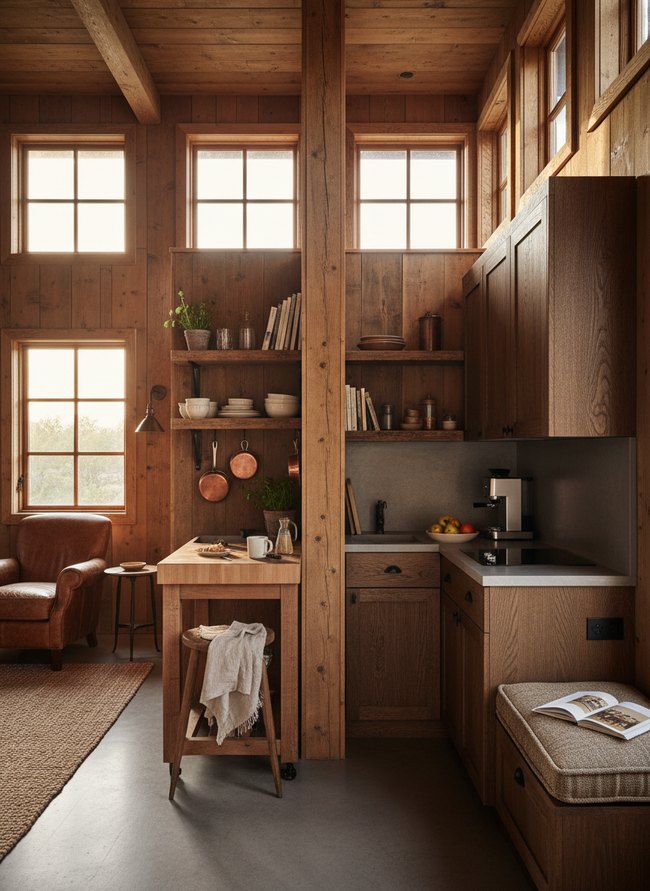
Rich, honey-toned knotty pine planks cover the walls and ceiling, creating a cozy cabin feel. Open wood shelves filled with white dishes and copper pots offer easy access and rustic charm. Visible storage creates a welcoming, lived-in kitchen space.
2. Modern Loft Appliance Choice
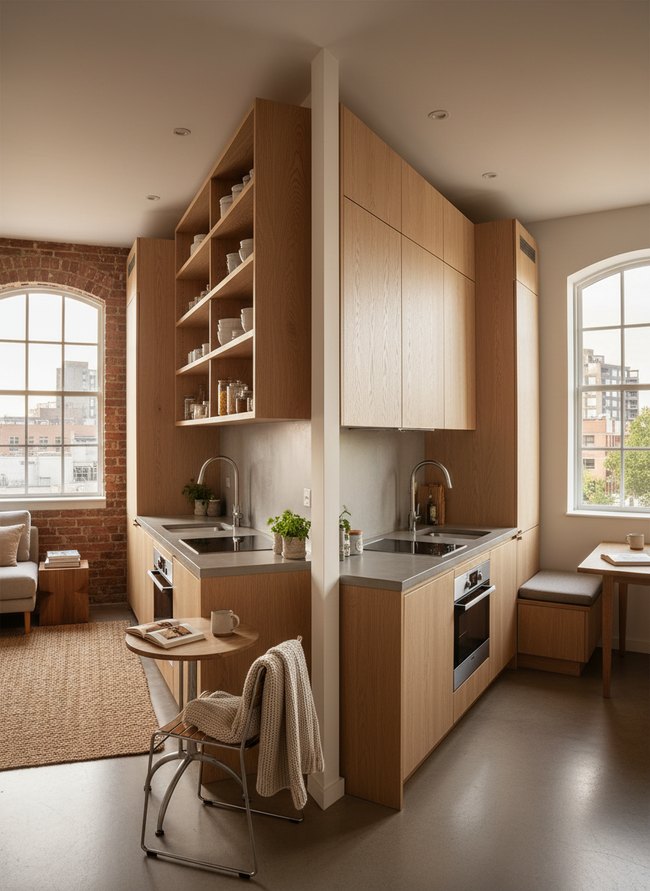
Light honey-toned wooden shelving on the left displays dishes and pantry items, showing an open storage choice. A closed wooden cabinet wall on the right provides a sleek, hidden appearance for kitchen necessities. Homeowners should consider personal organization style before picking open or closed storage for a tiny kitchen.
3. Farmhouse Charm Storage Battle
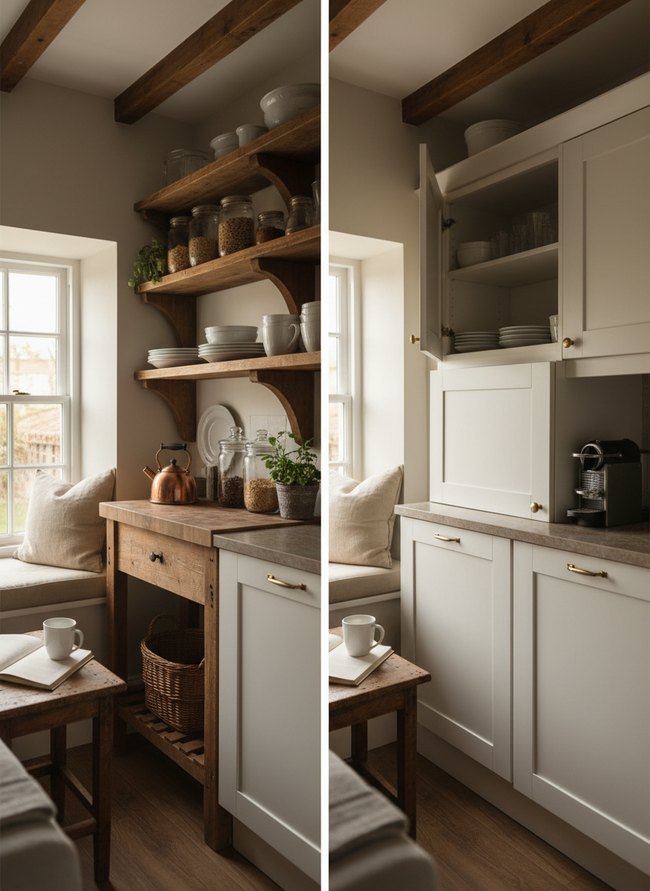
A narrow kitchen wall holds both open wood shelves and closed cream cabinets. Open shelving displays clear glass jars of grains and stacked white dishes for easy access. Designers consider how much visual clutter a small space can handle with open versus closed tiny kitchen storage.
4. Industrial Compact Kitchen Verdict
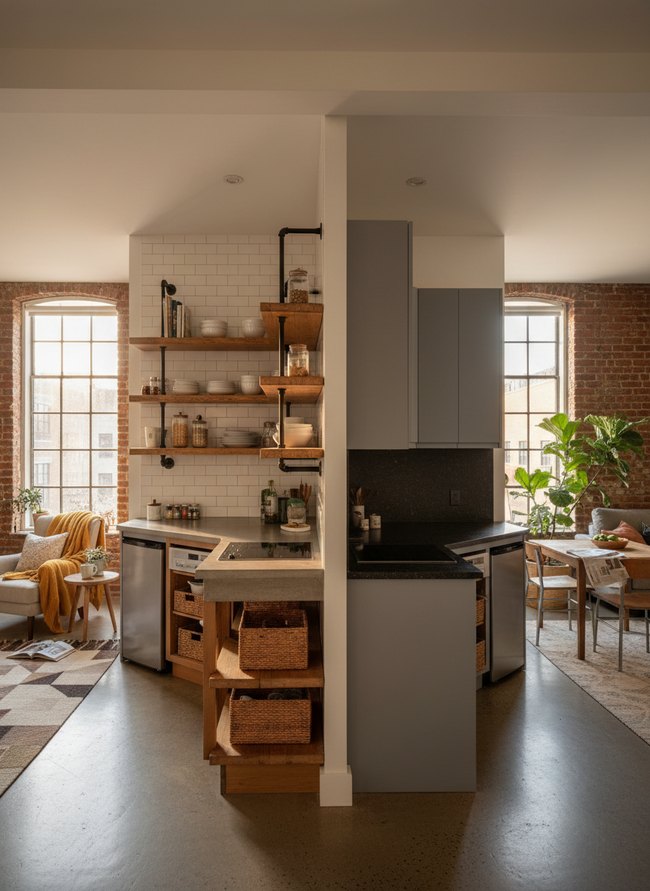
A narrow white wall divides two compact kitchen styles. Open shelving, crafted from honey-toned wood and black metal pipes, displays white bowls and glass jars on the left. Closed gray cabinets with black countertops on the right offer a different look. Open shelves allow easy access to dishes; closed cabinets hide kitchen clutter.
5. Scandinavian Space Efficiency Draw
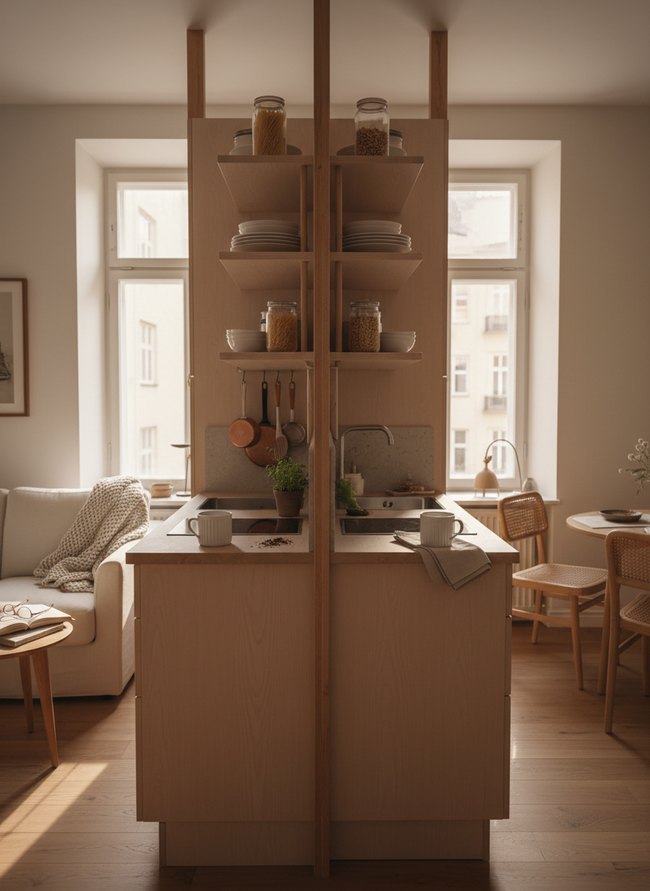
A tall, light wood shelving unit divides the room, showcasing white plates and glass jars of pasta. The clever design creates two distinct living zones within a small home, offering both an open and closed kitchen feel. Consider using a similar half-wall structure to define your own spaces without blocking natural light.
6. Coastal Cottage Cabinet Dilemma
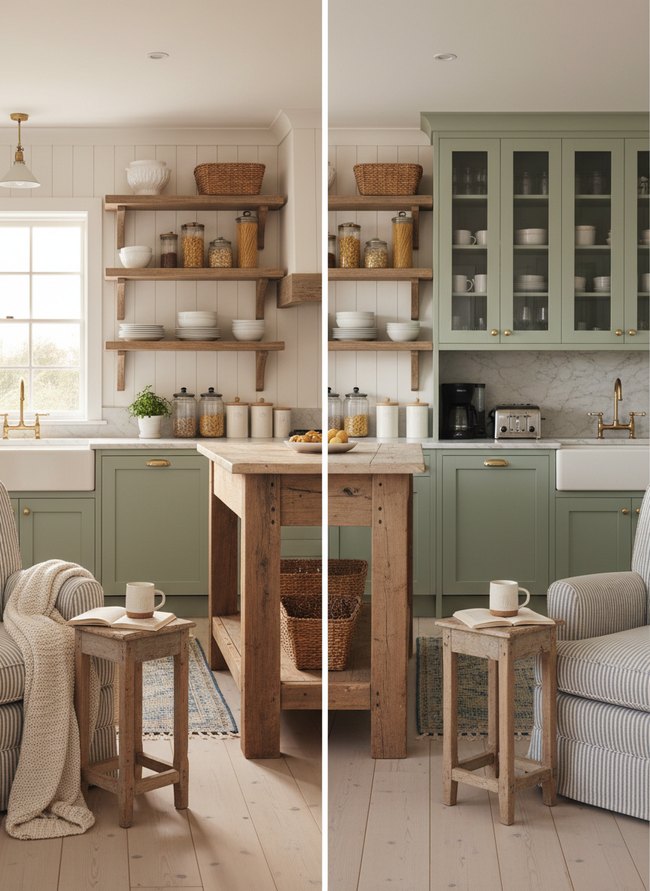
A solid wooden island sits in the middle of a cozy kitchen, dividing the space in two. Open wooden shelves on the left side display white dishes and glass jars of dry goods. Glass-fronted green cabinets on the right side offer a tidy view of similar kitchen items. Open shelves create a casual feel, while closed cabinets provide a cleaner look in a tiny kitchen.
7. Urban Micro Kitchen Strategy
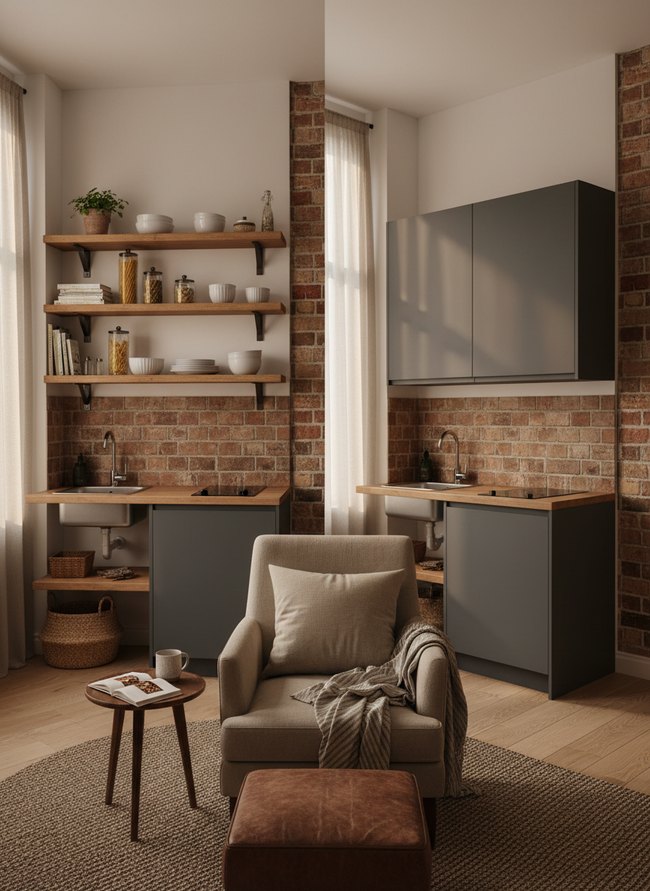
Three honey-toned wooden shelves hold white bowls and glass jars against a rough red brick wall. Charcoal gray base cabinets with light wood countertops offer a clean, modern contrast to the exposed brick. Open shelving keeps the kitchen feeling light and airy; avoid closed upper cabinets for a more spacious look.
8. Eclectic Boho Storage Showdown
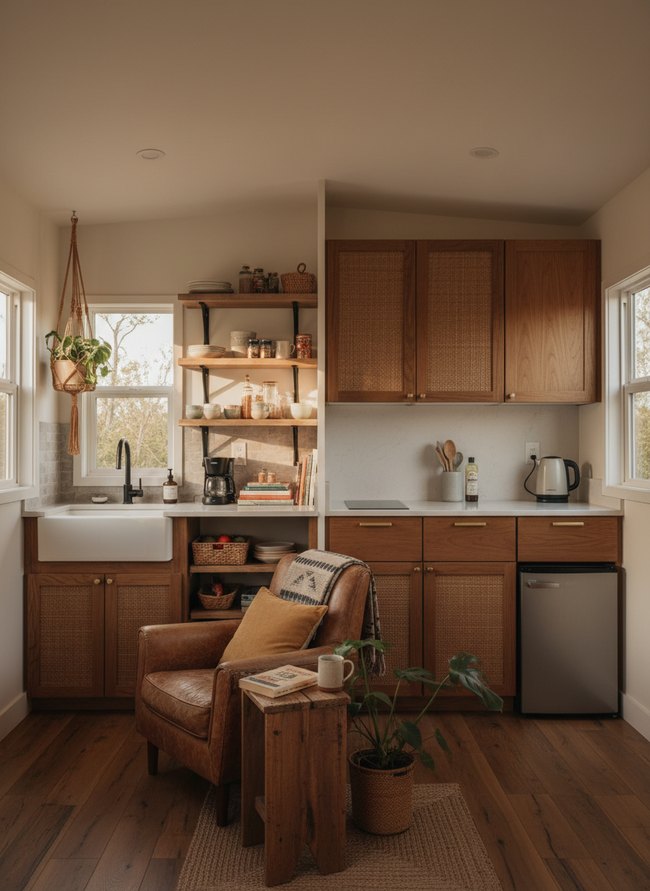
Wooden open shelves show off neatly stacked white dishes and glass jars. Woven cane cabinet fronts hide kitchen items, providing a clean, uncluttered look. Mixing both open and closed storage creates a balanced look in a tiny kitchen.
9. Transitional Style Open Closed
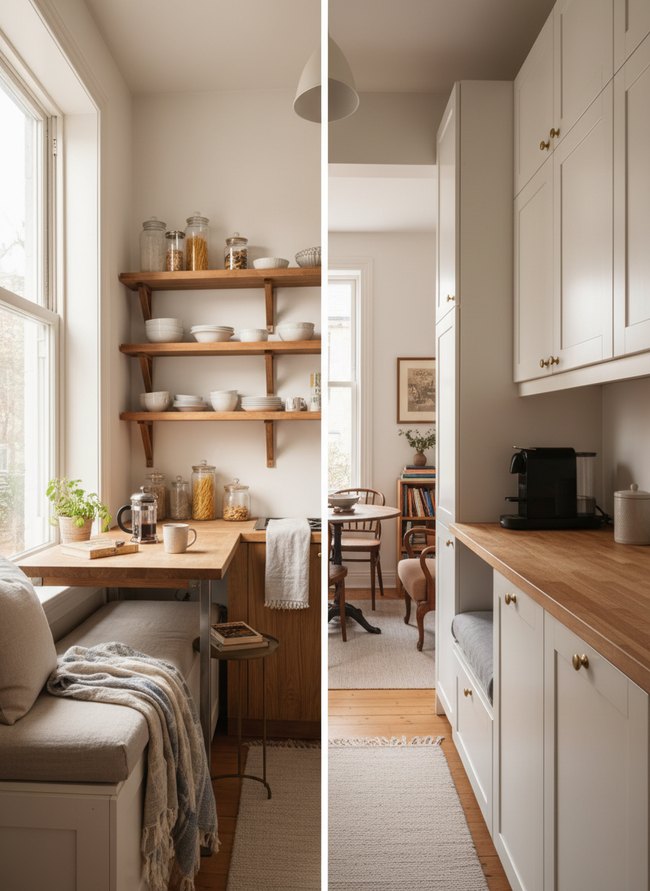
Pale white cabinets with brass knobs line the right wall, offering a clean, uniform look. Natural oak shelving on the left holds white ceramic dishes and glass jars, creating an airy display. Mixing open and closed storage showcases decorative items while hiding less attractive kitchen tools.
10. Contemporary Sleek Configuration
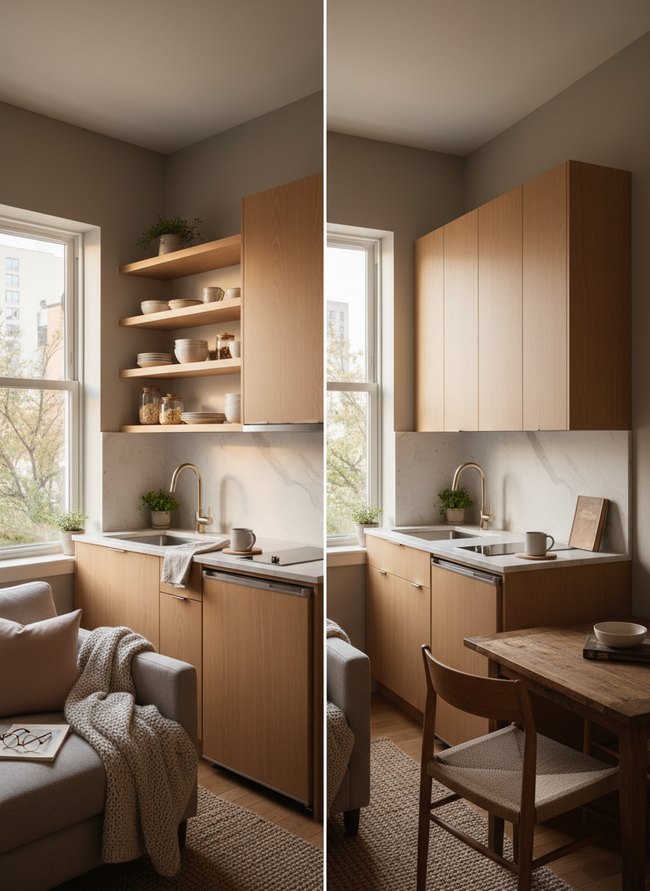
The left side shows wooden floating shelves, displaying ceramic dishes and glass jars. A tiny kitchen stays clean with matching items. Closed wooden cabinets provide a uniform appearance, as seen on the right side.
11. Shaker Tiny Kitchen Contrast
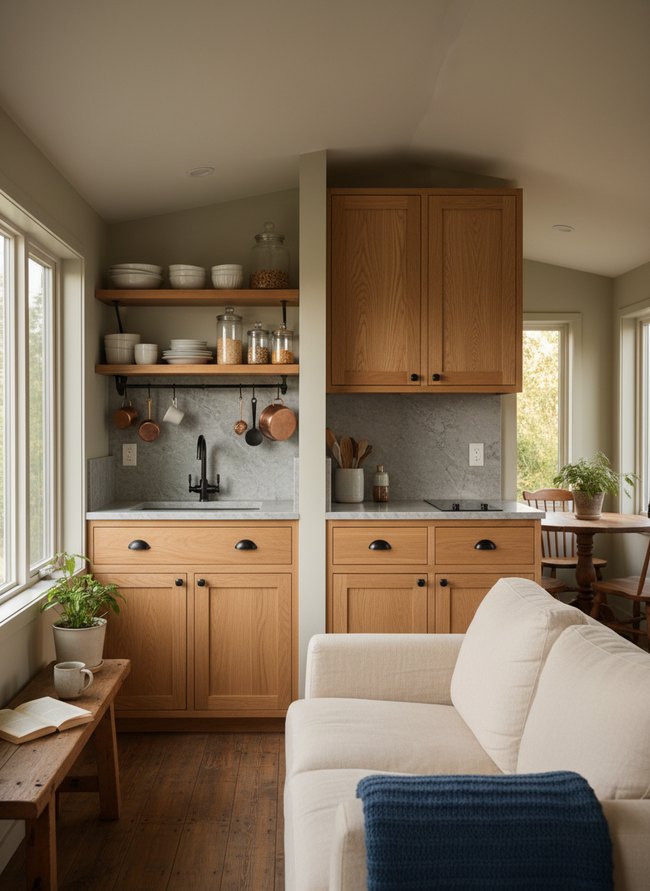
Warm wooden shaker cabinets with black cup pulls line the right wall. Natural light washes across the open wooden shelves on the left, displaying white ceramic dishes and clear glass jars. Mixing closed cabinets and open shelving keeps the tiny kitchen feeling airy yet organized.
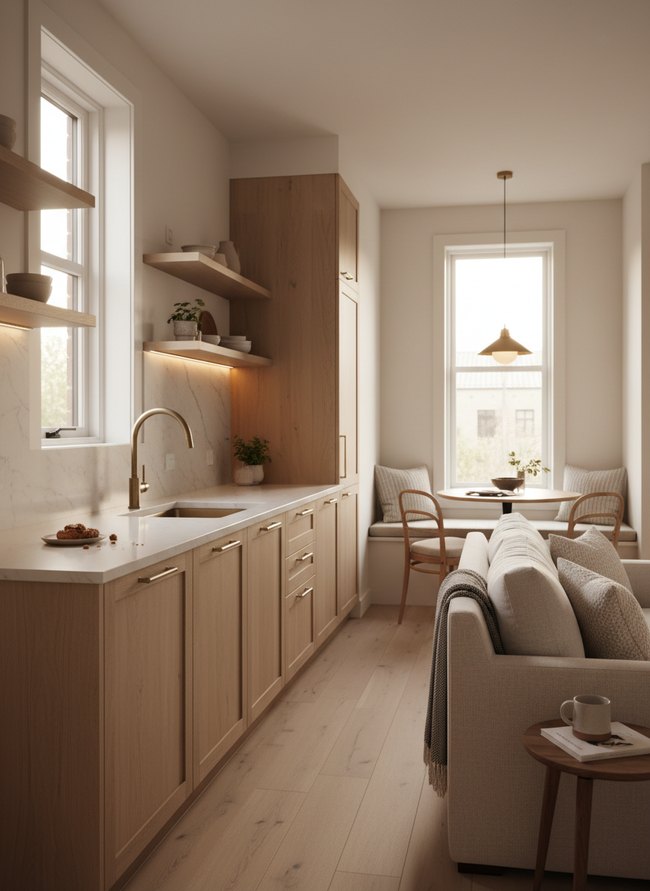
12. Minimalist Efficiency Design Faceoff
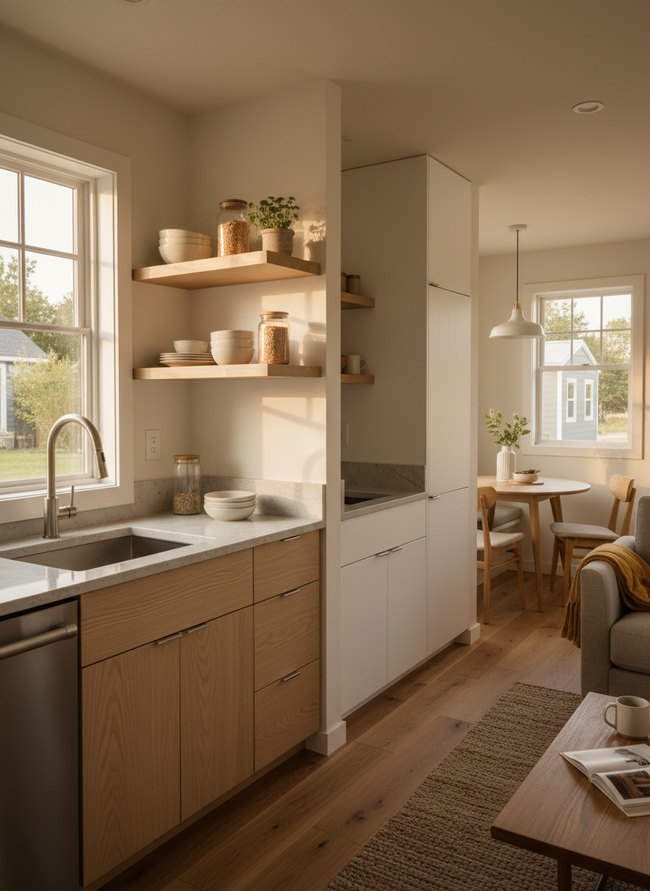
Light oak open shelves above a white quartz countertop offer an airy, accessible storage solution. The kitchen cabinets below feature light oak flat-panel doors and drawers, creating a clean, modern base. Open shelves display dishware, and closed cabinets hide less attractive items in the tiny kitchen.
The Dirty Little Secret: How Much Dust Will My Open Shelves Really Collect in a Tiny Kitchen?
Many folks fret over dusty white ceramic plates on open shelves. Most people imagine a thick, gray fuzzy blanket covering every item in their small kitchens. You have likely heard tales of constant wiping. These stories paint a grim picture, but the truth is far less dramatic.
Open shelves in small spaces surprisingly stay cleaner than you think. Airflow is a big factor. Still, some items gather more dust than others. Most homeowners place rarely used serving bowls on high, dusty oak shelves. Instead, put your daily coffee mugs and colorful etched glass tumblers where you grab them often. High-traffic items resist dust buildup because you move them frequently.
Dust particles settle where air stands still. A solid wood cutting board tucked into a corner will collect dust. Therefore, store less-used items inside a closed, lower cabinet. Your grandmother’s antique silver sugar bowl might belong behind a frosted glass door. Wipe down your accessible, daily-use items once a week. This quick clean keeps surfaces bright and your tiny kitchen sparkling.
Stop Hiding: Smart Styling for ‘Ugly’ Essentials on Open Shelves (Think Cereal Boxes & Tupperware)
Many people believe cereal boxes and plastic containers must hide in a dark pantry. Most homeowners tuck away their colorful plasticware and cardboard boxes. Smart stylists know better. You can place those everyday items on open wood shelves.
First, remove cereal from its original cardboard box. Pour the cereal into a clear glass jar with a metal lid. These tall, clear jars let you see the oats inside. Group several same-size jars together on a top shelf.
Next, stack your plastic food containers. Many people just toss colored plastic tubs into a cupboard. Instead, use a deep woven basket, like a honey-toned wicker basket, to hold all the plastic lids. Keep the plastic bases nested together, perhaps in a lower cubby. A sturdy wire rack can hold cutting boards upright.
Glass jars make a difference. Dried pasta transforms into a kitchen decoration in a wide-mouth glass container. A small ceramic bowl can hold tea bags. Decant your cooking oils into slender glass bottles with metal pourers. These small swaps turn common kitchen items into visual features on your open shelves.
Which Idea Will You Try First?
That’s 12 different takes on open vs closed tiny kitchen. The best ideas above are usually the smallest moves — one material, one layout shift, one piece of furniture in the right place. Pick whichever room feels closest to your space and start there before tackling the rest.
Found an idea worth keeping? Save this post to your Pinterest board so it’s waiting for you when you’re ready to start your own project.