17 Tiny Loft Bedroom Stairway Designs (With Storage)
Compact living offers bright freedom, but a small footprint demands clever planning for every cubic inch. A robust oak ladder provides quick vertical access, yet a wider staircase offers more comfortable foot placement. Property owners seek ways to save floor space without losing storage capacity. A design must balance easy movement with hidden compartments for linens or books. Each tiny loft stairway presents a unique solution to these everyday challenges. A solid maple staircase might feature deep pull-out drawers on each riser. A steel spiral with open treads feels more airy. Your decision shapes how you use the compact home each day. These 17 designs help you choose your path.
1. Compact Drawer Stairway
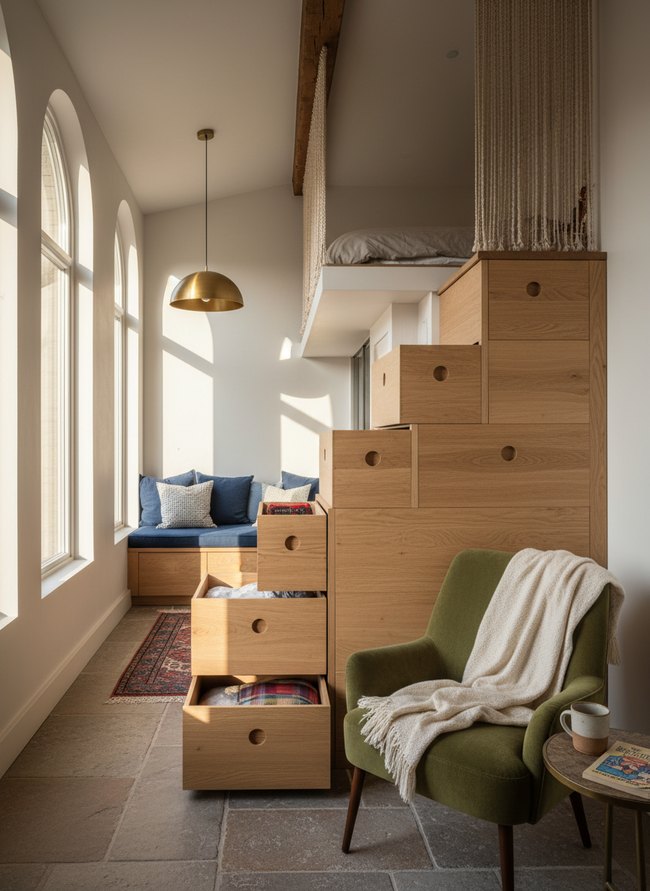
Blonde wood drawers stack upward, forming a tiny loft stairway with hidden storage. The compact stair-cabinetry combination gains valuable floor space. A soft green armchair sits nearby, offering a cozy reading spot.
2. Modular Cube Loft Steps
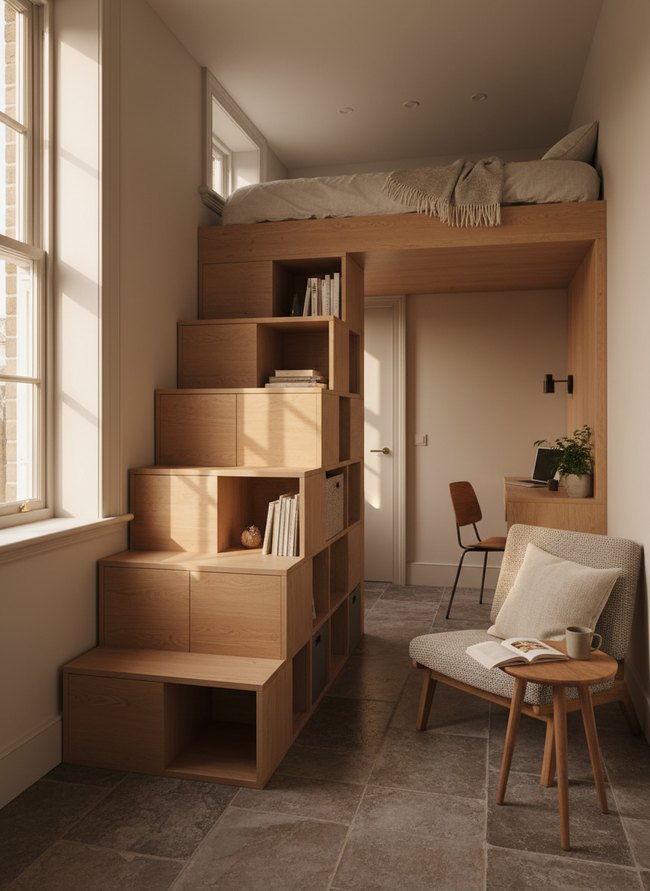
Light blonde wood forms a modular cube stairway, each step a storage compartment. The loft stairway provides significant storage space, surrendering a traditional open stair railing. A gray armchair sits on the dark flagstone floor, inviting you to relax beside the warm wooden unit.
3. Pull-Out Tread Staircase
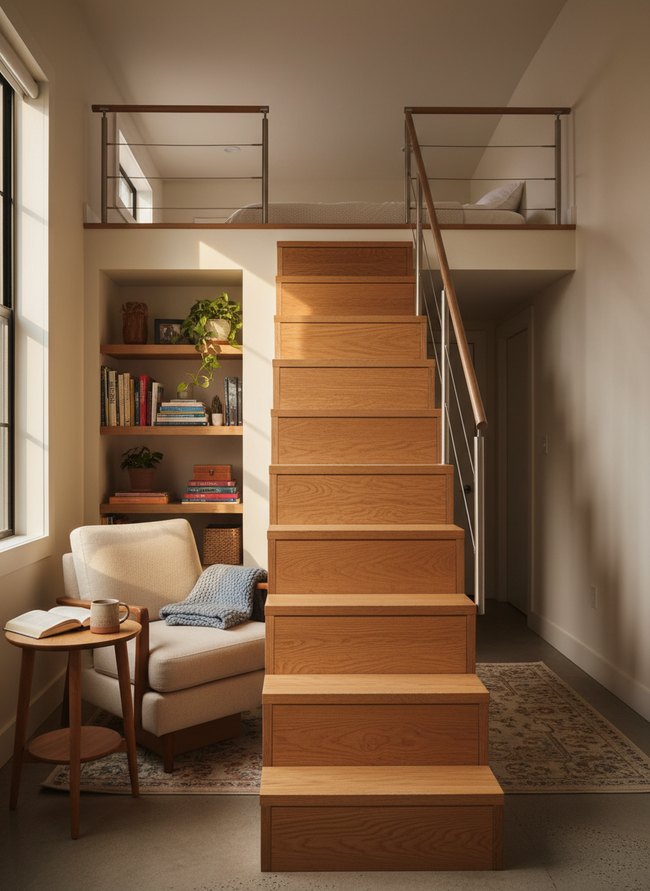
Warm oak treads rise in a clean, solid block, creating a tidy visual line. Each wooden stair offers hidden storage, pulling out like a drawer to tuck away clutter. The staircase gains significant storage space over open risers, but trades away a light, airy feeling in the room.
4. Hidden Compartment Ascent
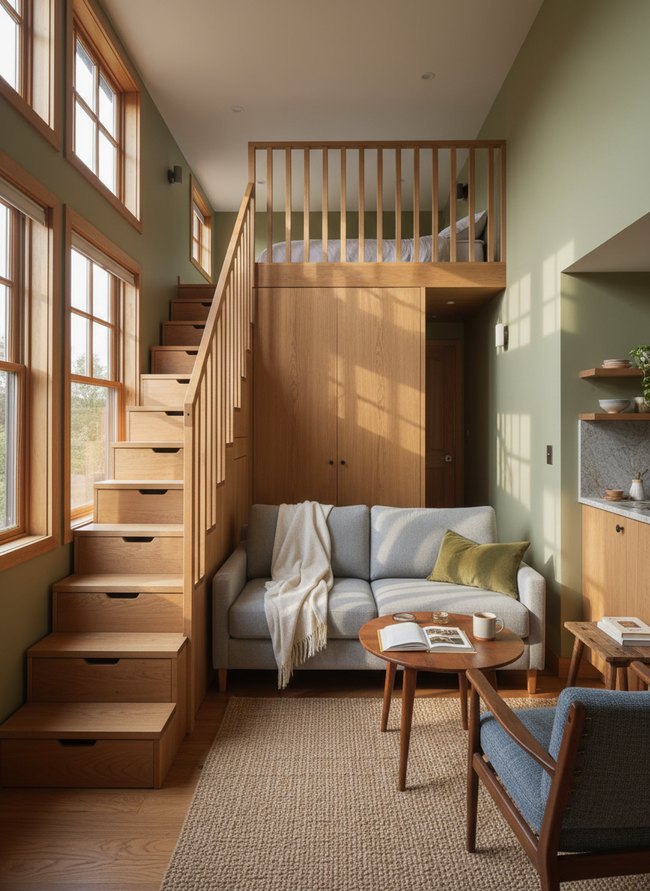
Solid oak stair treads with subtle dark pulls create a stacked drawer system. Each drawer offers convenient storage, trading open display for concealed organization. Light green walls and a gray fabric sofa provide a calm backdrop to the warm wood tones.
5. Vertical Cabinet Loft Stairs
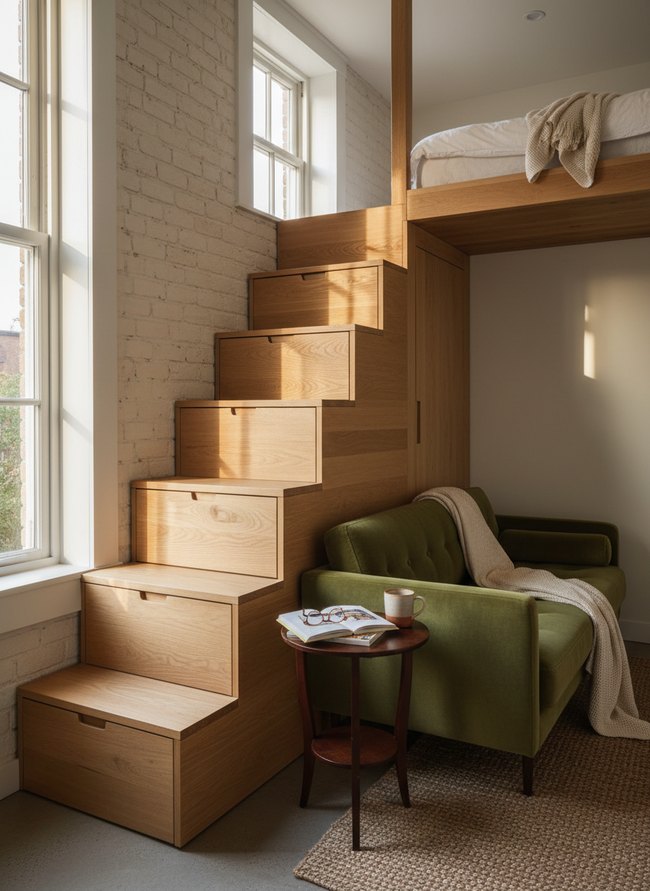
Light oak drawer fronts stack upward, forming a tiny loft stairway with hidden storage. The design choice provides ample concealed space, but the staircase sacrifices open risers for a more solid, blocky appearance. A green velvet sofa rests alongside the stairs, offering a soft seating area below the elevated sleeping platform.
6. Floating Box Stair Unit
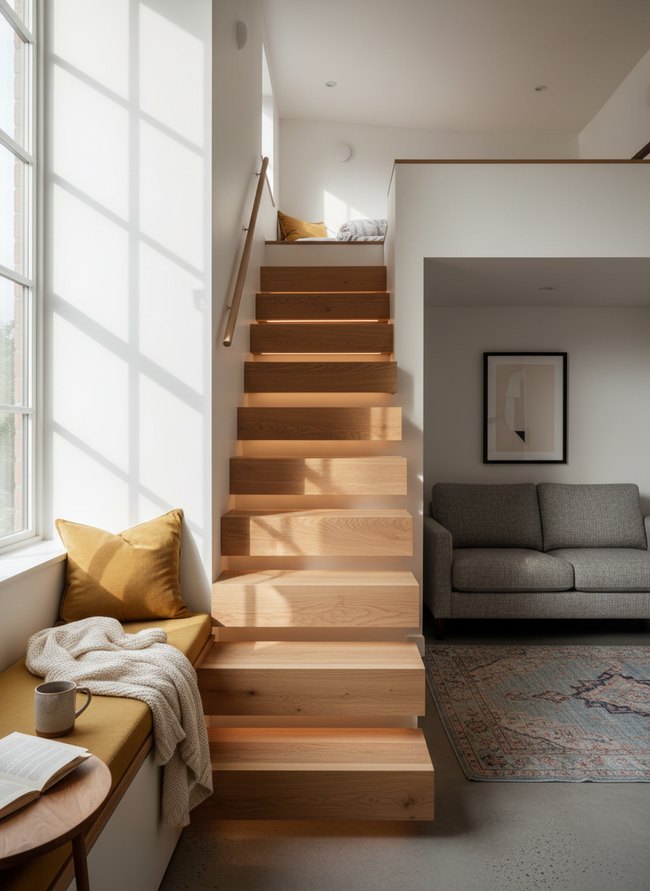
Blonde oak stair treads extend from the white wall, creating a clean, floating effect. Each wooden tread features a recessed light strip, illuminating the path upward. The tiny loft stairway maximizes open space while providing warm, functional light.
7. Folding Stair Storage
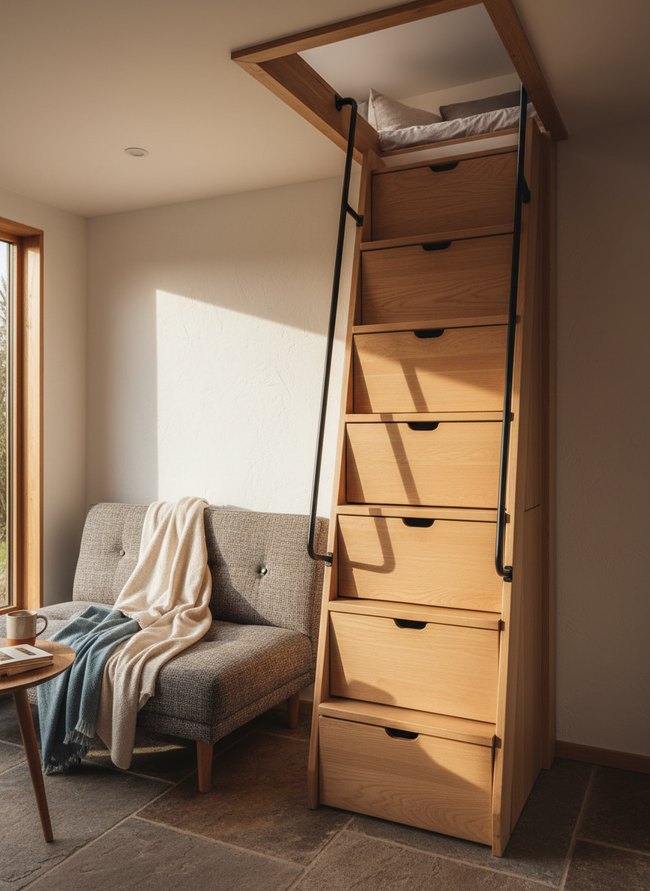
Light-toned oak wood drawers stack vertically, forming a sturdy ladder with six storage compartments. Black metal handrails provide a secure grip, contrasting with the warm wooden surfaces. The tiny loft stairway maximizes floor space, trading away traditional open steps for concealed storage.
8. Rolling Ladder Access
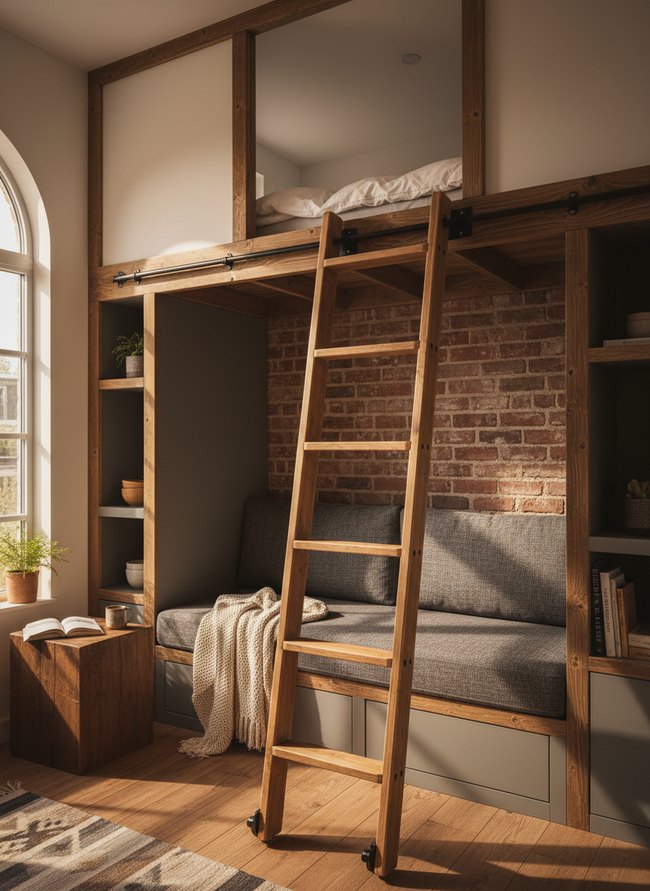
A tall wooden ladder with small black wheels rests against a dark metal rail. The rolling ladder provides flexible movement to the sleeping loft overhead. Open floor space is gained when the ladder rolls away.
9. Bookcase Loft Ladder
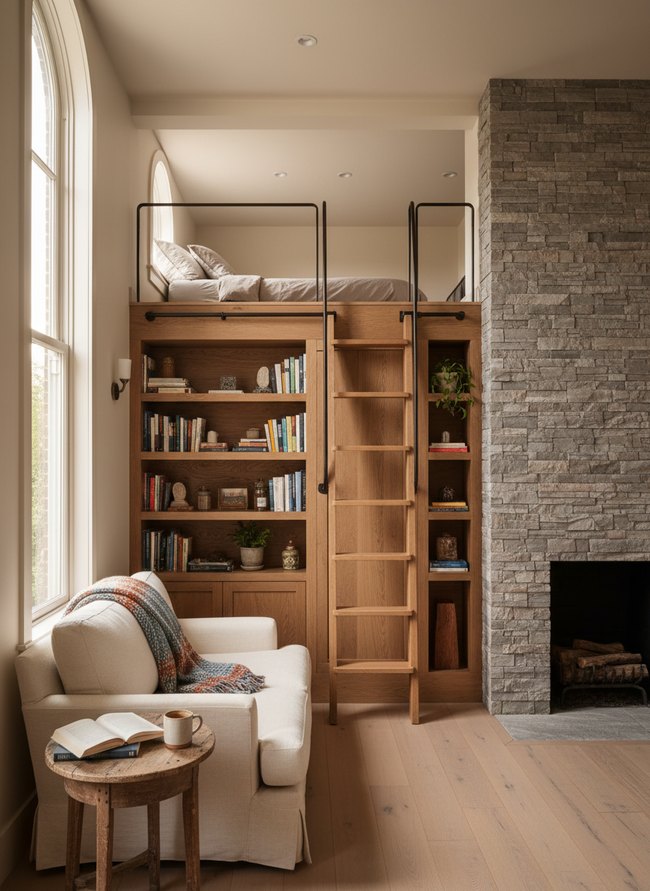
A blond wood bookcase ladder offers a clever way to reach your sleeping loft. The tiny loft stairway blends into the warm oak shelving unit, giving you storage over open steps. The shelving unit provides valuable shelf space but sacrifices a continuous handrail.
10. Angled Storage Stairway
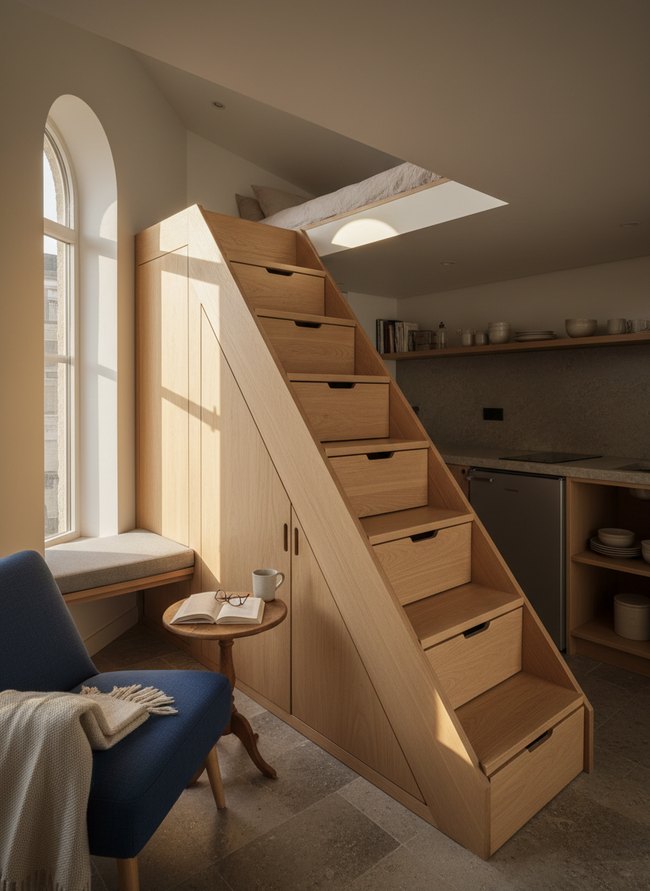
Blonde wooden stairs rise from the gray stone floor, each tread a deep drawer. The tiny loft stairway gains ample storage capacity, trading traditional open risers for hidden compartments. A small wooden table and a blue fabric chair sit nearby, offering a comfortable reading spot.
11. Basket Pullout Steps
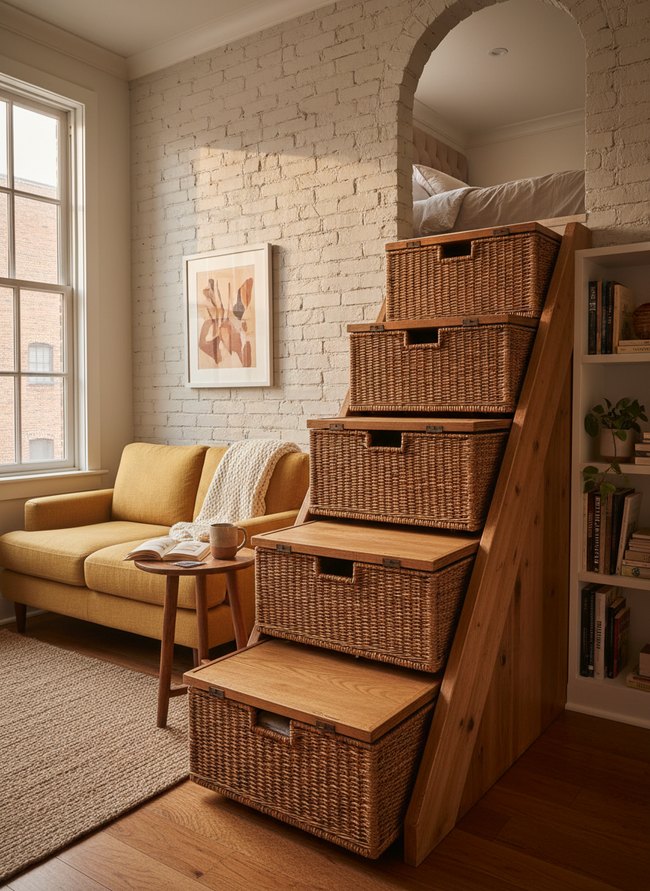
Woven wicker baskets form sturdy stair treads, offering abundant storage space within a small footprint. The tiny loft stairway design provides concealed organization, trading away open, airy stair risers. A soft yellow sofa sits nearby, inviting relaxation beside the warm wooden tones.
12. Integrated Desk Stairway
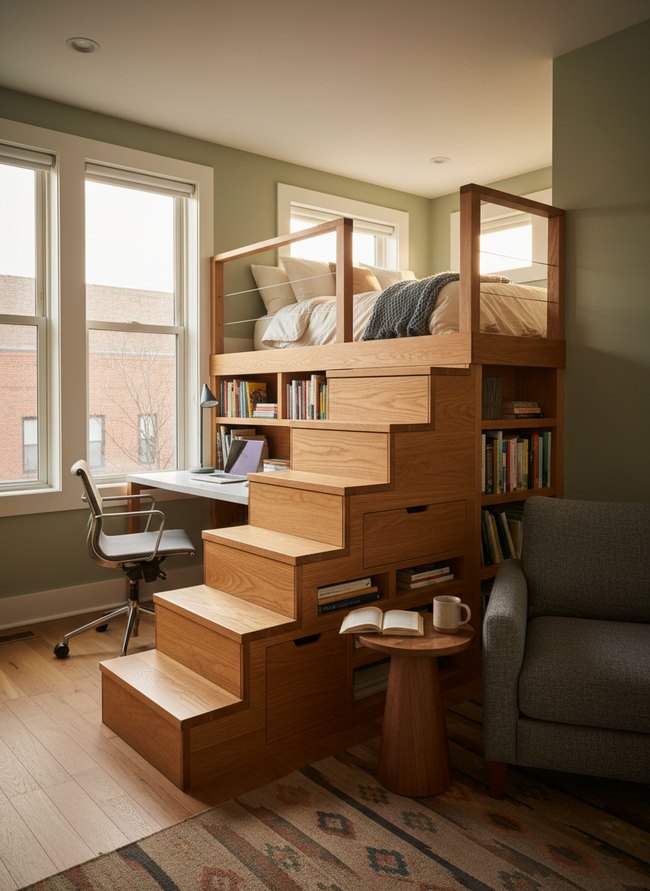
Light oak stair treads rise to a loft bed; each tread pulls out as a deep drawer. A white desk surface tucks under the second stair, offering a compact workspace in the tiny loft stairway. The stairway gains significant storage and a dedicated work area, but it trades away open floor space.
13. Geometric Storage Stairs
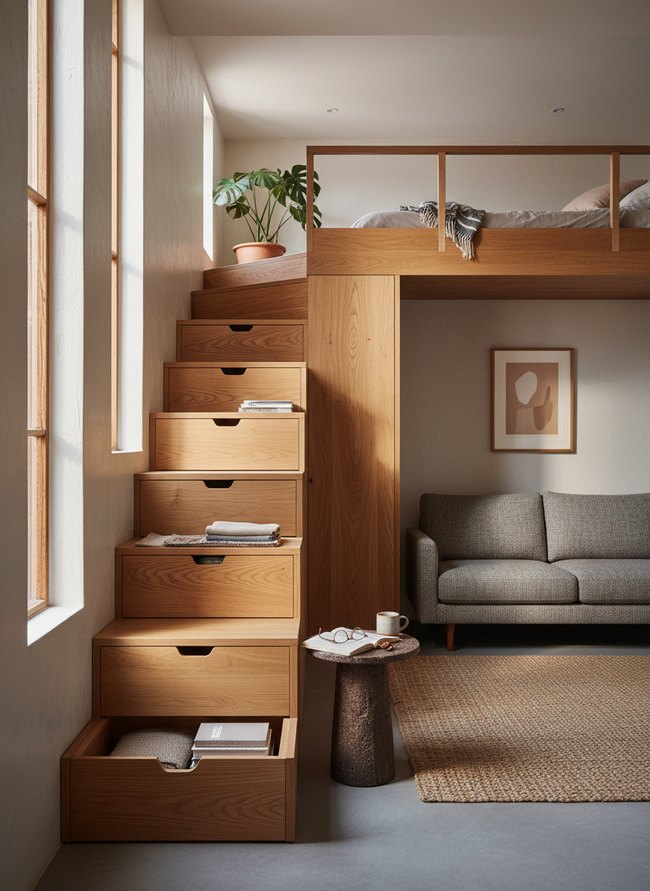
Blonde oak steps ascend to a sleeping loft, each step a deep drawer. The geometric stairway provides ample storage, sacrificing visual lightness for practical volume. A tall wooden wardrobe stands beside the steps, offering more concealed space.
14. Spiral Shelf Loft Ascent
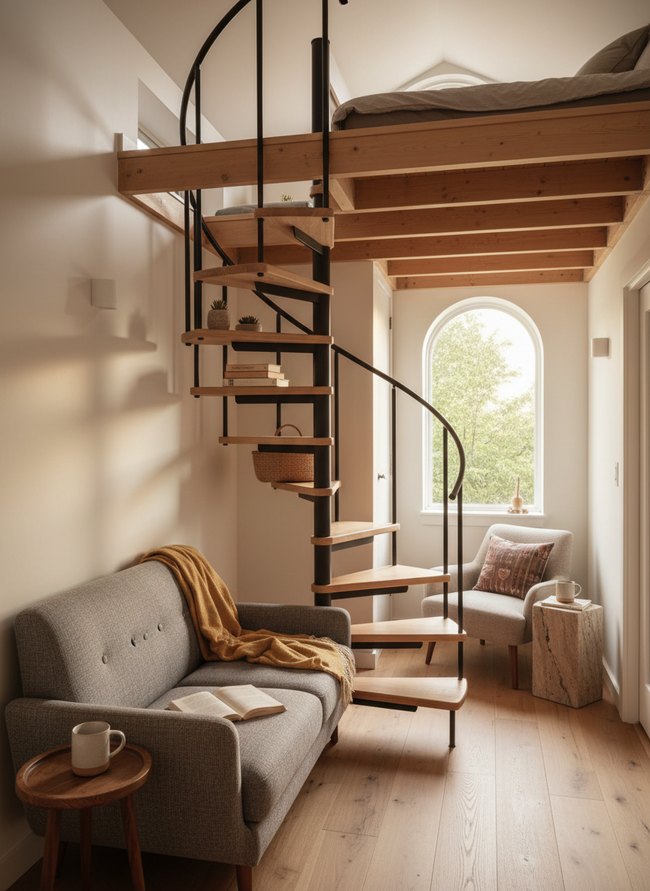
Black metal spindles form a tight spiral, supporting light wood treads that ascend to a loft bed. The compact design gains floor space, sacrificing a traditional staircase’s broad steps. Small succulents and a woven basket rest on wooden shelves integrated into the stair’s central pole, offering natural decor.
15. Custom Unit Stair Design
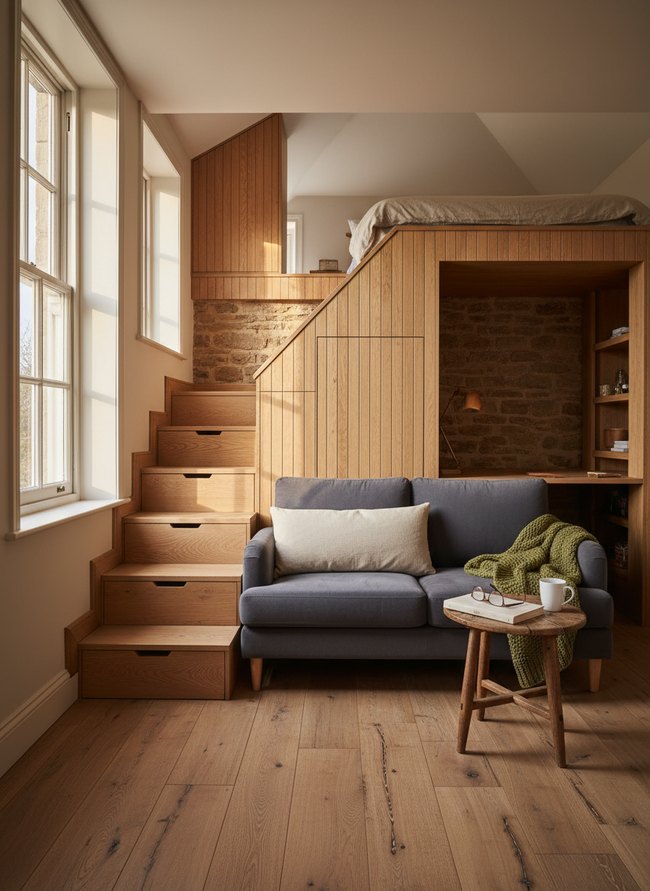
Light oak treads rise with built-in drawers, giving hidden storage at each step. The tiny loft stairway design blends seamlessly into the room’s warm wooden panels. Integrated drawers provide ample organization, exchanging open floor space for smart, concealed compartments.
16. Industrial Drawer Loftway
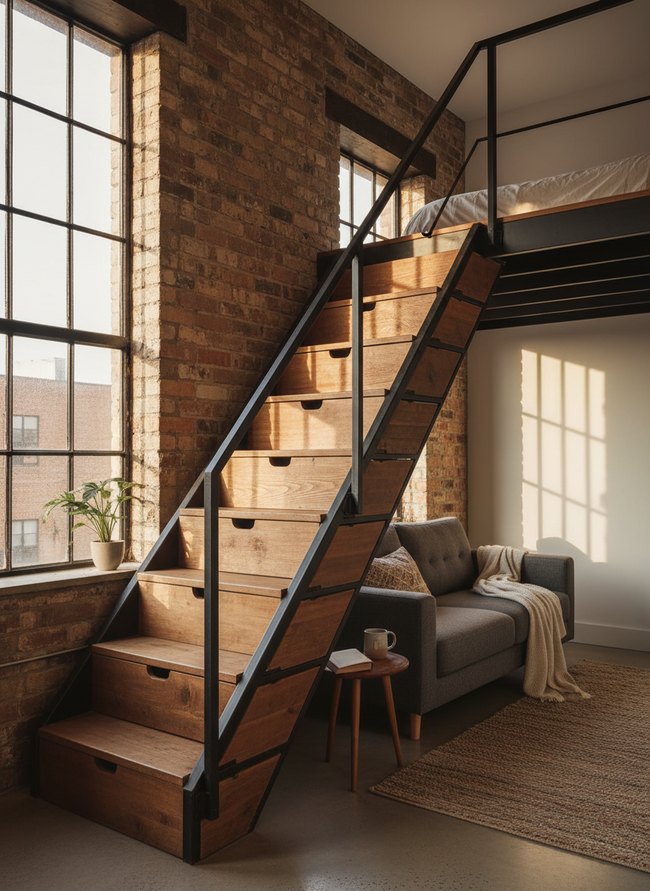
Oak wood steps with dark steel frames present a strong, functional profile. Each wooden stair tread conceals a deep pull-out drawer, giving you hidden storage space. A charcoal fabric sofa with a cream knit throw sits below the loft bed, offering a cozy seating area.
17. Minimalist Box Tread
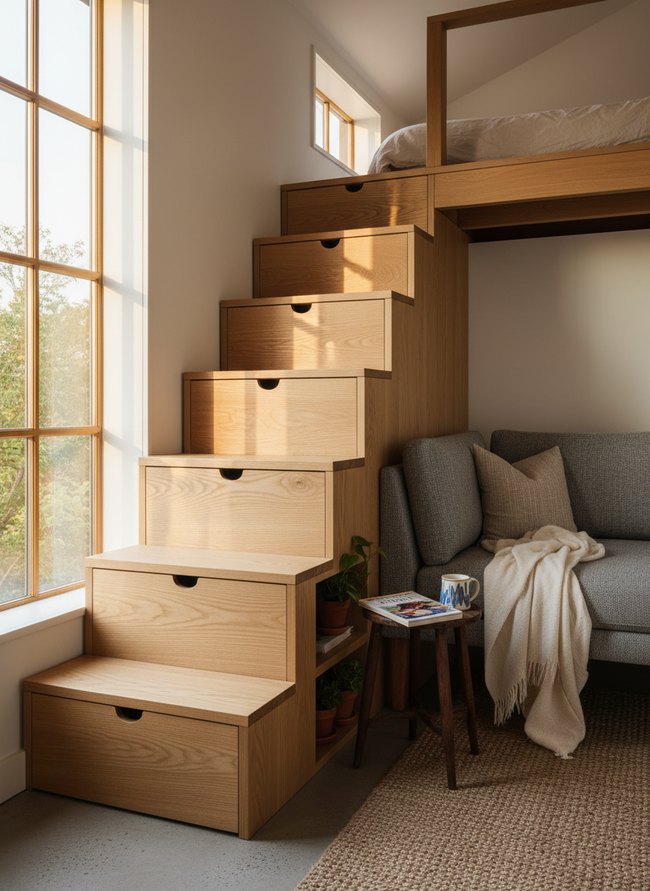
A tall wooden stack of six light oak drawers rises beside a large window. Each drawer face becomes a stair tread, offering storage in a compact footprint. The clever stairway offers space-saving design, trading open stair railings for solid wood panels.
Should I Prioritize Drawers or a Closet Under My Stairs?
Your small space needs careful planning. Deciding between built-in drawers or a hidden closet under your loft stairs requires thought. Deep drawers offer quick access to folded clothes or flat linens. Shallow drawers separate small items like socks or belts. A narrow closet, however, swallows bulky items.
Heavy winter coats hang wrinkle-free. Vacuum cleaners fit inside with ease. Drawers consume more precious floor space when pulled open. Each drawer front adds a visual break to the wooden stair design. A single closet door presents a cleaner, continuous wall surface. Opening a closet door needs less clearance than pulling out multiple wide drawers.
Choose drawers if you store many small, everyday objects. Your daily routine benefits from easy reach. A closet works better for seasonal gear or awkward household tools. Large items disappear behind a single hinged panel. Consider your most frequent storage demands. Your tiny home will feel much bigger with smart choices.
Is a Ladder or a Compact Staircase Better for Daily Use?
Choosing between a fixed wood ladder and a small spiral staircase requires careful thought. A straight ladder, built from sturdy oak, saves considerable floor space in a tiny home. However, climbing down a steep ladder with a morning coffee mug proves challenging. Your hands stay busy gripping the smooth wood rungs.
A compact staircase offers easier foot traffic. Stair treads, crafted from dark stained maple, provide stable platforms for each step. Moving laundry baskets or a plush bedspread up to a loft bedroom becomes simpler with a handrail. However, a spiral staircase, with its winding metal frame, demands more square footage from your living area. That extra footprint takes away from other furniture placements.
Select a fixed ladder if maximizing open floor space remains your top priority. This choice suits agile individuals with good balance. Pick a compact staircase if daily ease of movement and carrying items outweigh floor plan constraints. A small staircase works well for families or those valuing convenience over extreme space saving. The right stairway design enhances your daily living experience.
Which Idea Will You Try First?
That’s 17 different takes on tiny loft stairway. The best ideas above are usually the smallest moves — one material, one layout shift, one piece of furniture in the right place. Pick whichever room feels closest to your space and start there before tackling the rest.
Found an idea worth keeping? Save this post to your Pinterest board so it’s waiting for you when you’re ready to start your own project.