10 Best Daybeds That Work as Tiny Home Beds
Small floor plans demand clever furniture choices, making a tiny home daybed a smart option. Homeowners gain valuable open space by choosing a compact piece, but they might give up sprawling sleep surfaces. Natural light from a nearby window bathes a honey-toned wooden frame, offering a cozy spot for daytime reading. Each specific daybed design offers a different balance between generous seating and a comfortable sleeping area. A tailored mattress with crisp white sheets sits ready for use in a compact footprint. Daybed choices represent varied approaches to balancing comfort with efficient use of limited square footage.
1. Minimalist Nordic Sleeper Daybed
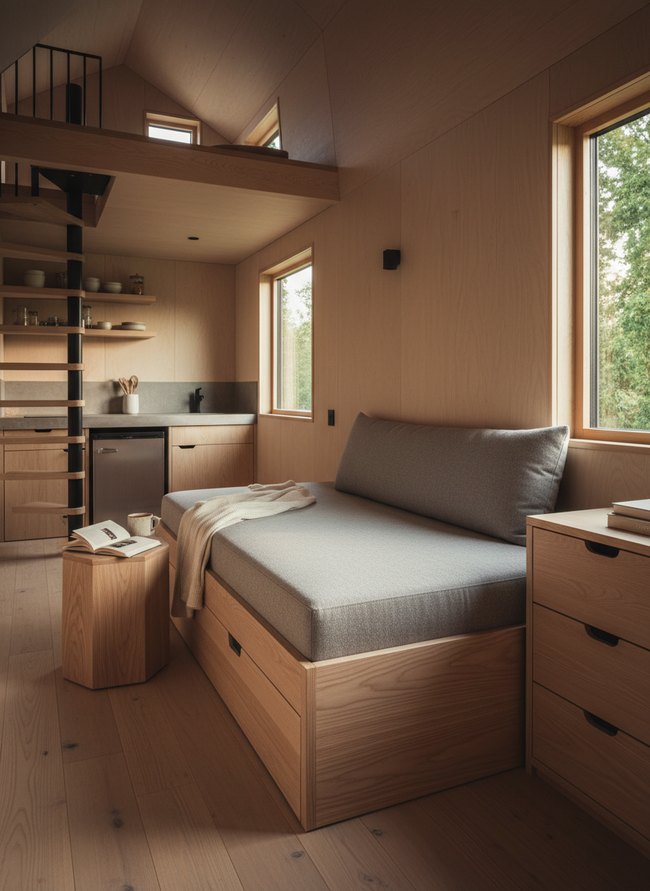
A light gray mattress offers a firm, low-profile sleeping surface, trading plush comfort for a streamlined look. Wooden drawers slide out from beneath the daybed, providing hidden storage inside the honey-toned oak frame. The simple design provides a clean aesthetic, trading ornate details for quiet utility.
2. Compact Storage Trundle Daybed
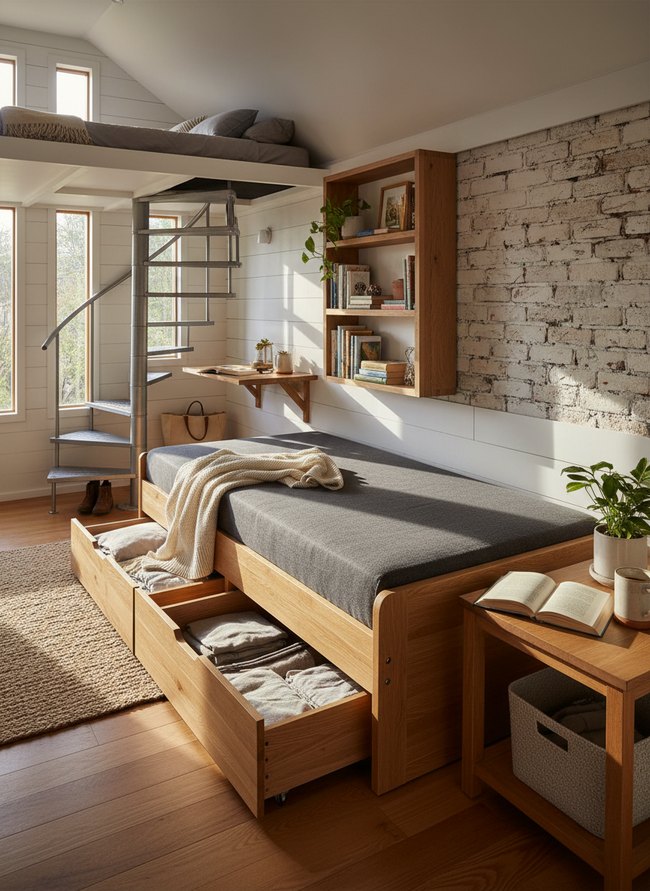
The light oak frame of the daybed offers a simple sleeping surface for one. Deep wooden drawers slide out from beneath the bed, holding folded linens, a practical choice for keeping clutter out of sight. The daybed gains valuable floor space, trading away the option for a wider, more traditional bed frame.
3. Modern Modular Corner Daybed
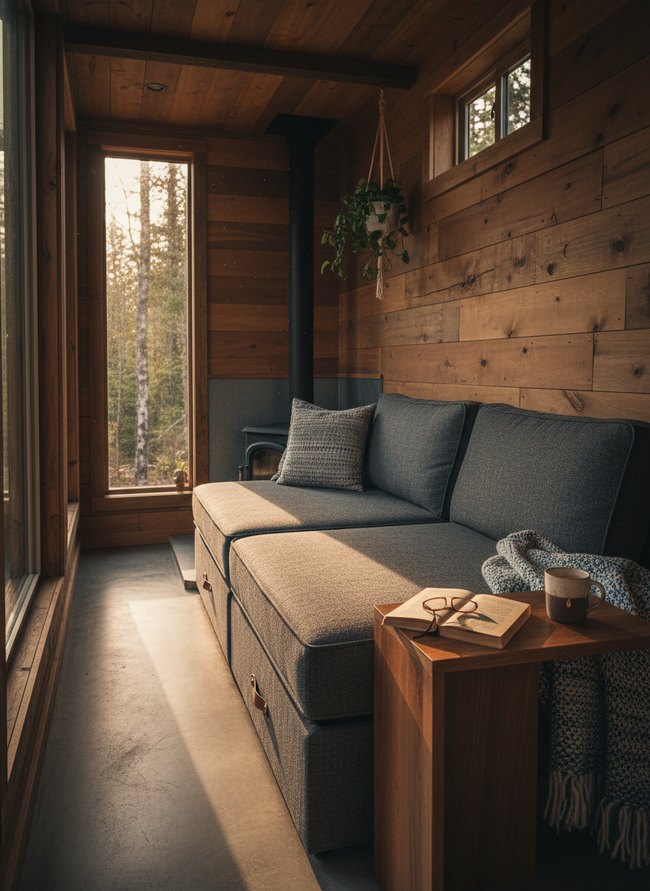
Gray woven cushions create a comfortable, low-slung seating area. A modular tiny home daybed offers flexible lounging over a traditional fixed sofa. Exposed wooden walls and a small black stove pipe suggest a rustic, warm interior.
4. Convertible Sofa Futon Daybed
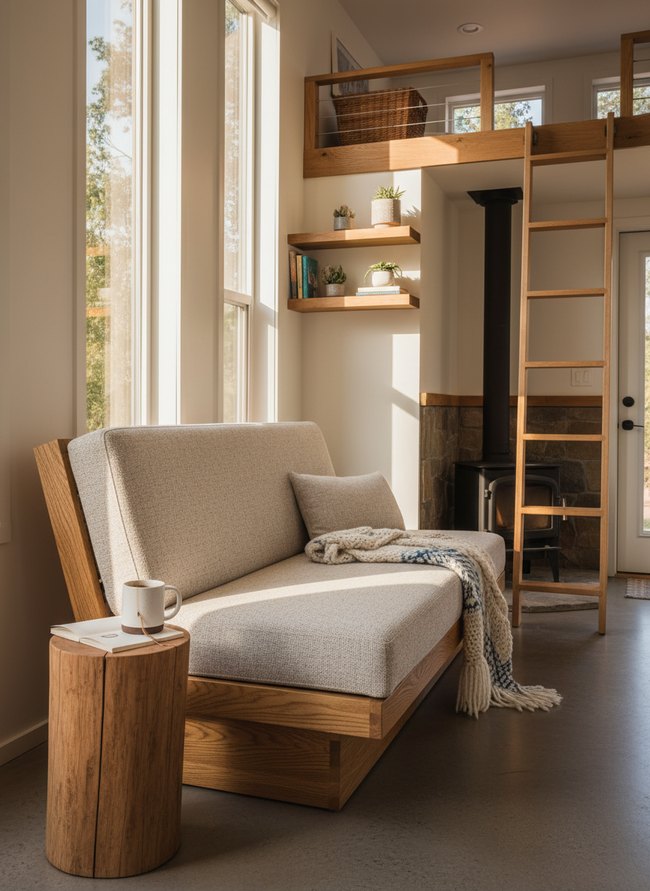
Beige upholstered cushions on the tiny home daybed offer flexible seating. The clean, light wood frame replaces a bulkier metal design, gaining warmth in the living space. A chunky knit blanket draped across the futon adds soft, inviting texture.
5. Rustic Farmhouse Studio Daybed
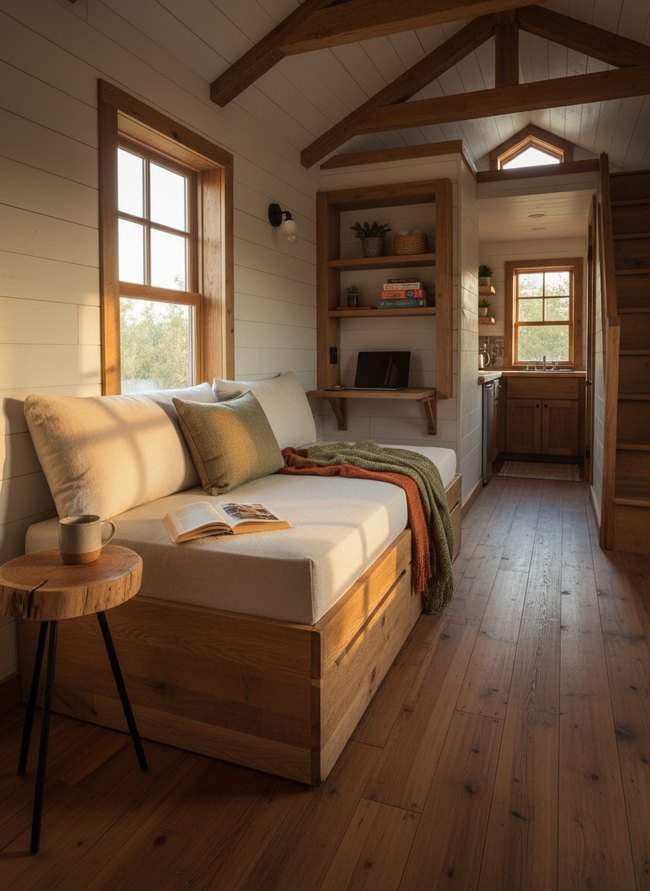
The light oak daybed offers a simple sleeping surface in a small space. Wood beams overhead create a cozy, enclosed feeling, while open plank floors stretch back to a small kitchen area. The daybed trades a larger bed for more walking room.
6. Industrial Metal Frame Daybed
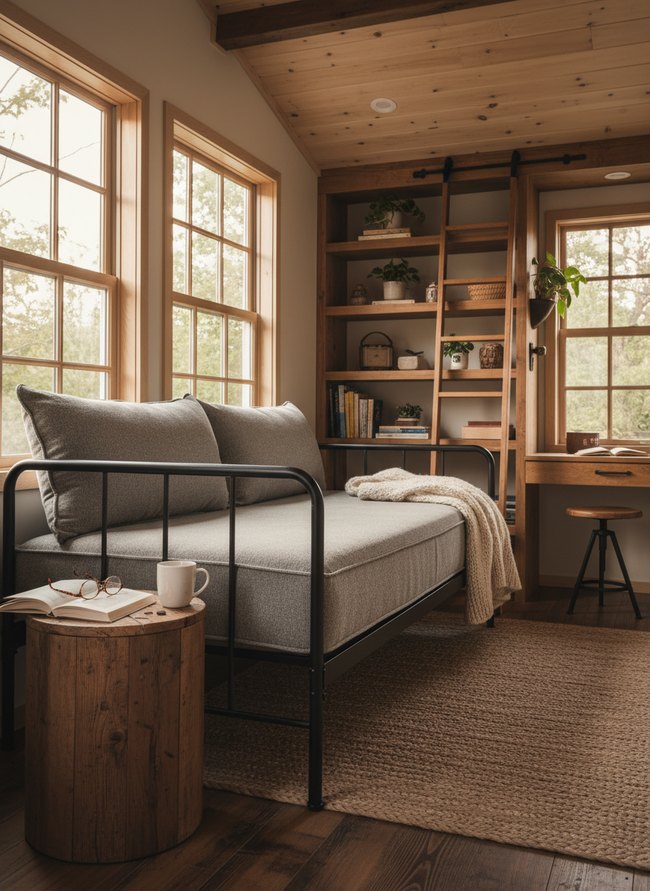
The black metal frame of the tiny home daybed offers a strong, simple silhouette. The metal frame prioritizes long-lasting support over a softer, upholstered look. Gray woven fabric cushions provide a comfortable surface for sitting or napping.
7. Bohemian Woven Rattan Daybed
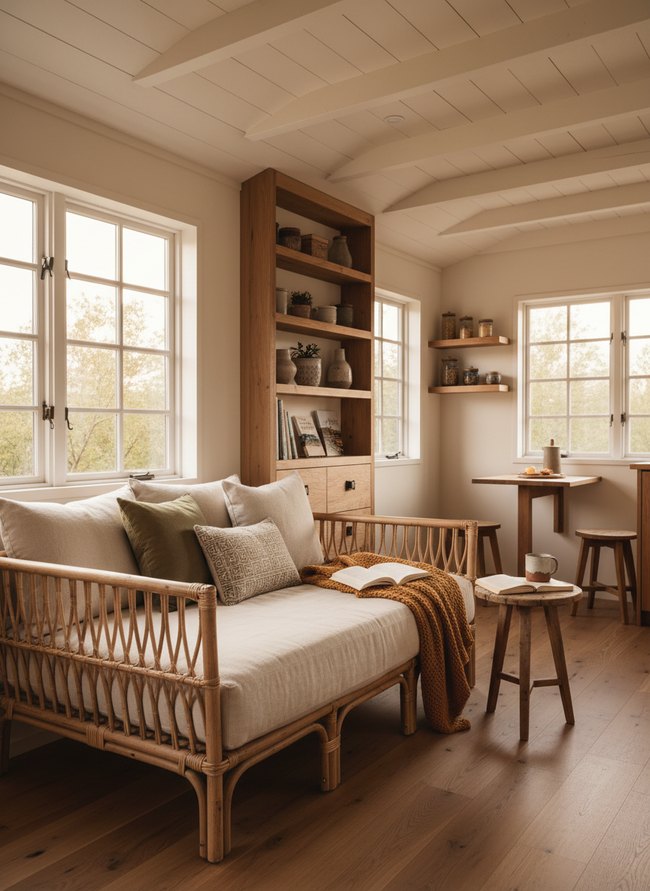
The light honey-toned rattan daybed offers a relaxed, open feel for your living area. A natural, woven frame trades some plushness for an airy aesthetic. A soft linen mattress and various cream and moss green pillows provide cushioned comfort, inviting you to unwind.
8. Mid-Century Wood Slatted Daybed
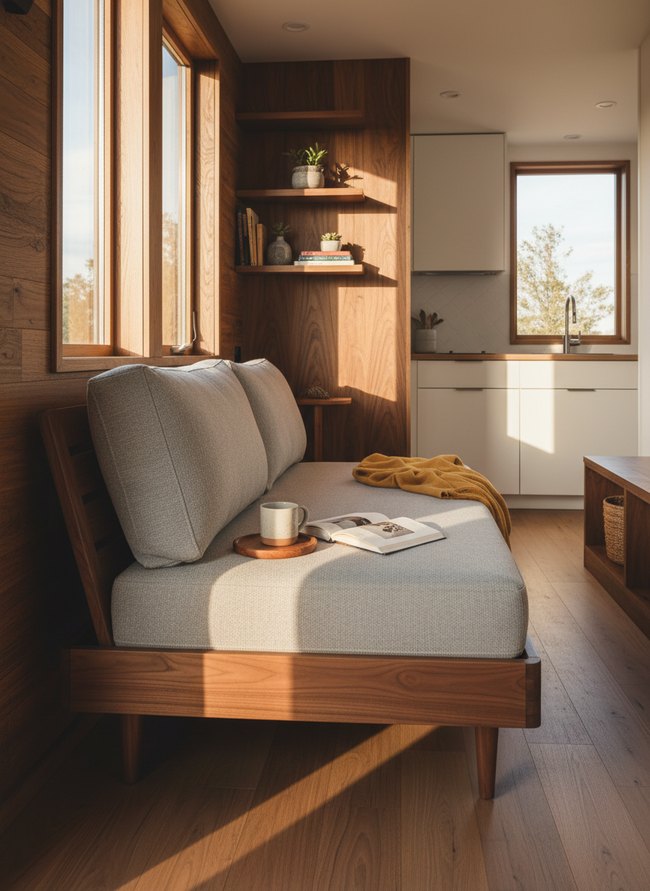
Light gray fabric cushions rest on a warm walnut wood frame. The daybed features minimalist lines for a small footprint, trading away plush bulk. Slatted wood backrests provide firm support against the vertical wood paneling, offering a compact tiny home daybed solution.
9. Floating Platform Reading Daybed
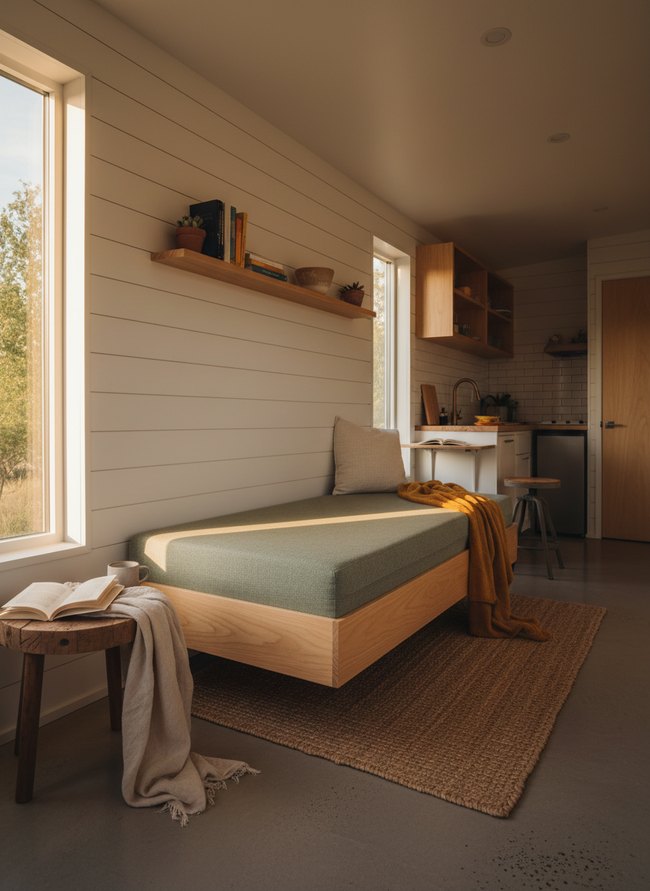
The light maple frame of the daybed appears to float above the gray concrete floor. The minimalist floating design trades under-bed storage for a clean, open look. A woven jute rug adds warm, earthy texture below the green upholstered mattress.
10. Space-Saving Wall-Mount Daybed
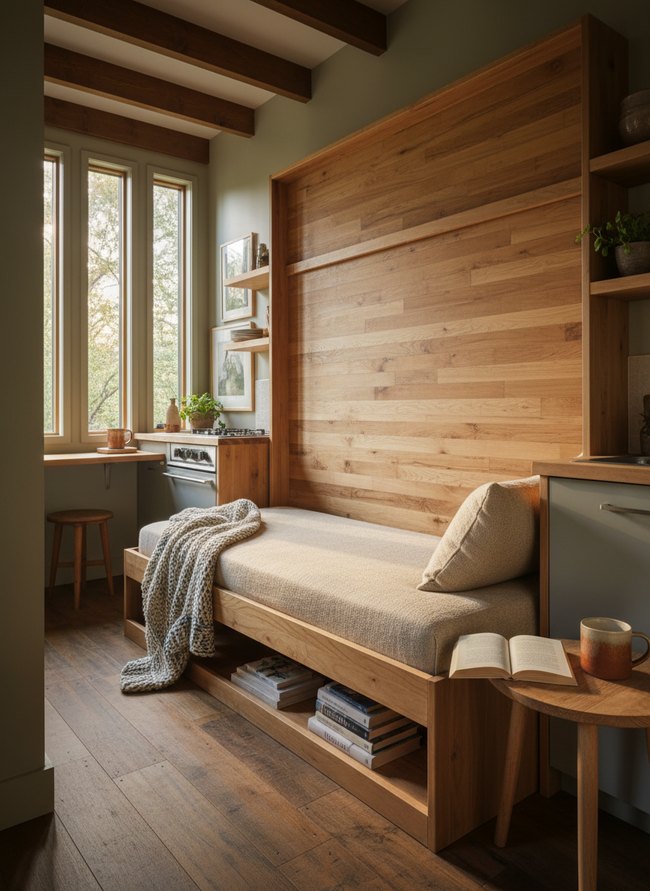
Light wood wall paneling rises vertically behind the beige upholstered daybed. The daybed offers a single sleeping surface, trading a full mattress for valuable floor space. Its wide wooden frame includes open shelves underneath for books and small items.
Sleeper Sofa vs. Daybed: Which Saves More Space (and My Sanity)?
Oak floorboards wait for either a folding couch or a single wooden frame. Folding couches offer seating for daytime guests on soft fabric cushions. Unfolding the frame into a bed needs clear floor space in front of the unit. Daybeds provide a permanent twin-sized mattress for sleeping. The back of a daybed often features a sturdy metal railing or a solid wood panel. You pull out a trundle bed from underneath for a second sleeper, and this action requires little extra room. Deep storage drawers sometimes replace the trundle. A sleeper sofa works better in a small living area that hosts many daytime visitors. Your tiny house benefits more from a daybed when sleeping arrangements take priority over a formal seating area. A single mattress sits ready.
Trundle Bed vs. Storage Drawers: Where Do I Stash My Stuff Without Looking Cluttered?
A low wooden daybed offers a sleeping spot. Many furniture pieces present two main choices for under-bed space: a pull-out trundle bed or built-in storage drawers. Each option claims a distinct purpose for your floor plan. A trundle bed provides an extra sleeping surface, often a twin mattress, that slides out from beneath the main daybed frame. This second mattress adds significant sleeping capacity for overnight guests. However, the trundle bed consumes all under-bed space, leaving no room for other items.
Conversely, storage drawers, typically two or three deep rectangular compartments, fit snugly beneath the daybed platform. These drawers deliver contained areas for stashing clothes, books, or extra linens. You sacrifice a guest bed. A single daybed with storage maintains a tidier appearance. The wooden drawers keep items hidden from view.
Choose a trundle bed if your small home frequently hosts overnight visitors. Your priority becomes extra sleeping space. Select storage drawers when your primary need involves concealing everyday clutter. These drawers offer a neat solution for keeping your living area organized.
Which Idea Will You Try First?
That’s 10 different takes on tiny home daybed. The best ideas above are usually the smallest moves — one material, one layout shift, one piece of furniture in the right place. Pick whichever room feels closest to your space and start there before tackling the rest.
Found an idea worth keeping? Save this post to your Pinterest board so it’s waiting for you when you’re ready to start your own project.