Loft Bed vs Murphy Bed for Tiny Homes: Which Saves More Space?
A tiny home floor plan often feels like a puzzle with missing pieces. A compact sofa pushes against a small pine dining table, leaving little room for movement. Each square foot of polished concrete floor holds enormous value. Finding clever ways to add extra sleeping spots without cramping the main living area becomes a major quest. Many people consider a loft bed or a murphy bed to solve this exact problem. The two popular space-saving solutions offer distinct advantages for small dwellings. Differences exist in how each bed system reclaims precious square footage. The guide breaks down the specific features of a loft vs murphy bed, helping you decide which one best fits your compact layout.
1. Fold-Out Desk Murphy Bed
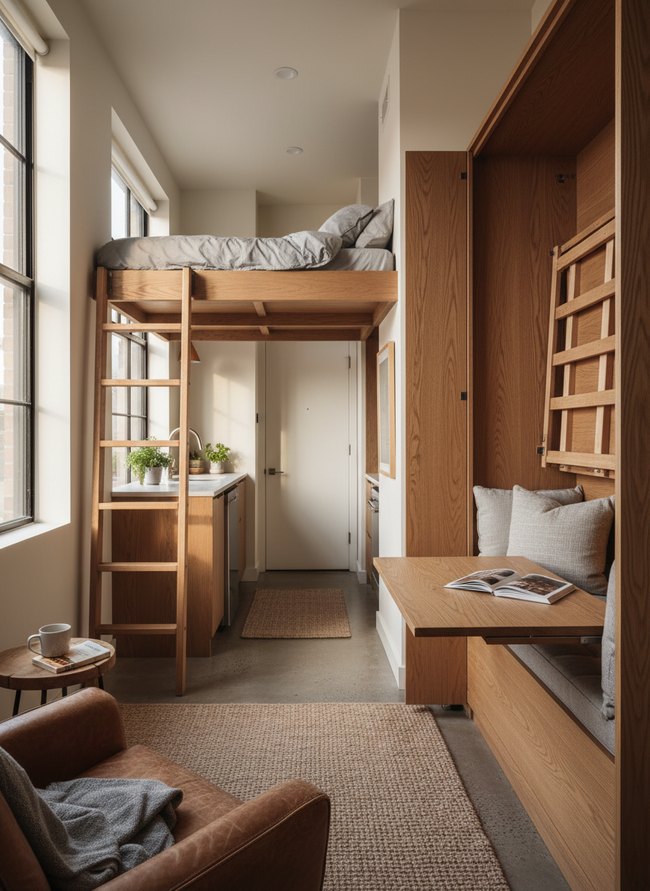
A warm wooden loft bed with a gray duvet sits high above a kitchen sink, offering a clever sleeping area that saves valuable floor space. The opposite wall features a similar honey-toned wood structure, where a fold-out desk murphy bed neatly tucks away, providing a versatile workspace or dining spot in the small home. The dual arrangement maximizes function in a compact studio.
2. Under-Stair Loft Nook
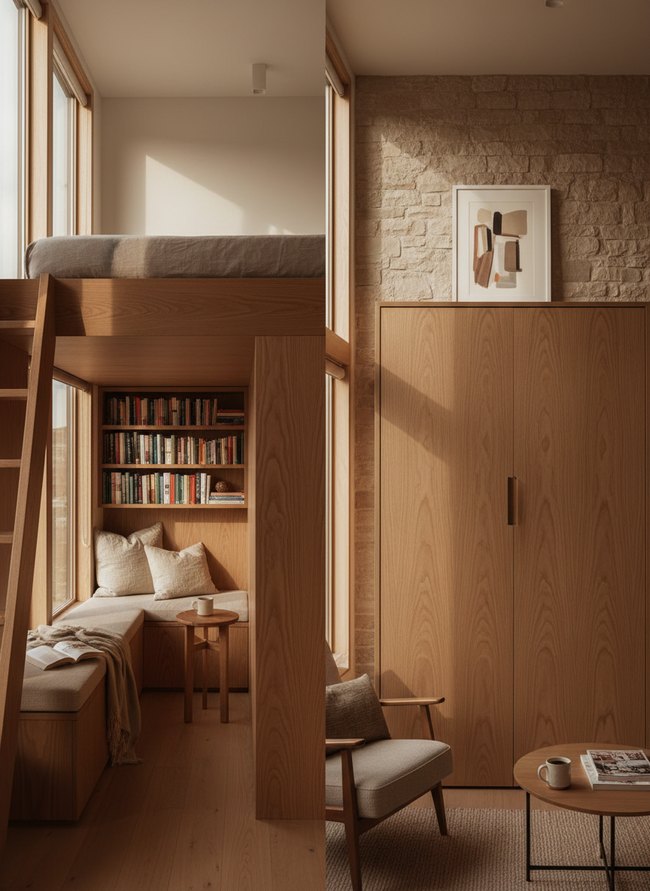
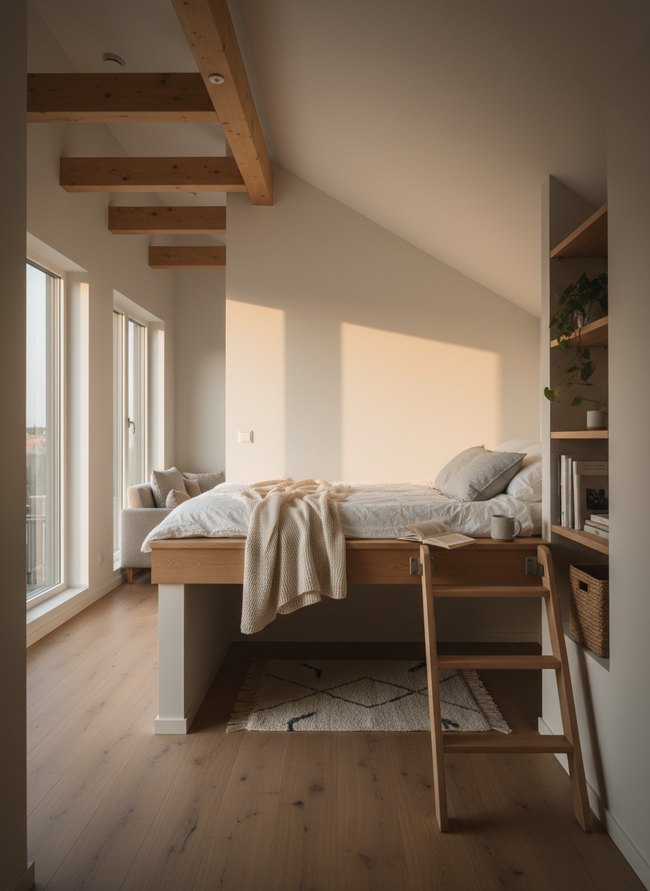
A light oak ladder leads to a simple raised bed with a soft gray mattress. Below the bed, a built-in window seat provides a cozy reading nook with bookshelves, offering a clever space-saving solution for sleeping and relaxing. The compact design maximizes functional living area in a small footprint.
3. Vertical Wall Drop-Down
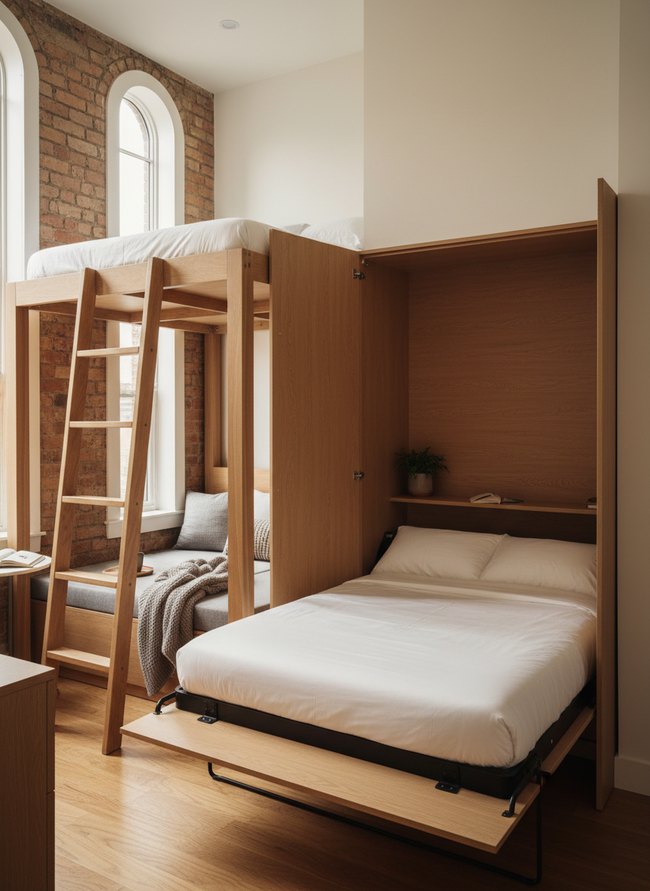
A light wood murphy bed folds down from a tall wall unit, offering a comfortable sleeping surface for guests. Natural oak panels conceal the mattress when not in use, creating a clean, streamlined wall. The hidden bed design maximizes floor space, especially helpful for a small apartment.
4. Mezzanine Office Loft
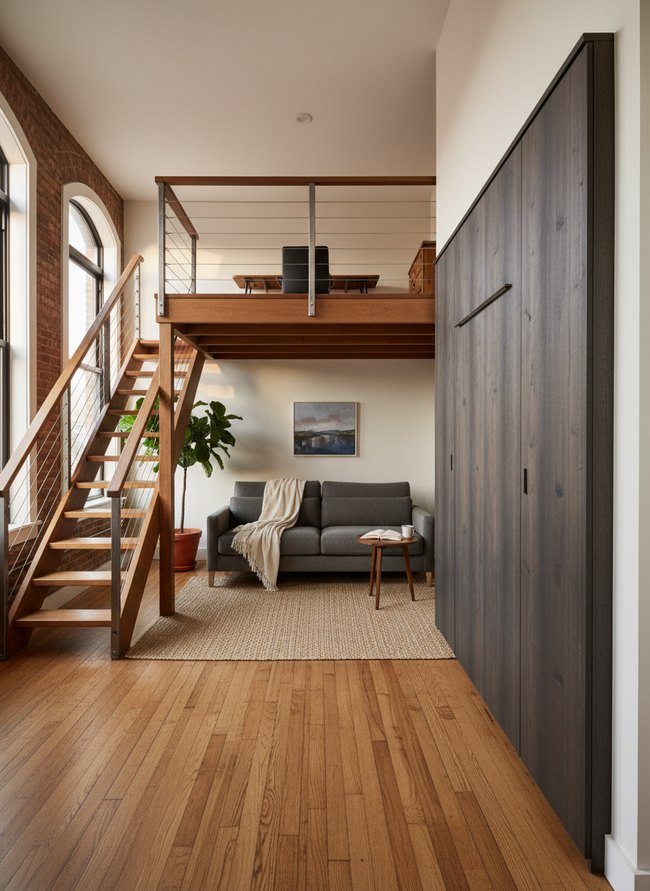
A natural wood staircase with metal cable railings leads to a light wood mezzanine, providing a distinct work area above your living space. Dark wood panels on the right wall cleverly conceal a murphy bed, ready to fold down for comfortable sleep. The clever setup maximizes floor space by stacking functions.
5. Compact Cabinet Murphy
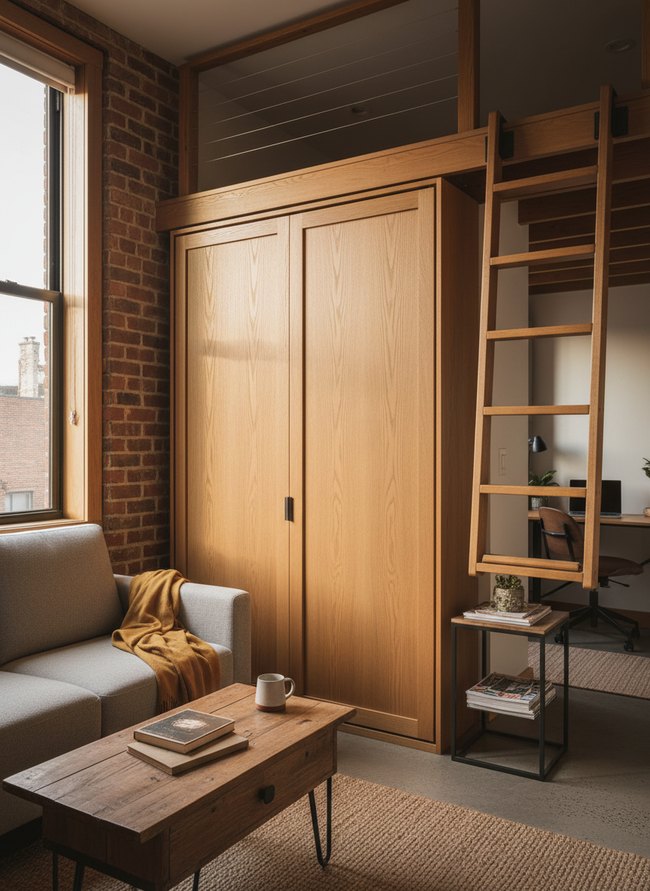
A light honey-toned wood cabinet stands tall against a red brick wall, hiding a compact murphy bed inside its double doors. A thick wooden ladder leans against a high loft, offering a sleeping space above the main living area. The arrangement provides two distinct sleeping areas in a small footprint.
6. Corner Elevated Sleeping
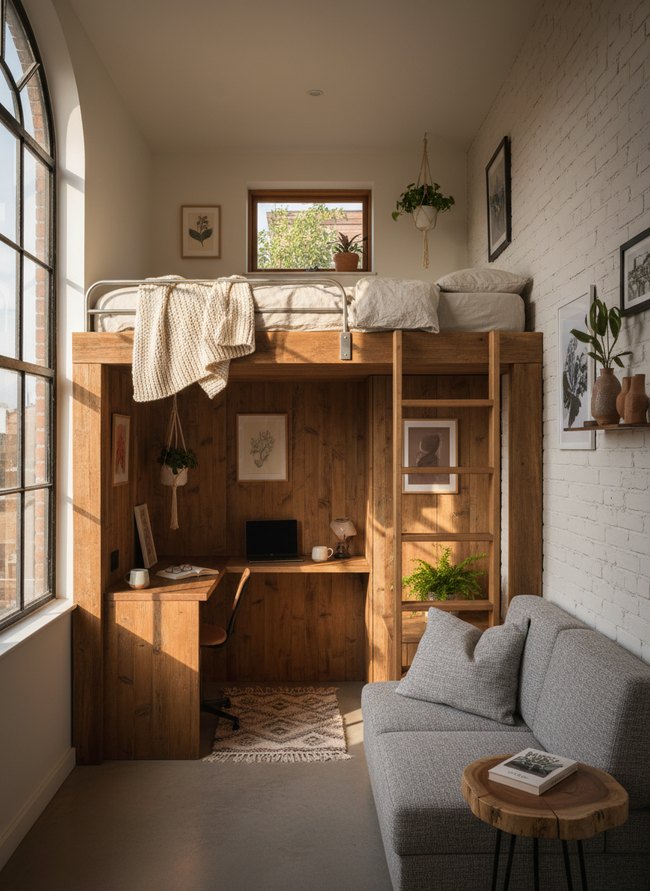
A warm wooden loft bed structure fills the corner, providing an elevated sleeping area with a comfortable mattress and soft beige bedding. Underneath the bed, a built-in wooden desk offers a dedicated workspace with a laptop and a small lamp, creating a clever office nook. The smart design tucks away your sleeping space while opening up valuable floor area for living.
7. Sofa Conversion Murphy
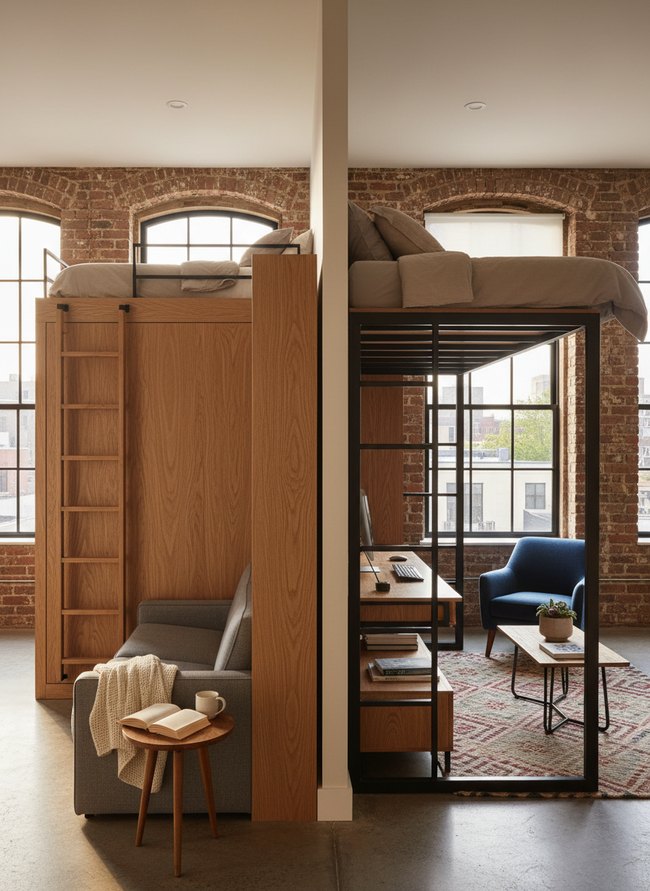
A pale wood Murphy bed stands tall, its framed bed tucked away above a gray fabric sofa. A slim wooden ladder on the left offers access to the elevated sleeping area. The clever setup provides a living space and a sleeping area in a small footprint.
8. Floating Platform Loft
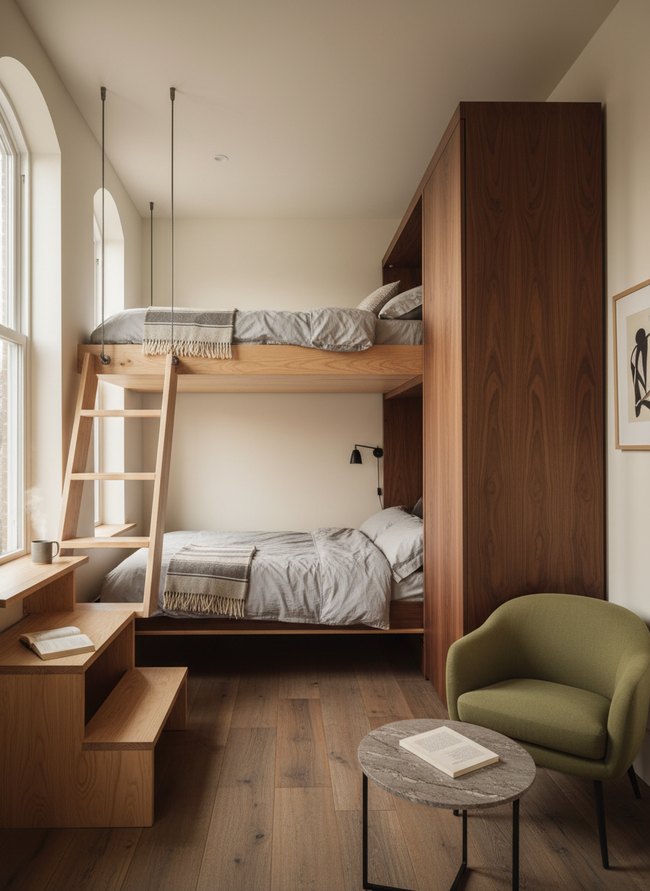
A light wooden platform bed, suspended by slim black ropes, floats above a lower built-in bed, offering two distinct sleeping areas within a compact space. The lower bed frame, crafted from rich dark wood, pulls out from a tall wooden cabinet, providing a clever space-saving solution. The double-decker setup maximizes vertical room, making it an excellent choice for shared tiny home living.
9. Hidden Bookshelf Bed
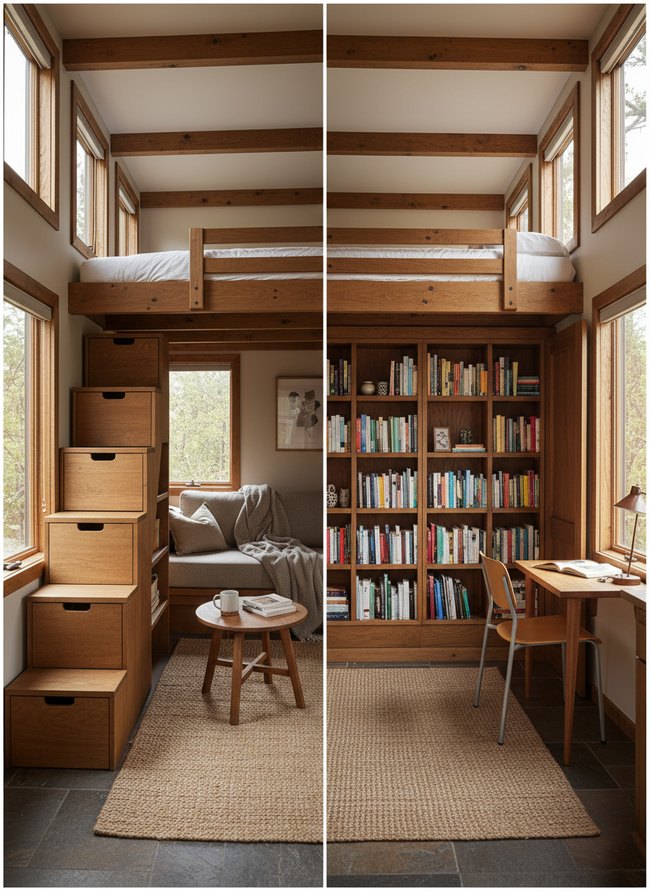
A honey-toned wooden loft bed sits high above, providing a clever sleeping area in the small home. Wooden stairs with deep storage drawers lead up to the bed, making good use of vertical space. Below the bed, a tall bookcase with many colorful books offers a reading nook or a hidden murphy bed option.
10. Staircase Storage Loft
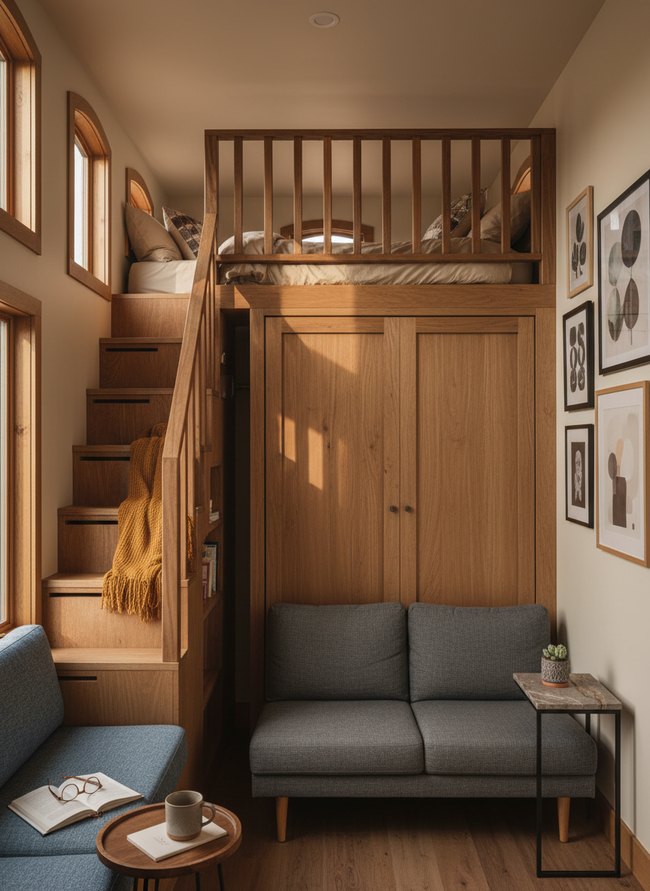
A natural oak loft bed with a simple wooden railing provides a cozy, elevated sleeping area. Each solid oak stair tread pulls out into a deep storage drawer, giving hidden space for clothes or blankets. The staircase storage loft system cleverly combines a sleeping platform with practical storage solutions, maximizing every square inch of the small living area.
11. Integrated Media Murphy
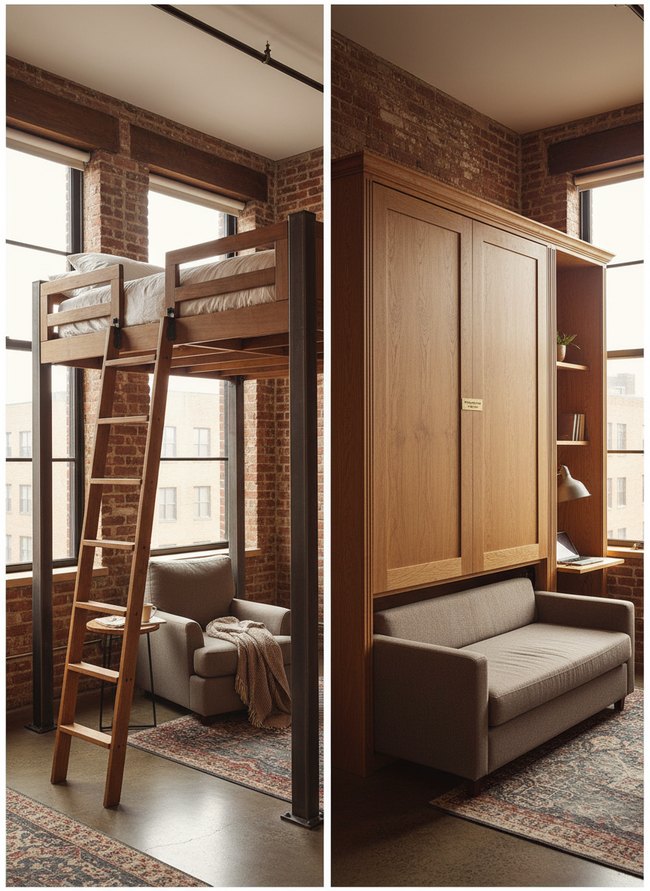
A tall wooden ladder leads up to a simple loft bed with a white mattress on the left, offering a sleeping area high above your daily living space. A handsome oak murphy bed cabinet stands on the right, neatly hiding a full-sized bed behind two hinged wooden doors. The clever design allows you to enjoy a comfortable sofa and work desk during the day, then pull down a bed at night.
12. Attic Alcove Loft
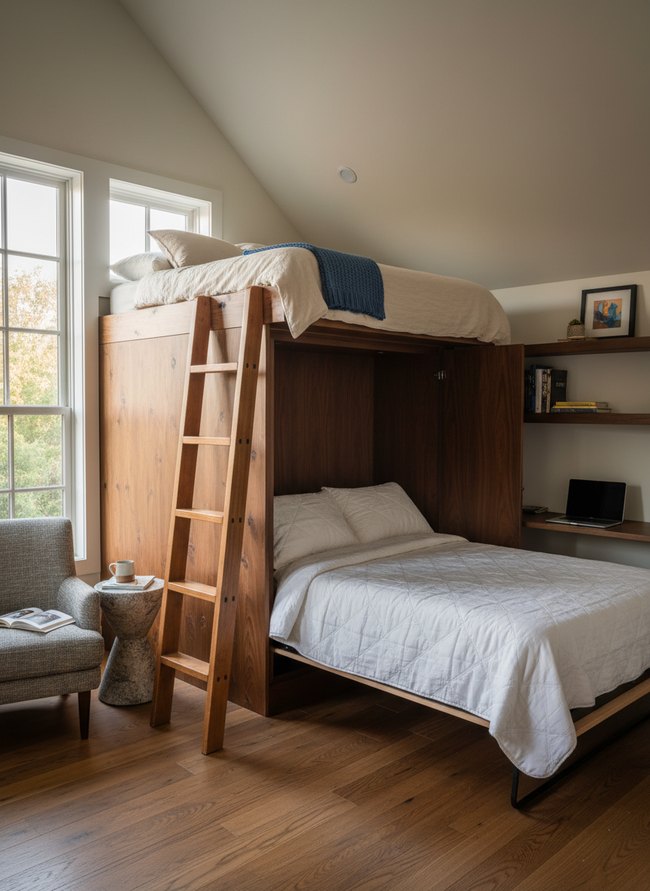
A tall, honey-toned wooden structure features a built-in loft bed on top and a pull-down murphy bed below, saving floor space. A light wooden ladder with five rungs offers access to the upper sleeping area, while the lower bed folds neatly into the main unit. The clever design gives two distinct sleeping areas in a small footprint.
The ‘Hidden’ Cost of Ceiling Height: More Than Just Headroom
Still, a tall ceiling gives you more than just standing room; it totally changes how tiny living feels inside. A vaulted ceiling, for example, makes a small room feel much bigger than its actual square footage. You might think a low ceiling adds a cozy feel, but a flat, low ceiling can make a small living area feel squished and dark. A higher ceiling also lets you install larger, taller windows, bringing in more natural light to brighten the whole space. With extra vertical space, you can easily add open shelving that reaches near the ceiling, storing many items without cluttering the floor. The air inside a tiny home also moves better with more room above, letting warm air rise and keeping your living space cooler. A high-pitched roof allows for stronger roof trusses, which improves the overall structure of your home on wheels. These stronger trusses can also support heavier items, like a ceiling fan with solid brass blades or even a small indoor climbing wall. Your perception of spaciousness directly relates to the distance between your head and the wooden planks above.
Beyond the Bed: Integrating Storage and Workspace into Loft & Murphy Designs
Beyond just the bed, you see, smart storage and workspace design really changes everything in a tiny home. Hidden drawers beneath a loft ladder offer deep capacity for bulky sweaters. Your small space feels much bigger when every element works double duty. Modular shelving units, built directly into the wall next to a Murphy bed cabinet, stash books and small tools. Plenty of homeowners think only about the bed itself. That limited view misses huge opportunities for extra function. A flip-down desk, tucked inside the Murphy bed frame, provides a sturdy surface for a laptop. Your daily tasks get easier with dedicated spots. Integrated lighting, installed under a loft’s wooden platform, brightens the desk below for evening work. Small details make a difference. Solid wood cubbies, stained a dark walnut, line the wall around your sleeping area. This arrangement keeps clutter out of sight. A narrow, slide-out pantry beside the bed easily holds kitchen staples. Every inch counts in compact living.
Which Idea Will You Try First?
That’s 12 different takes on loft vs murphy bed. The best ideas above are usually the smallest moves — one material, one layout shift, one piece of furniture in the right place. Pick whichever room feels closest to your space and start there before tackling the rest.
Found an idea worth keeping? Save this post to your Pinterest board so it’s waiting for you when you’re ready to start your own project.