How to Style a Tiny Home Reading Nook in a Closet
Closets often hold more than stored clothes; they offer untapped square footage for quiet corners. Most people overlook the vertical space and structural bones of a small closet. The compact area can transform into a cozy retreat with careful planning. Many homeowners discover a small closet’s deep walls provide natural sound dampening. We will show you how to build a tiny home reading nook that feels both private and open. Your existing closet, whether a shallow linen cupboard or a deep walk-in, holds potential for a personalized hideaway. Each suggestion provides clear steps for turning an overlooked space into your cherished reading spot.
1. Cozy Corner Shelf Retreat
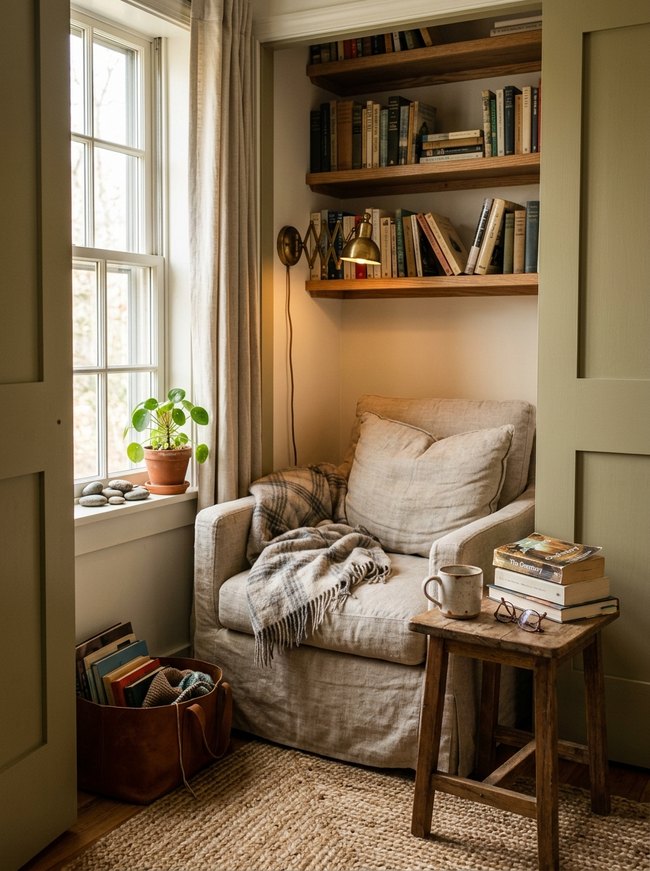
The designer created a tiny home reading nook by placing a soft, oversized linen armchair directly into the closet opening, a clever choice that maximizes floor space in a small area. The chair fills the width of the closet, making the small space feel intentional and complete rather than cramped, providing a dedicated spot for reading. Warm oak shelves above the chair hold many books, while a pleated beige curtain filters natural light from the nearby window. An oversized chair can fill a small nook.
2. Minimalist Built-In Lounge
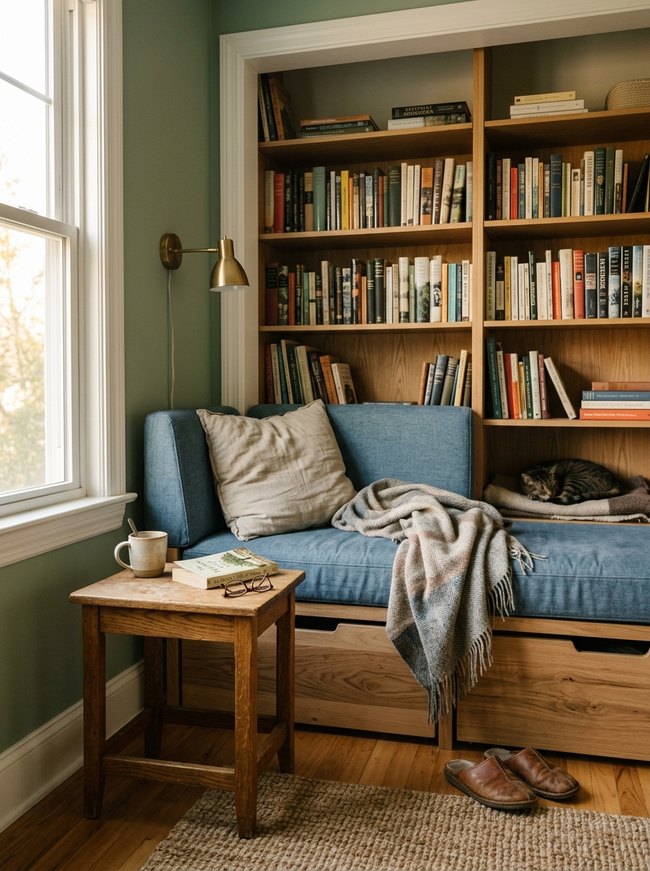
The built-in bookcase and bench maximize every inch of the narrow space, creating a dedicated area for quiet moments. Deep wooden shelves rise floor to ceiling, holding many books and a sleeping tabby cat. Homeowners can steal the idea of custom millwork to fit a reading nook into an awkward corner.
3. Bohemian Textile Alcove
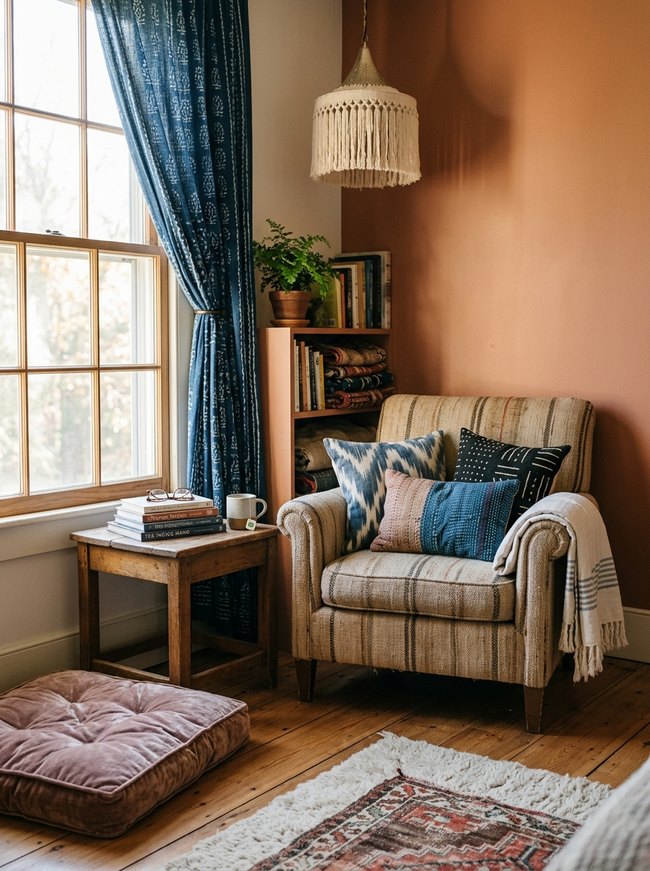
Layering patterned textiles creates a rich, inviting texture that makes a tiny home reading nook feel expansive. The technique adds visual weight and softness, preventing the small space from appearing stark or empty. A sturdy oak side table holds stacked books, a small fern in a copper pot, and a warm clay-toned wall paint. Layer diverse, patterned fabrics.
4. Rustic Wood Panel Hideaway
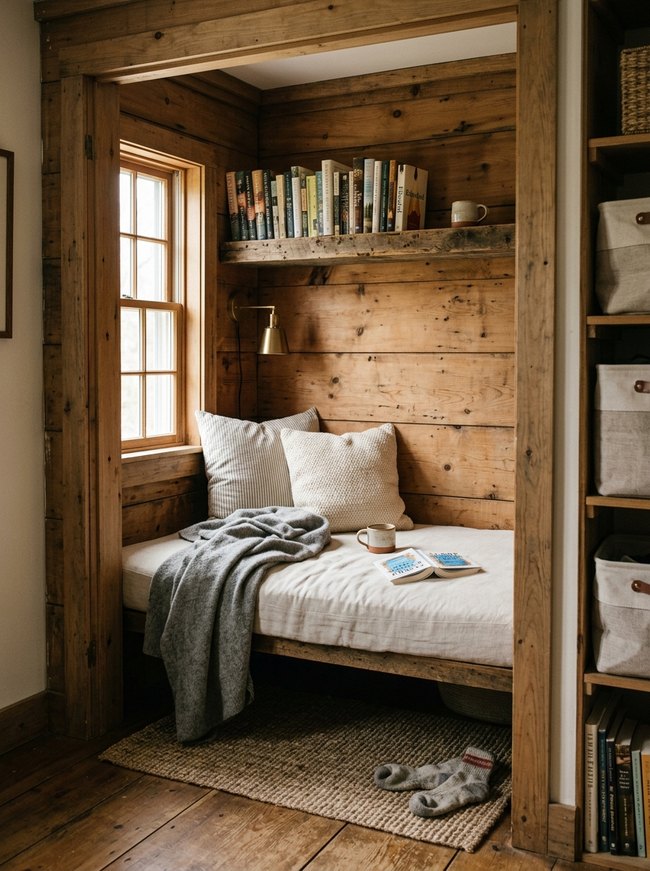
The builder installed rough-hewn wooden planks across the entire wall and bench surface, creating a cohesive, deeply textured background. The uniform application of warm, honey-toned wood panels makes the small space feel like a true retreat, a complete escape from the outside world. A single brass wall lamp provides focused light, while striped and textured pillows add soft comfort to the bench. Steal the consistent use of one material for an immersive reading nook experience.
5. Modern Scandinavian Perch
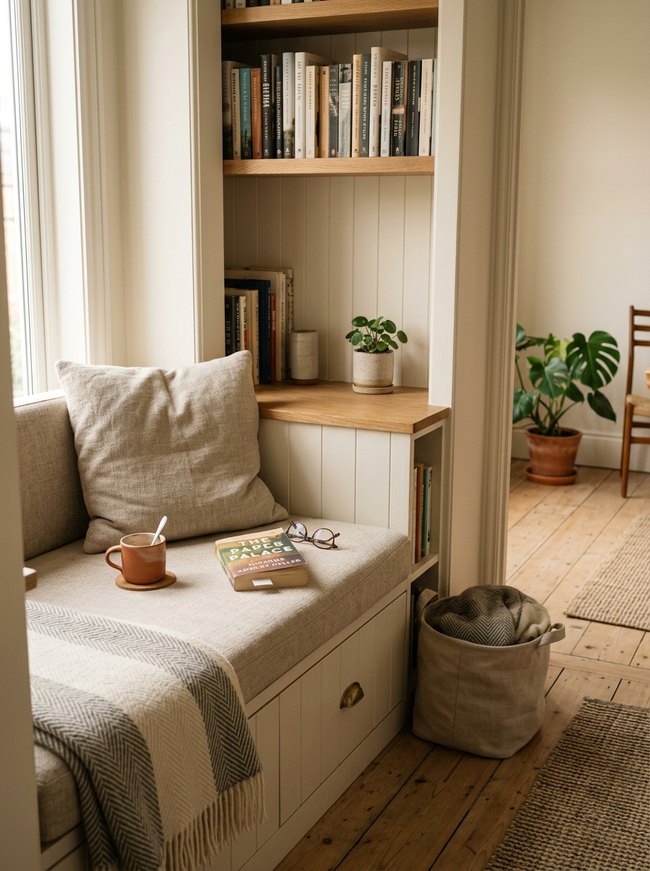
Built-in bookshelves above and below the window bench create a cohesive, space-saving reading nook, making every inch useful. The bench offers a comfortable seat and ample storage, preventing clutter in a small area. Light wood shelves and a cream-colored linen cushion work together with vertical shiplap paneling to produce a calm atmosphere. The integrated shelving idea is a clever design.
6. Industrial Pipe Bookshelf
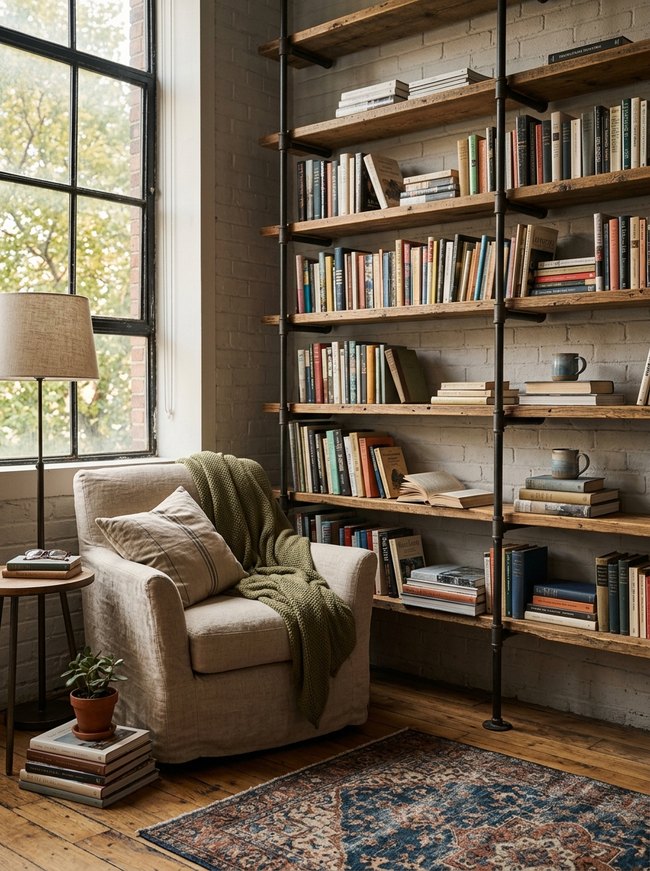
The designer chose exposed black pipe and thick wooden planks for industrial-style wall shelving. The shelving makes the most of vertical space, offering ample storage for many books without needing a bulky freestanding unit. A soft linen armchair and a fuzzy olive green throw provide comfort, while a small wooden side table holds a potted plant. Install the floor-to-ceiling pipe shelving.
7. Velvet Tufted Nook
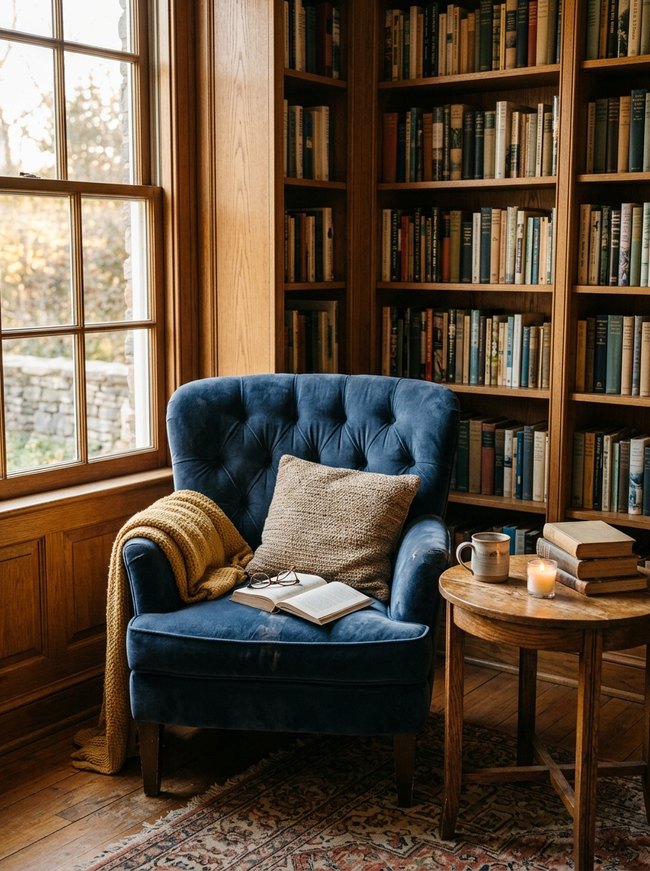
Tufted velvet upholstery creates a plush, inviting texture, making the tiny home reading nook feel extra special. Rich honey-toned wood panels and bookshelves wrap the space, providing a solid, grounded feeling. A chunky mustard yellow throw blanket and a woven beige pillow add contrasting textures and warm colors. Define a cozy corner using a brightly colored, deeply textured chair.
8. Window Seat Sanctuary
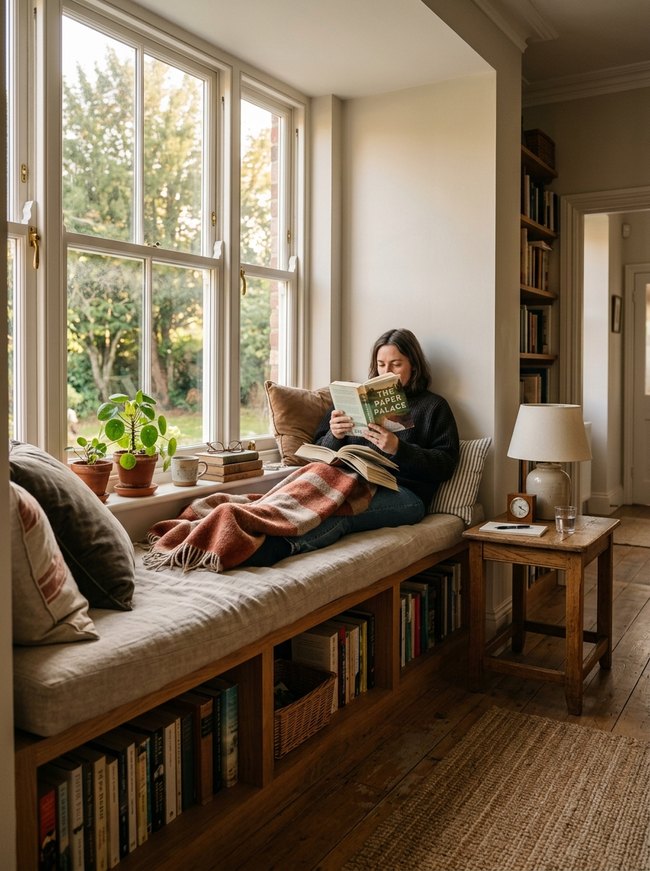
The deep window seat creates a dedicated zone for reading, allowing a person to stretch out comfortably next to natural light. Plush linen cushions and a striped wool throw add inviting textures to the oak bench. Small potted plants and stacked books on the wide sill complete the cozy atmosphere for the tiny home reading nook. Build a wide, cushioned window bench.
9. Under Stairwell Library
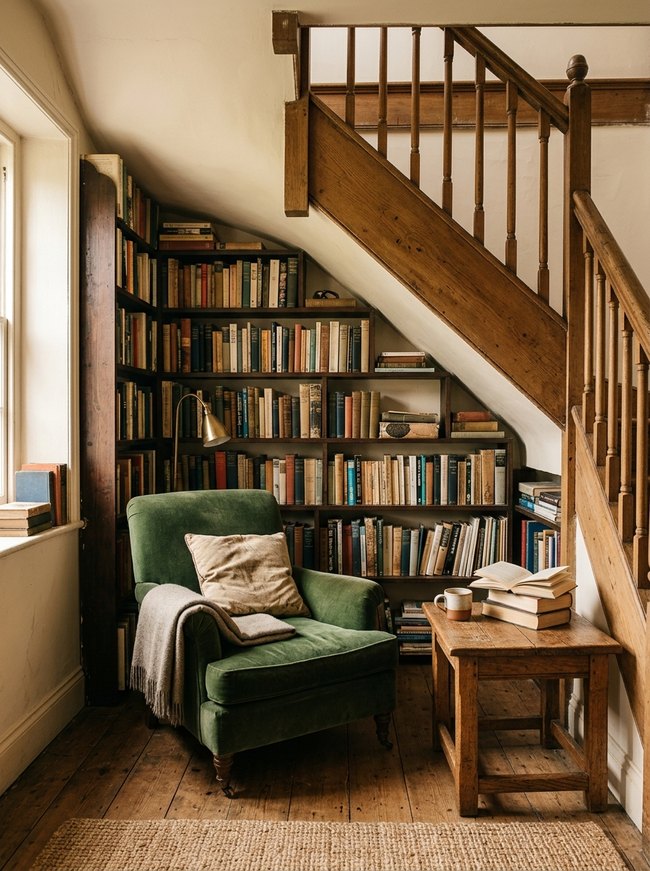
Custom shelving built into the under-stairwell space makes the tiny home reading nook work. The precise construction uses every available inch, creating a full library where dead space once existed. A rich green armchair and a small wooden side table provide comfortable seating and a surface for your drink. The custom shelves fit oddly shaped areas.
10. Kids Play Tent Haven
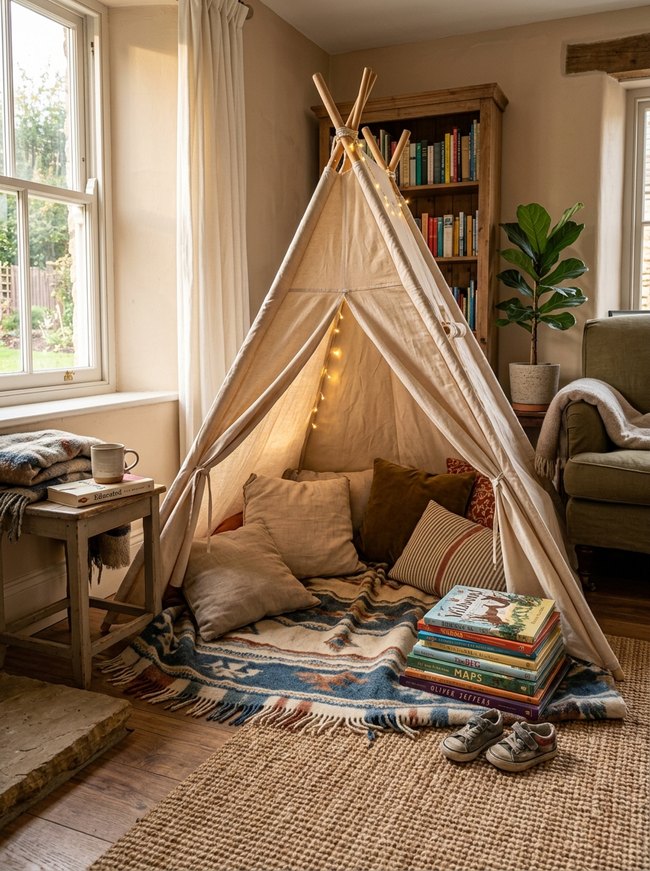
A woven canvas teepee creates a defined, cozy zone within the larger room. The structure physically separates a small area, making a tiny home reading nook feel special and private. Small string lights glow inside the tent, while soft pillows and a patterned wool blanket offer comfort. The tent carves out a distinct space.
11. Petite Hanging Chair Spot
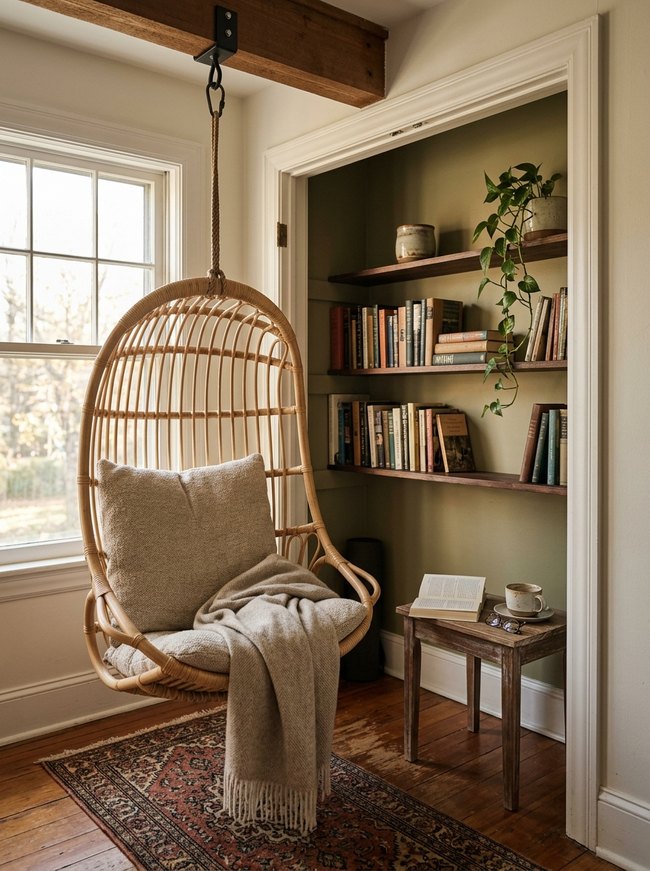
Hanging the woven rattan chair from the exposed wooden beam creates a playful, space-saving design. The vertical placement maximizes floor space, a smart strategy for a small closet conversion. Book-filled floating shelves and a small wooden side table support the reading experience. The suspended chair opens up your small area.
12. Foldaway Desk Reading
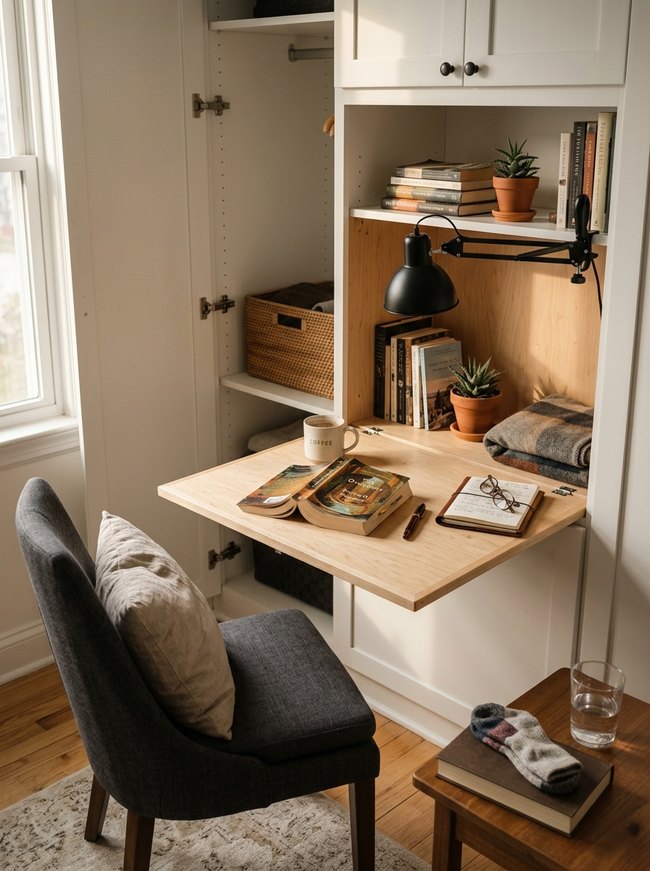
The foldaway desk creates a functional reading nook within a narrow closet space. The light maple surface offers a sturdy place for books and a coffee mug, disappearing when more room is needed. A black swing-arm lamp and small terracotta potted plants add practical lighting and natural warmth to the surrounding white cabinetry. The clever desk idea maximizes small spaces.
Micro-Acoustic Buffering in Enclosed Recesses: Optimizing Soundscapes for Focused Reading
Sound absorption changes a small closet reading nook. Heavy velvet drapes hung on a bronze tension rod block outside noise. You create a more focused atmosphere with thick textiles. Thin cotton curtains allow sounds to bounce freely, a common styling error. A plush wool rug, two-inches thick, covers the bare wood floor. This soft surface soaks up echoes from your voice. Bookshelves lined with well-worn paperbacks also serve as sound diffusers. The varied book spines break up sound waves traveling through the air. Consider wrapping a wall in charcoal felt panels for serious soundproofing. These dense squares stop noise from passing through the plasterboard. You might add a large, overstuffed armchair upholstered in plaid flannel. The soft fabric and deep cushions absorb stray sounds. Hard, flat surfaces like a bare desk or a glass table reflect sound waves. Such reflective elements make the space feel loud and unfocused. A solid oak door with a heavy brass handle further seals the quiet space. You gain a peaceful haven for uninterrupted reading.
Illuminance Layering for Circadian Alignment in Windowless Volumes: A Case Study of Closet Nook Lighting
Strategic light layering in a windowless closet nook creates circadian alignment. Your body clock benefits from varied light colors and intensities throughout the day. Soft, warm amber light from a low-wattage LED strip tucked under a floating oak shelf offers a gentle morning glow. Bright, cool white light, mimicking midday sun, streams from a flush-mount ceiling fixture above your head. This setup avoids a common error: relying solely on one harsh overhead bulb.
Ambient backlighting from a dimmable LED panel behind a woven rattan screen softens the room’s hard edges. You can adjust the screen’s light color from crisp white to deep orange. A small, focused task lamp with a flexible goose neck illuminates the pages of your open book. Its adjustable beam directs light precisely where you need it. As evening arrives, the overhead cool white light fades out. Warm amber tones from the shelf lighting and back panel remain. This deliberate shift in color temperature signals your brain to prepare for rest. A cozy reading nook needs more than just one lamp.
Which Idea Will You Try First?
That’s 12 different takes on tiny home reading nook. The best ideas above are usually the smallest moves — one material, one layout shift, one piece of furniture in the right place. Pick whichever room feels closest to your space and start there before tackling the rest.
Found an idea worth keeping? Save this post to your Pinterest board so it’s waiting for you when you’re ready to start your own project.