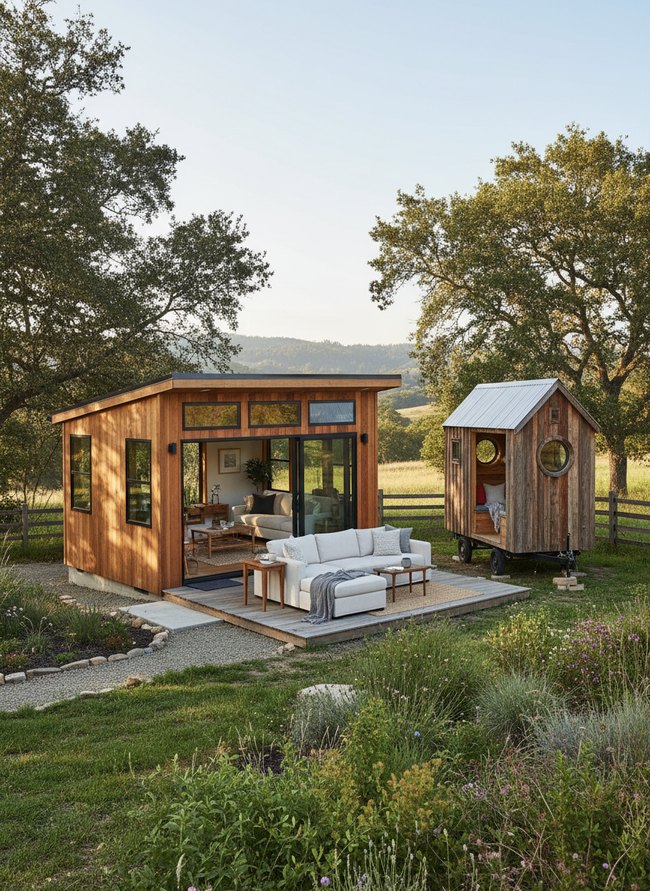
Multi-Gen Living and the ADU Renaissance (2026)
The single armchair in the tiny living room often feels too small for everyone. Growing kids, visiting parents, and returning adult children sometimes cram into shared spaces. Finding private nooks within the main house becomes a daily challenge. Families frequently need extra square footage under a separate roof. A backyard cottage provides that needed personal area. Smart homeowners are now adding these detached structures to their properties. The multi-gen ADU trend offers a flexible solution for many households. Modern designs for these smaller buildings give families increased comfort and lasting value. Savvy homeowners want practical ways to expand their property.
1. Integrated Family Courtyard ADU
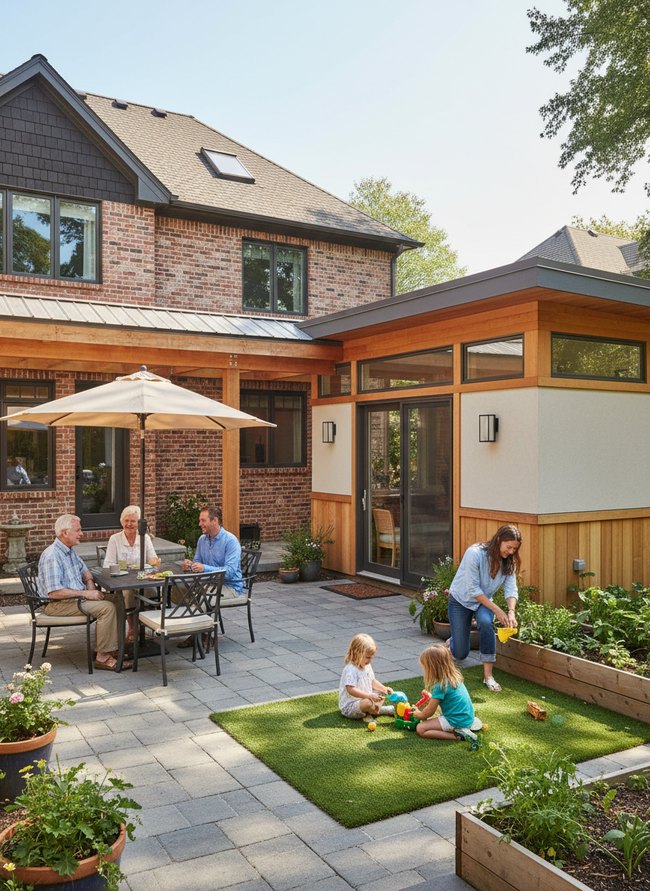
A light beige umbrella shades a black metal dining set on the textured gray paver patio. Family can gather comfortably on the outdoor patio for meals and conversations. A newly built accessory dwelling unit (ADU) with cedar plank siding and large glass doors creates a private yet connected living space.
2. Connected Garden Suite ADU
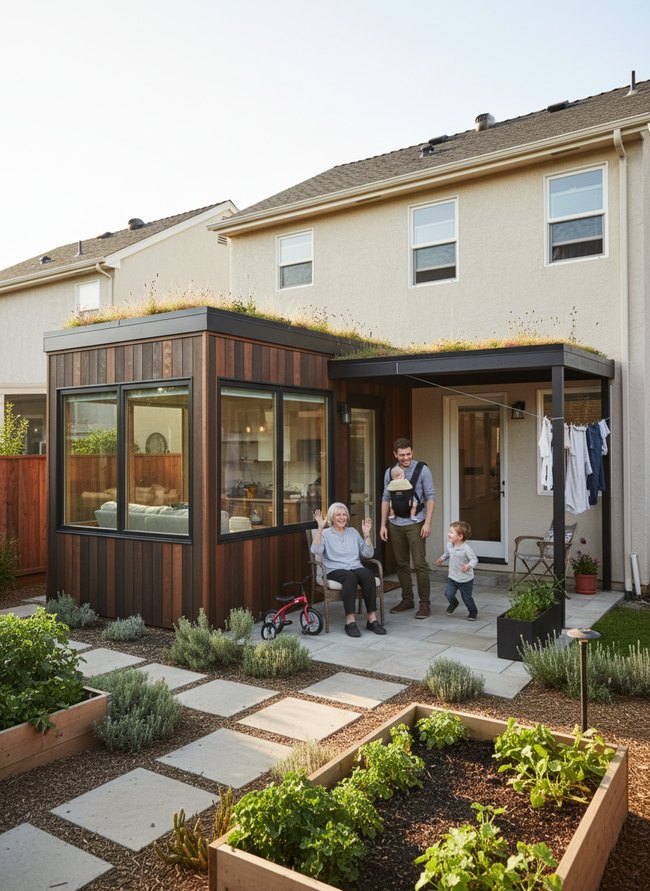
A rich brown wood-paneled garden suite ADU creates an independent living space connected to the main house. The green roof on the accessory dwelling unit offers extra insulation and a natural look. The multi-generational ADU trend offers a practical solution for housing loved ones close by.
3. Dual Living Modern ADU
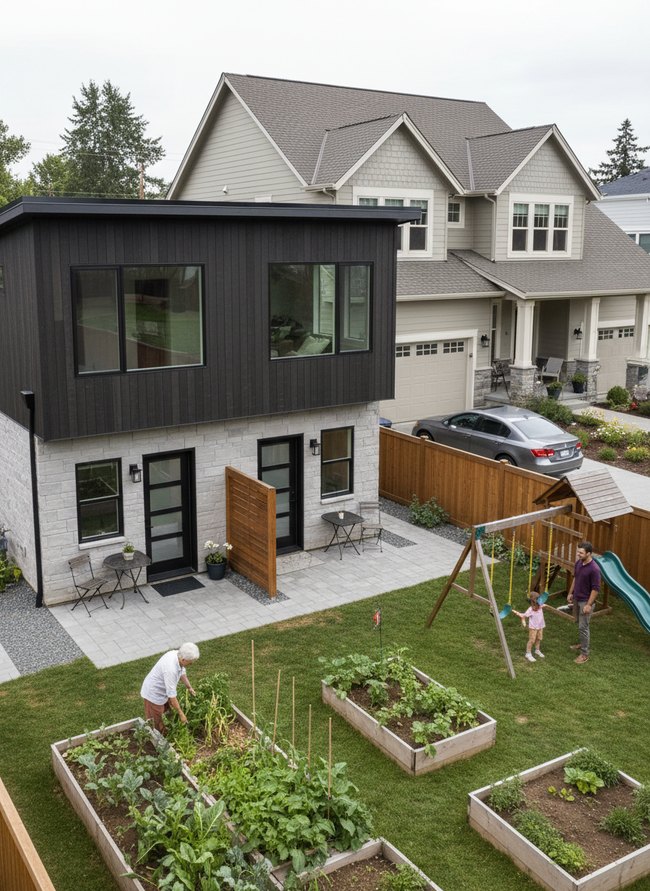
A two-story ADU with dark vertical siding sits next to a large grey house, offering independent living spaces. A light grey stone patio provides private outdoor areas for each ground-floor unit, giving residents personal space. Distinct homes for different family members make this multi gen ADU trend work well for your family’s needs.
4. Generational Bridge Home ADU
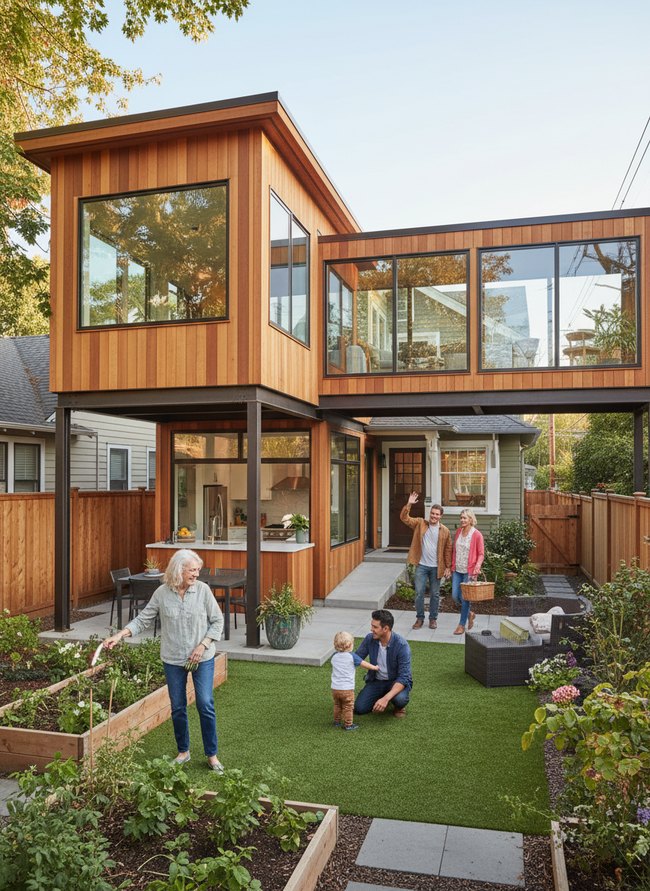
A multi-level accessory dwelling unit (ADU) with rich cedar siding and dark metal supports connects to a main home, providing extra living space. Large square windows on the upper bridge and lower kitchen area offer wide views of the green backyard, bringing the outside in. The design lets families stay close while having their own comfortable, connected spaces.
5. Shared Green Space ADU
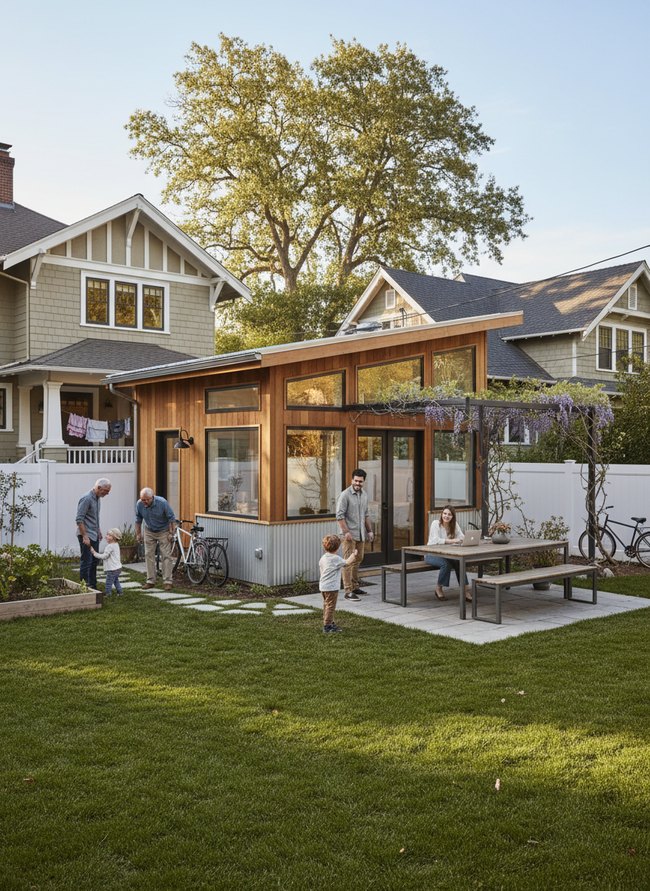
A compact cedar-clad accessory dwelling unit stands prominently in the backyard, offering extra living space for your family. The concrete patio with its dark metal pergola covered in flowering wisteria creates an outdoor dining area right outside the ADU’s glass doors. The clever design provides independent living quarters while keeping your extended family close for shared moments.
6. Independent Duplex ADU
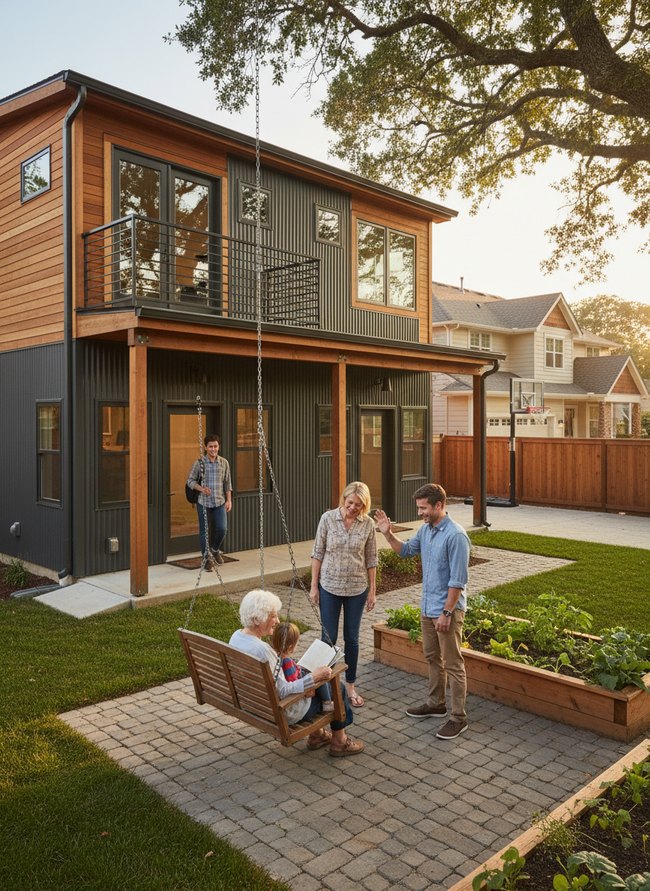
A two-story ADU features warm cedar siding and dark corrugated metal panels, offering distinct living spaces for a multi-generational family. The ground-floor entrance provides independent access for residents, while an upper-level balcony offers private outdoor enjoyment. The design works well for families wanting connected yet separate living arrangements.
7. Flexible Living Pod ADU
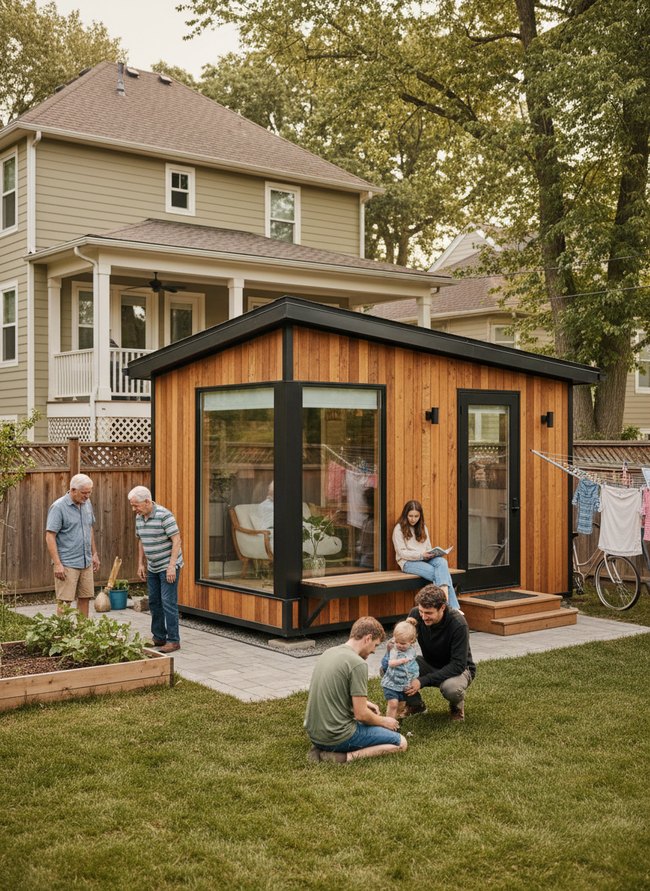
A compact wooden structure with black trim stands on a light gray paver patio. Large glass windows allow natural light inside, creating a bright living area for occupants. The flexible living pod ADU gives your family a private space for guests or extended family.
8. Community Focused Micro ADU
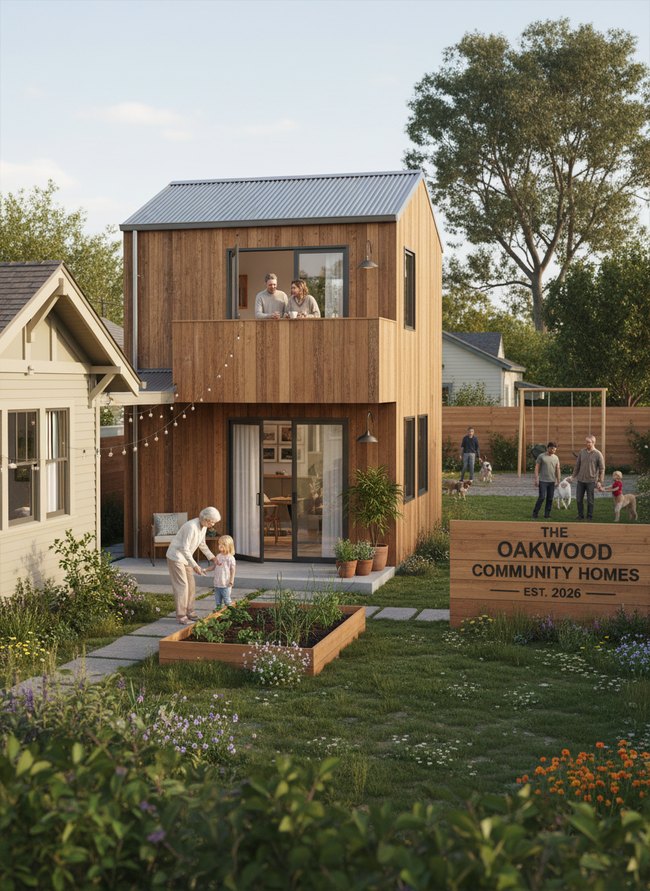
A two-story brown timber dwelling with a gray corrugated metal roof offers a small, independent living space. A concrete patio with potted plants and string lights connects the main dwelling to a smaller beige house next door, creating an outdoor area for families. The multi-generational ADU trend helps families live close while maintaining personal space.
9. Accessible Ground Floor ADU
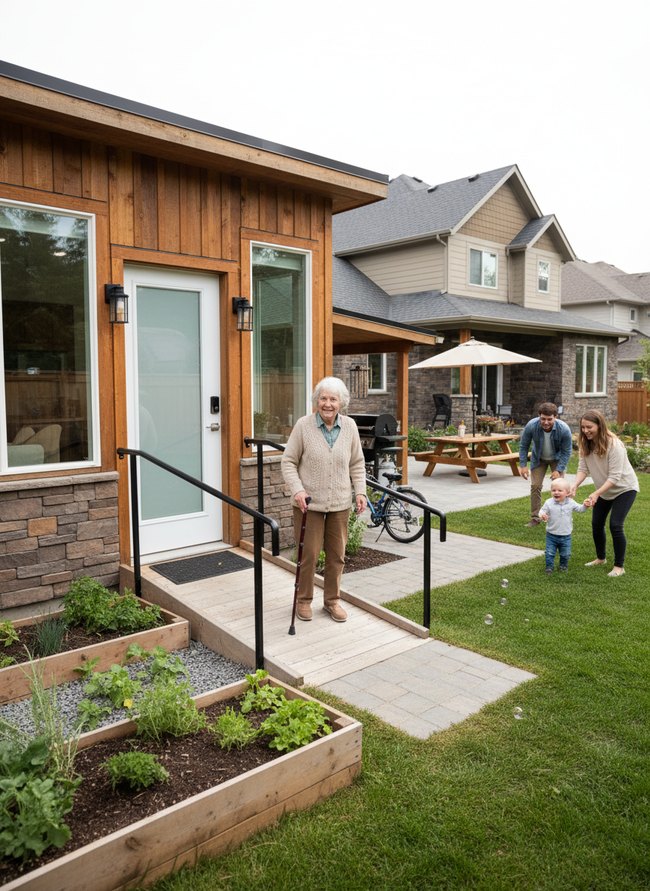
A light wooden ramp with dark metal handrails offers easy access to the ground-level ADU entrance. Warm wooden siding on the accessory dwelling unit creates a welcoming exterior. Thoughtful design choices like these create a safe, independent living space for your loved ones.
10. Adaptive Urban Infill ADU
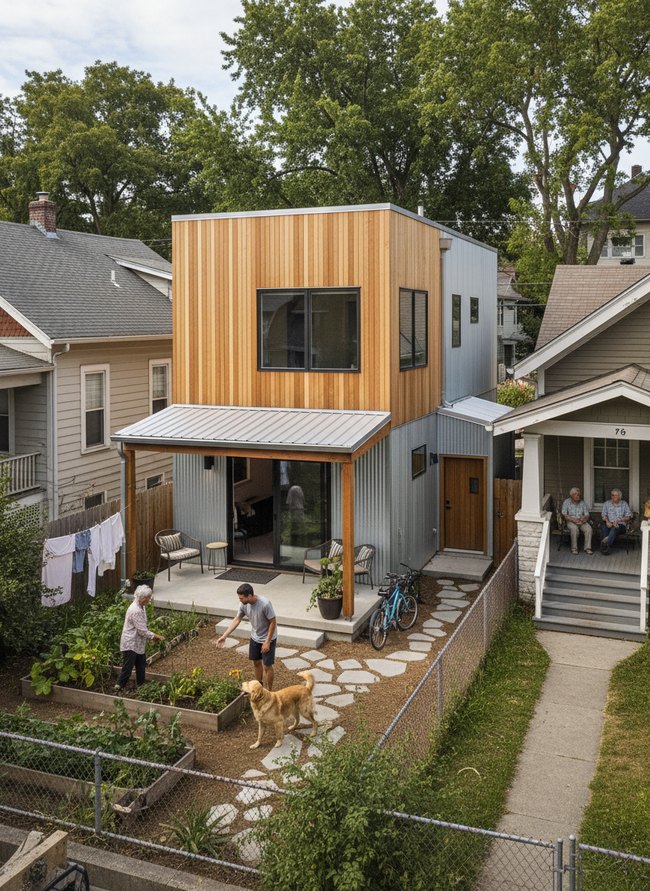
The two-story ADU features natural wood siding on its upper level and corrugated metal on the lower floor, providing a modern, durable exterior. A ground-level concrete patio with a covered porch offers an inviting outdoor living space, perfect for relaxing or entertaining guests. Raised garden beds in the foreground allow you to cultivate fresh produce, connecting you with nature right outside the ADU.
11. Multi-Unit Compact ADU
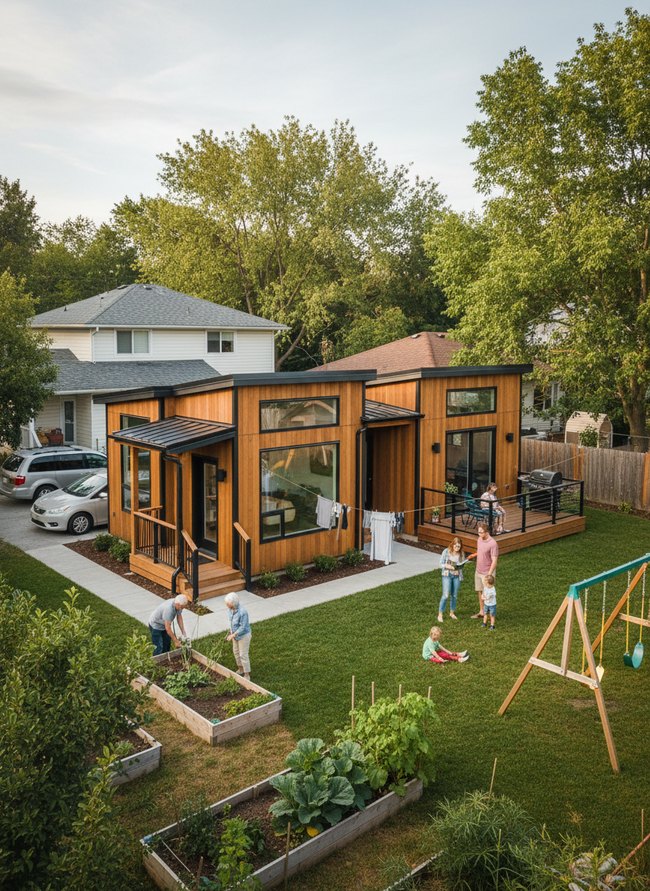
Natural honey-toned cedar siding clads two separate yet connected compact dwelling units, offering private spaces for different family members. Each small structure features a flat black roof and dark window frames for a modern look, allowing individual living areas with shared outdoor amenities. A large wooden deck with a black metal railing connects the two units, providing a central gathering spot for cooking and relaxing together. The setup maximizes shared living while respecting personal boundaries.
12. Harmonious Backyard Village ADU
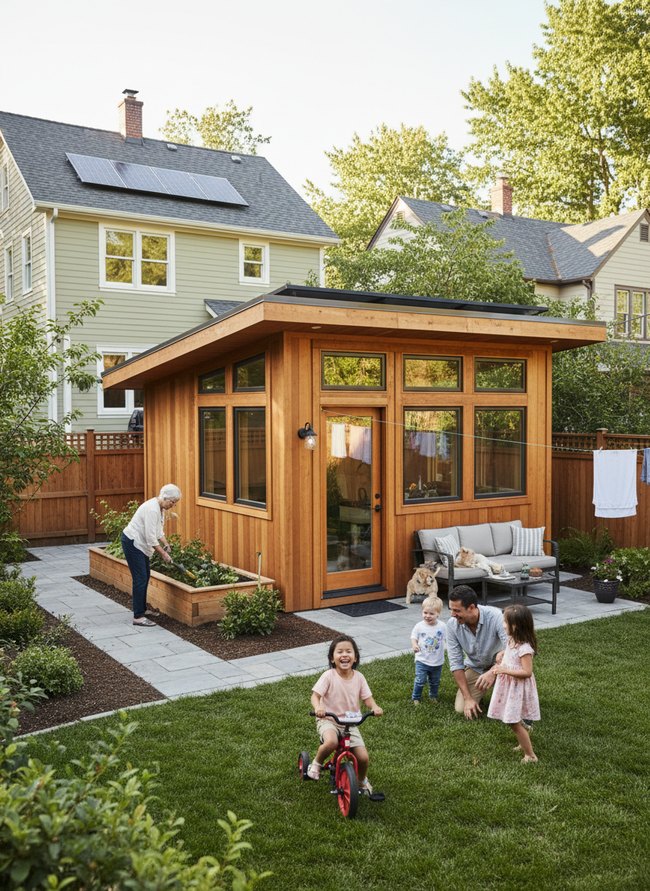
A single-story wooden outbuilding with a flat roof creates a distinct living space in the verdant backyard. Large dark-framed windows and a glass door let natural light into the cedar-sided structure, ensuring a bright interior. A light gray paver patio extends from the building, offering a welcoming outdoor area for shared family activities.
Beyond the Bylaws: Navigating the Cultural Shift of Shared Spaces
But a tiny red sofa in the corner of a shared living room offers more than just extra seating; it becomes a physical marker for individual space, a small, clear boundary. Defining personal zones within a multi-generational home prevents misunderstandings before they even start. Many families believe open layouts foster togetherness, yet those wide-open spaces often blur lines, creating unspoken friction. Instead, you need clear definitions. A tall honey-toned oak bookshelf, for example, can separate a reading nook from a television area, giving each activity its own distinct footprint. Your family members require visual cues for privacy. A heavy slate gray curtain across a doorway provides an immediate sense of personal retreat, even in a small area. This dark fabric tells everyone, without a word, that the space behind it is currently occupied. Shared rooms absolutely need these physical divisions. A whitewashed wooden screen, knee-high and double-wide, can create a small private dressing area within a larger bedroom. That screen gives a person a moment of quiet solitude. Thoughtful placement of furniture and decorative elements helps establish these important personal territories.
The ‘Flex-Space’ Fallacy: Designing for True Adaptability, Not Just Buzzwords
…but a true flexible tiny home space needs more than just a fold-down bed. Clever design means your floor plan grows with your family without needing big renovations. You want a durable oak floor, not soft pine, because scuffs from toddler toys will be different from the drag of a wheelchair later on. Think about future needs.
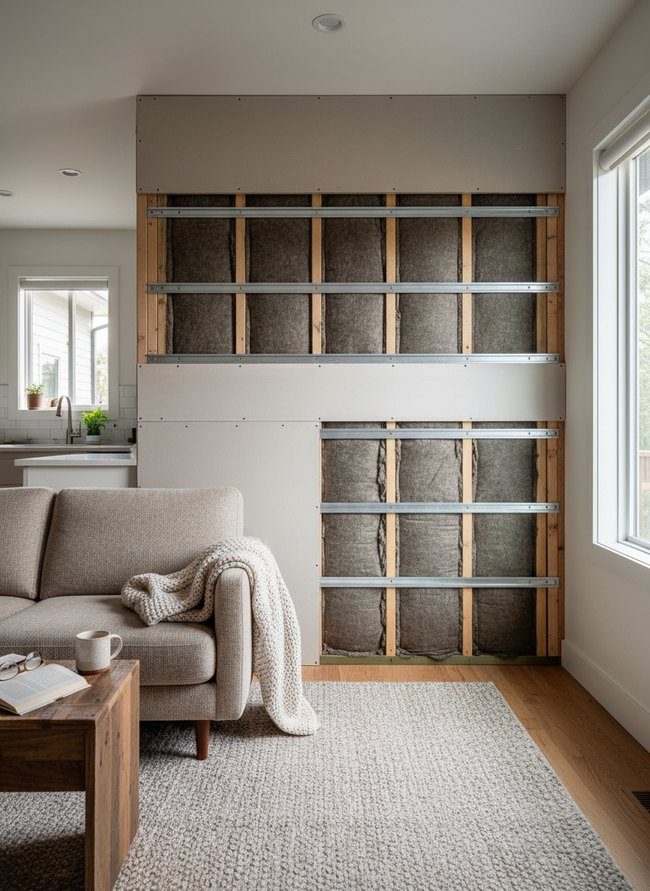
Many designers push open-concept layouts, calling them “flexible,” but an empty box often becomes a noisy echo chamber. A separate, pocket-doored bedroom provides quiet sleep for a baby or privacy for an aging parent. Recessed lighting offers bright task illumination, but dimmable wall sconces create soft ambiance for different moods. Your electrical outlets should sit higher than standard to accommodate medical equipment or changing furniture arrangements. Install blocking in the walls now, behind the drywall, to support grab bars in a bathroom later. This forethought saves money and messes down the road. Consider a compact, stackable washer-dryer unit; its small footprint frees up valuable square footage. Every material choice matters. A concrete countertop withstands decades of kitchen use. Choose neutral, washable paint colors, like a light gray or warm beige, for easy updates.
Which Idea Will You Try First?
That’s 12 different takes on multi gen adu trend. The best ideas above are usually the smallest moves — one material, one layout shift, one piece of furniture in the right place. Pick whichever room feels closest to your space and start there before tackling the rest.
Found an idea worth keeping? Save this post to your Pinterest board so it’s waiting for you when you’re ready to start your own project.