10 Best Curtains for Tiny Home Windows (Light + Privacy)
Many homeowners overlook the critical role window treatments play in small spaces. A compact living area benefits immensely from careful light control and smart privacy solutions. A lack of attention to these details leaves tiny home windows feeling exposed and diminishes the overall comfort inside. Skilled designers understand that each fabric panel or wooden blind sculpts natural light, transforming a narrow room. Different materials offer unique advantages; some block harsh sun, while others diffuse a soft glow throughout the interior. Below, you will find ten specific curtain options that deliver both filtered light and solid privacy for your compact dwelling.
1. Sheer Cafe Tier Rod
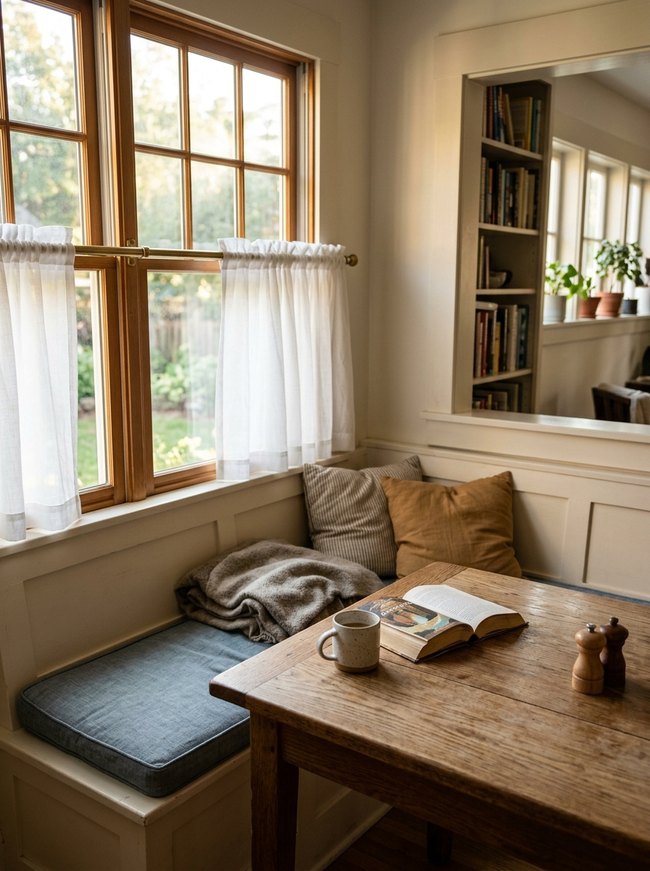
Sheer white cafe curtains mounted on a thin brass rod provide privacy without blocking natural light in the cozy breakfast nook. The half-height white panels allow sunlight to stream through the upper windowpanes, keeping the small room bright and airy. A light oak table and soft gray cushion complete the warm, inviting space. Mount the curtains at half-height to balance light and privacy.
2. Blackout Thermal Roller Shade
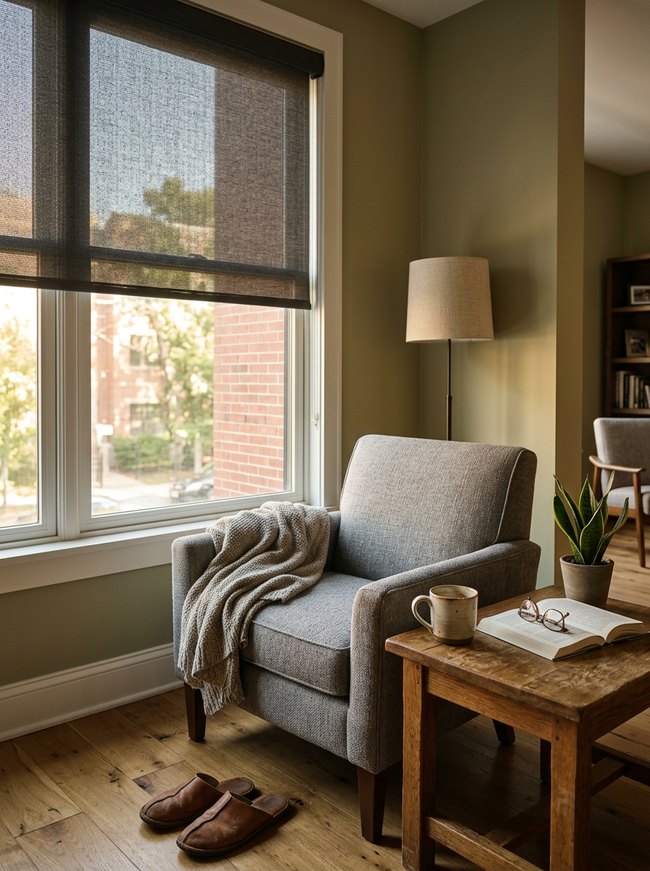
Double roller shades provide adaptable light control for the small window. Two separate shades allow you to manage sunlight and privacy independently, a smart choice for any tiny home. A thick woven throw blanket draped over the gray armchair adds soft texture. The double roller shade idea offers flexible light filtering.
3. Linen Ruffle Privacy Panel
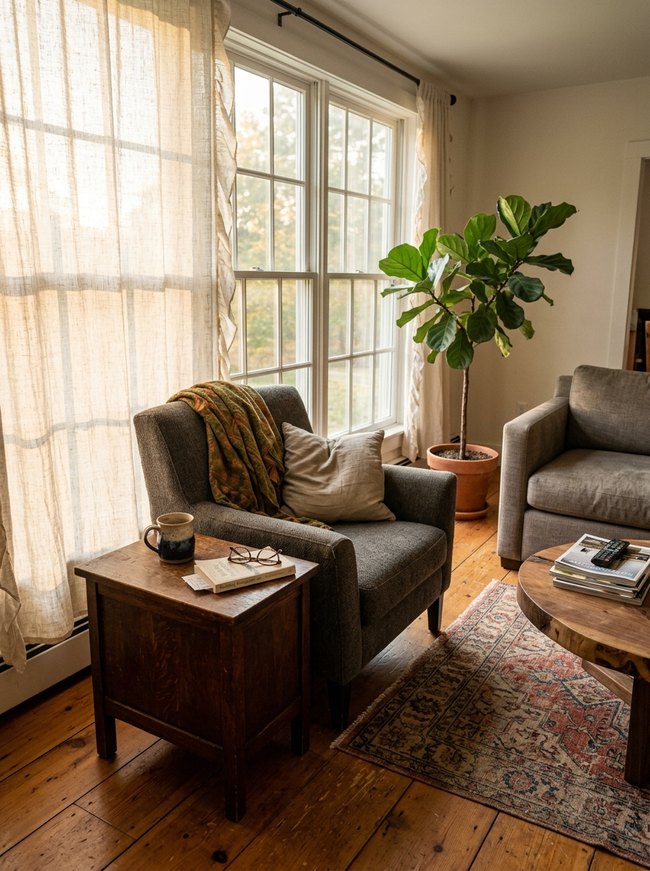
The designer chose lightweight linen curtains, allowing soft natural light to filter through the tall window panes, brightening the small room. The sheer window panels offer daytime privacy without blocking all the sunlight, a clever strategy for a tiny home. A tall fiddle leaf fig plant and a patterned area rug add organic textures, creating visual depth; steal the sheer linen choice for your own tiny home curtains.
4. Magnetic Pleat Window Cover
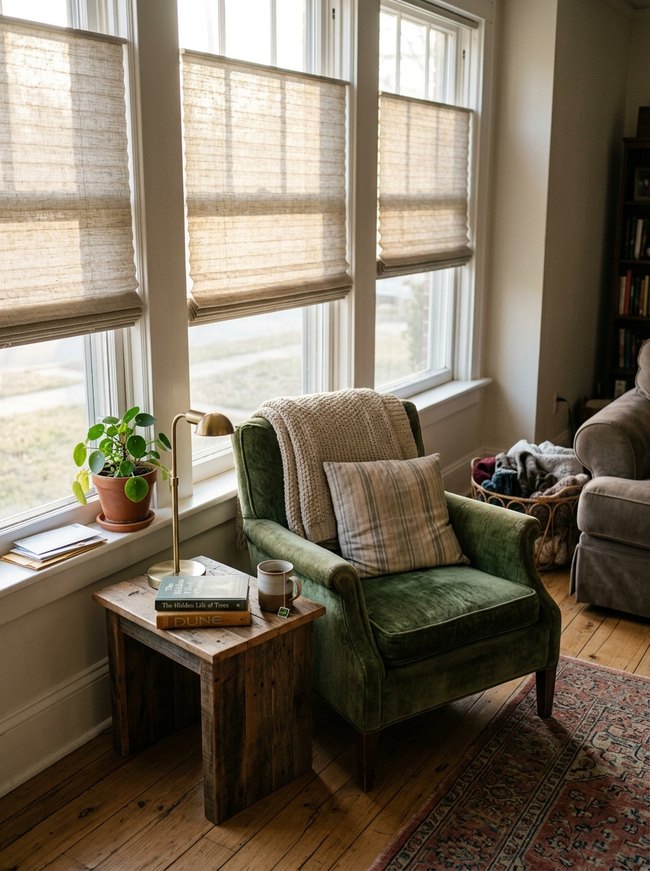
Sheer pleated shades offer privacy without blocking all natural light. The light-filtering curtains allow soft sunlight to fill the room, creating a bright, airy feel. A deep green velvet chair adds a pop of rich color, complementing the warm wood tones. Steal the sheer pleated shade idea for flexible light control.
5. Top-Down Bottom-Up Blind
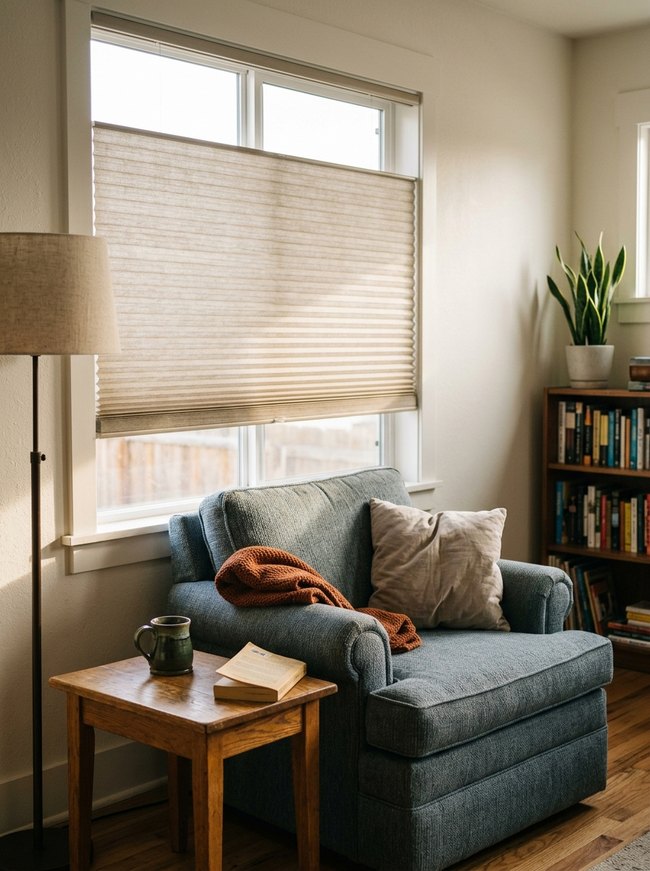
The designer chose a top-down bottom-up cellular shade for the reading nook, allowing daylight to stream across the pale wall while maintaining privacy on the lower pane. The tan fabric blind slides on slim cords, offering flexible light control for your tiny home curtains. A dark green stoneware mug sits on the oak side table, completing the cozy scene. The cellular shade offers adaptable light and privacy.
6. Patterned Roman Lift Shade
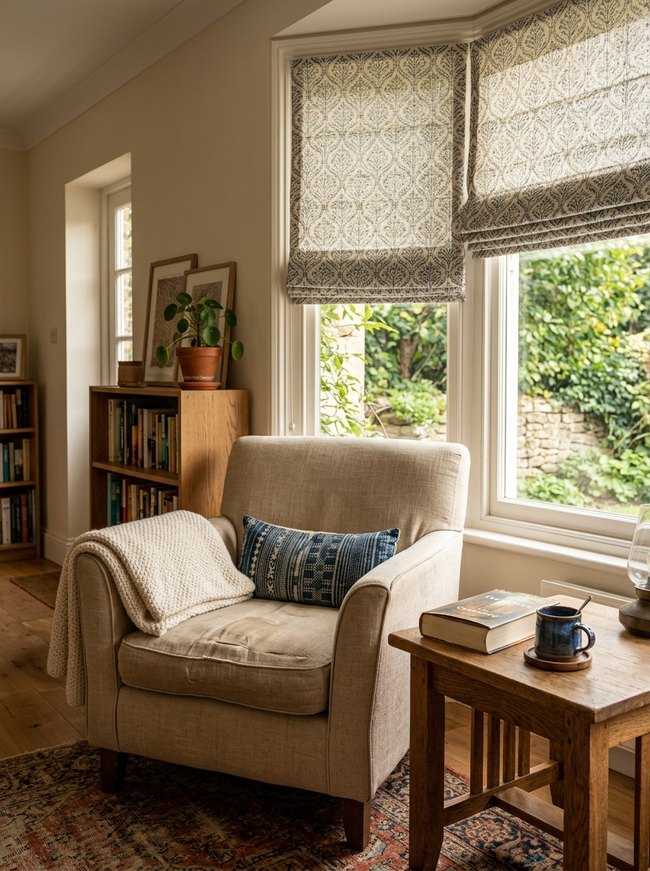
Patterned Roman lift shades add visual interest without consuming floor space. The soft blue and cream pattern complements the neutral armchair and warm oak side table. The clever design offers both light control and a decorative element for the tiny home curtains.
7. Velvet Blackout Pinch Pleat
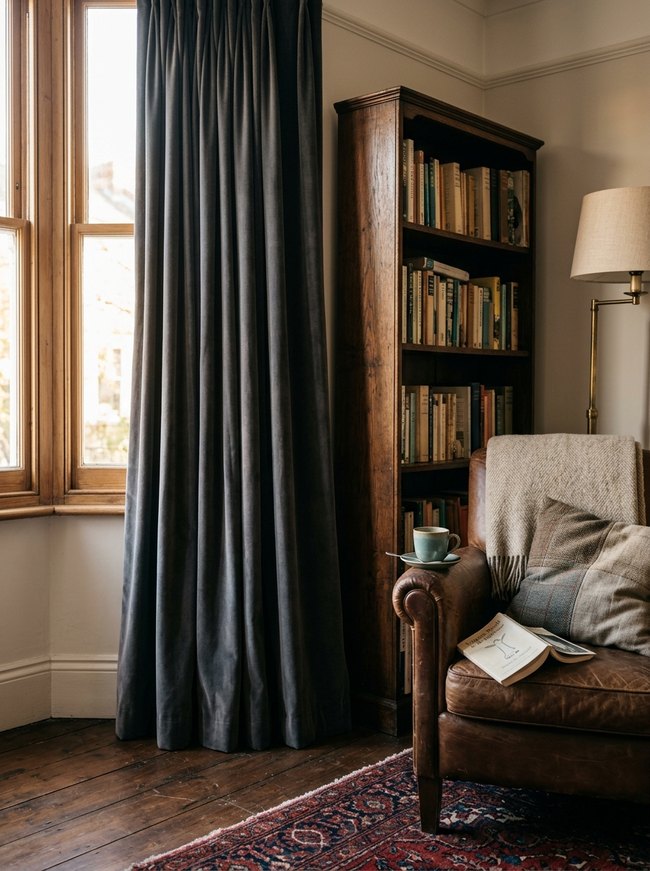
Dark velvet curtains in the room create a luxurious, enclosed feeling, making the tall window feel smaller and more private. The thick fabric blocks bright daylight, adding deep color and soft texture to the room. A rich brown leather armchair and a tall wooden bookshelf fill the corner, creating a cozy reading nook. Heavy, dark curtains offer true light control and deep visual weight.
8. Bamboo Woven Roll Up
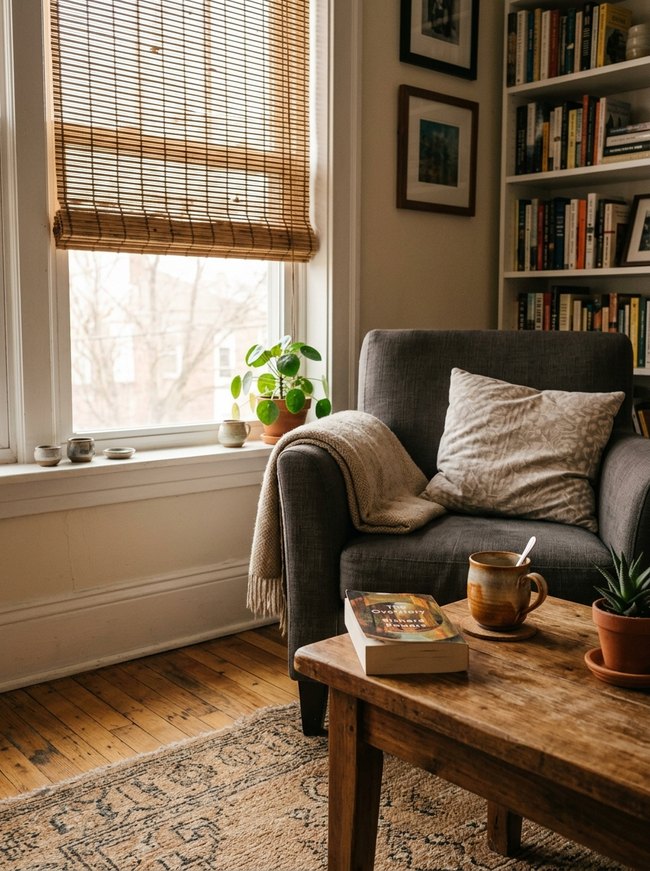
Bamboo woven roll-up shades bring natural texture and soft light into the room. The natural material offers warm, filtered light while still providing privacy, an important feature for tiny home curtains. A cozy blanket draped over the dark gray armchair and a small potted plant on the weathered wood coffee table add comfort. Natural woven shades provide filtered light and privacy.
9. Crisp White Tension Rod
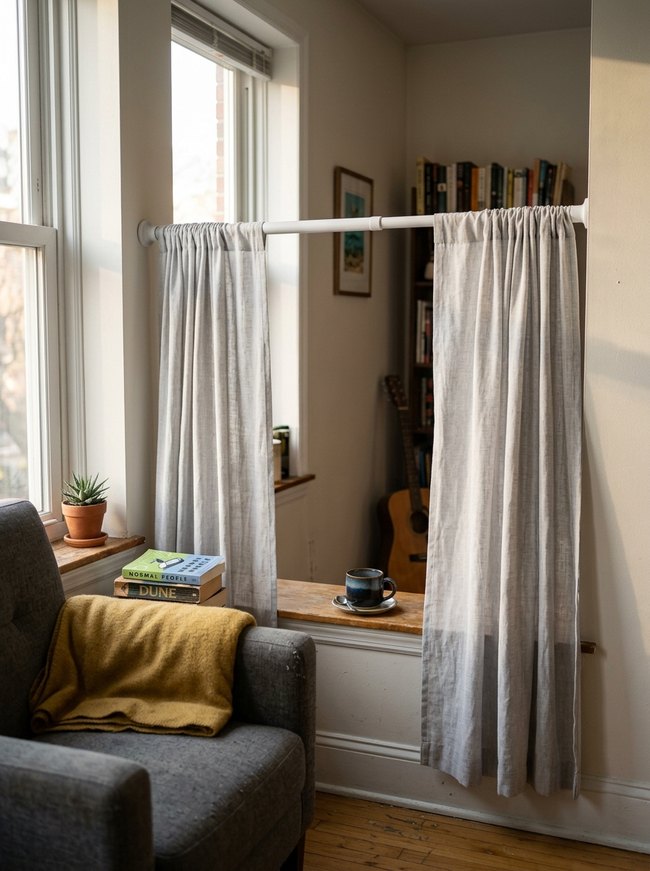
Crisp white tension rods create a clever privacy solution for the small window nook. The light gray linen fabric on the curtains allows ample daylight to filter through while still shielding the interior. A small terracotta potted succulent and a stacked pile of books personalize the window seat, adding warm, lived-in layers. The tension rod setup offers simple, drill-free installation.
10. Tiered Lace Valance Set
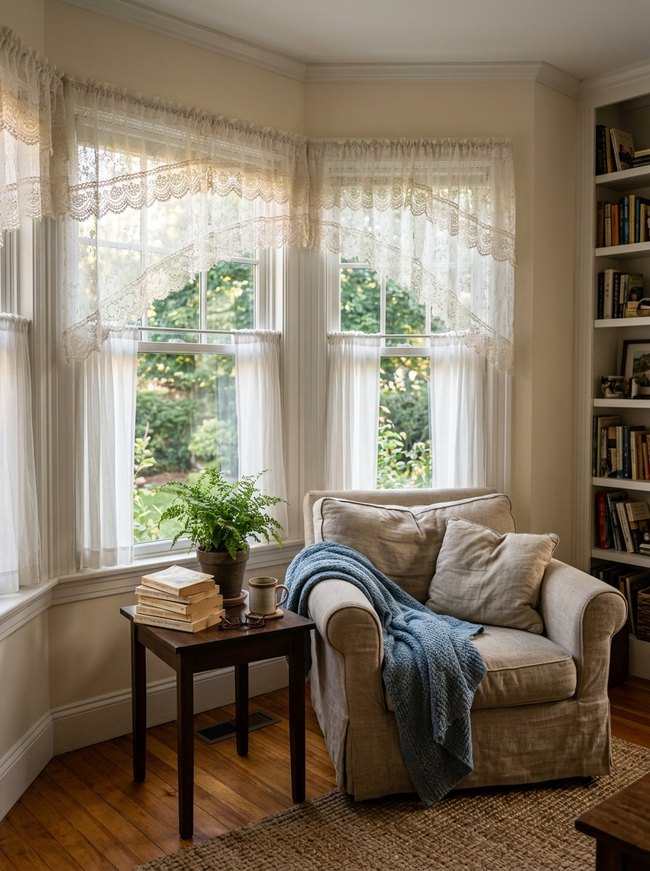
Layering two distinct lace curtains provides both privacy and soft light in the cozy nook. The approach works by combining a decorative valance with simple sheer panels, allowing control over the outside view. A plump beige armchair with a dusty blue throw blanket invites relaxation. Different lace patterns offer varied light control.
The Inverse Relationship: Thermal Mass vs. Fabric Drapery in Micro-Aperture Fenestration
Heavy thermal mass in tiny home curtains directly reduces fabric draping over small windows. Consider a four-foot wide window opening on a tiny house wall. Thick, charcoal-gray wool drapes, while excellent for insulation, will gather into a dense stack when pulled back. This bulky fabric then covers a significant portion of the glass pane, even when fully open.
Conversely, a sheer, white linen panel offers minimal thermal resistance but gathers into a thin, wispy stack. You gain more visible glass area with the lighter fabric. Owners often choose heavier materials hoping for privacy, but the bulk obstructs precious daylight. A double-hung window measuring two feet by three feet experiences greater light loss from thick cotton than from a lighter cellular shade.
Selecting a single, dense pleated curtain for a narrow window actually blocks more light than two thinner, flat panels. You want the curtain fabric to compress tightly against the wall next to the window frame. Thin, dusty teal cotton offers better light transmission when open than a heavy, honey-toned velvet. Remember, every square inch of glass matters in a small dwelling.
Spatial Illusion through Verticality: An Analysis of Pleat Structure and Ceiling-Mount Placement in Limited Volume Interiors
Vertical lines in window treatments create an illusion of greater height inside small rooms. Pinch pleat curtains, with their crisp, tailored folds falling straight from the rod, naturally draw your eye upward. You can mount these fabric panels directly to the ceiling, just above the window frame, making walls appear taller. Consider a floor-length, single-color linen panel that brushes the blond oak floorboards. This design avoids breaking the vertical flow, tricking your brain into sensing more space. Conversely, a cafe curtain, cut to cover only the lower half of a window and hung mid-frame, chops the wall into horizontal sections. Such a short drape visually shortens the room, making your tiny home feel even smaller. A full-length ripple fold curtain, with its smooth, continuous waves of dusty teal fabric, offers another strong vertical element. This style delivers clean, unbroken lines from the ceiling down to the knotty pine flooring. Windows then become tall, slender features rather than short, wide boxes. Your small interior feels more expansive when fabric panels stretch from the ceiling down, emphasizing the full height of the room.
Which Idea Will You Try First?
That’s 10 different takes on tiny home curtains. The best ideas above are usually the smallest moves — one material, one layout shift, one piece of furniture in the right place. Pick whichever room feels closest to your space and start there before tackling the rest.
Found an idea worth keeping? Save this post to your Pinterest board so it’s waiting for you when you’re ready to start your own project.