12 Decorating Mistakes That Make a Tiny Home Feel Smaller
A tiny home works hard for its owner. Many people struggle making a small space feel open and bright. Owners often pack everything inside their living quarters, thinking more stuff equals more comfort. A cramped floor plan, however, just makes wooden walls close in. Designers understand common decorating mistakes, and they have clear solutions. Everyone wants a compact house that feels airy and spacious, not like a cluttered storage unit. Knowing how to arrange furniture and accents makes a big difference in a restricted footprint. Let’s fix common missteps.
1. Dark Wall Color Scheme
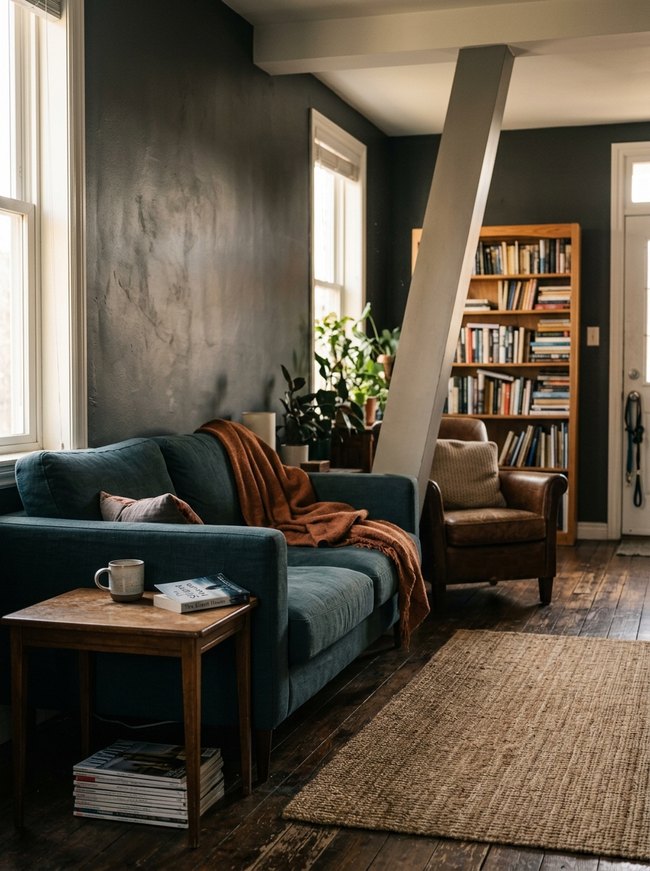
Dark charcoal walls make the cozy room feel smaller by absorbing light. Painting walls a lighter color will reflect natural light, making the entire space feel more open. Avoid dark wall colors in small rooms to maximize the perception of space.
2. Cluttered Open Shelf
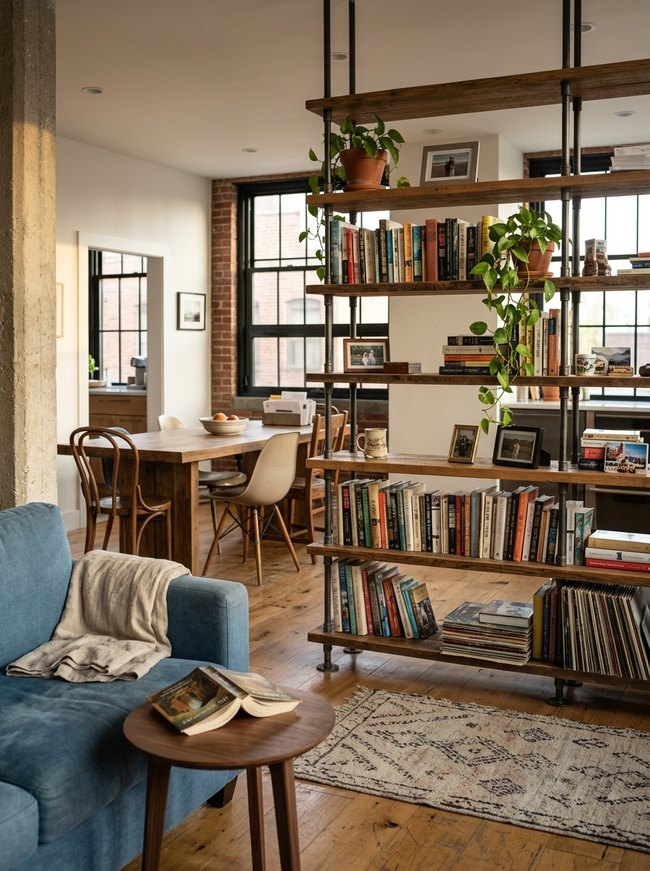
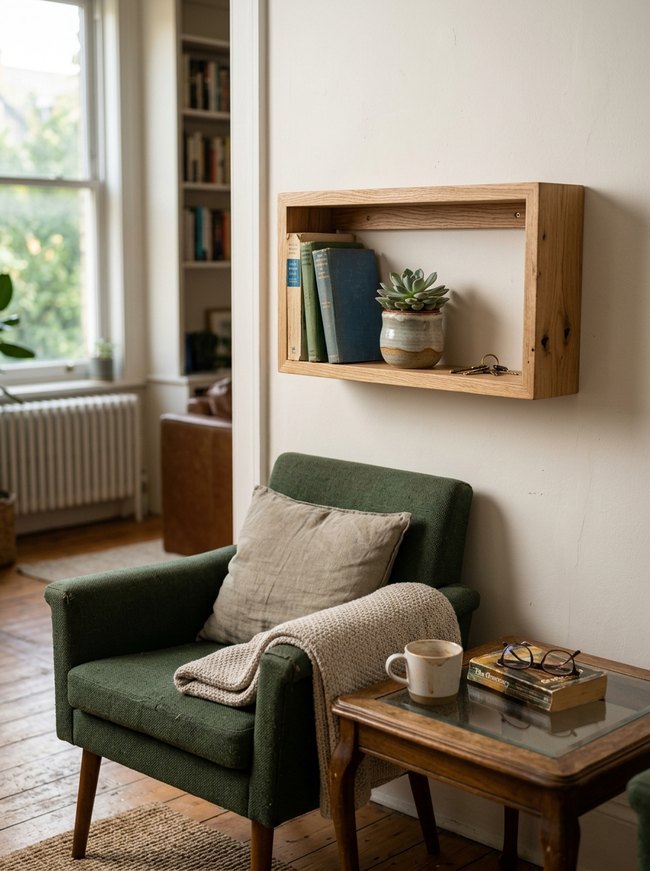
The open wooden shelves in the room hold too many books and small items, making the space feel packed. Homeowners want to leave some gaps on the shelves so the small home feels more open and inviting. Place a few larger decorative items on each shelf, leaving clear space between them.
3. Overstuffed Furniture Arrangement
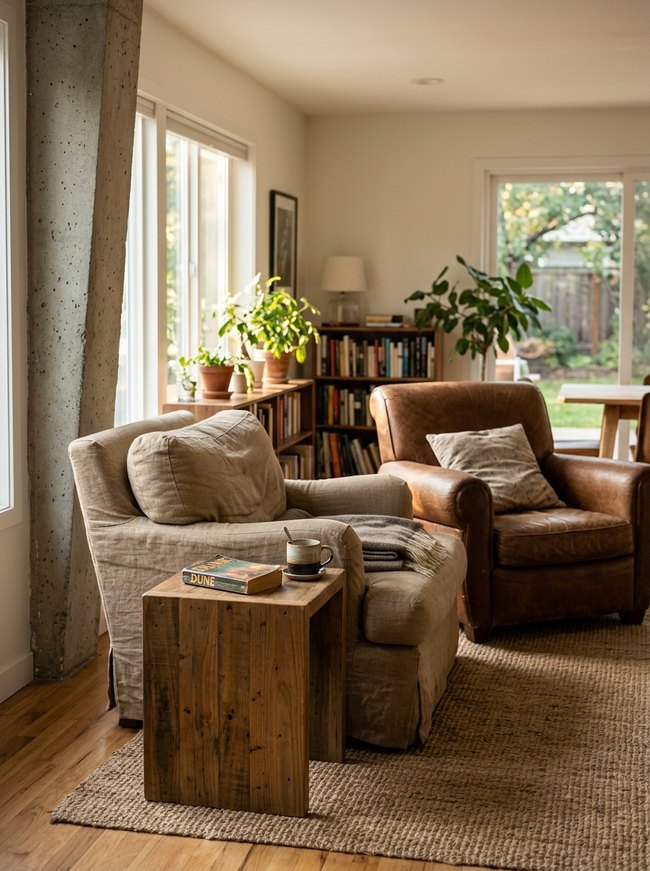
Two large tan armchairs fill much of the small room, leaving little open floor space. Furniture pieces must fit the living area without blocking pathways. Avoid placing too many big items in one room to prevent tiny home decorating mistakes.
4. Large Scale Pattern
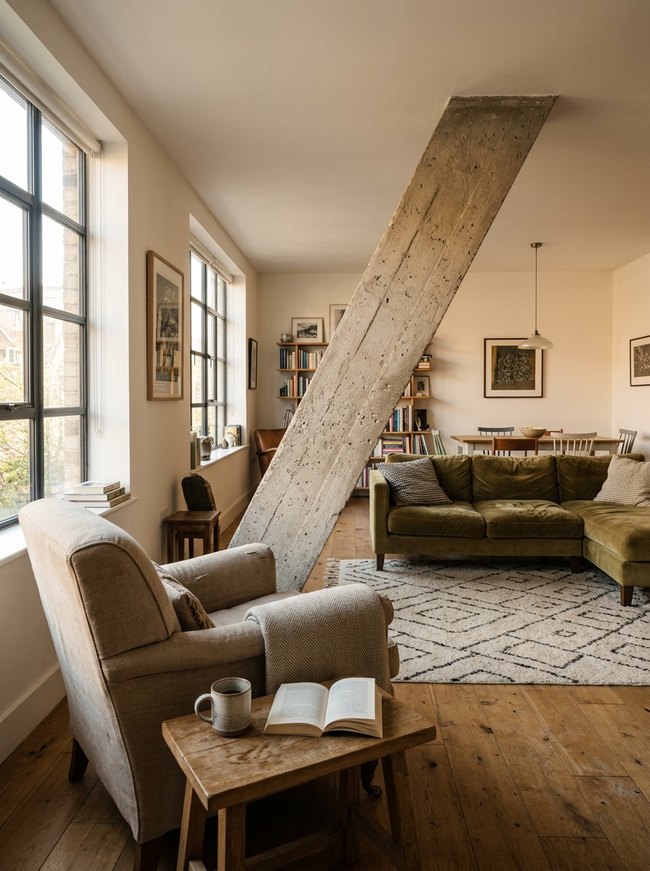
A large patterned rug with bold black lines on a cream background pulls the eye across the wooden floor, making the room feel smaller. Solid colors or small, subtle patterns work best for rugs in compact spaces. Avoid big, busy designs when decorating a tiny home.
5. Bulky Window Treatment
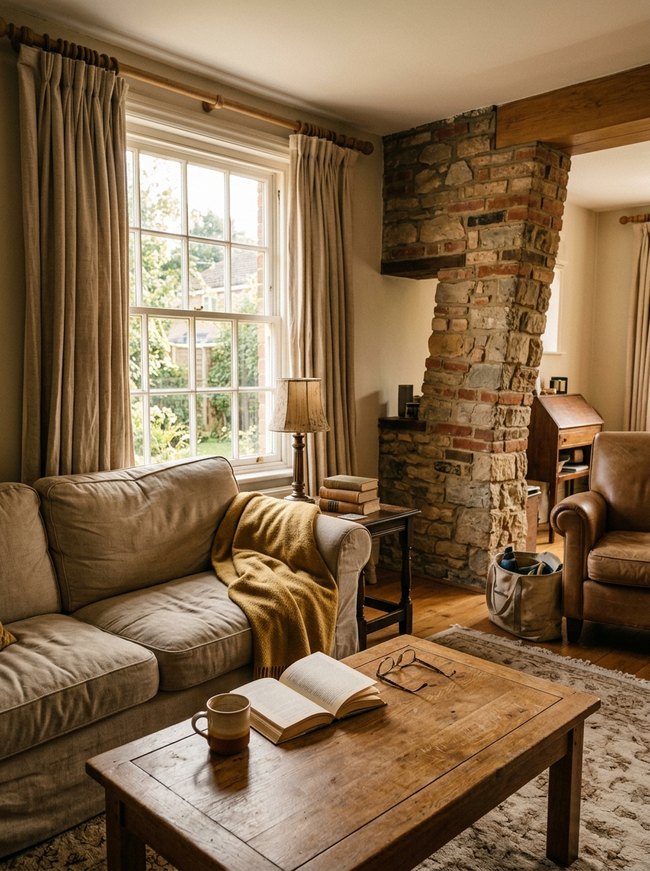
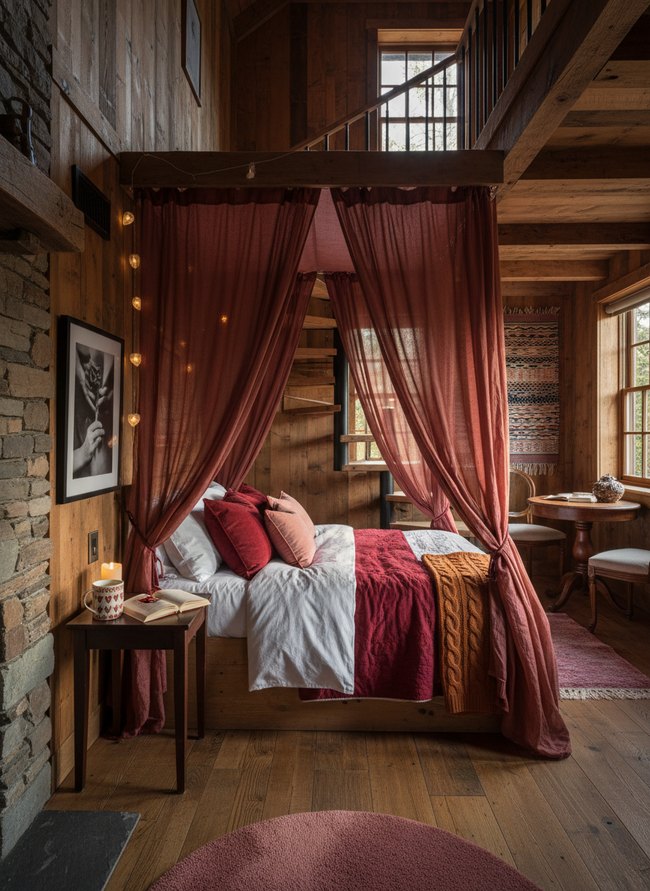
Thick, pleated beige curtains block much natural light from the tall window. Heavy fabric treatments make tiny home decorating mistakes obvious, shrinking the room visually and blocking valuable sunlight. Lighter, sheer window coverings are a better choice.
6. Misplaced Oversized Art
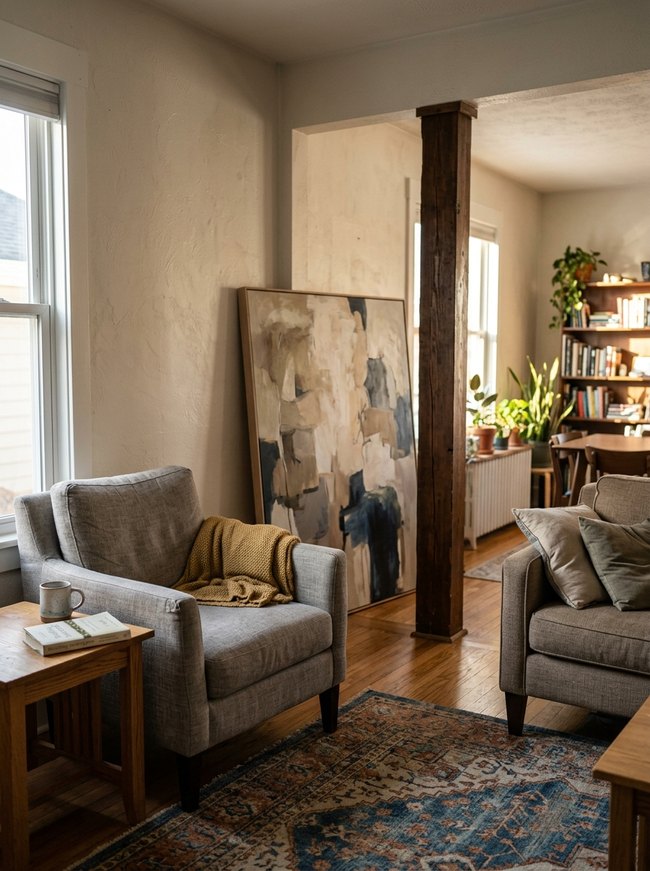
A large abstract painting leans against a pale beige wall, making the living space feel cramped. Oversized artwork can quickly overpower a small room, stealing visual space from other elements. Choose smaller artwork that complements your wall size instead of dominating the wall.
7. Mixed Era Decor
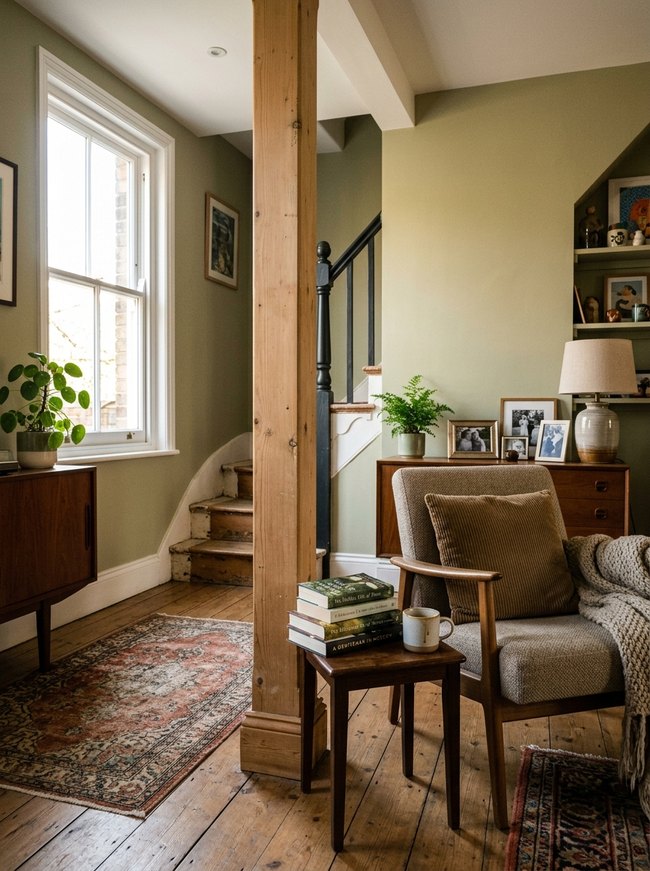
The wide wooden column in the room creates an awkward division, making the small space feel even tighter. Homeowners should choose furniture and decor that allows light and views to flow freely. Avoid adding large, bulky items that break up sightlines in a compact area.
8. Floor Heavy Storage
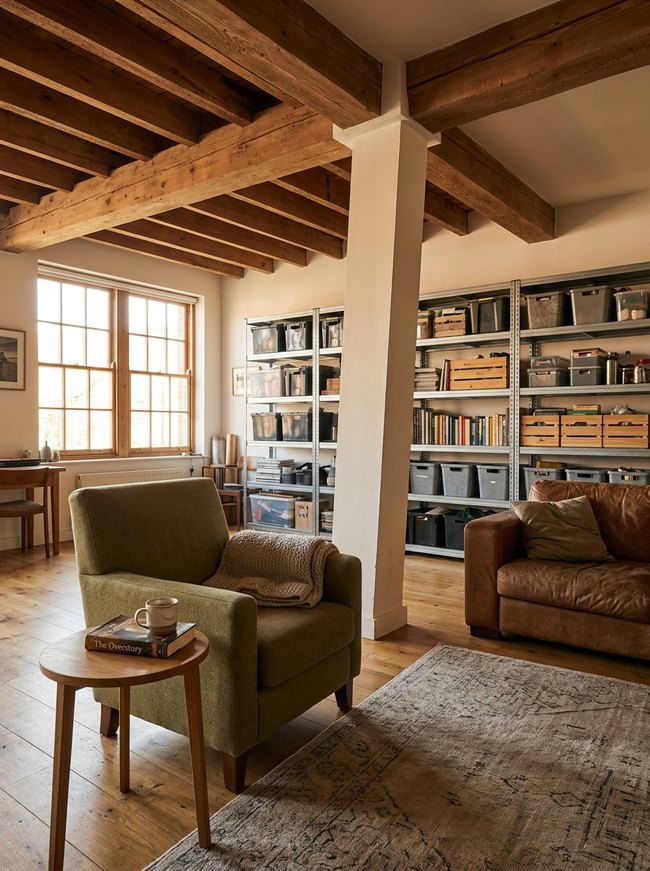
The large metal shelving unit fills the entire back wall, creating a heavy visual line low to the floor. The tall, wide shelves with many dark bins draw the eye down, making the room feel shorter and cramped. Avoid floor-heavy storage to help a small living space feel more open and airy.
9. Unused Vertical Space
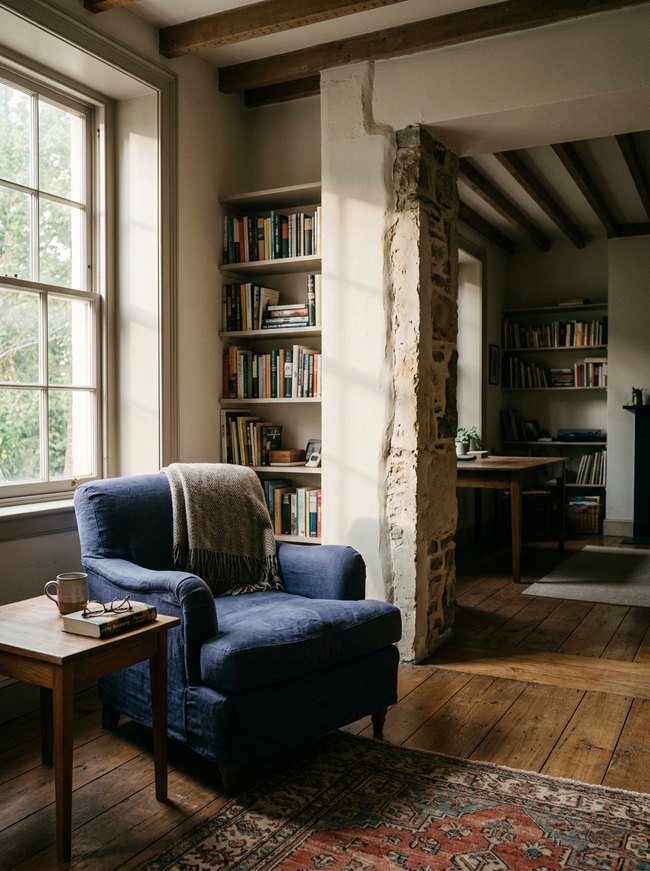
Tall white bookshelves fill the wall space, holding many colorful books. Vertical areas in the home add storage, which helps prevent tiny home decorating mistakes. Builders should extend shelves high, all the way to the ceiling, for maximum benefit.
10. Disparate Lighting Zones
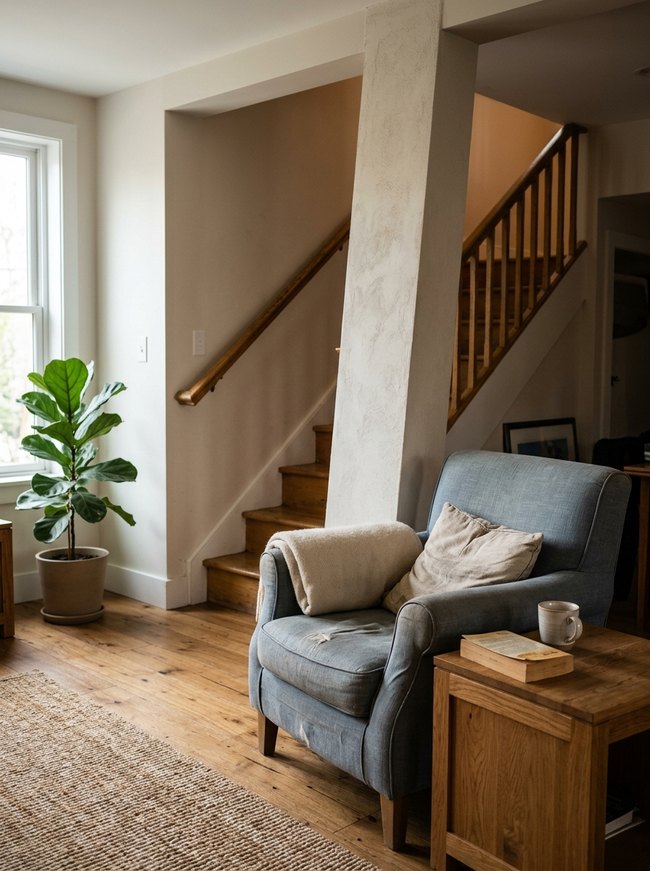
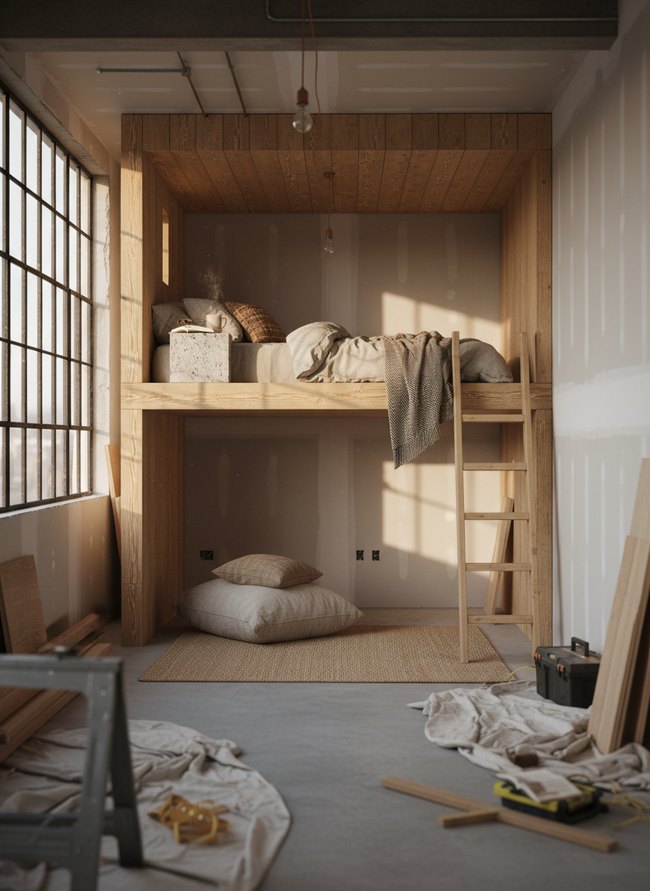
Warm natural light fills the living area near a large window, contrasting sharply with the dim, unlit stairway in the background. Different light levels make the small room feel choppy and separated, not open. Matching light fixtures and bulbs create a single, bright space.
11. Closed Concept Shelving
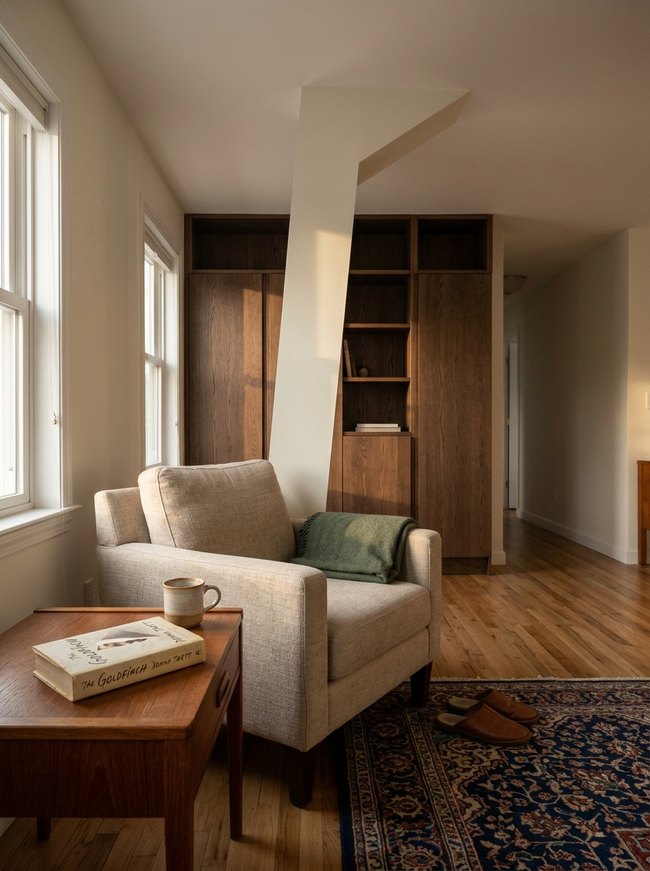
Tall wooden shelving units with closed doors block the bright window light, making the room feel smaller. Open shelves or light-colored furniture create an airy feeling instead of dark, solid pieces. Bulky, floor-to-ceiling storage is best avoided in rooms with limited floor space.
12. Heavy Room Divider
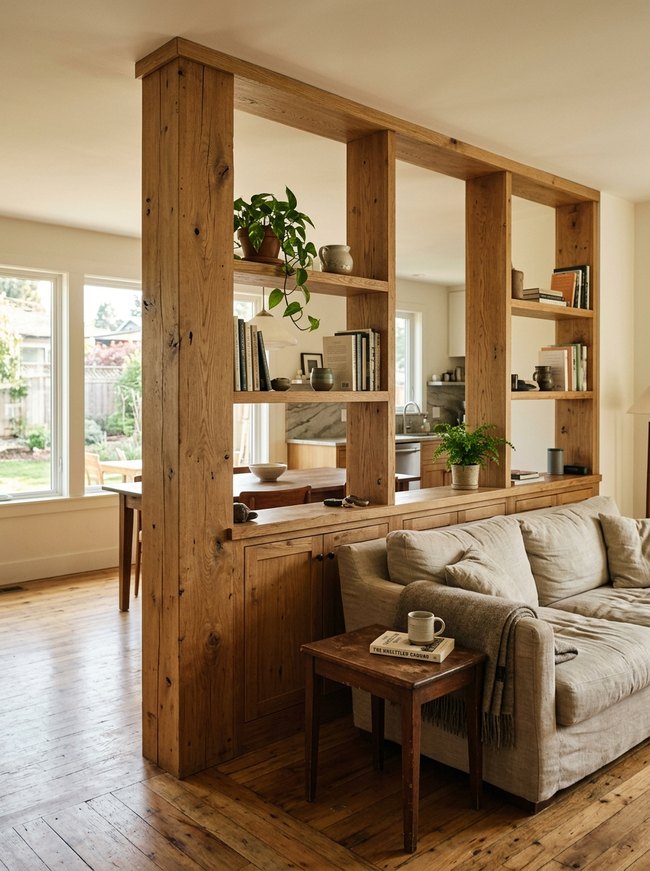
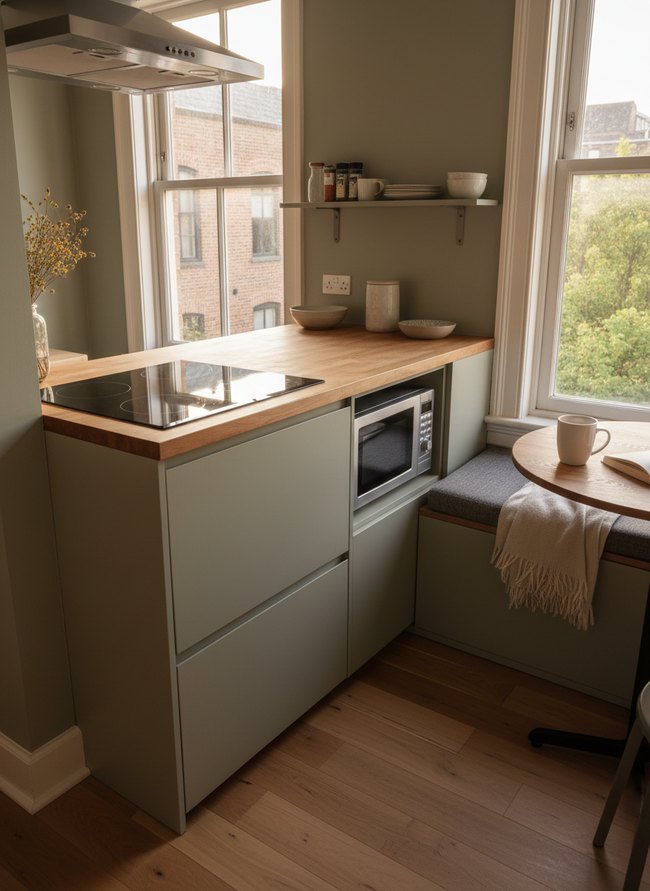
The thick, honey-toned wooden divider creates distinct areas but blocks light and views. A tiny home benefits from open spaces to avoid feeling boxed in. Low, open shelves or sheer curtains offer better alternatives to solid walls.
Is Your Furniture Layout Accidentally Creating Obstacles?
Most people think pushing furniture against every wall saves floor space. This common setup, however, often blocks your tall windows and makes a small room feel boxed in. Instead, arrange your three-seat sofa and two oak end tables so they float a few inches from the plaster wall. Allowing natural daylight to stream past the low furniture creates an open, airy feeling. You might also place a double-wide console table directly in front of the window, not against a solid wall. That arrangement lets light through its open bottom shelves.
Many homeowners also believe tucking a single armchair into a corner maximizes square footage. That corner armchair, however, often creates a visual dead end, halting your eye’s movement through the entire space. Consider angling a dark gray armchair slightly away from a corner, perhaps facing a shallow bookcase. This small shift allows a clear path for your line of sight. Placing a live edge coffee table in the center of the room, rather than pushed to one side, provides a central anchor. This layout encourages movement around the table, making the small living area feel expansive.
The ‘Neutral’ Trap: Why Beige Can Betray Your Small Space
Many homeowners think a room painted all pale beige will stretch its small dimensions. Pale walls often flatten a tiny room, making the space feel more like a cardboard box. Instead, you need to trick the eye with clever contrast. Most people paint every wall a uniform off-white, losing any visual interest.
Savvy designers actually use varying shades of one color, like a dark charcoal sofa against a lighter gray wall, to build depth. A single deep accent wall, perhaps a dusty teal, pulls the far surface visually closer. Other decorators layer textures, like a rough linen throw over a smooth cotton armchair, to create a tangible difference. Your small home thrives on these unexpected shifts.
Common advice suggests keeping everything light and airy. However, a single dark element, such as a black iron floor lamp standing against a creamy wall, provides a strong focal point. This sharp contrast gives the eye a place to land, instead of wandering aimlessly across a uniform surface. A honey-toned wooden table on a light oak floor makes a subtle but clear distinction. Smart decorators understand that contrast, not sameness, truly expands your small home’s visual boundaries.
Which Idea Will You Try First?
That’s 12 different takes on tiny home decorating mistakes. The best ideas above are usually the smallest moves — one material, one layout shift, one piece of furniture in the right place. Pick whichever room feels closest to your space and start there before tackling the rest.
Found an idea worth keeping? Save this post to your Pinterest board so it’s waiting for you when you’re ready to start your own project.