18 Afrohemian Tiny Home Decor Ideas (2026 Trend)
Mass-produced global aesthetics rarely translate well to small living spaces. Most designers simply shrink existing styles, often losing original character in the process. A different pattern emerges within the burgeoning Afrohemian tiny home movement. The design direction actively rethinks volume and texture, making small footprints feel expansive and deeply personal. Concrete walls meet vibrant woven tapestries in unexpected harmony. Rich indigo dyes against natural bamboo flooring create layers of visual interest that defy square footage limitations. Each space tells a story through hammered copper accents, hand-carved wooden stools, and sun-baked terracotta pots. These 18 examples demonstrate how a distinct identity can flourish even in compact environments.
1. Woven Rattan Wall Display
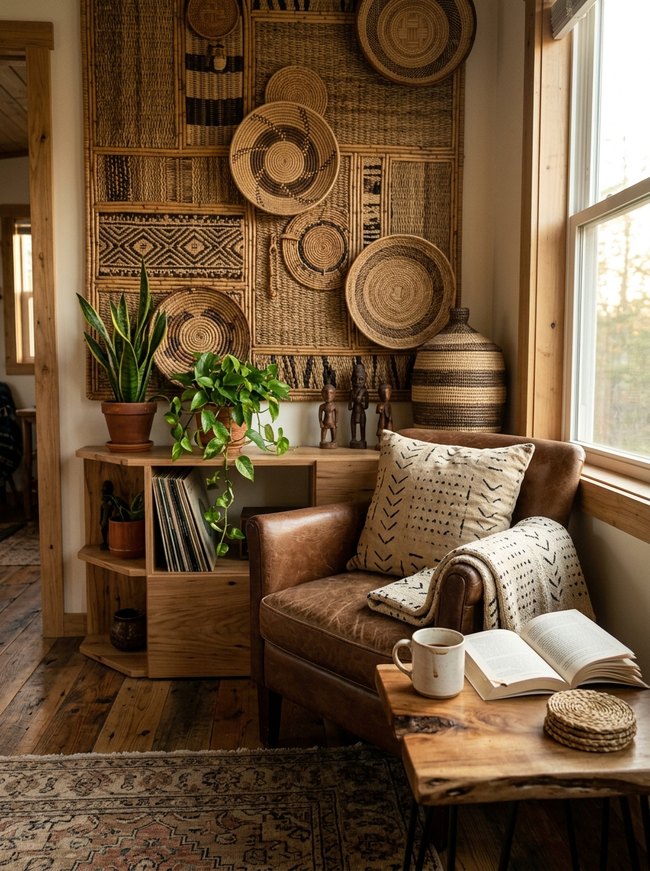
The afrohemian tiny home uses a layered wall display of woven baskets to create visual depth. Varied sizes and dark patterns of the rattan pieces draw the eye upward, making the small corner feel expansive. Warm oak wood tones, a brown leather armchair, and green potted plants further soften the space. Steal the layered basket wall.
2. Terra Cotta Planter Corner
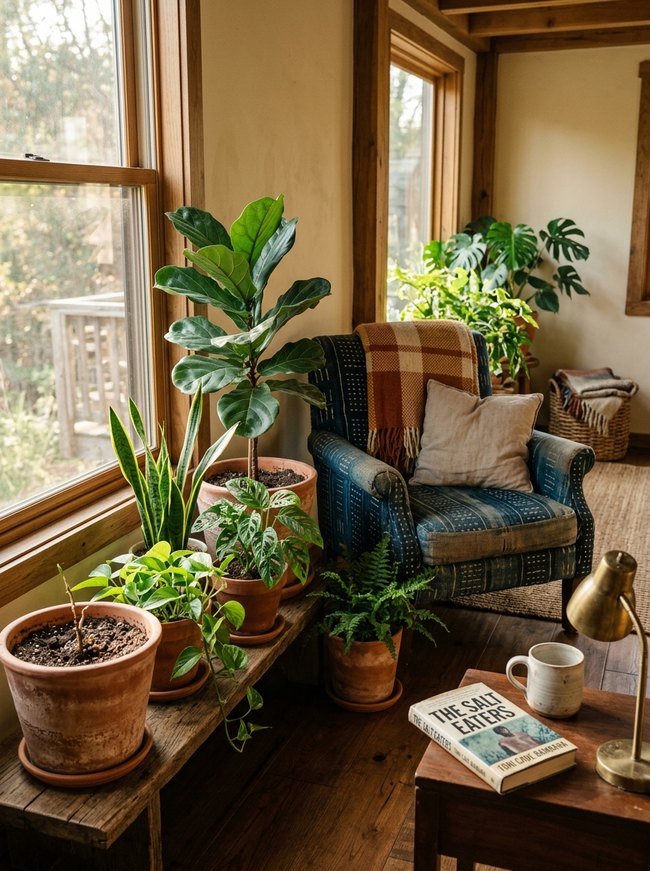
Terra cotta planters at varying heights create a lush, organic corner. The arrangement brings natural elements indoors, softening the room’s hard lines. A patterned blue armchair and a plaid wool throw add rich textures. Layering plants at different levels creates visual depth.
3. Mud Cloth Textile Throw
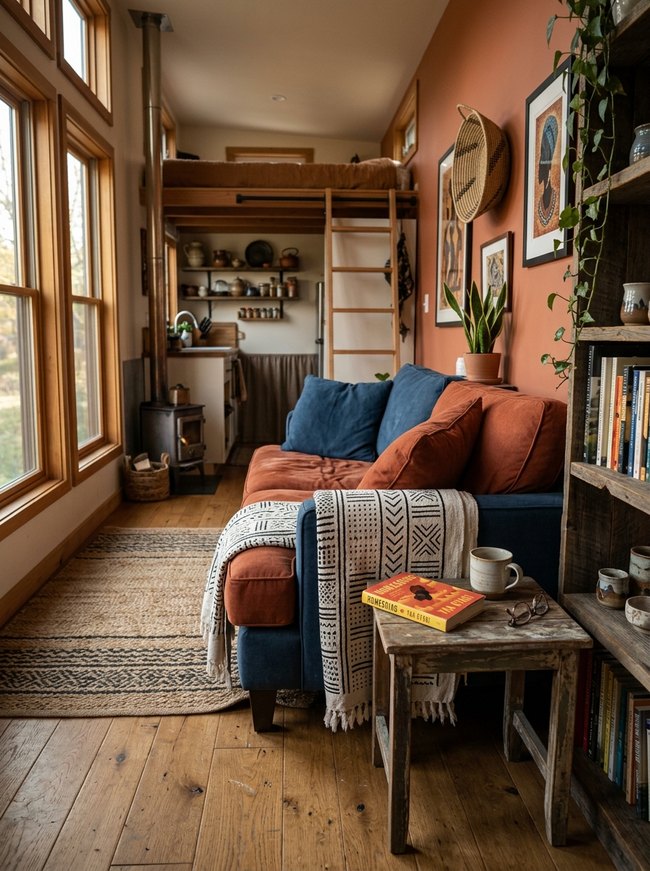
The designer skillfully uses a mud cloth textile throw to add visual texture and global flair to the blue sofa. The patterned blanket breaks up the solid couch color, drawing the eye with its bold black and white design. A rustic wooden side table and a tall snake plant further enhance the cozy, layered aesthetic of the afrohemian tiny home. Drape a patterned textile throw over a solid sofa.
4. Artisan Basket Weave Storage
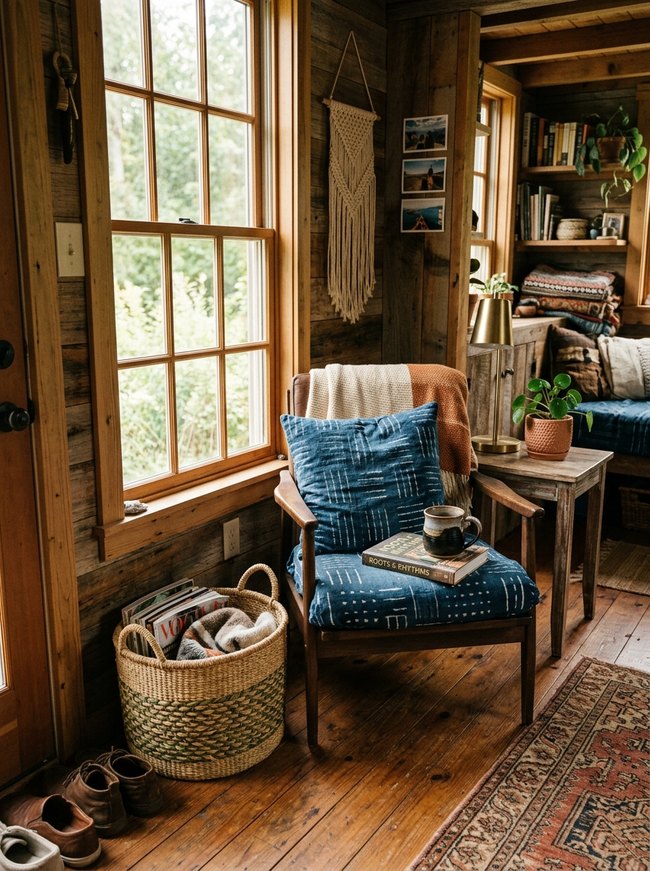
The woven seagrass basket offers a smart storage solution, keeping magazines and a soft blanket tidy in this small space. The basket’s natural texture and earthy green pattern add visual interest without cluttering the wood-paneled room. A dark blue patterned cushion on the wooden armchair complements the basket’s rustic feel, while a small brass lamp provides warm light. The woven storage basket idea is a great addition.
5. Beaded Curtain Room Divider
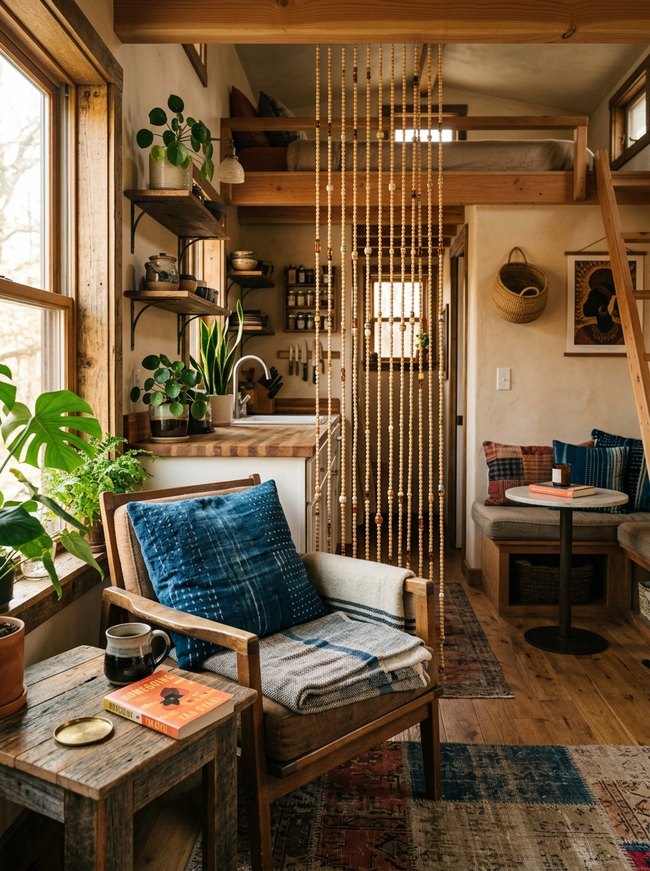
A beaded curtain provides a soft room divider, separating the living space from the kitchen. Light wood beads allow sunshine to pass through, keeping the small area bright and open. Dark wooden floating shelves and a woven basket offer practical storage, while a patterned quilt adds rich texture to the wooden armchair. The beaded curtain adds soft division without blocking natural light.
6. Geometric Print Floor Cushion
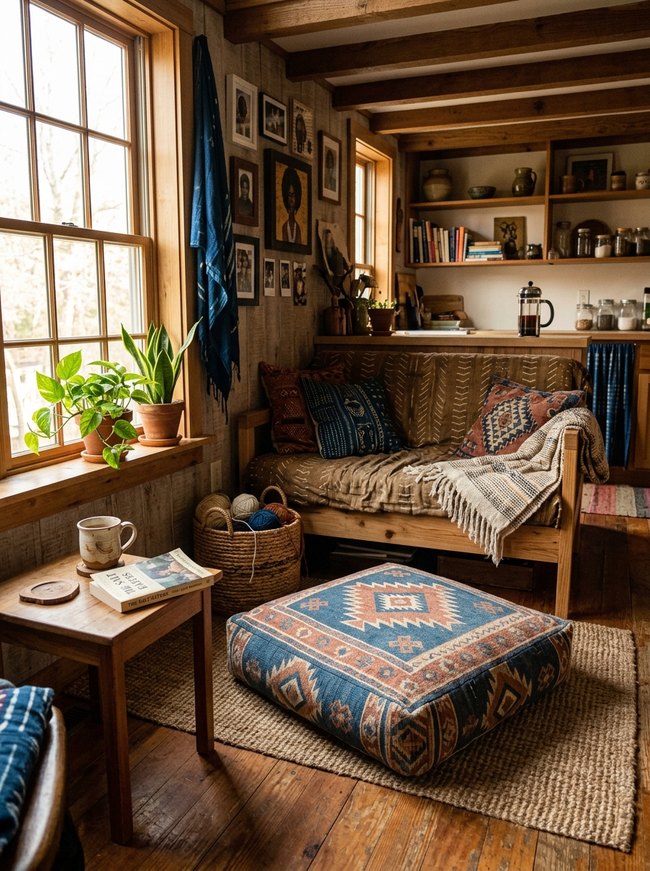
The geometric print floor cushion adds a bold, grounded presence to the warm wood floor. The deep blue and rust-orange pattern provides a vibrant contrast to the natural wood tones and the simple jute rug. The gallery wall with framed art and the dark blue throw draped over the wall paneling offer additional visual interest. A large, patterned floor cushion defines the sitting area.
7. Hand-Carved Wooden Stool
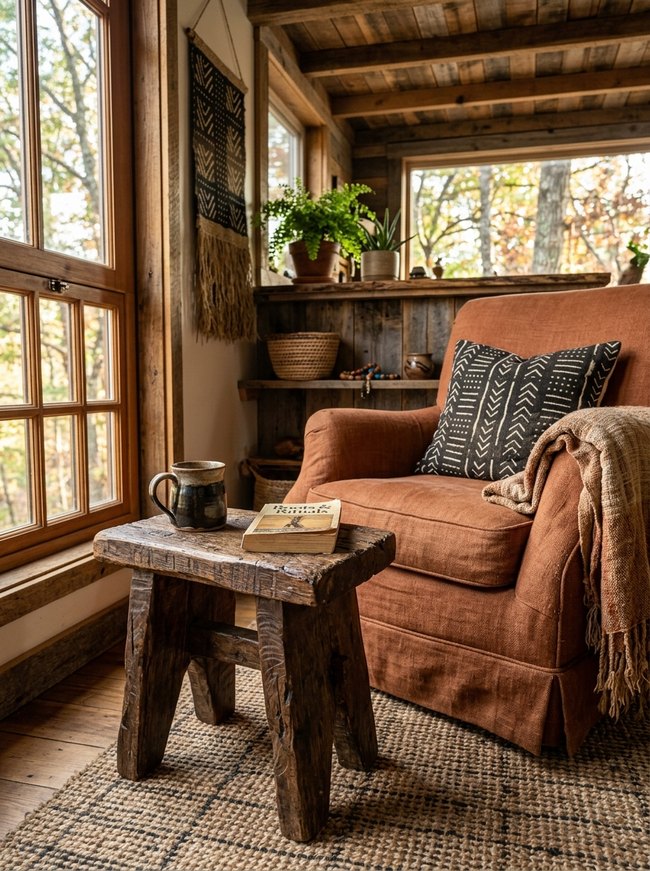
The hand-carved wooden stool provides robust texture, contrasting with the soft burnt-orange armchair for visual depth. A woven wall hanging and a green fern add organic elements, warming the rustic wood paneling. A single, rough-hewn wooden piece adds grounding character.
8. Macrame Plant Hanger Trio
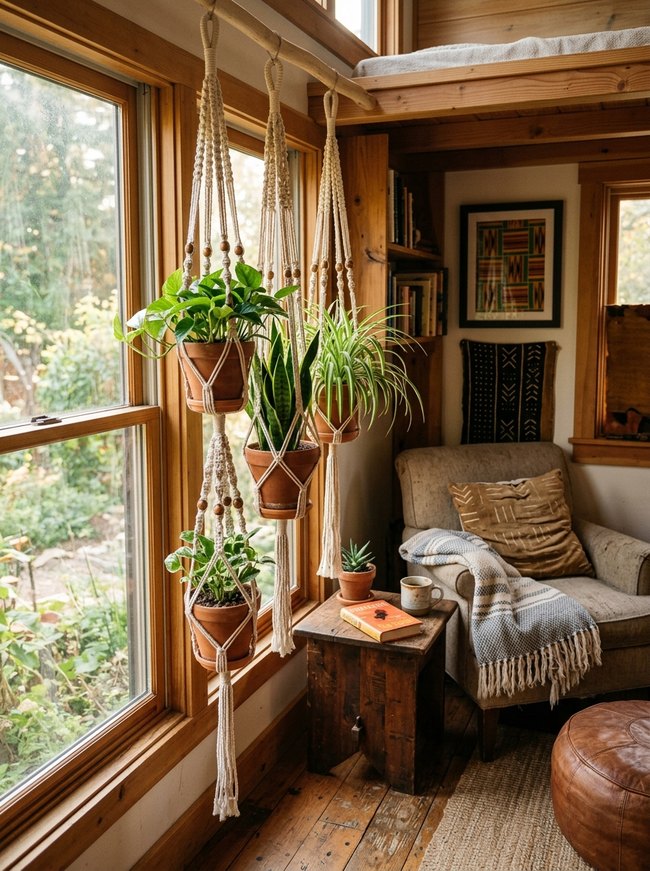
A trio of macrame plant hangers fills the tall window with natural texture and green life. The airy, open knots allow abundant sunlight to stream into the cozy corner. A woven throw blanket and a leather pouf also add warm, inviting elements to the space. Steal the idea of hanging multiple plants at different heights to create a living green curtain.
9. Ethiopian Coffee Ceremony Set
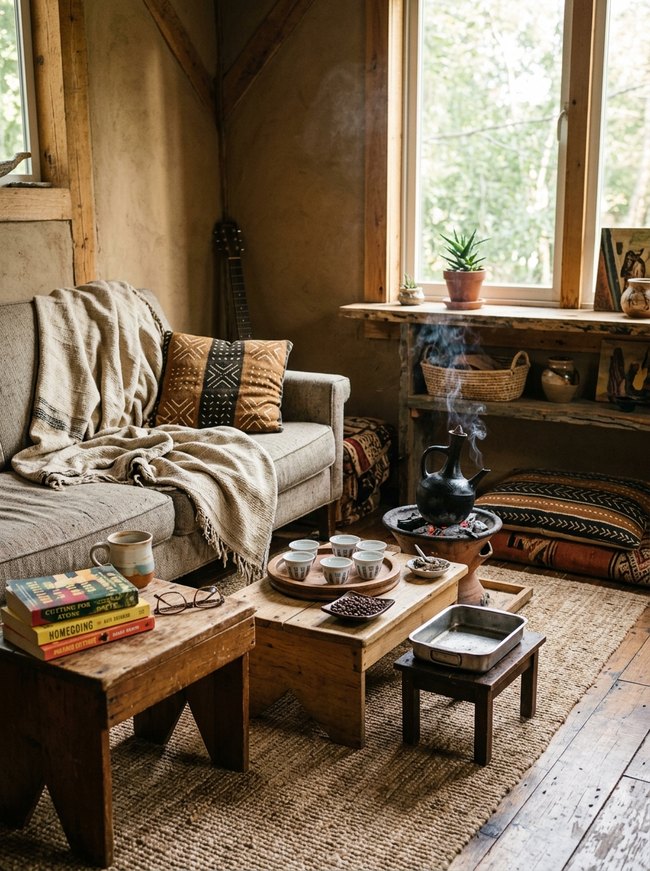
The small, dark clay jebena pot with its smoking charcoal fire instantly creates a focal point. The arrangement works because warm steam adds dynamic movement to the static scene. Earthy floor cushions and a textured jute rug soften the rustic wooden floorboards. Use a smoking or steaming element to add life to your space.
10. Adinkra Symbol Wall Art
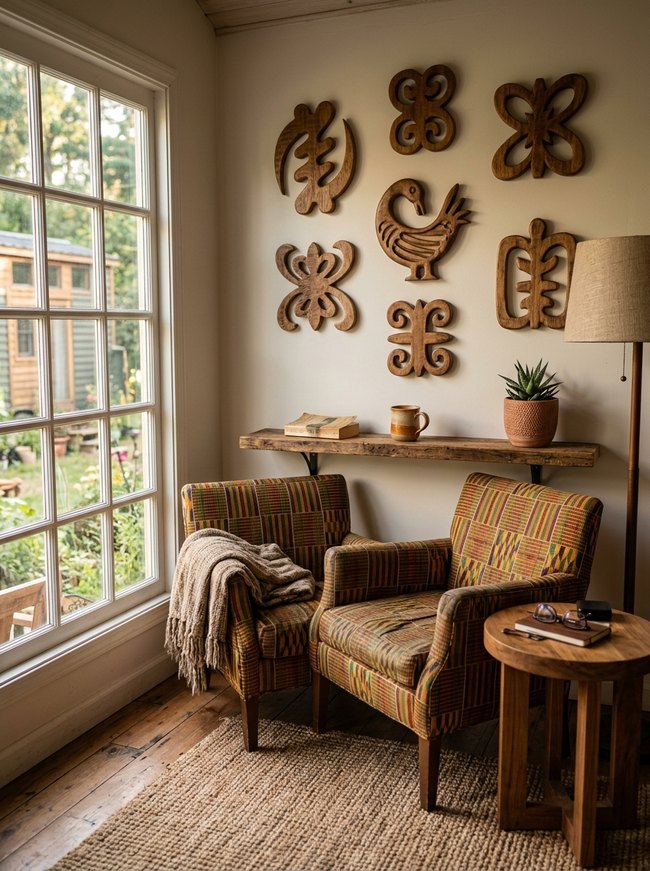
Seven carved wooden Adinkra symbols above the seating create a striking focal point. The grouping of meaningful wood pieces provides visual weight, balancing the tall window on the left. Two patterned fabric armchairs with warm tones and a textured jute rug on the wide plank floor provide cozy seating. Cultural wall art creates a strong focal point.
11. Kente Pattern Accent Pillow
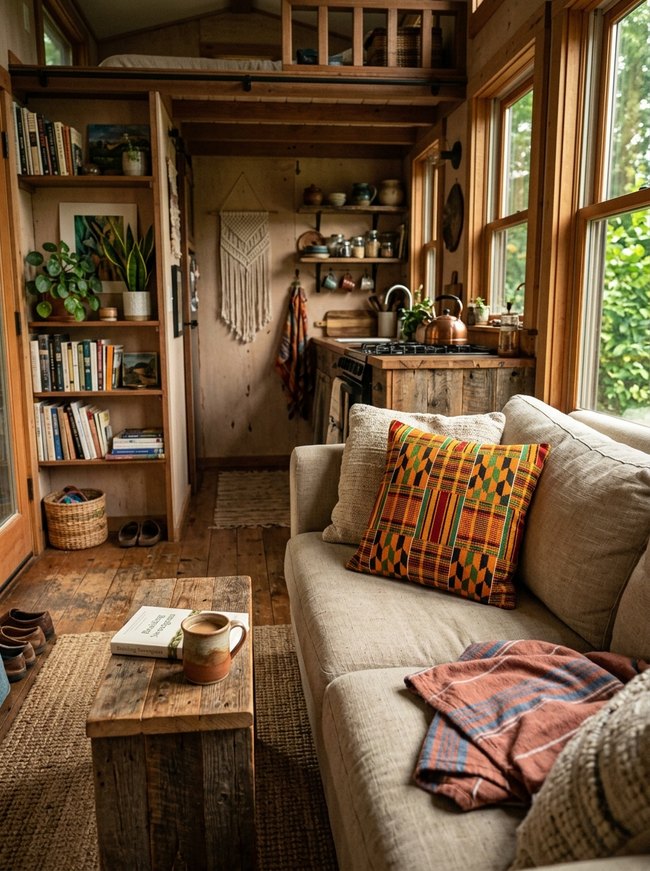
A single kente pattern accent pillow adds a rich, colorful focal point. The small, bold textile introduces vibrant gold, red, and green hues, preventing the neutral couch from feeling dull. A natural macrame wall hanging and a woven jute rug also soften the rustic wood plank walls. One strong pattern creates big impact.
12. Boho Fringe Hammock Chair
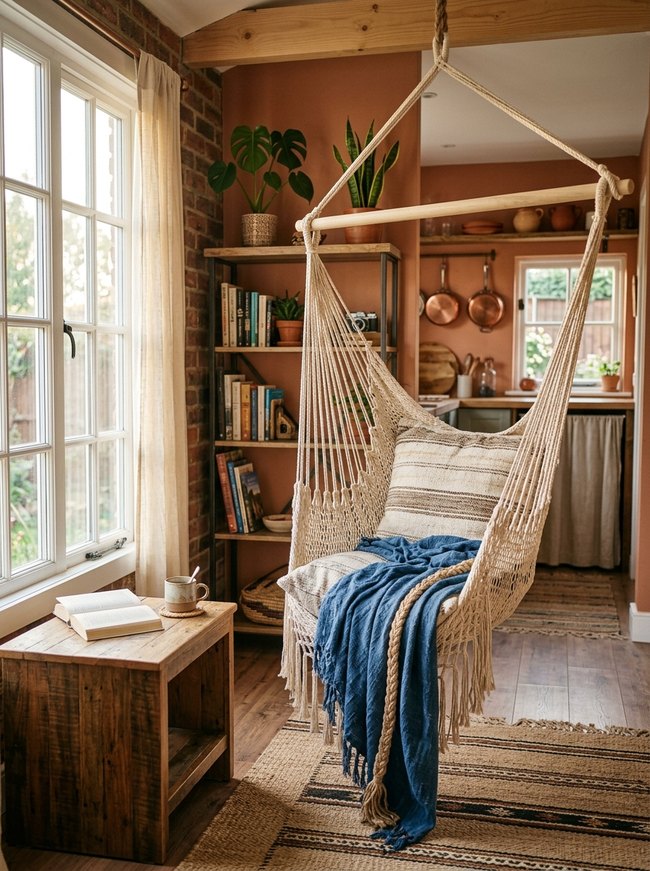
A woven fringe hammock chair creates a cozy reading nook, using vertical space efficiently in a tiny room. A raw wood side table holds a book and a mug next to the hammock. Exposed brick walls and warm terracotta paint add rich earth tones. A hanging chair offers extra seating.
13. Global Inspired Gallery Wall
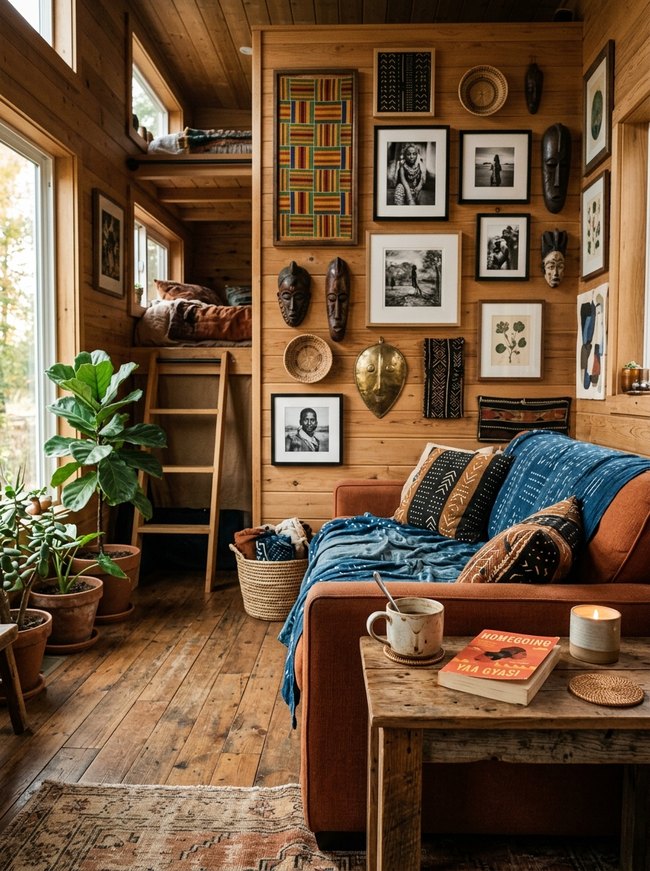
The designer created a gallery wall by mixing diverse textures and forms. The approach works well in a cozy afrohemian tiny home, adding visual depth without cluttering the small wooden space. Black and white photographs blend with carved wooden masks and woven baskets, creating a rich, layered effect above the rust-colored sofa. Curate a varied collection of art and objects to build a dynamic gallery wall.
14. Textured Jute Area Rug
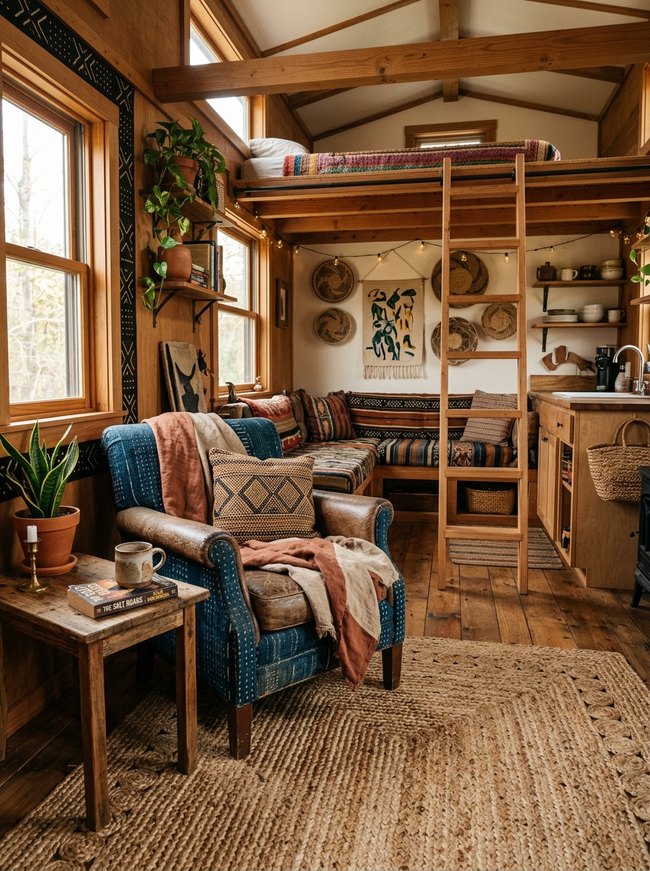
A large braided jute rug defines the central living area, separating the space from the kitchen. The natural fiber adds warm texture and prevents the wooden walls and floor from feeling too uniform. Woven baskets and patterned textiles also contribute layered visual interest. Use a sizable area rug to create distinct zones in an open-plan room.
15. Natural Fiber Ottoman Pouf
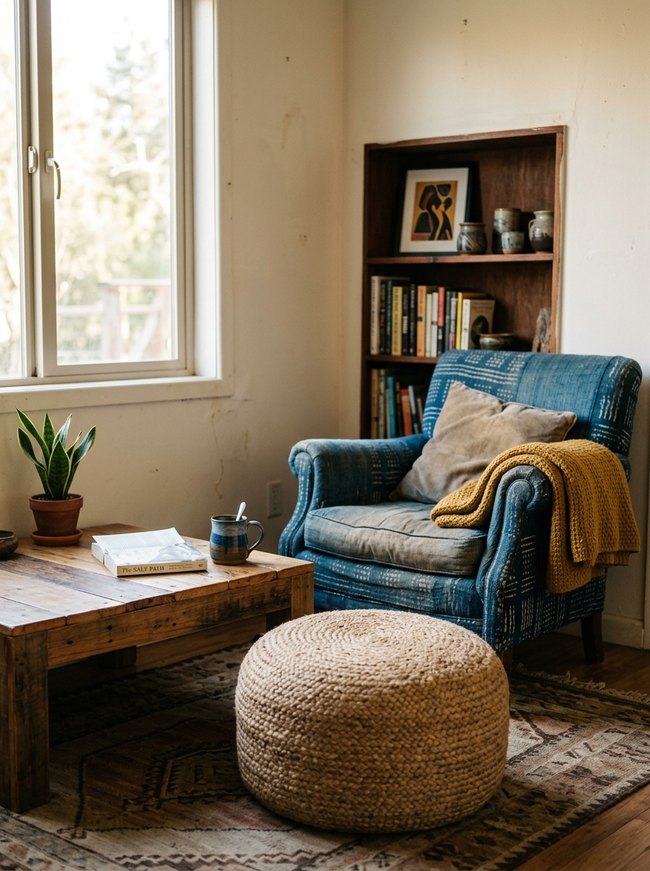
The round natural fiber ottoman pouf adds soft texture and a grounding element to the room. The chunky knit material contrasts nicely with the rough wooden coffee table and the patterned blue armchair. A similar woven floor rug under the ottoman also brings warmth and visual interest. Use a natural fiber pouf to add soft texture.
16. Indigo Dye Fabric Drape
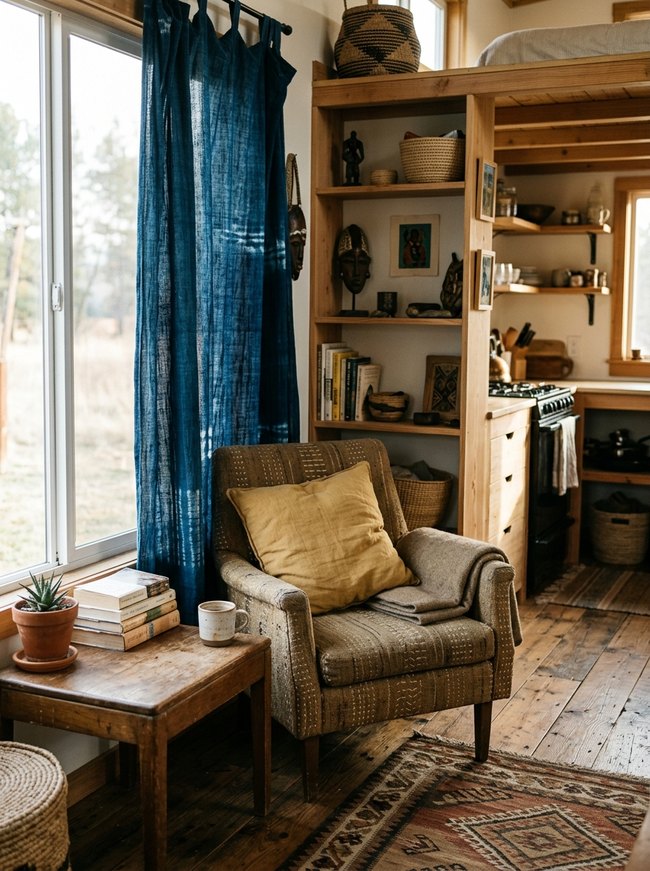
The deep indigo fabric curtain creates a vertical visual against the wide window frame. The textured drape adds a rich, cool color that balances the warm honey-toned wooden floorboards and light tan armchair. Woven baskets on the tall shelving unit and a patterned area rug also bring earthy elements into the living area. A single, bold textile offers immediate visual impact.
17. Raffia Detail Mirror Frame
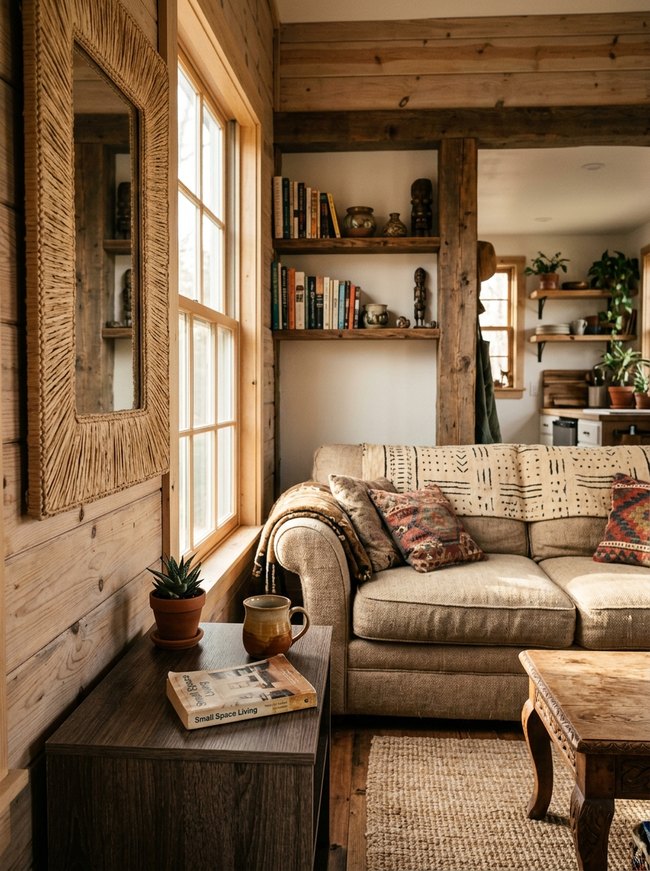
The raffia mirror frame adds a raw, textured element to the smooth wooden wall. Natural fibers introduce organic warmth, balancing the sharp angles of the window and the simple paneled boards. A patterned mud cloth throw blanket draped over the sofa and small terracotta potted plants further enhance the earthy, collected aesthetic. The raffia mirror provides natural texture.
18. Clay Bead Garland Decor
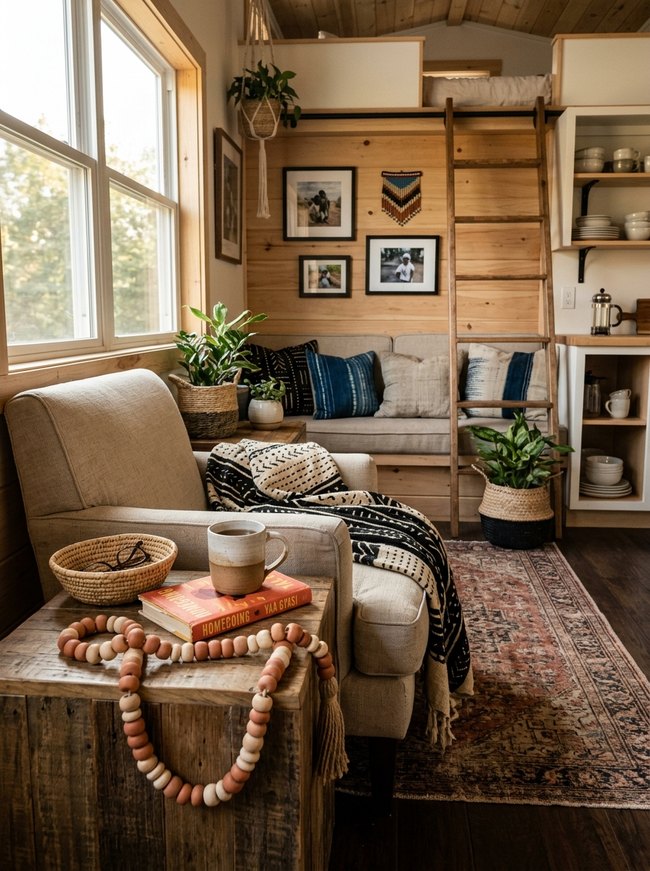
The stylist artfully uses a terracotta and cream clay bead garland to soften the rough-hewn wooden side table. The decorative strand adds organic texture and a gentle curve, breaking up the straight lines of the rustic furniture. A woven basket holds eyeglasses, providing practical storage with natural materials. Draping a beaded garland over a hard surface introduces softness and visual interest.
The ‘Global Nomad’ Aesthetic: Deconstructing the Hybridity in Afrohemian Textile Selection for Compact Spaces
Curated textile layers provide depth in Afrohemian tiny homes. Many designers choose a hand-woven mudcloth throw across a raw wood bench. This textured fabric introduces earthy tones and a story. Conversely, a common error involves too many competing patterns without unifying colors. A vibrant indigo batik pillow then rests against the mudcloth, creating visual harmony. Such a pairing allows individual patterns to shine within the small living room. Your home’s smaller footprint demands thoughtful choices for every decorative element. The intricate geometric patterns of a Moroccan wedding blanket might drape over a low acacia wood table. This metallic detail catches the natural light from a single skylight. A solid charcoal linen curtain then frames the kitchen window, calming the busy patterns. Every selected textile contributes to a layered, cohesive story. You build a feeling of collected travel, not cluttered chaos. These deliberate fabric combinations transform a compact dwelling into a global sanctuary. Each piece of fabric adds character to your living space.
Optimizing Biophilic Integration: Quantifying the Impact of Indigenous Plant Species on Air Quality and Spiritual Well-being in Micro-Dwellings
Integrating indigenous plant species directly improves air quality and spiritual well-being within small living spaces. Consider a waist-high snake plant, native to West Africa, positioned near a honey-toned cedar window frame. Many people simply add any green leaf for decoration. However, specific plants like the West African Sansevieria trifasciata actively filter indoor air, removing common toxins like formaldehyde and benzene. Another example, the Caribbean ZZ plant, with its waxy, dark green leaves, thrives on minimal water and sunlight, making it a robust addition to any tiny Afrohemian home. Your lungs will thank you for cleaner oxygen. A small, clay pot holding a vibrant prayer plant, with its dusty teal undersides, brings a sense of calm and natural rhythm to a cramped desk nook. These specific plants carry cultural weight and connect residents to ancestral roots, beyond their physical benefits. Conversely, a non-native plant might require specialized care or struggle in the unique microclimates of a tiny house, offering less benefit. Choosing native flora reduces maintenance efforts significantly. Small spaces benefit greatly from plants that actively contribute to the environment. Therefore, focus your planting choices on species with proven air-purifying qualities and cultural significance for the deepest impact.
Which Idea Will You Try First?
That’s 18 different takes on afrohemian tiny home. The best ideas above are usually the smallest moves — one material, one layout shift, one piece of furniture in the right place. Pick whichever room feels closest to your space and start there before tackling the rest.
Found an idea worth keeping? Save this post to your Pinterest board so it’s waiting for you when you’re ready to start your own project.