18 Tiny Home Bunk Bed Ideas for Families
Tiny living brings big challenges for families. Children need sleep. Everyone needs a small private space. A simple wooden ladder against a sturdy steel frame often makes the most sense. Clever bunk bed designs maximize floor plans with smart storage solutions. Parents want a durable piece that stands up to daily abuse. Forget flimsy particle board; a solid oak ladder offers better safety. Good design fits a family’s actual needs, not just some picture. Finding the right custom configuration for small areas takes careful looking. We pulled together eighteen different options. Each option shows real solutions for compact rooms.
1. Compact Triple Tier Sleeper
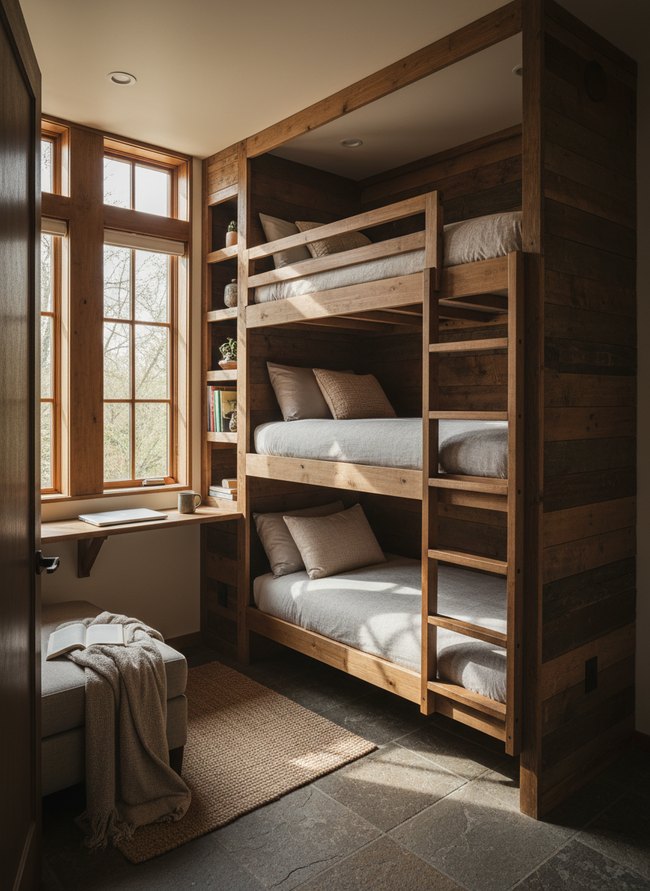
The three-tier wooden bunk bed features strong, light brown timber frames built right into the wall. Homeowners can create a similar compact triple-tier sleeper by using vertical space for sleeping areas, leaving more floor room open. Builders should remember to build sturdy, wide ladders for safe access to each high bunk.
2. Space-Saving Corner Bunk
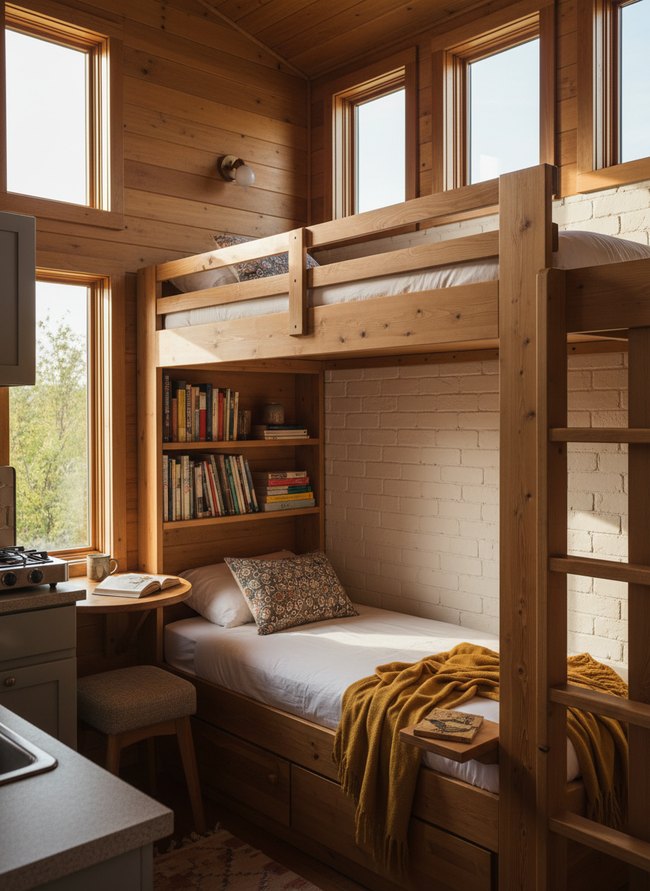
The natural pine bunk frame provides a warm, inviting sleeping area. Integrated wooden shelves offer convenient storage for books and small items. A small, curved wooden table creates a cozy reading nook beside the bed.
3. Fold-Down Wall Bunk
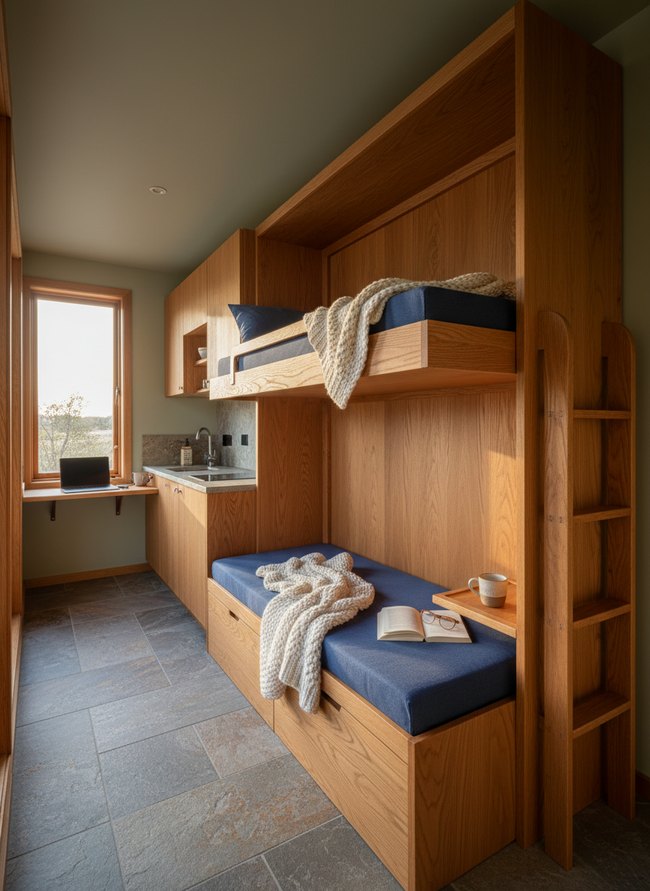
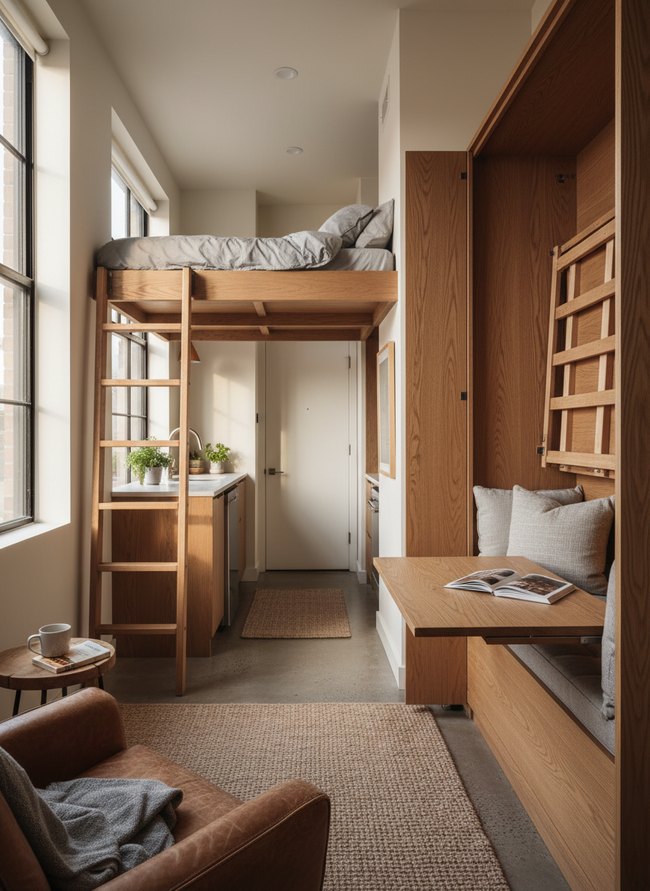
The fold-down upper bunk bed disappears into the honey-toned oak wall unit, creating flexible sleeping space. The small home gains valuable floor space when the top bed is stowed away. A built-in ladder with integrated shelving offers extra storage without taking up more room.
4. Hidden Pull-Out Bunk
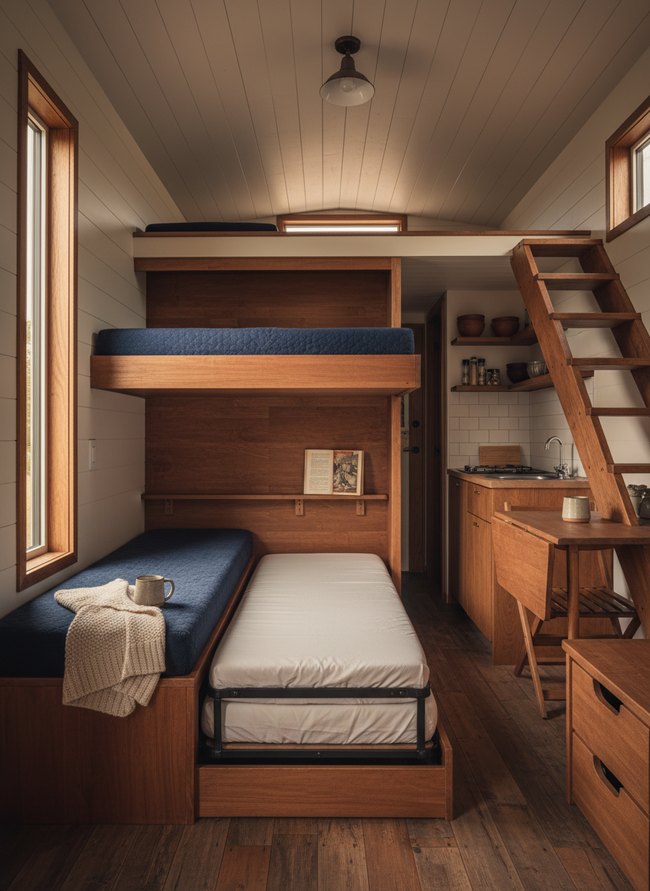
A pull-out mattress on metal rollers offers a clever space-saving solution in the tight room. A honey-toned wooden frame surrounds the lower blue mattress, matching the upper bunk bed and nearby kitchen cabinets. The compact design maximizes floor space in a small home.
5. Ladder Access Twin Bunk
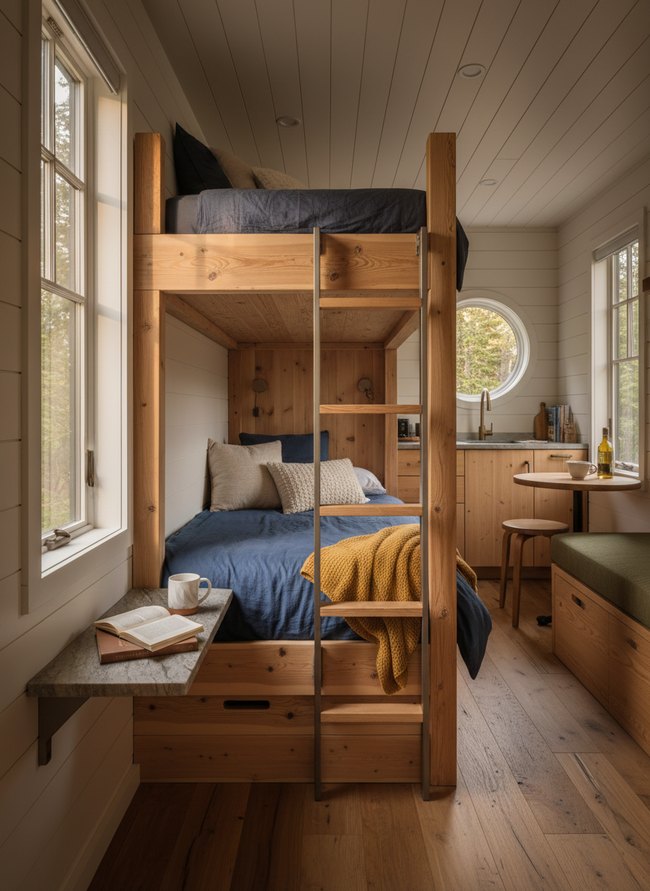
A tall wooden frame offers a sturdy sleeping solution. A built-in metal ladder provides easy access to the top bunk. Drawers underneath the bottom bed offer extra storage.
6. Integrated Desk Bunk
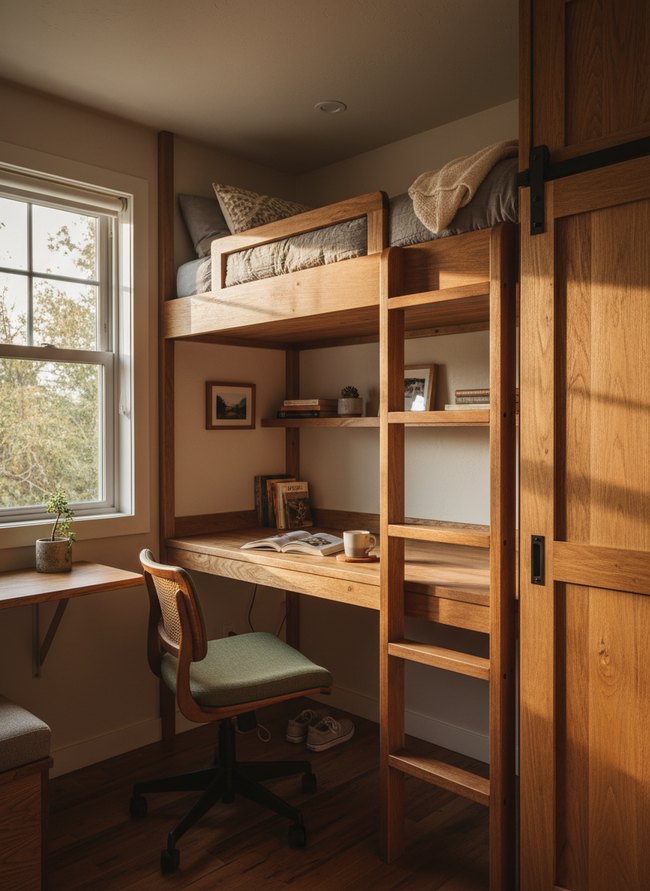
The sturdy light brown oak bunk bed features a built-in desk and shelving underneath the top sleeping area. Your small space benefits from a tiny bunk bed that combines sleeping, working, and storage in one compact unit. Consider building a similar integrated desk bunk to maximize every square inch.
7. Storage Staircase Bunk
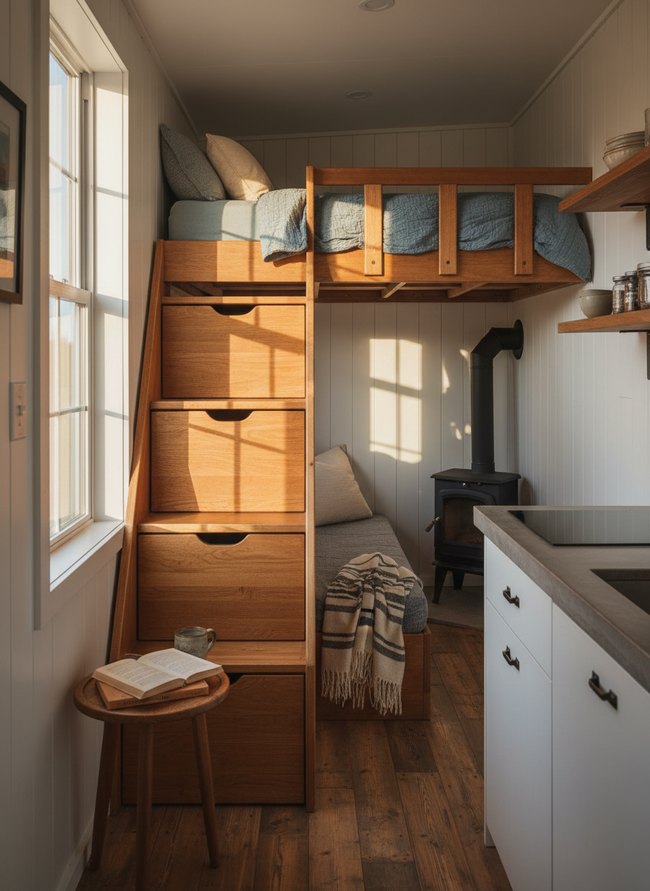
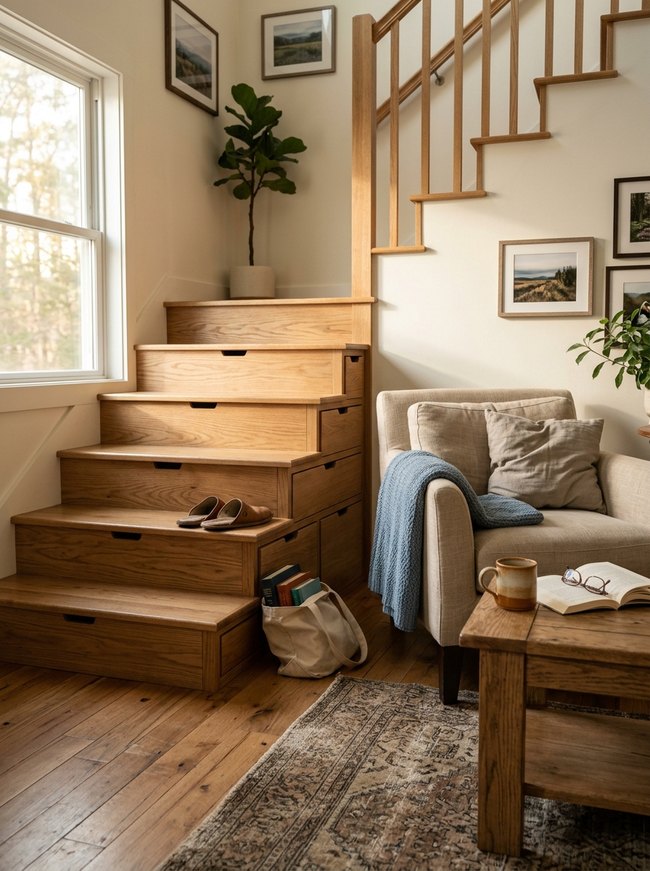
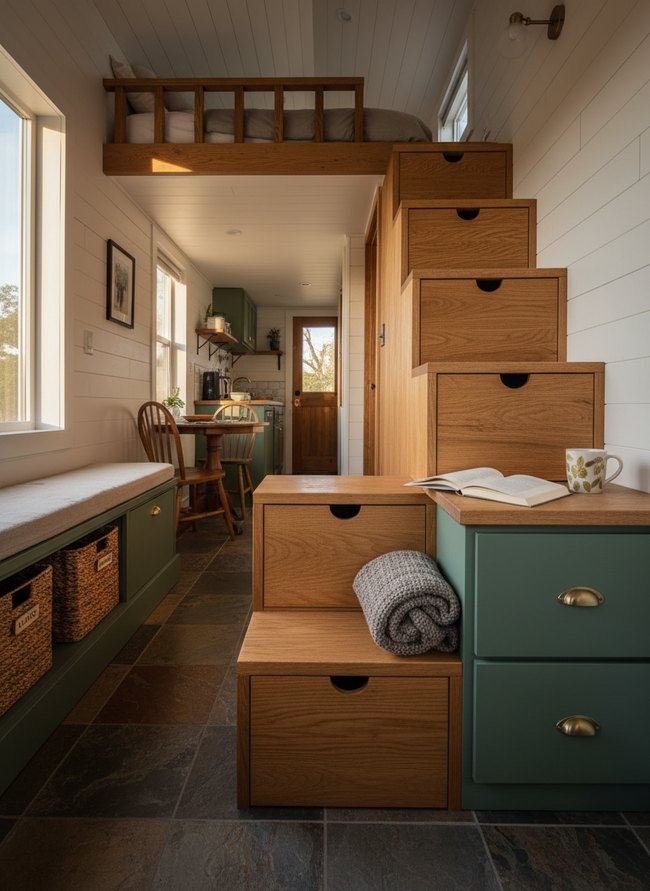
Honey-toned oak stairs with integrated drawers offer clever storage for a tiny bunk bed setup. The design uses vertical space well, keeping a small home tidy. Solid wood provides sturdy construction and long-lasting use.
8. Loft Style Double Bunk
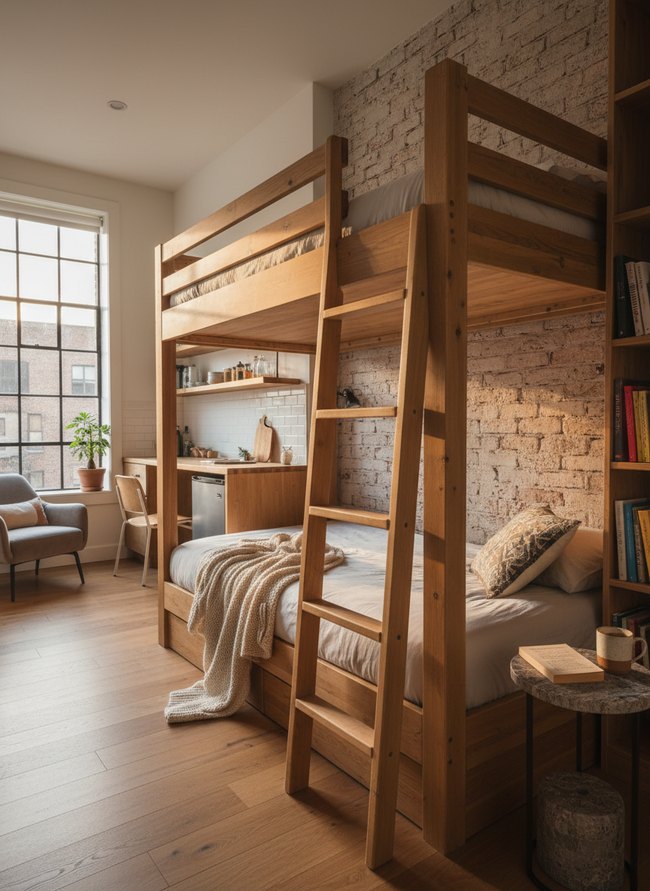
A honey-toned wooden bunk bed dominates the room, offering both a raised sleeping area and a lower bed. The clever design maximizes floor space in small rooms, giving you extra room to move around. Consider adding a built-in desk or shelving underneath the top bunk to create a functional workspace.
9. Modern Capsule Bunk
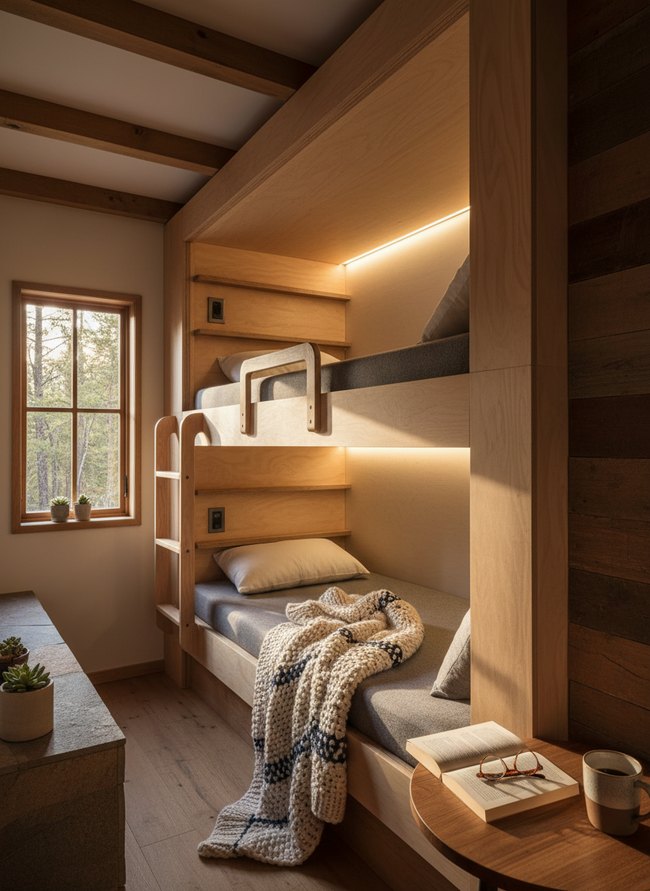
Warm natural wood panels create private sleep areas in this smart tiny bunk bed design. Soft strip lighting inside each sleeping nook provides a cozy, inviting glow. Small shelves and power outlets in the bunks offer extra convenience.
10. Modular Stackable Bunk
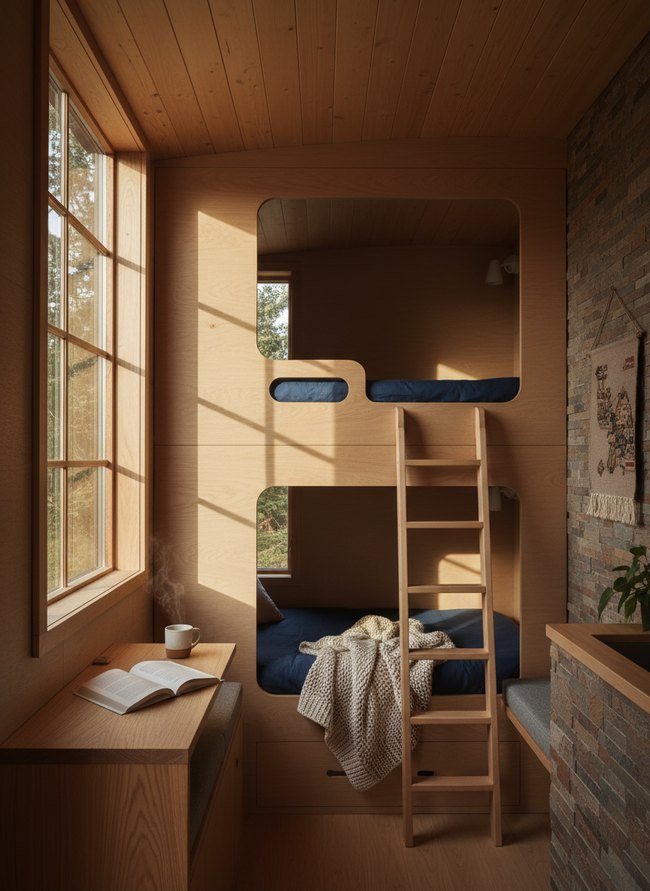
The honey-toned wood bunk bed features two deep blue mattresses tucked into curved, light wood frames. Modular bunks arrange in many ways to fit available wall space. Small built-in windows add natural light to each sleeping nook.
11. Convertible Sofa Bunk
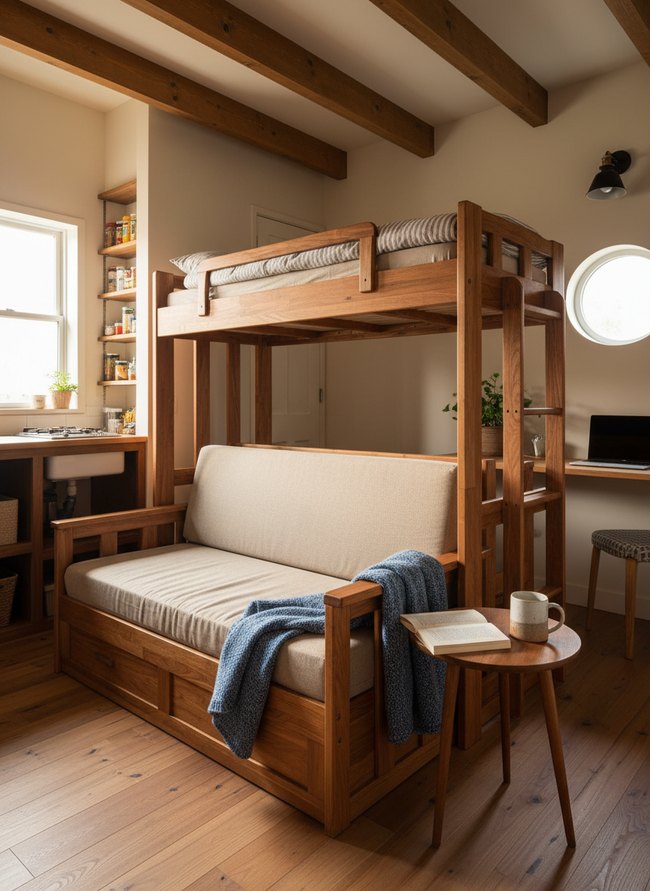
The solid oak frame of the bunk bed converts a lower sofa into a sleeping space. A blue knit blanket rests casually on the creamy linen cushions of the daybed. Consider a tiny bed with a flexible design to maximize your small living area.
12. Built-In Nook Bunk
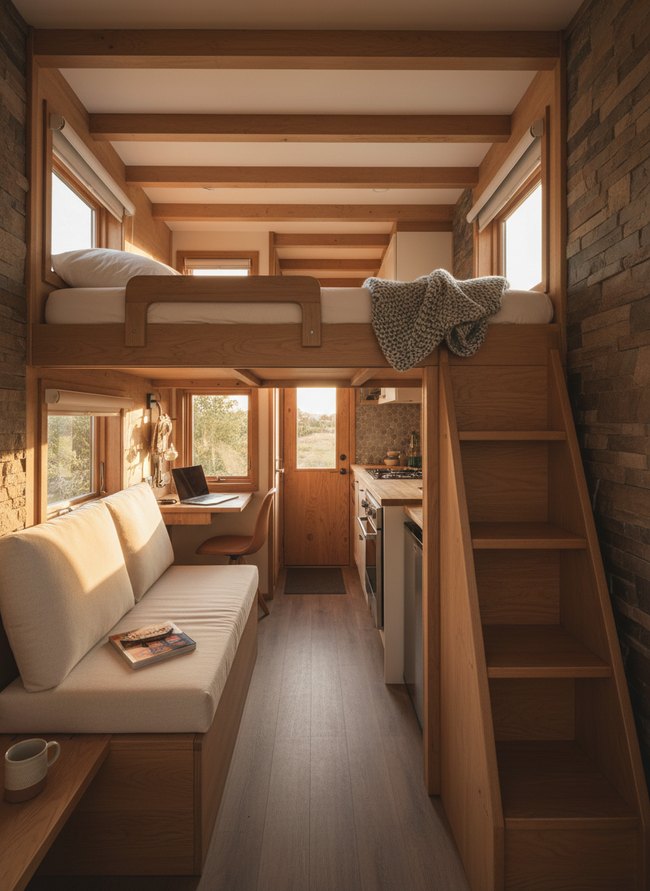
A honey-toned wooden bed frame above the cream sofa creates a cozy sleeping area. The clever tiny bunk bed design uses the space underneath for a small desk and seating. Builders can create a custom wooden frame that fits snugly into a room’s dimensions.
13. Custom Compact Quad Bunk
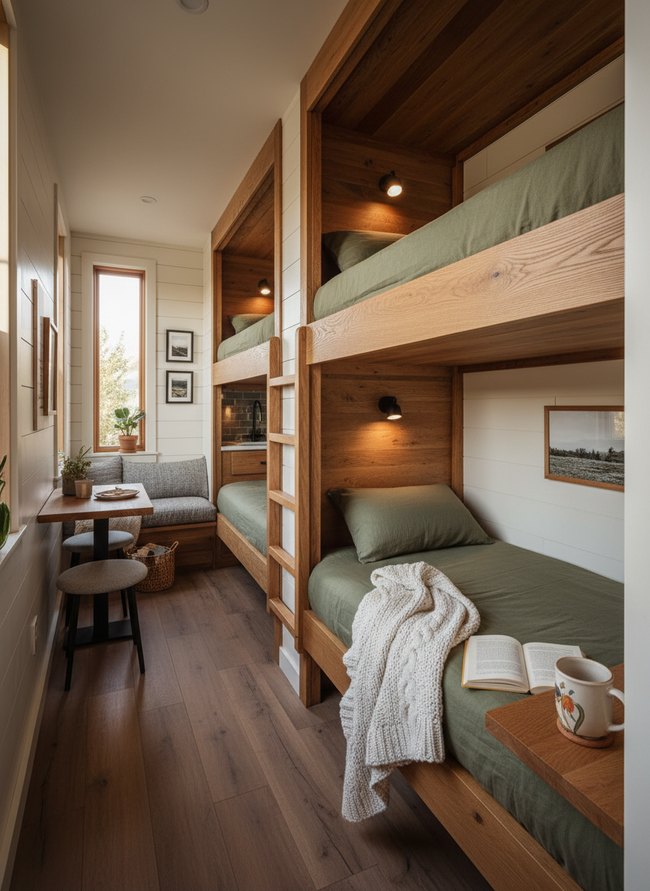
Honey-toned oak frames four cozy sleeping nooks, each with a soft green mattress and a small wall light. Built-in bunks save floor space by using vertical room, making the tiny home feel much larger. Consider adding a floating bedside shelf for a book or a morning coffee mug.
14. Vertical Stacked Bunk
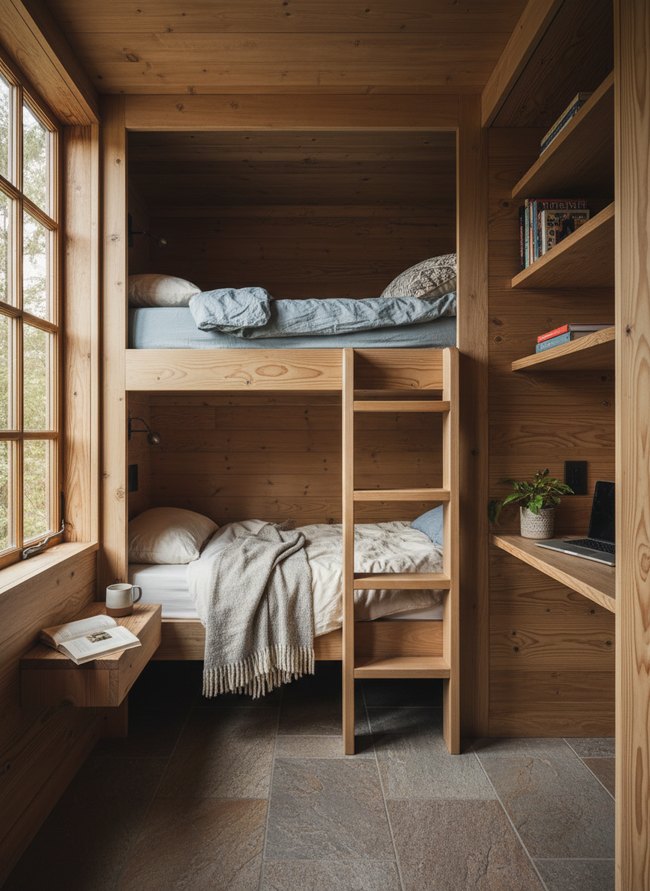
Pale honey-toned wooden bunks recess deeply into the wall, offering a private sleeping nook. The clever design creates cozy sleeping areas while saving valuable floor space in small rooms. Consider building the bunk bed directly into an existing wall for a streamlined, functional look.
15. Under-Platform Trundle Bunk
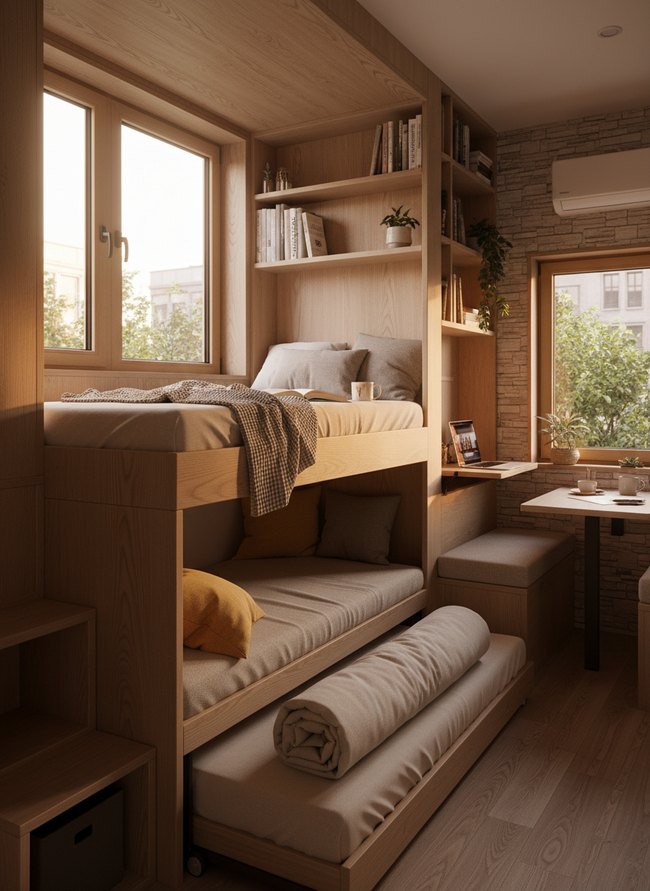
A light oak triple bunk bed features a hidden trundle that slides out from under the bottom bunk. The smart design adds extra sleeping space without taking up more floor room. Consider adding a third wheeled bed to your stacked bunks for unexpected guests.
16. Minimalist Floating Bunk
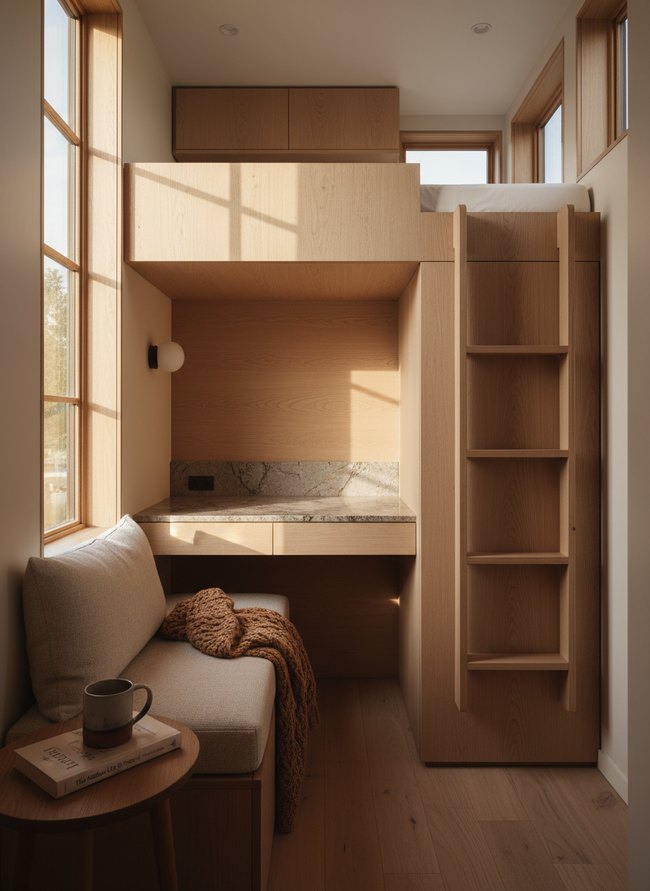
A honey-toned bunk bed floats above a built-in desk, showing how to fit many uses into a small room. A sturdy oak ladder provides access to the upper sleeping area. Light-colored wood for the bed makes the space feel bigger and brighter.
17. Rustic Wood Cabin Bunk
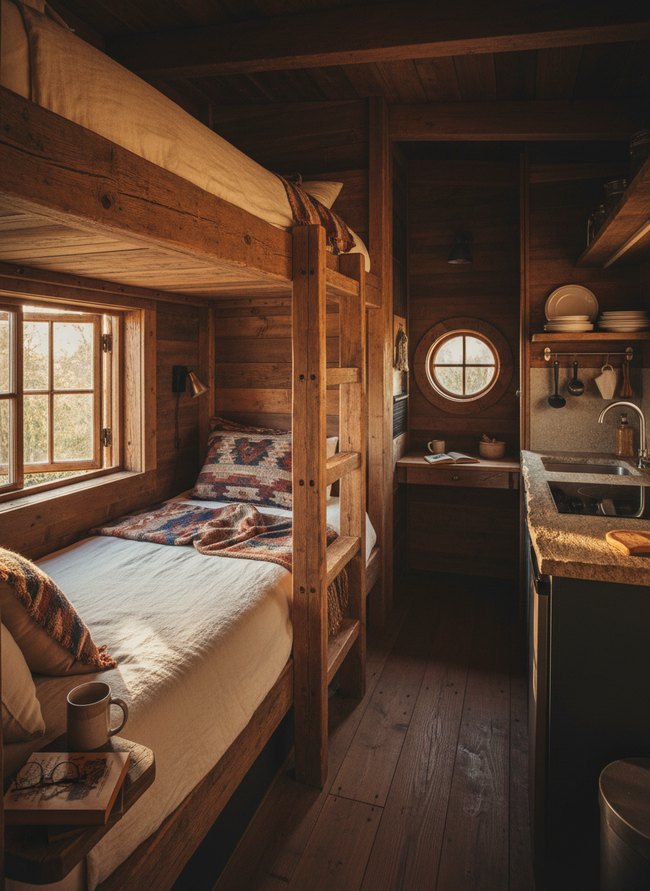
The honey-toned wood bunk bed features sturdy square posts and simple plank construction. A window beside the bottom bunk brings natural light into the space, making the sleeping area feel open. Build the bed with light-colored bedding to keep the small room feeling bright.
18. Industrial Pipe Frame Bunk
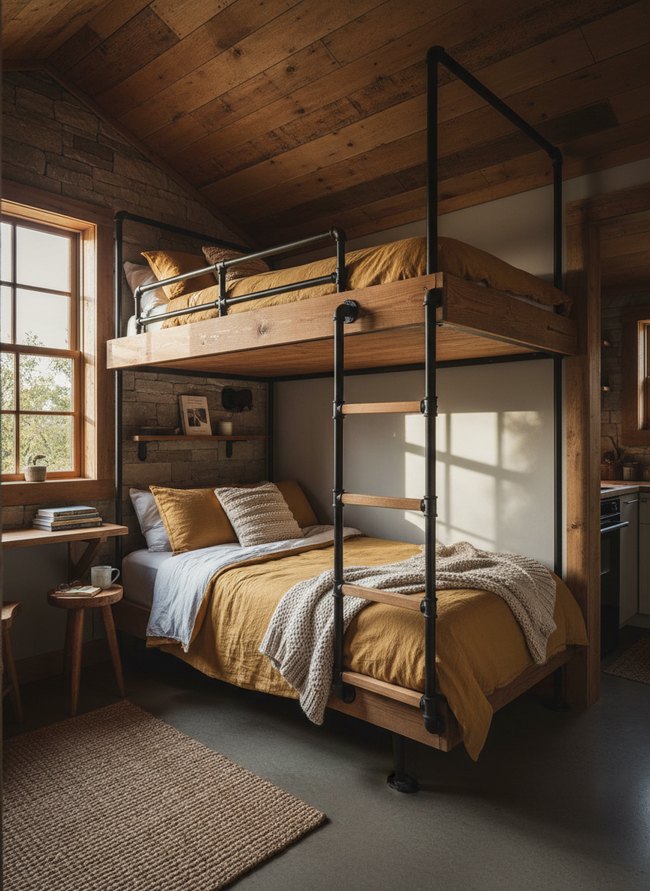
Black metal pipes form a strong, industrial frame around warm wooden bunk beds. The sturdy bed design combines the strength of dark steel with the comfort of natural honey-toned wood. You can build a similar space-saving piece using simple pipe fittings and solid timber planks for a rustic yet modern feel.
Noise Nuisance: How to Design for Soundproofing and Sleep Separation in Shared Tiny Spaces
Many people think a pillow wall stops sound. A fluffy cotton pillow absorbs little noise. Sound waves travel through soft materials easily. Dense cork panels actually block more sound. These dark brown squares stick directly onto your interior walls.
You might hang thick curtains around the bunk bed area. Thin fabric curtains offer minimal sound privacy. Heavy wool blankets draped over a brass rod make a better barrier. Each woven wool fiber traps more airborne noise. Consider solid wood bunk beds instead of metal frames. Metal frames amplify vibrations from movement. A sturdy pine frame absorbs footsteps and rustling.
Sound insulation foam feels like a good idea. Open cell foam only dampens echo. Closed cell foam sheets block physical sound waves. Install these thin gray sheets between wall studs during construction. A white noise machine on a bedside table also helps. This small device creates a steady hum. That constant sound masks sudden creaks or whispers. You can buy one for under fifteen dollars.
Adding a small, tall bookshelf between beds also helps. A narrow oak bookshelf creates a physical sound break. Each stacked hardcover book further disrupts sound paths. Books on the shelves absorb vibrations.
Which Idea Will You Try First?
That’s 18 different takes on tiny bunk bed. The best ideas above are usually the smallest moves — one material, one layout shift, one piece of furniture in the right place. Pick whichever room feels closest to your space and start there before tackling the rest.
Found an idea worth keeping? Save this post to your Pinterest board so it’s waiting for you when you’re ready to start your own project.