19 Tiny Home Kids’ Bedroom Ideas That Maximize Play Space
Square footage limitations do not restrict childhood imagination. Many articles about small spaces miss this concrete truth. Play zones can be built with careful planning. Small rooms offer a cozy feeling, encouraging creative games inside their four walls. A built-in loft bed above a hinged oak desk uses vertical space wisely. Our collection of 19 kid bedrooms demonstrates how clever design transforms compact areas into sprawling adventure lands for your children. Each room features specific storage solutions and playful elements. Vibrant wall colors, chunky wool rugs, and custom built-ins with secret compartments appear in the designs below.
1. Loft Bed Adventure Nook
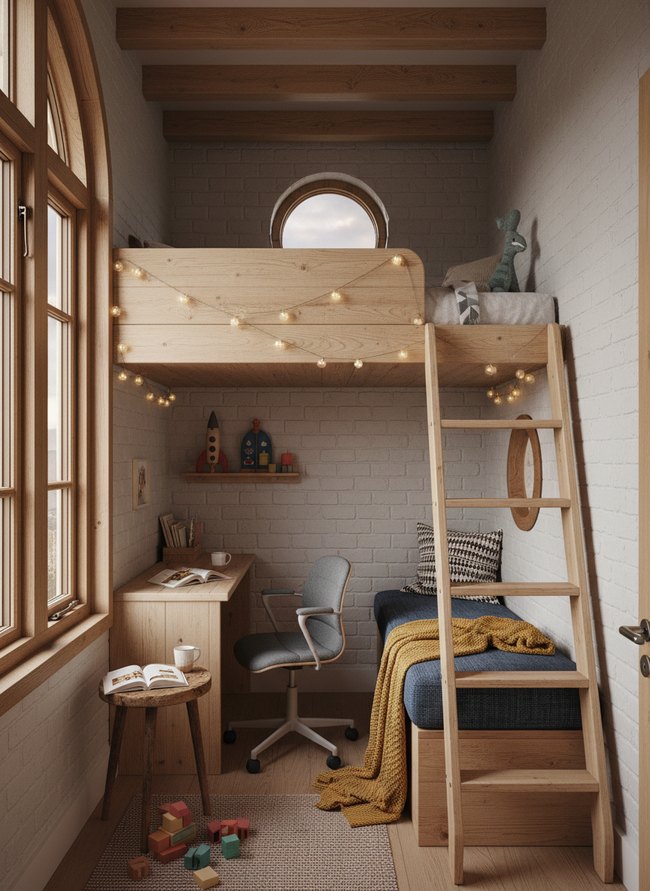
An elevated timber sleeping platform creates a distinct adventure nook, maximizing vertical space in the tiny kids bedroom. The clever design separates the sleep zone from the study area, giving each function its own dedicated place. Warm string lights and a small round window add inviting appeal to the private upper bunk.
2. Under-Bed Play Den
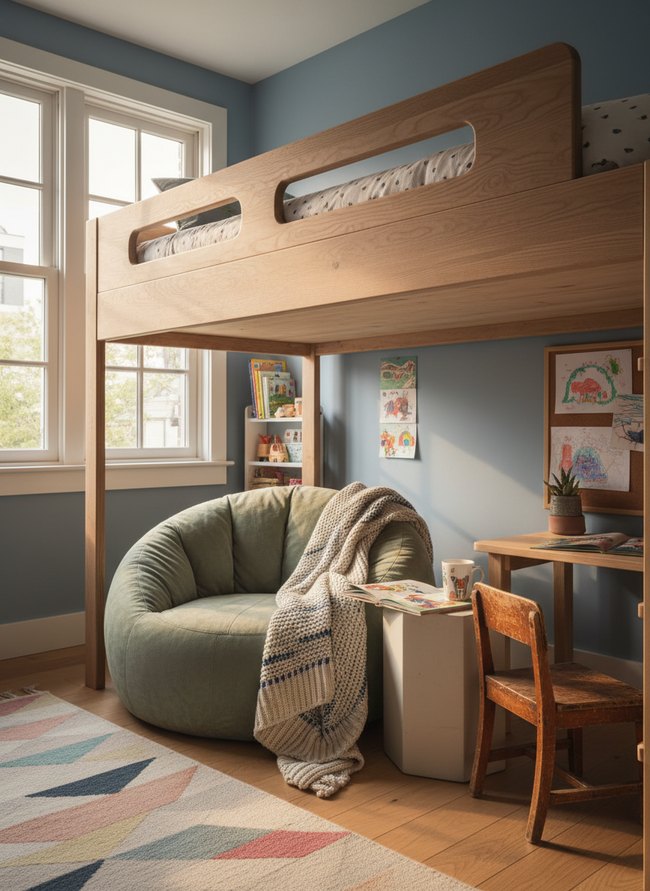
A pale oak bunk bed creates a distinct play zone underneath, freeing valuable floor space in a tiny kids bedroom. The arrangement provides both a cozy sleeping area and an inviting space for imaginative play. A soft green beanbag chair and small wooden desk furnish the sheltered nook, offering a comfortable spot for reading or drawing. The smart use of vertical space is a great takeaway for any small room.
3. Corner Bunk Study Zone
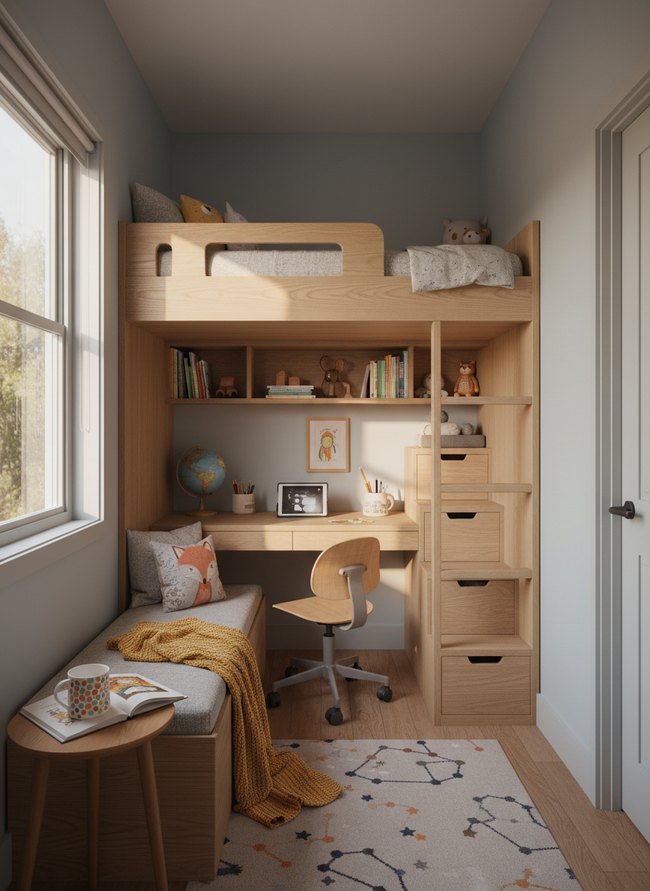
Built-in wooden furniture with a loft bed overhead creates a compact workstation below, maximizing floor space in the tiny kids bedroom. The clever arrangement provides distinct areas for sleep, study, and relaxation within a small footprint. A light gray rug with orange and blue constellations adds a playful touch to the oak flooring. The integrated corner design conquers tight spaces.
4. Fold-Down Desk Retreat
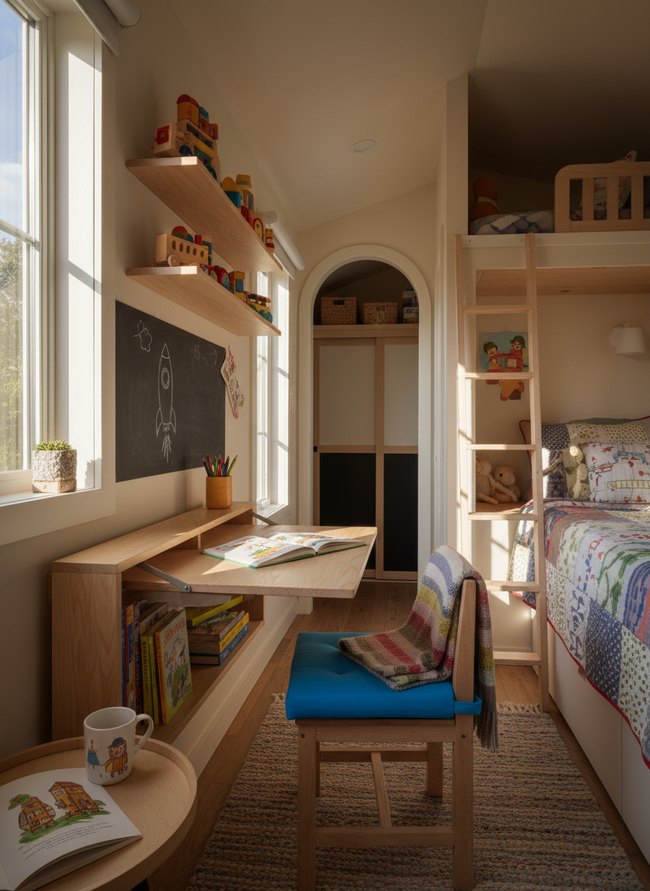
A fold-down wooden desk maximizes floor space in a tiny kids bedroom by disappearing when not in use. A tall built-in bunk bed saves considerable room. Floating wooden shelves above the desk keep favorite toys displayed neatly. The fold-down desk is the cleverest move in the room.
5. Wall-Mounted Storage Sleep
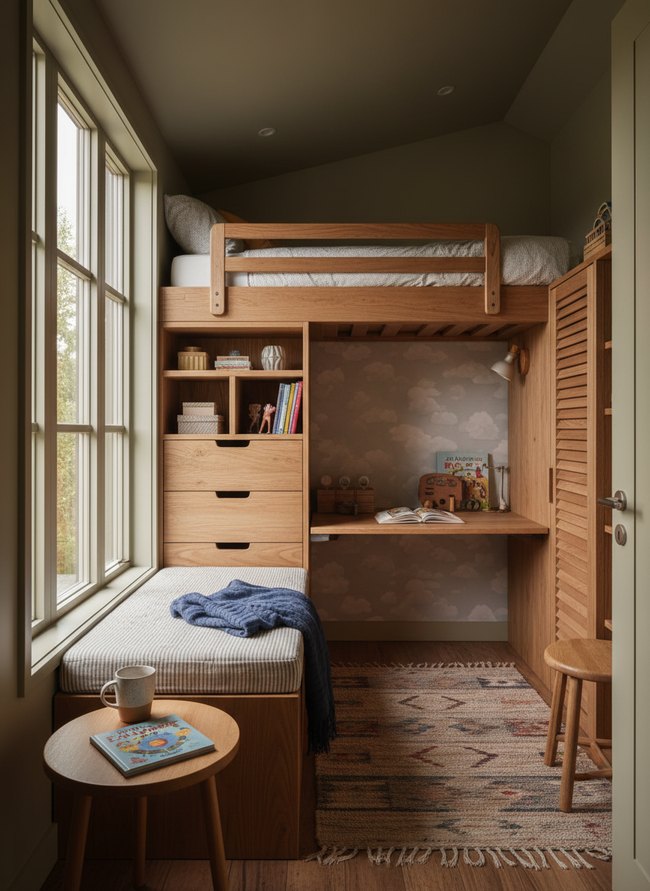
A wall-mounted bed frame creates a sleeping area above a compact workspace, freeing up precious floor space in the tiny kids bedroom. The clever design integrates a small oak desk and shelving directly below the bed, making every inch functional for study and storage. A window seat with a striped cushion provides a comfortable reading nook beside the natural light. The integrated furniture system offers maximum utility in a minimal footprint.
6. Modular Cube Playroom
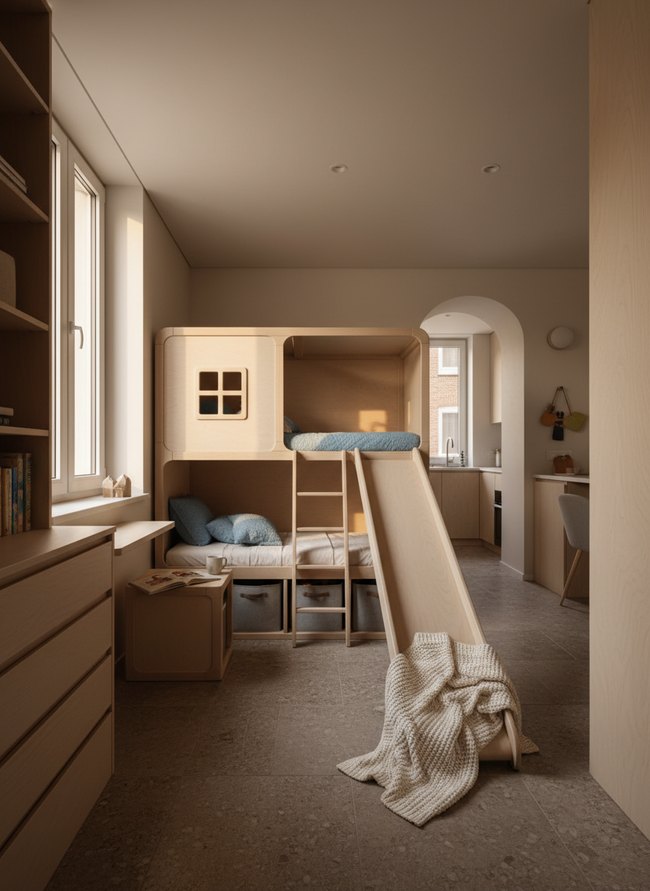
The honey-toned wood bunk bed includes a cozy house shape on the upper level, transforming a simple sleeping area into a playful fort. The integrated structure makes a tiny kids bedroom feel expansive, offering distinct zones for rest and imaginative play within one compact footprint. Light blue bedding and gray fabric storage bins add soft color and practical organization. Consider a built-in play feature like the wooden slide for maximum fun in minimal floor space.
7. Built-In Platform Explorer
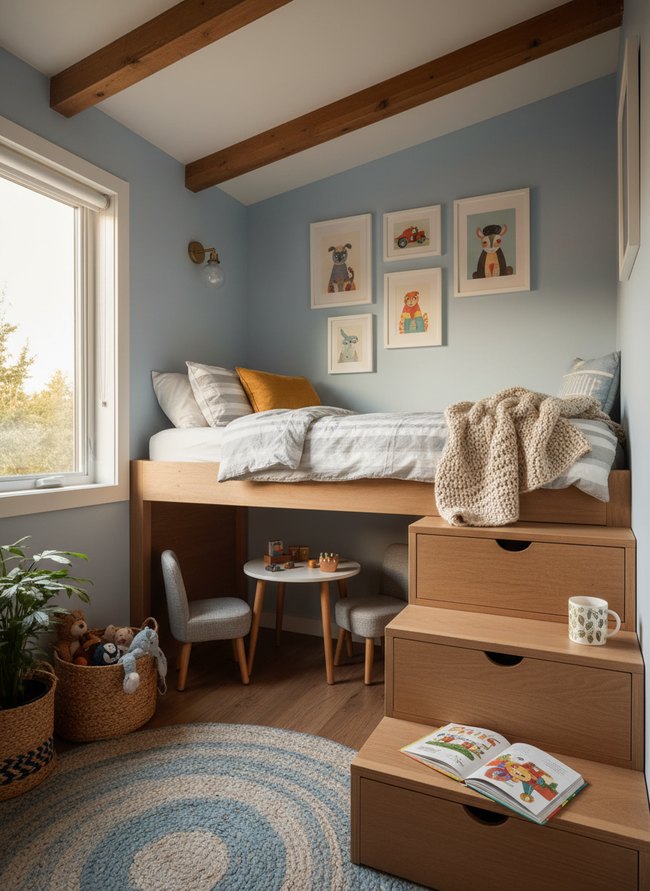
The elevated bed platform creates distinct zones within the tiny kids’ bedroom. The raised sleeping area frees up floor space below for a small table and two gray chairs, giving a child room to play without cluttering the main floor. Built-in oak drawer steps offer both storage and easy access to the bed. Stacking functions gains usable space.
8. Slide-Out Bed Hideaway
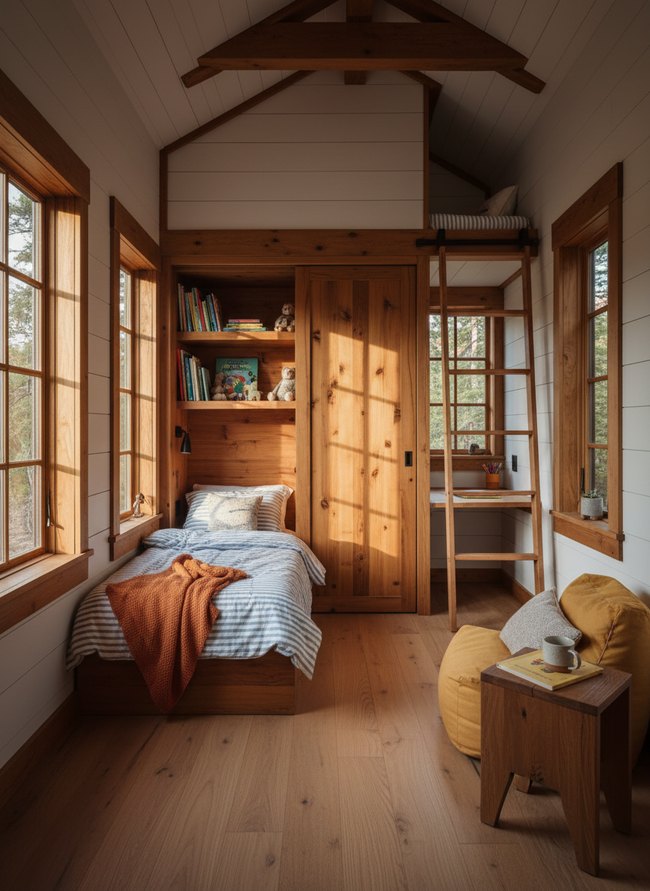
A built-in bed platform with under-bed storage maximizes floor space in the small room. Natural wood tones of the bed frame and wall panels create a warm, inviting atmosphere for any tiny kids bedroom. Designers could easily adapt the integrated bookshelf and sliding wooden door for their own space. Steal the slide-out bed design.
9. Vertical Play Wall
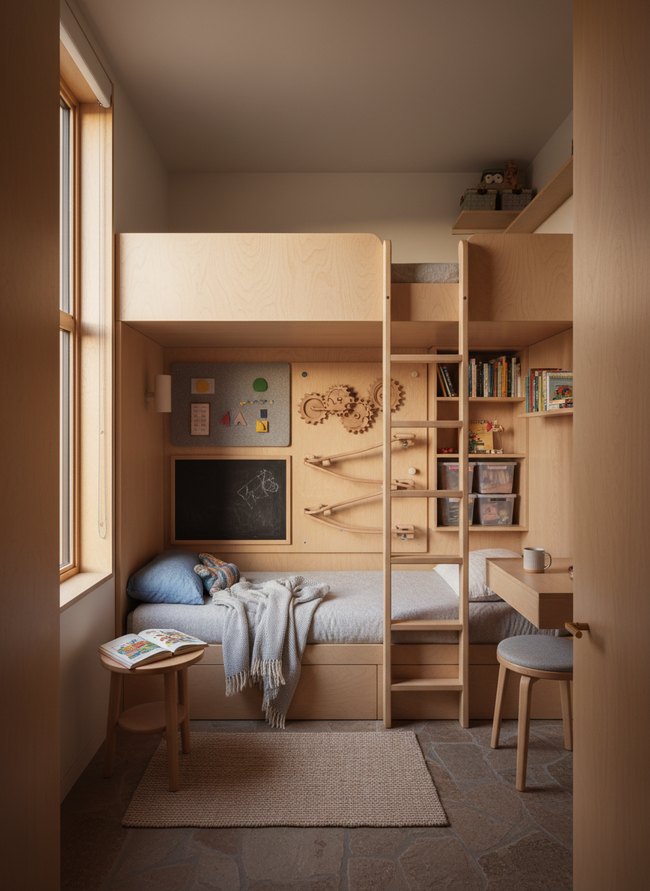
A built-in bunk bed unit with natural wood grain creates a functional, playful tiny kids bedroom. The wooden structure maximizes floor space by stacking two beds, integrating storage shelves, a desk, and a vertical play wall. Integrated wooden gears, a ball run, and a chalkboard offer creative engagement right next to the bed. Building vertically reclaims valuable floor area in a small room.
10. Hammock Netting Dreamland
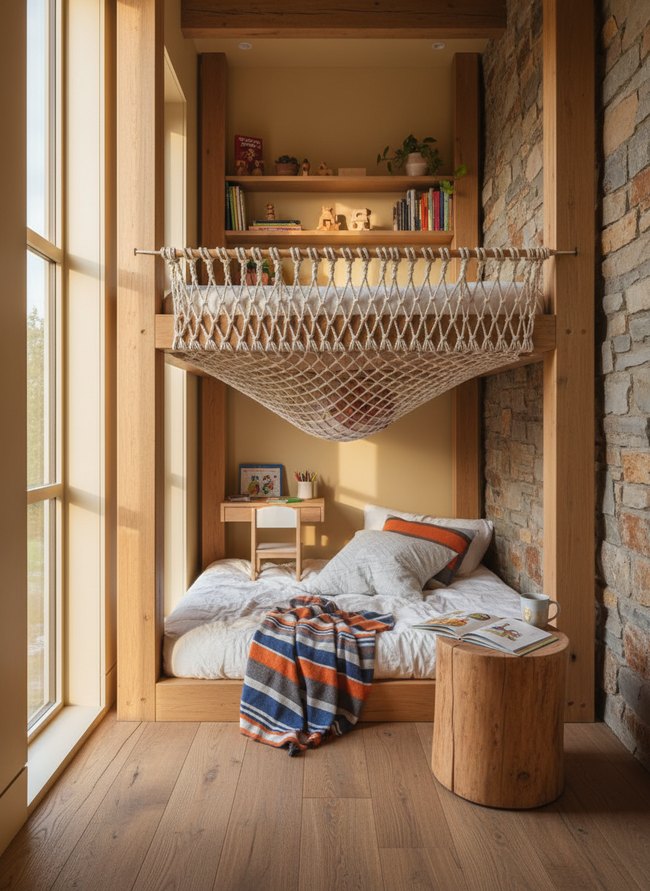
Hammock netting stretched between the wooden bunk beds creates a flexible play area. The design move reclaims unused vertical space, offering a cozy nook without needing extra floor area in a tiny kids bedroom. A small wooden desk fits neatly at the bottom bunk, and a raw timber stump serves as a bedside table. The netting reclaims vertical space.
11. Convertible Sofa Sleeper
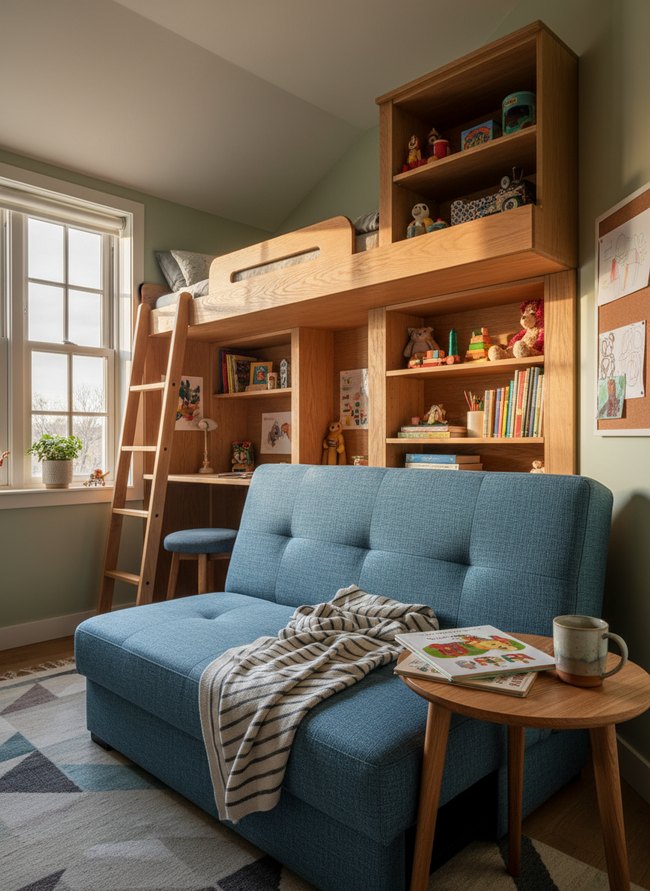
The oak loft bed with its integrated desk and shelving unit creates a compact, multi-functional zone. The furniture design stacks sleeping, studying, and storage vertically, freeing up precious floor space in a tiny kids bedroom. A soft blue sofa sleeper adds flexible seating for daytime activities and provides an extra bed for overnight guests. Steal the integrated furniture unit for maximum utility in minimal square footage.
12. Multi-Level Sleep Structure
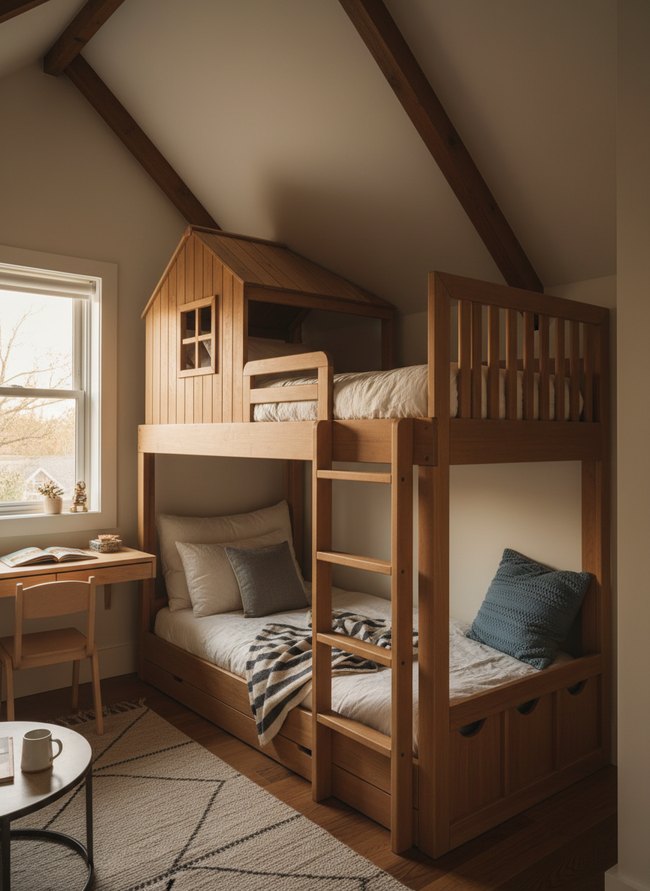
A light wooden playhouse structure built into the top bunk creates a magical sleeping area. The design makes a tiny kids bedroom feel larger by adding a fun, separate zone for imagination. Natural wood beams overhead and a small matching desk below complete the cozy, functional space. Incorporate a themed sleep structure.
13. Compact Desk Fort
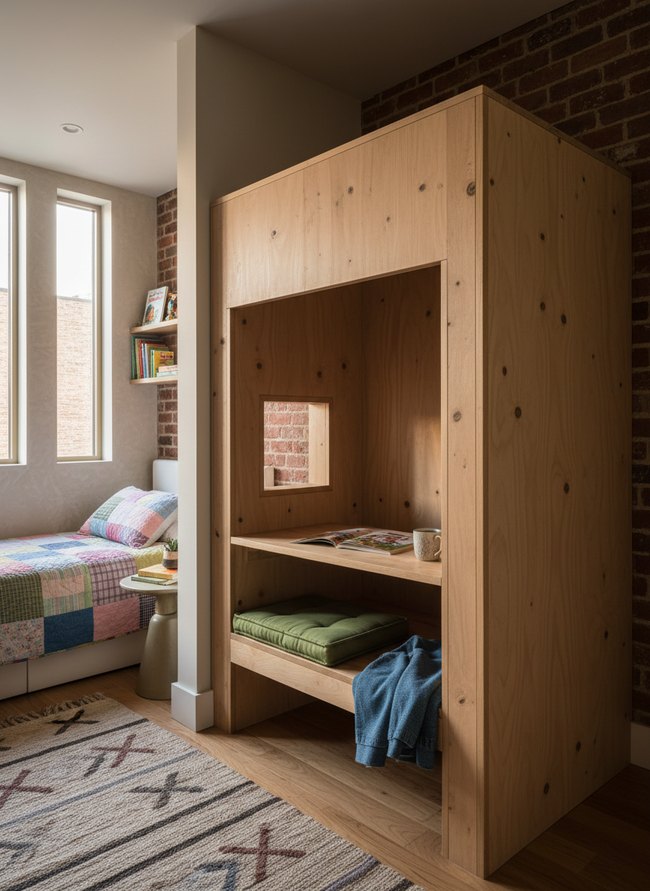
A tall wooden box structure creates a private study nook for a child. The clever design separates a small desk space from the sleeping area, giving a young person a dedicated spot for focused work within a compact tiny kids bedroom. A small square window cut into the back of the fort provides a peek into the room, while a low green cushion offers comfortable seating. The best design move to steal is building a wooden fort desk into the room.
14. Pull-Out Trundle Play
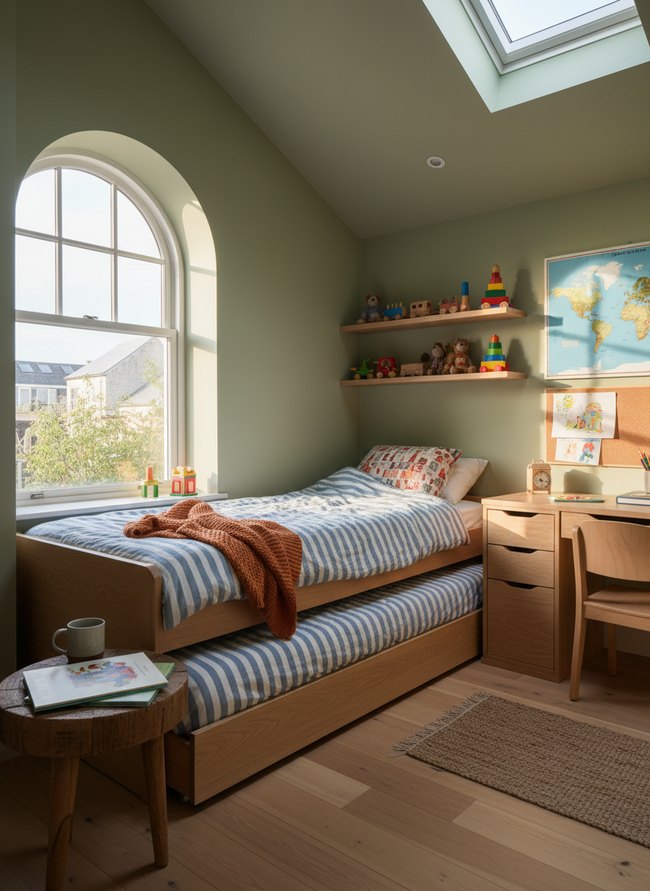
A pull-out trundle bed makes this small room a flexible tiny kids bedroom. The clever design tucks a second mattress neatly away, providing extra sleeping space without cluttering the floor. Light wood shelves display toys, while a natural cork board holds artwork, adding personality to the pale green walls. The bed is the single best move for maximizing play space here.
15. Elevated Play Platform
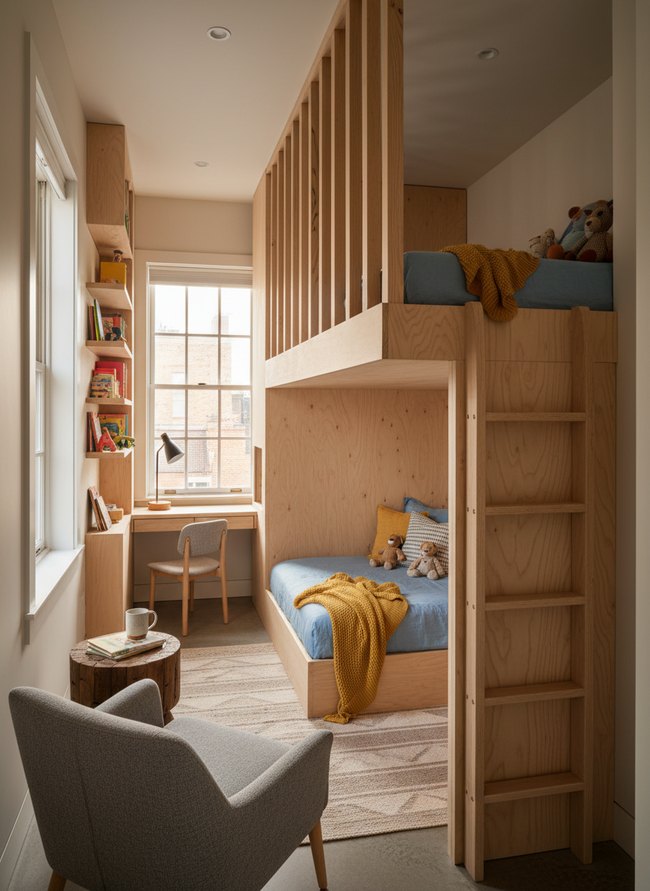
Stacked wooden bunk beds create two distinct sleeping areas within a compact footprint. The vertical arrangement makes smart use of the room’s height, freeing up valuable floor space below. A built-in desk with a small wooden chair fits neatly under the window, providing a quiet study nook. The clever stacking of two beds maximizes a tiny kids bedroom.
16. Transformable Furniture Space
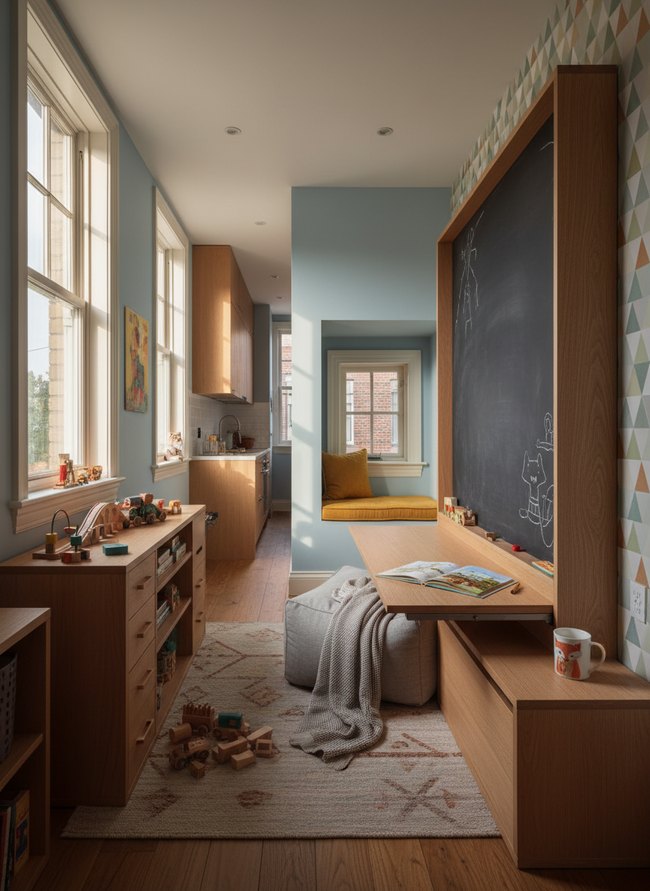
A folding wooden desk and blackboard unit creates a flexible activity zone within this tiny kids bedroom. The design offers both a creative surface and a study space without claiming permanent floor area. Light oak cabinetry and a built-in window seat with a mustard cushion also add warm, functional elements. Install a wall-mounted fold-down desk.
17. Murphy Bed Play Area
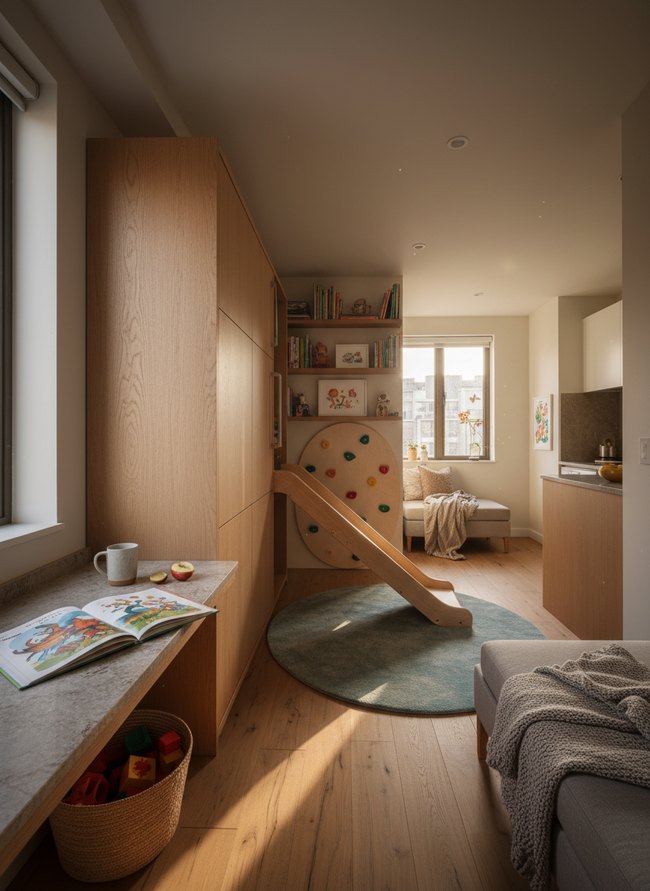
The Murphy bed design maximizes floor space in the tiny kids’ bedroom by folding away the sleep area. The smart integration allows a large, round climbing wall and a short wooden slide to fit into the room for active play. Light oak cabinets and a muted teal rug keep the small area feeling open. The hidden bed creates a versatile play zone.
18. Integrated Storage Sanctuary
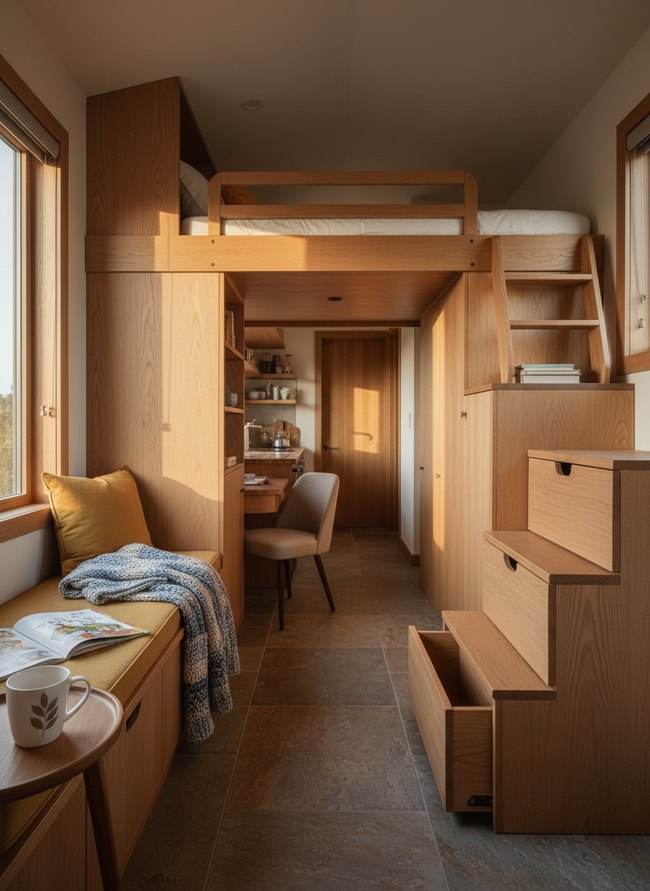
Built-in furniture creates maximum function in a small space. The design strategy works well for a tiny kids bedroom by using vertical room and creating many storage spots. A compact loft bed rests above a built-in reading nook and a clever staircase with deep storage drawers. Integrate storage into every furniture piece.
19. Stackable Bed Recreation
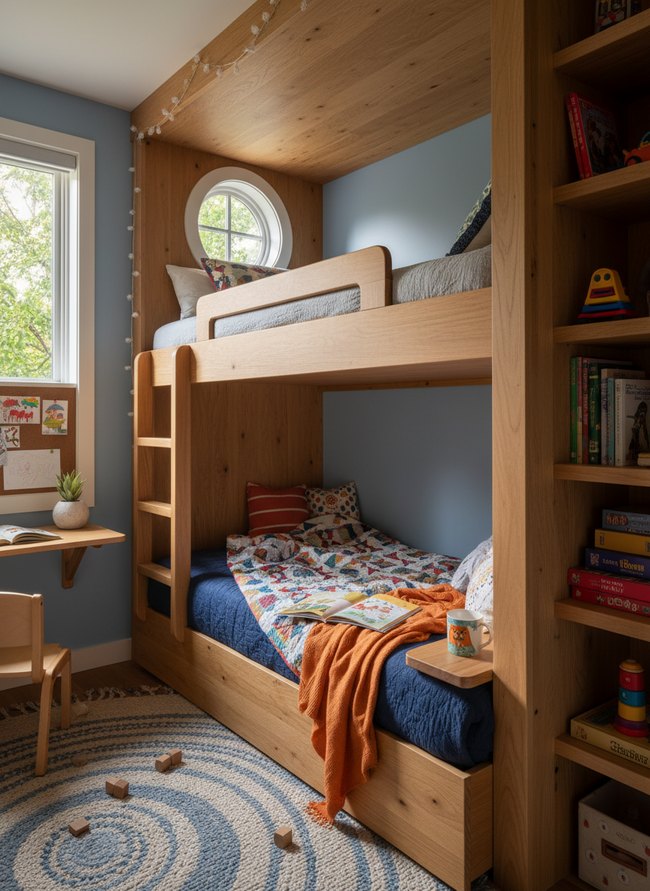
Built-in oak bunk beds maximize floor space in the tiny kids’ bedroom. The clever design integrates sleeping areas directly into the wall, freeing up central room for play. A small round window above the top bunk and a compact floating desk next to the lower bed add practical touches. Custom-built furniture can fit small room dimensions.
Verticality and Cognitive Scaffolding in Confined Play Zones
Multi-level bunk beds build cognitive frameworks for young occupants. A child’s brain develops strong spatial reasoning when navigating a three-foot ladder to a raised sleeping platform. Floor space expands dramatically with the bed elevated, offering a generous two-foot by three-foot play area below. This design offers more than just extra room; children mentally map the distinct zones. For instance, a dusty teal loft bed with an integrated bookshelf creates a quiet reading nook underneath. A solid oak desk fits snugly under the top bunk, ready for crayon art or building blocks. Conversely, a flat, single-level room misses the chance to develop this mental mapping. Kids learn to organize belongings into specific areas, like keeping stuffed animals on the top bunk’s grey plaid quilt. Their problem-solving skills strengthen when they decide how to move a large toy from the lower play zone to the elevated sleeping area. These compact play zones teach young residents about vertical limits and horizontal boundaries. A child learns to value every square foot within their personal space.
Modular Furniture Systems: Deconstructing Adaptability for Pediatric Lifestyles
Modular furniture systems provide scalable solutions for 19 kid bedrooms. A compact loft bed, built from interlocking blonde wood panels, offers a secure sleeping area above a low, rolling desk. These adaptable components let you reconfigure a room as your child grows. Imagine a single wall unit; it starts as a changing table with deep, grey fabric bins. Later, the same frame converts into a study nook with a pull-out teak desktop. Many parents buy fixed-size children’s furniture, which quickly becomes obsolete. Instead, choose pieces with interchangeable parts and simple connection points. Steel corner brackets and heavy-duty dowel rods allow quick adjustments to shelf height or bed orientation. Such design foresight stretches your initial investment across many years. Young children need open floor space for play; older kids need quiet zones for schoolwork. Your furniture should shift with these changing demands. A modular chest of drawers, crafted from painted pine, easily separates into two smaller nightstands when a larger bed arrives.
Which Idea Will You Try First?
That’s 19 different takes on tiny kids bedroom. The best ideas above are usually the smallest moves — one material, one layout shift, one piece of furniture in the right place. Pick whichever room feels closest to your space and start there before tackling the rest.
Found an idea worth keeping? Save this post to your Pinterest board so it’s waiting for you when you’re ready to start your own project.