24 Japandi Tiny Home Interiors for Calm Living
Many interior articles misidentify Japandi design as strictly minimalist. Instead, Japandi style finds its core identity in purposeful contrast. Rough wood grains stand against smooth, cool plaster walls. Subtle color palettes feature muted grays or honey-toned oak. Designers often combine raw ceramic vessels with sharp, geometric metal frames. Careful layering of textures and finishes creates visual depth, not stark emptiness. Distinct patterns emerge across numerous homes. Japandi interiors repeatedly showcase functional objects as decorative elements. Each small dwelling shows how two distinct aesthetics, Japanese and Scandinavian, merge into one cohesive, tranquil living space.
1. Woven Rattan Living Corner
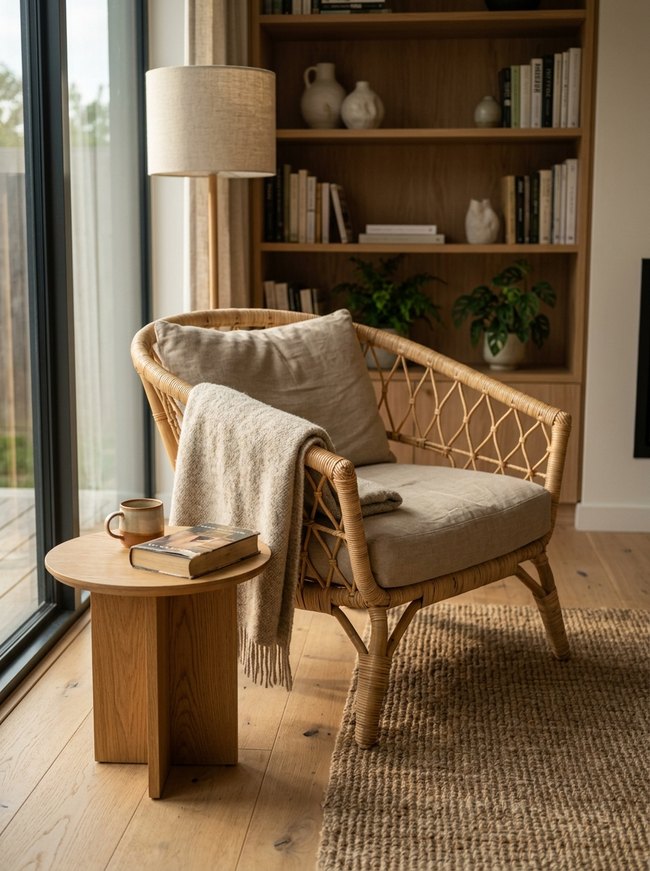
Layering natural textures creates a feeling of calm depth, preventing the small area from feeling flat. Woven rattan on the armchair, a chunky jute rug, and light oak wood floors work together for a warm, inviting space. Designers often use varied natural materials to add visual interest.
2. Blonde Wood Reading Nook
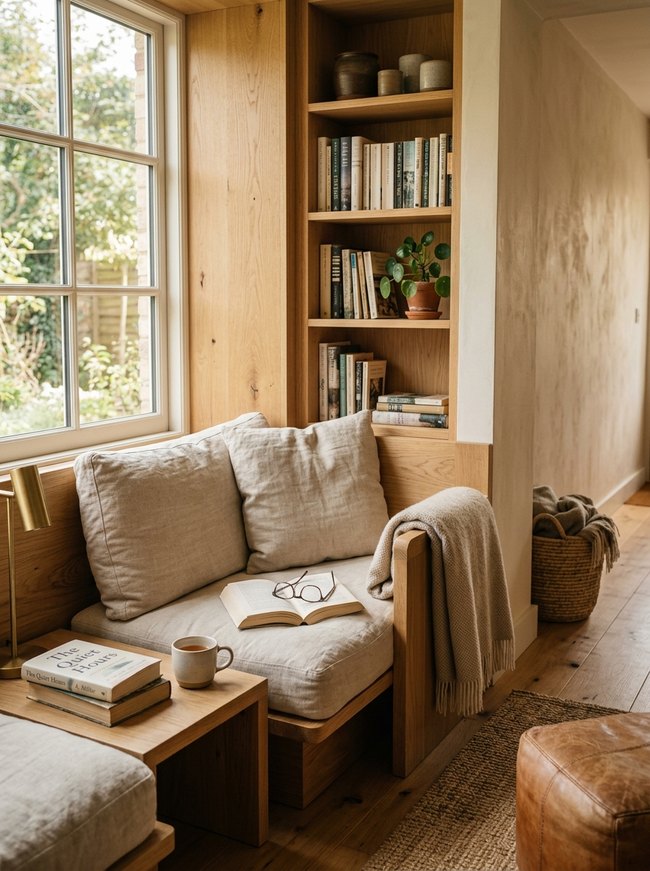
Blonde wood cabinetry creates a contained reading nook, maximizing floor space in a small interior. Light linen cushions and a woven basket with wool blankets add soft textures. The wooden bookshelves offer both storage and visual warmth. Integrated wooden furniture offers a similar space-saving solution for a small home.
3. Ceramic Tea Ceremony Alcove
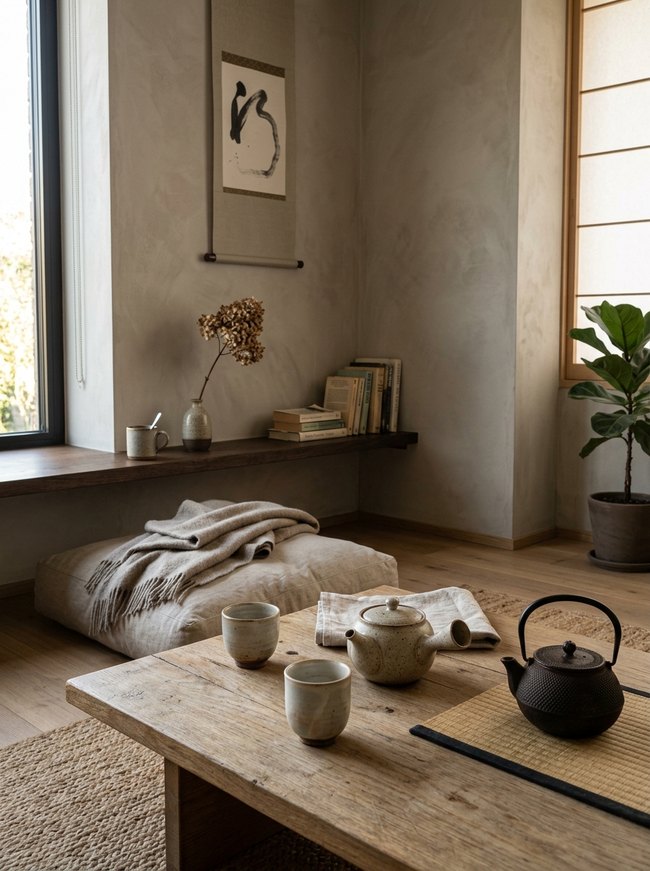
Low-level seating creates an intimate, grounded space. The simple choice makes the small room feel expansive and deeply calming. A dark wood window sill and natural fiber floor cushion further the organic texture story. The low-level furniture approach works for any small area.
4. Clean Line Bedroom Retreat
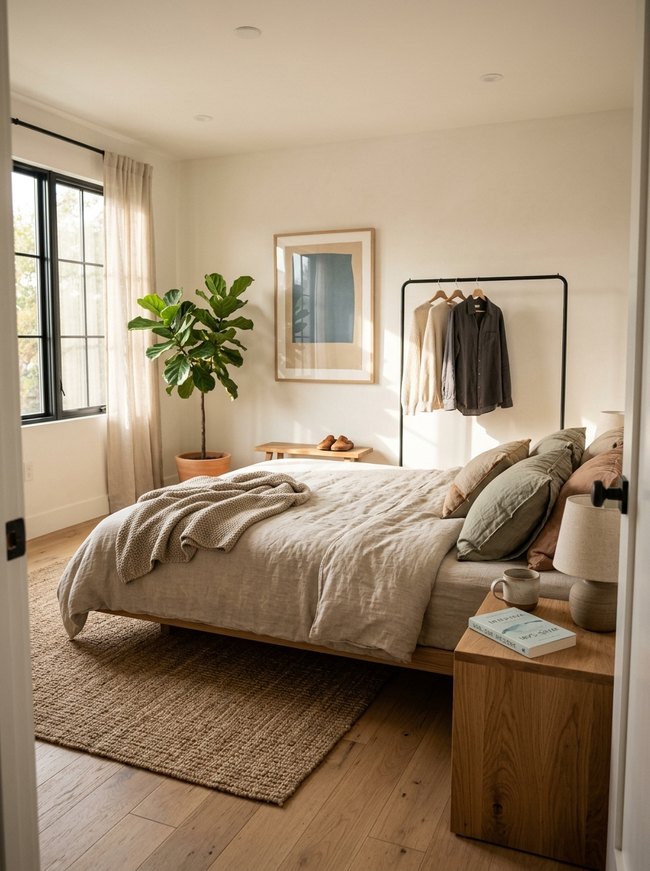
A low wooden bed frame creates a grounded, spacious feeling in the room, making the ceiling appear taller. Natural light streams from the wide window, bouncing off the light beige walls. A jute area rug adds warm texture to the wide plank oak floor. The low bed frame enhances visual height.
5. Zen Garden Bathroom Spa
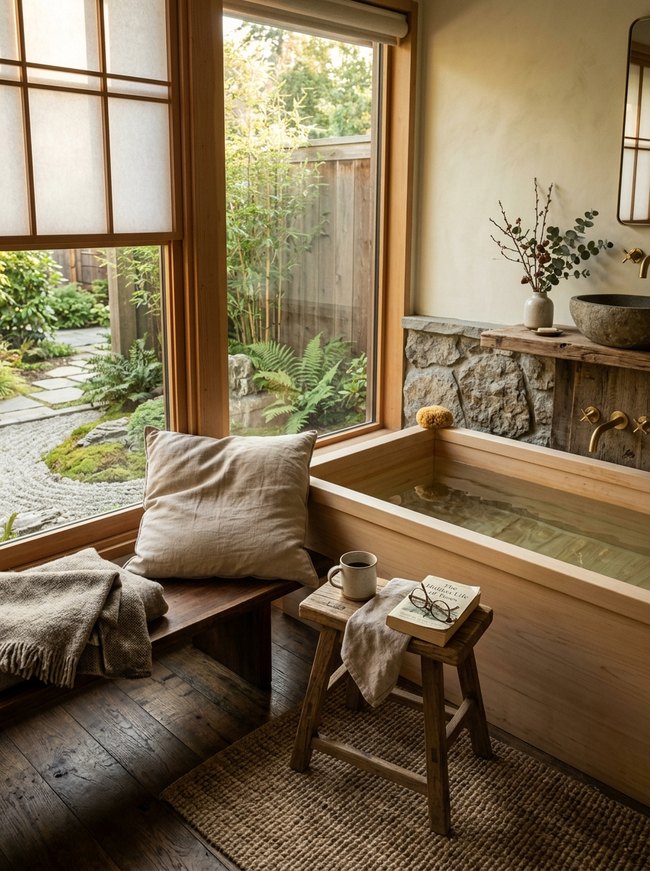
The large window wall creates an outdoor connection, bringing calm garden views into the bathing space. The window wall expands the room visually, blurring the line between inside and nature. Rough stone tiles and the light wood soaking tub also add warmth. The large window wall captures the outdoor view.
6. Warm Linen Dining Space
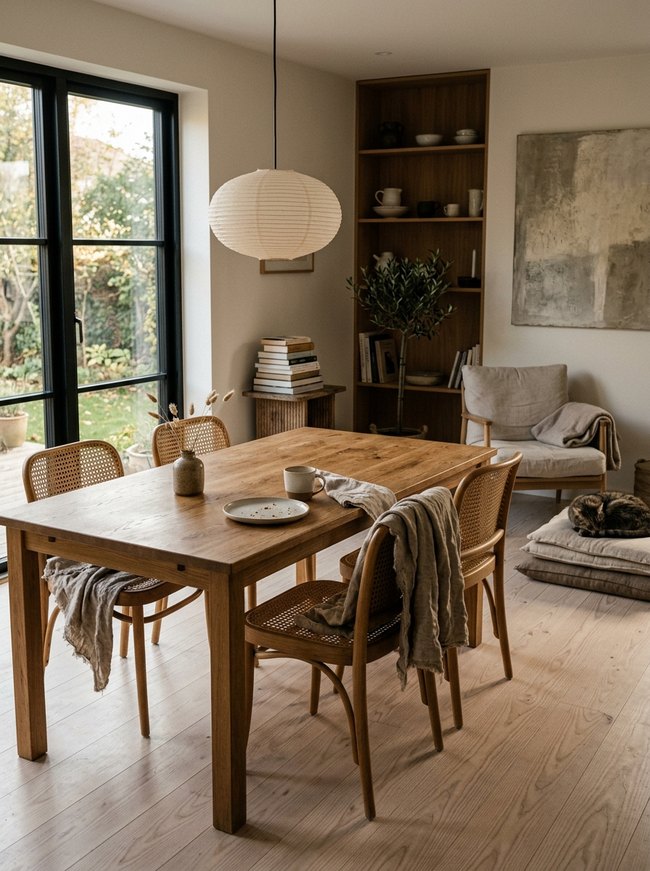
Consistent natural wood tones create a calm, cohesive feeling across the dining and living zones. The visual flow makes the small space feel larger by connecting distinct areas with warm, honey-toned oak furniture and light blonde flooring. A paper lantern light fixture and raw linen textiles add soft, inviting textures. Recreate the unified wood palette.
7. Tatami Floor Meditation Zone
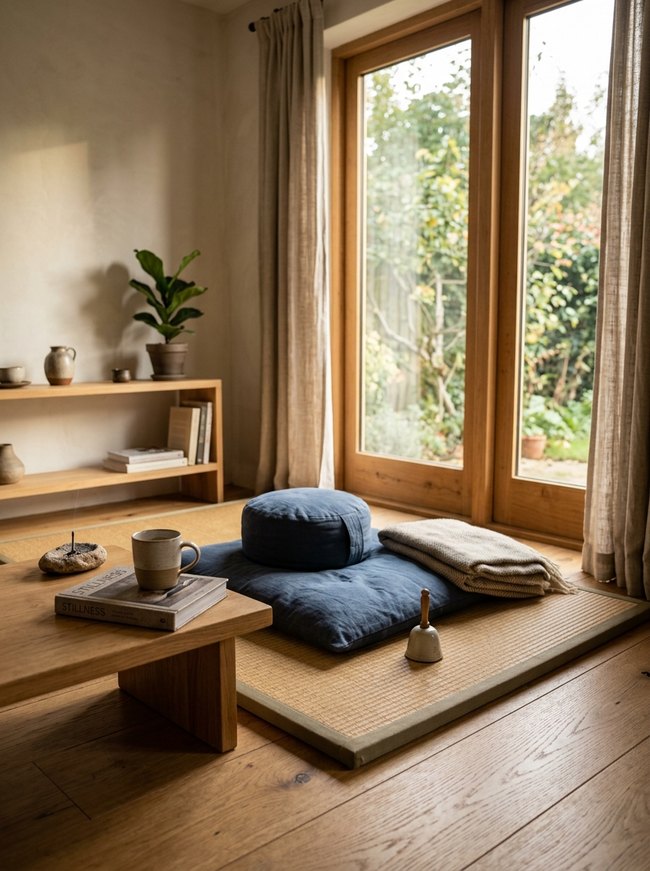
The designer creates a meditation zone by setting a tatami mat directly on the wide oak floorboards. The mat defines the space without walls, keeping the small area open and airy. A low wooden table, a simple zafu cushion, and a ceramic tea mug complete the tranquil setting. Readers can use a tatami mat to zone a small space.
8. Natural Fiber Entryway Bench
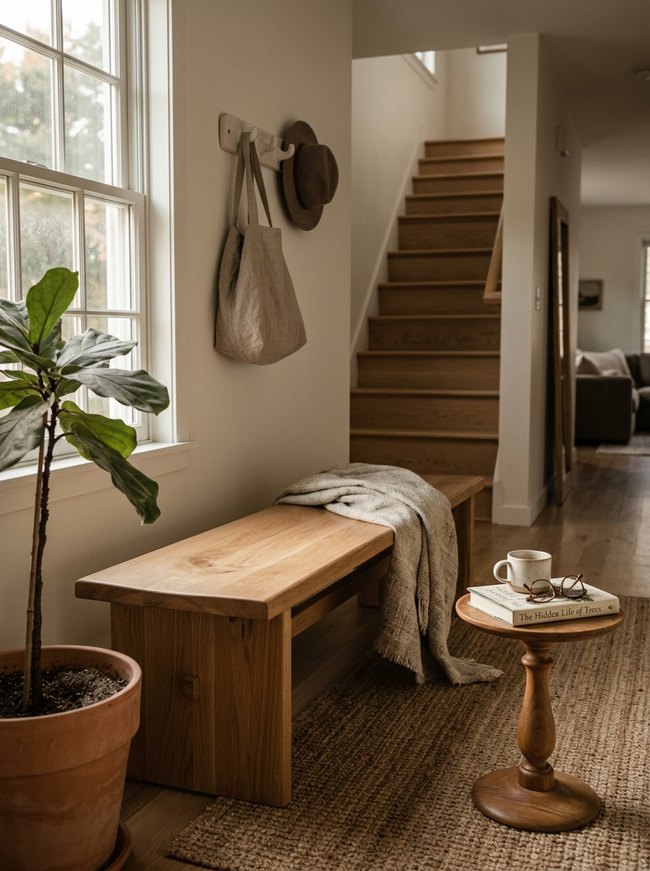
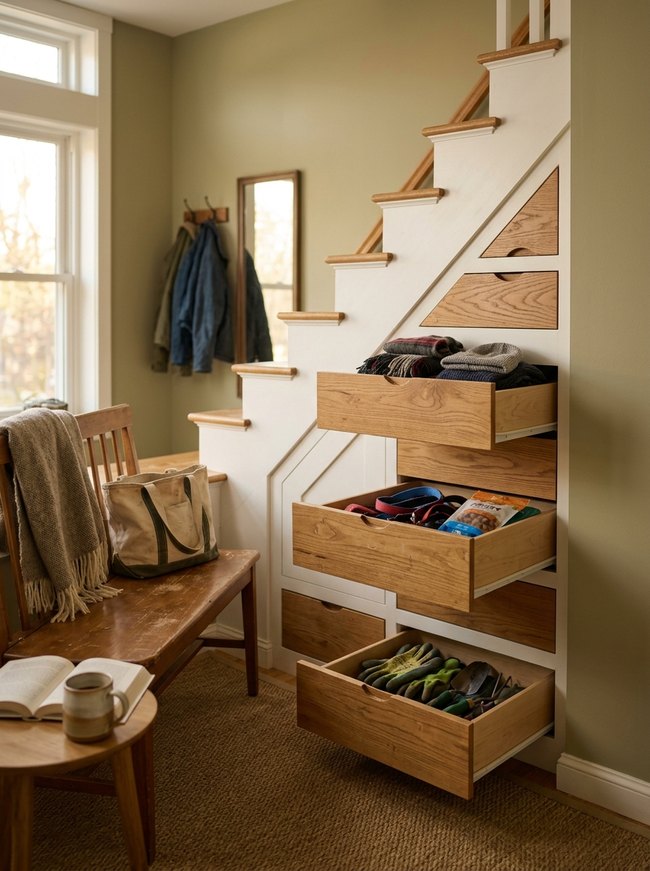
The light oak bench creates a warm, clear boundary for the entryway. A woven jute rug adds earthy texture, while a fiddle leaf fig tree brings natural green color. Designers often use a simple, solid wood piece to define a small space.
9. Minimalist Kitchenette Design
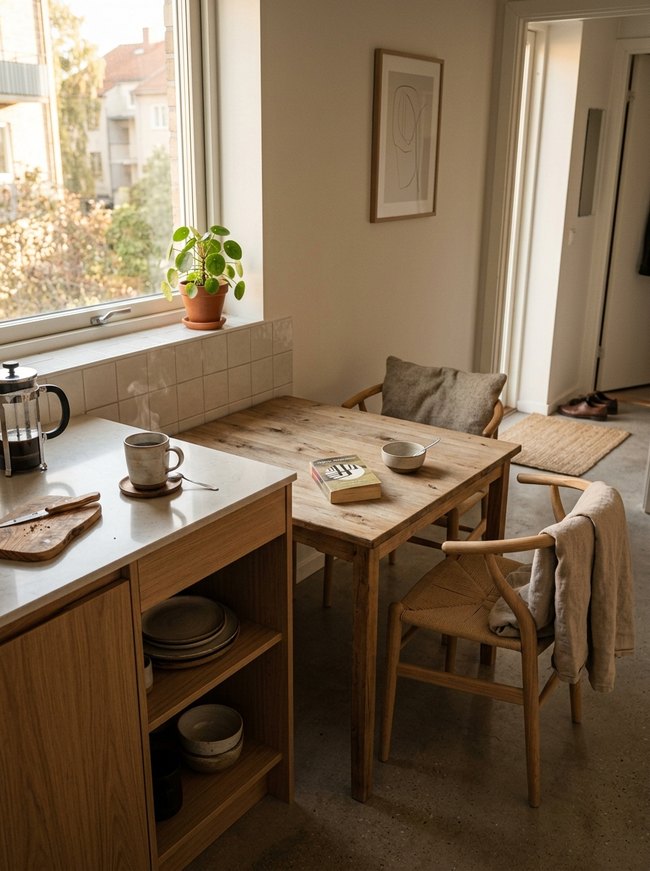
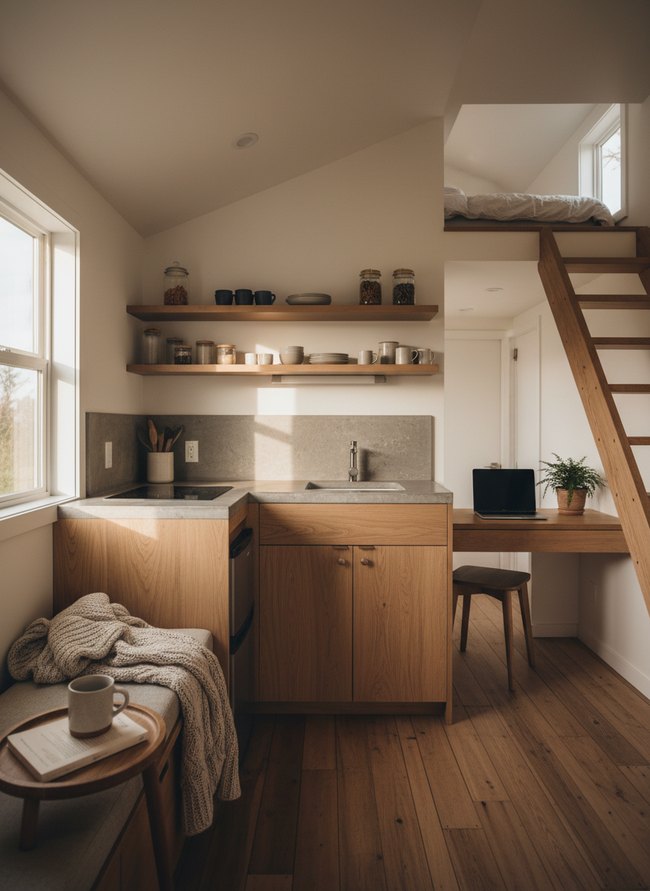
The oak kitchen island extends into a dining table, creating a unified flow in the small room. The continuous surface maximizes usable space and prevents visual clutter, a wise choice for the japandi tiny home. Light wood tones and the simple white tiled backsplash keep the area feeling open and airy. Connecting functional zones with shared surfaces is a smart design choice.
10. Stone Accent Hearth Area
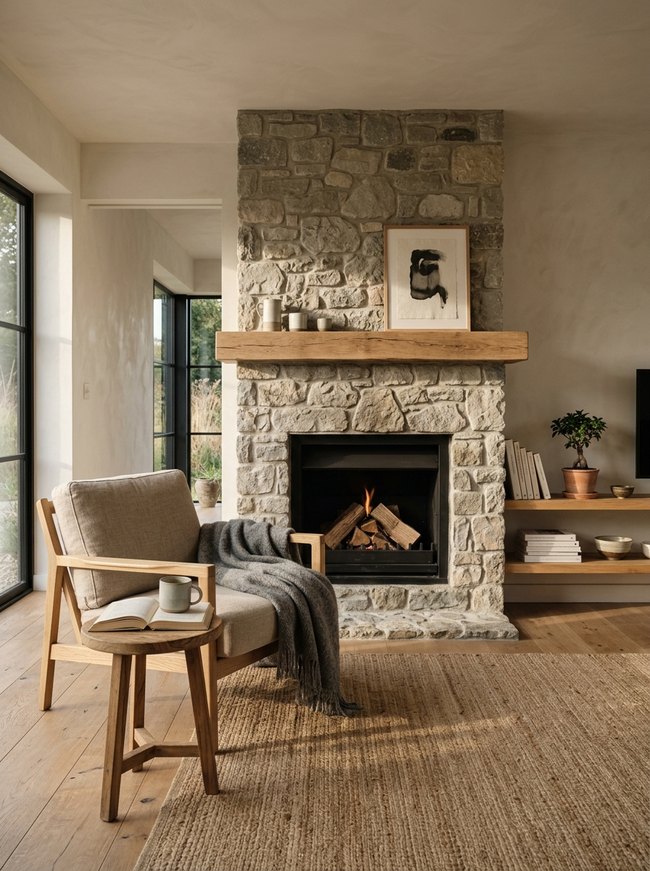
The designers made the stacked stone fireplace a central feature, pulling the eye with its rough texture. Rough-hewn wood elements like the floating mantel and side table create a warm, inviting feel. A large jute rug adds another layer of natural texture, defining the seating area. The interior uses varied natural textures to build visual interest.
11. Soft Light Work Studio
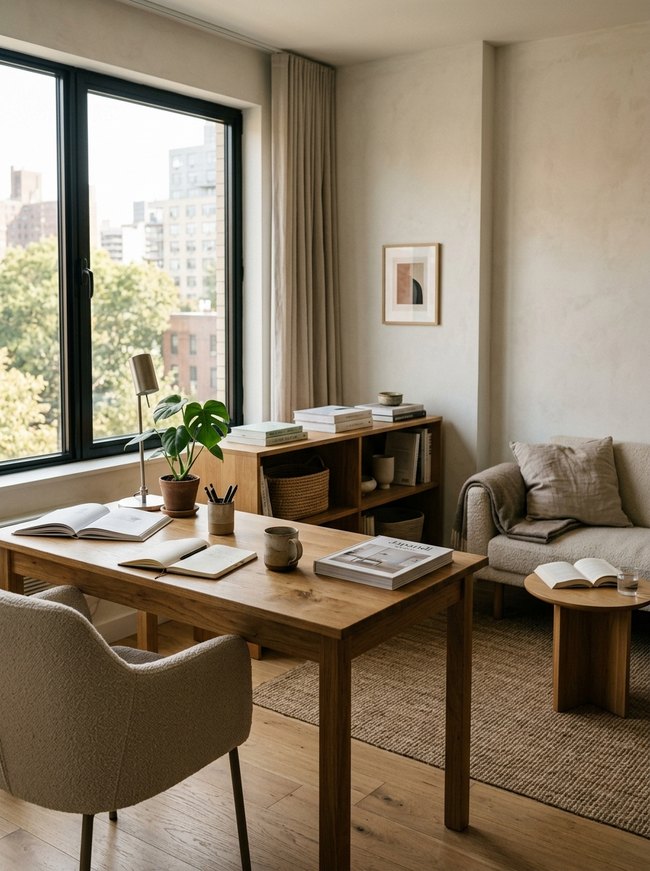
The light oak desk sits directly beneath a large black-framed window, maximizing natural light for focused work. Pale linen curtains and a soft bouclé sofa add texture and comfort to the room. The smart layout creates a bright, calm workspace. Steal the window-facing desk placement.
12. Earthenware Display Shelf
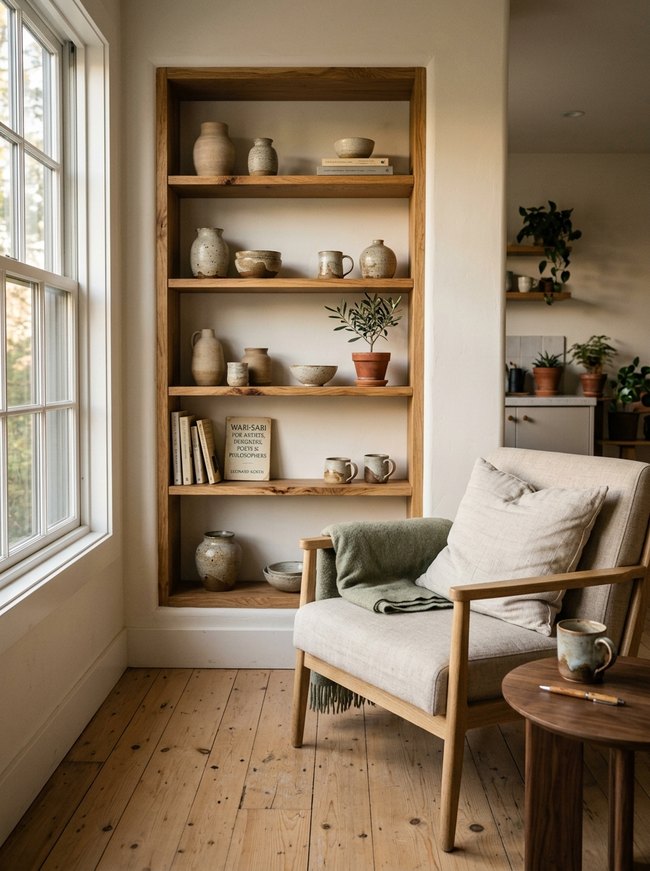
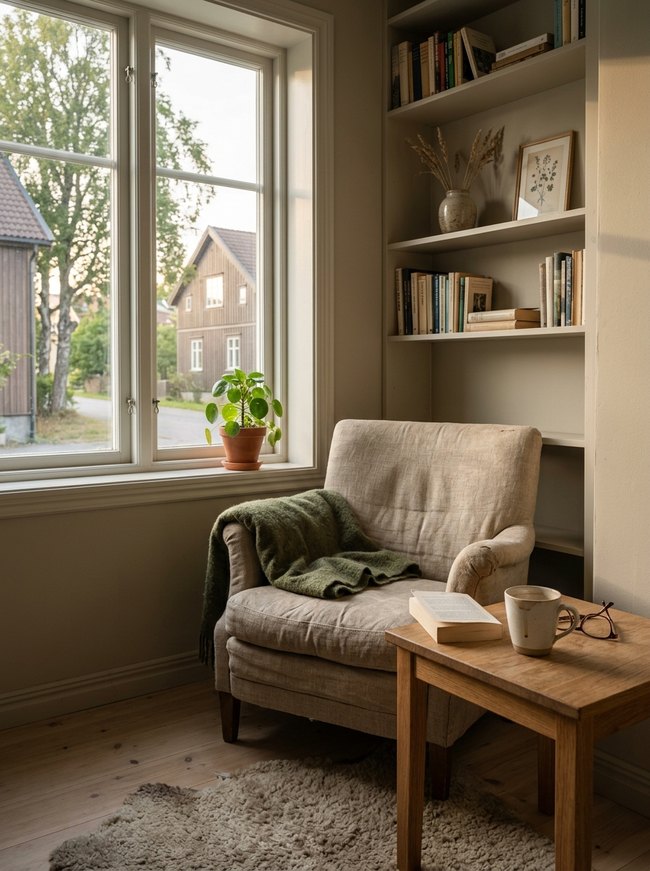
A deeply recessed, honey-toned oak bookshelf creates a clean, built-in look that maximizes wall space without protruding into the small room. Natural light from the multi-pane window illuminates the stoneware pottery and hardcover books, highlighting their textures. A light gray armchair with an olive green throw provides comfortable seating next to a round walnut side table. The recessed bookshelf offers a seamless, space-saving display.
13. Sliding Screen Room Divider
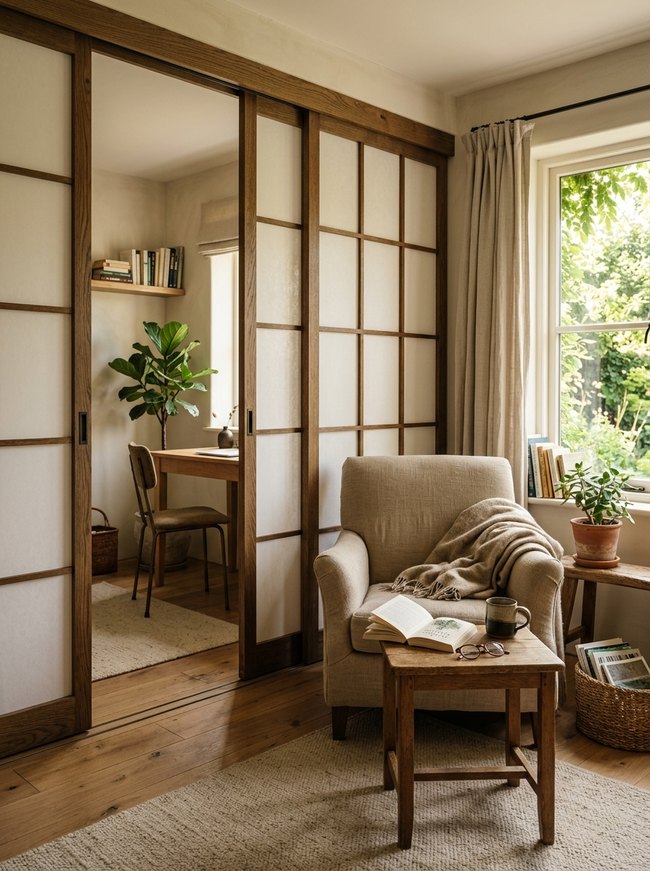
Sliding shoji screens create flexible room division in the small space. The translucent rice paper panels allow soft light to pass, maintaining an open, airy feel while still offering privacy for the adjacent office. A warm oatmeal-colored armchair and a small wooden side table provide a cozy reading nook. The sliding screen room divider offers adaptable living.
14. Low Profile Sofa Seating
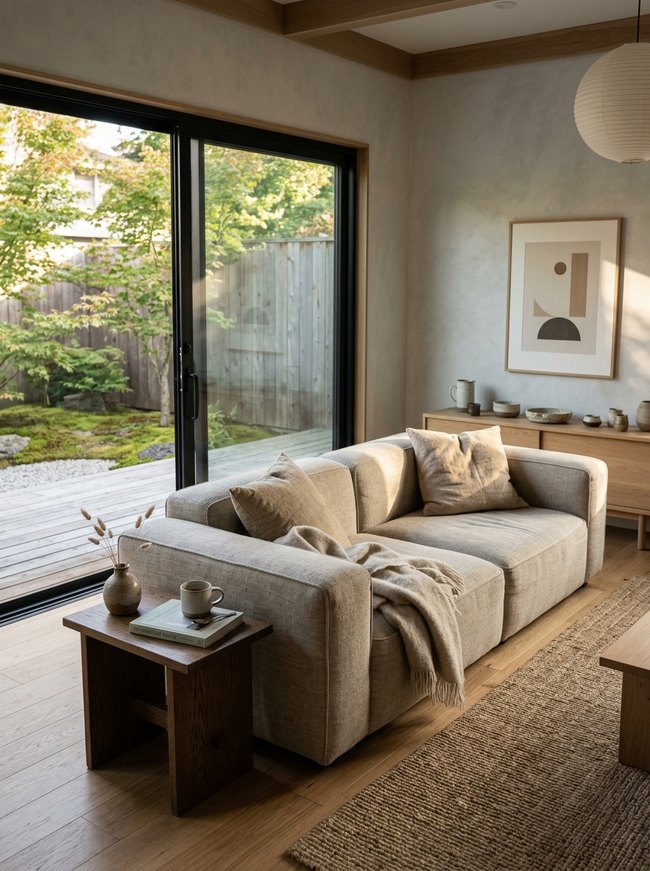
A modular sofa creates flexible seating options for the small living area. The furniture keeps the room open, allowing free movement and an airy feel in a japandi tiny home. Natural wood beams and a jute rug add warm texture. Modular furniture offers adaptable small-space solutions.
15. Bamboo Ladder Storage Unit
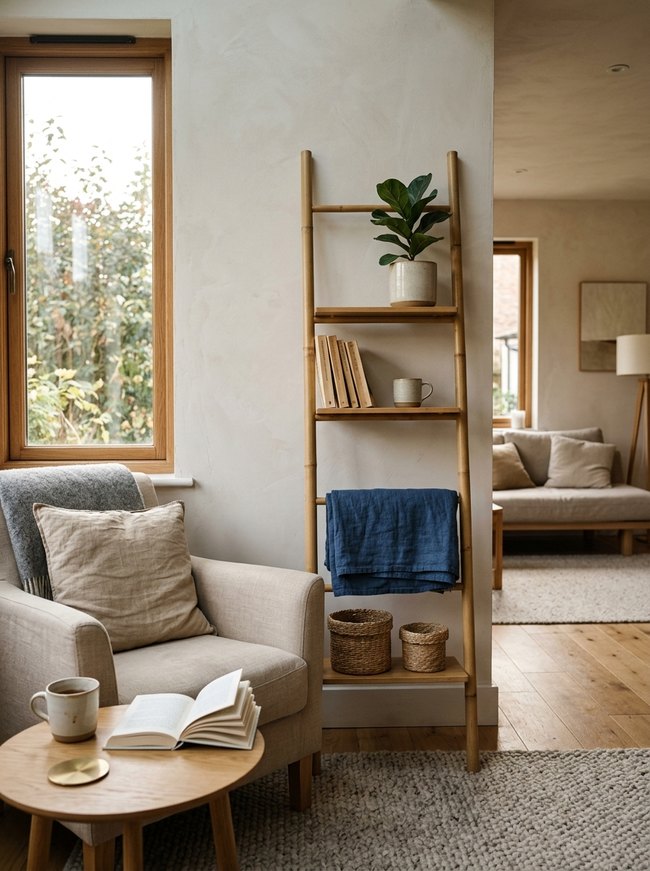
A freestanding bamboo ladder offers vertical storage without permanent fixtures. The slim unit works well in a japandi tiny home because its light natural wood prevents visual clutter against the pale wall. Green plants and folded blue linen fill the shelves. A narrow ladder shelf offers flexible display.
16. Concrete Finish Wall Detail
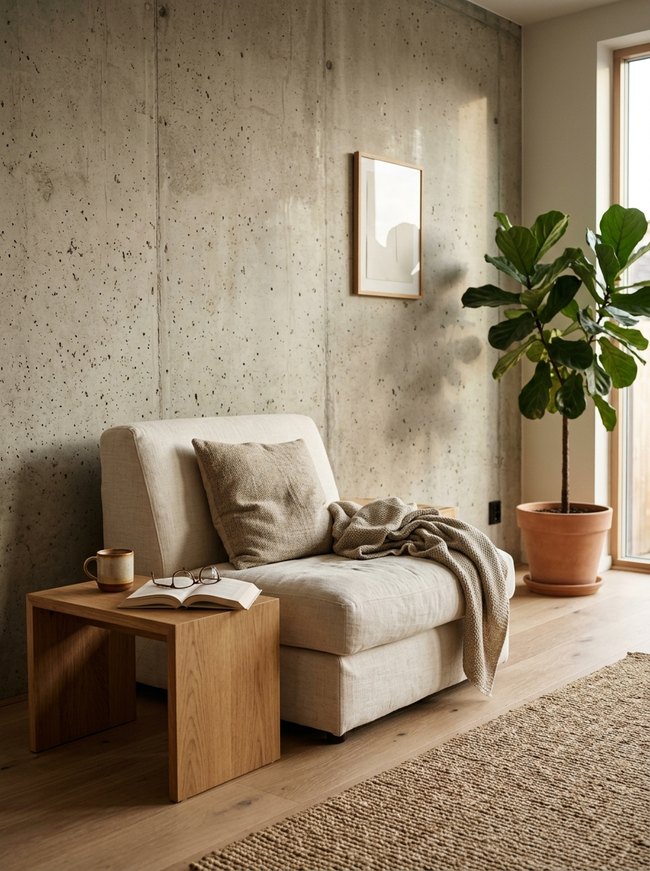
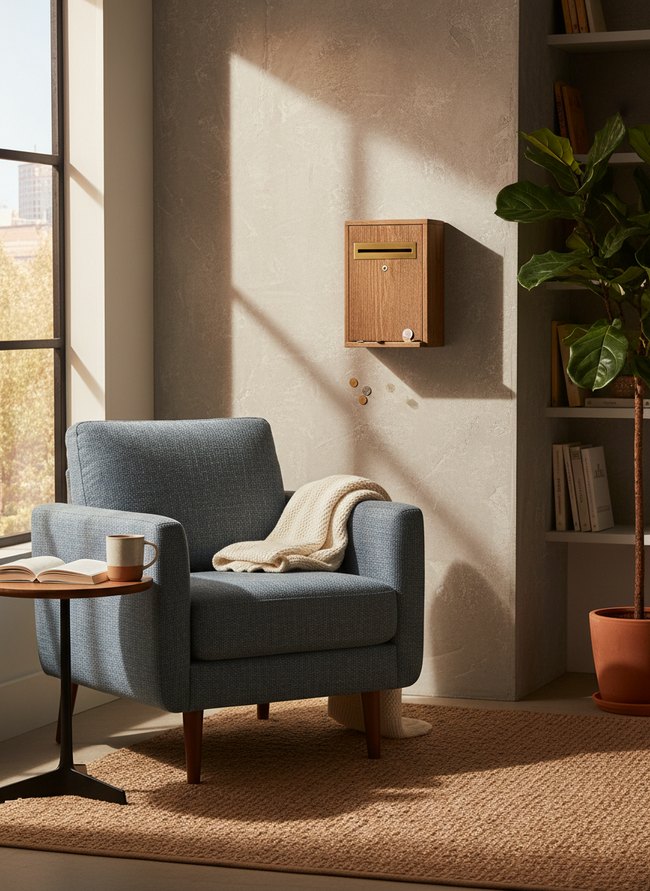
The raw concrete wall creates a dramatic, earthy backdrop for the light-colored furniture. The rough, textured surface grounds the bright beige linen chair and warm oak side table. A fiddle-leaf fig plant in a terracotta pot adds a burst of natural green color. The concrete wall finish offers raw, honest texture.
17. White Oak Flooring Layout
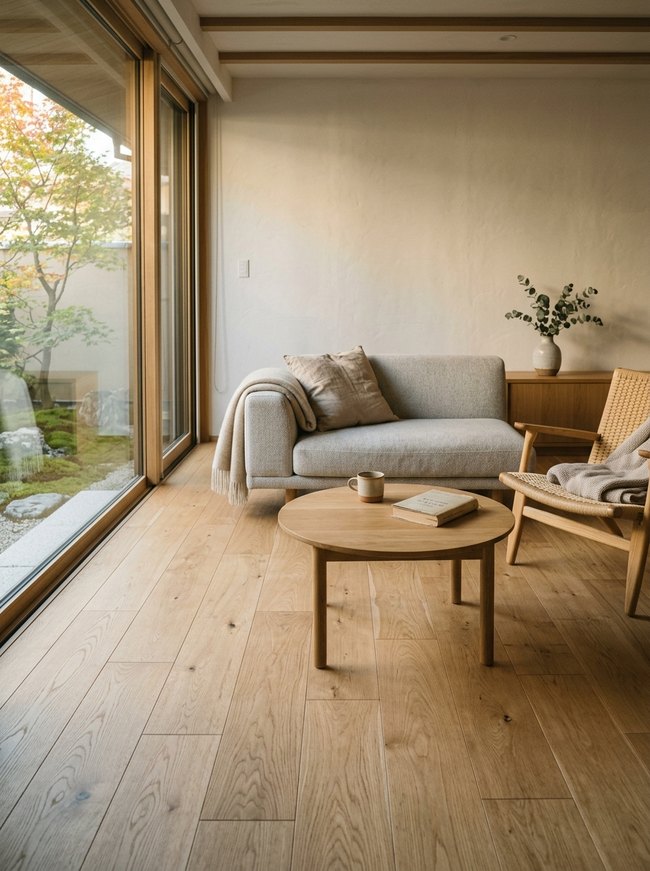
Wide plank white oak flooring creates expansive visual continuity, making the small room feel much larger. Light wood tones on the coffee table and woven chair complement the floor’s calm feeling. Consistent light wood floors stretch small spaces.
18. Paper Lantern Overhead Fixture
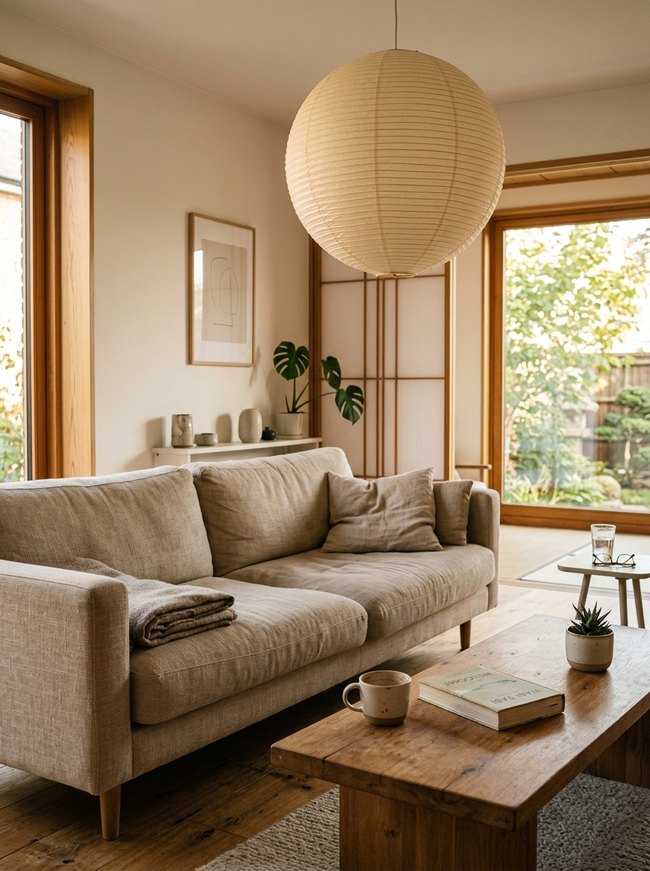
The large paper lantern overhead fixture defines the room’s scale. The soft, round shape and warm light balance the straight lines of the wood-framed windows. Earth-toned pottery and a monstera plant also add natural texture to the simple wall shelf. An oversized, round light fixture softens a rectangular space.
19. Pebble Floor Shower Stall
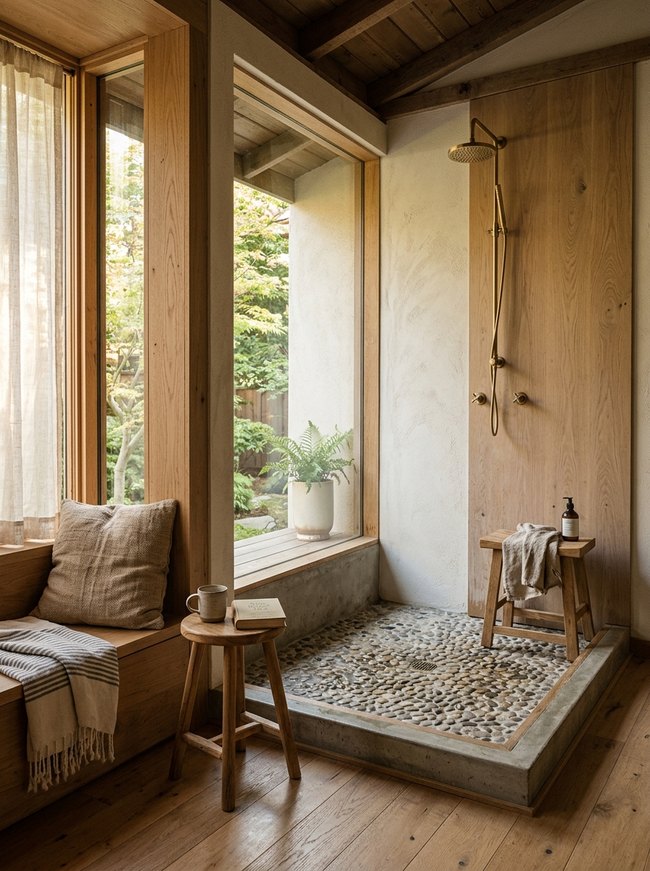
The open corner window system makes the small bathroom feel expansive, letting natural light flood the entire space. Smooth river pebbles cover the shower floor, offering a unique sensory experience underfoot. Warm oak planks on the walls and floor tie the whole room together. Steal the floor-to-ceiling glass corner.
20. Wool Throw Comfort Zone
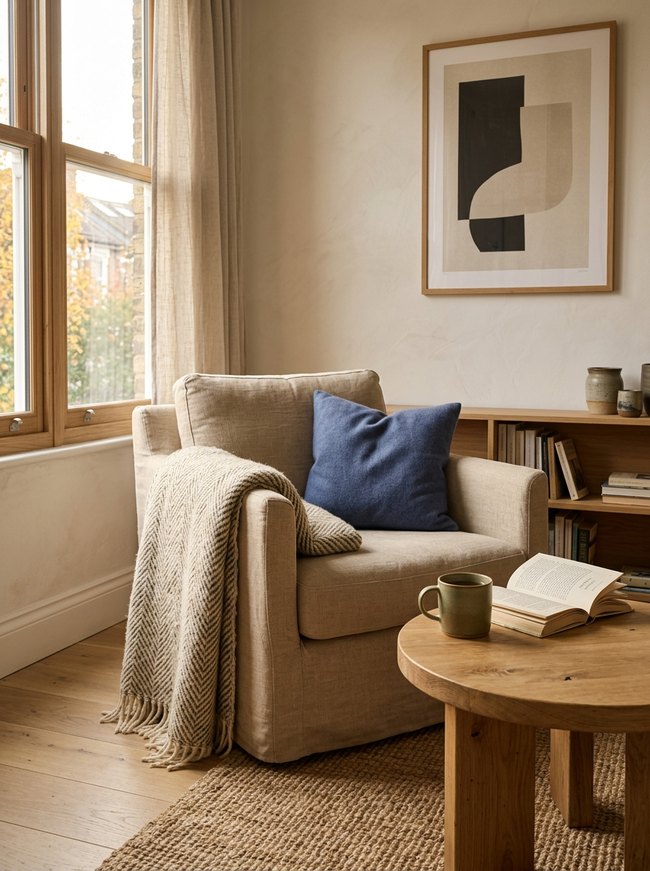
The designer carefully layered textures to build depth in the inviting corner. A chunky woven jute rug grounds the space, while a soft linen armchair provides visual warmth. A deep blue cushion provides a single strong accent.
21. Floating Wood Bed Frame
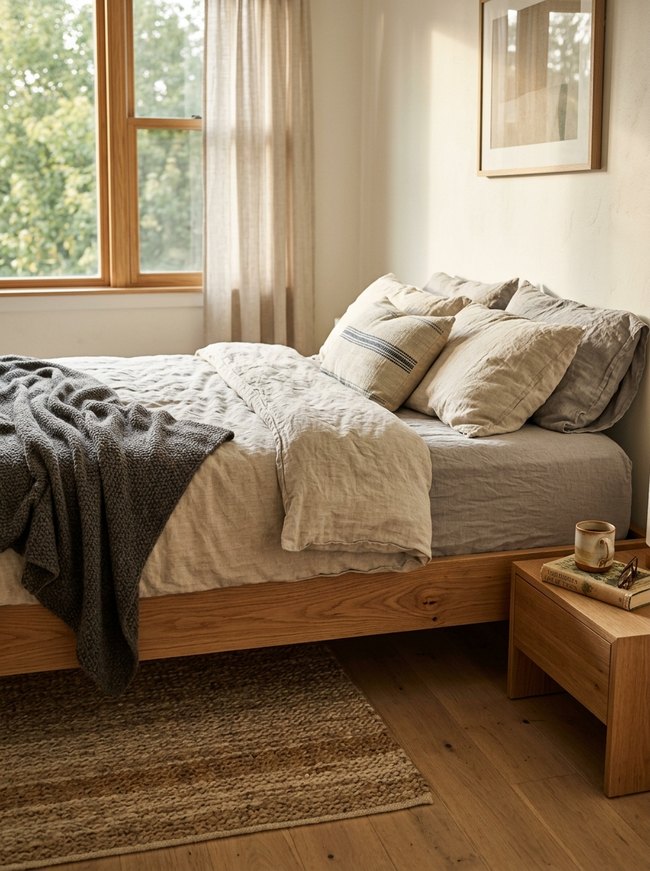
The floating oak bed frame lifts the bed visually, creating open space beneath. The design move makes the room feel larger and less cluttered, perfect for a japandi tiny home. Natural linen curtains and a woven jute rug also add soft texture. The floating bed frame provides an airy feel.
22. Clay Pot Plant Corner
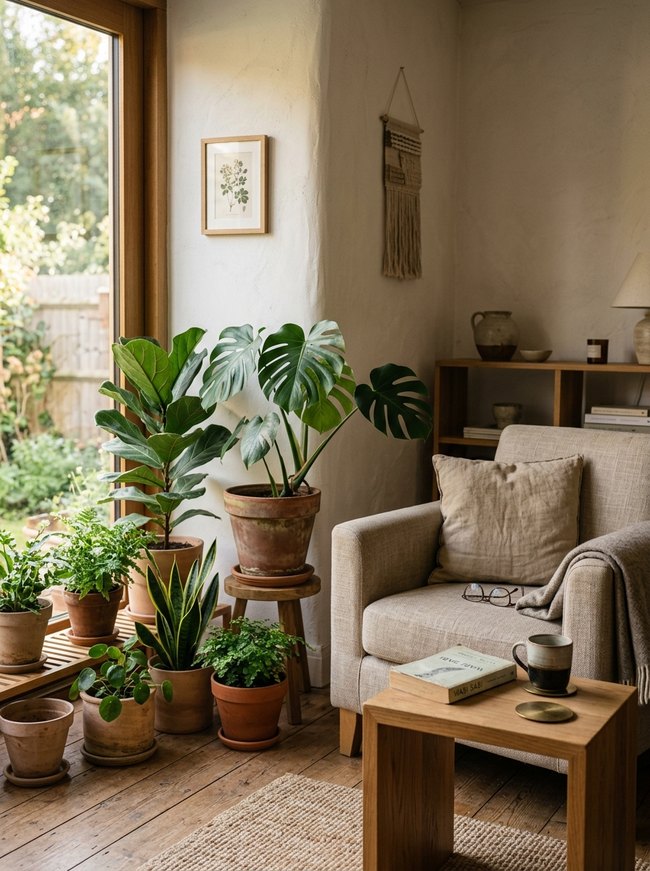
The Japandi tiny home uses a plant cluster to soften the harsh corner. The arrangement creates a natural, organic flow, contrasting with crisp wall lines and the blonde oak window frame. A woven wall hanging and textured pillow also add visual depth. The plant cluster offers a soft corner detail.
23. Simple Fabric Window Treatment
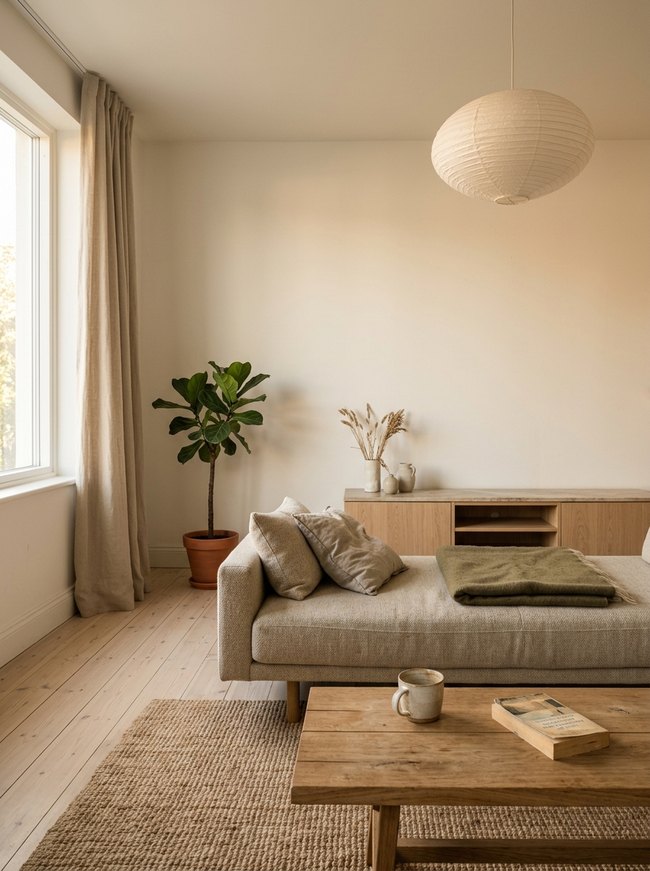
Long, neutral linen drapes at the window create a soft vertical line, making the room feel taller and more open. The simple fabric choice adds texture without visual clutter, a key principle for a japandi tiny home. A low light oak media console grounds the space, while a tall fiddle-leaf fig plant adds a touch of natural green. Floor-length curtains add height.
24. Subtle Art Wall Focus
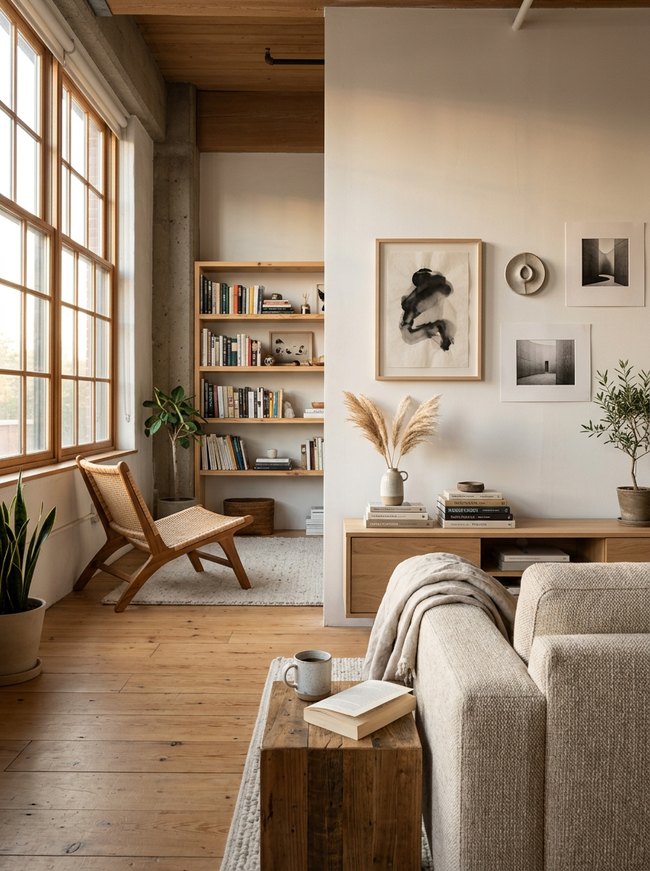
A framed art print serves as the central feature of the wall. The large frame draws attention without overcrowding the compact space. A simple oak bookcase and light wooden flooring keep the background clean. Using a single large art piece defines a wall.
The Deliberate Asymmetry of Japandi Furniture Arrangements: Beyond Mere Visual Interest
Deliberate asymmetry gives Japandi interiors deep visual balance. Consider a natural live-edge wood coffee table placed slightly off-center before a low-slung sofa. This placement avoids a mirrored look, which often feels stiff and forced in smaller rooms. You might notice a floor lamp with a slender black metal base standing tall on one side of the sofa, while a round, textured ceramic vase rests on a small side table on the opposite end. Such varied heights and shapes prevent the eye from settling too quickly. A common mistake involves pairing identical nightstands with matching lamps on either side of a bed. Instead, you could place a single oak nightstand with a simple white ceramic mug on one side. Your other side of the bed might feature a tall, narrow ladder shelf holding a few folded linen throws. Japandi tiny homes master this nuanced arrangement, guiding your gaze through the open space with thoughtful, varied elements. Every piece earns its spot, creating a serene, calm feeling without rigid formality.
Materiality as Acoustic Dampener: The Role of Unfinished Wood and Textured Plaster in Tiny Japandi Spaces
Unfinished wood and textured plaster naturally quiet small rooms. Rough-sawn Douglas fir planks on walls absorb sound waves instead of bouncing them around. Imagine a tiny Japandi home where conversations echo loudly off painted drywall. Acoustic comfort dramatically improves with a switch to soft, porous surfaces.
Your ears will register a noticeable calm from the lack of sharp echoes. Many homeowners overlook sound quality when planning their interiors. A smooth, sealed surface, like a glossy kitchen tile, reflects nearly all sound energy. Such hard materials make tiny homes feel noisy and less restful.
Lime plaster, applied with a visible hand trowel texture, offers excellent sound dampening. This natural material creates millions of tiny air pockets across its surface. Sound energy then dissipates within these small pockets. Oak ceiling beams, left unsealed, also trap stray sound waves. You achieve a peaceful environment without adding extra sound panels. Each rough surface helps your small space feel larger and more serene.
Which Idea Will You Try First?
That’s 24 different takes on japandi tiny home. The best ideas above are usually the smallest moves — one material, one layout shift, one piece of furniture in the right place. Pick whichever room feels closest to your space and start there before tackling the rest.
Found an idea worth keeping? Save this post to your Pinterest board so it’s waiting for you when you’re ready to start your own project.