Vertical vs Horizontal Storage: Which Works in Tiny Spaces?
Floor space is not the only limited dimension in small rooms. Many small home styling guides focus solely on maximizing square footage, ignoring how a narrow or shallow wall impacts placement. Homeowners must consider the depth of available wall surfaces just as carefully as their width or height. A two-foot wide painted wall offers different space-use opportunities than a ten-foot wide white wall, even if both share the same twenty-four-inch depth. The tiny living area demands careful attention to these subtle distinctions. The list reveals practical ways to make informed decisions for a compact home.
1. Stacked Wall Shelving Units
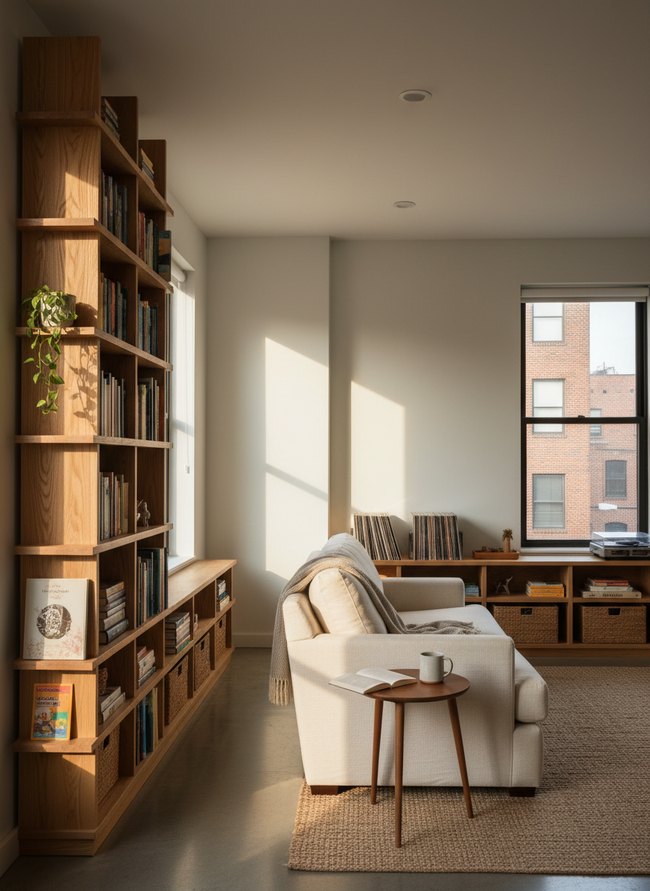
The tall, light oak bookshelf unit wraps around the corner, reaching the cream-colored ceiling. The vertical design maximizes storage capacity by using available wall height, keeping books and decorative items organized. Designers often employ this effective strategy: build up, not out.
2. Under-Bed Rolling Containers
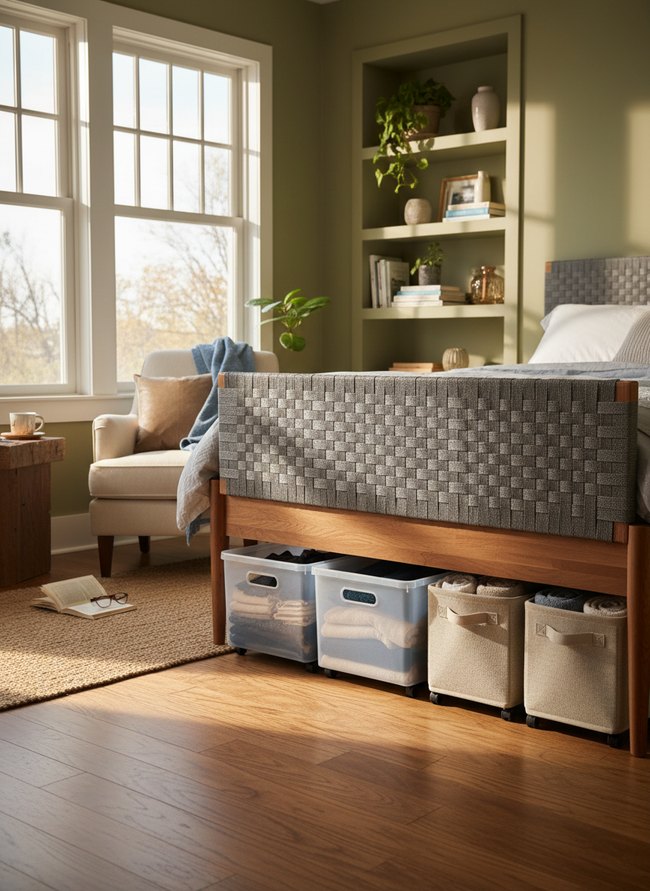
Under-bed rolling containers provide hidden horizontal storage for bulky linens. Clear plastic boxes and beige fabric bins on small black wheels slide neatly under the wooden bed frame. The storage maximizes unused floor space, keeping the bedroom tidy and spacious.
3. Tall Corner Book Tower
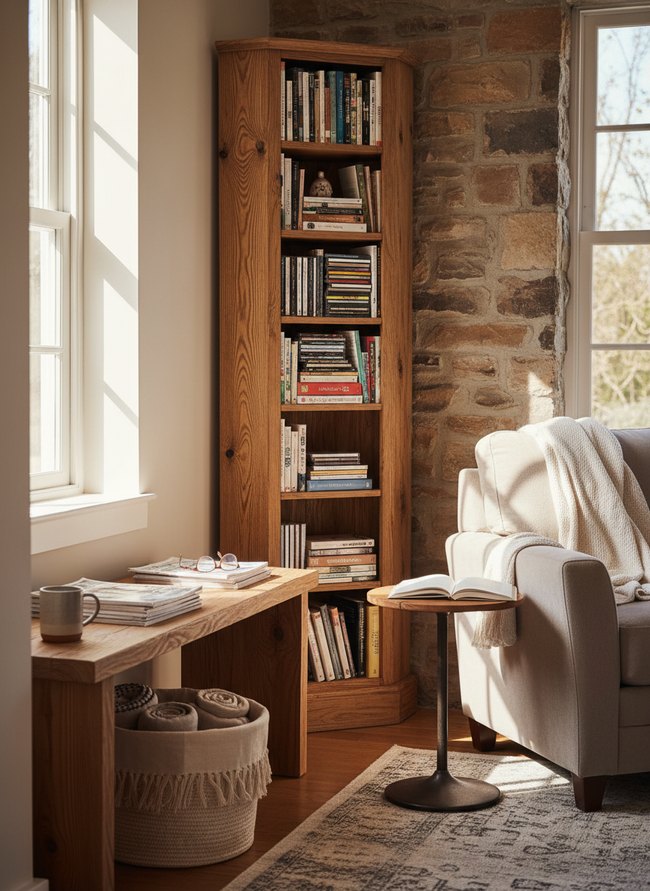
A tall corner bookshelf fits into an unused room angle, creating storage where walls meet. The honey-toned oak unit maximizes vertical space without taking up floor area. A small table beside the armchair provides an extra surface, keeping the reading nook light and open. The tall corner unit offers a clever solution for dead space.
4. Modular Cube Organizer
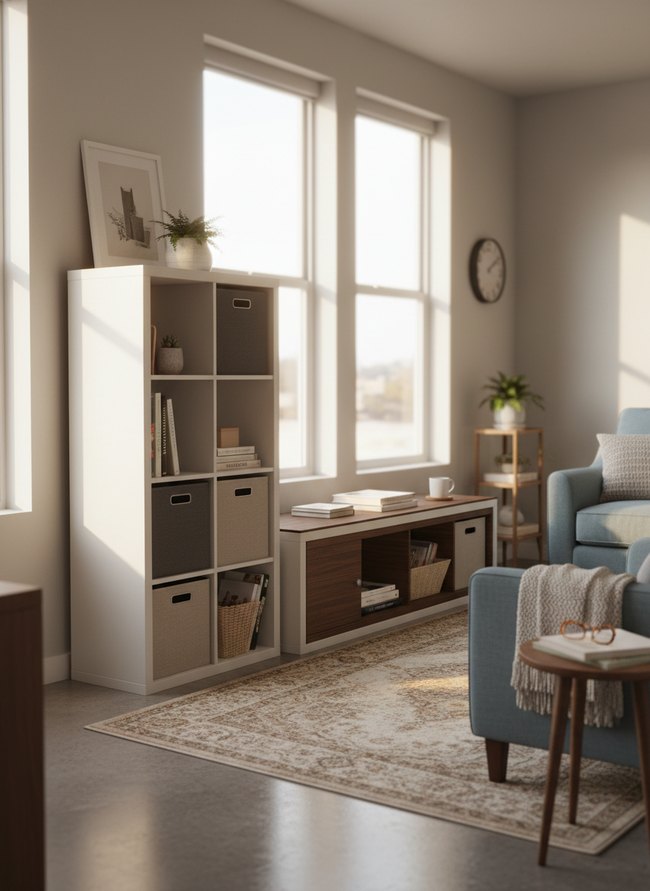
A tall, white cube organizer stands upright, maximizing vertical storage within a compact footprint. Different sized bins and books fill the open shelves, creating a functional display. Homeowners can utilize vertical space with a modular organizer.
5. Drawer Divider System
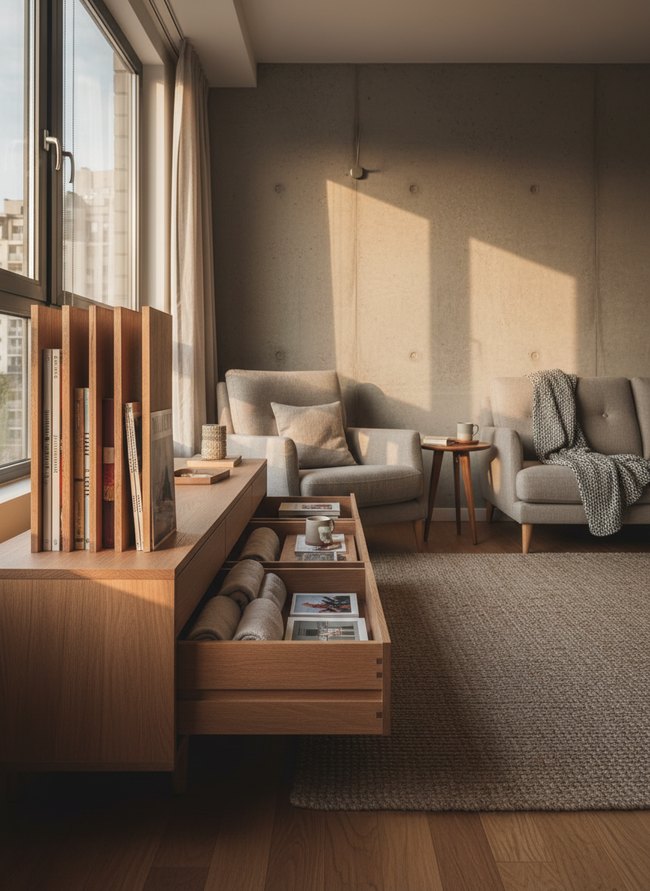
Wooden drawer dividers offer a smart way to sort belongings, keeping small items from shifting inside a long drawer. Vertical slots in the accompanying wooden bookshelf also keep magazines upright. Simple divisions create neat compartments for different objects, making everything easy to find. Drawer dividers organize vertical vs horizontal storage.
6. Over-Door Hanging Rack
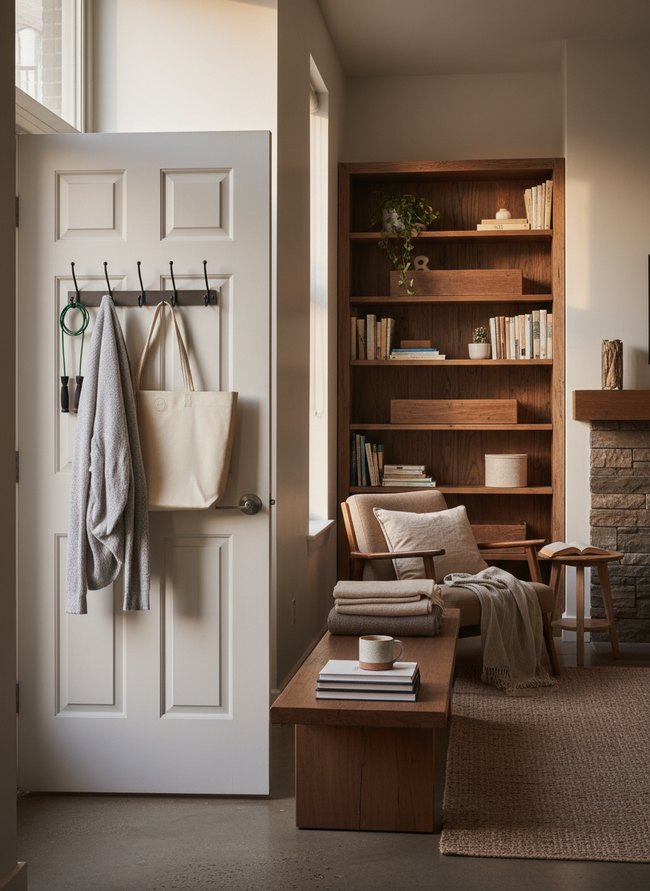
A black metal hanging rack on the white paneled door multiplies storage capacity without using any floor space. The rack gains usable vertical storage for everyday items like a gray cardigan and a cream tote bag. A tall wooden bookshelf and a brown upholstered armchair create a cozy reading nook nearby. The over-door hanging rack offers clever vertical storage.
7. Slim Pantry Pull-Out
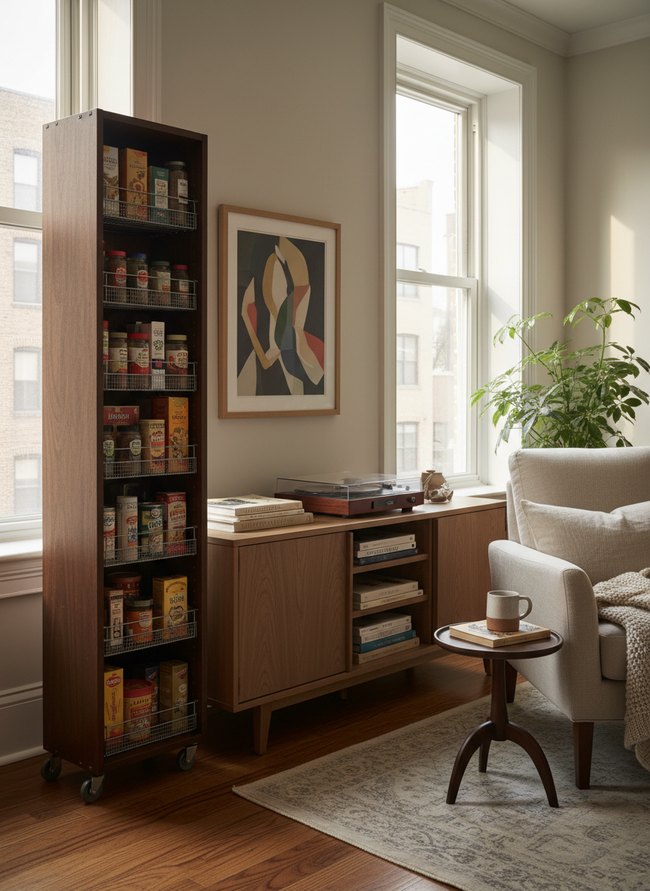
A tall, thin wooden storage unit on wheels creates a slim pantry pull-out. The narrow unit maximizes unused vertical space by a window, making a functional storage spot for many small items. A low wooden console and a light beige armchair sit nearby, providing a cozy reading nook. Savvy designers can steal the idea of using a narrow, rolling shelf to add hidden storage in tight spots.
8. Floating Desk Storage
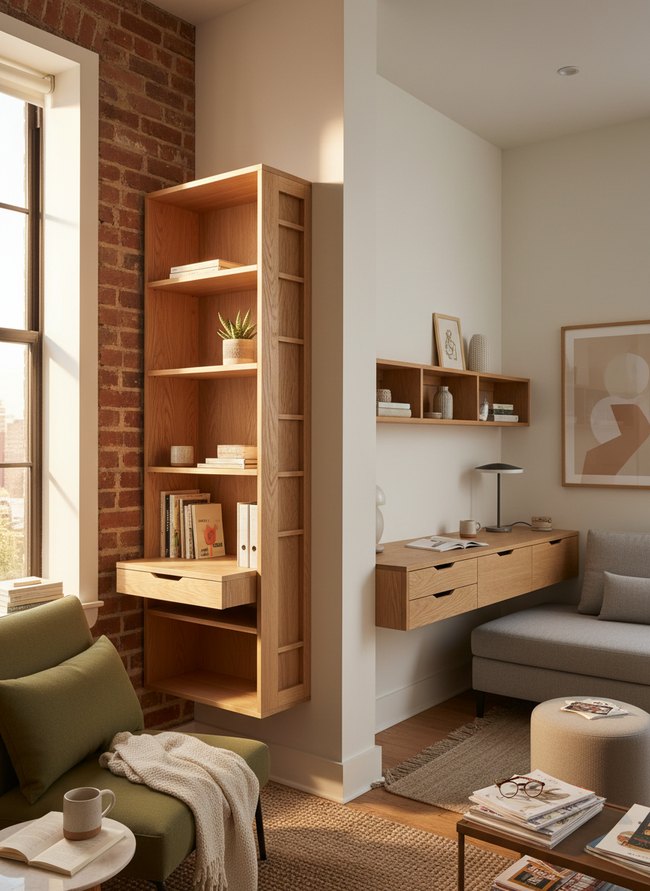
The designer used a vertical oak bookshelf and a horizontal floating desk to maximize space in the narrow nook. The arrangement works because the tall bookshelf provides ample book storage, while the wide desk creates a functional workspace without taking up floor space. Readers can steal this idea by installing a combination of vertical and horizontal storage units on a dividing wall.
9. Built-In Vertical Wardrobe
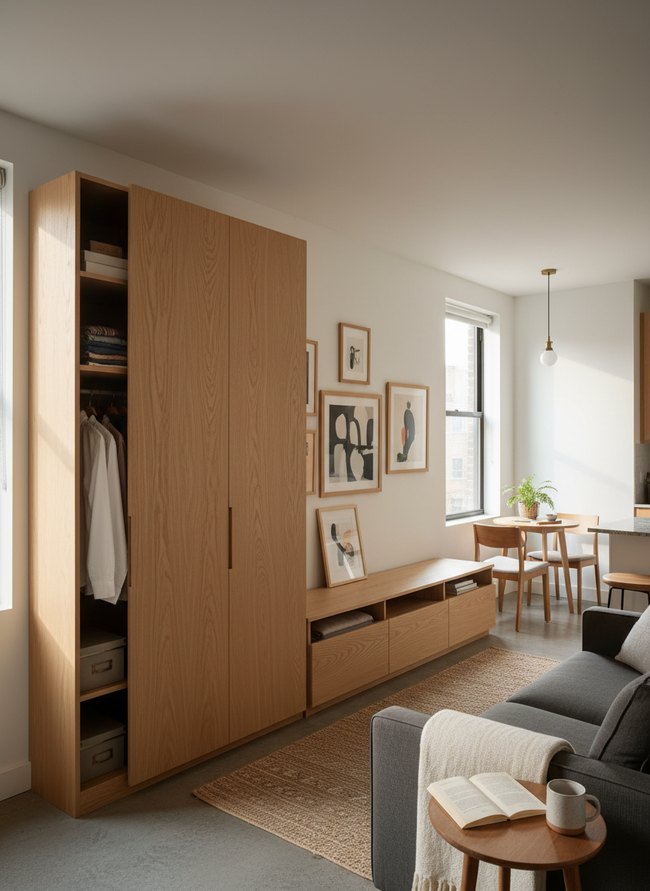
The tall oak wardrobe seamlessly integrates into the wall, offering abundant vertical storage without consuming floor space. The light honey-toned wood complements the low media console, creating a unified appearance across the long wall. The wardrobe provides maximum storage with a built-in look. Tall built-in wardrobes are a great storage solution.
10. Low Profile Media Console
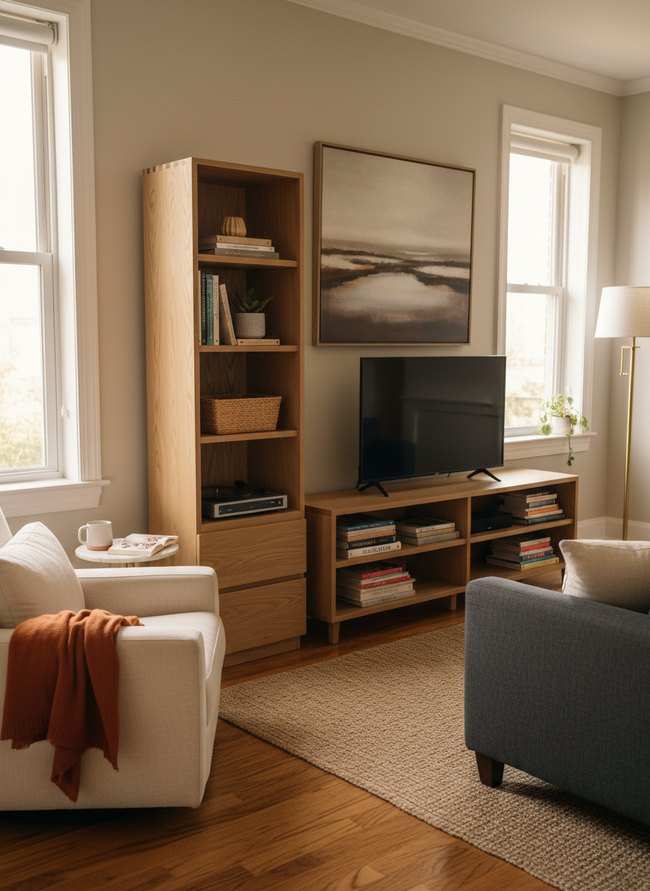
A unified oak tone on the tall bookcase and low media console creates a cohesive storage wall. The two pieces offer vertical and horizontal storage, maximizing available wall space. A soft tan rug on the warm wood floor grounds the furniture arrangement. Steal the unified wood color for a clean, organized look.
11. Tiered Countertop Caddy
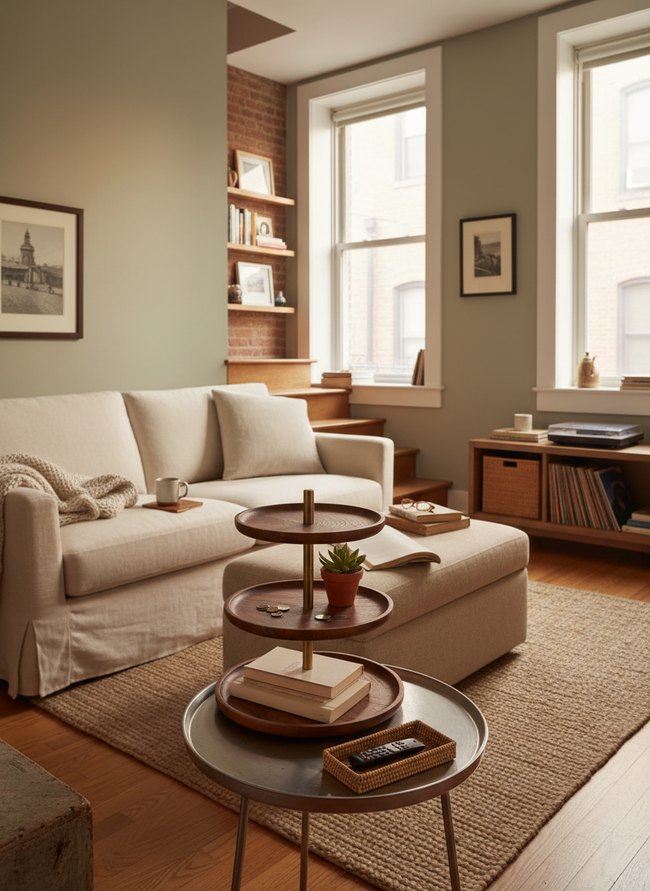
A three-tier wood and brass caddy maximizes vertical storage in the small living space. The compact caddy saves precious floor space, providing multiple surfaces for small items. Round dark wooden trays hold books, a terra cotta succulent pot, and loose coins. The tiered caddy provides more tabletop capacity.
12. Wall-Mounted Pegboard Display
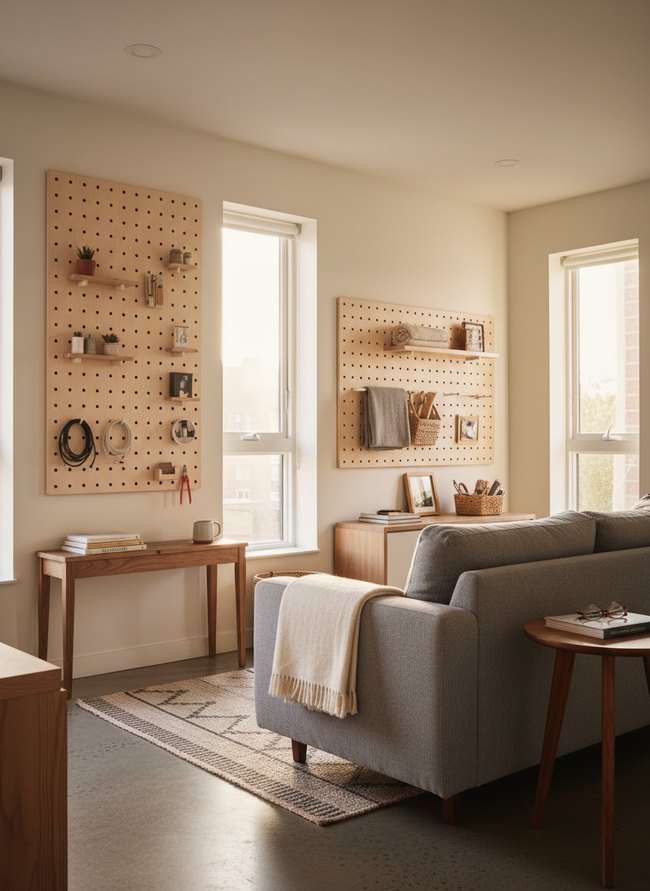
Large wooden pegboards mounted on the walls provide flexible vertical storage. The pegboards offer a customizable display for many small items without taking up floor space. Light-colored wood pegboards blend into the warm beige walls, creating a clean, organized look. Mount pegboards on your walls for adaptable, space-saving storage.
Cubic Volume Maximization: Deconstructing the Vertical Plane Efficiency Coefficient
Wall-mounted shelving units transform unused airspace into prime storage. Many people overlook the potential of a simple kitchen wall for extra items. A tall, narrow bookshelf, reaching toward a nine-foot ceiling, multiplies your available surface area dramatically. Consider the classic mistake of placing only low, wide cabinets in a small room. Those wide cabinets waste cubic volume above them. Stacked open shelves, crafted from light-colored pine, maintain an airy feel while holding many paperback books. Vertical storage solutions consistently outperform their horizontal counterparts in terms of sheer capacity within a fixed footprint. A clever homeowner understands that every available inch, from floor to ceiling, holds value. Install sturdy metal hooks on the back of a closet door to hang cleaning supplies. This strategic positioning frees up floor space inside the closet. Even a slender corner cabinet, built from reclaimed barn wood, can provide ample space for linens and towels. Maximize your home’s cubic volume. Your small dwelling deserves thoughtful design choices.
Ergonomic Friction Index in Multi-Tiered Horizontal Systems: A User Interaction Analysis
Accessing lower levels in horizontal storage often requires more physical effort than reaching higher ones. A honey-toned wooden dresser with five deep drawers, for example, makes retrieving socks from the bottom drawer a deep bend. Many people dislike repeatedly stooping or kneeling to get at items stored below waist height. A similar wide dresser with only two top drawers and open shelving below dramatically changes this interaction. Your body feels less strain when grabbing a folded charcoal blanket from an eye-level shelf. Designers call this problem “ergonomic friction,” describing the resistance a user feels when interacting with a space. Overhead cabinets placed too high also create ergonomic friction, forcing you onto a step stool. Thoughtful spatial planning reduces this friction, making your home feel more comfortable. Consider a shallow three-tier oak bookshelf compared to a single deep oak chest. The bookshelf offers easier access to each book. Your hands find items faster with less movement. Shallow storage often beats deep storage in daily use.
Which Idea Will You Try First?
That’s 12 different takes on vertical vs horizontal storage. The best ideas above are usually the smallest moves — one material, one layout shift, one piece of furniture in the right place. Pick whichever room feels closest to your space and start there before tackling the rest.
Found an idea worth keeping? Save this post to your Pinterest board so it’s waiting for you when you’re ready to start your own project.