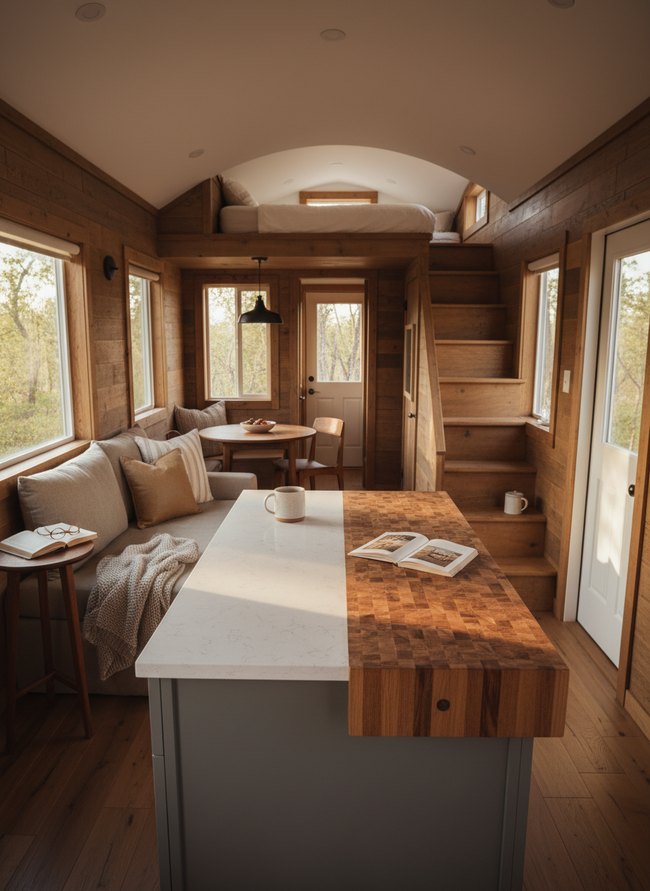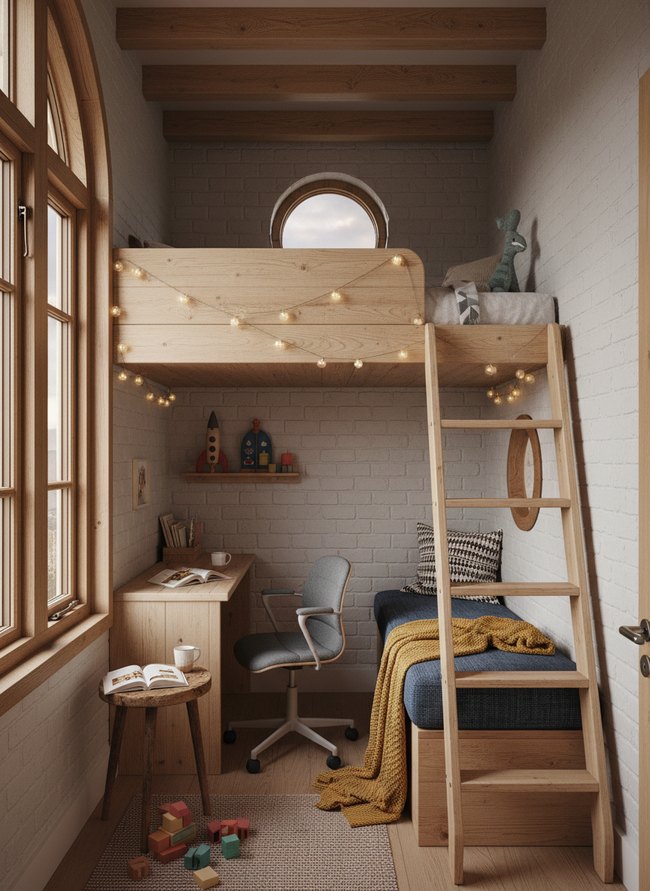
10 Tiny Home Organization Trends Taking Over 2026
Raw plywood shelving offers earthy warmth, yet open cubbies show every stored item. Polished concrete floors give modern shine, but the bare surface demands constant tidiness. You weigh clean, minimalist lines against soft, lived-in comfort. Each decision shifts your small living space. Woven rattan baskets provide natural texture; hard plastic bins deliver uniform storage. Practical choices reshape your daily flow. Tiny home organization trends 2026 present distinct paths. Each option holds unique benefits. Consider which approach best fits your compact quarters.
1. Modular Wall Grid System
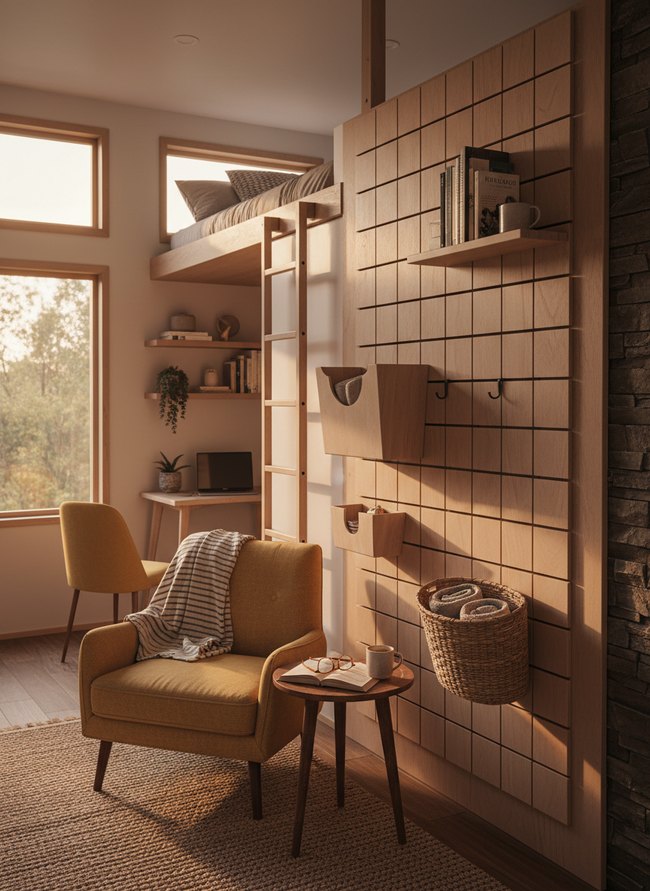
A pale wooden grid wall offers versatile storage, keeping small items tidy. Floating shelves can display books, or woven baskets can hold rolled towels, trading permanent fixtures for adaptable placement. The modular system provides clean lines, allowing storage reconfiguration as needs evolve.
2. Under-Stair Pull-Out Pantry
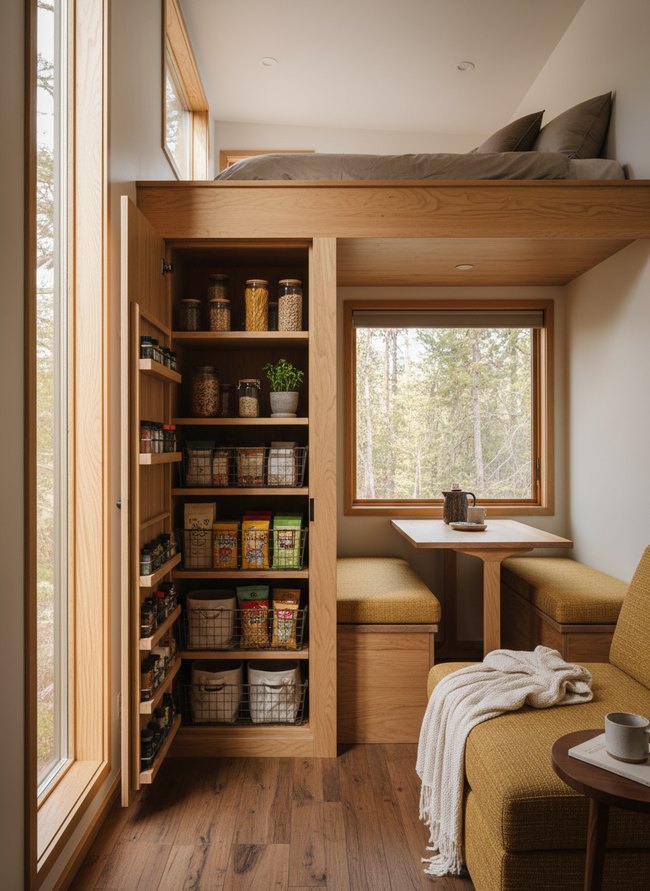
A tall oak cabinet with interior shelves and spice racks pulls out from under a wooden loft. Designers chose the space-saving design, trading traditional pantry square footage for clever vertical storage. The cabinet offers ample room for pantry items, keeping them hidden yet accessible.
3. Retractable Desk Hidden Storage
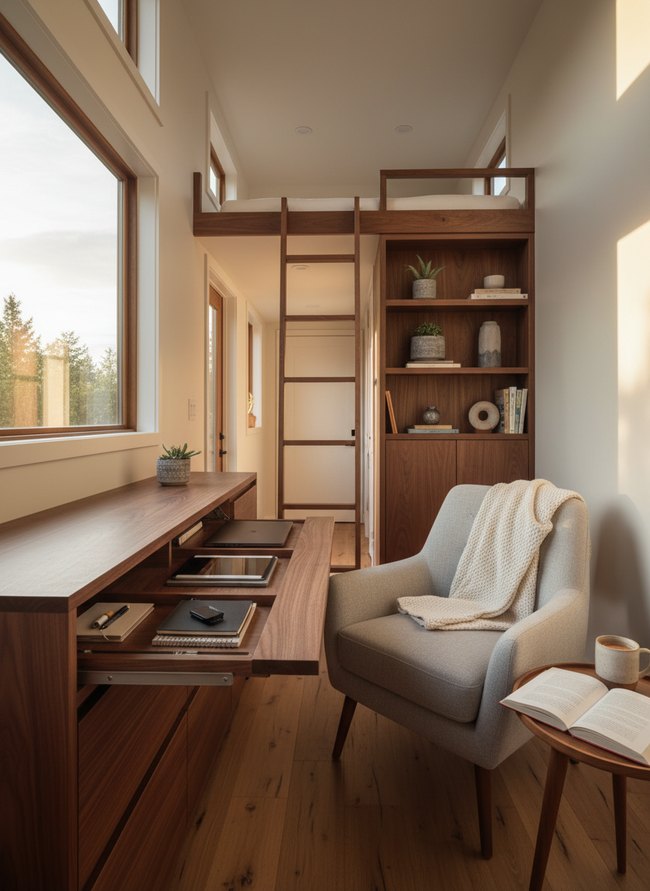
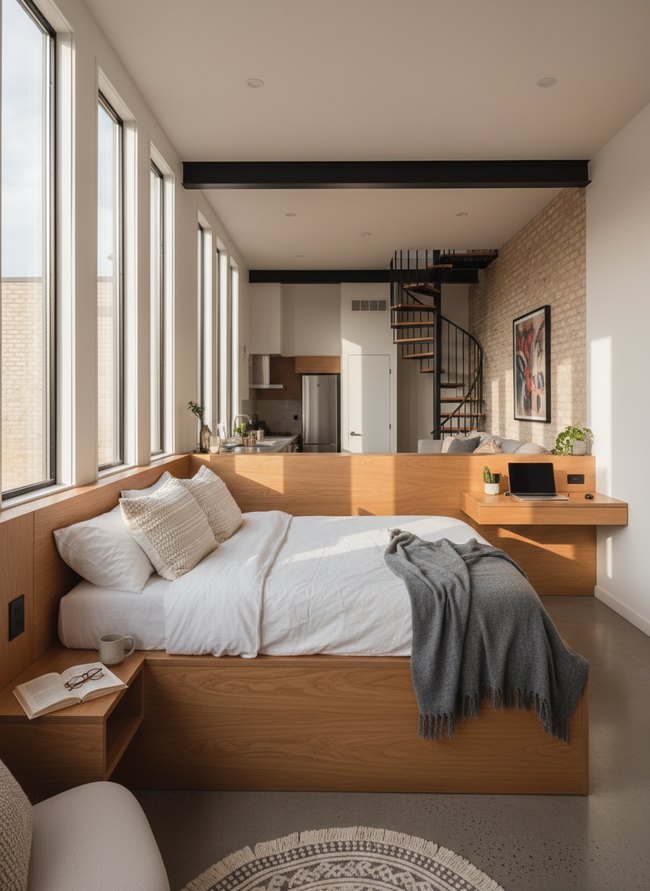
Walnut wood panels form a long, narrow work surface. A hidden retractable desk offers a clean, uncluttered look. The light gray armchair provides a soft spot to read.
4. Vertical Garden Herb Wall
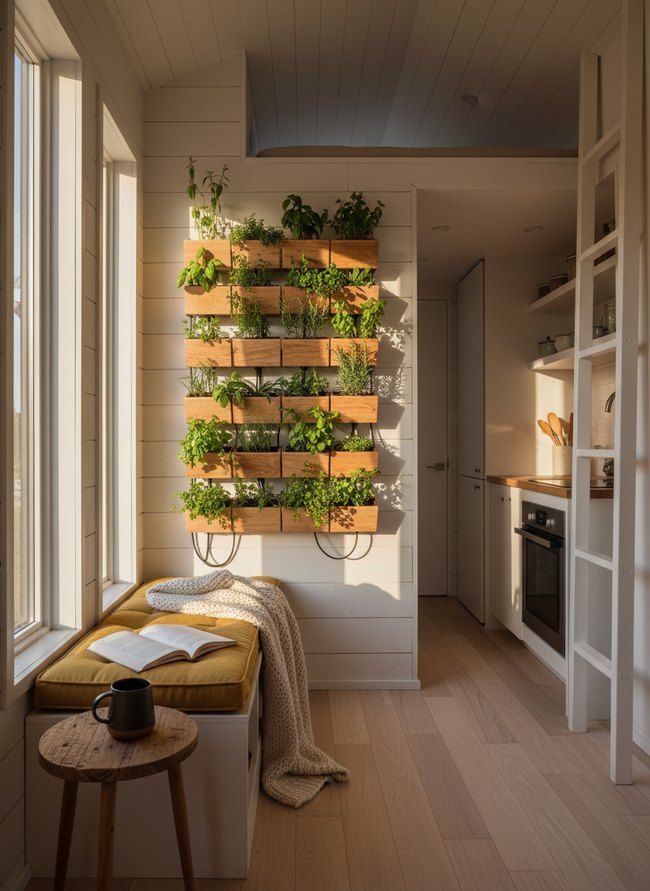
Stacked wooden planters filled with green herbs offer a living wall. The planters provide fresh ingredients and a natural focal point, trading away a plain stretch of painted shiplap. A narrow oak stool with a dark ceramic mug sits beside a window seat with a mustard yellow cushion, inviting quiet moments.
5. Fold-Down Laundry Station
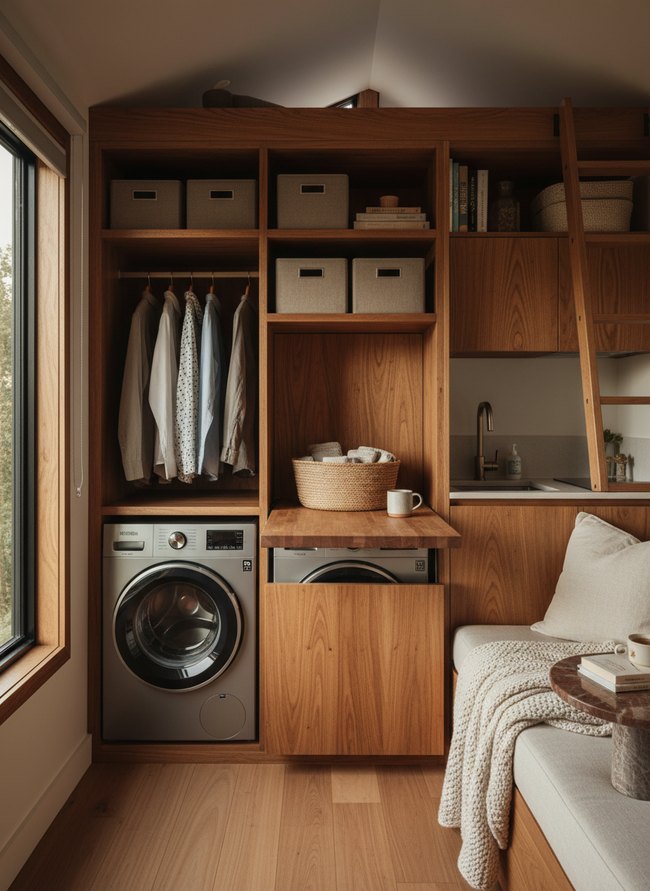
A slim silver washing machine sits below a wooden shelf. A compact laundry setup gains back precious floor space in a small dwelling. The choice means less room for a dedicated folding counter or extra storage above the machines.
6. Integrated Smart Storage Cubbies
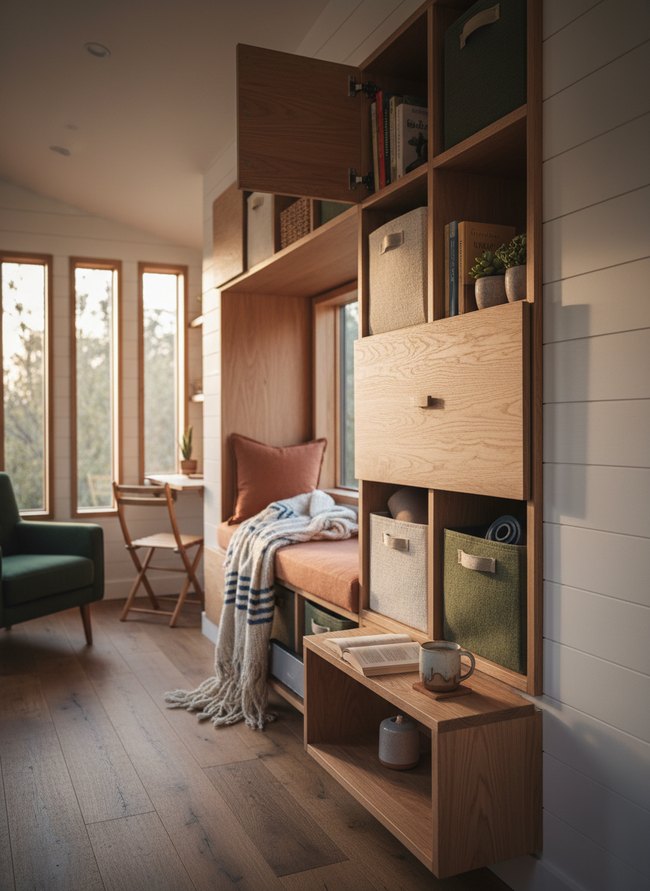
Oak storage cubbies line the white shiplap wall, offering a clean, modular system for belongings. Choosing the cubbies means gaining structured hidden storage but losing the open display of traditional shelving. A long window seat with a rust-colored cushion and a striped knit blanket sits below the wooden units, creating a cozy reading nook.
7. Multifunctional Sliding Partitions
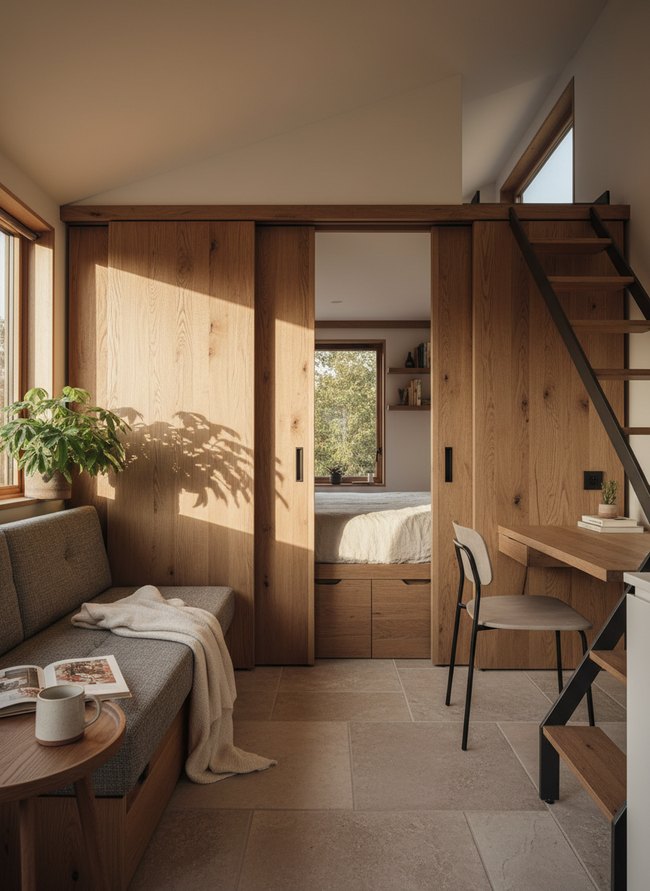
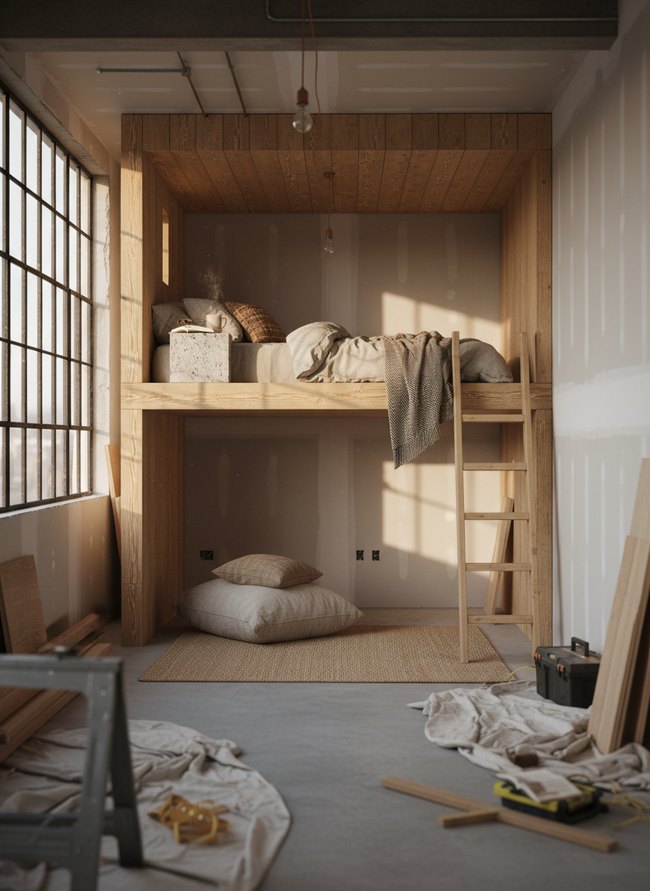
Wide oak sliding doors offer a choice for adaptable living, allowing separation or combination of spaces. Flexible room configurations come at the expense of fixed privacy. Honey-toned wood planks form the sturdy loft ladder, giving access to an elevated sleeping area.
8. Compact Loft Bed Organizer
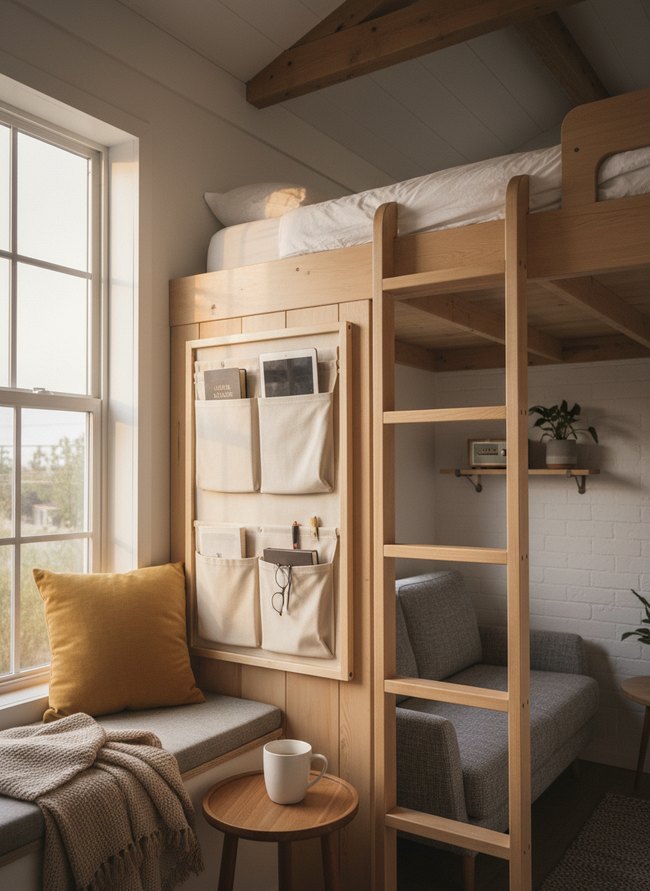
The canvas pocket organizer mounts directly onto the light wood paneling below the loft bed. The organizer gains accessible storage for small items like reading glasses and a tablet, trading away blank wall space for practical use. A sunny yellow cushion sits on the window seat, offering a soft spot to read.
9. Overhead Suspended Shelf
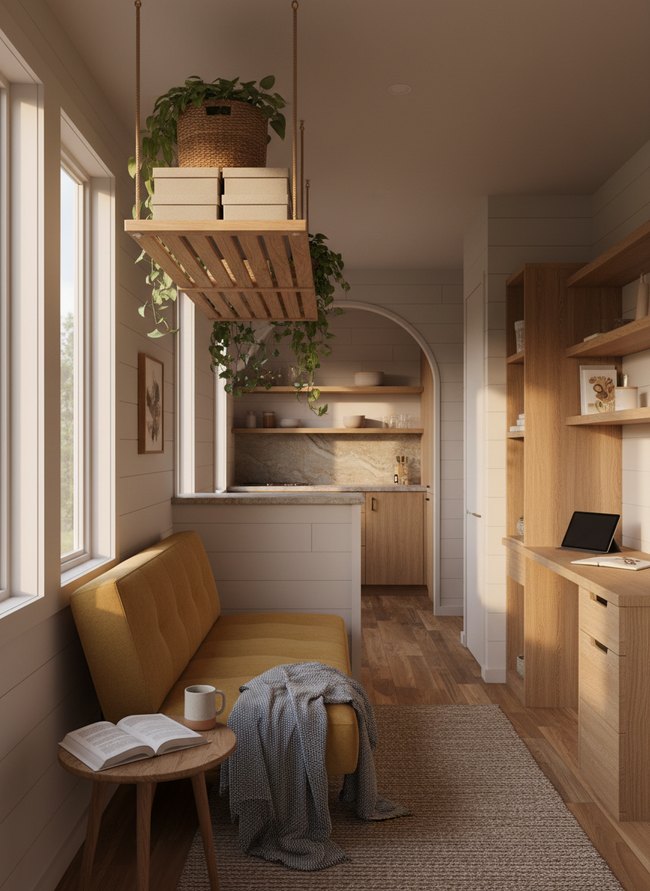
A slatted wood shelf hangs from the ceiling on thick ropes. The overhead storage gains floor space over traditional shelving. The design trades some open sightlines for practical vertical organization.
10. Built-In Convertible Seating
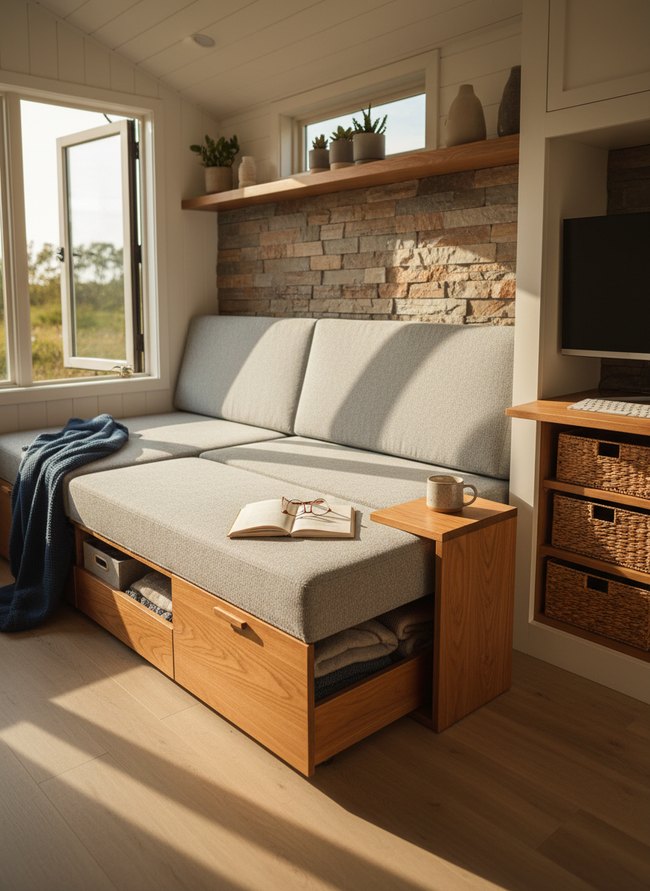
The light gray upholstered L-shaped bench offers a clever solution for small spaces. Homeowners choose the adaptable furniture for its dual function, trading a fixed sofa for flexible seating and hidden storage. Deep wooden drawers under the cushions pull out, holding folded blankets and other soft textiles.
Should You Invest in Built-Ins or Freestanding Furniture for Max Space?
Built-in shelves or modular storage units: a key decision for your small living space. Custom pieces offer a snug fit against raw timber walls, using every square inch. However, a carpenter’s hourly rate and material costs for a walnut bookshelf can quickly add up. Installation of a fixed maple wardrobe means a permanent fixture; you cannot easily move it later. If your tiny home layout feels settled for years, and you value a seamless, custom look with hidden storage compartments, then built-ins provide the tightest space use.
Freestanding furniture gives more freedom. You can reposition a rolling pine island or exchange a small metal locker for a larger one. Initial purchase prices for these items are usually lower. You also avoid contractor fees and messy sawdust. Moving day means you take your furnishings with you. Yet, individual pieces rarely hug every corner of a curved wall perfectly, leaving small gaps. Gaps collect dust. If your needs change often, or you prefer to rearrange your belongings every few months, a collection of movable, independent pieces makes more sense. Your lifestyle dictates the smarter choice between these two storage paths.
Is Vertical Storage Always the Best Choice, or Should You Prioritize Accessibility?
Should you stack storage high or keep your most-used items within easy reach? Tall wall cabinets offer maximum space for many small boxes. However, reaching the top shelf demands a step stool or a ladder. A knee-high rolling cart provides instant access to everyday tools. You sacrifice significant cubic feet for that convenience, leaving less room for bulkier goods.
Prioritize vertical storage if your tiny home holds many diverse possessions, like a large collection of paperback books or seasonal clothing. Install floor-to-ceiling wooden shelving units. This choice suits people who enjoy a tidy, uncluttered look and do not mind a bit of stretching.
Choose accessibility for a small living area if you cook daily or need quick access to craft supplies. Low, wide drawers fit beneath countertops. This approach works for someone who values speed and hates searching for kitchen utensils. Some people find bending over less bothersome than climbing.
Which Idea Will You Try First?
That’s 10 different takes on tiny home organization trends 2026. The best ideas above are usually the smallest moves — one material, one layout shift, one piece of furniture in the right place. Pick whichever room feels closest to your space and start there before tackling the rest.
Found an idea worth keeping? Save this post to your Pinterest board so it’s waiting for you when you’re ready to start your own project.