How to Maximize Counter Space in a Tiny Kitchen
A compact stovetop offers more room for chopping, but a full-sized cooktop promises cooking freedom. Homeowners often weigh the benefits of a spacious open floor plan against the practicality of dedicated culinary zones. Your small kitchen presents unique design puzzles. Clever solutions exist for every tight corner. A wall-mounted spice rack keeps dried herbs visible and off the narrow countertop. Another person might prefer a rolling butcher block for flexible food prep and extra storage. Vertical storage options free up precious flat surfaces. Fold-down extensions add temporary work areas without taking up permanent floor space. Hide-away features keep the small space neat and functional. The guide explores several ways to maximize tiny kitchen counter area. Each strategy offers a different balance.
1. Fold-Down Counter Extension
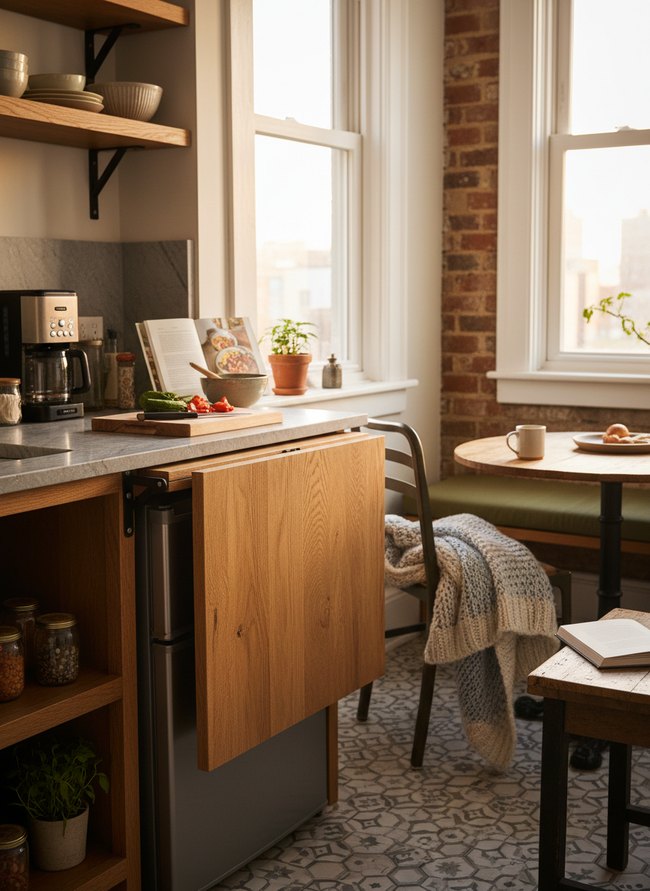
A honey-toned oak panel hangs vertically, ready to extend your meal prep area. The fold-down counter extension offers extra space when needed, trading away a continuously open floor plan for a hidden surface. Black metal hinges secure the wooden board firmly against the light gray stone countertop.
2. Slide-Out Prep Board
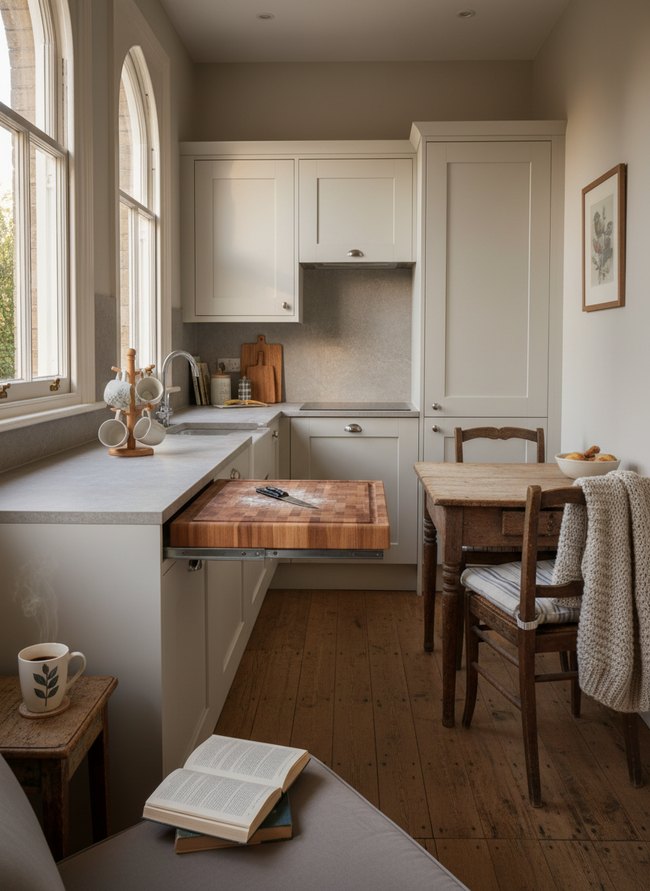
A butcher block cutting board slides out from under the gray stone countertop, giving you extra chopping space. Light beige kitchen cabinets frame the functional board, keeping the board hidden when not in use. The board provides a larger work surface but reduces cabinet storage.
3. Over-Sink Drying Rack
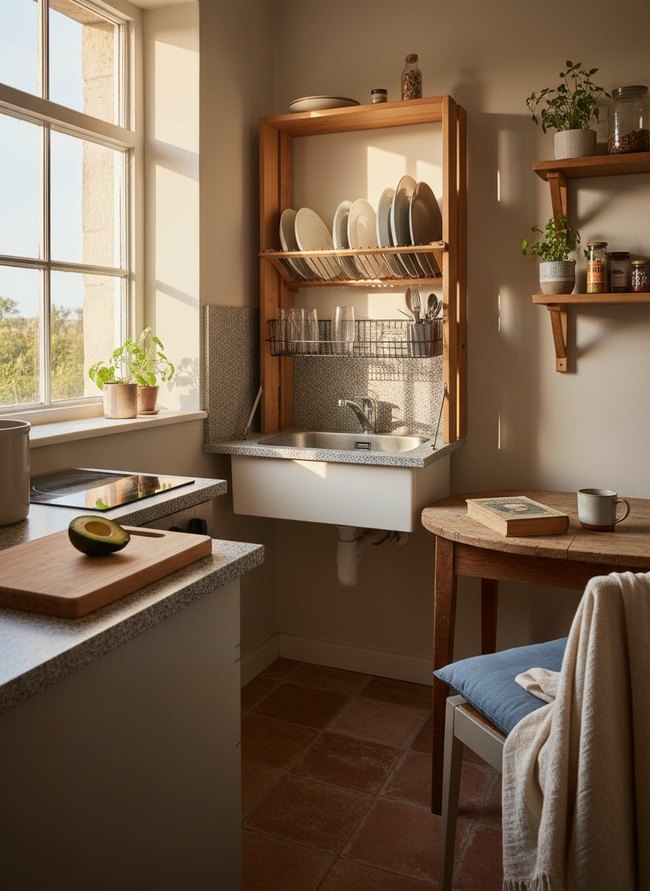
The tall wooden drying rack holds plates and glasses above the white sink. Homeowners could choose the vertical storage solution, trading away a clear view for more counter space. A small round wooden table and a light gray chair sit beside the compact kitchen sink area.
4. Vertical Tiered Organizer
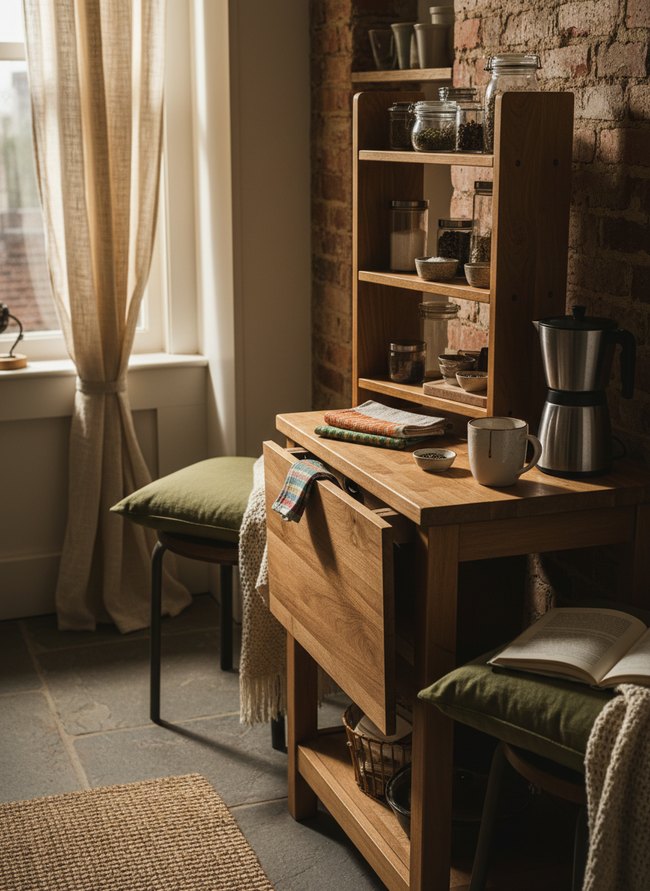
The light wood organizer provides three open shelves for storage. A vertical tiered organizer maximizes tiny kitchen counter space, trading an expansive flat surface for organized vertical storage. A small silver coffee maker sits on the warm wooden surface, ready for morning use.
5. Magnetic Knife Strip
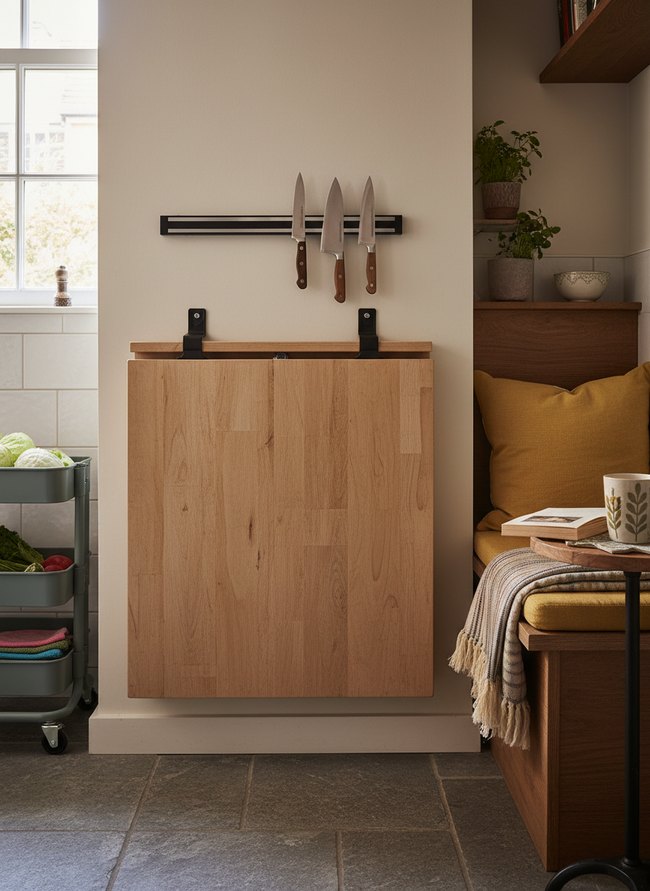
Three sharp steel knives hang from a dark magnetic strip on the pale wall. Homeowners install a magnetic knife strip to free up valuable counter space, trading a knife block for a clear workspace. A folding honey-toned wood table rests below the strip, ready to drop down and offer a sturdy surface.
6. Under-Cabinet Appliance Garage
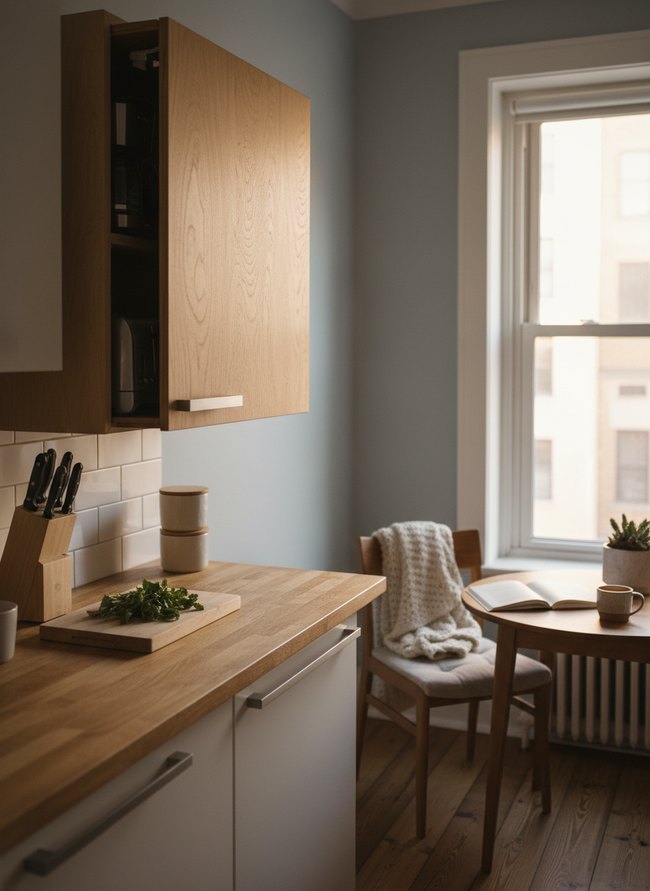
A honey-toned wooden cabinet opens upward, revealing a hidden coffee maker inside. The under-cabinet appliance garage keeps your butcher block counter clear, but trades away instant access to small appliances. Consider this approach if you value a clean, uncluttered surface above all else.
7. Pull-Out Workspace Shelf
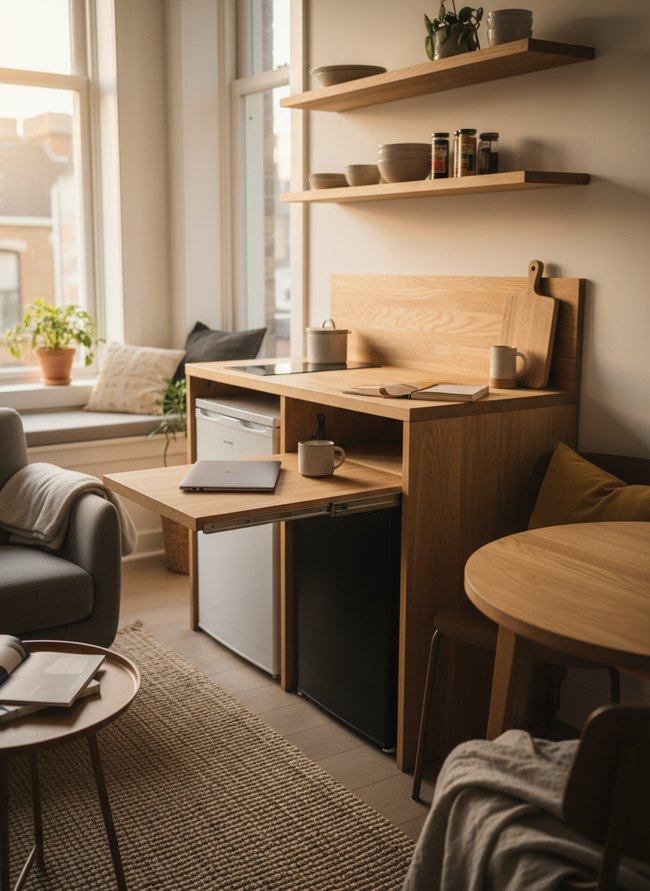
A light oak pull-out shelf extends horizontally, offering extra surface area for a laptop or a mug. The wood feature provides convenient workspace; the shelf trades away floor space when open. Two compact refrigerators fit neatly below the main countertop, keeping cool drinks or snacks within easy reach.
8. Retractable Counter Insert
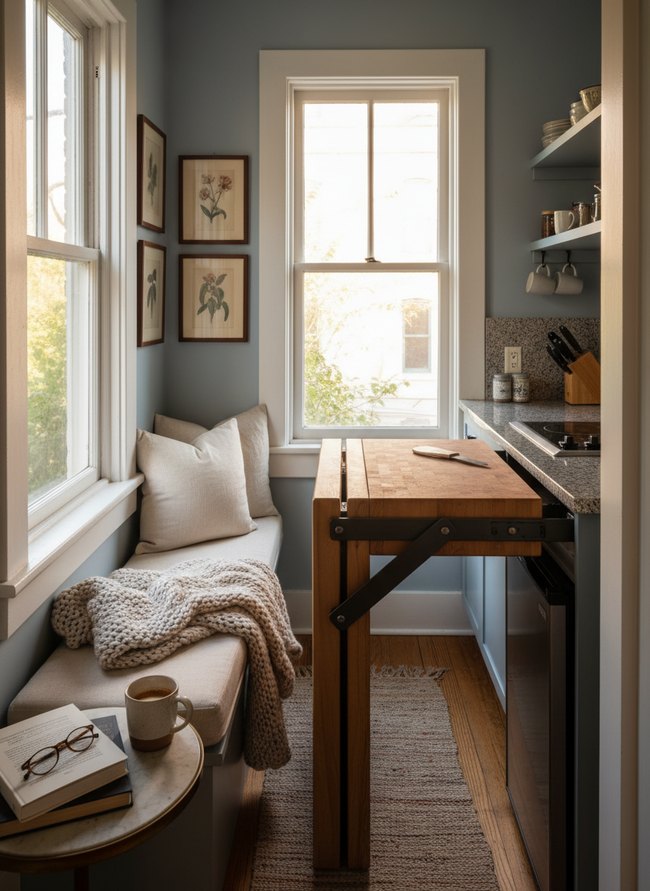
A light oak butcher block counter extends from the wall, supported by dark metal folding brackets. The counter gains extra surface area for food prep over open floor space. A gray granite countertop sits next to the wooden counter, providing a fixed work zone.
9. Rolling Island Cart
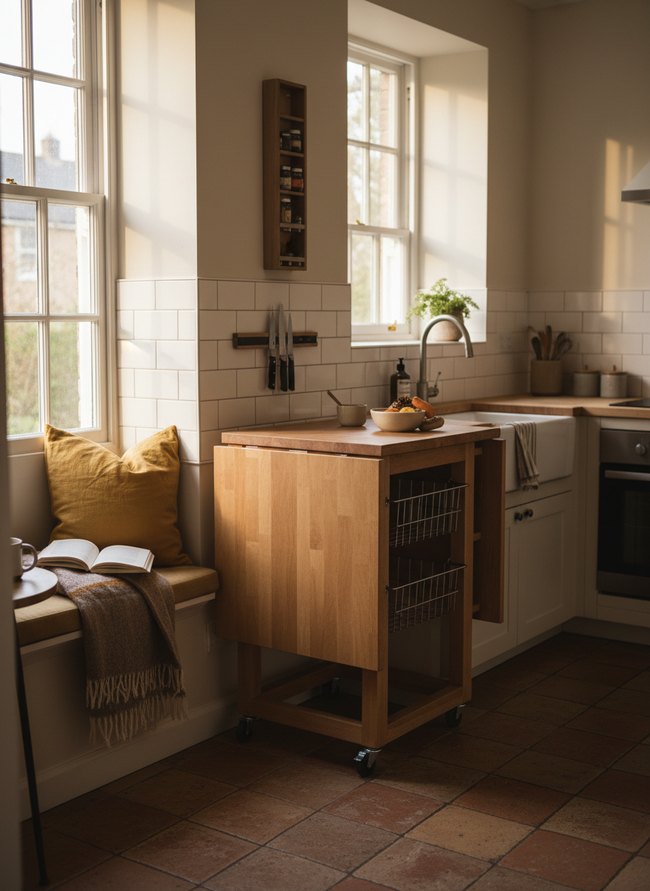
The honey-toned wooden cart offers a flexible workspace, expanding your preparation area with a folding leaf. You trade a fixed kitchen layout for a mobile piece that adapts to your cooking needs. The rolling island cart maximizes tiny kitchen counter space, providing extra surface area and storage baskets on demand.
10. Slim Wall-Mounted Table
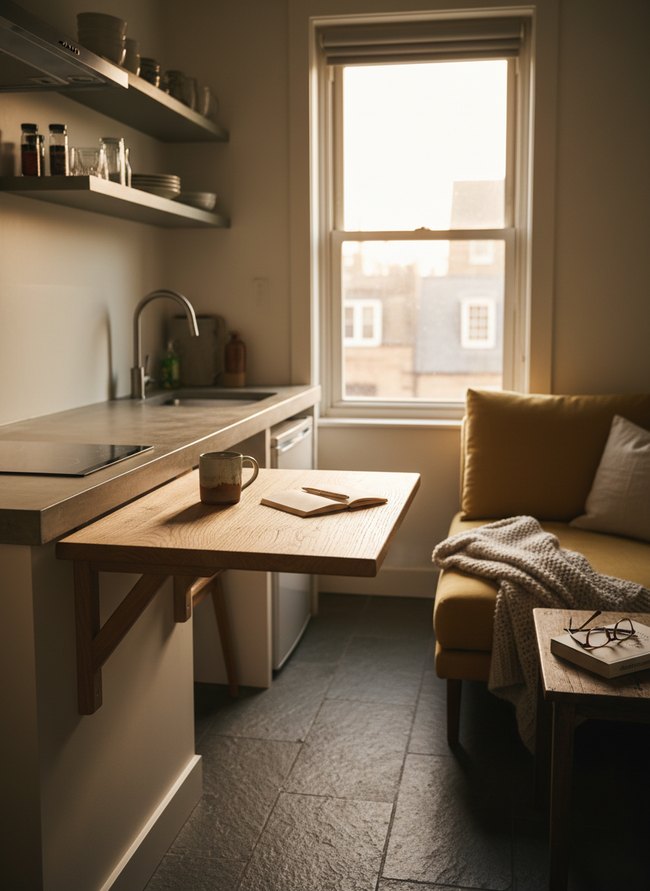
A natural oak folding table extends from the white kitchen cabinets, providing extra flat surface. The table provides flexible workspace over a permanent fixture. A golden yellow sofa beside the table offers a soft seating spot.
11. Hidden Corner Storage
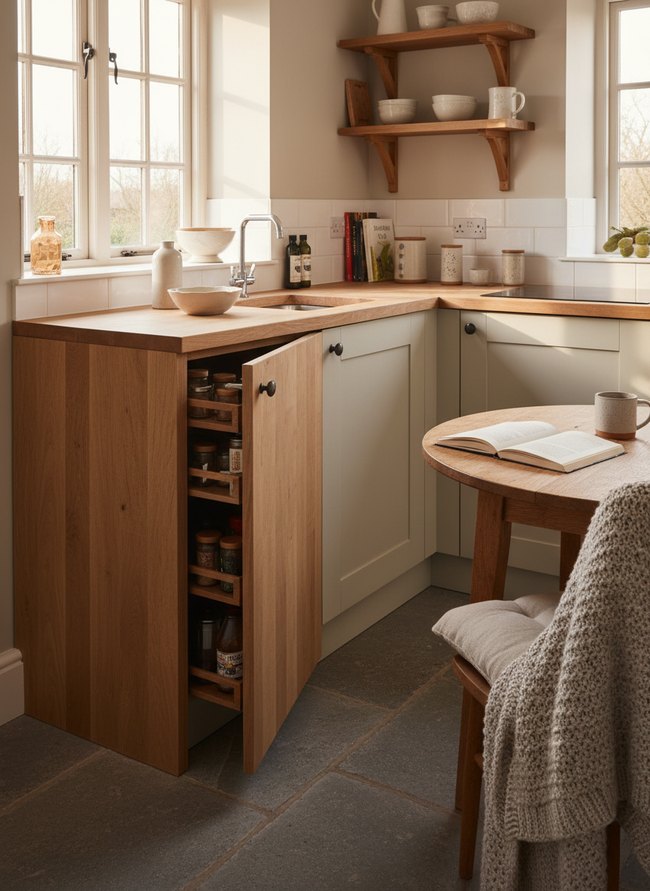
The pale oak pull-out cabinet door opens to reveal stacked spice racks. The cabinet gains hidden storage for small jars and bottles, trading away a solid corner cabinet. Light gray cabinets with black round knobs flank the storage unit, offering a clean, uniform kitchen border.
12. Stackable Food Prep
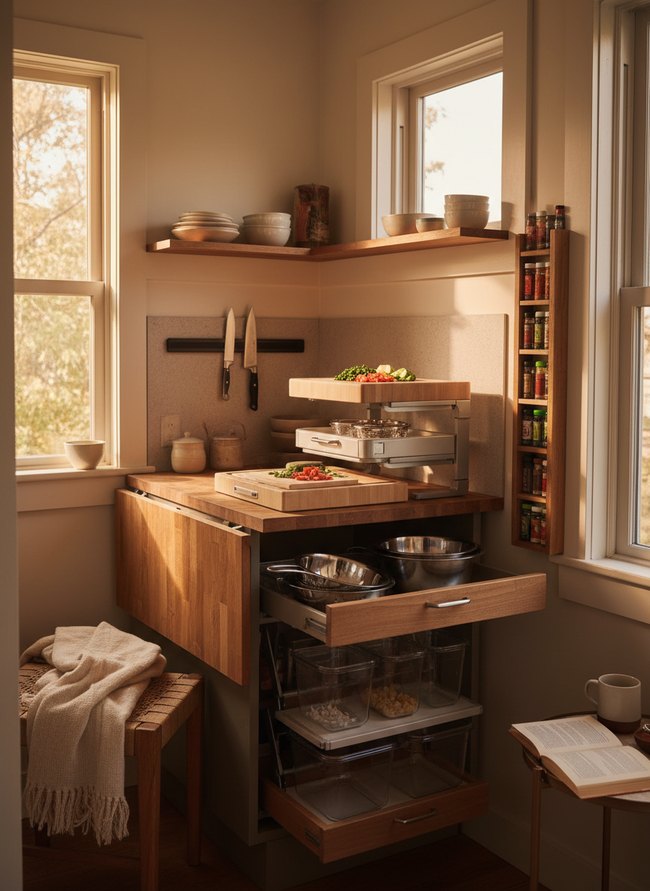
A light honey-toned, three-tier, hide-away listicle provides stackable food prep space. The listicle gains significant vertical work surfaces, but trades away some under-counter storage for the necessary mechanics. The wooden counter extends from the wall, offering additional workspace in this cozy kitchen.
Should I build a permanent vertical unit or a temporary one?
A fold-down listicle offers two main paths for a small kitchen. Built-in units provide lasting structure. Freestanding options deliver flexibility.
Permanent wall units secure directly to wall studs. This solid installation ensures maximum stability for heavy cookware or stacks of ceramic plates. However, a fixed unit requires more installation effort. Future kitchen layout changes become difficult.
Portable standing units move freely. You rearrange a honey-toned pine rolling cart with brass casters as needed. These movable pieces of furniture adapt to evolving needs, like creating extra floor space for a gathering. Yet, a freestanding unit might wobble slightly under a heavy load. It takes up a consistent floor footprint when open.
Choose a built-in vertical listicle if your small kitchen layout feels settled for years. Select a freestanding fold-down listicle if your kitchen often transforms for different tasks or entertaining.
Is a fold-down counter worth the effort over a simple pull-out shelf?
Your small kitchen needs another flat surface. A fold-down countertop provides expansive workspace. This folding panel requires sturdy metal hinges and a secure wall mount. Mounting a fold-down unit involves careful drilling into wall studs. The wooden surface extends out, providing a solid workspace. This larger surface offers a durable landing spot for mixing bowls and cutting boards. Building a pull-out shelf involves fewer steps. A sliding shelf tucks neatly into a cabinet opening. This simpler mechanism needs only drawer slides and a plywood base. Pull-out shelves offer a quick, hidden solution for extra prep room. However, these narrow surfaces hold only one small appliance. A fold-down counter suits a cook who needs wide, stable prep areas. Choose the fold-down option for heavy baking projects. A simple pull-out shelf serves you well for quick tasks. Opt for the pull-out design if you primarily use a single coffee maker.
Which Idea Will You Try First?
That’s 12 different takes on maximize tiny kitchen counter. The best ideas above are usually the smallest moves — one material, one layout shift, one piece of furniture in the right place. Pick whichever room feels closest to your space and start there before tackling the rest.
Found an idea worth keeping? Save this post to your Pinterest board so it’s waiting for you when you’re ready to start your own project.