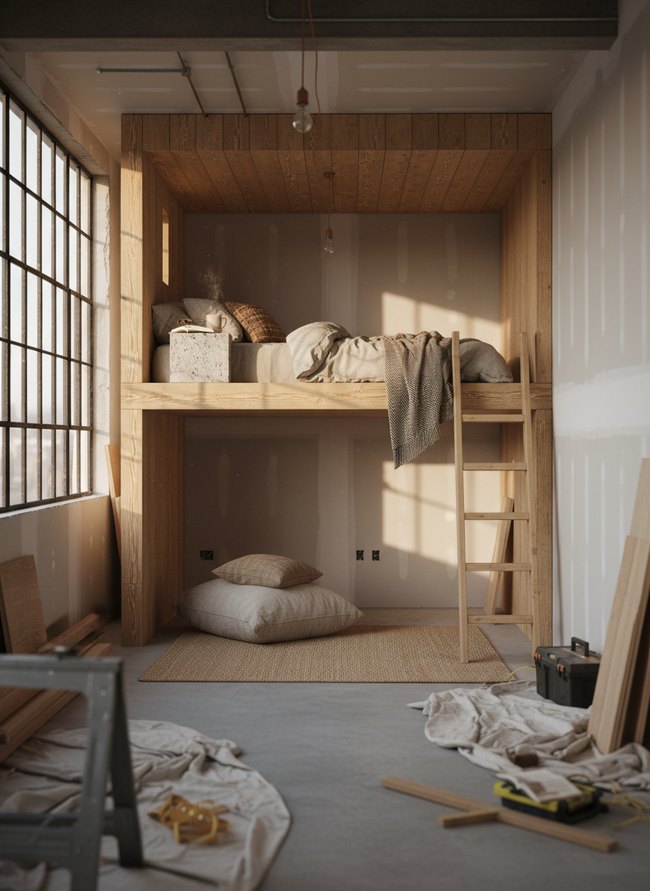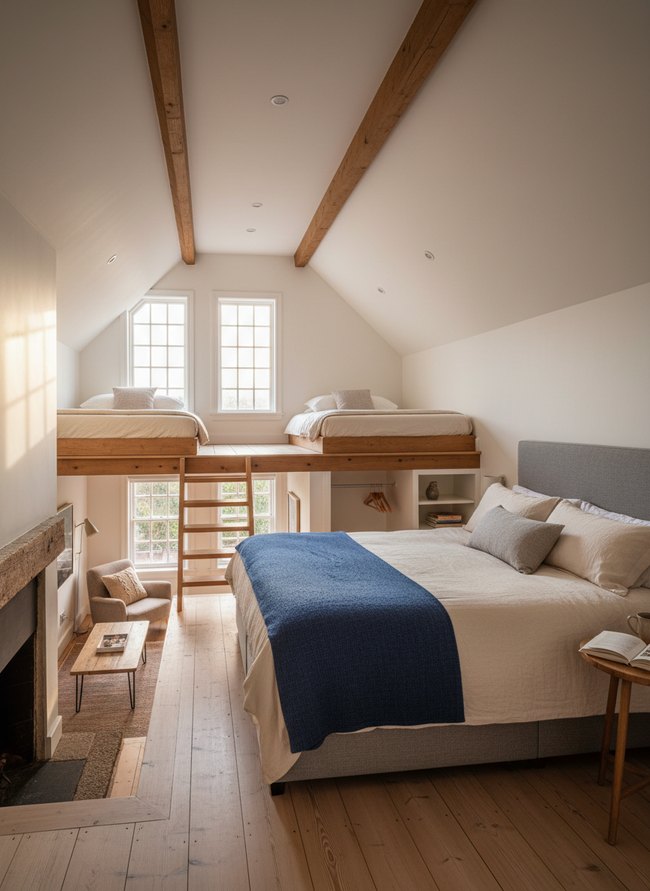
16 Tiny Home Nursery Ideas for New Parents
Floor space demands careful thought when planning a tiny home nursery. Small square footage offers cozy intimacy, creating a quiet haven for your new arrival. Limited room also requires clever storage solutions and versatile furniture pieces. Each layout below represents a different approach to balancing comfortable living with practical needs. Readers will discover sixteen distinct arrangements for compact spaces. One of these will surely fit your small dwelling.
1. Foldaway Crib Corner Nursery
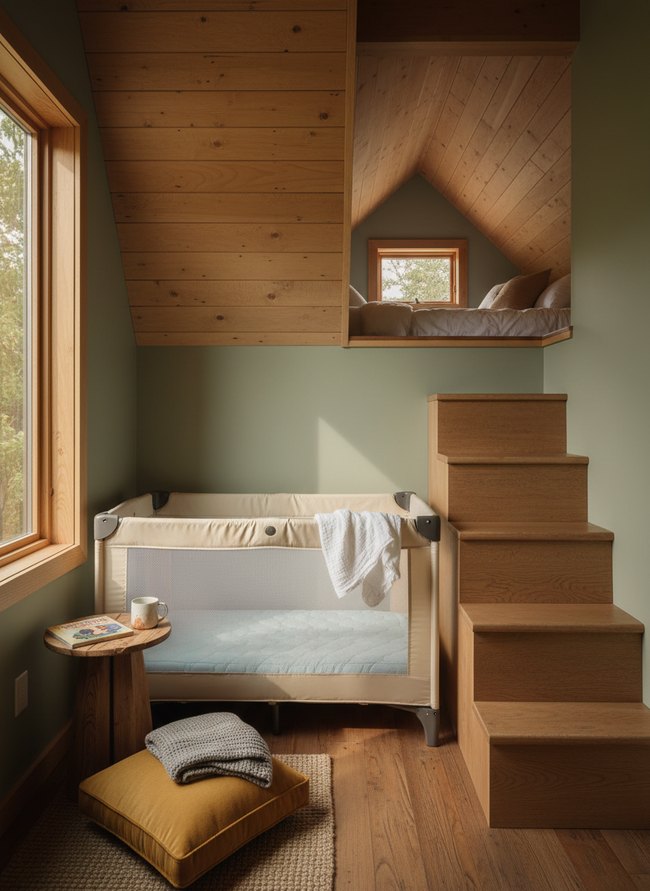
A beige portable crib sits against a sage green wall, ready for a tiny home nursery. Homeowners might choose this space-saving design, trading a permanent wooden crib for the flexibility of a foldaway model. A small, round wooden side table holds a children’s book and a white ceramic mug, completing the corner.
2. Compact Convertible Crib Setup
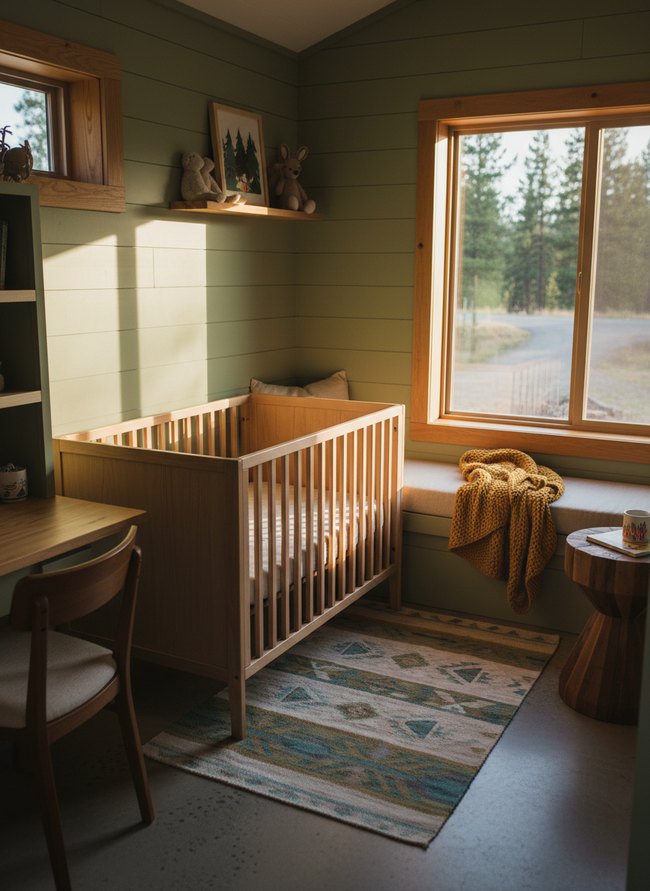
A light oak crib stands ready for a baby’s rest. Parents could choose the compact convertible crib setup for a tiny home nursery, gaining future flexibility. The wooden frame provides a warm, natural tone that will age well.
3. Under-Crib Storage Nursery
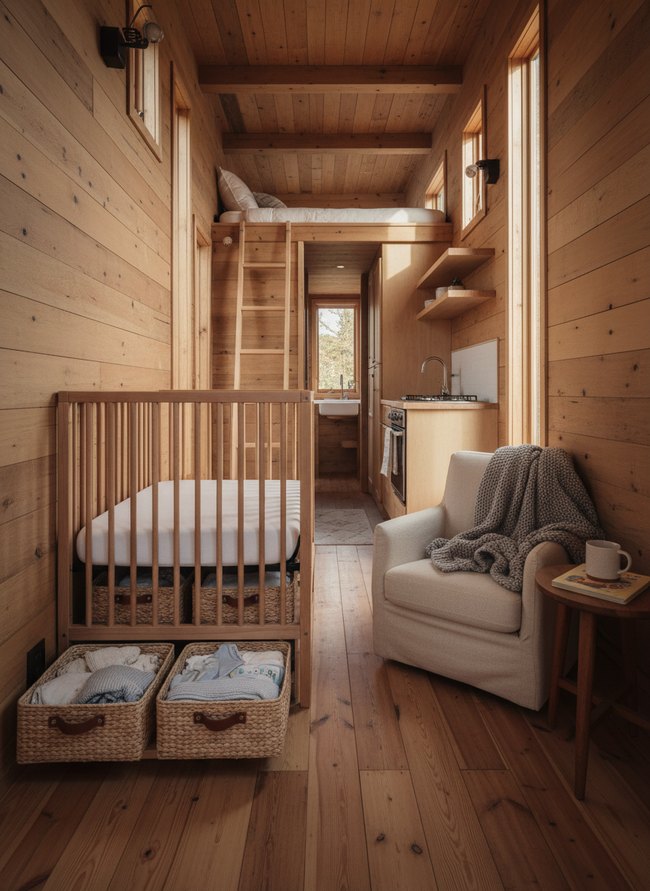
The light brown wooden crib stands against a planked wall, holding a firm white mattress. The nursery gains valuable floor space, trading away an open design for clever utility. Woven wicker baskets slide beneath the crib frame, neatly containing soft baby clothes.
4. Vertical Wall Shelf Nursery
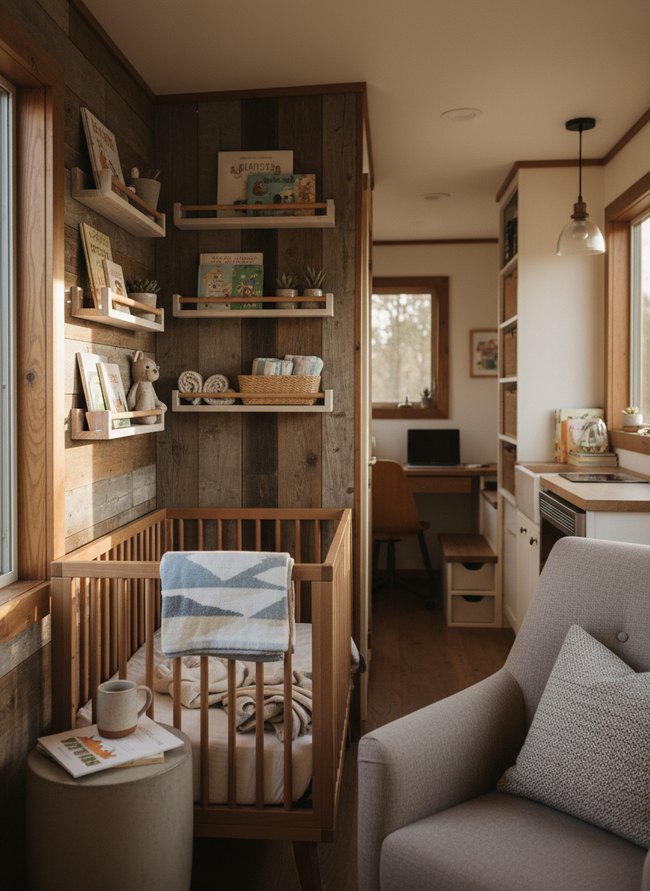
Warm wooden planks line the corner wall, framing a small crib and several open shelves. The design trades floor space for vertical storage. Books and small plants sit on the white floating shelves above the light brown crib, creating an organized corner.
5. Loft Bed Crib Nook
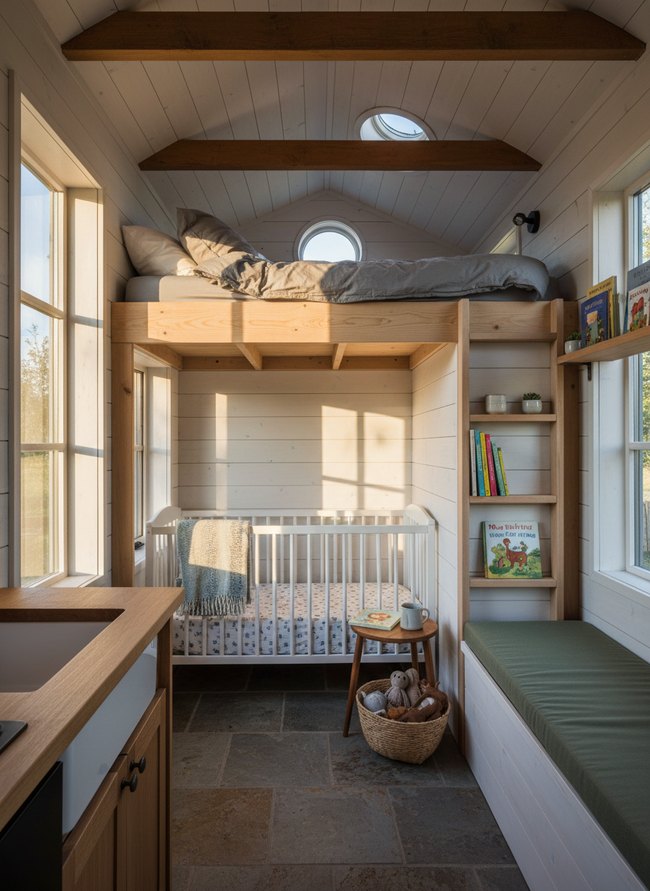
A white wooden crib sits snugly below a natural pine loft bed, creating a compact sleeping area. Stacking beds gains significant floor space, but the arrangement sacrifices some privacy for both sleepers. A small wooden ladder provides access to the upper bunk.
6. Built-In Bunk Nursery
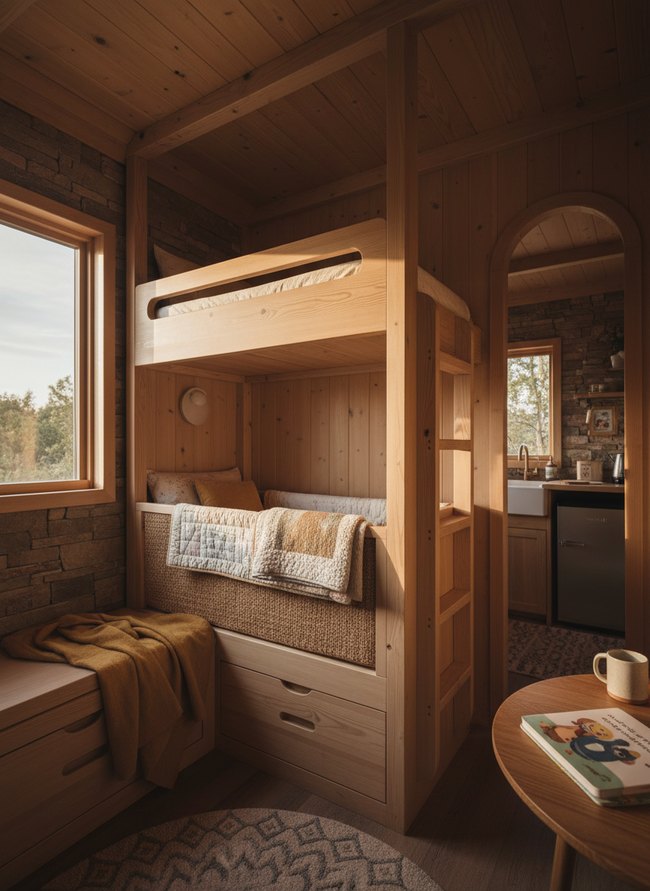
A natural pine bunk bed, built into the room’s frame, offers a smart solution for limited square footage. The bed gains two sleeping areas within a small footprint, trading away floor space for vertical living. A round wooden table sits nearby, providing a spot for quiet moments.
7. Modular Cube Crib Design
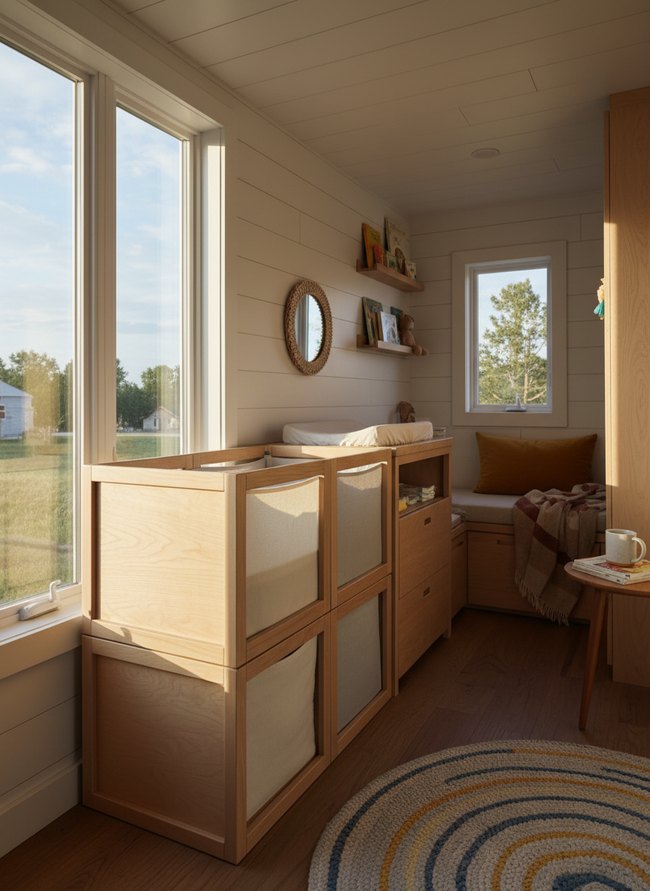
Light-toned wooden cubes form a modular crib system, offering versatile storage over a fixed crib design. The crib system gains flexible arrangements for your small space, trading away a traditional, permanent crib structure. A round braided rug with blue and yellow stripes softens the dark wood floor.
8. Slide-Out Bassinet Station
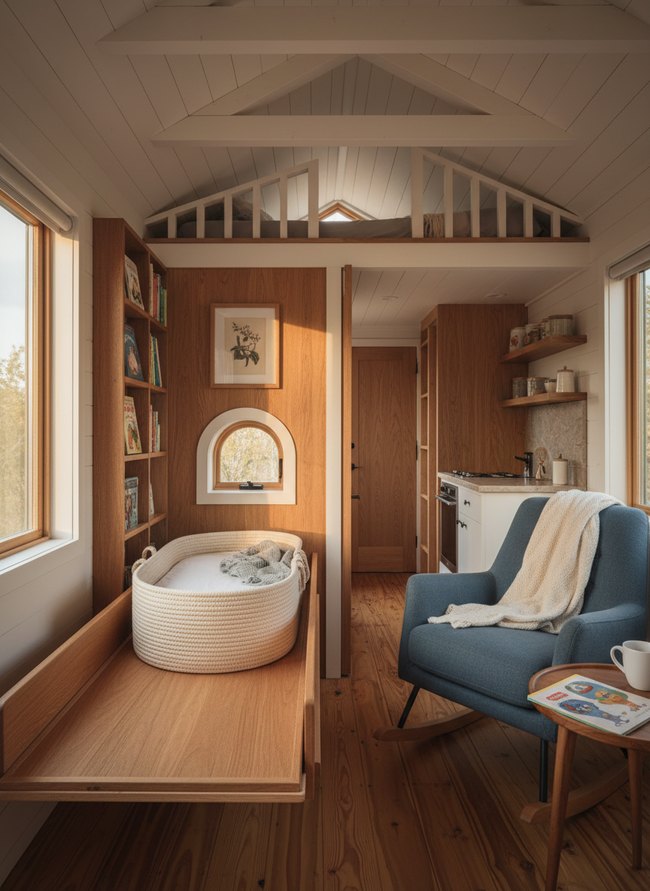
A woven rope bassinet slides out from a wooden wall panel, providing a compact sleeping spot. The space-saving design replaces a traditional crib, freeing floor space for a larger living area. A small arched window above the bassinet lets in soft natural light.
9. Murphy Crib Wall Unit
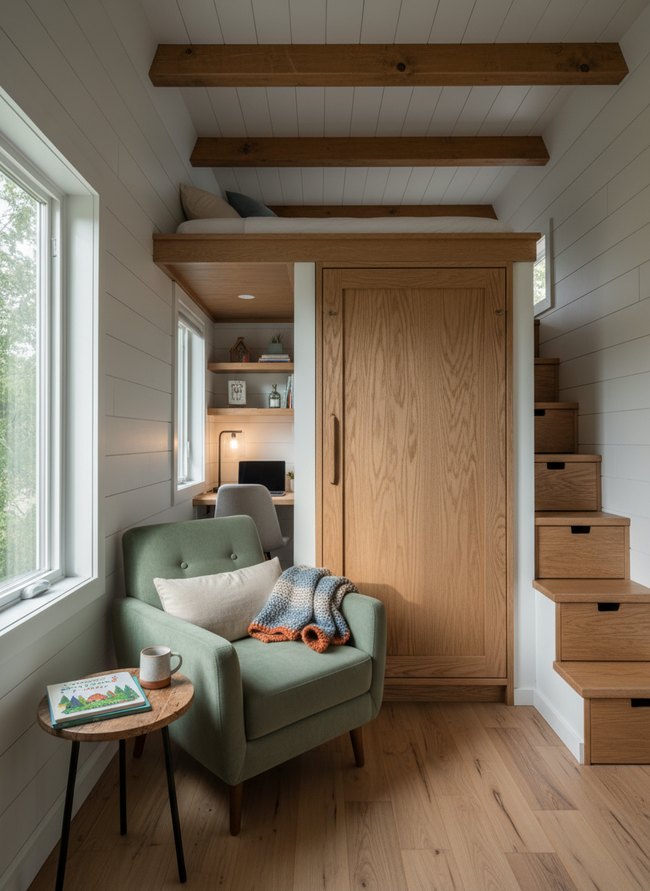
A tall oak panel door hides the crib for a Murphy Crib Wall Unit. The design prioritizes flexible floor space during the day, trading constant crib access for an open room. Light-toned wood steps with recessed drawers climb beside the unit, offering storage and access to a lofted bed above.
10. Window Seat Changer Nursery
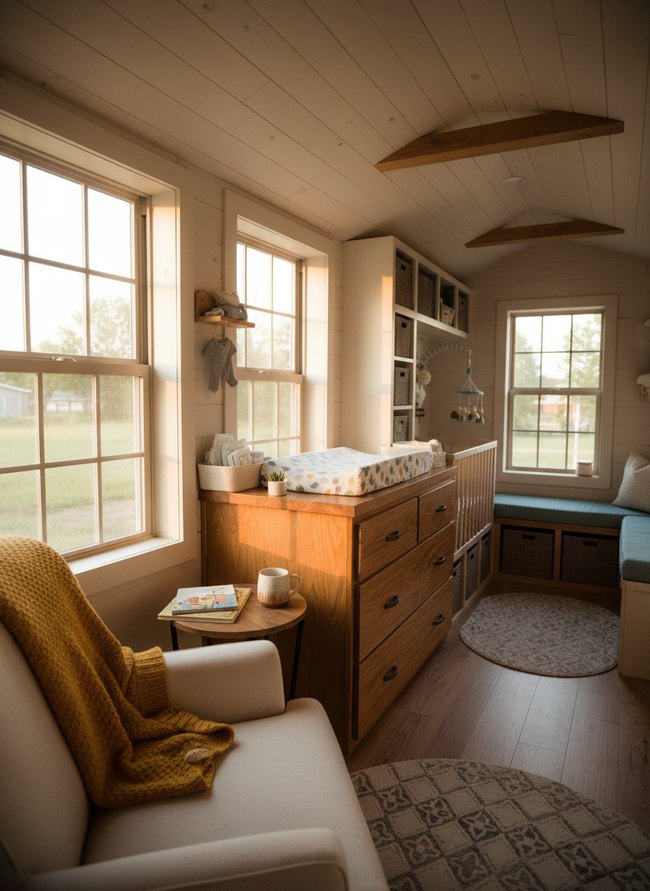
A honey-toned wooden dresser with a changing pad sits against a white paneled wall. The nursery prioritizes compact furniture over expansive floor space. A small, light gray area rug softens the warm wood floor, defining distinct zones.
11. Pocket Door Crib Space
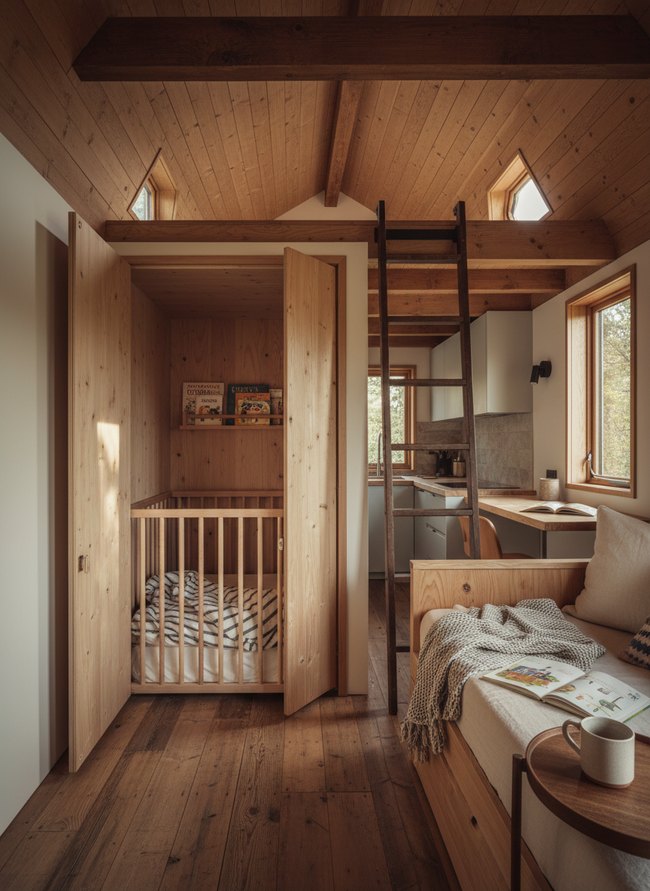
A light oak crib fits snugly within a recessed wooden alcove, offering a compact sleeping space. Homeowners might choose this clever tiny home nursery layout for maximum floor area, trading away a separate room for the baby. Natural light streams through small triangular windows set high in the sloped pine ceiling, brightening the wood-paneled walls and showing the distinct grain of the wide plank floorboards.
12. Custom Corner Built-Ins
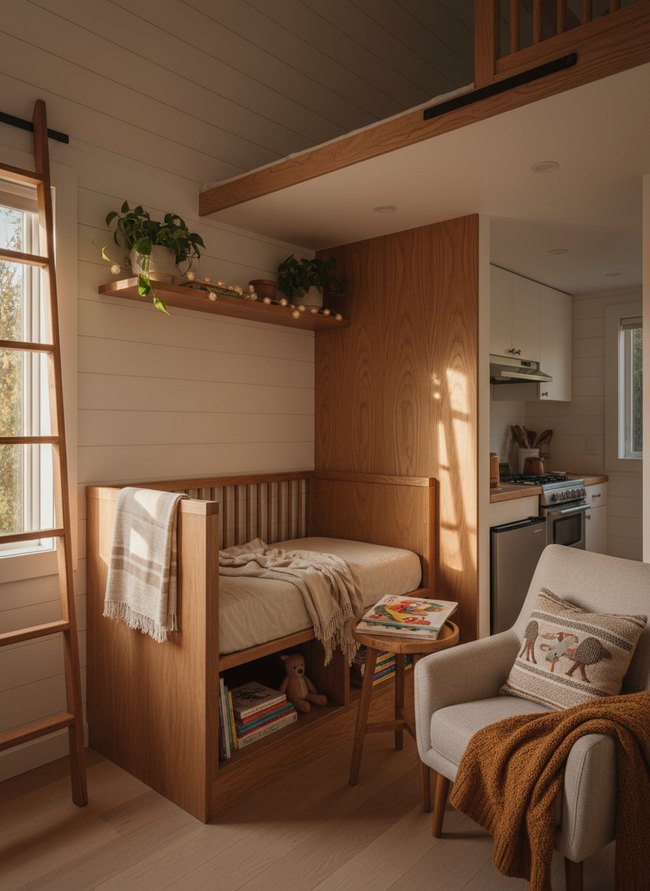
A light brown wooden crib nestles into a corner, its solid side panels and slatted back creating a cozy alcove for your little one. The furniture integrates into the wall structure, gaining dedicated sleeping space, but sacrificing flexibility for rearranging the room. A narrow floating shelf above the crib holds potted green plants and small string lights, adding natural warmth.
13. Mini Crib Alcove Setup
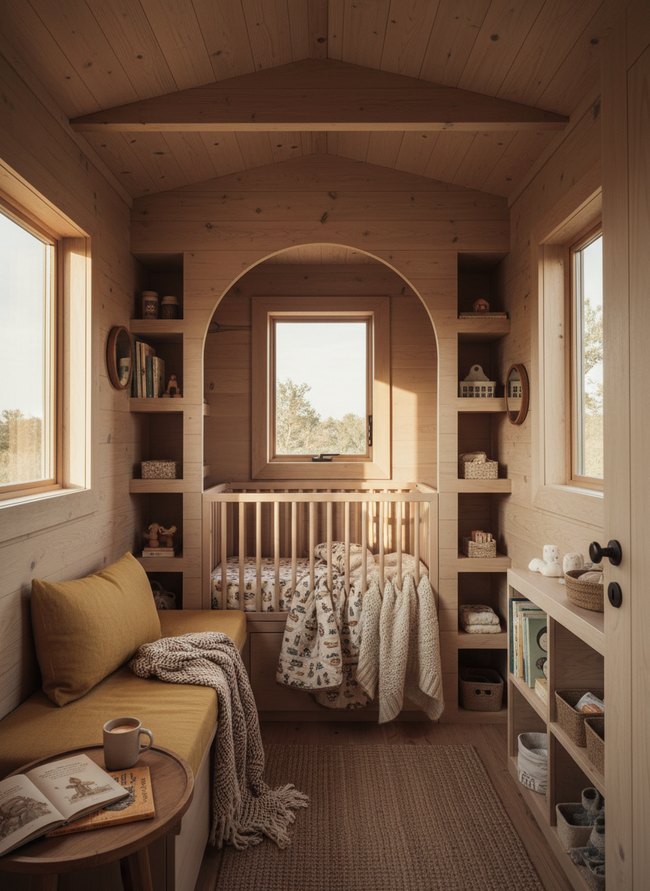
A pale wood crib tucks neatly into an arched alcove, creating a dedicated sleep zone. Homeowners could choose this layout for a tiny home nursery if saving floor space outweighs the need for a full-size crib. Natural pine planks clad the walls and ceiling, making the small room feel like a warm, cozy retreat.
14. Overhead Storage Crib Pod
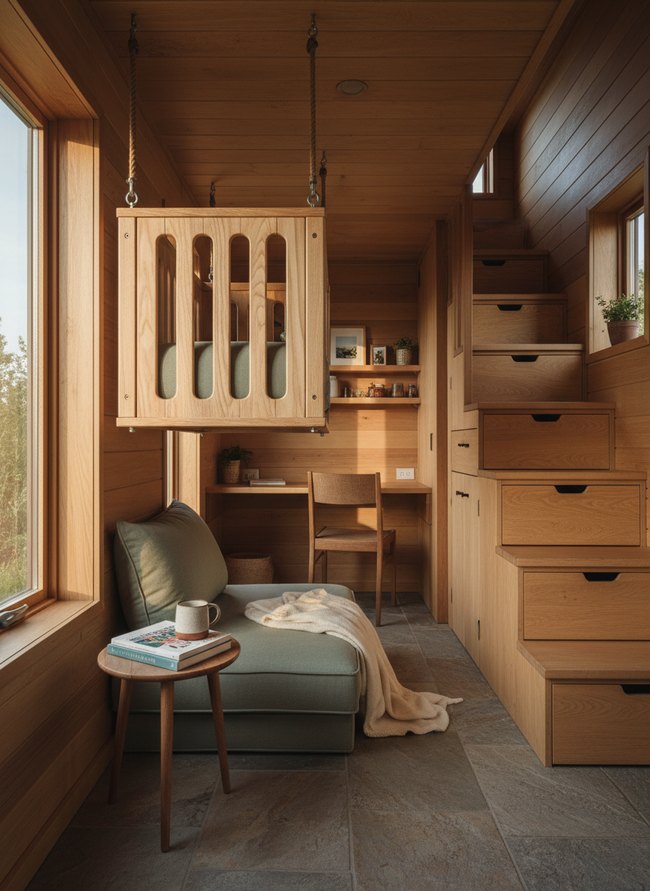
A wooden crib hangs from thick rope, suspended from the light-toned ceiling. The compact nursery offers a space-saving sleep solution. Homeowners choose this layout for maximum floor space, trading away easy crib access.
15. Rolling Bassinet Combo
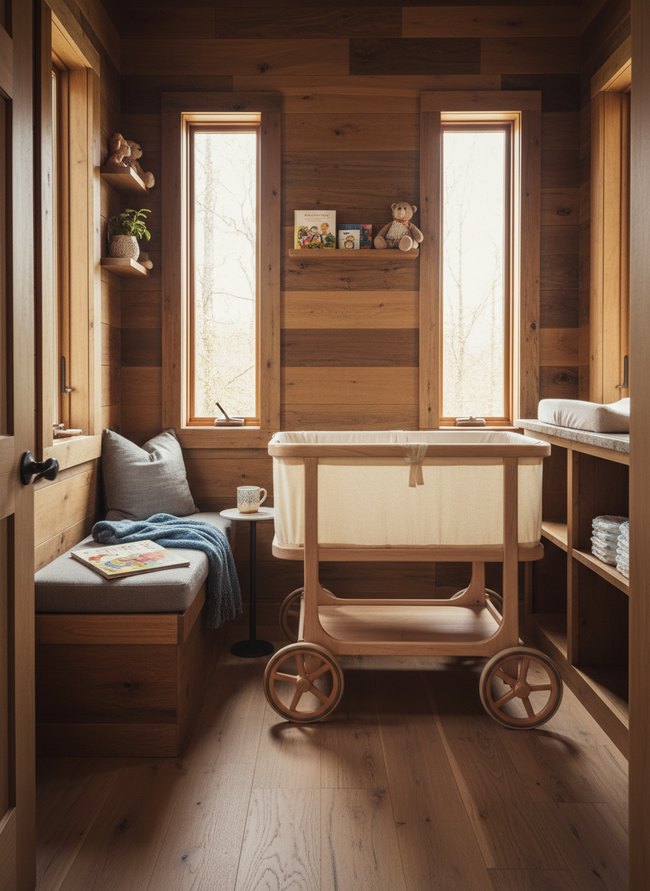
A pale wood bassinet with four small wooden wheels stands centrally on the warm oak floorboards. The bassinet offers mobility for the sleeping baby, trading away a fixed crib’s larger footprint. A long built-in bench with a gray cushion sits against the paneled wall, offering a cozy spot next to two tall narrow windows.
16. Integrated Changing Table Nursery
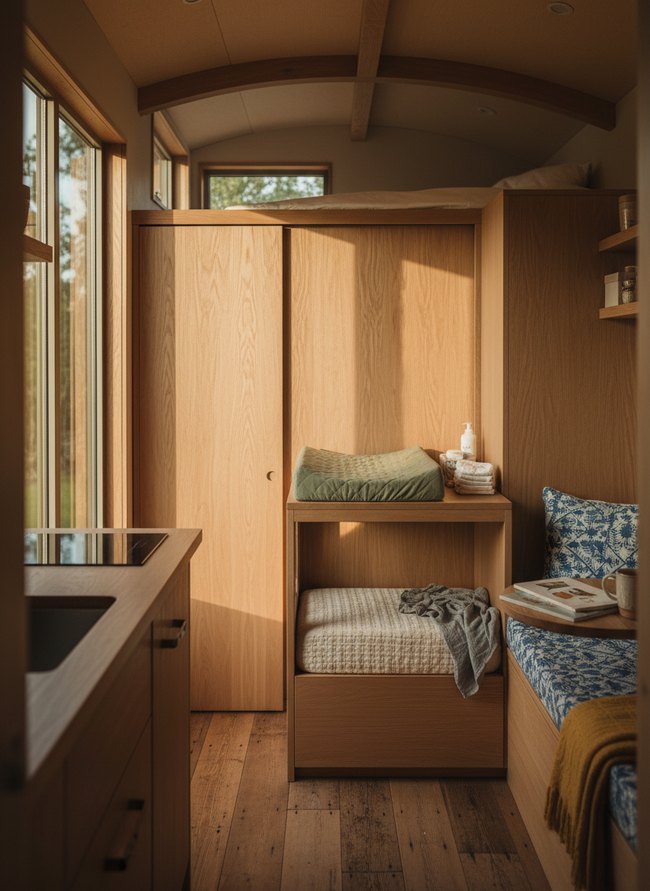
A light oak changing table built into the wall offers a dedicated space for baby care. The tiny home nursery design trades open floor space for built-in functionality, keeping baby supplies organized. The compact, efficient layout prioritizes utility over sprawling roominess.
Should I Prioritize a Convertible Crib or a Mini Crib for My Tiny Home Nursery?
Choosing between a convertible crib and a mini crib for your small nursery needs careful thought. Convertible cribs offer long-term value, transforming from a baby bed to a toddler bed and sometimes even a full-sized bed frame. Your small living space will need an open area to store the extra wooden pieces for later assembly.
Mini cribs save precious square footage immediately. These compact beds fit into tight corners and narrow rooms with ease. However, a baby outgrows the small mattress size much faster than a standard crib. You will buy a new bed within two years.
A traditional convertible crib suits families planning to stay in their tiny house for many years. Its solid oak construction provides a lasting furniture piece. Parents anticipating a move to a larger home should pick a mini crib. The lightweight metal frame makes relocation simple.
Built-In vs. Freestanding Storage: Which is Best for Maximizing Space?
Built-in cabinetry offers seamless lines in a small nursery. Freestanding furniture provides more flexibility. Custom built-ins require a higher initial investment. Contractor fees add hundreds to your project cost. Building permanent shelves means less adaptability later. You cannot easily move a fixed wooden dresser.
Freestanding pieces offer budget-friendly choices. A pine changing table costs less upfront. You rearrange portable bookcases with ease. Moving a finished crib to another room is simple. Freestanding options suit renters perfectly. They offer no permanent wall attachments.
Built-in storage works for homeowners seeking long-term value. Custom wall units add resale appeal. Permanent shelves maximize every inch of vertical space. They hide clutter behind painted cabinet doors. Built-ins create a unified, tailored look. Choose built-ins for a tiny home nursery you plan to keep for years.
Which Idea Will You Try First?
That’s 16 different takes on tiny home nursery. The best ideas above are usually the smallest moves — one material, one layout shift, one piece of furniture in the right place. Pick whichever room feels closest to your space and start there before tackling the rest.
Found an idea worth keeping? Save this post to your Pinterest board so it’s waiting for you when you’re ready to start your own project.