How to Style Tiny Bedroom Floor Space (When You Have None)
Your small bedroom probably feels like a shoebox. A twin bed often eats up almost every available inch of floor. A thick, woven rug defines the sleeping zone. Furniture choices become a high-stakes game of Tetris. Every single item needs to earn its spot in the cramped room. We’ll talk about smart rug placement and other little tricks. Careful choices make a big difference for your tiny bedroom floor space. The is your no-nonsense guide.
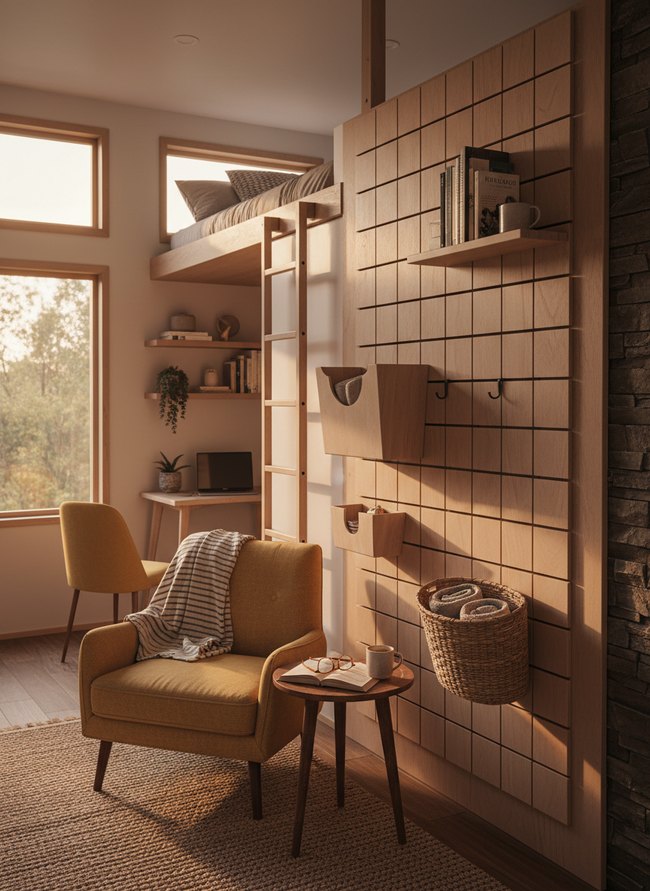
1. Vertical Lofted Floor Nook
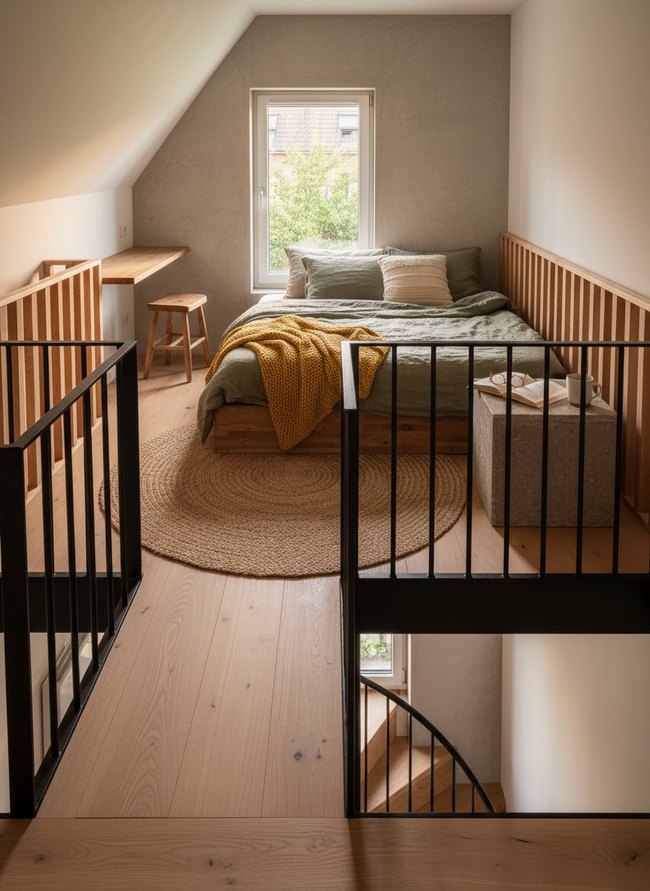
A round jute rug sits under a natural wood bed frame, defining the sleeping zone. The textured circle offers a clear boundary for the bed in a tight space. Consider placing a small circular rug under your bed to visually separate your sleeping area from other functions in a small room.
2. Under-Bed Storage Platform
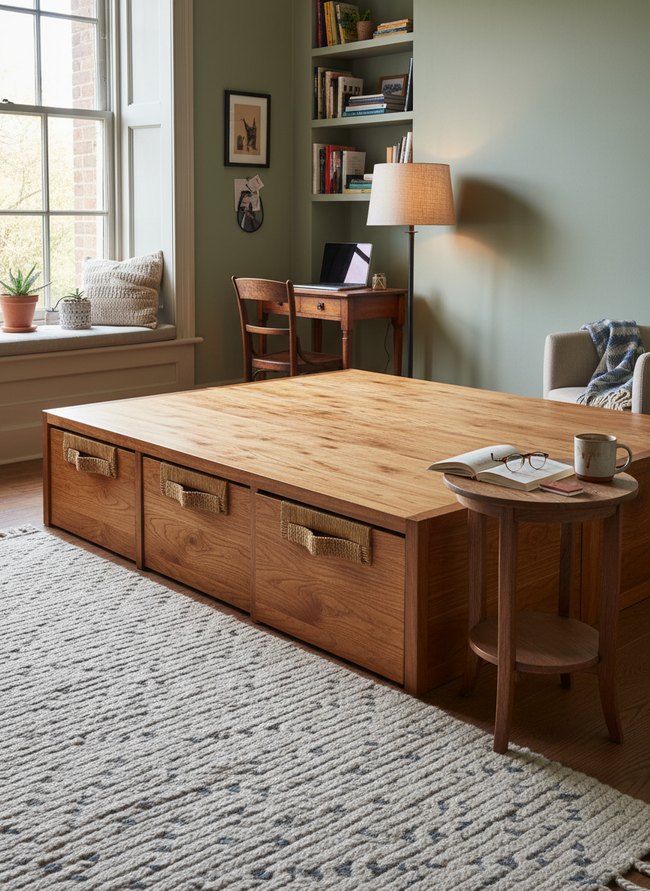
A large, honey-toned wooden platform bed with three woven drawer pulls offers smart hidden storage for your tiny bedroom floor space. The sturdy wooden base lifts the mattress height, making it easy to access your belongings without bending too low. Position a soft, pale gray rug directly in front of the platform to define the sleeping area.
3. Slim Floating Side Area
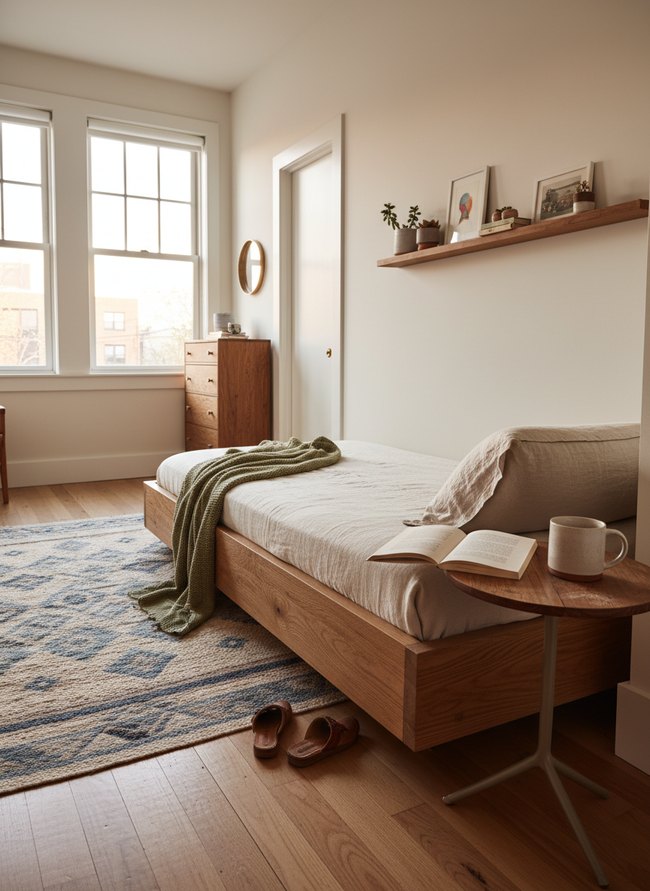
A natural wood bed frame with a light gray mattress creates a calming sleeping area. A small round side table floats over the bed’s edge, saving precious tiny bedroom floor space. A slender floating table holds a book and mug.
4. Corner Wardrobe Footprint
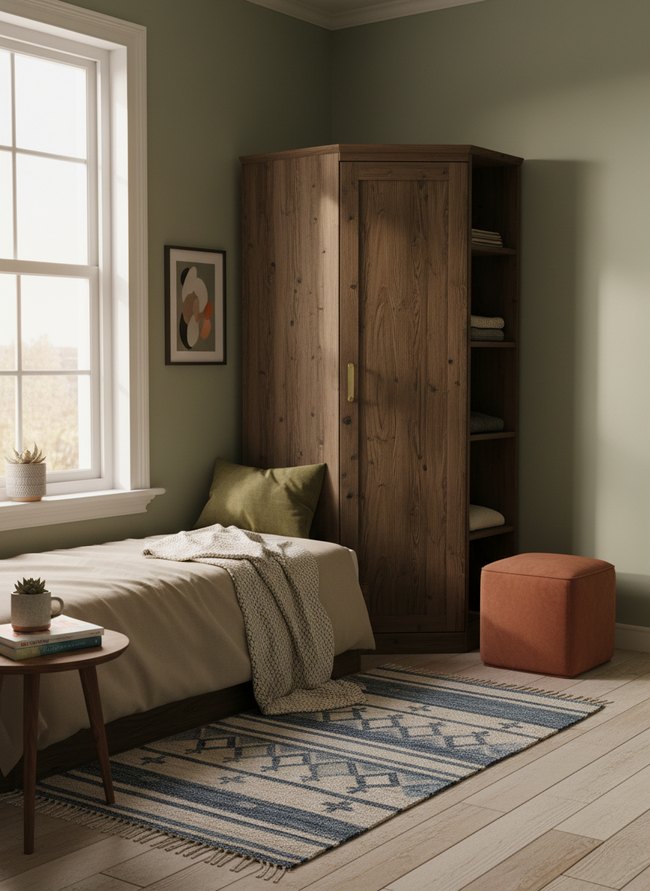
A tall wooden corner wardrobe saves valuable tiny bedroom floor space by fitting snugly into a room’s natural angle. The dark brown storage unit offers both closed cabinet storage and open shelving for folded clothes. A corner wardrobe maximizes storage without blocking walking paths.
5. Minimalist Open Pathway
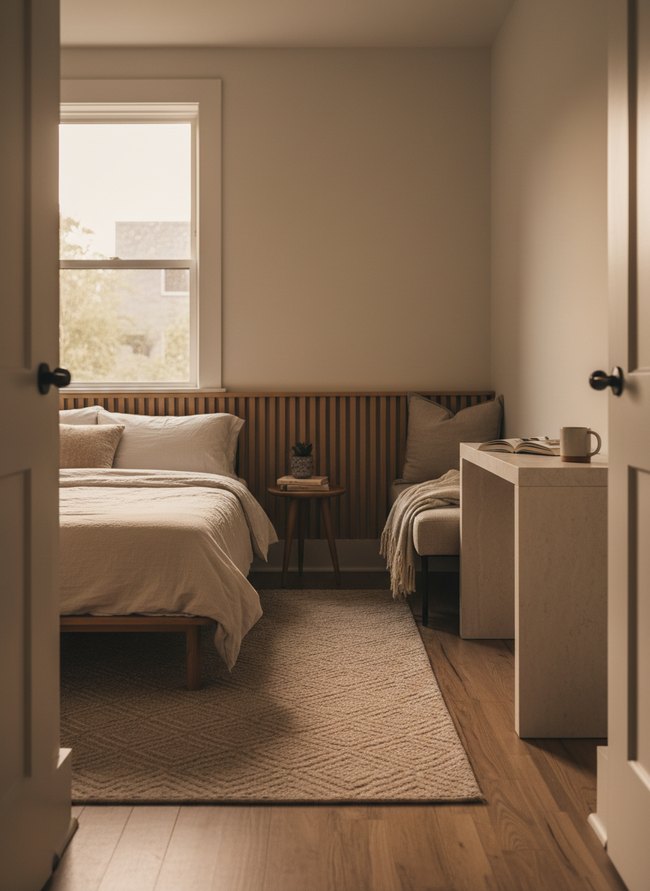
A long, narrow beige rug runs beside a low wooden bed frame, leaving wide hardwood borders on three sides. The clever rug placement creates a clear path from the white bedroom door to the window, making the small room feel larger. Choose a rug that allows plenty of bare floor to show, opening up the tiny bedroom floor space.
6. Wall-Mounted Bed Base
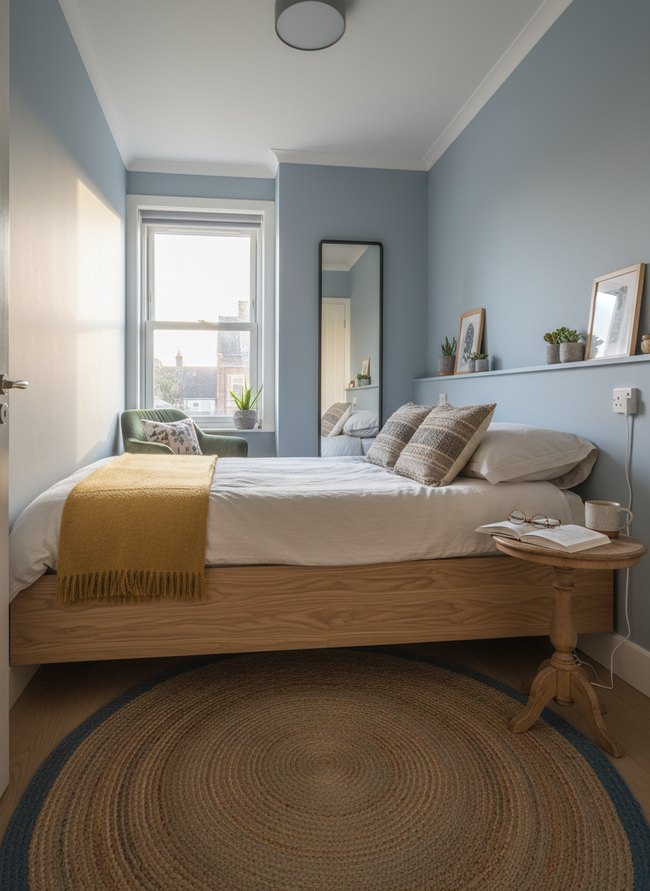
A floating wooden bed frame creates an illusion of open tiny bedroom floor space. The light oak bed base mounts directly to the wall, leaving the entire area underneath clear. A wall-mounted bed base maximizes a room’s visual square footage.
7. Compact Sliding Panel
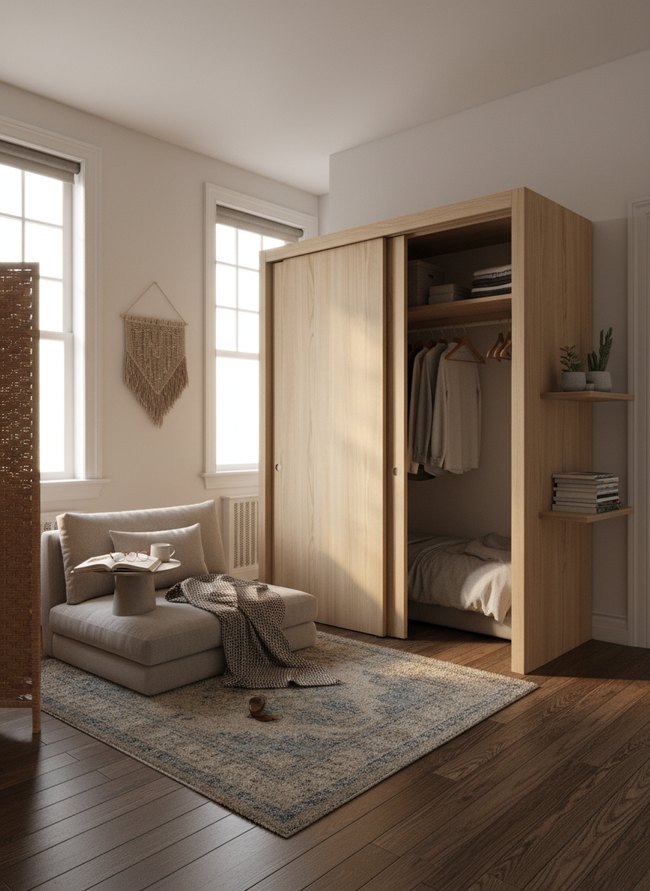
A light oak wardrobe features sliding panels that hide a small bed. The compact design tucks a sleeping area out of sight, freeing up bedroom floor space. Furniture with hidden functions maximizes usable area in a small room.
8. Integrated Desk Footprint
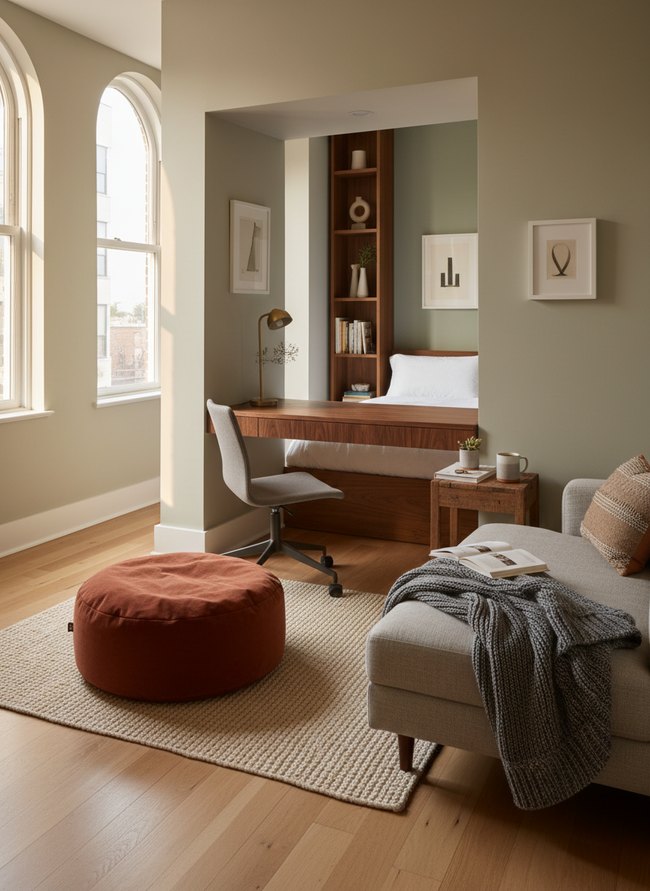
The built-in walnut desk and matching bookcase create a tucked-away workspace, using vertical wall space for storage. The clever setup maximizes tiny bedroom floor space, leaving room for other furniture. Avoid standalone desks that take up valuable open floor area.
9. Fold-Away Bed Zone
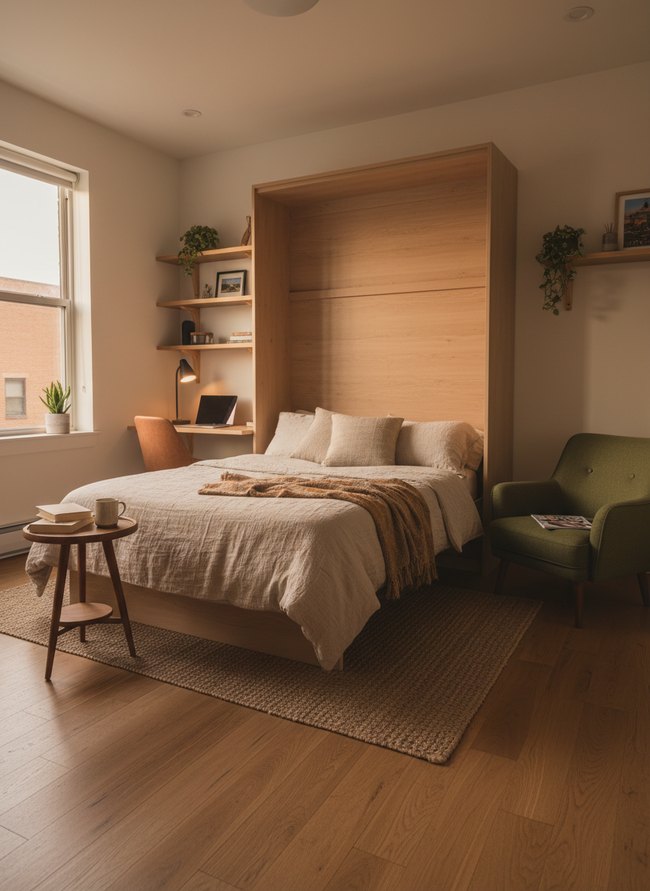
A light-toned wooden Murphy bed folds down, creating a full sleeping area in your tiny bedroom floor space. A woven jute rug grounds the bed, adding soft texture to the warm oak flooring. Position your chosen rug so it extends beyond the bed’s sides, offering cushioned steps when you rise.
10. Recessed Alcove Platform
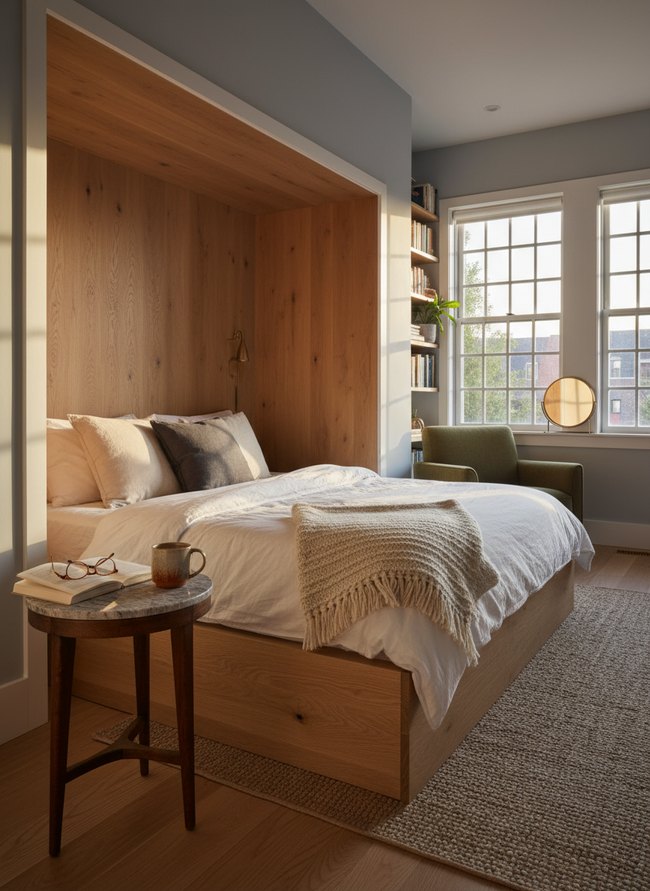
A light oak platform bed neatly tucks into a recessed alcove, maximizing every inch of tiny bedroom floor space. The clever design creates a cozy sleeping area and built-in storage. Consider building a similar structure directly into your wall to reclaim valuable square footage.
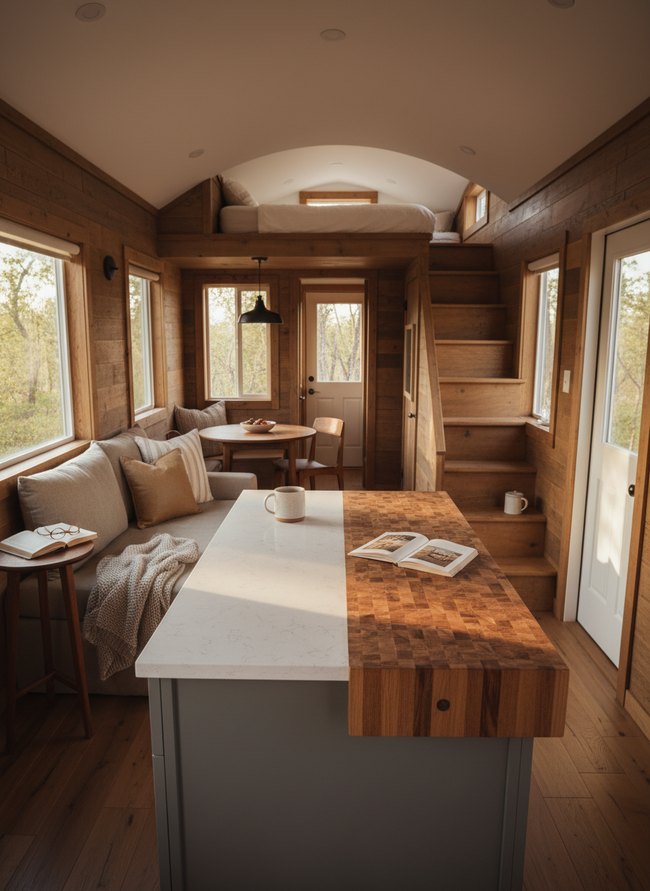
11. Elevated Sleeping Area
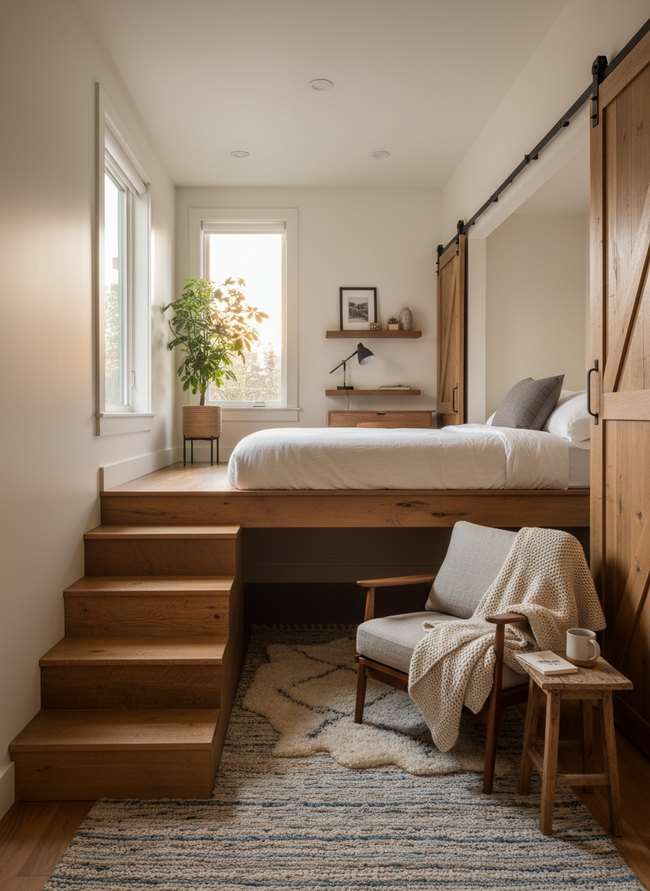
A warm oak platform bed creates a raised sleeping area, freeing up significant tiny bedroom floor space underneath. Wooden stairs lead up to the elevated bed, offering easy access. Building a similar raised platform maximizes a small room’s usable area.
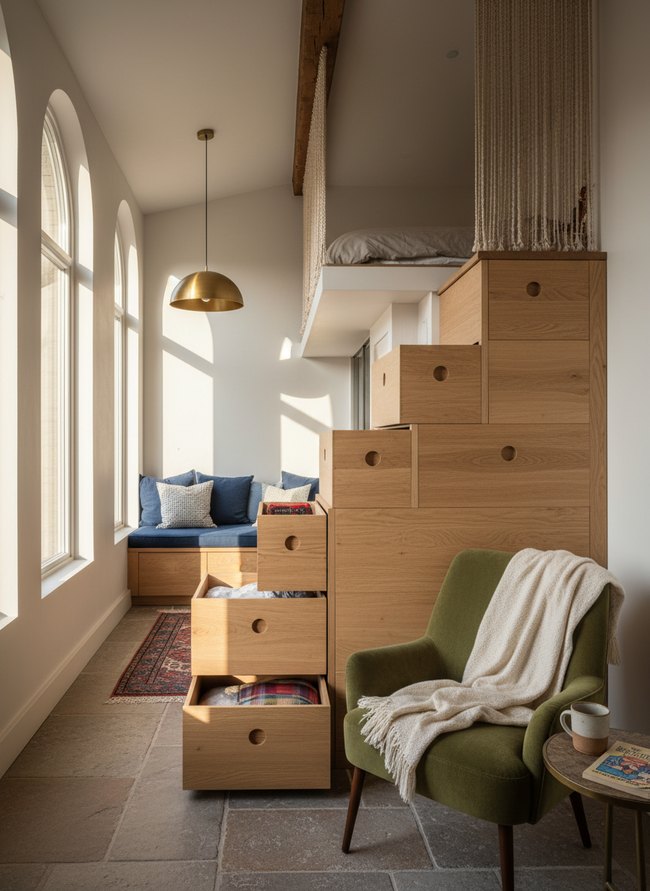
12. Hidden Drawer Floor
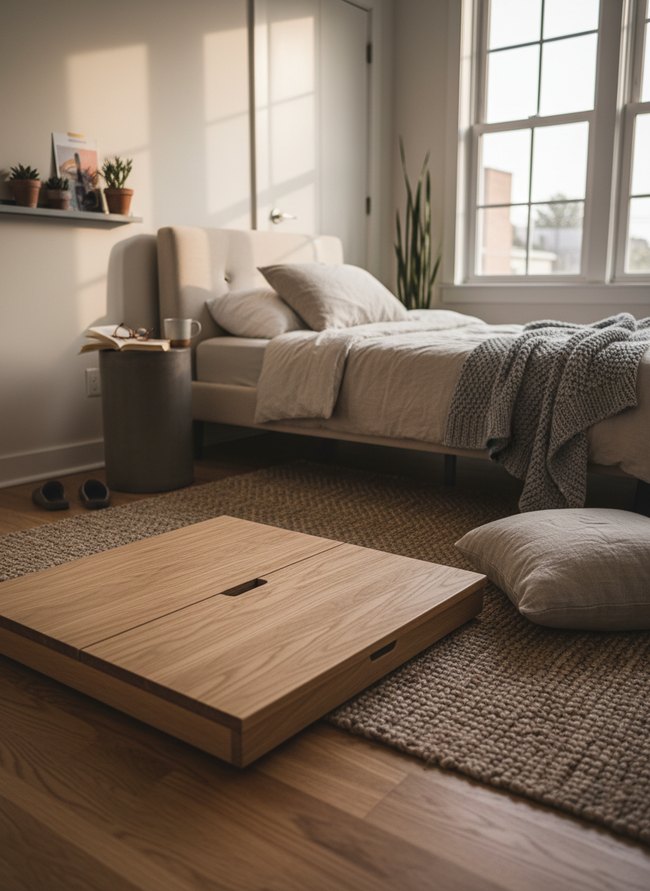
A light oak platform with two recessed handles rests on a woven jute rug. The platform provides hidden storage, expanding your tiny bedroom floor space. Consider adding a similar low-profile item to keep clutter out of sight.
Can I even put a rug in here? (Spoiler: Yes, if you know this trick)
Many people believe a small bedroom cannot hold a rug. Most assume a large, patterned floor covering will overwhelm a tight area. That idea often leads to bare wooden floors or cold concrete slabs in compact sleeping quarters. However, a clever rug placement strategy actually makes a tiny room feel bigger.
You should never choose a postage stamp sized accent rug. An undersized fabric patch just floats in the middle, highlighting cramped dimensions. Instead, select a generously proportioned wool rug that extends underneath at least two legs of your wooden bed frame. This technique creates a unified visual anchor. A single, charcoal gray area rug that tucks under the bottom two feet of your queen mattress and stretches across the walking path beside it works wonders. The substantial floor textile connects different zones of your small bedroom. This optical illusion broadens the perceived floor space.
My bed takes up the whole room! How do I even walk around it with a rug?
Many homeowners believe a rug must sit entirely under a queen bed. Your small room presents a different challenge. Most advice suggests pulling a rug halfway out from under a bed. That common placement causes tripping. A plush wool rug bunched against a bed frame creates a lumpy obstacle.
You need a narrow runner. Forget a large rectangular rug for a small bedroom floor. A long, thin Persian runner, perhaps 2 feet wide and 8 feet long, changes the entire game. Lay the soft runner along one side of your cedar bed. This placement gives you a warm landing strip for your feet. A low-pile jute runner also works well. The flat weave prevents snags. This smart rug placement defines a clear walkway. It makes the limited floor space feel intentional. You can walk around your wooden bed without stubbing toes. A small flat-woven accent rug, no wider than 3 feet, can also sit beside a twin bed. The small rug creates a soft spot. It does not block foot traffic.
Which Idea Will You Try First?
That’s 12 different takes on tiny bedroom floor space. The best ideas above are usually the smallest moves — one material, one layout shift, one piece of furniture in the right place. Pick whichever room feels closest to your space and start there before tackling the rest.
Found an idea worth keeping? Save this post to your Pinterest board so it’s waiting for you when you’re ready to start your own project.