How to Style a Tiny Home Loft Bedroom in 5 Steps
A cramped space does not shrink your style options. Many designers focus on making a tiny home loft bedroom feel larger, but a better strategy embraces its compact nature, creating a cozy, functional retreat. The design approach transforms perceived limitations into strengths. Crisp white sheets and dark plaid wool blankets offer visual warmth without adding bulk. Custom headboard solutions, like a slatted oak panel or a soft tufted fabric, define the sleeping zone with precision. Small wall-mounted brass sconces or a woven pendant lamp distribute soft glows across the pitched roofline. Built-in honey-toned drawers or a low cedar chest keep clutter hidden from view. A small clay vase or a hand-knitted throw on the foot of the bed completes the layered look.
1. Minimalist Linen Bedding Solution
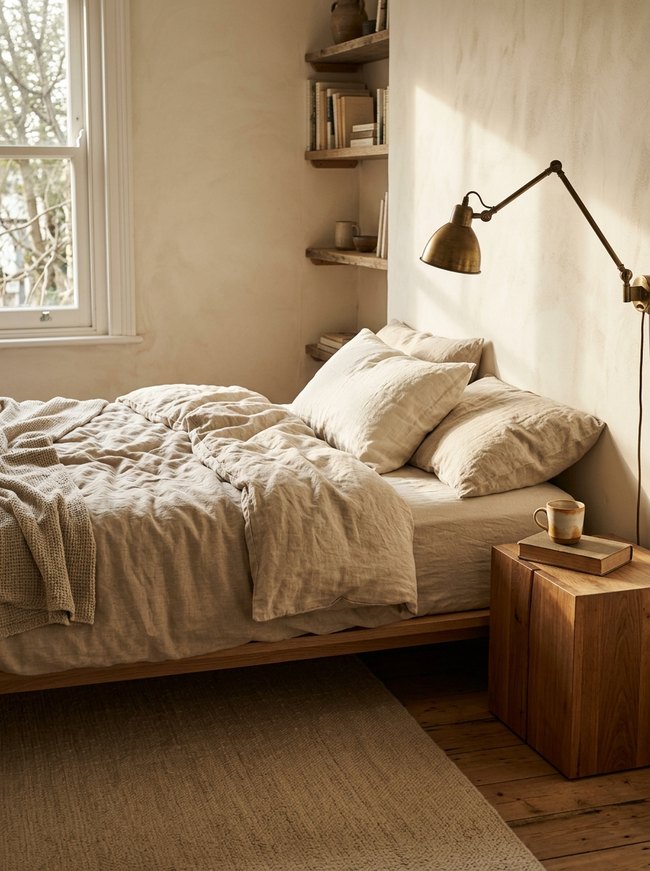
Natural linen bedding provides relaxed, soft texture and a neutral color that expands the visual space of the tiny home loft bedroom. The crumpled beige duvet and matching pillows keep the small sleeping area feeling open and airy. A chunky knitted throw blanket adds a subtle layer of warmth. The soft, light-toned linen creates an expansive feel.
2. Floating Wood Panel Headboard
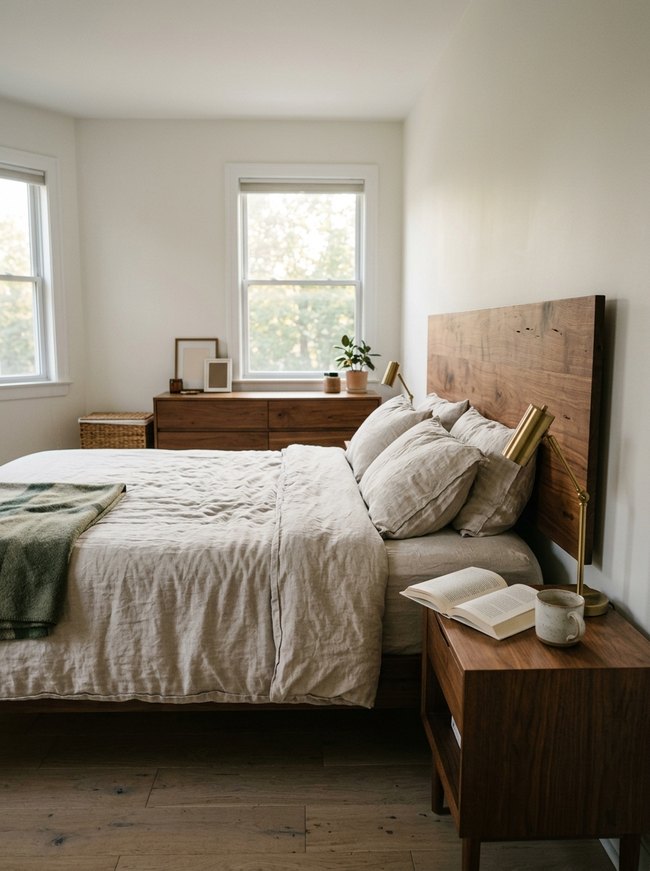
A wide walnut headboard panel defines the sleeping area without bulky posts, keeping the tiny home loft bedroom open. The warm wood grain adds natural texture, matching the bedside table and long dresser. Brass task lamps on either side provide focused light for reading in bed. The simple, floating wood panel headboard saves floor space.
3. Integrated Wall Sconce Lighting
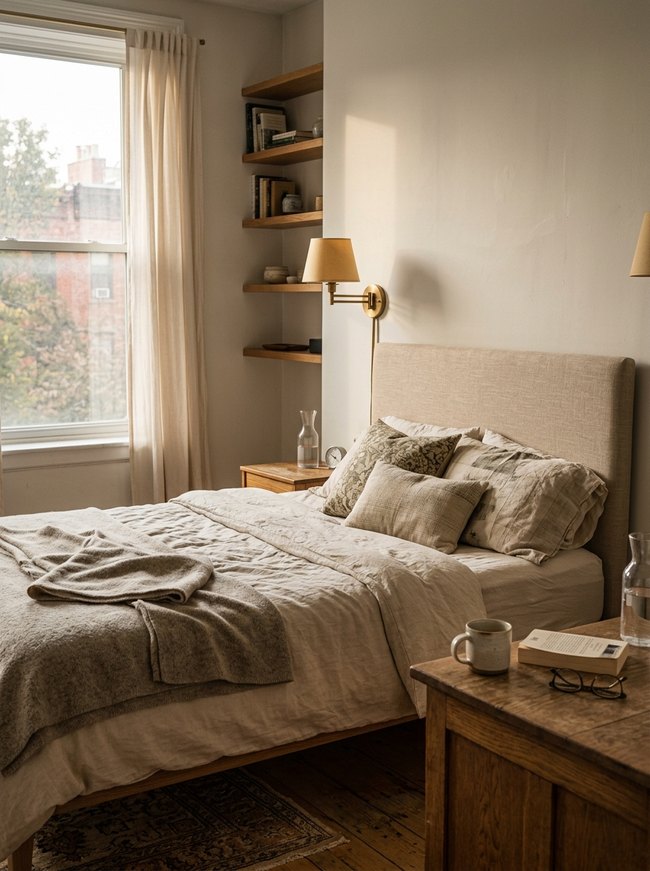
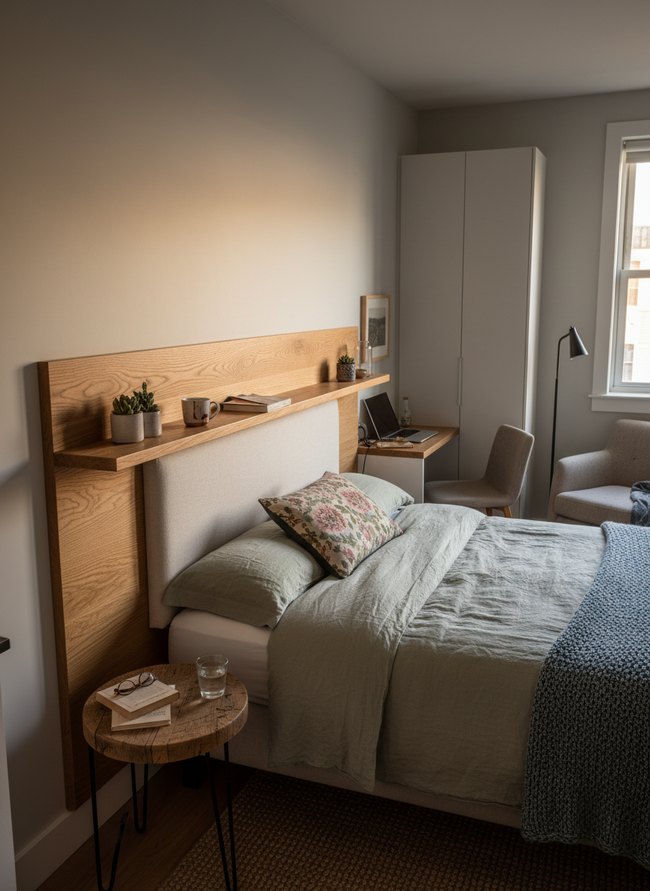
Integrated wall sconces provide focused light without consuming precious surface area on the small nightstand. A brass swing-arm lamp extends outward, directing warm light onto the bed and surrounding area. Wooden floating shelves beside the bed offer additional storage for books and small decorative items. Wall-mounted lighting saves space.
4. Under-Bed Pullout Storage Drawers
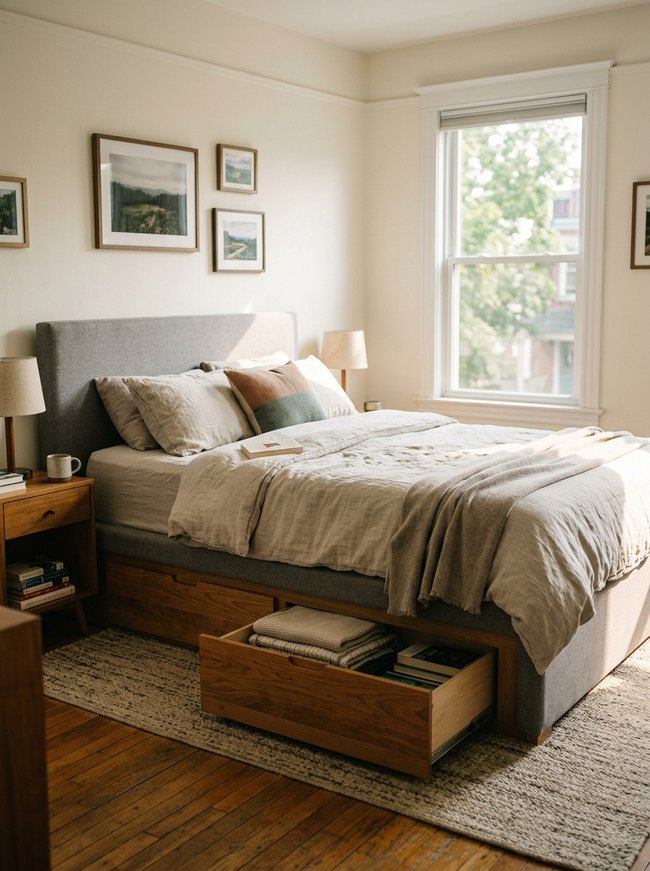
The designer uses under-bed pullout storage drawers to maximize floor space in the tiny home loft bedroom. The smart choice keeps the room clutter-free, providing essential hidden storage for blankets and books without adding bulky furniture. A soft, woven rug also defines the sleeping area, adding warmth to the wide plank wood floor. The under-bed drawer system offers effortless organization.
5. Bohemian Macrame Wall Hanging
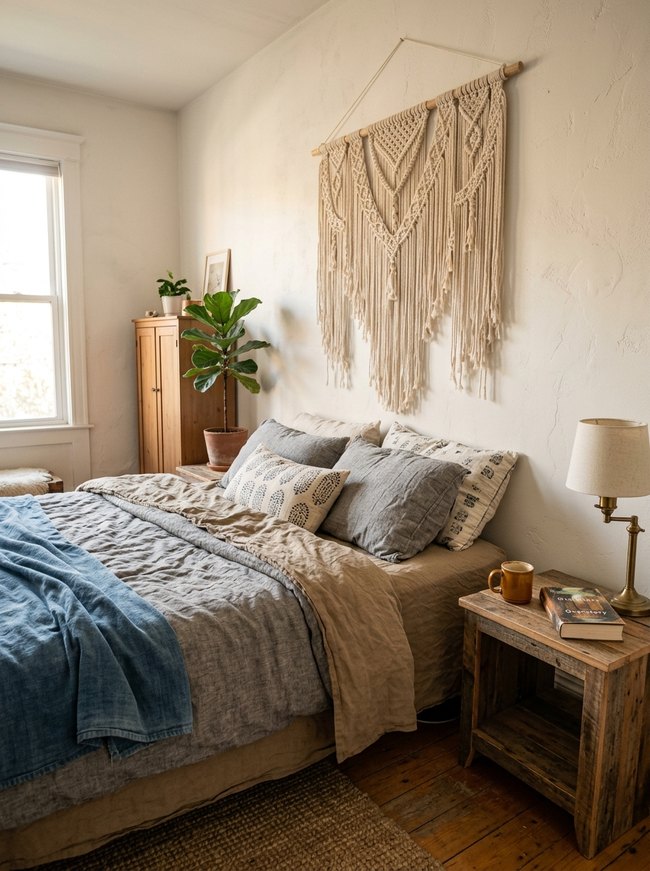
A large cream macrame wall hanging provides soft texture and visual interest above the bed. The intricate knots and flowing fringe replace a traditional headboard without adding bulk, saving precious floor space in a tiny home loft bedroom. Rustic wooden furniture, including a small bedside table, complements the natural fiber art. The textile wall hanging offers a soft, space-saving headboard.
6. Compact Corner Book Nook
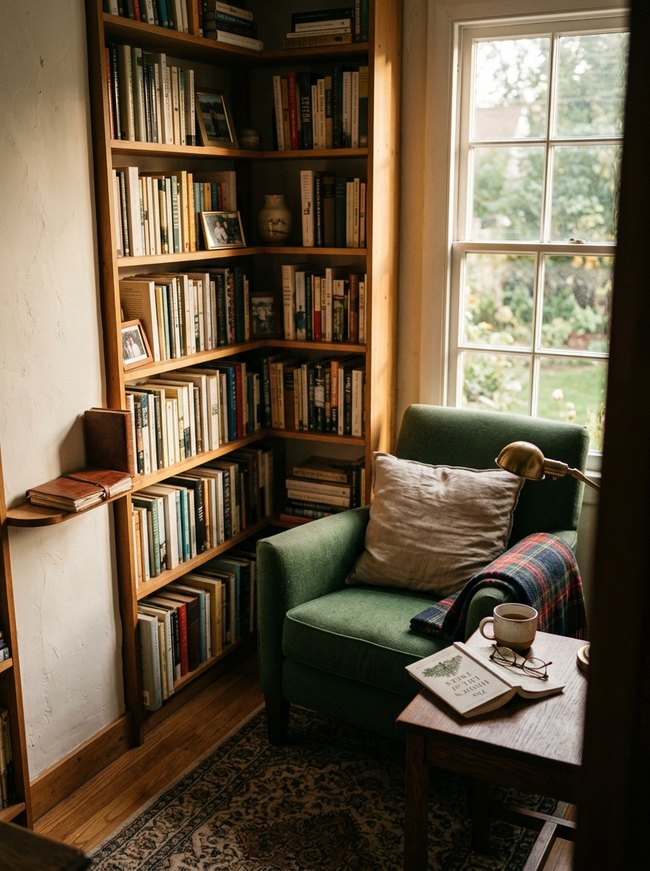
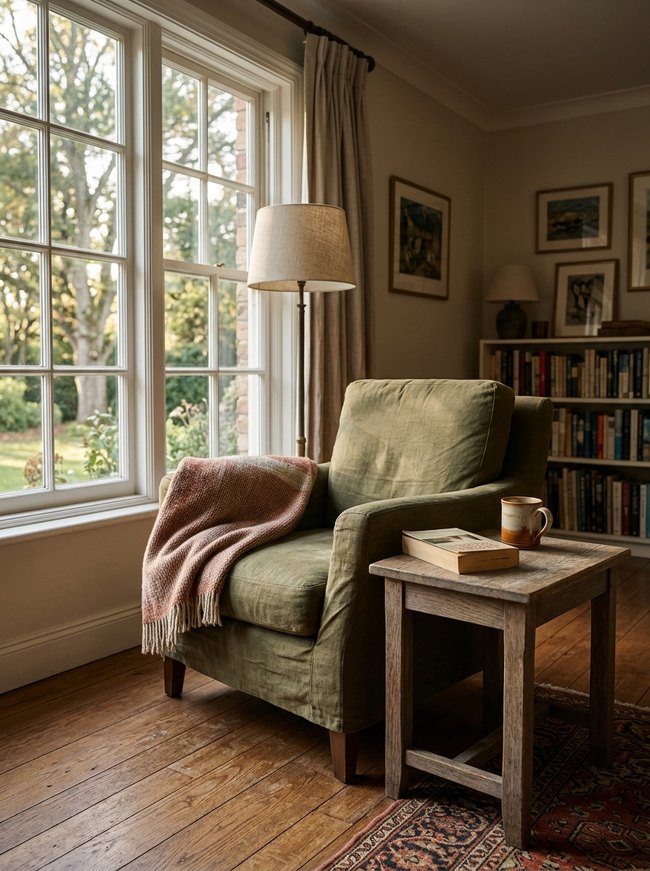
A built-in corner bookcase maximizes wall space for storage. The clever arrangement uses the natural alcove beside the window, turning an unused area into a functional reading spot. A deep green armchair and a small wooden side table with a warm beverage invite relaxation. Borrow the idea of custom-built shelves to fit awkward corners.
7. Soft Ambient String Lights
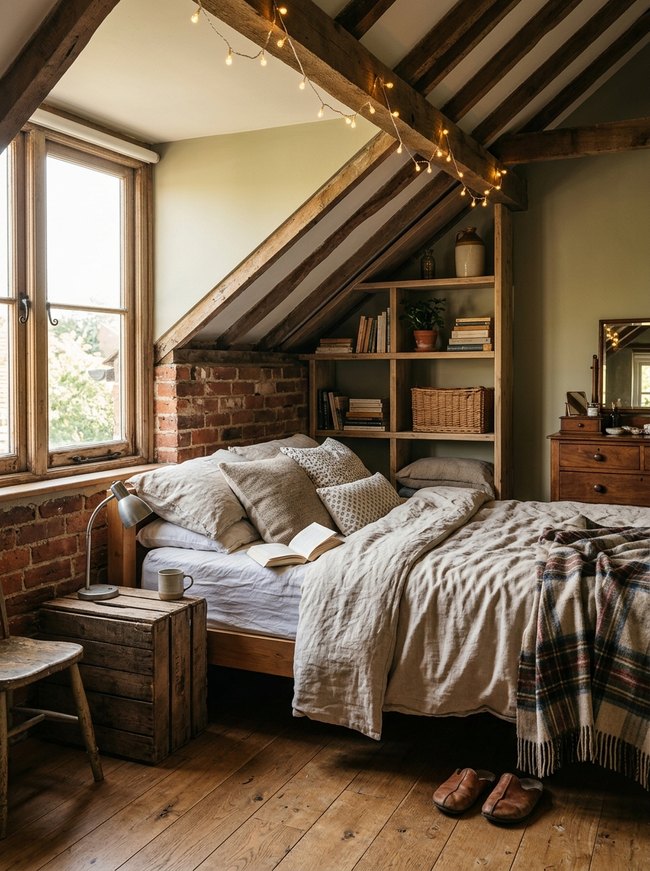
Warm string lights draped across exposed wooden ceiling beams create a soft, inviting glow. Small, bright bulbs scatter light widely without harsh shadows, making the entire tiny home loft bedroom feel larger and more open. An antique wooden crate functions as a simple bedside table, holding a small metal lamp and a ceramic mug. The string lights provide gentle, widespread illumination.
8. Clever Loft Ladder Access
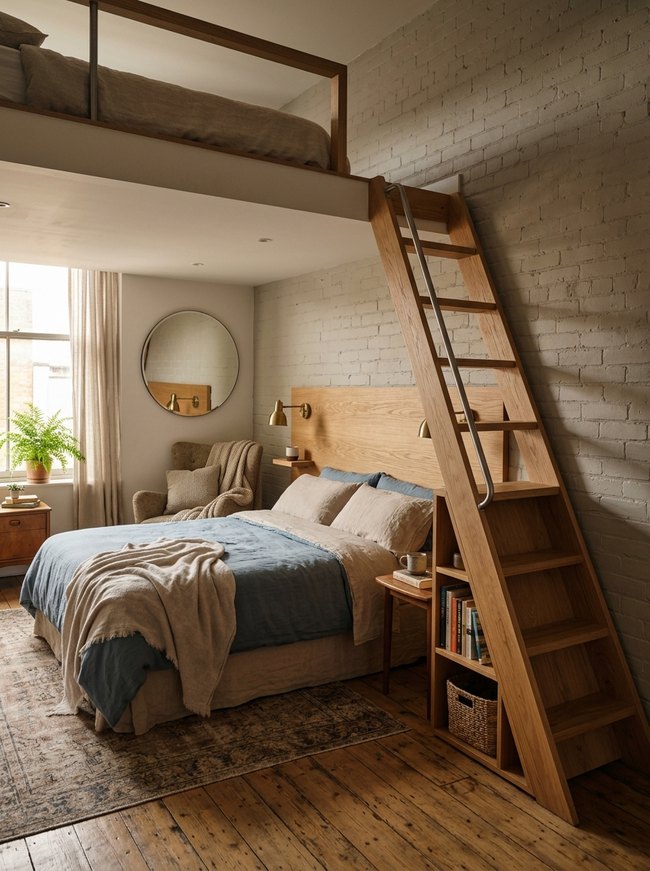
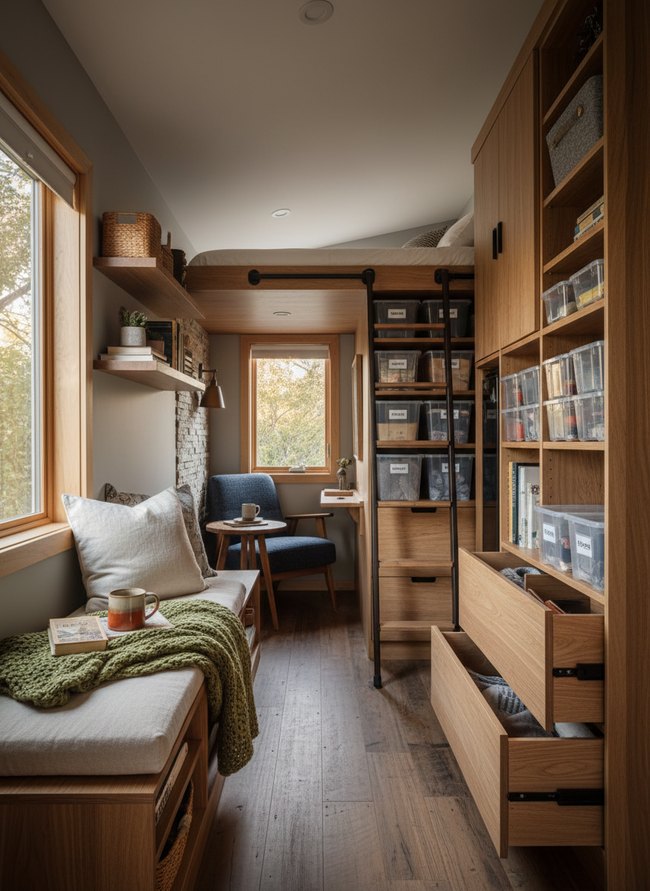
The angled wooden ladder provides direct access to the upper sleeping area. The ladder combines function and form, creating a streamlined path without bulky stairs. A small bookshelf integrated into the ladder base offers convenient storage for books and a woven basket. The ladder combines with hidden storage.
9. Streamlined Built-In Wardrobe
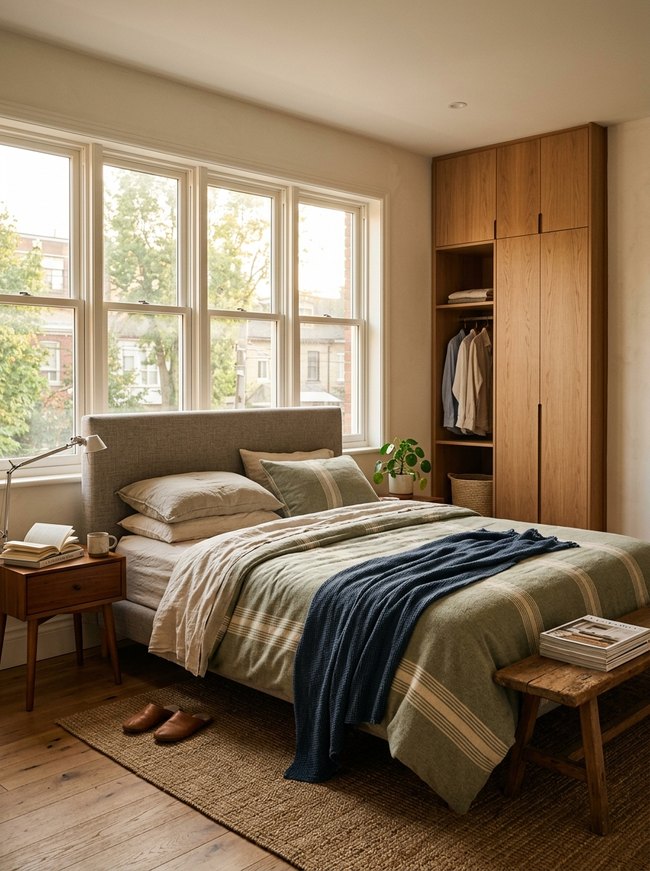
The tall oak wardrobe offers streamlined storage, integrating perfectly into the room’s corner without adding bulk. The natural wood tone warms the white walls, creating a calm bedroom atmosphere. Open shelves display folded clothes and a woven basket, adding texture and visual interest. Steal the built-in, floor-to-ceiling wardrobe design.
10. Accent Pillow Layered Comfort
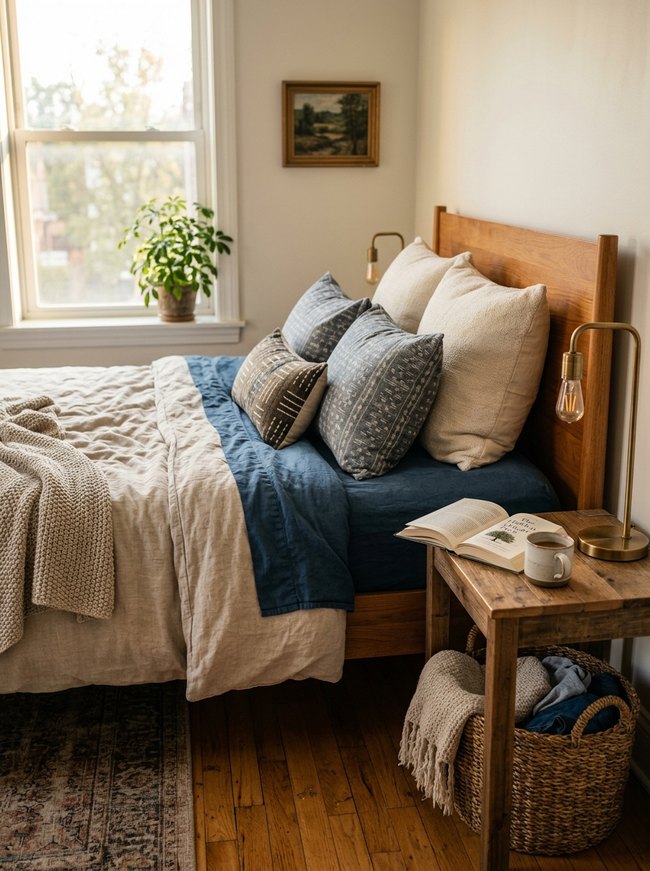
Layered accent pillows create inviting depth on the bed. The designer uses a mixture of cream-colored, charcoal, and patterned cushions to build visual interest against the warm wooden headboard. The tiny home loft bedroom benefits from the soft textures and varied sizes of the pillows, making the sleeping area feel comfortable and stylish. Steal this idea: layer diverse accent pillows.
11. Panoramic Window View Styling
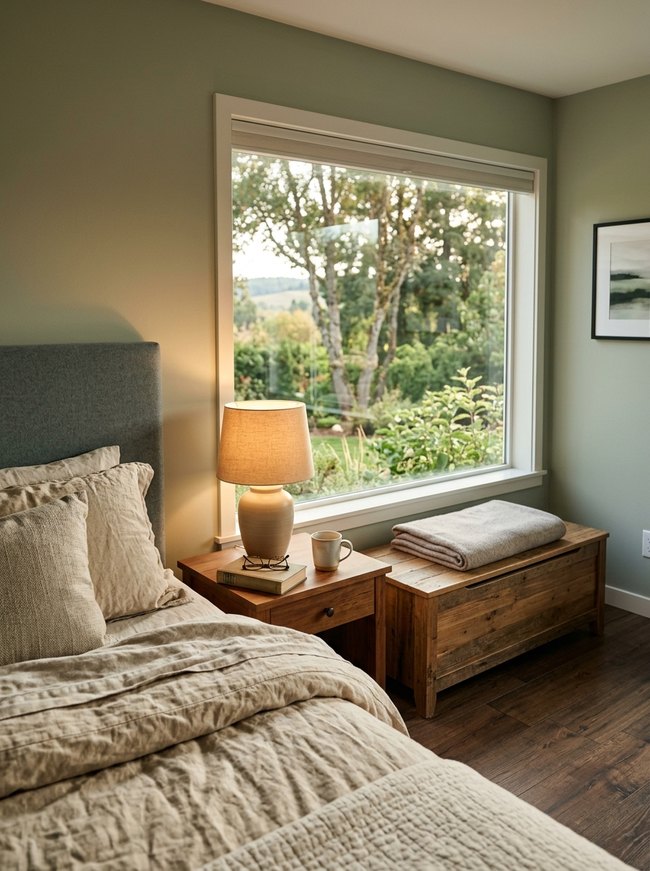
The wide horizontal window frames the outdoor landscape as a living artwork. The deliberate choice maximizes natural light and provides a soothing green backdrop, making the tiny home loft bedroom feel much larger. A simple wooden nightstand and a rustic storage chest keep the space uncluttered, supporting the tranquil view. A large, unobstructed window expands your small bedroom visually.
The Thermoregulatory Implications of Loft Bedding Materiality in Micro-Dwellings
Bedding choice directly influences the thermal comfort in your tiny home loft. A high-thread-count cotton sheet set, for instance, traps body heat against your skin, making warm summer nights miserable. Polyester duvet covers exacerbate the issue, creating a sticky, uncomfortable sleeping surface in the elevated space. Consider instead a light linen duvet and thin wool blanket for better airflow. Linen fibers naturally wick away moisture, keeping you dry and cool throughout the night. Wool, surprisingly, regulates temperature in both cold and warm conditions, pulling heat from your body when you overheat. Many tiny home owners mistakenly choose thick flannel sheets, thinking they add warmth during winter months. Heavy fabrics like flannel become overly warm in a compact loft, forcing you to throw off covers and disrupt sleep. Switch to a breathable percale cotton for your bottom sheet, allowing air to circulate freely around your body. This simple material change prevents uncomfortable overheating in your enclosed sleeping area.
Spatial Illusion through Integrated Headboard Design: A Perceptual Analysis for Vertical Habitats
Integrated headboard design actively reshapes spatial perception in small sleeping areas. A floating headboard, crafted from light-toned maple, visually expands a narrow loft bedroom. Many homeowners mistakenly choose a bulky, floor-standing headboard that chops off valuable wall space. Instead, a wall-mounted panel, covered in textured oatmeal linen, extends upward to the ceiling line. This vertical extension draws the eye, making the entire room feel taller and more open. Consider a hidden storage compartment built directly into the headboard itself. Such an integrated feature eliminates the need for freestanding nightstands, freeing up precious floor area. A deep charcoal headboard with slim horizontal slats could also create a wider visual line across the back wall. Thin vertical channels on a white oak headboard further emphasize height, preventing the common boxed-in sensation. Always select a headboard that merges with the wall or offers recessed elements to maximize perceived depth. A flat, dark gray panel with subtle recessed lighting creates a calming, shadow-free zone behind your pillows. This design technique transforms a tight corner into a functional, expansive sanctuary.
Which Idea Will You Try First?
That’s 11 different takes on tiny home loft bedroom. The best ideas above are usually the smallest moves — one material, one layout shift, one piece of furniture in the right place. Pick whichever room feels closest to your space and start there before tackling the rest.
Found an idea worth keeping? Save this post to your Pinterest board so it’s waiting for you when you’re ready to start your own project.