How to Choose the Right Rug for Every Tiny Home Layout
Many interior guides advise against rugs in small rooms. Such advice misses the clear power of a woven mat. Rugs do not shrink a floor plan; instead, a wool rug, a jute rug, or a flat-weave cotton rug defines separate zones within an open studio. A careful arrangement of three different flat-weave rugs can divide a twenty-foot living area into distinct spots for eating, sleeping, and relaxing. The method brings order to modest square footage. A smart rug choice improves both the feel and the function of your cozy dwelling. We will show you how.
1. Compact Entryway Coir Mat
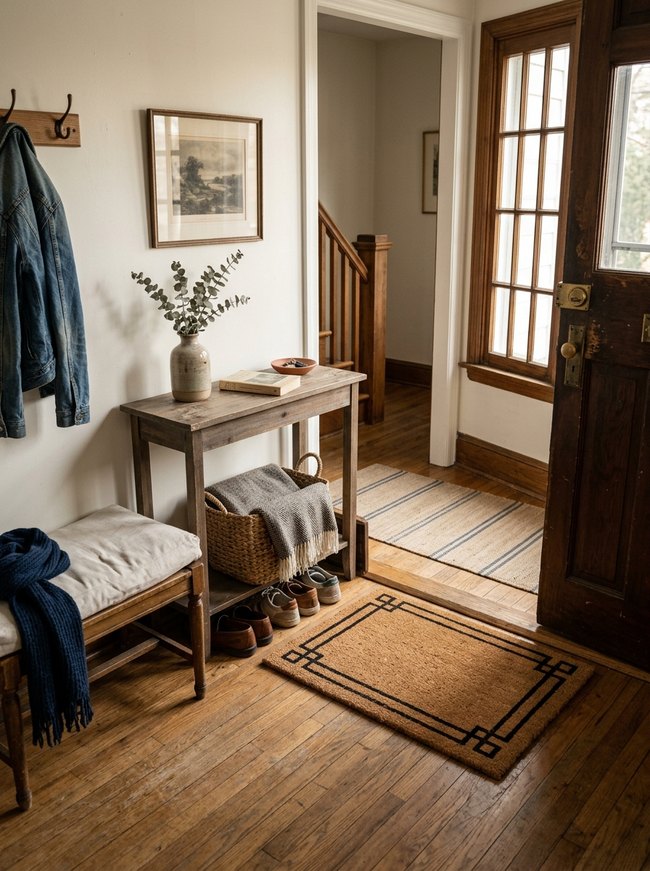
A small coir mat with a dark geometric border defines the entry space without overwhelming the area. The natural fiber rug traps dirt effectively, preventing debris from spreading into the tiny home. A narrow wooden console table and small padded bench also offer useful storage solutions. Choose a durable, natural mat that fits your doorway precisely.
2. Loft Bedroom Shag Oval
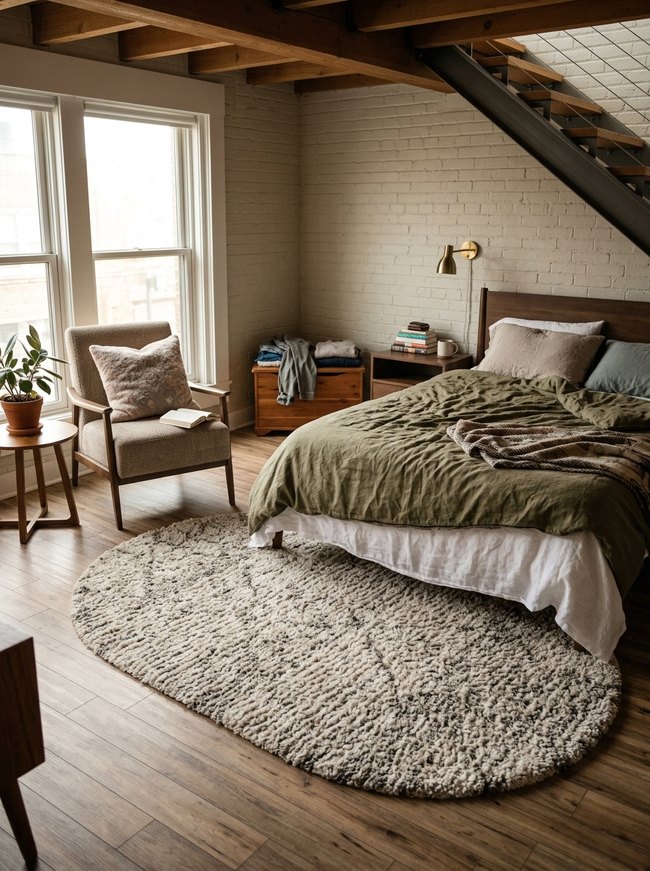
The owner chose an oval shag rug to soften the hard lines of the square bed and exposed brick wall. The curved shape introduces a gentle flow, making the small bedroom feel less boxy and more inviting. A warm brass wall lamp and a natural wood side table also add textural layers to the compact space. Steal the oval rug choice.
3. Galley Kitchen Runner Stripe
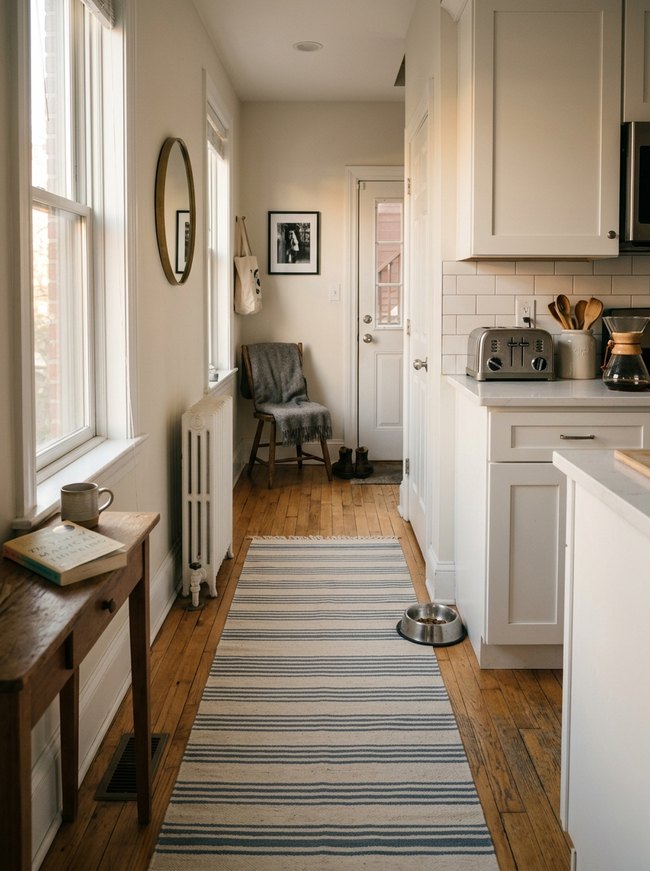
A narrow striped runner rug defines the galley kitchen walkway, stretching almost the entire length of the hardwood floor. The striped pattern creates an illusion of greater depth and draws the eye through the compact space, making the small room feel longer. White kitchen cabinets and subway tile backsplash keep the upper walls light and open, complementing the clean lines of the rug. A striped runner can enhance visual length in a tiny home.
4. Folding Living Area Jute
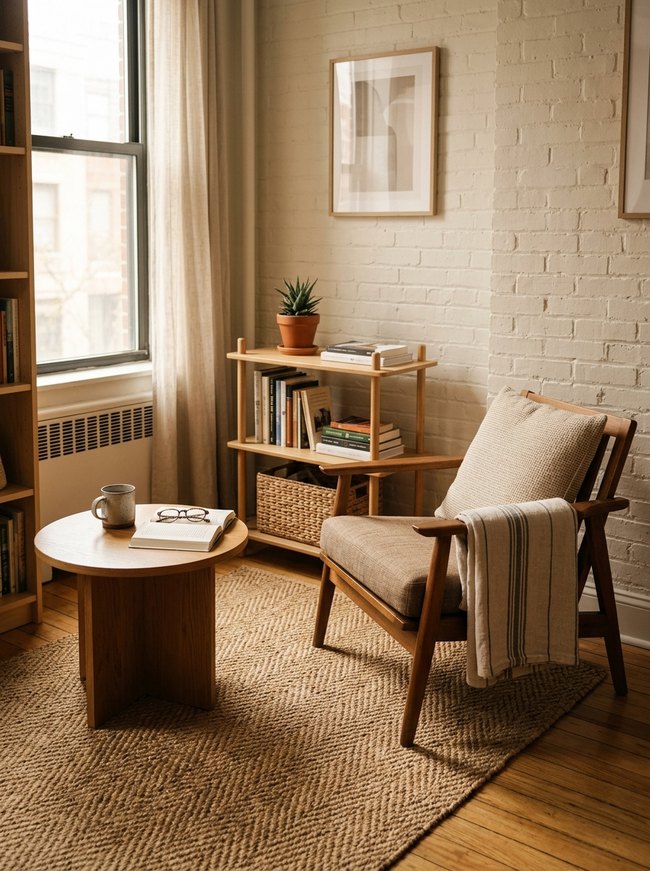
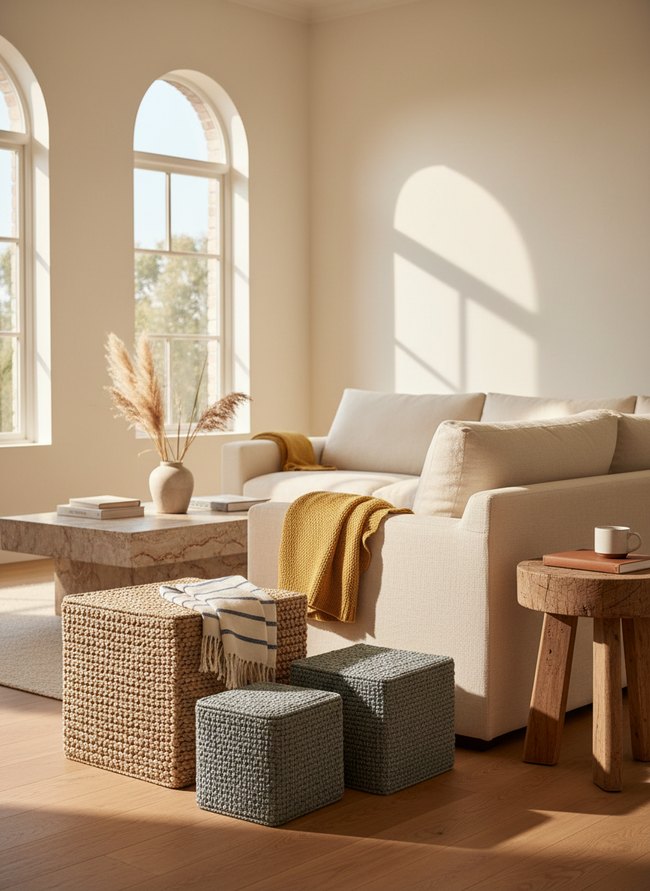
A large natural jute rug defines the cozy corner, creating a distinct room within a room. The woven texture visually expands the floor space, making the small living area feel more open. Light oak wood furniture and soft cream textiles complement the rug’s earthy tones. A big rug can separate zones in your tiny home.
5. Micro Study Plush Circle
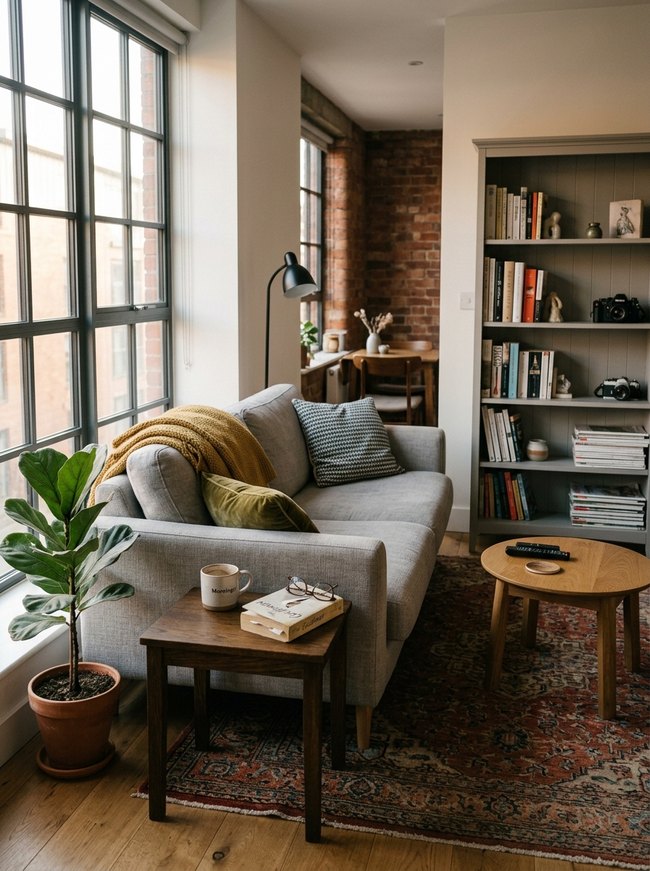
A plush, patterned rug defines the living area without crowding the narrow oak floor. The deep red and brown tones provide visual warmth. The gray bookcase with simple wood shelves and the small round oak coffee table provide function without bulk. A patterned rug can zone a tiny home’s living space.
6. Bunk Bed Wool Accent
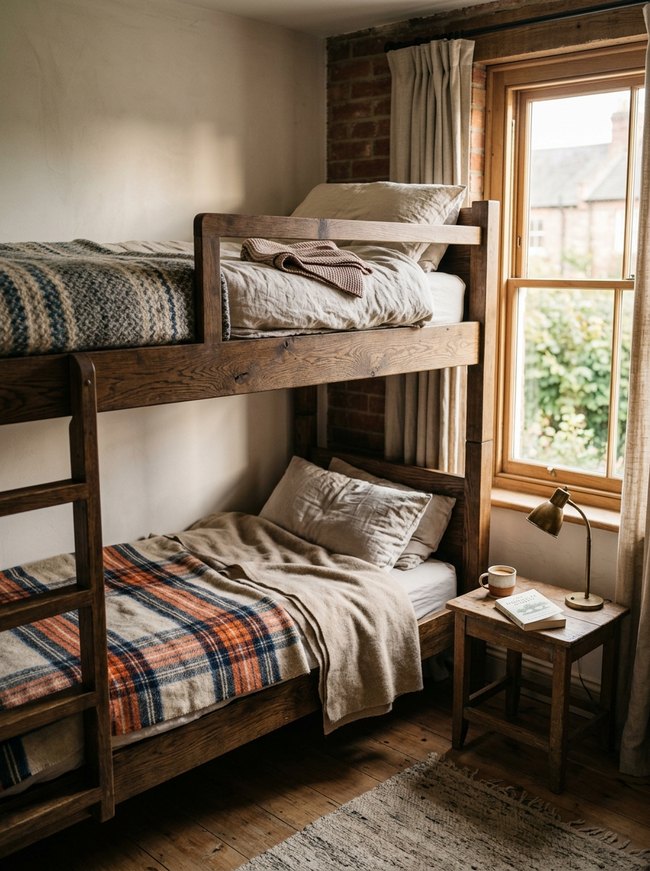
The designer uses a small, textured rug to define the lower bunk’s personal space. The accent rug provides a soft landing for feet without crowding the narrow floor. Natural wood bunk beds and the exposed brick wall add rustic warmth. The valuable move to steal is using a compact rug to delineate small zones.
7. Corner Dining Sisal Square
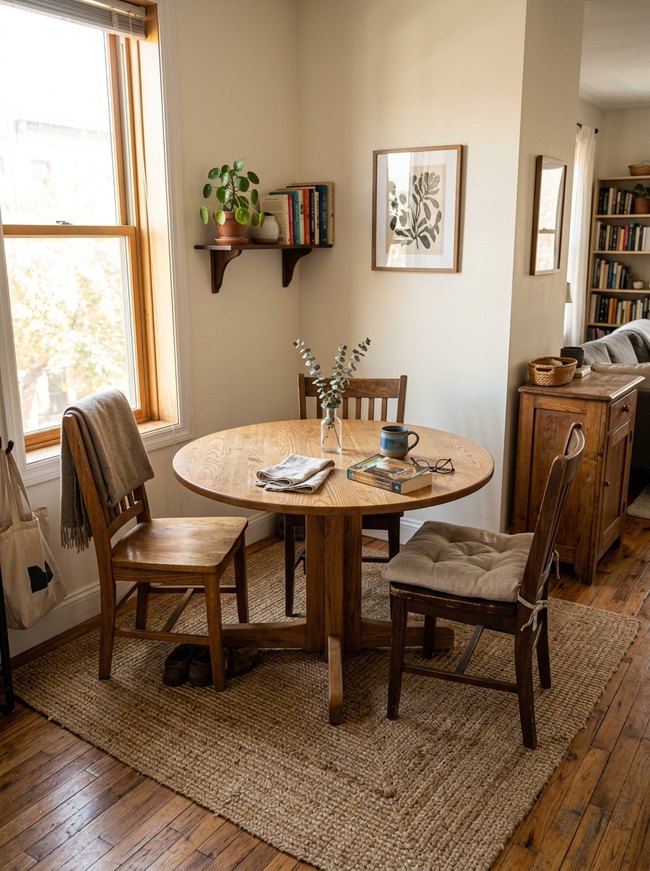
Placing a natural sisal rug directly under the round oak dining table defines the small eating area. The square rug creates a visual room within the open floor plan, keeping the dining chairs fully on its woven surface. Earthy tones from the wooden furniture and beige chair cushions complement the neutral rug. A simple square rug zones the tiny home dining space.
8. Bathroom Pebble Weave Small
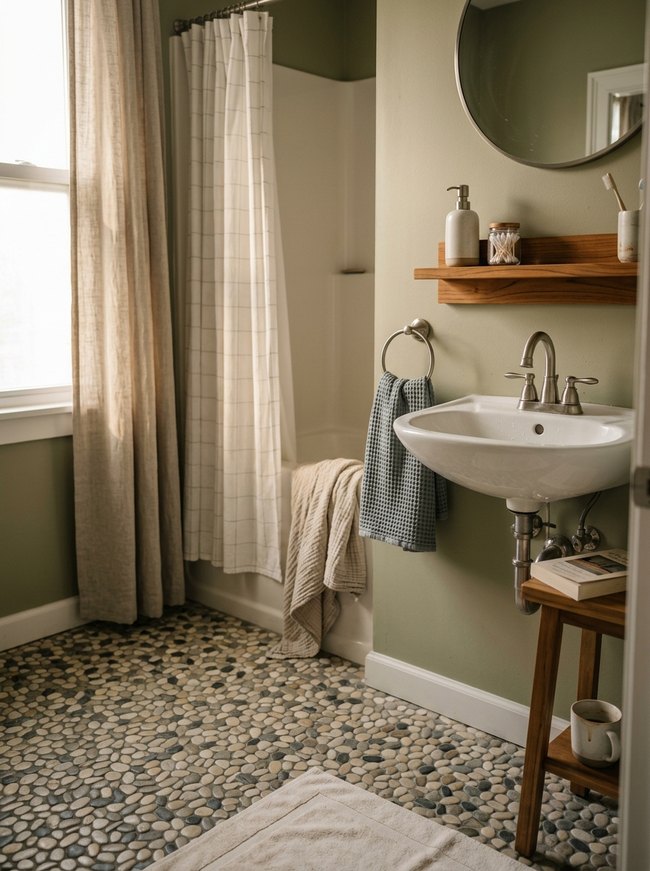
The homeowner chose a pebble tile floor to create texture and visual interest in the bathroom. A small, light-colored bath mat offers a soft landing spot on the uneven stone surface. The wooden floating shelf above the sink provides warm contrast against the pale green wall paint. Natural stone adds depth to the tiny home rug layout.
9. Flex Space Geometric Flatweave
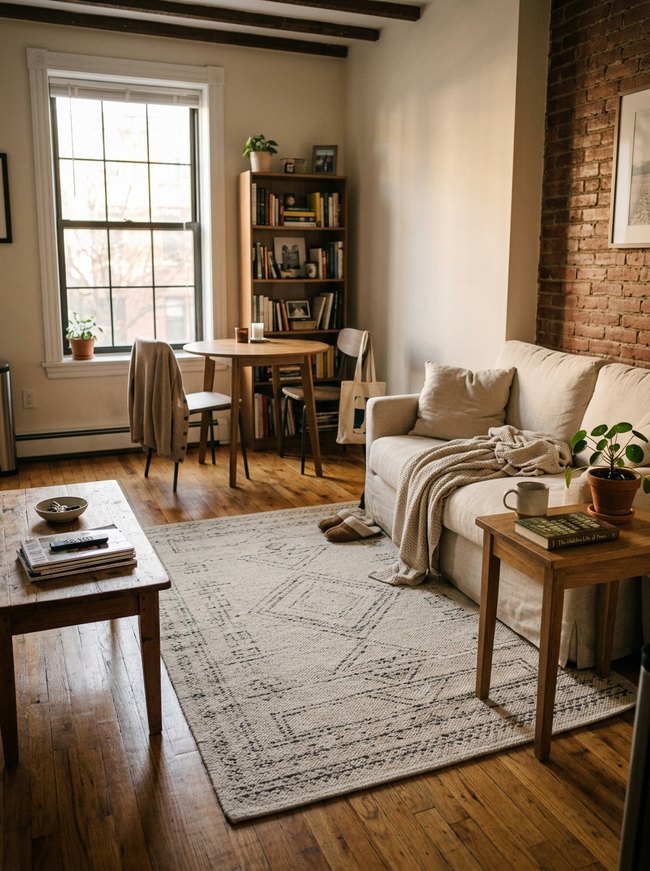
The light-colored flatweave rug defines the main living area, creating a clear zone on the warm oak floor. The neutral tone and subtle geometric pattern keep the small space feeling open and airy. The rug stretches from the weathered wooden coffee table to the oatmeal fabric sofa, visually connecting these furniture pieces. The low-pile rug prevents tripping hazards and allows furniture to move freely.
10. Outdoor Deck Patterned Poly
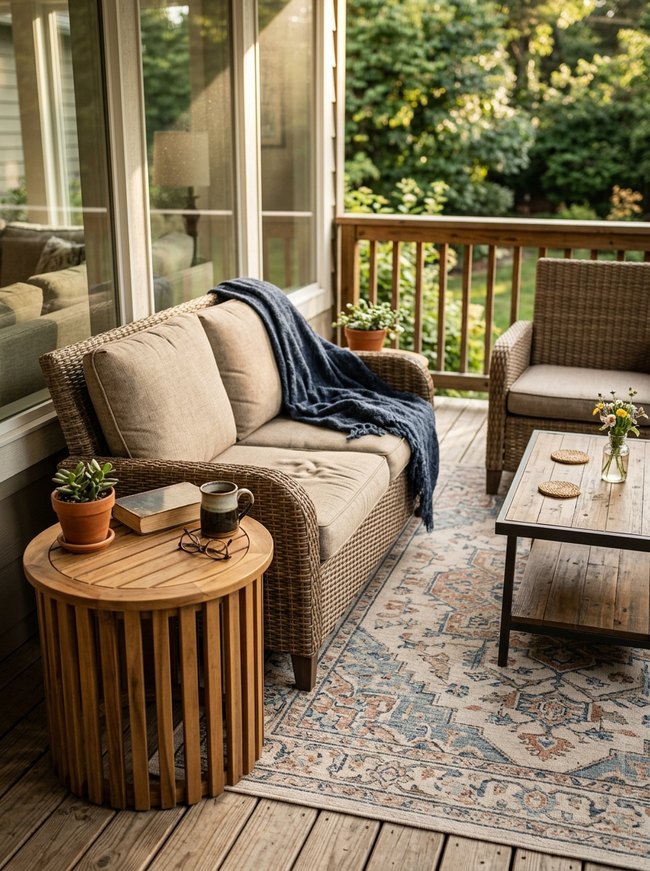
The outdoor deck uses a patterned poly tiny home rug to define the sitting area. A large patterned rug creates visual space, making the small deck feel like an expansive room. Natural wicker furniture and a slatted teak side table support the outdoor feel. An outdoor rug clearly marks distinct zones.
11. Murphy Bed Area Scatter
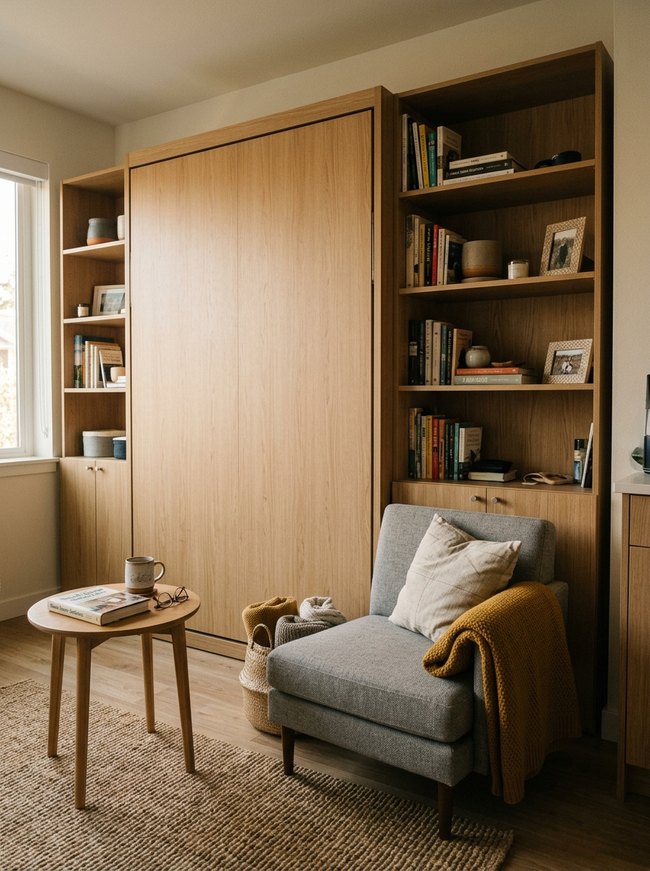
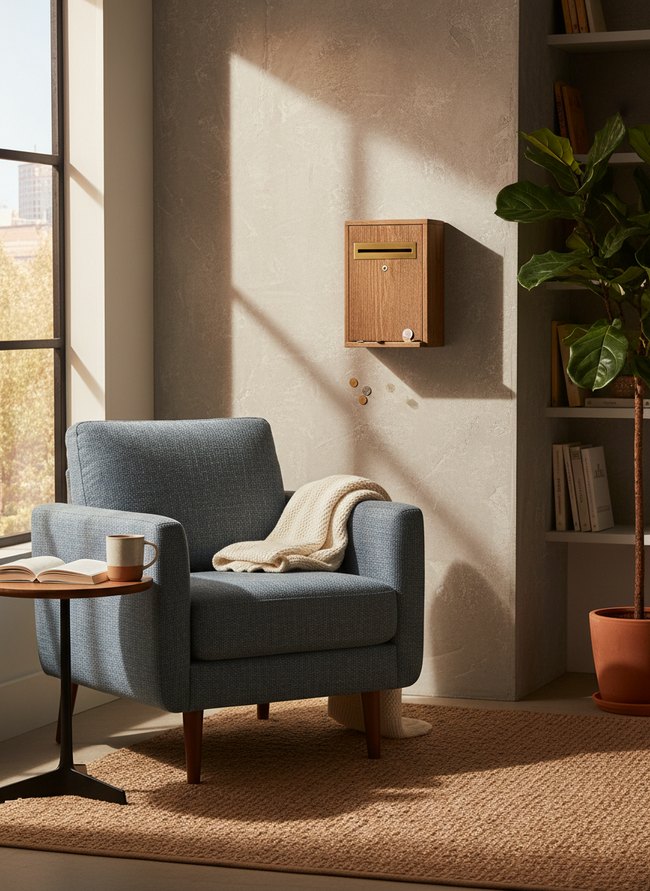
The designer chose a woven jute rug to define the small living space within the room. The natural fiber rug provides texture and warmth, clearly marking the armchair and side table as a distinct zone from the adjacent Murphy bed. Bookshelves filled with colorful spines and framed photographs add personal detail to the light oak cabinetry. A textured rug establishes a reading nook.
12. Ladder Access Stair Tread
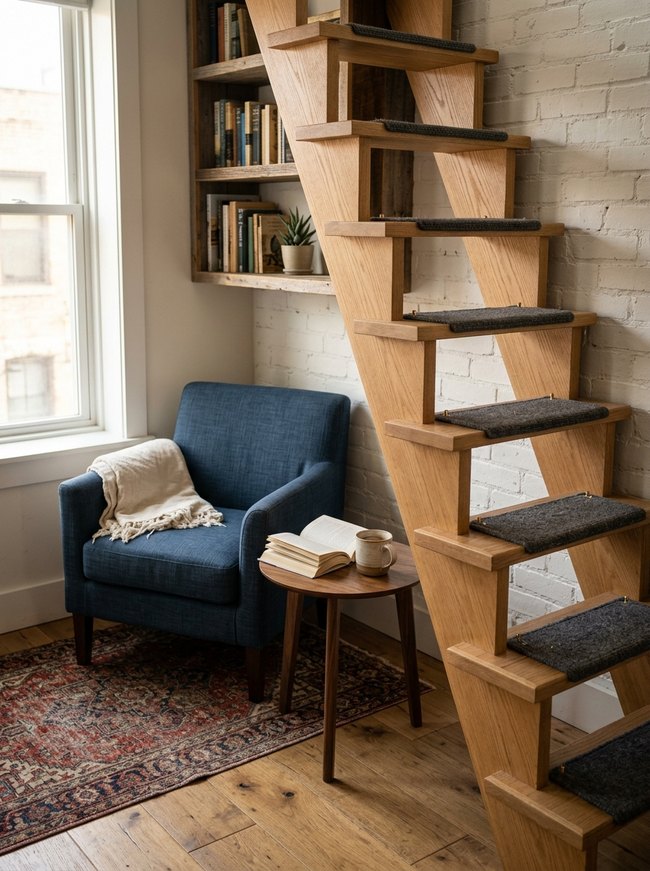
The designer uses small, dark gray felt stair treads to make the ladder access staircase safer and quieter. Individual treads offer grip without covering the light oak wood, preserving the open feel of the tight space. A narrow, patterned rug under the blue armchair adds soft texture and defines a reading nook. Individual stair treads offer a clever alternative to a full runner for tiny home rug needs.
The 1.5-Inch Edge Rule: Quantifying Negative Space and Its Perceptual Impact in Micro-Interiors
Maintain a 1.5-inch border between your rug’s edge and the wall in any small room. This precise dimension creates a “negative space” buffer, visually expanding your tiny home’s footprint. Imagine a 50-square-foot living area; a sisal rug with a tight 1.5-inch perimeter makes the room appear wider than a rug butting against the baseboard. That narrow, consistent gap fools the eye into perceiving extra floor area.
Conversely, a rug placed too far from the wall, perhaps with a 6-inch gap, fragments the floor plane. This larger void makes the small space feel broken and smaller, like scattered pieces rather than a unified whole. Your brain registers the floor as less continuous, reducing the perceived room size. A tight 1.5-inch border keeps the visual flow unbroken. This subtle separation also allows a sliver of your original flooring, perhaps warm oak planks or cool concrete, to frame the rug. That framed edge adds a layer of depth, a small but significant detail for micro-interiors. This specific sizing rule consistently delivers a visually expansive effect within compact living quarters.
Pile Density and Acoustical Damping in Confined Living Zones: Optimizing Material Choice for Sound Attenuation
Thick rug piles dampen sound in small rooms. A dense, hand-knotted wool rug, for instance, absorbs more echo than a flat, woven cotton mat. Hard surfaces like polished concrete floors or painted plywood walls bounce sound waves around a small tiny home interior. This creates a noisy, clattering atmosphere.
Thin rugs offer little acoustical damping. Many tiny house owners mistakenly choose a low-pile jute rug for its natural texture. Jute rugs, however, provide minimal sound absorption. You hear every footstep, every dropped spoon, every conversation clearly. A deep, shaggy sheepskin rug, in contrast, traps sound waves within its long fibers. The soft material soaks up unwanted noise.
Consider a tiny house with a vaulted ceiling. Sound reverberates strongly in this tall, open space. A dense, charcoal-grey shag rug placed under the main seating area instantly softens harsh echoes. This specific rug placement creates a calmer, quieter living zone. You experience a more peaceful environment. Thin rugs simply cannot offer this kind of sound attenuation in a small, hard-surfaced room.
Which Idea Will You Try First?
That’s 12 different takes on tiny home rug. The best ideas above are usually the smallest moves — one material, one layout shift, one piece of furniture in the right place. Pick whichever room feels closest to your space and start there before tackling the rest.
Found an idea worth keeping? Save this post to your Pinterest board so it’s waiting for you when you’re ready to start your own project.