How to Add a Home Office to Any Tiny Home Layout
The biggest challenge for a tiny home office is not fitting a desk; the real puzzle involves making the workspace disappear. Most guides focus on clever storage, yet a visible laptop or a stray paper stack spoils the cozy atmosphere of a small living area. A small, dedicated nook desk often feels like clutter if you cannot truly hide the desk when your workday ends. You need solutions that conceal your entire operation. Each suggestion below explores how fold-down options, strategic task lighting, and clever concealment techniques integrate a functional workspace without sacrificing your home’s character. The strategies transform overlooked corners into productive zones, then vanish completely for evening relaxation.
1. Integrated Wall Nook Desk
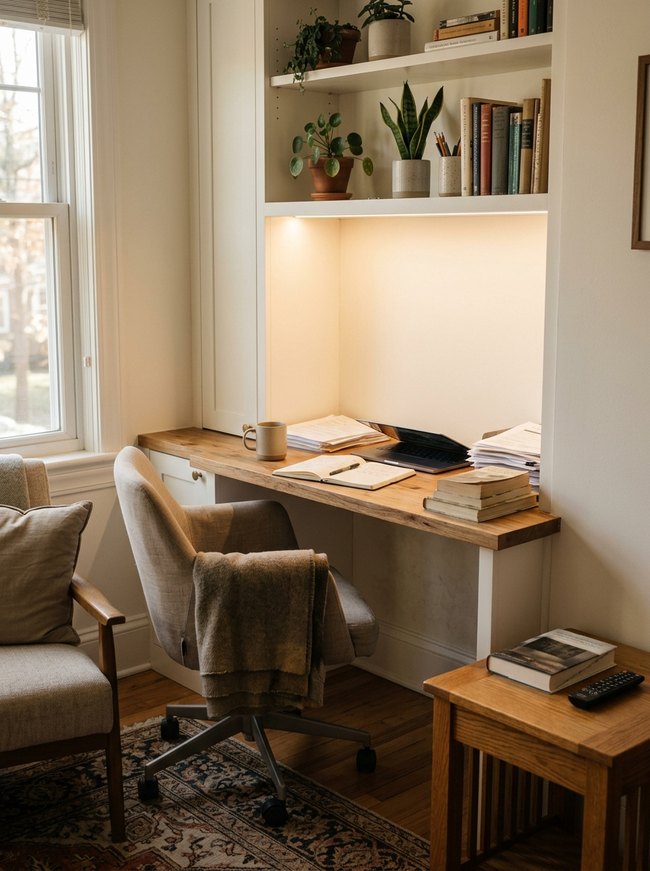
Custom built-in cabinetry creates a dedicated nook desk, making a tiny home office feel fully integrated. Warm under-shelf lighting illuminates the natural wood desktop, preventing shadows for focused work. Bookshelves above offer storage for books and small green plants, adding life to the compact space. The custom-fit desk design is easy to replicate.
2. Foldaway Murphy Style Workspace
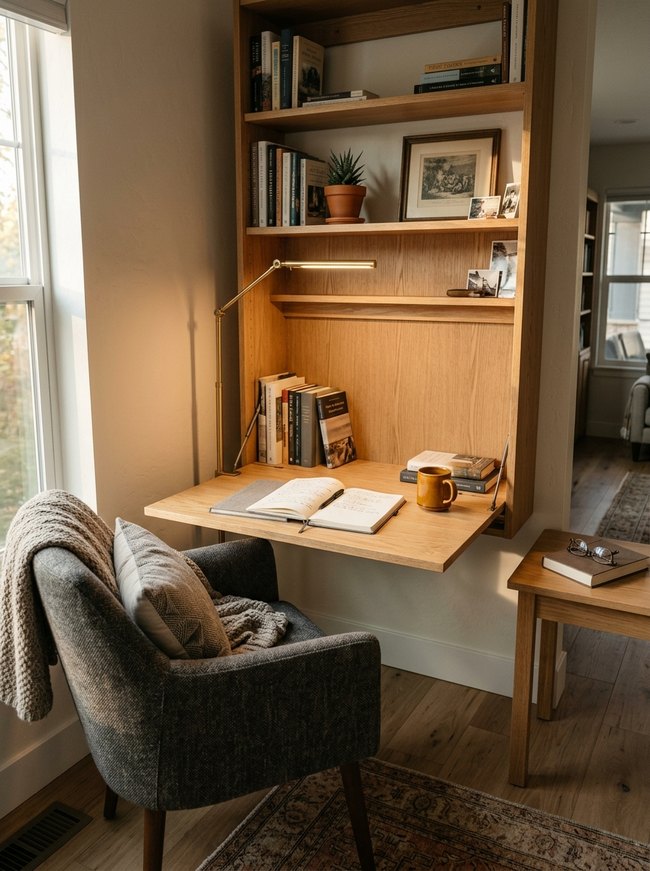
The designer built a fold-down solid oak desk into a tall bookshelf. The clever design disappears when closed, freeing up floor space for a cozy reading nook or other activities. A warm brass desk lamp and a dark gray tweed armchair complete the small workspace. Readers can steal the fold-down desk idea.
3. Compact Corner Alcove Setup
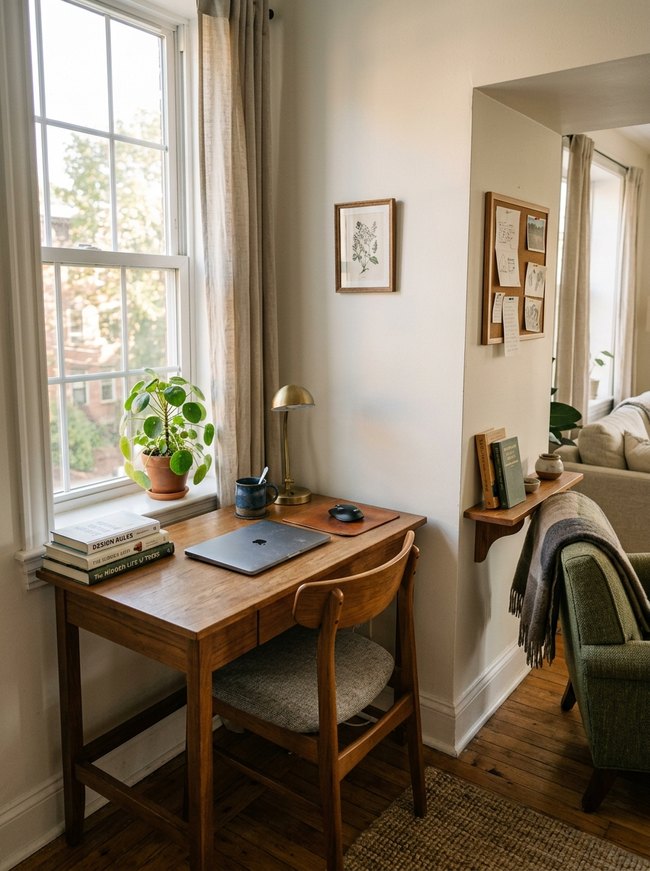
Placing a narrow wooden desk directly beneath a bright window maximizes natural light for your tiny home office. The clever positioning uses a typically unused wall space, creating a dedicated workspace without blocking the room’s main flow. A small wooden floating shelf and a cork board on the adjacent wall provide extra storage and display space. The desk setup uses a window nook for a compact workspace.
4. Floating Shelf Laptop Station
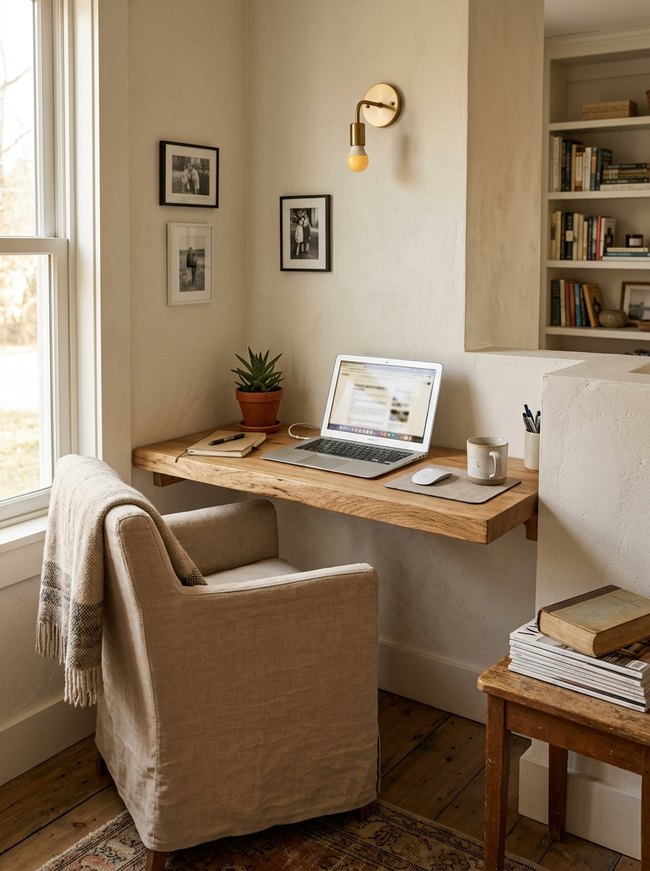
A floating live-edge oak desk creates a compact workspace without bulky legs. The desk design saves floor space, making the small nook feel larger and open. A brass wall sconce and small framed black-and-white photos add personality to the creamy wall. Consider the floating desk idea.
5. Hidden Closet Office Reveal
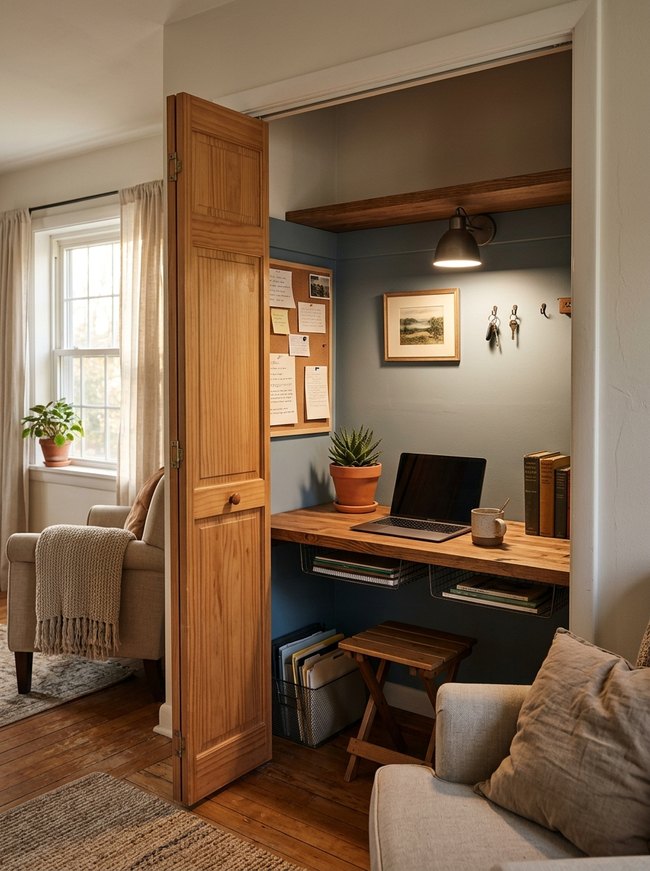
Bifold pine doors create a hidden closet office within a small living space. The doors completely conceal the work area, allowing the room to feel like a relaxing home when the workspace is not needed. A warm wooden floating desk provides a solid surface for a laptop and a terra cotta potted succulent. Installing a tiny home office inside a closet is a clever space-saving strategy.
6. Under Stairwell Study Nook
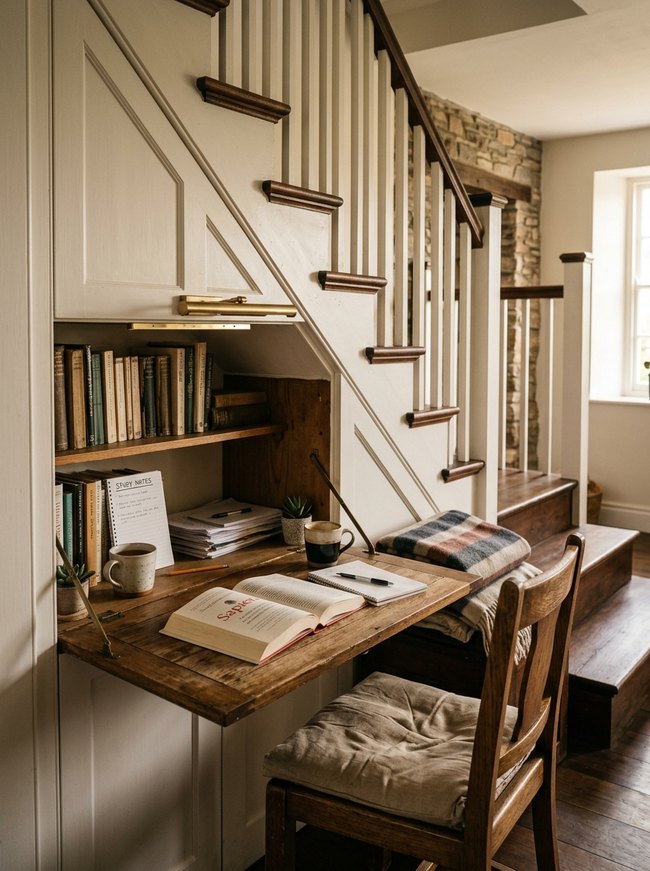
The custom fold-down desk maximizes the small under-stairwell area, creating a functional workspace that disappears when not in use. The clever design integrates a golden picture light and two built-in wooden shelves for books, offering both illumination and storage within the tiny home office. The fold-down desk offers flexible space.
7. Convertible Dining Desk Hybrid
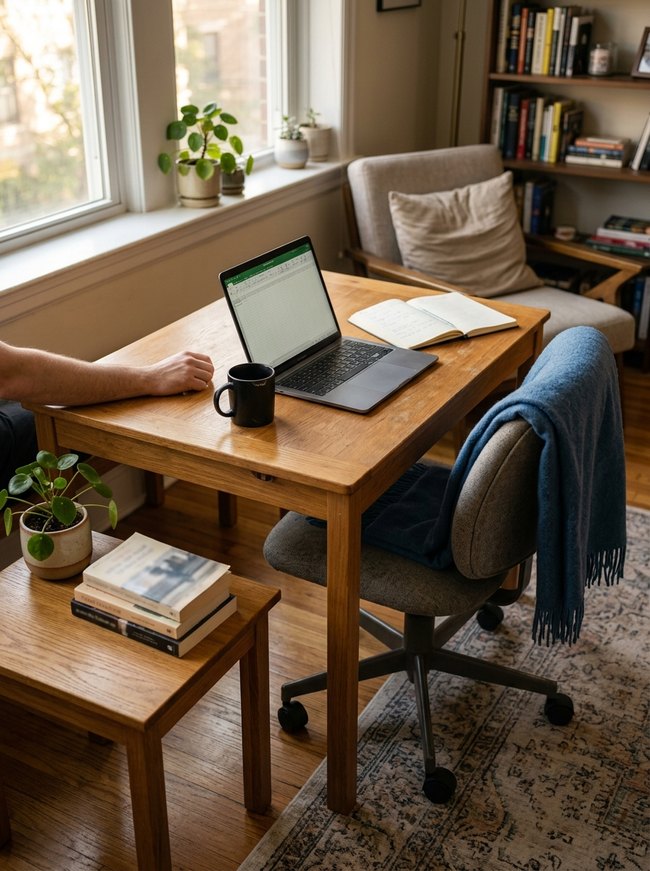
A honey-toned wood dining table as a desk creates a flexible, multi-purpose area. The table’s simple form easily transitions from work to meals without visual clutter, crucial for a tiny home office. A rolling desk chair and small side table with stacked books offer additional utility in this compact space. Designers choose furniture that serves dual functions without needing constant rearrangement.
8. Pull Out Drawer Worksurface
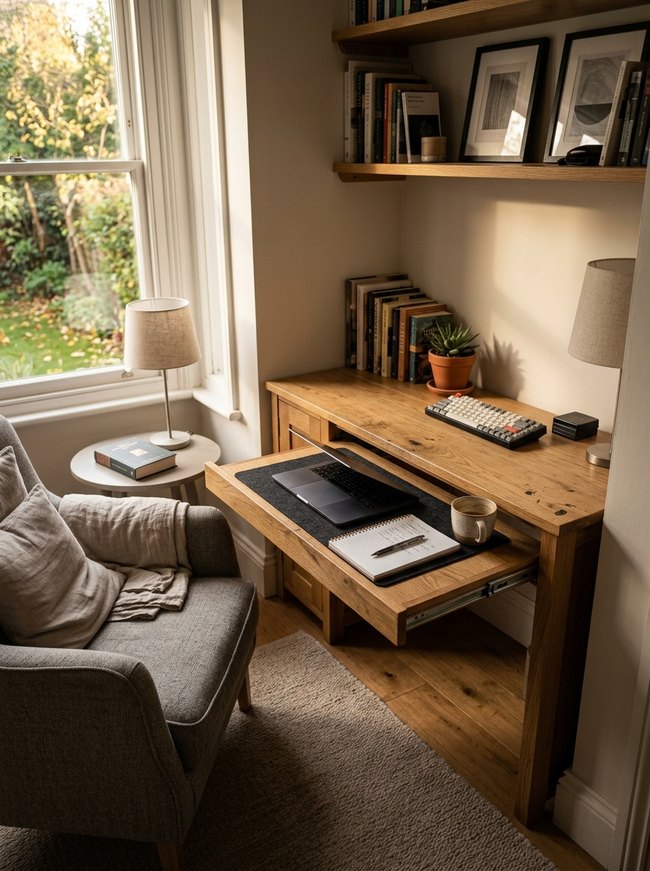
The pull-out drawer worksurface creates a flexible, hidden desk space within a compact footprint. The clever design allows a homeowner to expand their working area only when needed, keeping the main oak desk clear for other uses. Floating wooden shelves above the main worksurface offer extra storage for books and framed art. Steal the pull-out worksurface idea.
9. Window Seat Office Perch
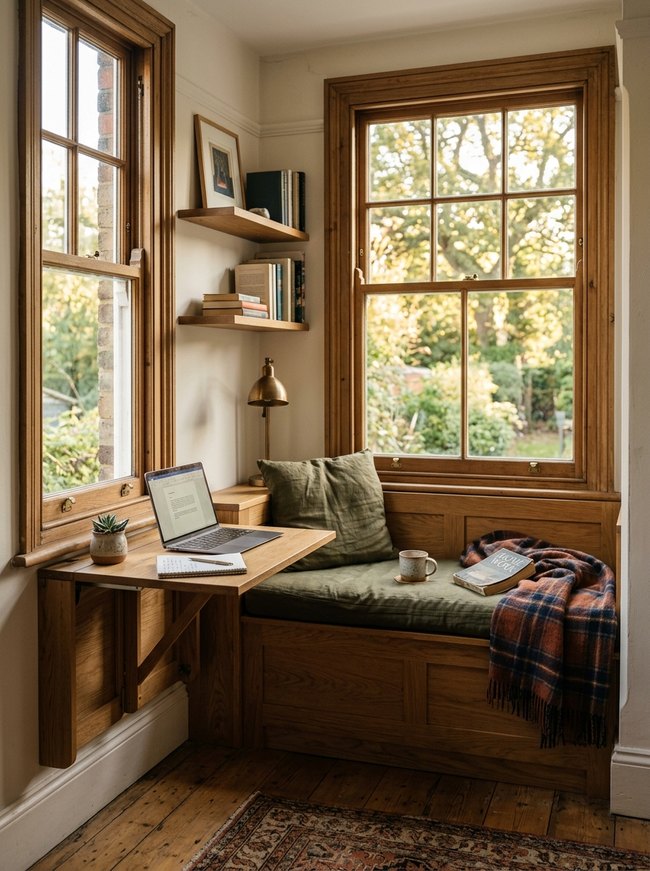
The window bench with its attached folding desk creates a versatile tiny home office. The design works by using vertical space and multi-functional furniture, allowing the warm oak desk to disappear when not in use. Corner shelves above the bench offer storage for books and a small brass lamp. Steal the idea of a fold-down desk attached directly to built-in seating.
10. Loft Level Writing Retreat
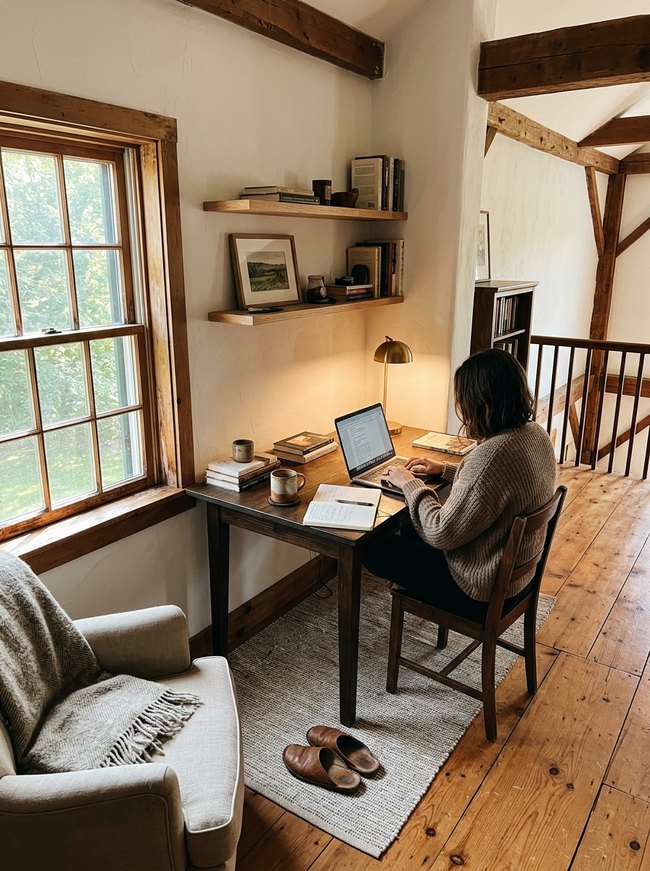
The small dark wood desk fits neatly into a corner, creating a dedicated workspace. The strategic placement uses an often-overlooked area, providing a sense of enclosure and focus for a tiny home office. Natural light streams through the large window, offering a bright environment, while two floating wood shelves hold books and small decorative items. Steal the corner desk placement.
11. Mobile Cart Office Solution
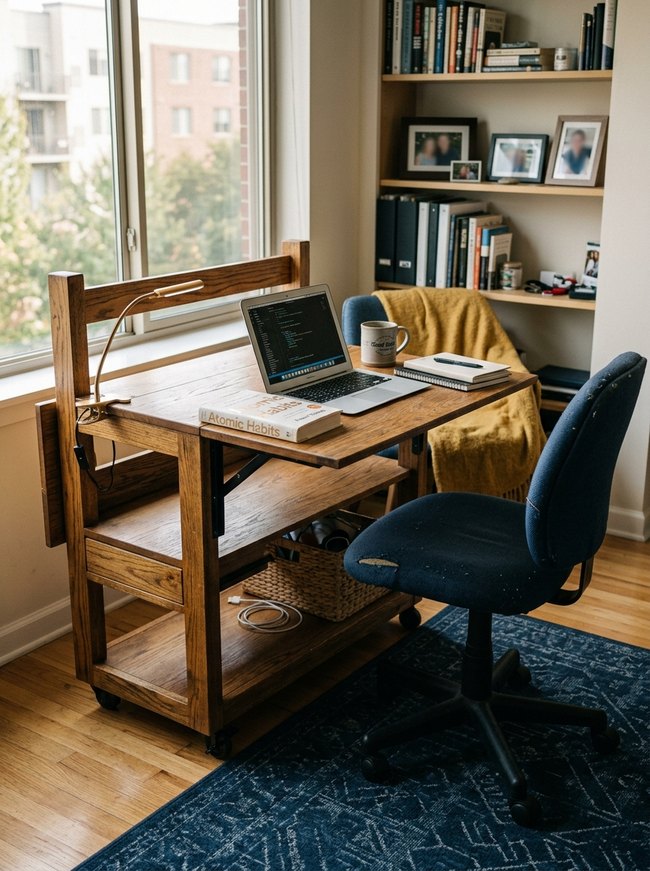
A rolling oak cart creates a flexible tiny home office space, moving easily when extra floor room is needed. The cart’s drop-leaf desktop expands the workspace, offering more surface for a laptop and notebook. Built-in shelves below store books and a woven basket, keeping supplies tidy; a convertible rolling desk is a clever idea.
12. Vertical Wall Desk Unit
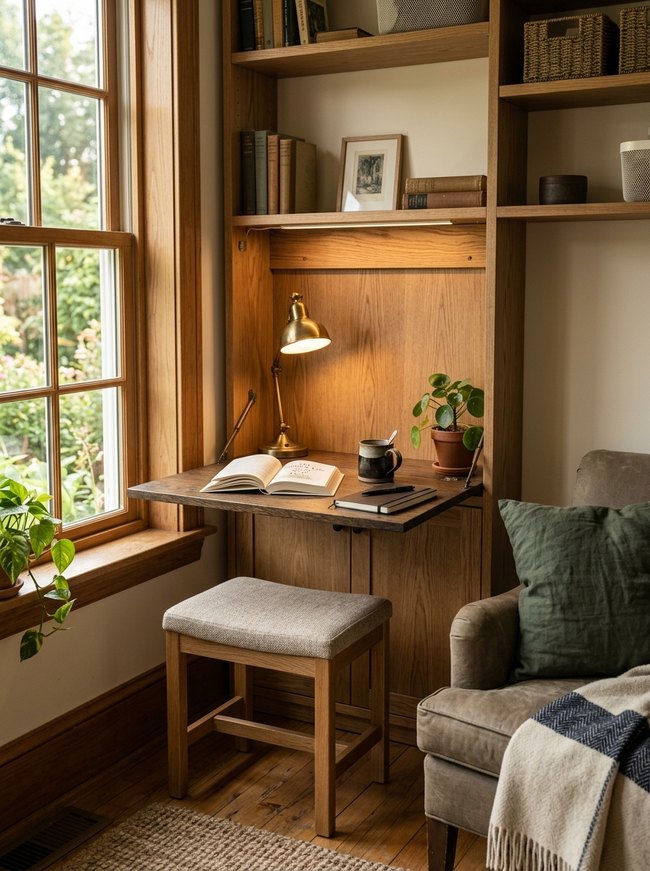
The designer used a fold-down wood desk to create a compact workspace. The specific desk design allows the small work surface to disappear completely when not needed, freeing up floor space in a tiny home office. An antique brass lamp and small potted plant add warm, inviting details to the compact setup. The fold-down desk is the most effective move to steal here.
The Ergonomic Imperative of Integrated Lighting in Micro-Workspaces
Integrated lighting defines a micro-workspace’s comfort. Desk-mounted lamps, with their bulky bases and sprawling arms, swallow valuable surface area. Instead, you want illumination that folds away or disappears completely, freeing up every square inch of your small **nook desk**. Overhead task lighting, perhaps a slender LED strip tucked beneath a wall-mounted shelf, casts an even glow without claiming desk real estate. A recessed puck light, flush with the underside of a fold-down desktop, activates with a simple touch, providing focused brightness for your work. Poorly placed light sources create harsh shadows or glare on your screen, straining your eyes during long hours of concentration. Consider a slim, adjustable light bar that clips directly onto your monitor’s top edge, aiming soft light downward. Your tiny home office setup demands clever solutions that merge function with minimal intrusion. Warm-toned light, around 2700 Kelvin, reduces eye fatigue more effectively than stark white light. A swivel-mounted light fixture, attached to a wall stud near your workspace, pivots to illuminate your keyboard or reading material as needed. This kind of careful planning elevates a cramped corner into a highly productive zone.
Deconstructing the Biomechanics of Fold-Down Desk Hardware for Sustained Use
Daily use demands industrial-grade hardware for fold-down desks. Many tiny house owners choose lighter, cheaper hinges, unaware of the stress frequent opening and closing places on the mechanism. A small, brushed brass piano hinge might look sleek, but its slender pins will warp under the constant pressure of a laptop and daily paperwork. Instead, consider heavy-duty stainless steel butt hinges, each screw hole capable of handling significant shear force. Your workspace needs robust support, not flimsy connections.
Gas struts offer smooth, controlled movement, preventing the desk surface from slamming down or springing up unexpectedly. A single 40-pound gas strut mounted beneath a 30-inch wide oak nook desk provides ample counter-balance, protecting both your fingers and the wall mounting points. Cheap friction hinges, conversely, wear out quickly, creating a wobbly surface that makes precise work difficult. A secure desk surface improves concentration during long work sessions. Investing in commercial-grade hardware prevents future repairs and maintains the desk’s stable functionality. The solid construction of your fold-down desk ensures years of dependable service.
Which Idea Will You Try First?
That’s 12 different takes on tiny home office. The best ideas above are usually the smallest moves — one material, one layout shift, one piece of furniture in the right place. Pick whichever room feels closest to your space and start there before tackling the rest.
Found an idea worth keeping? Save this post to your Pinterest board so it’s waiting for you when you’re ready to start your own project.