The Modular ADU Boom (2026 Edition)
Neighborhoods everywhere are changing. Many homeowners once looked at their backyard like an empty canvas for a new deck or a small garden shed. Now, plenty of folks see that same patch of green grass as prime real estate for a separate living space. Your cousin probably talked about building a small apartment over their garage last Thanksgiving. Today, a detached granny flat or a backyard office means extra income or a quiet spot for older parents. The modular ADU boom of 2026 brings quick, efficient construction right to your property line. Pre-built units arrive on a flatbed truck, ready to set down on a concrete slab. Smart homeowners want these small structures for a good reason. The units offer big returns.
1. Rapid Urban Core Module
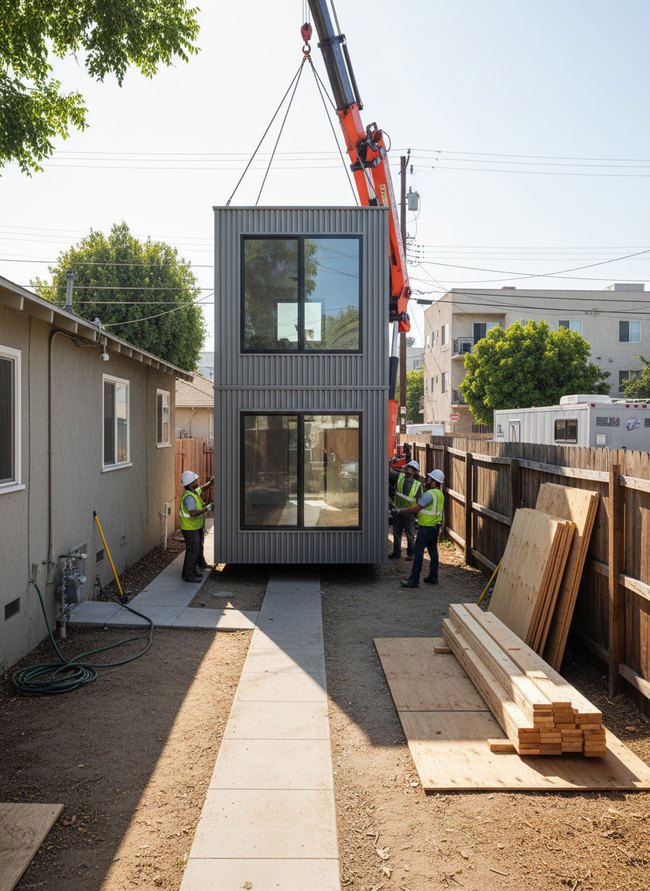
A tall gray modular unit with black framed windows hangs suspended by a red crane arm. The two-story structure shows how quickly a new living space can appear in a backyard. Property owners should consider local zoning laws before ordering a two-story unit.
2. Streamlined Backyard Expansion
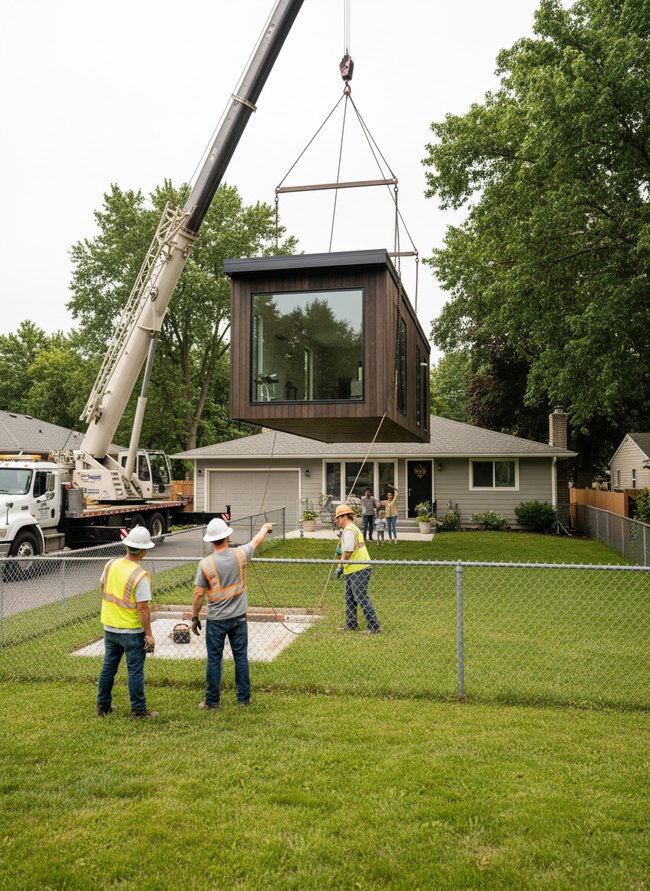
A large mobile crane lifts a dark brown rectangular module over a suburban backyard. The streamlined exterior features dark wood siding with a wide black-framed window. A simple, modern structure can quickly add valuable living space to your existing home. Always check local building codes before placing any new backyard structure.
3. Compact Prefab Guest Suite
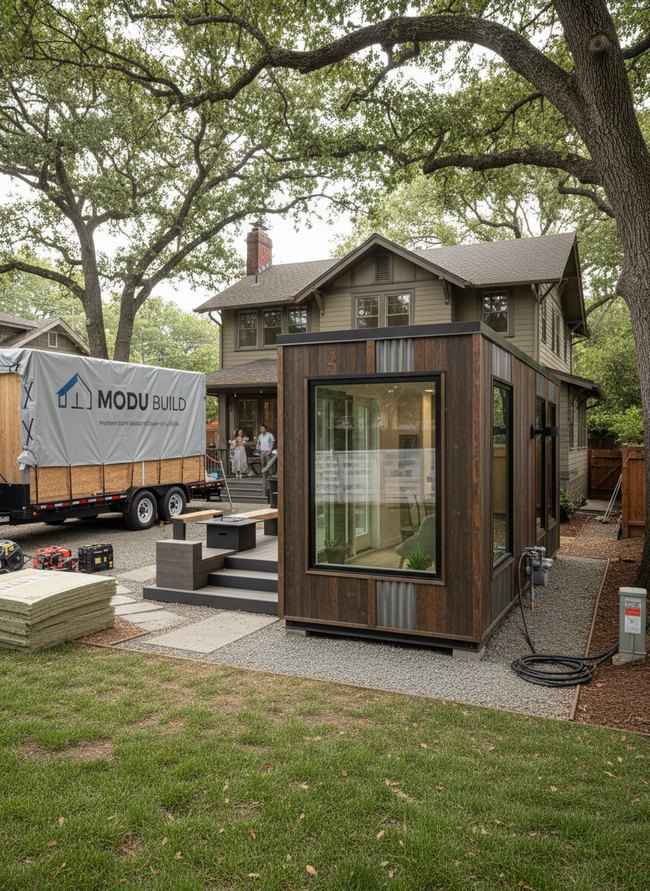
The wood-sided structure has large, black-framed windows, allowing natural light inside. Homeowners can add a compact guest suite to their property for extra living space. A simple foundation of concrete blocks and gravel can support the new building.
4. Sustainable Micro Dwelling Unit
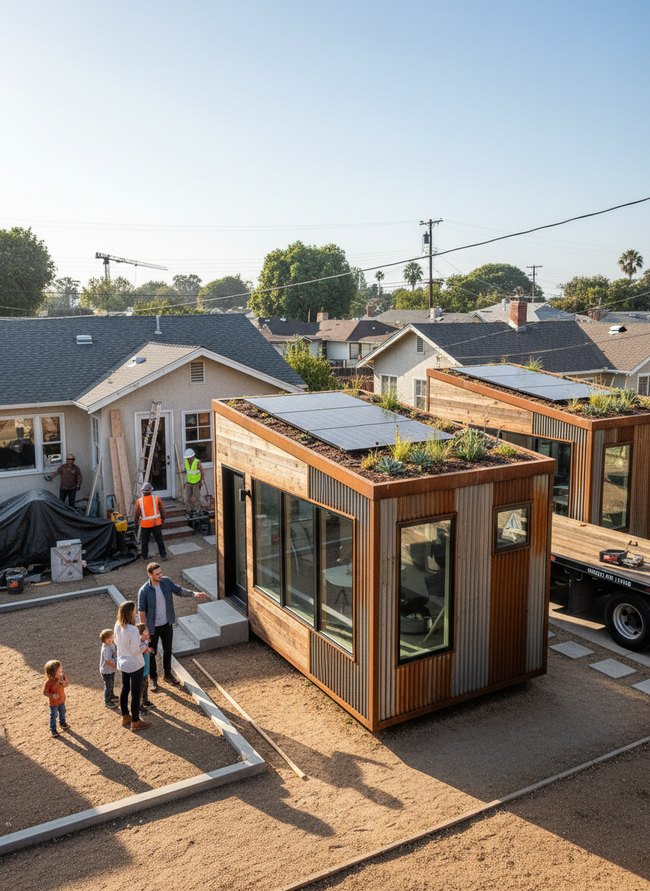
The small structure’s roof features dark solar panels and green plants. A backyard could hold a similar micro dwelling unit, offering extra space. Adding a sustainable unit might increase property value.
5. Modern Off-Grid Annex
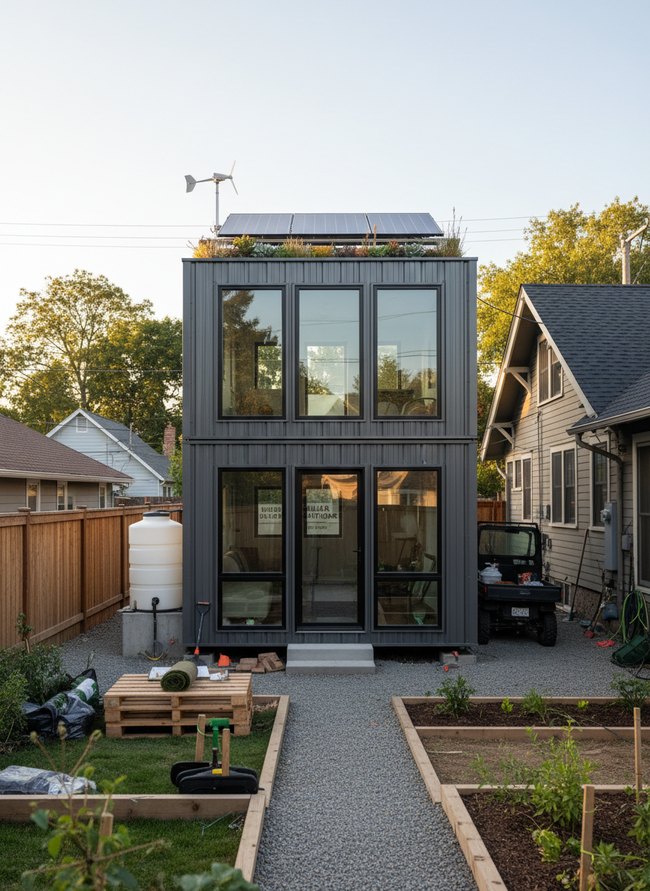
A gray modular ADU stands two stories tall with many large glass windows. Solar panels and a small wind turbine on the flat roof provide off-grid power for the entire structure. A rainwater collection system, like the white plastic tank shown, offers greater independence.
6. Elevated Loft ADU Design
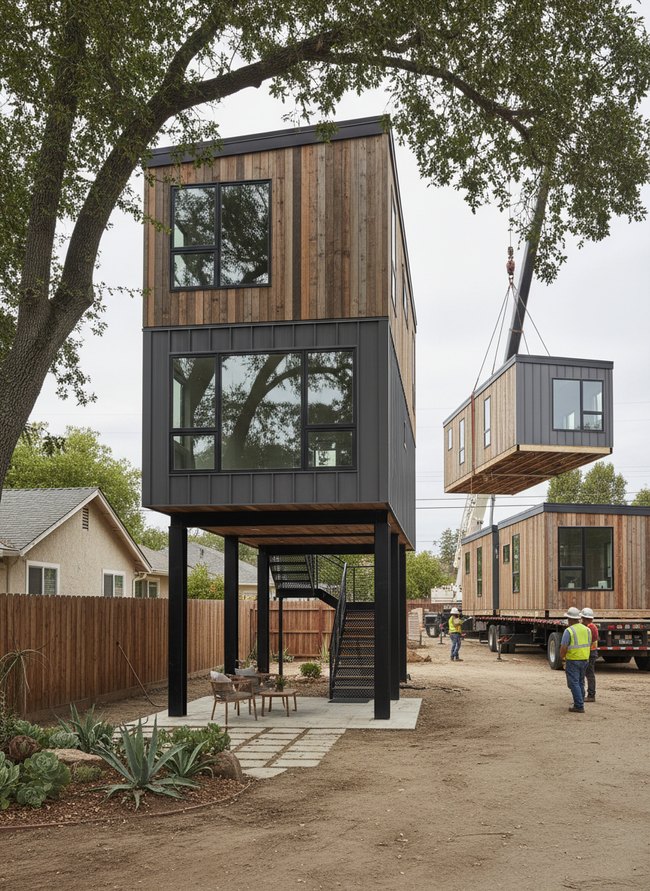
A tall modular structure, clad in dark gray metal and natural wood, rises on stout black columns. Workers assemble another gray wood module in the background, showing the speed of construction. The elevated design provides valuable ground-level outdoor space.
7. Transitional Family Pod
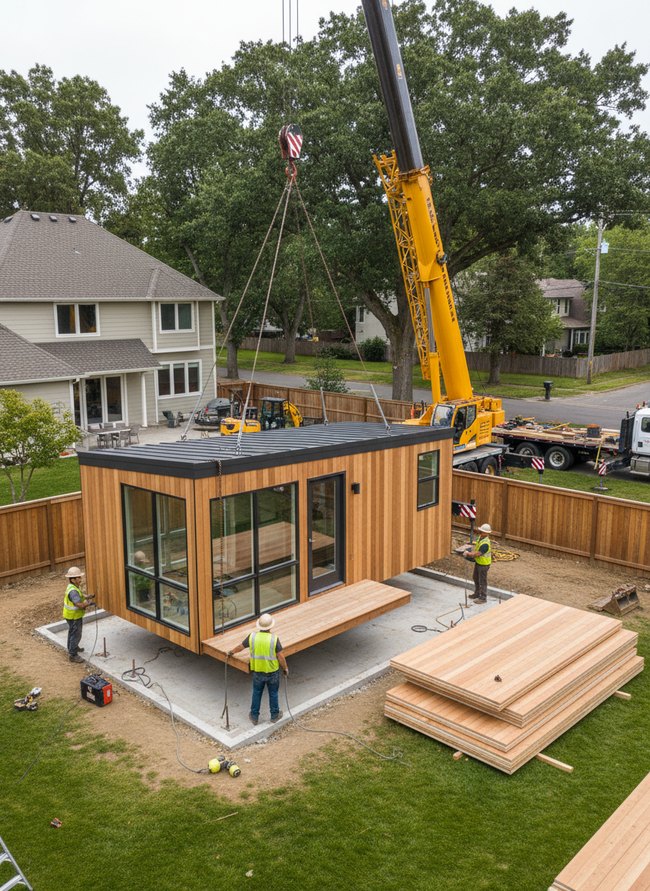
A large yellow crane lowers a cedar-sided building onto a concrete slab. The quick installation method allows property owners to add extra space with minimal fuss. Module placement should be considered carefully for optimal light and privacy.
8. Smart Home Starter Module
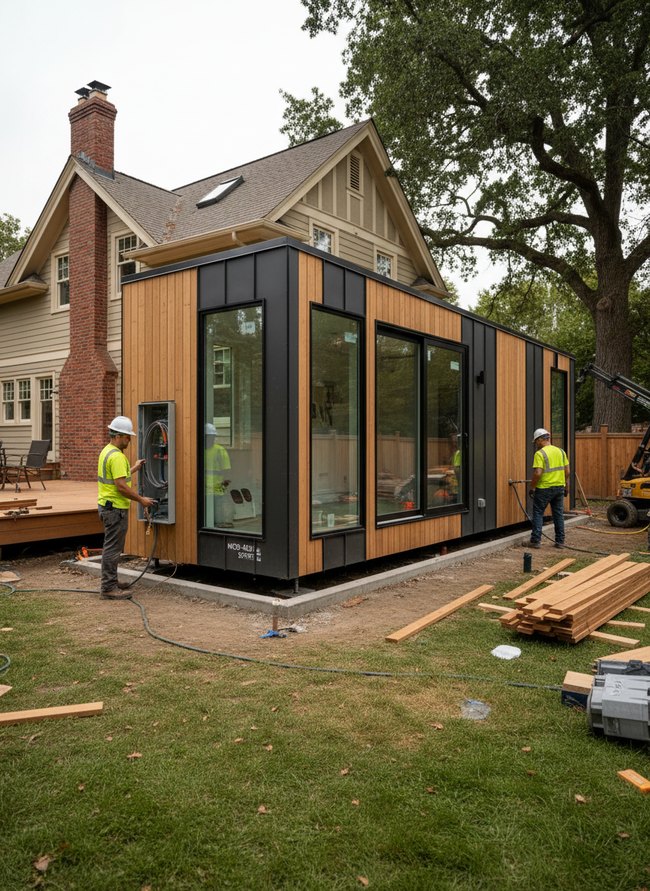
The small modular ADU structure features natural wood siding and dark metal panels, offering a clean, modern look next to an older, tan-colored house. Large glass windows bring in plenty of light, making small spaces feel much bigger. Consider how the ADU’s exterior materials blend with your main home’s existing finishes.
9. Flexible Work-Live Studio
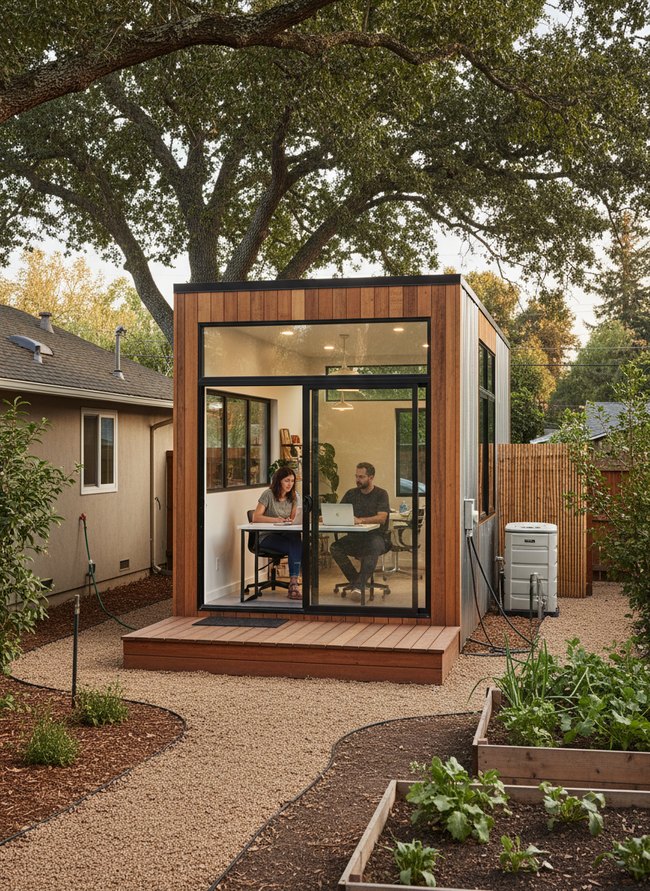
The small, wood-sided building stands on a low wooden deck in a backyard. A black-framed glass door slides open, inviting you into the bright white interior workspace. A simple prefab structure can give you a dedicated spot for work or creative projects.
10. Modular Garden Retreat
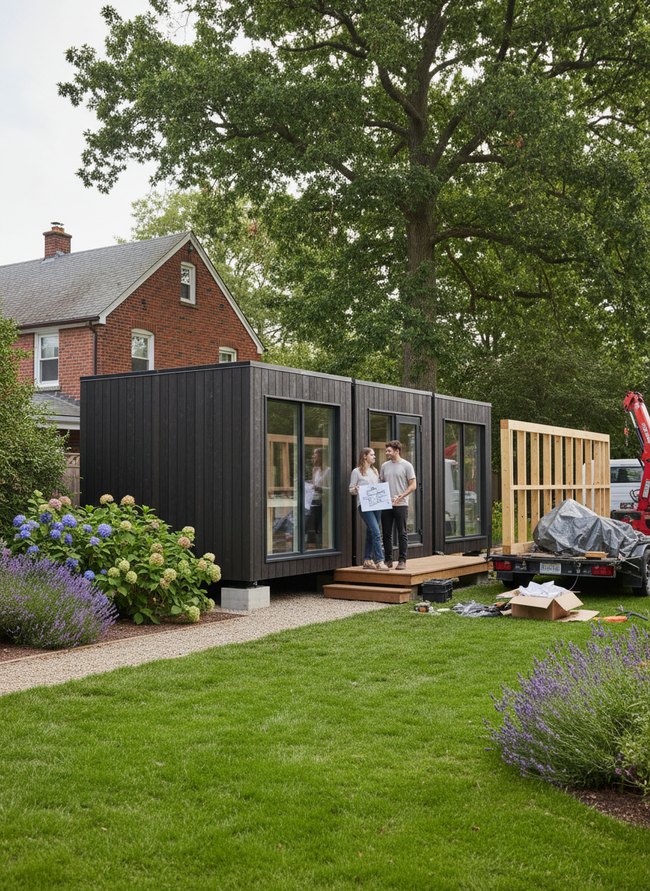
Dark vertical wood siding on the modular structure creates a strong, modern backyard presence. Wooden steps lead to a small platform deck, making a welcoming entry. A simple, dark-colored exterior helps the garden retreat blend into natural green surroundings.
11. Quick-Deploy Rental Unit
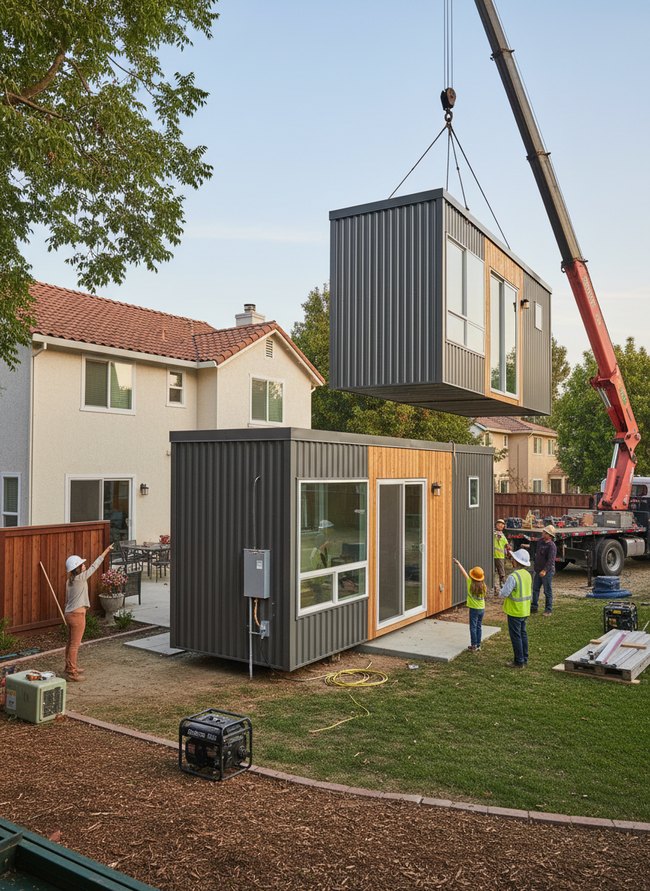
A gray corrugated metal module hangs in the air, lowered by a large red crane. Quick assembly means the rental unit can be ready for tenants in days, not months. Property owners should plan for easy crane access to place the new structure.
12. Eco-Friendly Urban Infill
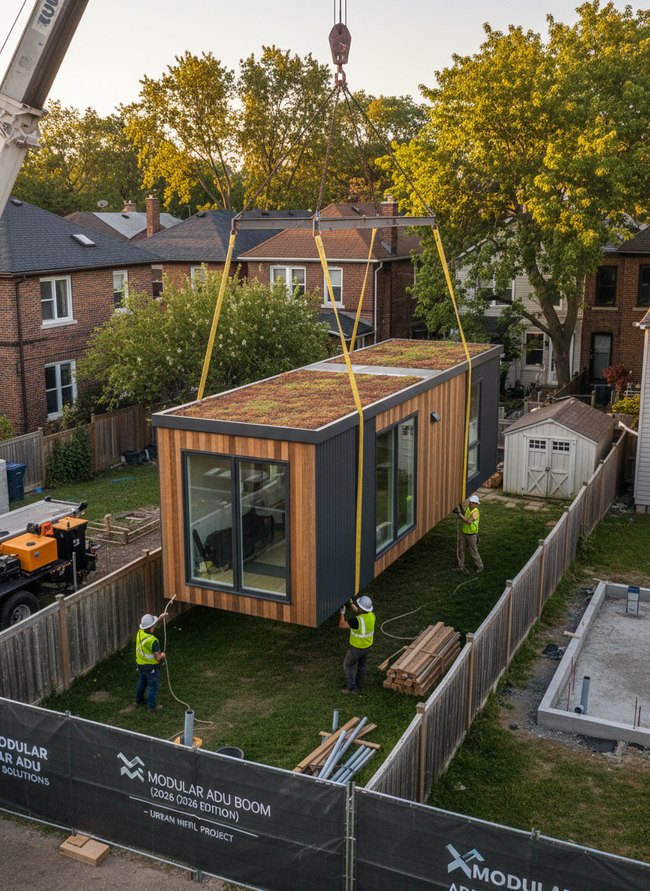
A green roof on the rectangular module offers a unique, living element to urban spaces. The modern construction with natural elements creates a cozy home even in small city backyards. Consider adding a green roof to your own accessory dwelling unit for better insulation and a touch of nature.
Beyond the Brochure: What Modular ADUs *Actually* Look Like on Your Property
Vinyl siding in a light cream hue probably feels like a safe choice for your new modular ADU. Most people pick a plain facade, hoping it will disappear into the background. Charcoal roof shingles on the compact structure often match the main house. However, this blending strategy rarely works; a new, boxy structure simply stands out.
Oak decking on a small attached porch can make a huge difference. Homeowners often neglect the transition between the two buildings. Instead, use a connecting path of dark gray flagstone. This creates a visual bridge, not a stark divide. Paint the ADU a deep forest green. This rich color helps the smaller building recede into garden foliage. Install two tall cedar planters with bright red geraniums. These vibrant plants draw the eye to the landscape, away from hard lines.
Permit Predicaments & Property Lines: Navigating the Red Tape Without Losing Your Mind (or Your Deposit)
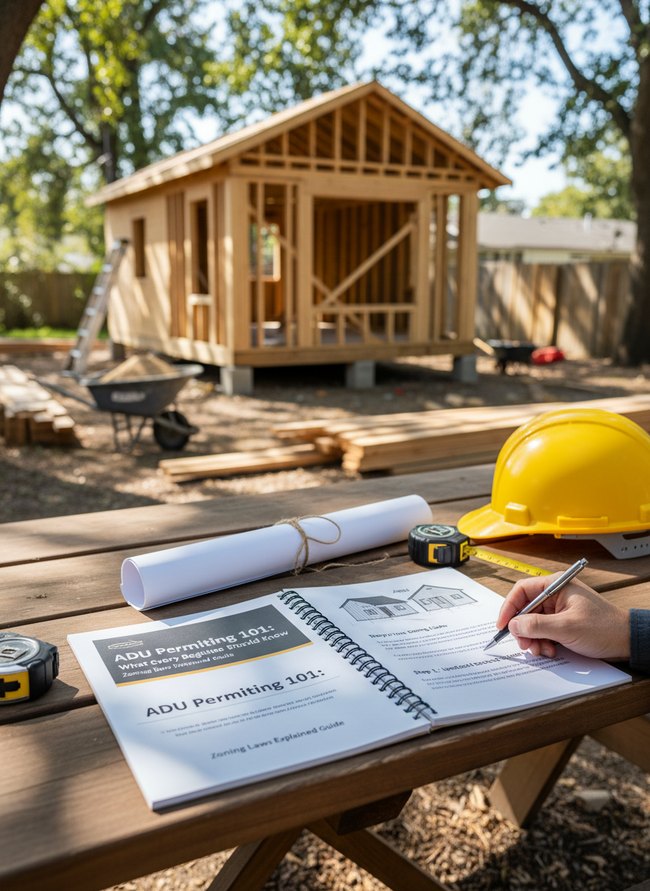
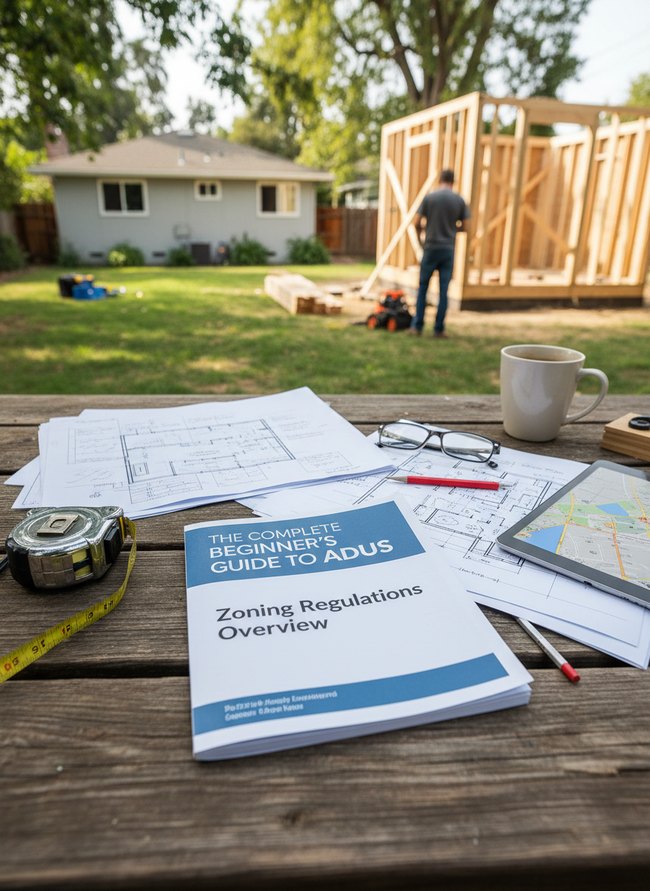
Most homeowners assume a modular ADU is just a large shed. Few people actually check the fine print before placing a deposit on a steel-framed unit. Local zoning laws often define a “dwelling unit” differently. Your county planning department website holds the key. Many folks try to understand complex building codes alone. That approach quickly leads to frustration. Instead, schedule a preliminary review with a city planner. These officials offer free guidance on your property’s specific restrictions.
A common mistake involves setback requirements. Property owners often measure from their main house. You must measure from the property line itself. Every jurisdiction has distinct rules for accessory dwelling units. Some areas require a ten-foot rear setback; others demand twenty feet. Ignoring a single orange cone can halt construction. Furthermore, many people skip a land survey. A certified land surveyor will pinpoint exact boundary lines. This precise measurement prevents costly future disputes. Do not rely on old paper deeds; they are often inaccurate. Obtain a new boundary survey before breaking ground.
Which Idea Will You Try First?
That’s 12 different takes on modular adu boom. The best ideas above are usually the smallest moves — one material, one layout shift, one piece of furniture in the right place. Pick whichever room feels closest to your space and start there before tackling the rest.
Found an idea worth keeping? Save this post to your Pinterest board so it’s waiting for you when you’re ready to start your own project.