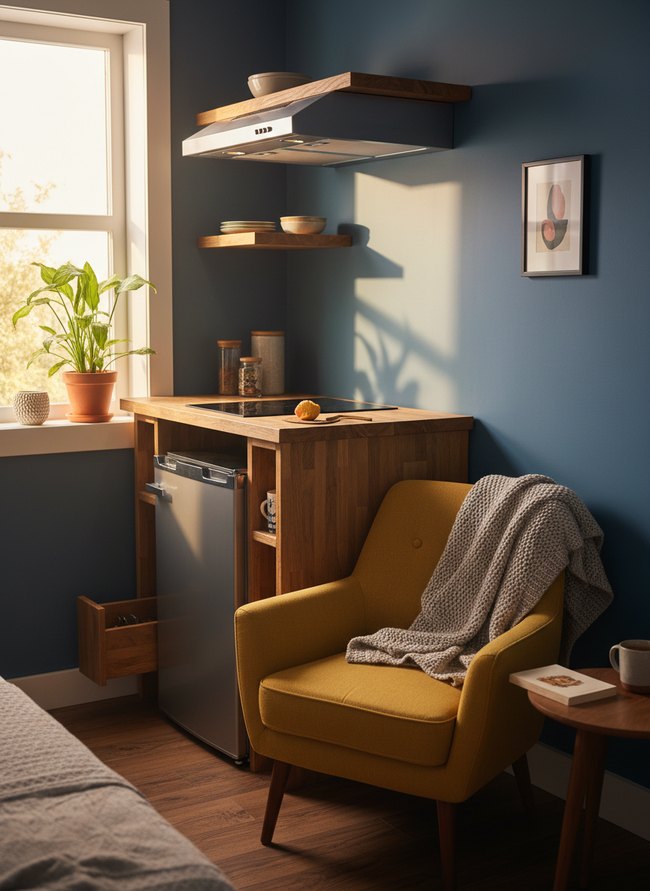
How to Organize Tiny Home Power Cords and Tech
Loose wires draped across a miniature countertop diminish a clean, open feel inside a small house. Hiding black cables frees up precious visual space and improves the neatness of a compact living area. A charging station tucked behind a wooden panel maintains a tidy desk surface, but accessing power for a quick phone charge might take an extra step. Cord organizers bring order to tangled bundles, yet some solutions add a small box to a carefully curated decor. Homeowners consider solutions that balance easy access with a streamlined appearance for a tiny home. Different approaches offer varying levels of concealment and convenience.
1. Sleek Wall-Mount Charging Station
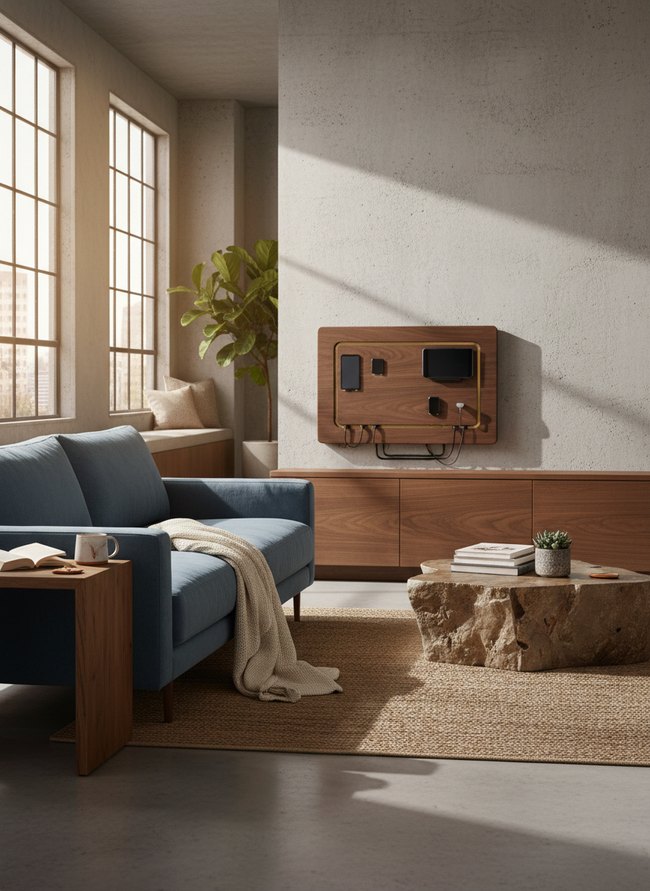
The dark walnut charging station mounts high on the concrete wall, keeping screens and chargers out of the way. Homeowners choose the sleek wall-mounted unit for a clean look, but they trade away flexible placement. Walnut cabinets below offer hidden storage, adding to the room’s uncluttered feel.
2. Under-Desk Cable Management
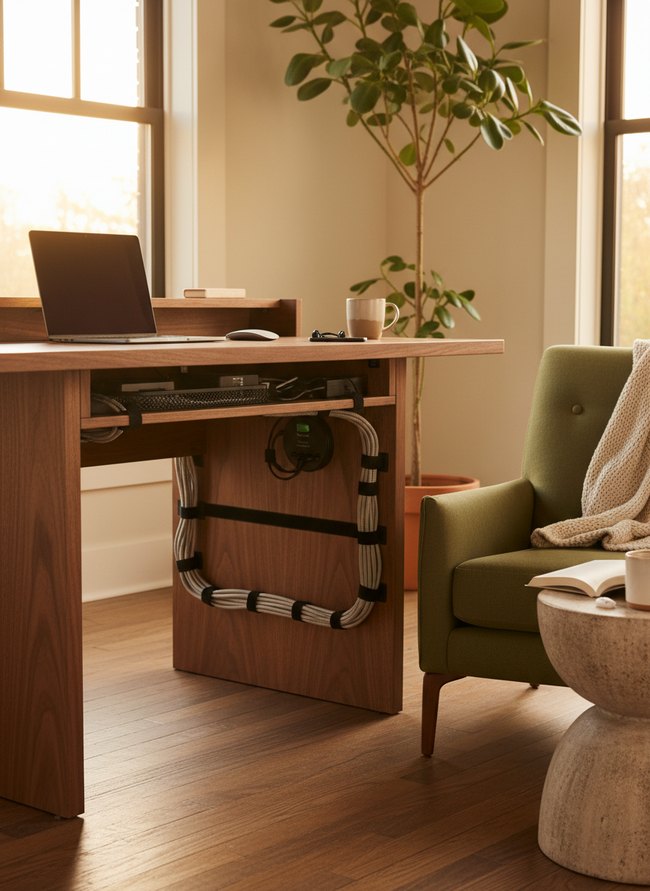
The dark brown wooden desk features a hidden wire management system. The desk prioritizes neatness, trading away immediate access to individual power blocks. A woven beige cable sleeve gathers the coiled cords against the desk leg.
3. Woven Basket Power Hub

A round, woven basket with open geometric patterns offers a charging station. A decorative basket hides bulky power strips, trading immediate access to charging ports for a cleaner look. Black and white charging cords emerge from the basket’s top, reaching two dark phones and a light tablet.
4. Drawer Organizer Tech Tray

A rich walnut charging station sits on a light oak side table, holding many small gadgets. The sleek wooden organizer keeps charging cables tidy, but it sacrifices complete concealment for easy access. White power cords stream neatly from the dark brown box, connecting to a hidden power strip within the wooden tray.
5. Hidden Router Shelf
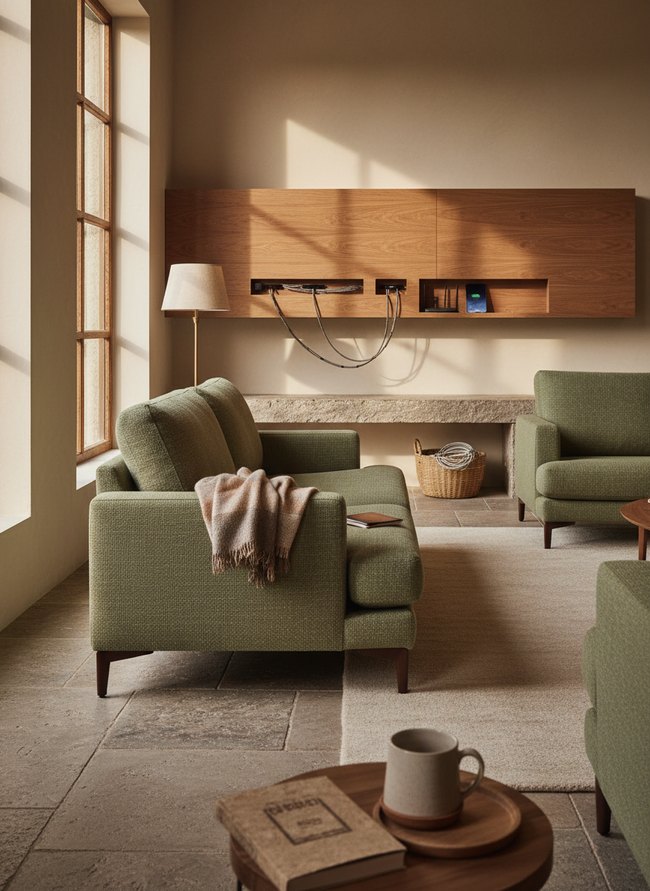
A long wooden floating shelf offers a clean visual break across the pale wall. Homeowners could choose a solid wood piece for warmth over a minimal metal shelf. The shelf creates a dedicated space to organize tiny home tech elements.
6. Braided Cord Sleeve
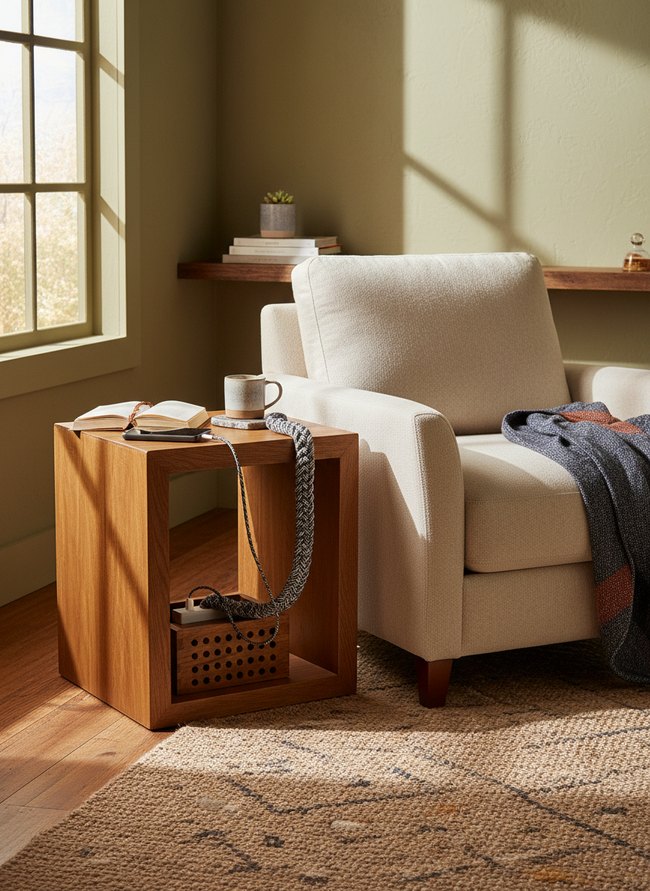
A woven gray and white cord sleeve hangs from the wooden side table. You choose a clean, visible presentation for power cords, trading hidden organization for decorative texture. The braided sleeve keeps charging cables neatly grouped, adding a soft, patterned element to your living space.
7. Magnetic Cable Clips
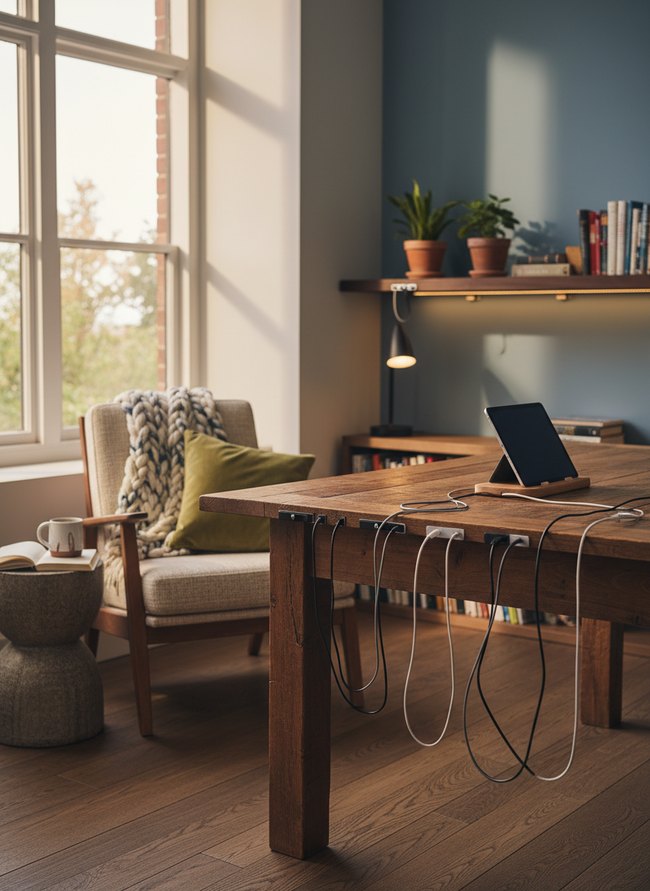
Black plastic clips line the thick wooden table edge, holding charging cables in place. Quick access to power is gained, but some visual tidiness is traded away. Dark power cords hang freely below the table, creating a playful, tangled look.
8. Desktop Charging Valet
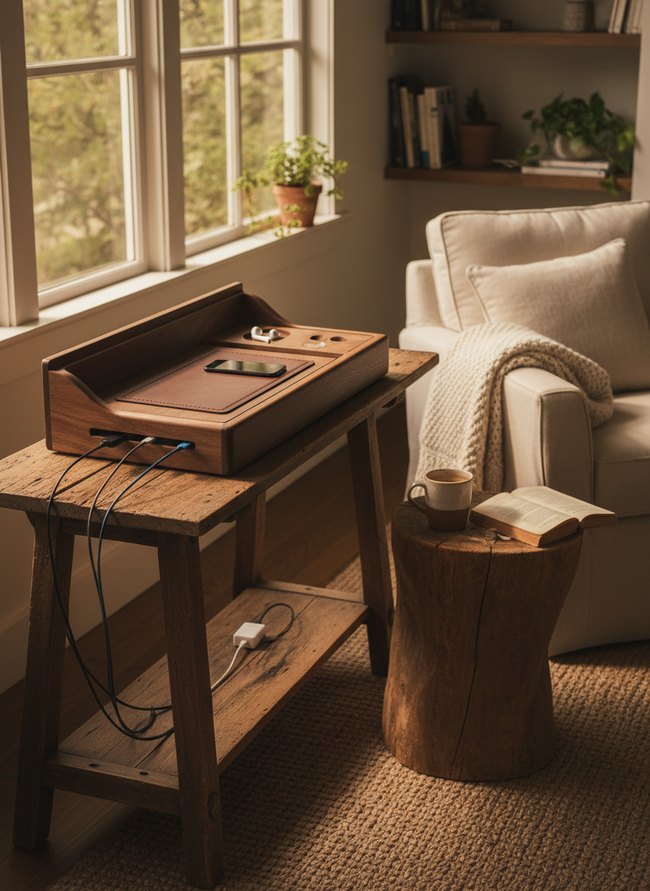
A dark wood charging station with a brown leather pad offers a neat surface for devices, trading exposed cords for a tidy appearance. A rustic wooden side table with a lower shelf provides extra storage space, committing to a natural aesthetic. A warm beige woven rug covers the light wood floor, adding soft texture to the cozy room.
9. Vertical Power Strip Mount
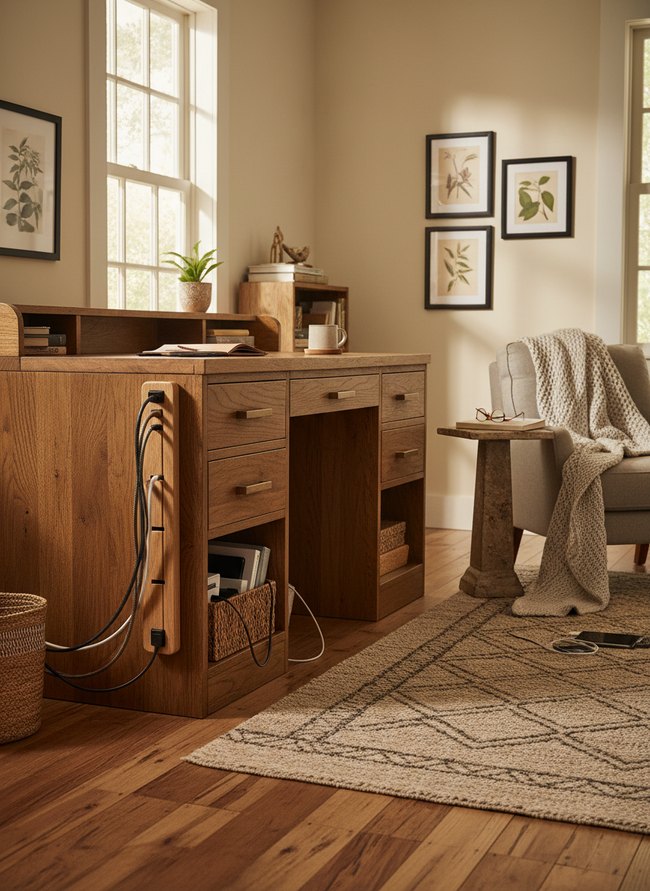
A blonde wooden power strip hangs vertically on the desk’s side panel. The clean, mounted charging station organizes cords, trading away the flexibility of a freestanding unit. A textured woven basket sits beneath, ready to hold more wires.
10. Compact Device Dock

The dark walnut charging station features six upright slots, keeping multiple devices tidy. Homeowners choose a natural wood finish, trading a bright modern look for earthy warmth. A thick braided cord organizer sits hidden on the shelf below, ready to manage extra slack.
11. Adhesive Cord Channels
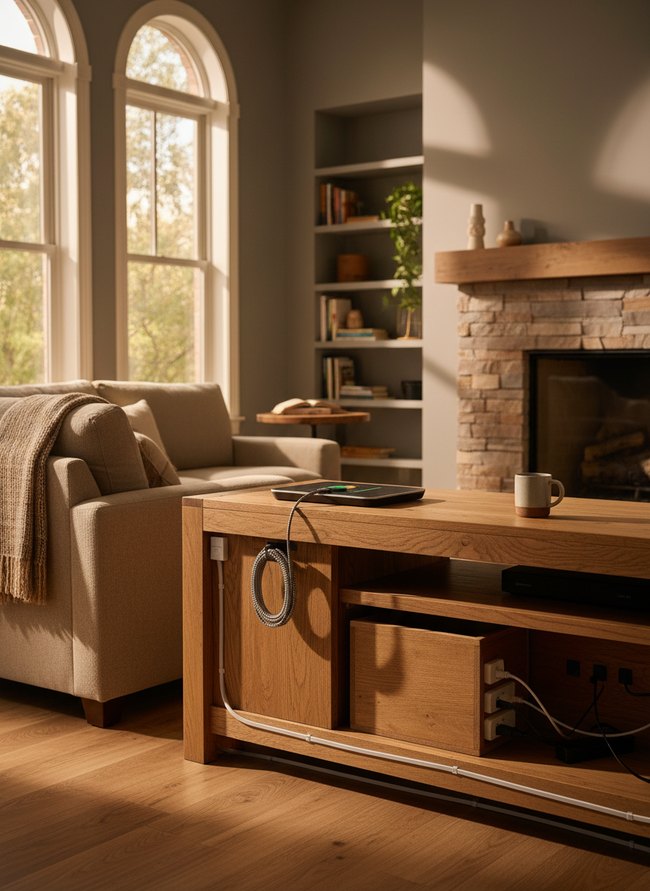
White plastic channels run down the honey-toned wood coffee table leg, keeping a charging cord neat. Visible cord channels allow for easy setup, trading away a completely concealed wire path. A coiled gray charging cable hangs beside the channels, ready for use.
12. Integrated Outlet Cover

The wooden outlet cover blends into the beige wall texture. A tidy spot for charging devices is gained, but the subtle look of hidden cords is sacrificed. A thick gray sofa provides a comfortable place to sit.
Should I build a permanent charging station or use portable organizers?
Built-in power hubs or portable cord organizers stand as your two main choices for tidying up. Permanent charging stations offer a smooth, flush finish against a plywood wall. Installation requires tools, wires, and a dedicated afternoon. Portable charging stations give you freedom. A wooden box with multiple slots moves easily from a pine desk to a kitchen counter. You gain flexibility with a movable setup. Fixed charging hubs keep cords out of sight forever. A custom-made oak panel hides all cables and power bricks behind its solid surface. This option suits homeowners who rarely rearrange furniture. They value a clean, unchanging look.
Portable organizers provide a useful answer for renters. A three-compartment plastic bin holds charging cords for phones and tablets. Renters often move things around. They need solutions that travel well. Permanent stations work for long-term residents. A wall-mounted metal plate with charging slots offers a fixed, sturdy spot. The built-in choice means less clutter. It costs more initially. Portable options are cheaper. A woven fabric basket with internal dividers costs less than a custom build. Consider your living situation and future plans before making a final pick.
Is it better to hide all cords completely or use decorative cable management?
Black power cables tangle behind your bedside table, forming a dark plastic knot. Natural wood floorboards disappear under a confusing coil of wires. You wonder whether to tuck away every single cord or let some show with decorative cable clips.
Completely hiding power cables brings a sleek, clean look to your small living area. This method often involves cutting holes into drywall or custom-building furniture with hidden channels. Your time investment increases for these deeper renovations. Dust bunnies collect less often around unseen wires.
Showing power cords with stylish organizers offers quick setup. Colorful braided cords become a design element when wrapped around a copper wall hook. Metal cable trays mounted under desks keep wires off the floor, yet still visible. These cable management solutions require less upfront effort. You accept a slightly less minimalist aesthetic.
Choose full concealment if you prioritize a seamless, uncluttered visual space above all else. This path suits homeowners ready for minor construction. Pick decorative organization if you need a fast, flexible fix for your many charging stations. This choice works well for renters or those who frequently rearrange furniture.
Which Idea Will You Try First?
That’s 12 different takes on organize cords tiny home. The best ideas above are usually the smallest moves — one material, one layout shift, one piece of furniture in the right place. Pick whichever room feels closest to your space and start there before tackling the rest.
Found an idea worth keeping? Save this post to your Pinterest board so it’s waiting for you when you’re ready to start your own project.