How to Store Sports Equipment in a Tiny Home
Many homeowners overthink tiny home sports gear storage, believing every item needs a custom, built-in cubby. Most tiny dwelling plans waste valuable cubic feet with fixed shelving or bulky cabinetry. Wall racks hold hockey sticks and snowboards with a thin profile. Ceiling hoists lift kayaks and bicycles overhead, freeing up floor space. Outdoor sheds secure bulkier equipment like dirt bikes or jet skis. Each approach provides a practical answer for keeping active gear organized and accessible within limited areas.
1. Vertical Wall Paddle Rack
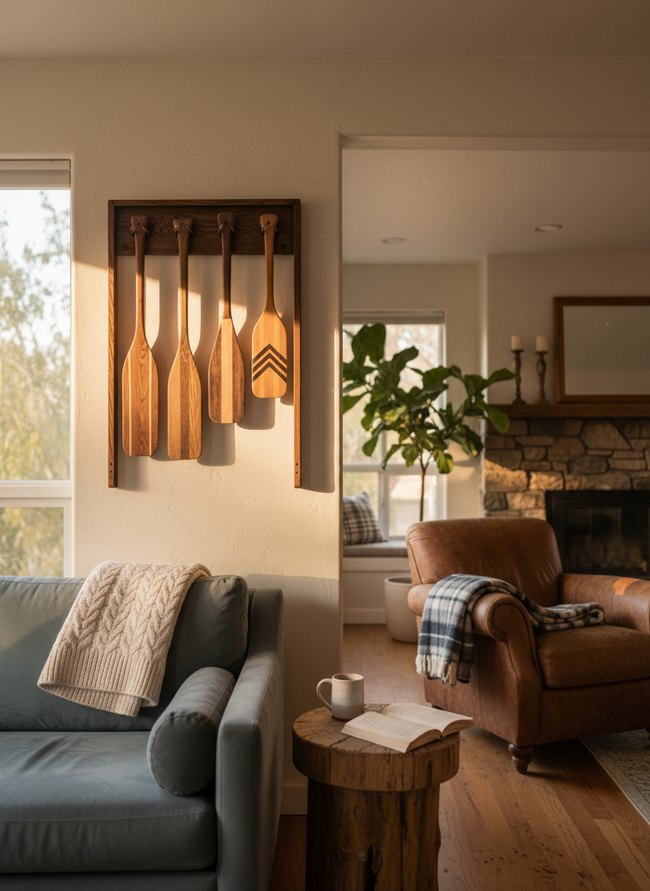
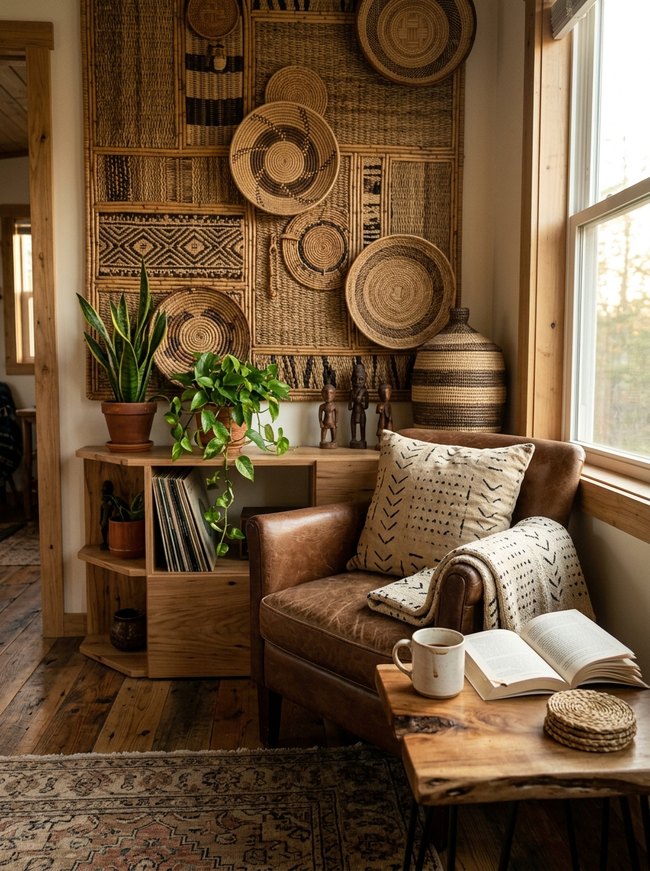
A simple wooden rack displays four decorative paddles on the wall, turning sports gear into wall art. The paddles have a natural wood finish and interesting patterns, elevating their function beyond simple storage. Warm light from the nearby window highlights the wood grain, while a light gray sofa and a brown leather armchair provide comfortable seating below. Incorporating functional items as visual decor is the move to steal.
2. Ceiling Bike Hoist
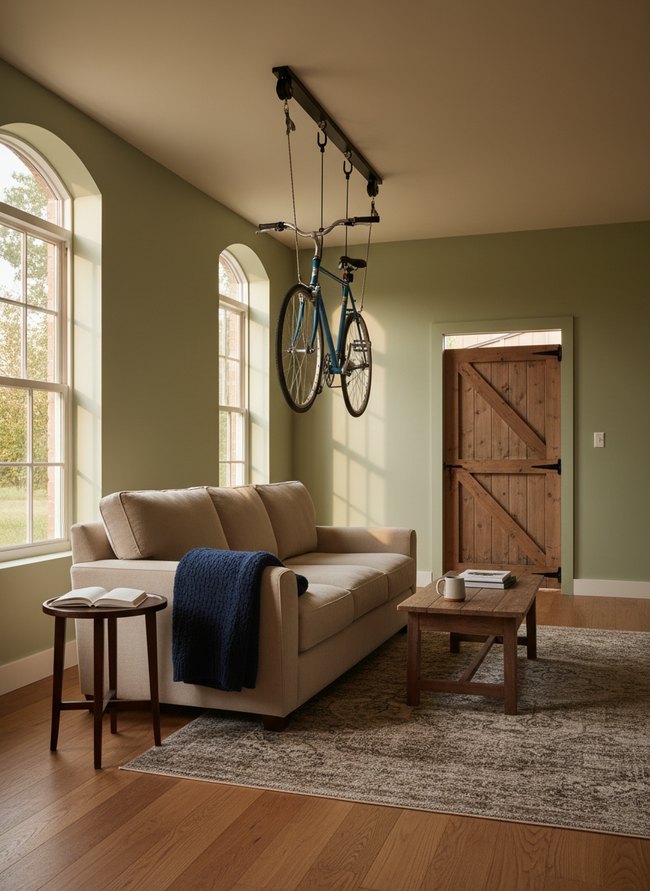
A black ceiling hoist hangs a blue road bike high above the floor, freeing up valuable ground space. The simple overhead storage keeps a large piece of sports equipment off the ground, preventing clutter in a small living area. Warm daylight streams through two tall arched windows, illuminating a beige sofa and a rustic wooden coffee table. Steal the hoist idea for any large item you need to store.
3. Compact Ski Wall Mount
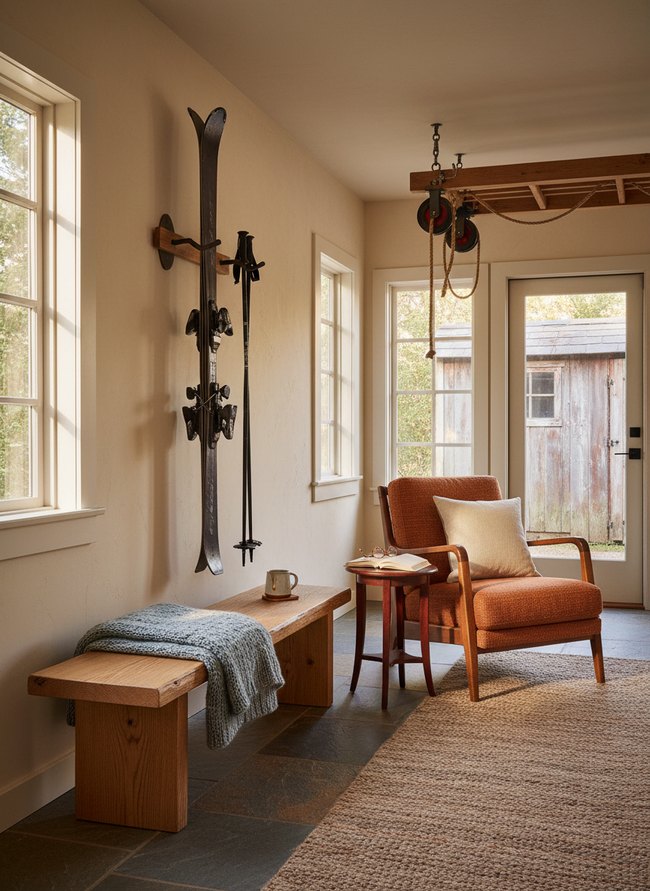
The vertical ski wall mount keeps tall, narrow skis off the floor. Vertical placement saves valuable floor space in a tiny home. A wooden bench below offers a place to sit, and a warm brown armchair provides extra seating. You can steal the compact mount for your tiny home sports gear storage.
4. Overhead Kayak Sling
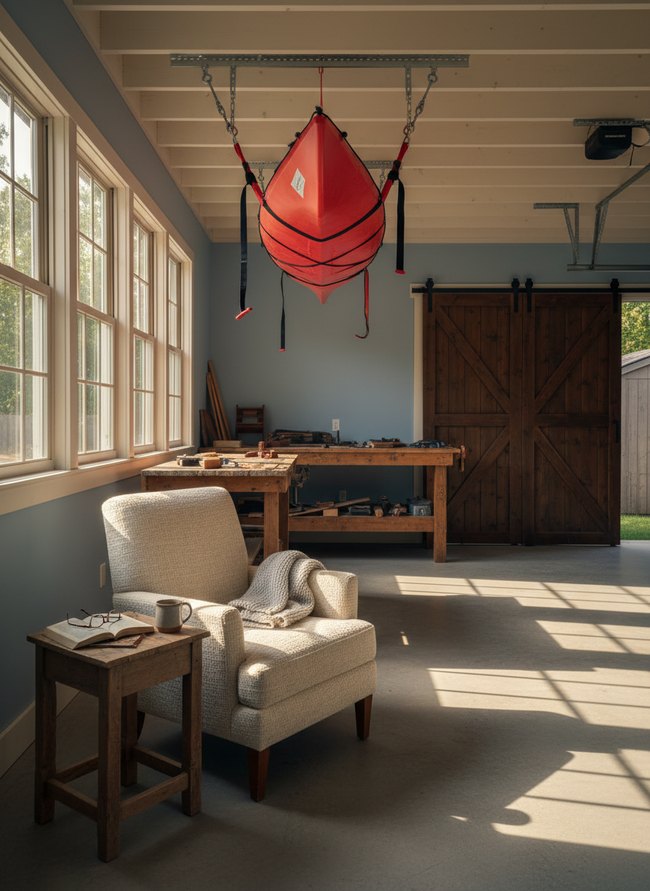
The red kayak hangs securely from ceiling-mounted steel tracks. The overhead storage keeps the bulky watercraft off the floor, freeing up valuable square footage in the small structure. Light beige paint covers the wide ceiling beams, matching the window trim and creating a bright, cohesive look. Maximize space by utilizing overhead storage for large items.
5. Corner Golf Club Organizer
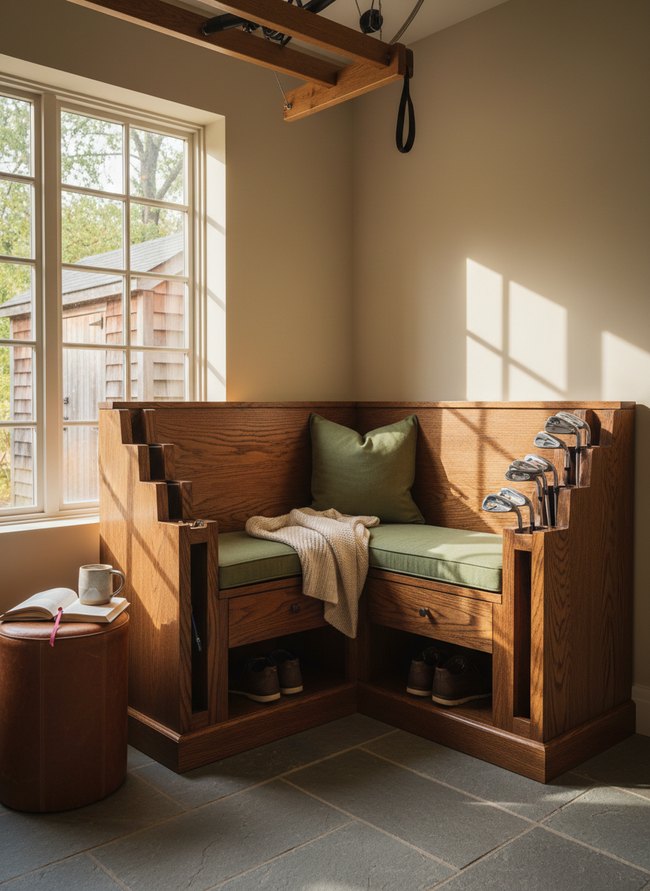
Built-in corner furniture makes the tiny home sports gear storage solution work. The custom wooden bench fills a corner, using space often wasted in small rooms. Underneath the green cushions, pull-out drawers and open cubbies provide spots for shoes and other small items. Bespoke storage should be built into an unused corner.
6. Outdoor Gear Storage Shed
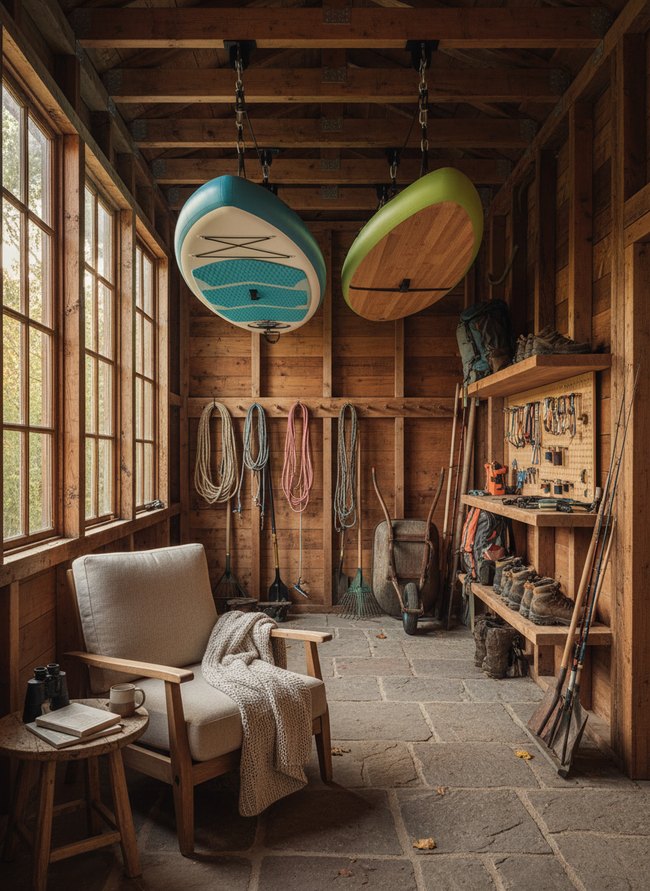
The designer used ceiling hoists to lift two paddleboards off the floor, freeing valuable ground space for other items. The strategy maximizes the vertical area in a compact shed, making a small footprint feel larger. Wooden wall pegs hold coiled ropes, while a built-in workbench with a pegboard organizes small tools. Steal the vertical storage idea for your own tiny home sports gear storage.
7. Pull-Out Helmet Drawer
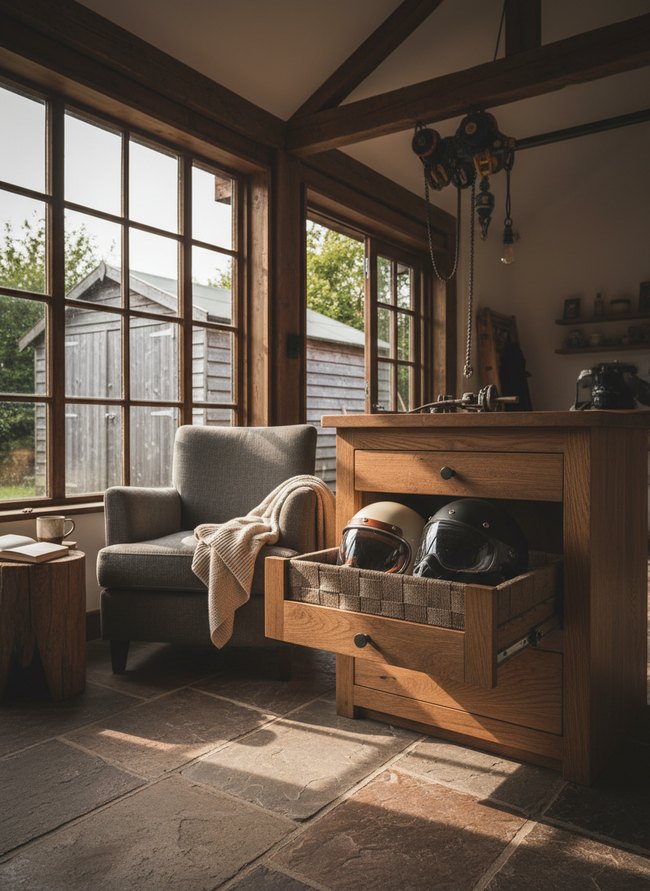
A pull-out drawer with a woven basket insert creates hidden storage. The functional design contains bulky items like helmets discreetly within the furniture piece, keeping tiny home sports gear tidy. Natural wood tones on large window frames and a solid oak cabinet add warmth to the sunlit room. The clever integration of storage into existing furniture is a move worth stealing.
8. Suspended Fishing Rod Holder
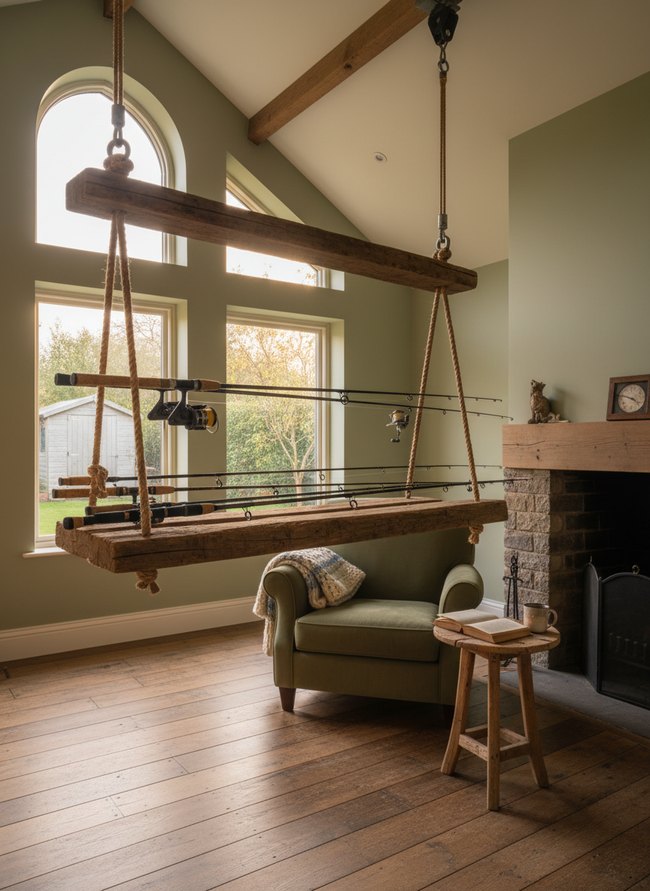
The designer suspended a thick oak beam from the high ceiling, making a floating display for fishing rods. The clever trick keeps fishing gear off the floor, freeing up valuable space in a small room. Warm green walls and a plush armchair provide a cozy reading nook. Homeowners could steal the idea of hanging items from the ceiling to create tiny home sports gear storage.
Compression Load Dynamics in Vertical Wall Mounting Systems for Irregularly Shaped Objects
Weight distribution matters in vertical wall mounting. A kayak, with its long, narrow hull, puts stress across many points. Placing a single, thin hook under the kayak’s center point causes uneven forces. Thin steel brackets, spaced widely, share the load across the plastic boat’s body. You want even pressure.
Many people make a mistake by using too few mounting points. A heavy bicycle hanging from one top hook pulls downward with concentrated force. This pull can crack a drywall panel or loosen screws from a wooden stud. Multiple robust straps, each anchored into a solid wall stud, spread the bicycle’s mass. Each strap holds a small part of the total weight. The wall structure itself handles the dispersed forces better.
Small homes need clever storage for large objects. Think about the surface area touching the wall. A broad, flat paddleboard needs wide, padded cradles to prevent dents. These cradles support the board’s entire bottom edge. A wall-mounted system works best when the object’s shape dictates the hanger’s form.
Ergonomic Retrieval Trajectories in Ceiling-Mounted Hoist Systems for High-Density Storage
Ceiling-mounted hoists demand careful thought about how you grab things. A heavy mountain bike, for example, needs a smooth, controlled descent. Many tiny home dwellers simply drop items, which strains your back and shoulders. Instead, design your hoist system with a specific retrieval path in mind. A chest-high pull bar on a four-point hoist allows a person to guide a kayak down gently. You want the equipment to land within your comfortable reach, not on the floor with a thud. Consider the reach of your shortest family member when setting the lowest drop point for a bulky snowboard. Poorly planned drops can cause injuries or damage your expensive gear. Optimal ceiling hoist design integrates ergonomic principles for safe, easy access.
Which Idea Will You Try First?
That’s 8 different takes on tiny home sports gear storage. The best ideas above are usually the smallest moves — one material, one layout shift, one piece of furniture in the right place. Pick whichever room feels closest to your space and start there before tackling the rest.
Found an idea worth keeping? Save this post to your Pinterest board so it’s waiting for you when you’re ready to start your own project.