Tiny Home Kitchen Rules Designers Always Follow
Small spaces present unique demands. A two-burner hob beside a compact porcelain sink alters weekday meal preparation. Standard advice for kitchen layouts abounds. Most guidance assumes sprawling granite counters and ample cabinet doors. Builders constructing tiny homes quickly learn about real-world use. Designers working on these compact spaces understand a deeper principle. Every inch of butcher block counter or reclaimed wood shelving must earn its keep. Specific tiny kitchen designer rules, hard-won wisdom from years of creating functional, small-scale rooms, guide their work. The rules are not suggestions; they are actual blueprints.
1. Integrated Appliance Concealment Rule
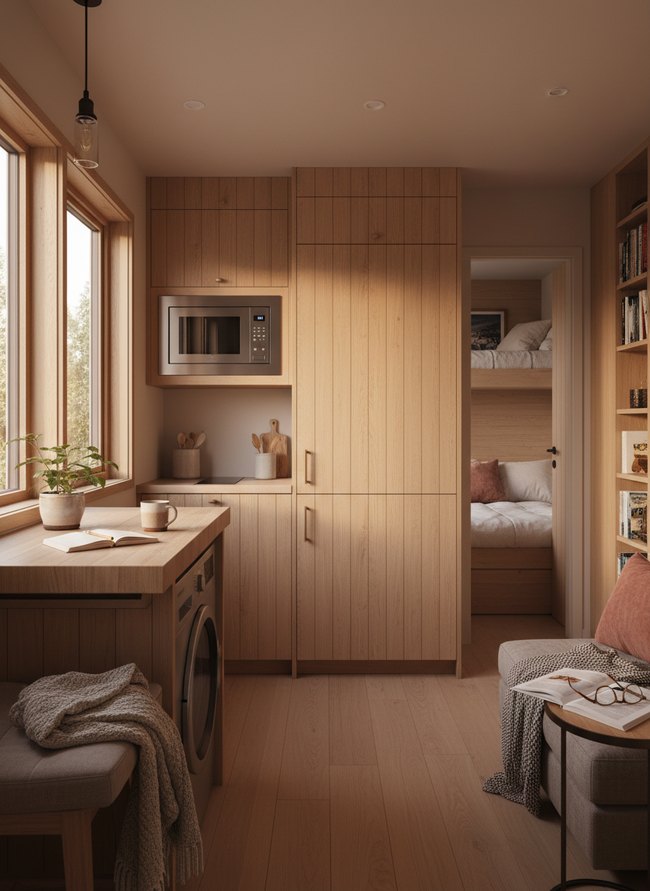
Vertical grain oak panels hide a refrigerator and dishwasher, making the small kitchen feel larger. A stainless steel microwave sits recessed above the countertop, keeping the cooking area neat. Matching appliance fronts to cabinet doors creates a seamless look.
2. Vertical Storage Maximization Rule
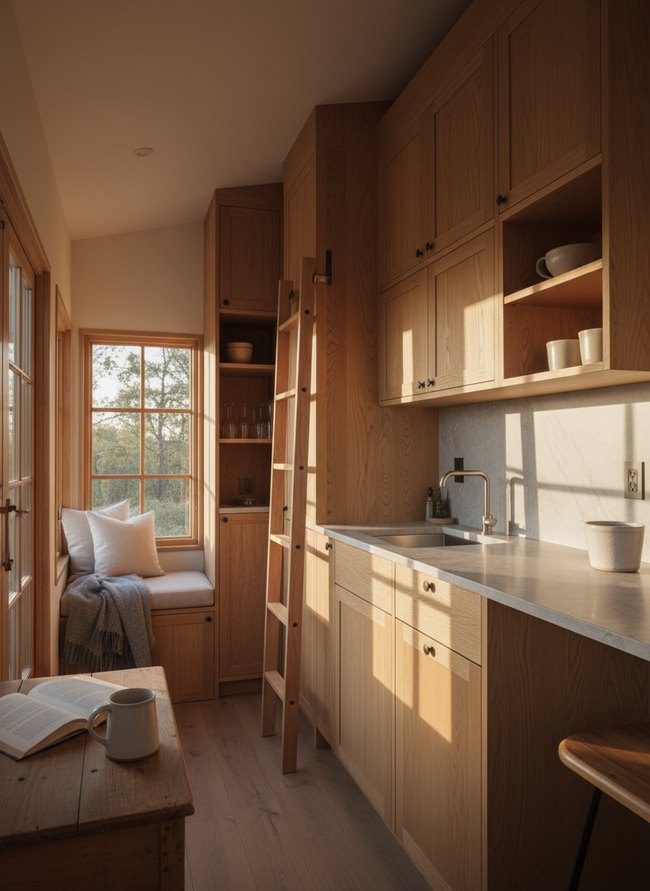
A slender wooden rolling ladder provides access to tall upper cabinets in the small kitchen. Honey-toned oak cabinets extend from floor to ceiling, making the most of every vertical inch. Tiny kitchen designers plan storage that goes all the way up, even if a step stool is needed.
3. Multi-Functional Furniture Principle
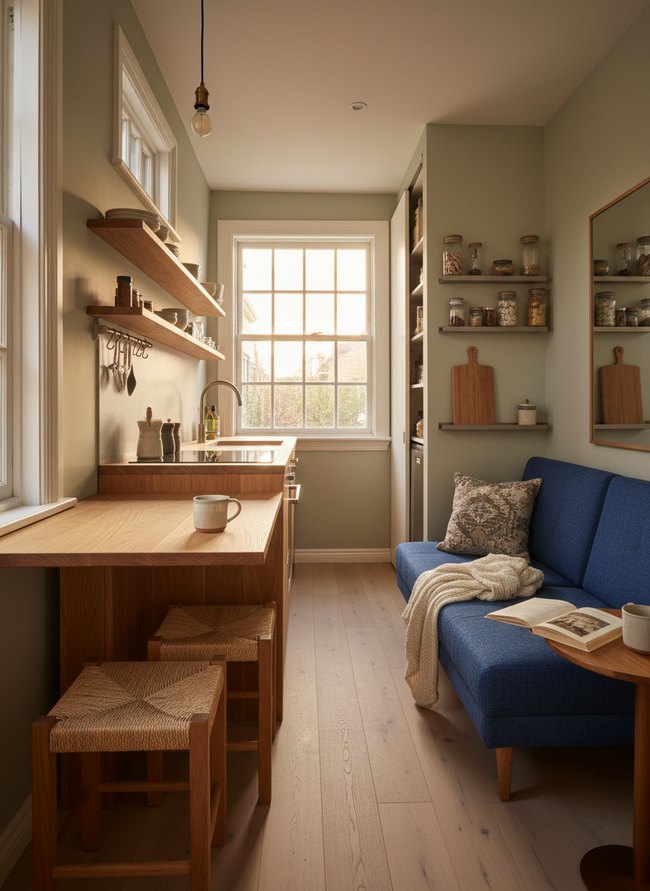
The oak counter extends from the kitchen, forming a honey-toned dining table. The clever design creates a small dining area without needing extra furniture. Built-in elements that serve more than one purpose maximize your floor space.
4. Streamlined Countertop Philosophy
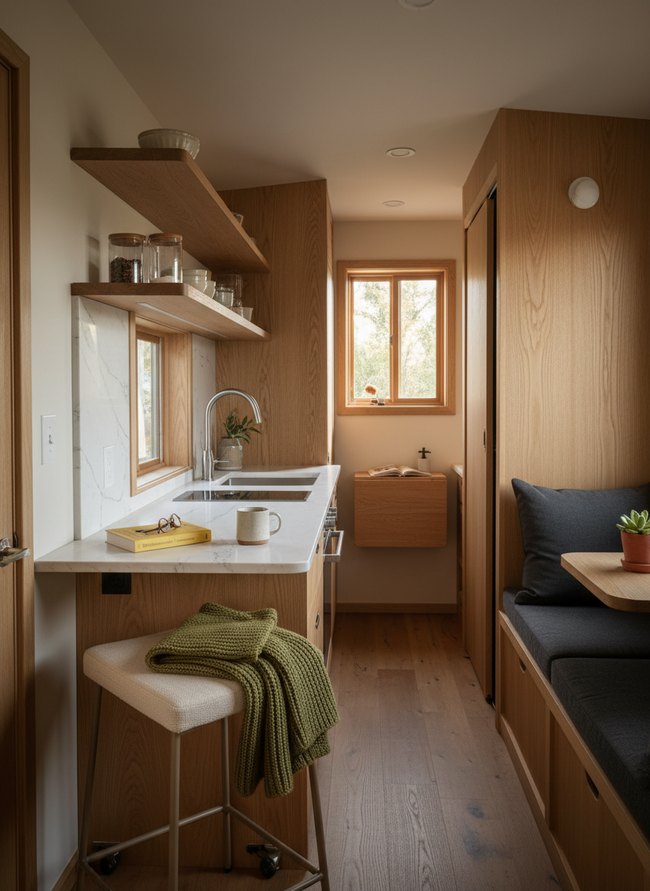
The white quartz countertop shows only a mug and a book, a clean surface for daily tasks. Tiny kitchen designer rules should be kept to a minimum, removing clutter for a calm feel. Clear kitchen surfaces maintain a spacious, peaceful environment.
5. Light Color Palette Dictate
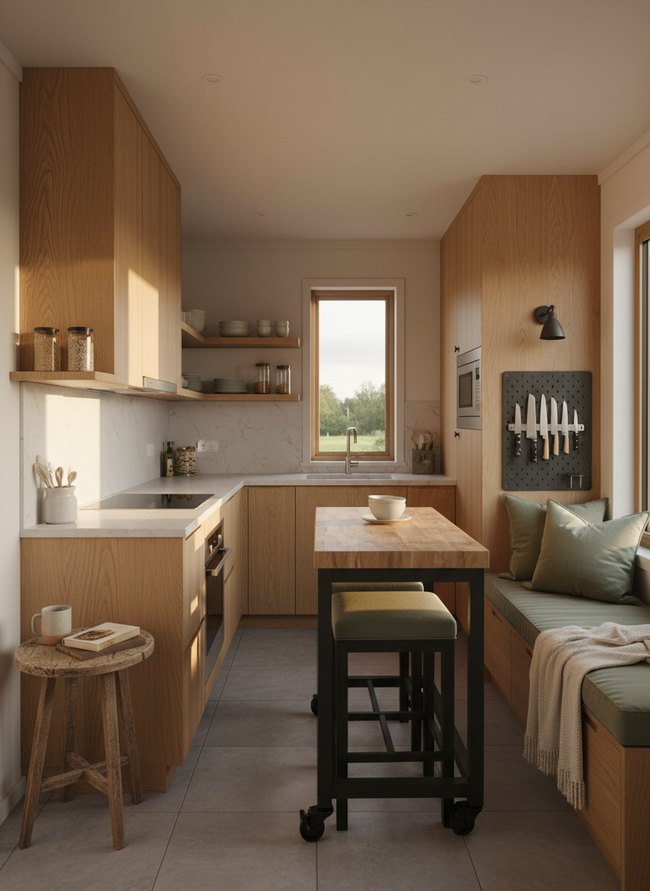
Blond oak cabinets and a white marble countertop make the small kitchen feel open. A light color palette helps the compact room feel much bigger. Homeowners should choose light wood tones and pale surfaces to expand a kitchen visually.
6. Reflective Surface Enhancement
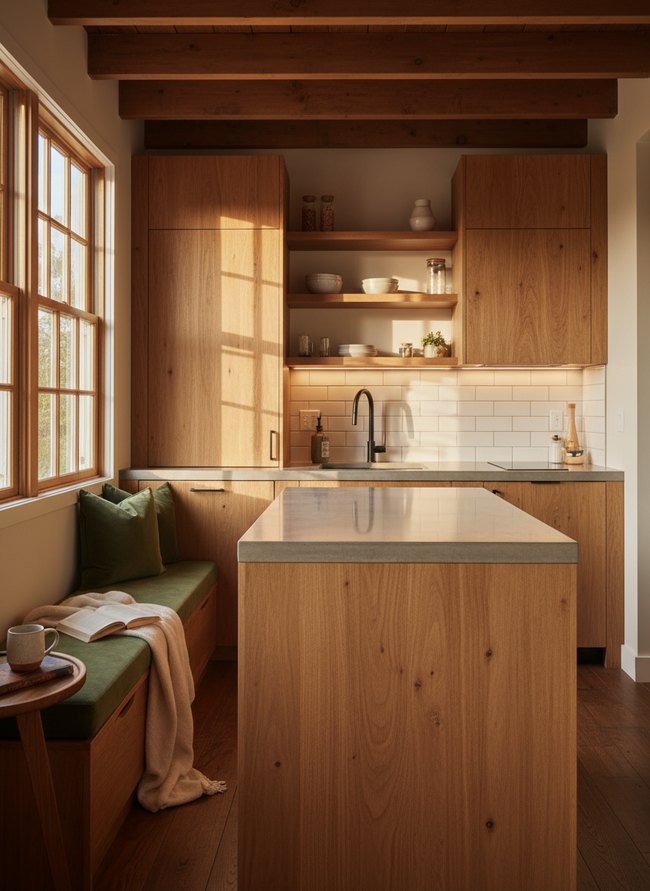
Light gray concrete countertops and white subway tiles reflect sunlight across the kitchen space. Smooth, shiny surfaces bounce light around, making the small room feel much bigger. Glossy finish materials open up a tiny kitchen.
7. Hidden Storage Integration
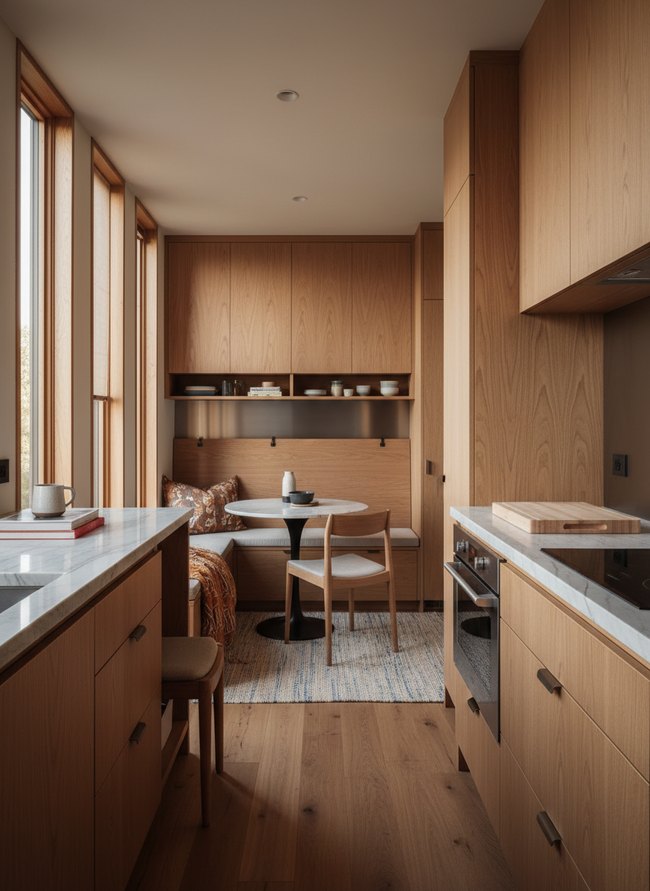
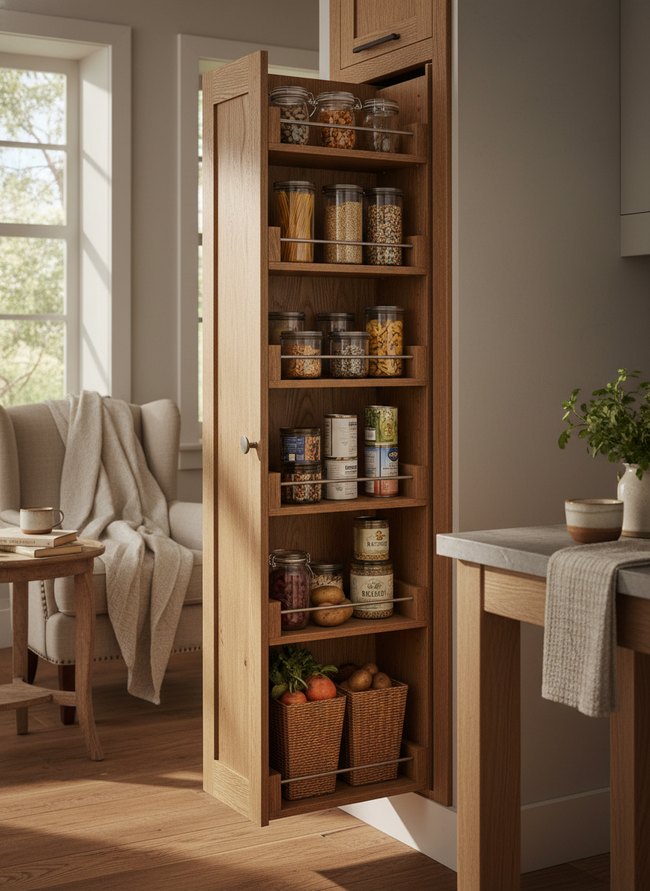
Light oak cabinets stretch to the ceiling, providing ample storage. Homeowners can build storage into every nook and cranny of a tiny kitchen. Pull-out pantry shelves or a built-in bench with hidden compartments offer practical solutions.
8. Compact Sink Solutions Rule
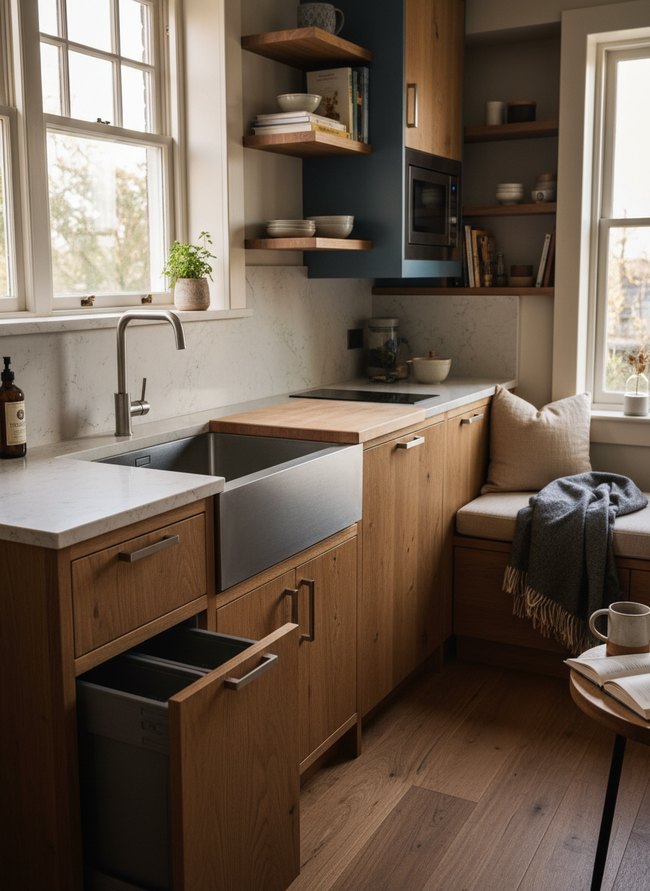
A large, stainless steel farmhouse sink with a light wood cutting board insert offers extra counter space. The clever design creates a bigger workspace for chopping vegetables or setting down dishes. Consider a sink with integrated accessories to maximize function in your own small cooking area.
9. Pull-Out Pantry Design
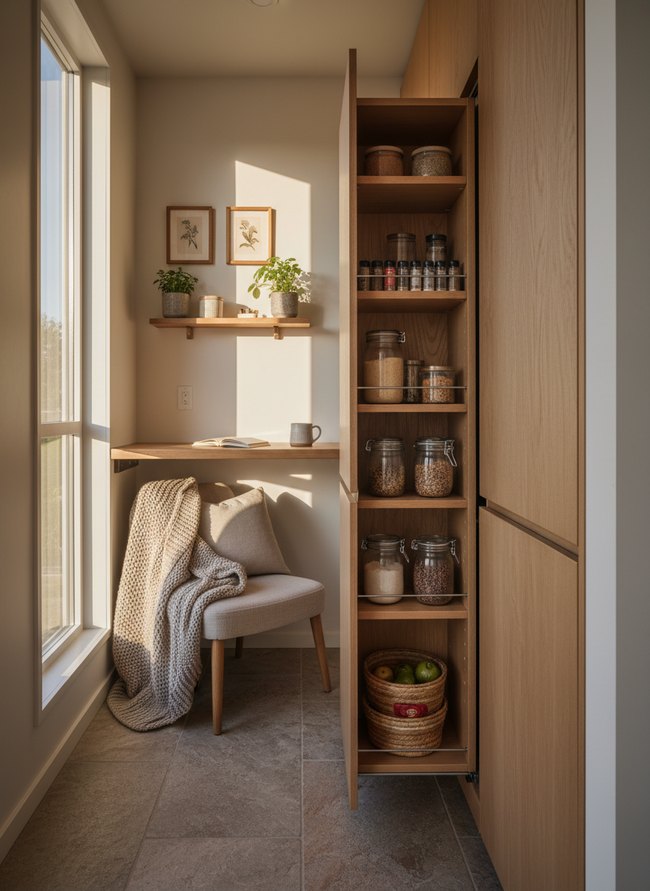
A tall, narrow pull-out pantry offers smart storage for small spaces. Wooden shelves hold glass jars filled with grains and spices. The slender pantry maximizes a tiny kitchen’s storage with vertical elements.
10. Fold-Away Table Guideline
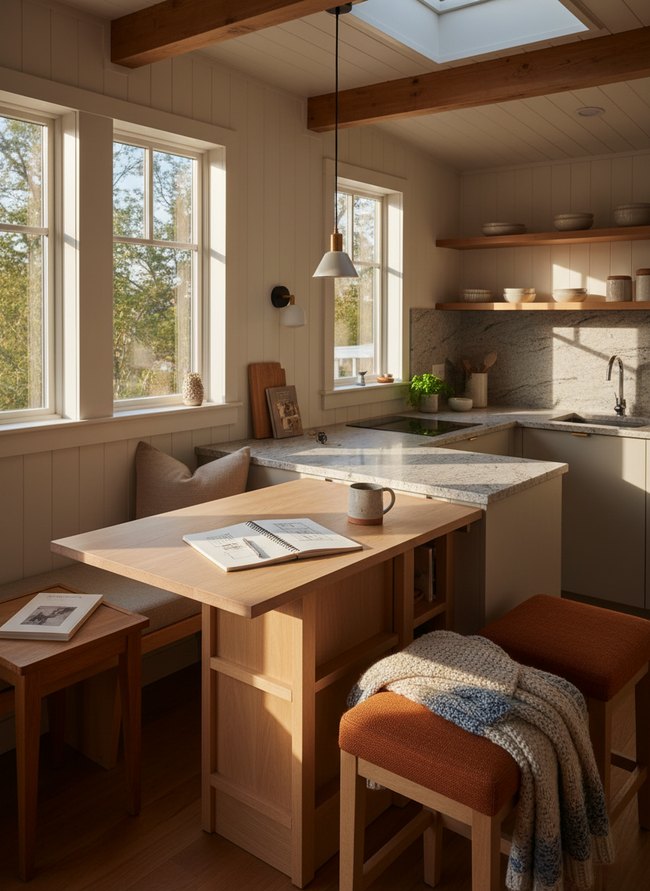
The natural oak table features a clever folding leaf, instantly expanding usable counter space. The flexible wood table serves as both a dining area and an extra prep surface in a small kitchen. A table with a folding top maximizes the function of any tiny kitchen.
11. Smart Appliance Selection
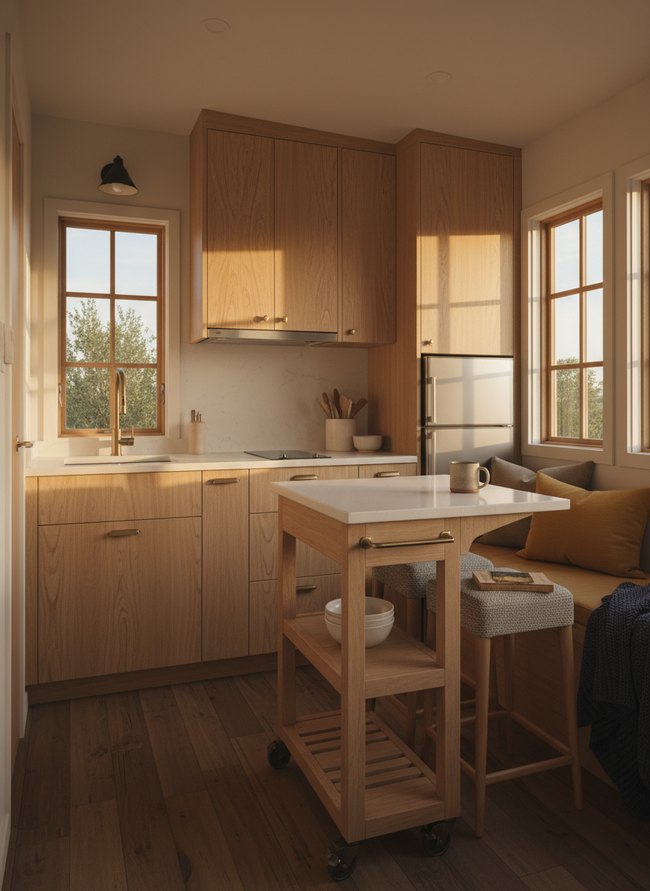
A polished stainless steel refrigerator tucks neatly into the kitchen corner, showing smart use of a tight space. Homeowners gain valuable counter space by selecting narrow, counter-depth appliances. Vertical appliances like a tall, thin refrigerator save floor area.
12. Overhead Cabinet Optimization
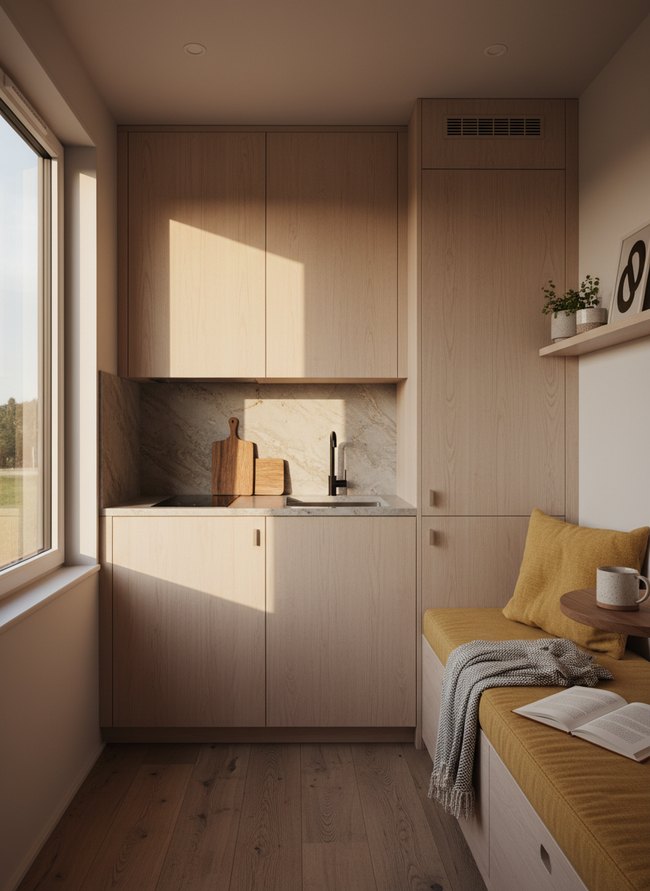
Floor-to-ceiling oak cabinets maximize vertical storage in the compact kitchen. The light wood finish and pale marble backsplash keep the space feeling open, not cramped. Dark colors on upper cabinets make a small room feel heavy.
My Tiny Kitchen Feels Like a Hallway – How Do I Create Zones?
Most people think a long, narrow tiny home kitchen needs big furniture to break it up. You might even try a bulky pine island. That approach just clutters the narrow floor. A better way uses smart placement and color.
Instead, define cooking zones with a low, cherry wood cart on wheels. This kitchen cart adds flexible counter space. Place a small, round woven rug under the wash sink. The charcoal rug gives the washing area its own ground. Next, hang a trio of waist-high copper pots above the cooktop. Those shiny pots mark the cooking zone clearly.
Many homeowners add a second overhead light fixture. One bright light often creates harsh shadows. Install two small, recessed LED puck lights instead. These lights cast a soft glow on the food prep space. You can also paint a single accent wall a soft dusty teal. That cool wall color visually shortens the long room. These small design moves create distinct work areas. Your tiny kitchen feels much bigger.
But Where Do I Put the Air Fryer? (Smart Storage for Bulky Appliances)
Many homeowners think every kitchen gadget needs a hidden spot. Your air fryer, a shiny chrome box, probably doesn’t fit in a standard 12-inch deep cabinet. Most people shove these big machines into the back of a deep pantry, making them hard to reach. That strategy means you rarely use your expensive countertop toaster oven.
Instead, create dedicated appliance zones. A pull-out shelf, 24 inches wide, works wonders under a butcher block counter. This sliding platform brings your heavy stand mixer right to the front. Another smart move involves open shelving made from thick, unfinished oak. These sturdy shelves, mounted above a 36-inch wide prep area, hold a bulky food processor with ease. A shallow wooden crate, 10 inches tall, keeps smaller attachments neat beside the main unit. This visible storage encourages daily use, making your small kitchen feel larger and more organized.
Which Idea Will You Try First?
That’s 12 different takes on tiny kitchen designer rules. The best ideas above are usually the smallest moves — one material, one layout shift, one piece of furniture in the right place. Pick whichever room feels closest to your space and start there before tackling the rest.
Found an idea worth keeping? Save this post to your Pinterest board so it’s waiting for you when you’re ready to start your own project.