12 Best ADU Window Styles for Light and Privacy
Tall glass panes let warm sunlight flood into an accessory dwelling unit, but smaller frosted panels offer a private retreat. Homeowners face a choice between sweeping exterior views and secure interior spaces. Each window style brings different benefits, trading one desired feature for another. Homeowners often weigh the amount of natural light against how much their neighbors can see inside the small structure. A high horizontal casement window might allow soft morning light without sacrificing much wall space. Other options deliver bright interiors at the expense of exposed living areas. The guide explores several ADU window choices, each offering a distinct balance.
1. Clerestory Transom Privacy Window
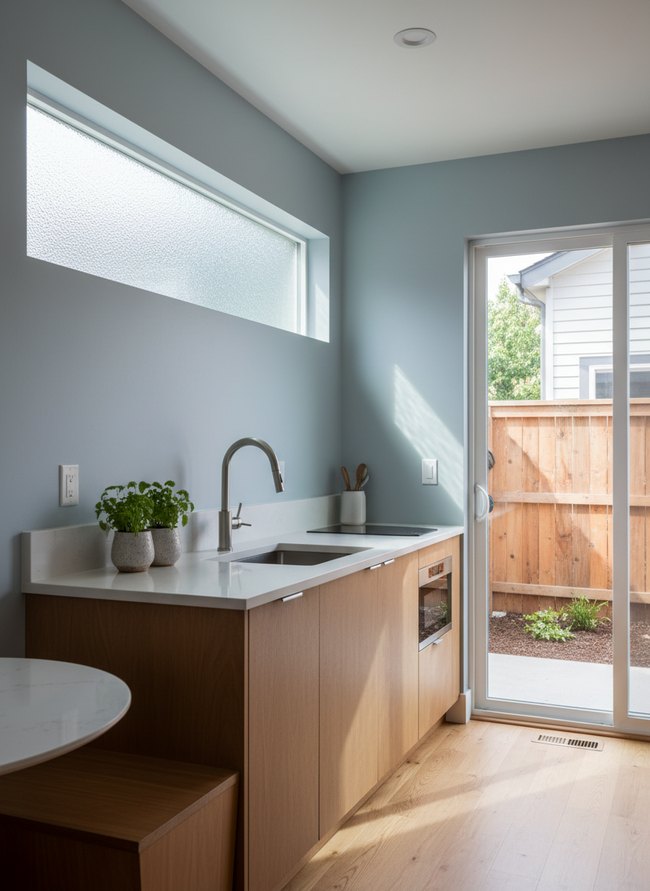
A long, narrow clerestory window sits high on the light blue wall, offering diffused light. Textured glass provides privacy, sacrificing a clear exterior view. Oak cabinets with flat white pulls line the kitchen, reflecting soft sunlight on the pale wooden floor.
2. Frosted Awning Light Panel
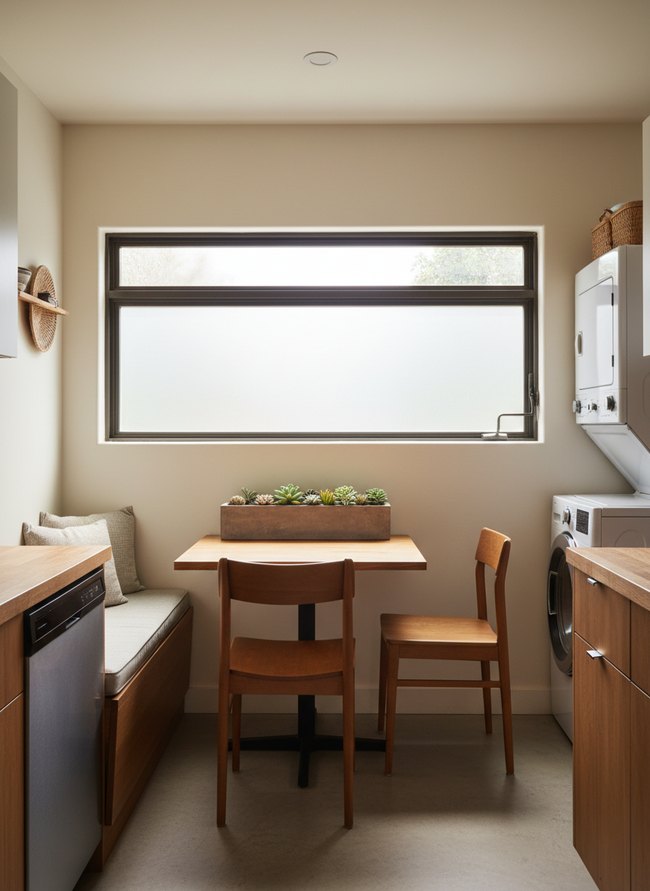
The wide black-framed window offers privacy with its frosted glass panel. The panel provides diffused light, trading away a direct view of the outdoors. The ADU window provides ample daylight while keeping interior space secluded from outside glances.
3. Picture Casement Garden View
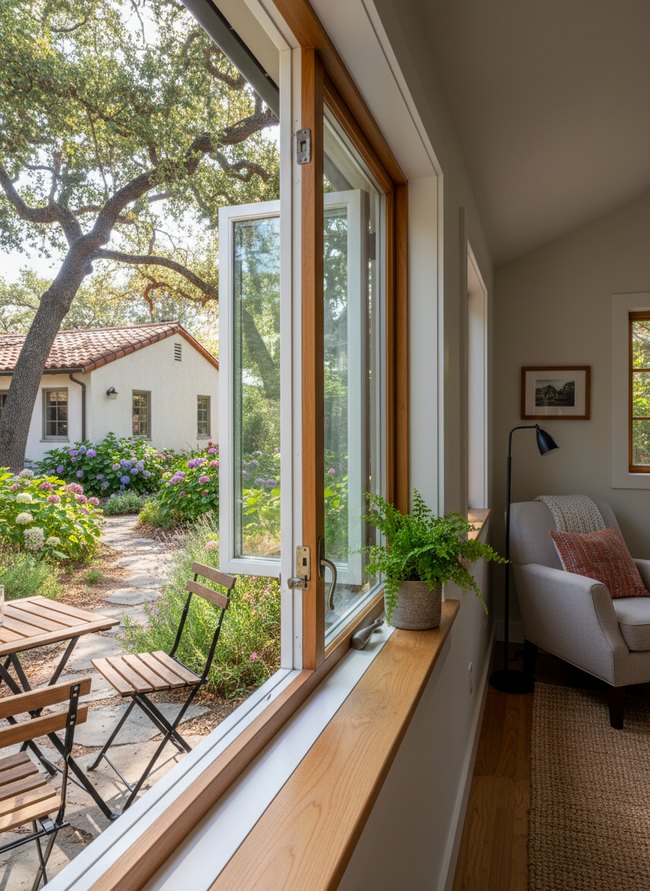
Light honey-toned wood frames the large glass casement, swinging open to the vibrant green garden. A small fern in a gray concrete pot sits on the wide wooden sill, soaking in bright sunlight. The casement provides a broad outdoor view, but sacrifices some wall space for open-air access.
4. High Fixed Skylight Pane
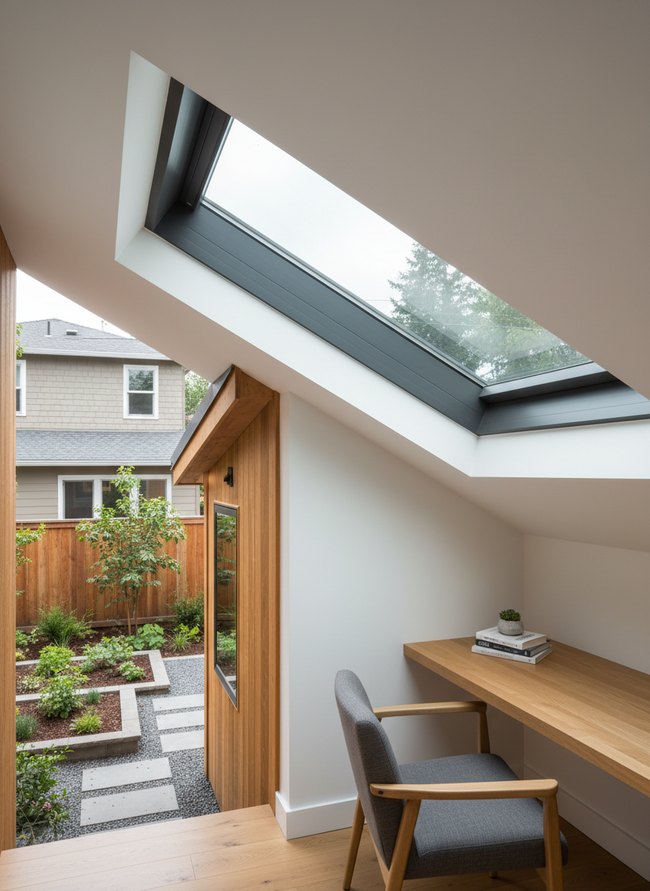
A large skylight pane spans the angled white ceiling, letting in ample overhead light. The ADU windows gain significant natural brightness, but the tall glass gives up easy access for cleaning. A light-toned wooden desk and a gray fabric chair sit below the window, creating a small work area.
5. Louvered Sliding Privacy Screens
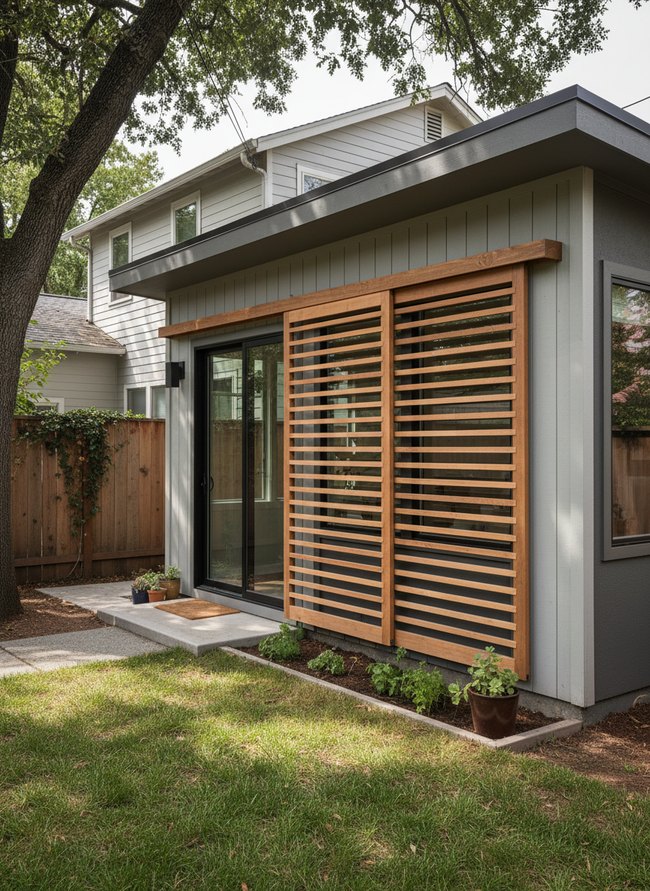
Natural wood louvered panels offer a way to control light. The panels create a sense of enclosed space, but trade away wide, open views. Sliding ADU windows provide both privacy and ventilation.
6. Angled Hopper Light Vent
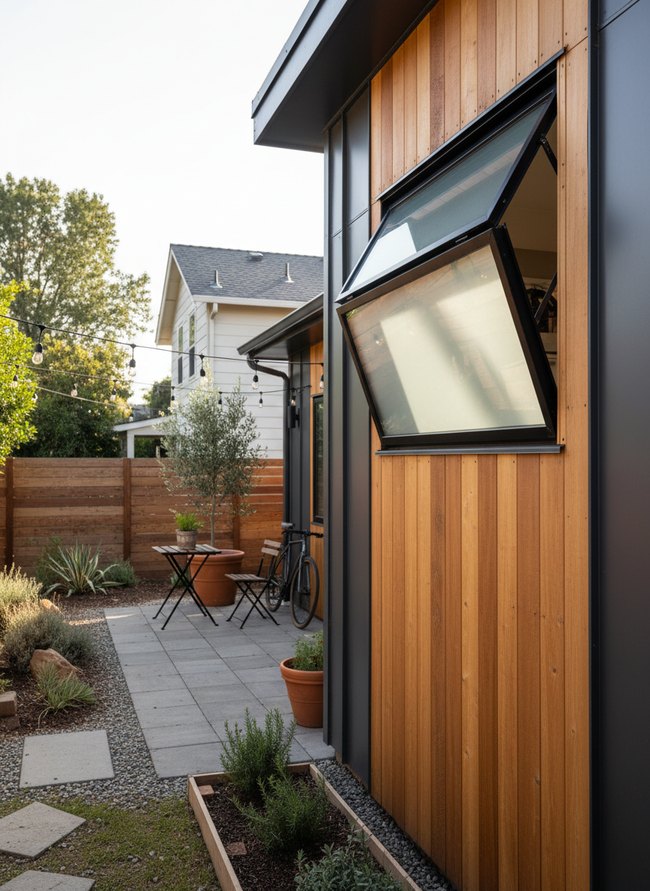
The black metal frame of the hopper ADU windows opens outward at a sharp angle. The design offers privacy and controlled ventilation over wide-open views. Natural light still streams inside, warming the cedar-plank siding and dark metal panels.
7. Slim Profile Jalousie Glass
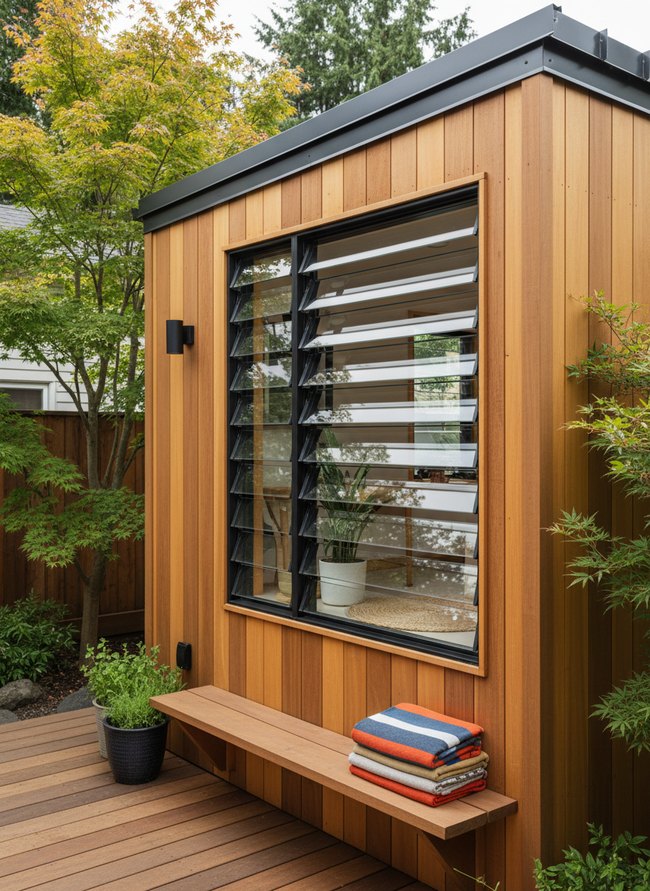
Black metal jalousie windows offer many small glass panes that open wide for airflow. The windows provide maximum breeze, trading a solid wall for ventilation. A warm cedar bench sits below the glass, inviting you to pause outside the building.
8. Tinted Top-Hinged Egress
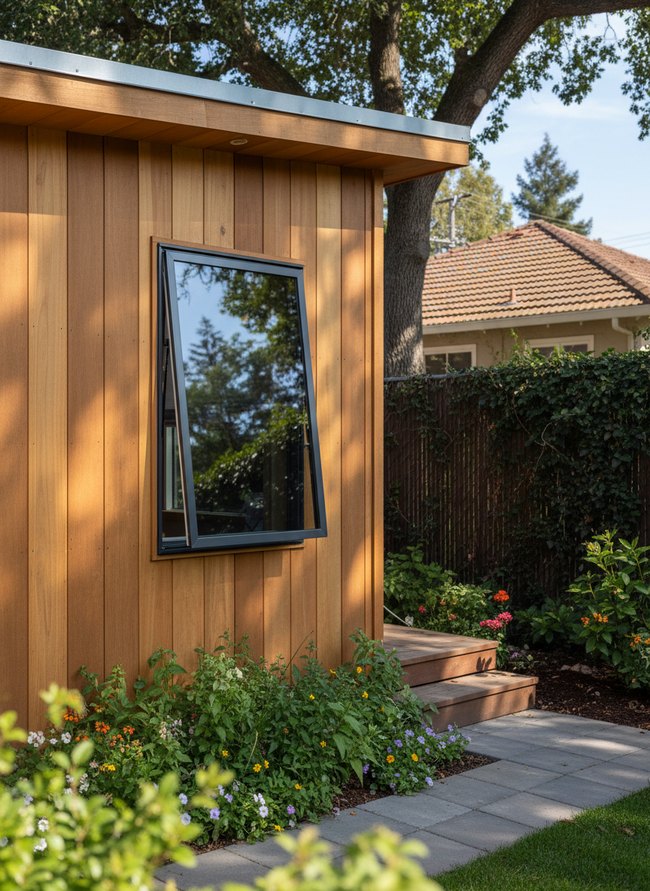
The black-framed window tilts outward from the honey-toned wood siding, allowing ventilation. Fresh air enters and fumes escape, but the window offers no weather protection during heavy rain. A concrete paver path leads to two dark wood steps, inviting passage.
9. Obscure Glass Sash Unit
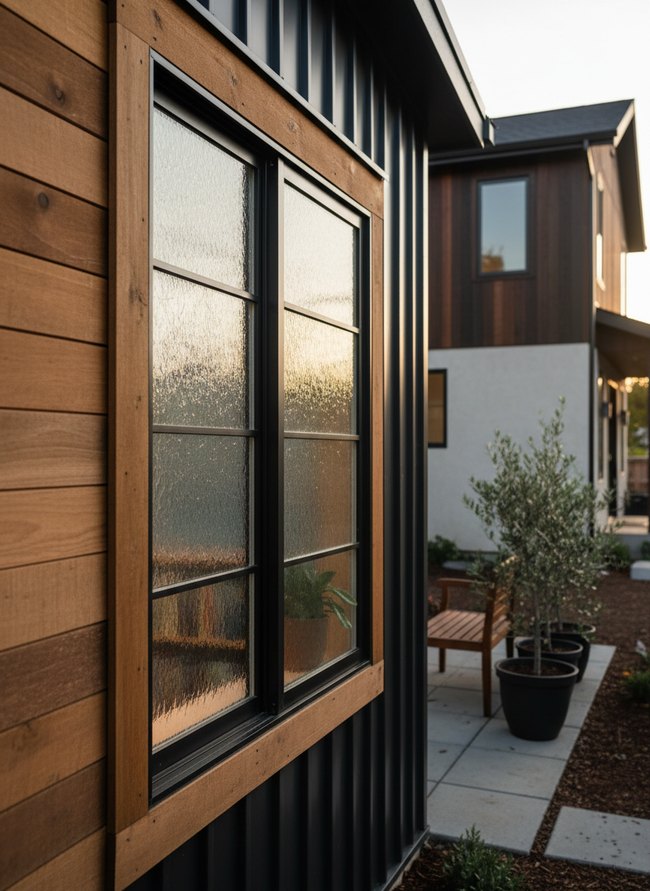
The black-framed window features textured, obscure glass panes. The glass provides privacy, trading away a clear view of the outside world. Light amber sunlight glows through the textured glass, hinting at the warm afternoon sun.
10. Vertical Bi-Fold Divider Window
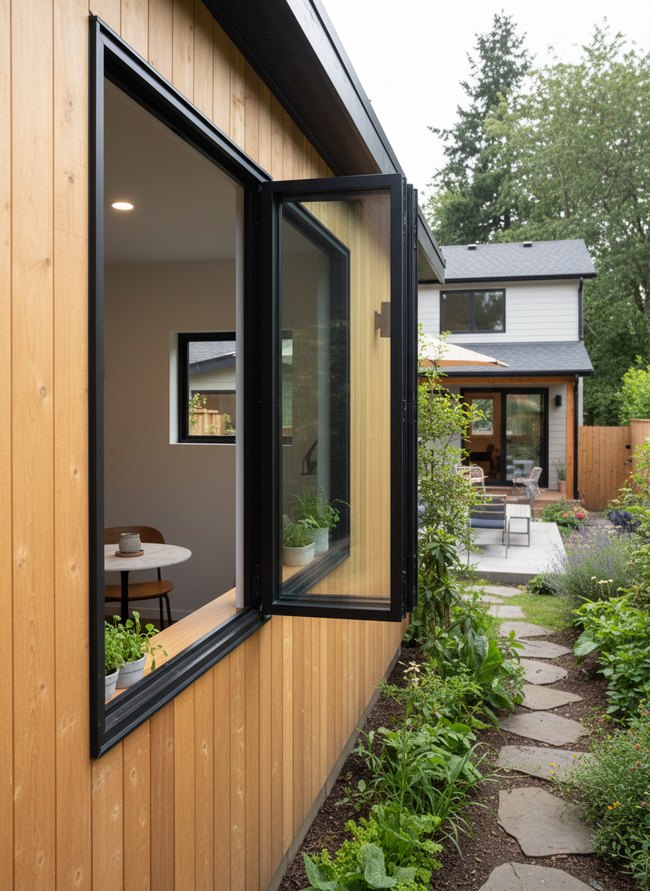
Black metal frames articulate a broad window opening, folding outward to reveal the interior. Homeowners choose this window style for maximum airflow, trading wall space for a large opening. Green plants sit on the wide wooden sill, connecting indoor and outdoor environments.
11. Corner Wrap-Around Glazing
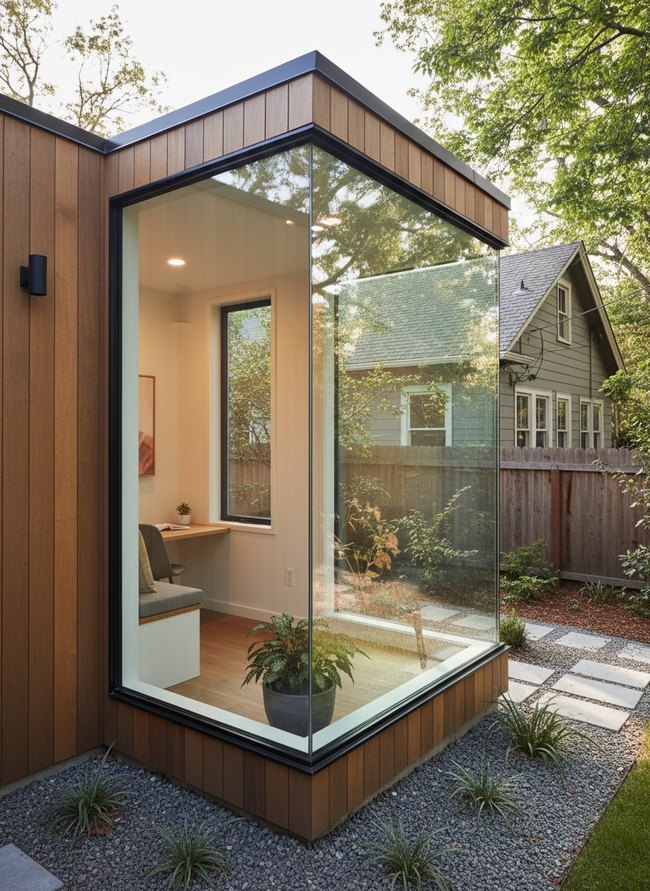
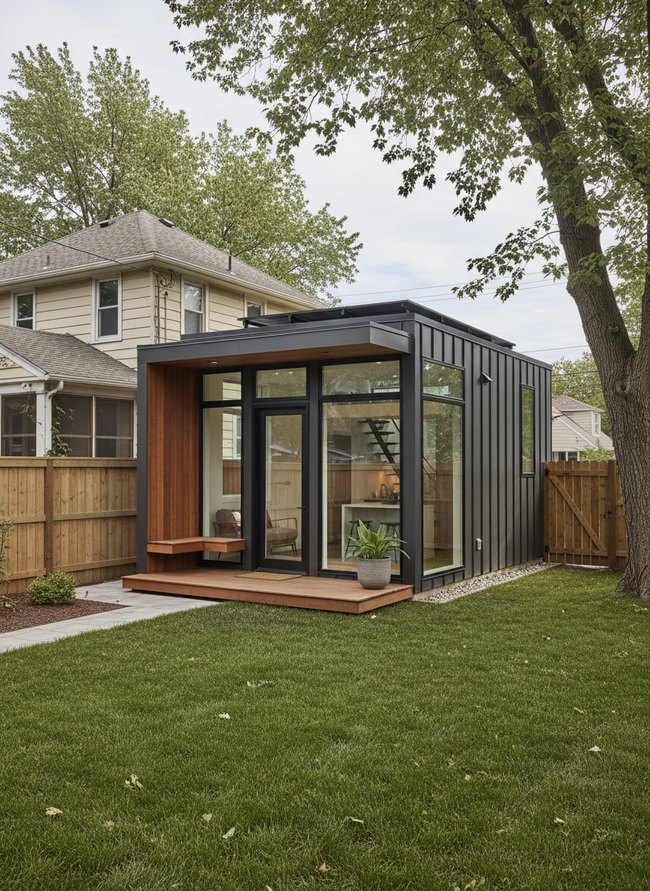
Clear glass panels form a seamless corner, bringing abundant daylight into the small structure. The large window offers expansive views of green outdoor plants. An open, airy feeling fills the interior, trading away some wall space for privacy.
12. Translucent Sliding Bay
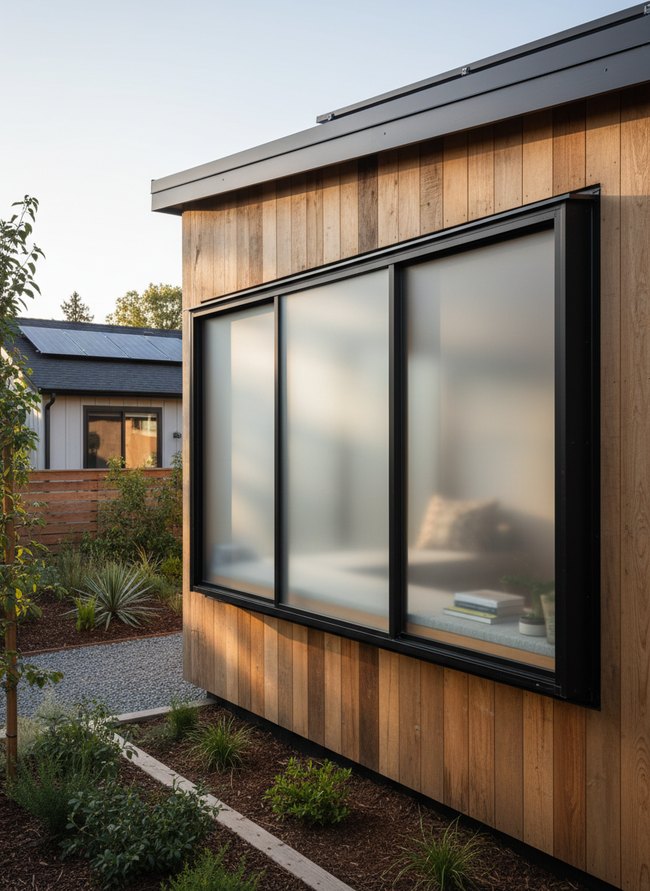
Frosted glass panels slide within a charcoal aluminum frame, offering soft light without a direct view. The ADU windows bring diffused sunshine inside, trading clear outdoor sightlines for constant privacy. Natural cedar siding frames the wide window, complementing the warm glow from within.
Should I Prioritize Light or Privacy for My Main Living Space ADU Windows?
Tall glass windows present a choice: sunlight or seclusion. Large panes bring abundant daylight inside your small dwelling. You sacrifice some personal space for those bright views. Smaller, frosted glass panels offer a private haven. These compact openings limit the amount of natural light entering your living area.
Homeowners near active city streets benefit from privacy-focused windows. They gain peace behind textured glass. Guests with distant backyard views should select light-maximizing windows. Ample sunlight fills their accessory dwelling unit. You enjoy expansive sights of green trees. Neighbors will see into your bright space. A single double-hung window allows for both. You push the lower sash up for fresh air.
Fixed Windows vs. Operable Windows: What’s Worth the Extra Cost for an ADU?
Large glass panes offer a choice: fixed or operable. Fixed windows seal tightly, providing a crystal-clear view without drafts. Operable windows open, letting in fresh air and summer breezes. Window costs differ greatly between these two types. Fixed glass panes cost less to buy and install. You pay more for operable sash frames and moving hardware.
A fixed window provides maximum daylight. It also creates a solid wall of glass. Operable windows allow natural ventilation. They also offer escape routes in emergencies. Consider your specific needs for each room. A bedroom needs an operable window for fire safety. A bathroom benefits from a small operable frosted window for steam release.
For a sunroom or a long hallway, fixed panes work well. They bring in generous light at a lower price point. You can save money on your ADU build with them. A fixed window needs less maintenance over time. Operable windows need occasional cleaning of their tracks and hinges. Your budget dictates some choices. Pick fixed windows for areas needing just light. Choose operable windows where fresh air matters most.
Which Idea Will You Try First?
That’s 12 different takes on adu windows. The best ideas above are usually the smallest moves — one material, one layout shift, one piece of furniture in the right place. Pick whichever room feels closest to your space and start there before tackling the rest.
Found an idea worth keeping? Save this post to your Pinterest board so it’s waiting for you when you’re ready to start your own project.