How to Create a Focal Point in a Tiny Living Room
A compact floor plan offers cozy comfort, yet a small footprint requires careful choices for visual impact. Grand furniture pieces demand precious floor space, while smaller accents risk getting lost in an open room. Crafting a tiny home focal point means picking one strong element to center the design. The strategy avoids clutter and brings clear purpose to the dwelling. Your personal style, whether modern minimalist or rustic farmhouse, helps guide critical design decisions. Each approach balances bold statements with practical functionality, creating a harmonious, functional living area. The following methods help create a compelling visual center for your space.
1. Window View Anchor
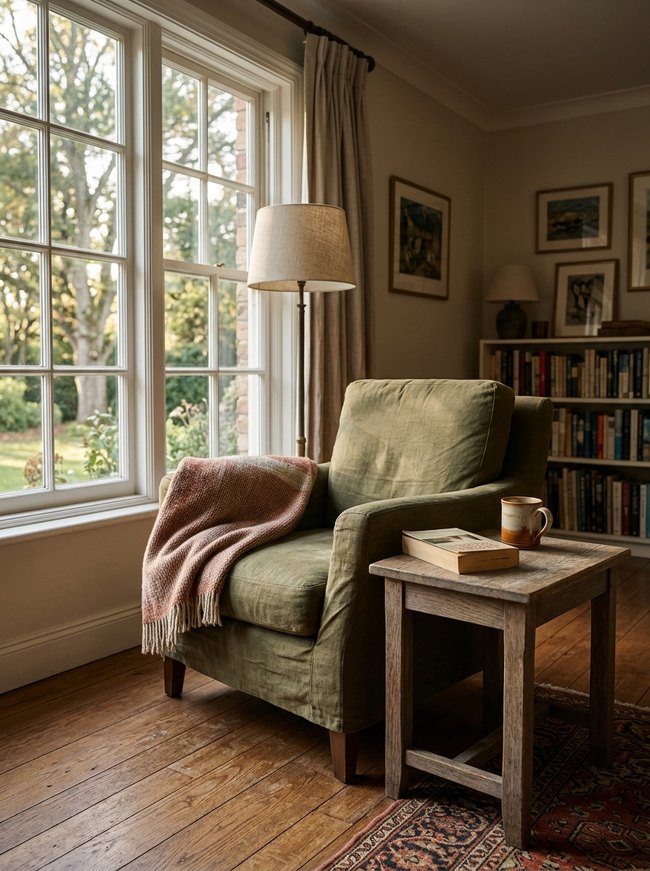
The large white window frames a bright outdoor scene, drawing the eye to green trees and soft sunlight. Homeowners could make the exterior view the tiny home focal point, choosing light-colored window treatments that allow plenty of natural light inside. A plush olive green armchair beside the window offers a comfortable reading spot, blending relaxation with an appreciation for the outdoors.
2. Gallery Wall Highlight
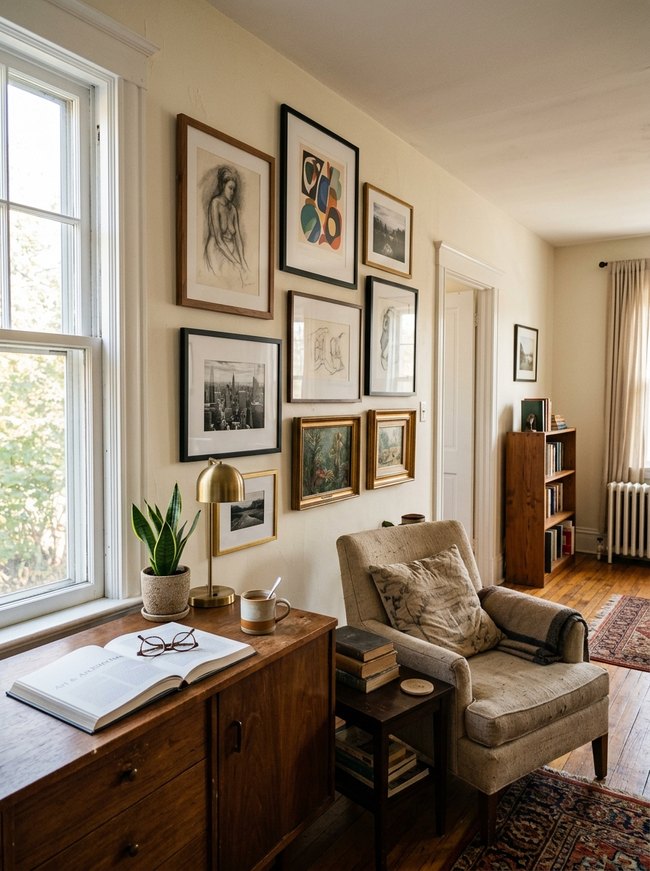
The gallery wall of framed art creates a strong visual statement on the cream-colored wall. A single large piece could create a dramatic tiny home focal point, but many smaller frames offer a collected, personal feel. A brown wooden credenza below the art provides a stable base.
3. Floating Shelf Arrangement
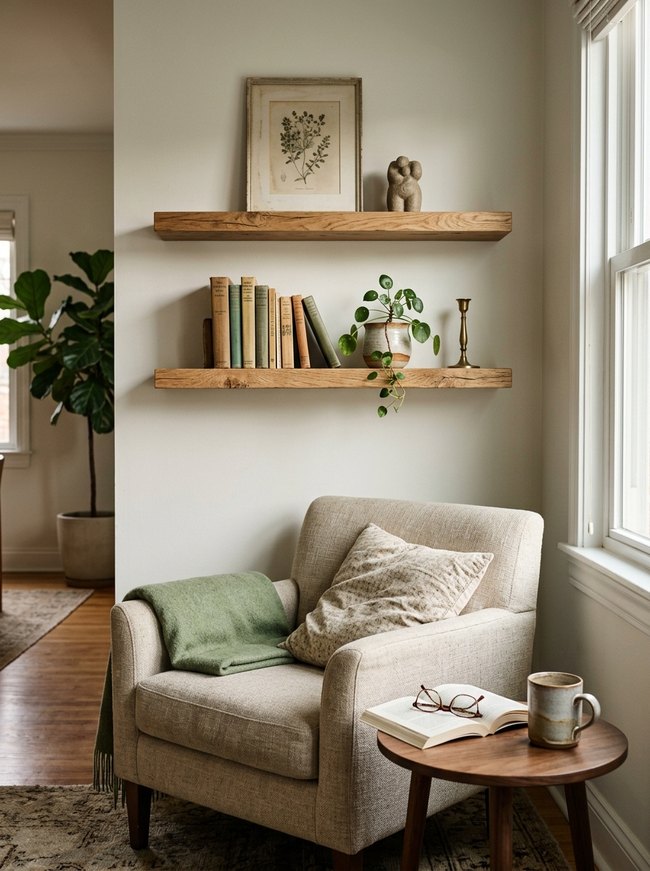
Honey-toned floating shelves provide a grounded, horizontal line for wall decor. The shelves gain flexible display space for small objects like a potted green plant or a stack of antique books, trading away the built-in storage of a larger unit. A textured cream armchair sits below, creating a cozy reading nook that becomes a tiny home focal point.
4. Bold Area Rug
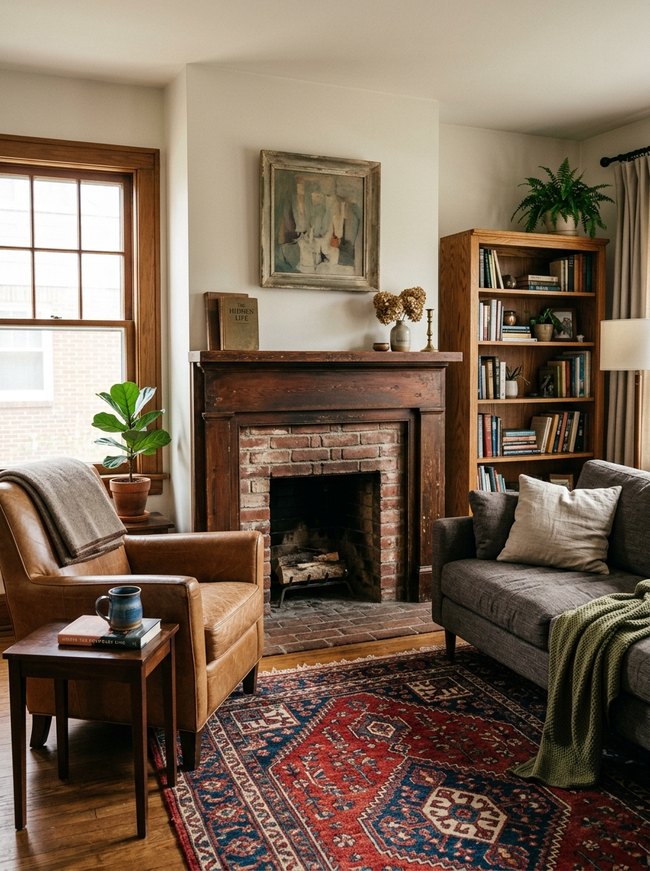
The deep red and navy wool rug draws immediate attention with bold geometric patterns on the light oak floor. The brightly colored rug brings warmth to the tiny home, but lessens the impact of the dark brick fireplace. A soft green throw blanket draped over the gray fabric sofa adds another color layer, inviting comfort.
5. Statement Lighting Fixture
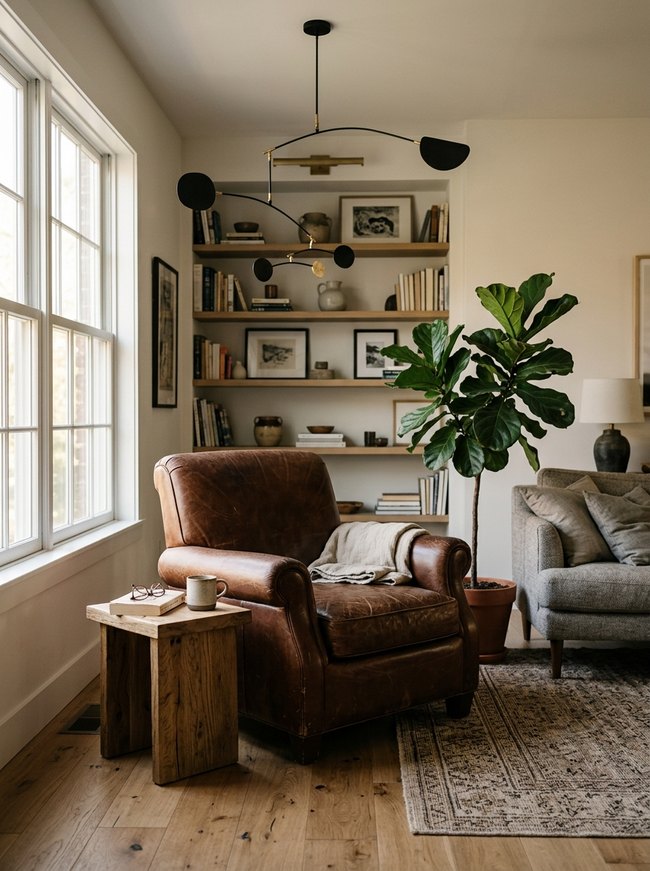
A black mobile chandelier hangs from the ceiling, its gold-toned arms extending in dynamic balance. A large, sculptural light fixture creates a strong tiny home focal point, drawing eyes upward in a small room. The warm brown leather armchair below offers a contrasting visual weight, grounding the space with its inviting texture.
6. Compact Fireplace Insert
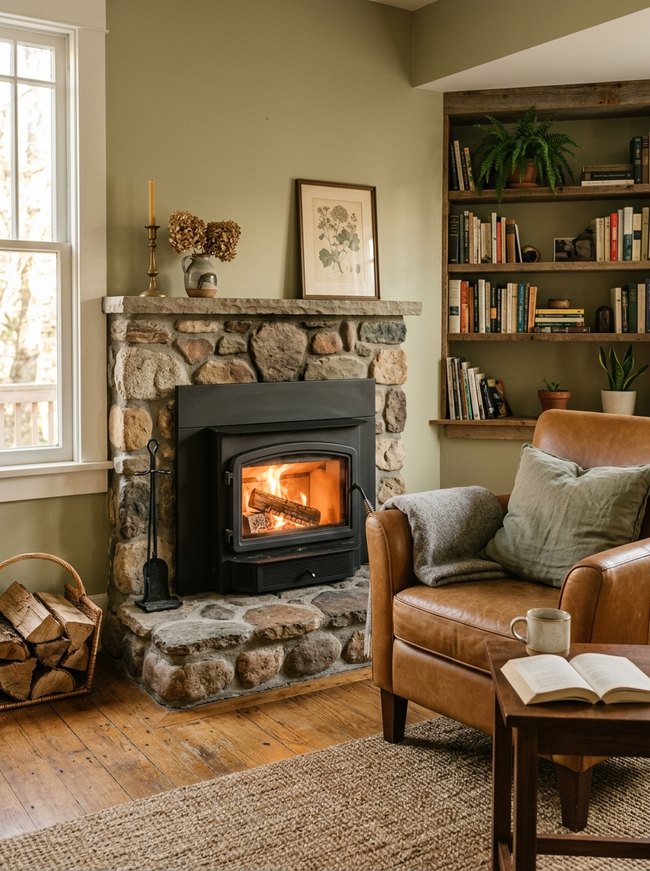
The black cast iron fireplace insert draws attention with its warm, orange flame. A stone hearth, built from rounded river rocks, projects into the room, grounding the visual weight of the wood-burning unit. The cast iron unit offers a functional heat source over an open fire, gaining efficiency and losing a wider view of the crackling logs.
7. Vibrant Accent Chair
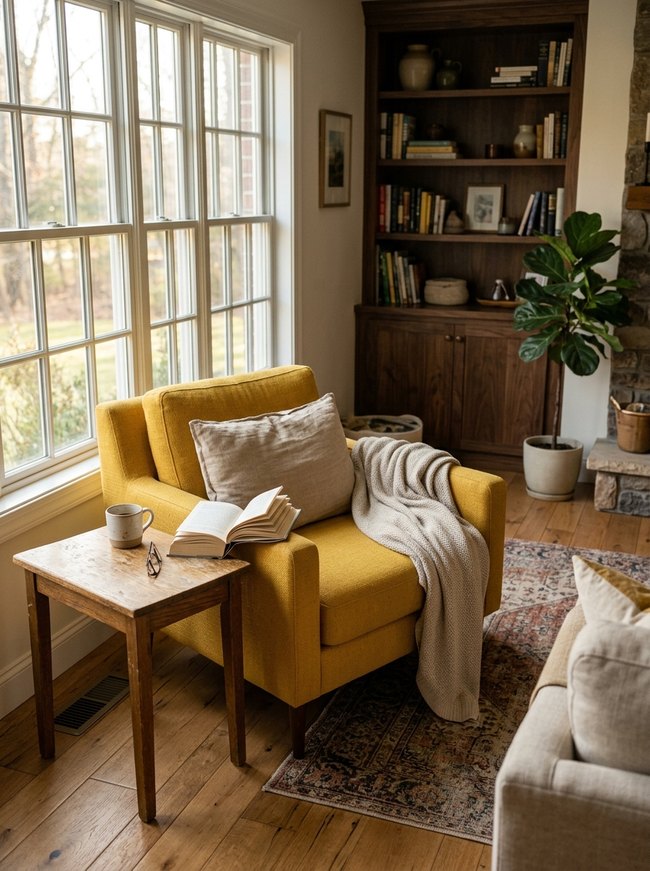
The mustard yellow armchair draws the eye directly to the sunlit corner. A vibrant accent chair creates a clear tiny home focal point, moving attention from the dark walnut built-in bookcase. A light cream linen pillow and knitted throw soften the chair’s bold color.
8. Textured Ottoman Focus
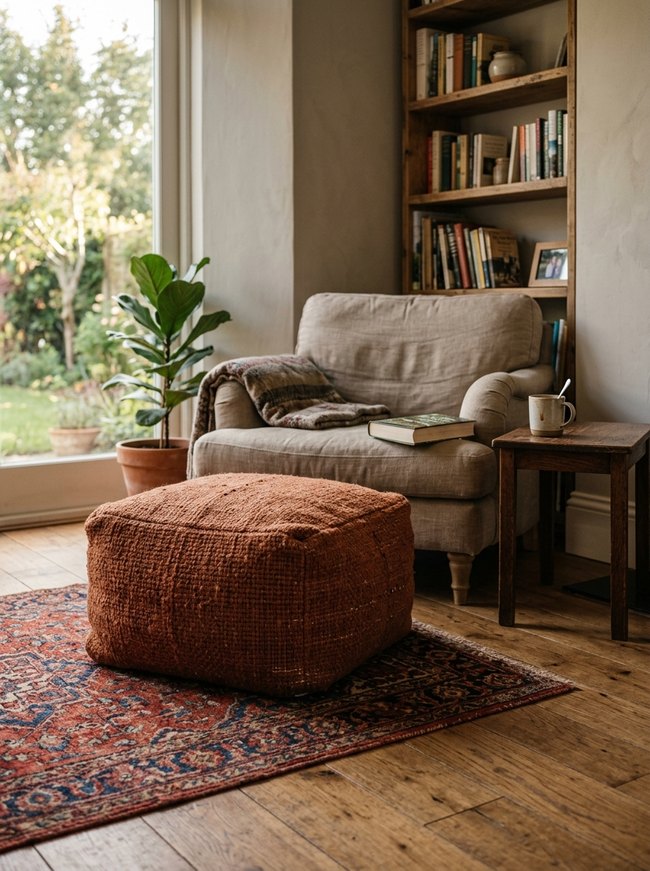
A chunky, rust-colored ottoman commands attention on the warm wooden floor. The soft, square pouf acts as a textured tiny home focal point, offering cozy comfort over sleek, hard surfaces. The woven red and blue rug beneath the ottoman provides a rich, patterned base, inviting bare feet to settle in.
9. Mirror Reflection Point
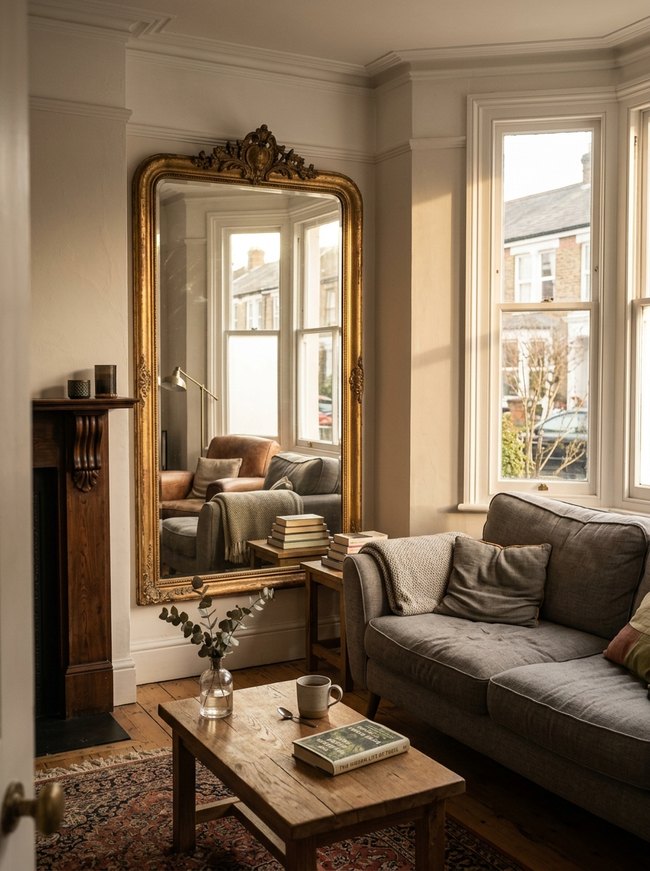
The tall, ornate gold mirror immediately captures attention, making the small living space feel more expansive. A large reflective surface offers light and perceived depth within your tiny home focal point. A dark wooden mantelpiece sits beside the mirror, offering an earthy contrast.
10. Artful Console Display
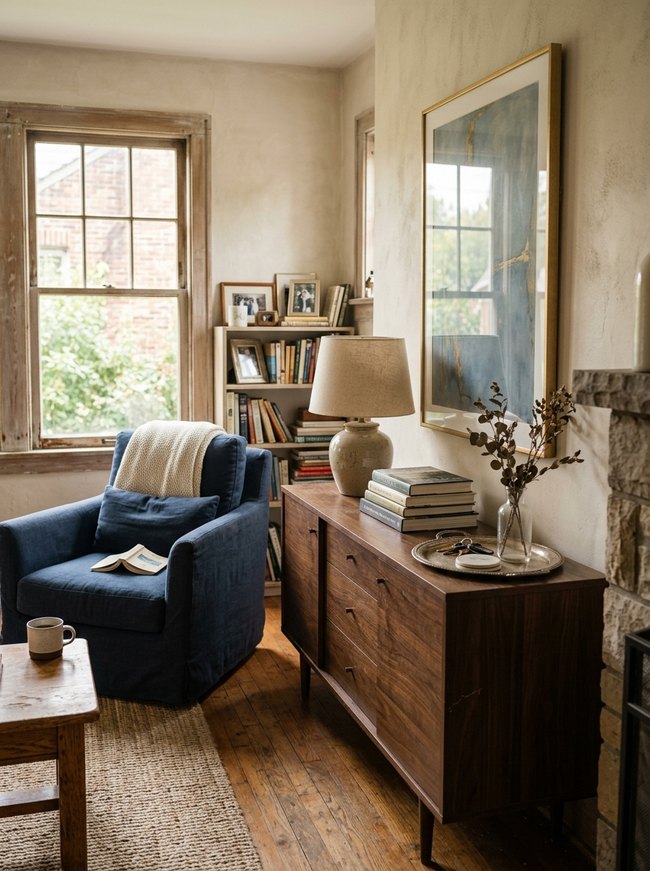
The rich walnut console cabinet commands attention with its long, low shape. The console gains a solid surface for decorative items over maximizing open floor space. A tall, framed abstract painting hangs above, adding a deep blue color to the light beige wall.
11. Built-In Nook Showcase
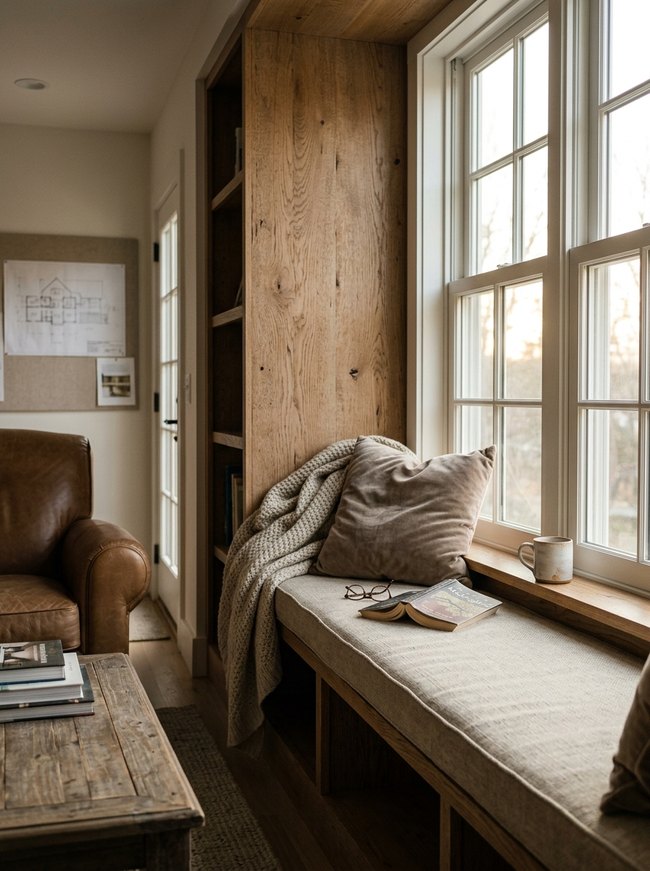
The honey-toned oak window seat with its thick cream cushion creates a cozy nook. The custom bench trades open floor space for a dedicated reading area and useful storage below. A plump beige velvet pillow and a textured oatmeal blanket invite you to settle in with a book and a warm ceramic mug.
12. Botanical Corner Oasis
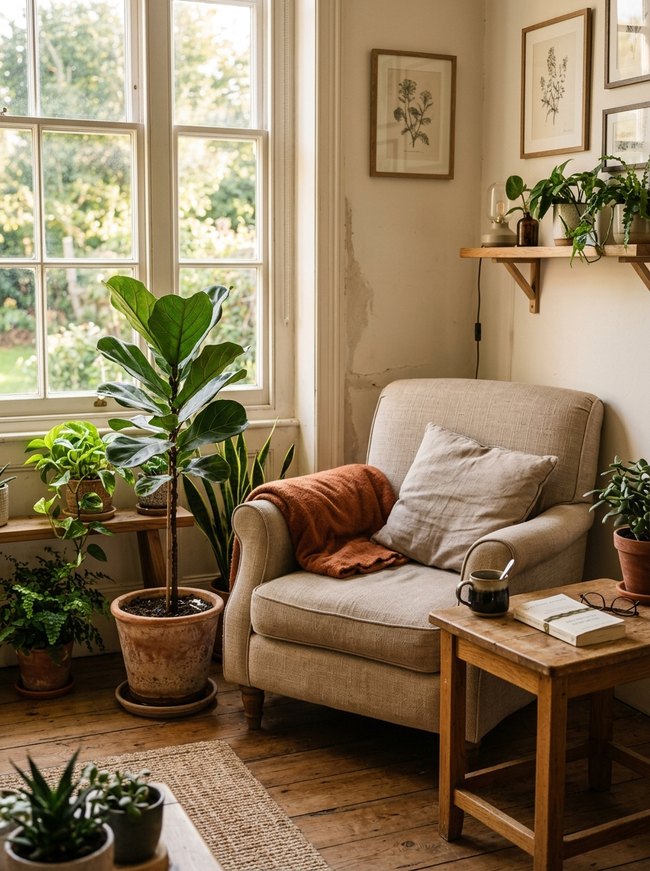
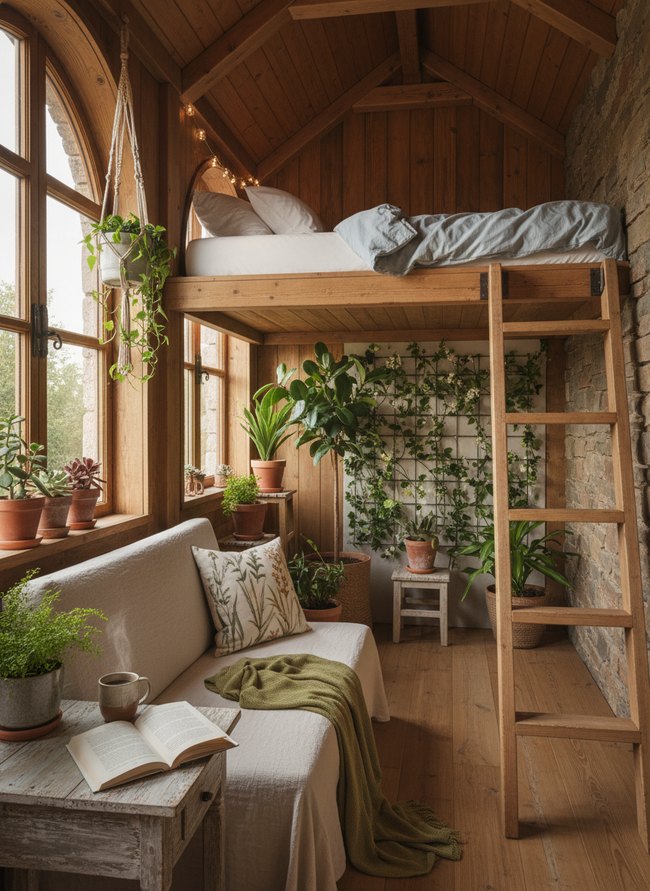
A tall fiddle-leaf fig tree in a terra cotta pot stands prominently, drawing the eye to its broad green leaves beside the large pane window. Light beige walls with distressed plaster offer a soft backdrop, creating a gentle contrast to the deep earthy tones of the plants and rough wood floors. The natural arrangement provides a calming, verdant focal point.
Should I Go Bold with One Statement Piece or Subtly Layer Multiple Elements?
Choosing between a single large focal point or several smaller items presents distinct paths for your tiny living room. A single oversized velvet armchair in a rich emerald green makes a strong, direct statement. That impressive piece demands a bigger slice of your budget. Remaining wall space around a large item stays open and uncluttered.
Layering multiple smaller elements offers a different visual experience. Three small framed photographs featuring sepia-toned cityscapes can tell a story across a painted white wall. Each small item requires careful placement to avoid visual clutter. This approach often costs less per item but adds up quickly. A small carved wooden stool next to a woven jute rug works with a low-slung ceramic planter. Tiny living rooms benefit from either strategy. A homeowner with a clear vision for one dramatic item picks the single piece. Someone who loves collecting different textures and patterns finds joy in combining many small treasures.
Is It Better to Prioritize Functionality or Aesthetics for My Focal Point?
Should your main focal point offer practical use or pure visual delight? Tiny living rooms demand smart choices. A working item, like a wood-burning stove with hammered copper accents, offers warmth and a place for cozy mugs. This functional centerpiece consumes floor space. You commit square footage to the stove’s black metal body and firewood storage.
Conversely, a large abstract painting, three feet tall, brings only color and shape. This purely aesthetic option saves valuable surface area. The artwork hangs flat against the wall, taking no precious floor space. However, the painting offers no storage for books or extra seating for guests.
Choose a functional focal point if daily needs outweigh decorative desires. A honey-toned oak storage bench, for example, gives seating and hides blankets. Pick a decorative focal point if visual impact matters most. A carved white marble bust, standing on a small dark pedestal, draws eyes without demanding work. Your living room style dictates the right path.
Which Idea Will You Try First?
That’s 12 different takes on tiny home focal point. The best ideas above are usually the smallest moves — one material, one layout shift, one piece of furniture in the right place. Pick whichever room feels closest to your space and start there before tackling the rest.
Found an idea worth keeping? Save this post to your Pinterest board so it’s waiting for you when you’re ready to start your own project.