Winterizing Your ADU: A Complete Guide
A crisp, cold gust of wind rattles your single-pane kitchen window, making the sheer white curtain dance. The sudden chill racing up your bare arm reminds you of last year’s heating bill. Your cedar deck planks creak with frozen moisture, a quiet warning. Preparing your backyard cottage for winter weather brings peace of mind. A simple checklist makes a big difference to winterize ADU spaces. The guide offers practical steps for protecting your detached accessory dwelling unit.
1. Insulated Window Panel Install
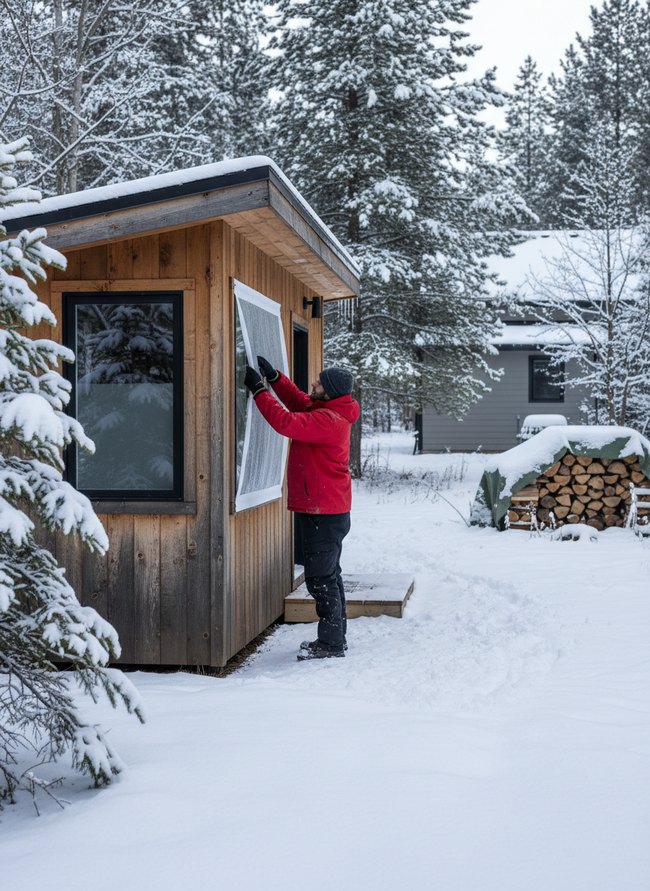
A person in a bright red jacket attaches a white insulated panel to a brown wooden ADU, preventing heat loss. The window panel fits snugly into the black window frame, keeping the tiny home warm. The simple panel install provides a quick, effective barrier against cold winter air.
2. Pipe Freeze Protection Wrap
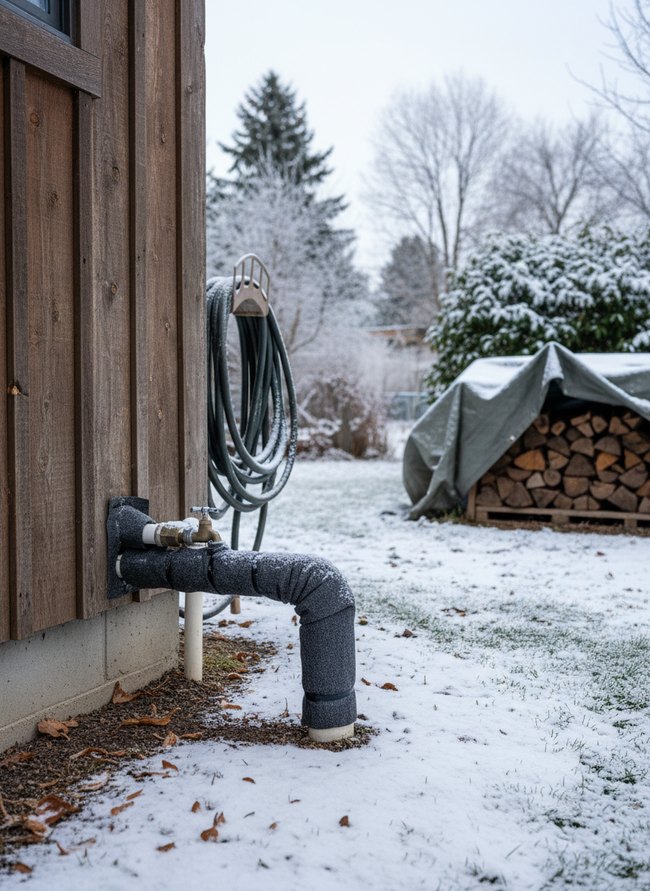
Gray foam pipe insulation covers the outdoor water pipes, protecting them from freezing winter temperatures. A brass spigot emerges from the wooden wall, ready for use even in snowy conditions. The insulation prevents costly damage to your ADU’s plumbing system.
3. Draft Stopper Door Seal
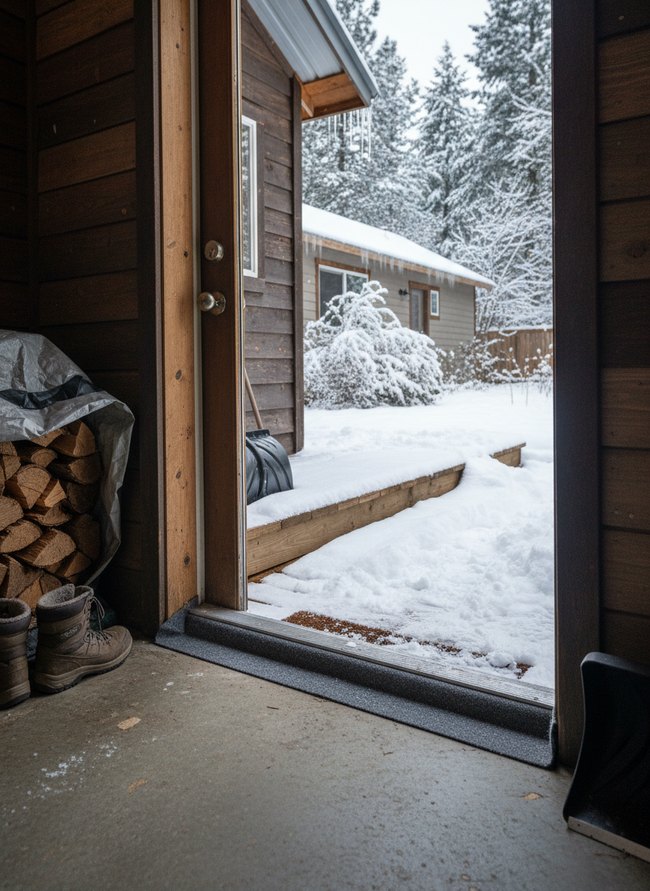
A dark gray draft stopper door seal lies flat along the concrete floor, hugging the bottom of the wooden door frame. The flexible rubber seal creates a tight barrier, preventing cold air from seeping into your warm ADU. Homeowners can easily install the simple door seal to keep their home cozy all winter.
4. Thermal Curtain Rod System
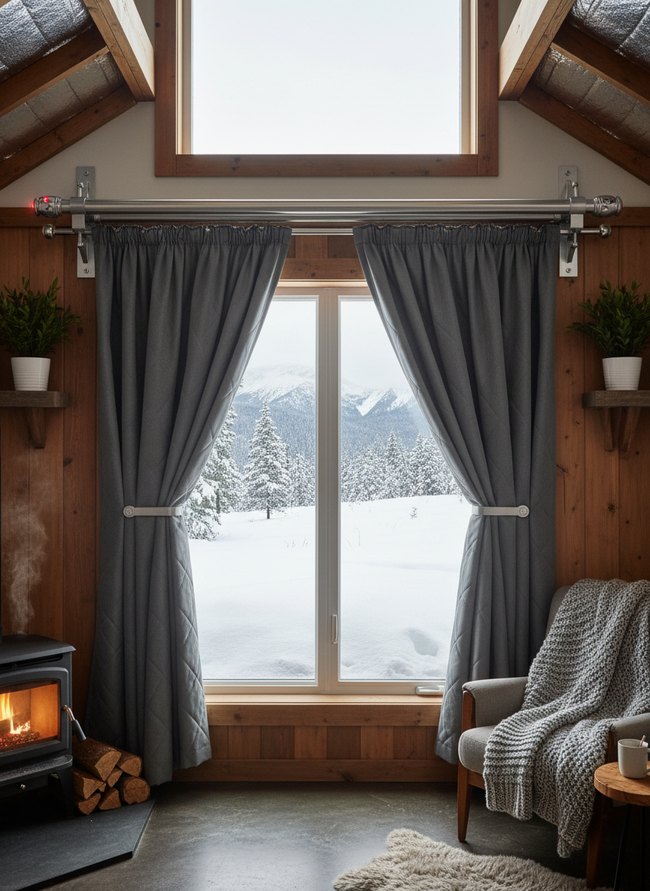
Thermal gray curtains hang from a double metal rod, blocking cold air from the window frame. A small wood stove on a black slate hearth adds warmth to the cozy room. The heavy fabric keeps heat inside the space, making it easier to winterize an ADU.
5. Smart Thermostat Integration
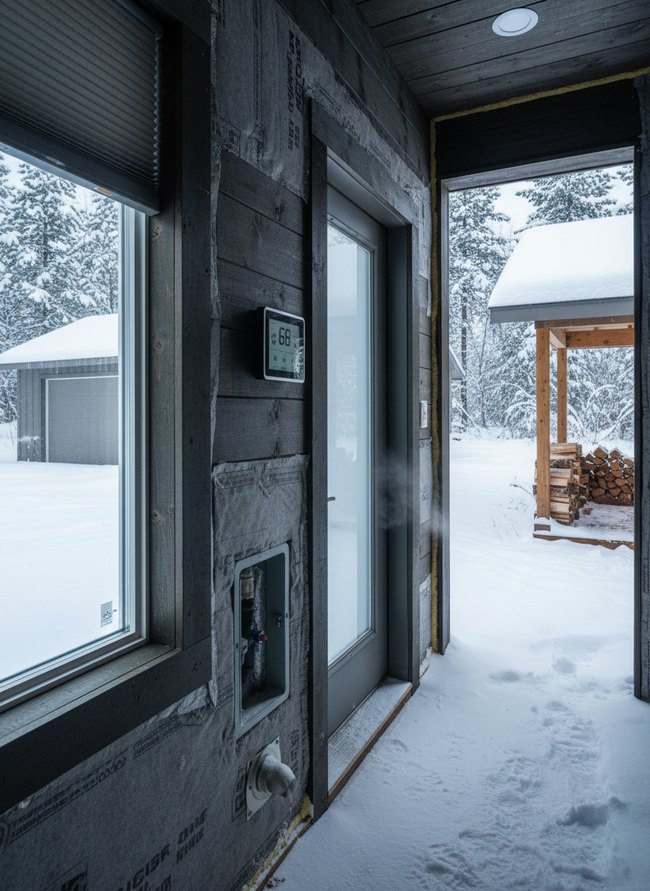
A black digital thermostat on the charcoal gray wooden wall displays a warm 68 degrees, allowing you to easily monitor and adjust the ADU’s temperature from inside. You can view the snow-covered ground and distant wooden shed through the clear window and glass door, which helps you decide if you need to turn up the heat. The system provides simple control over your winter heating.
6. Exterior Gutter Cleanout
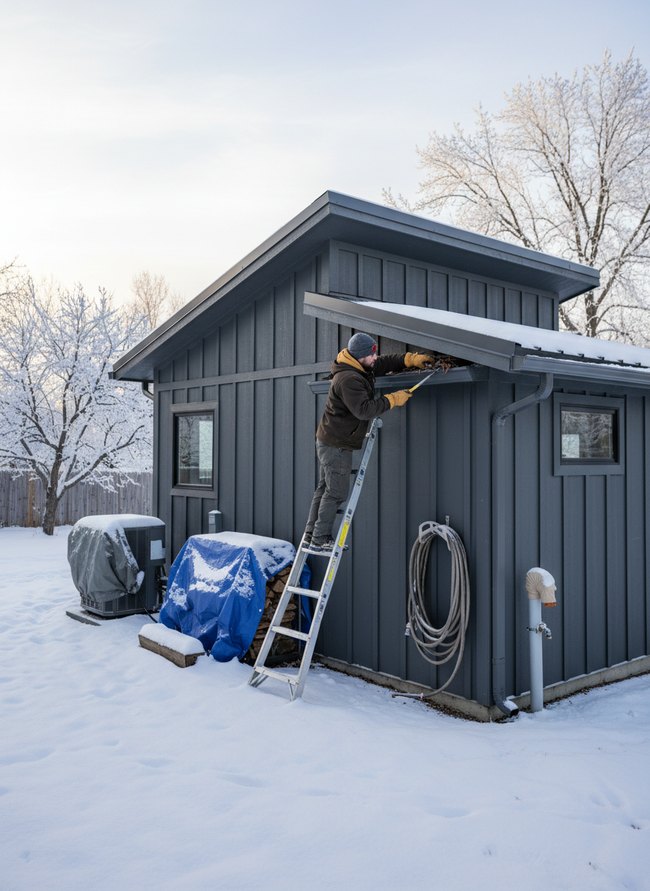
A person on a shiny silver ladder clears dark debris from a gutter on the side of a gray, wood-paneled building. The person’s gloved hands reach into the metal gutter, ensuring proper water flow and preventing ice dams during cold weather. The yearly task of cleaning out the ADU’s gutters helps avoid costly water damage to the roof and foundation.
7. Underfloor Insulation Upgrade
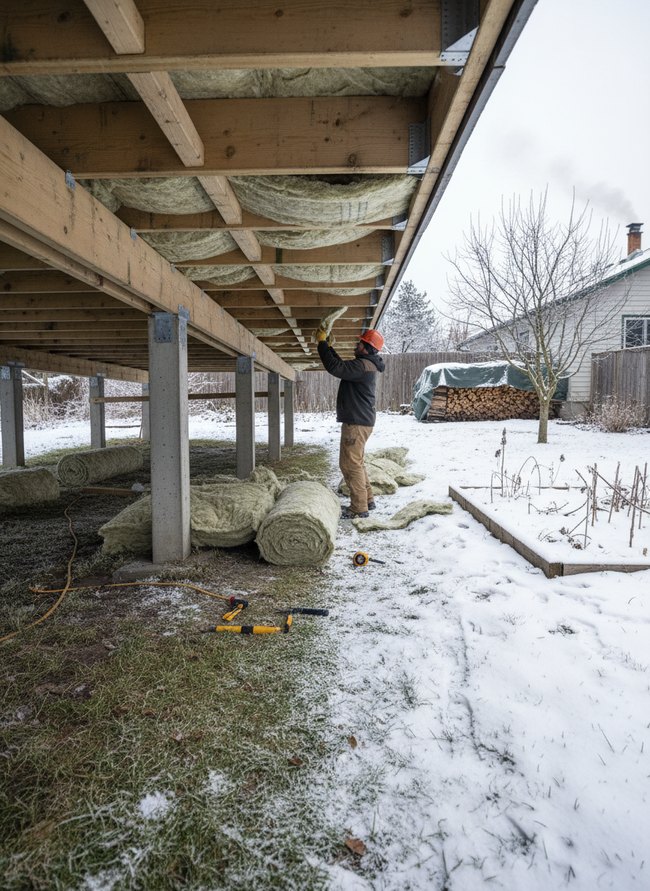
A man in an orange hard hat installs thick, yellow insulation batts between the rough wooden floor joists of a raised structure. The fluffy material fills the underfloor space, trapping warm air inside your ADU and keeping cold air out. The insulation upgrade makes your home’s floor much warmer, stopping drafts and cutting down your winter heating bills.
8. Foundation Skirt Reinforcement
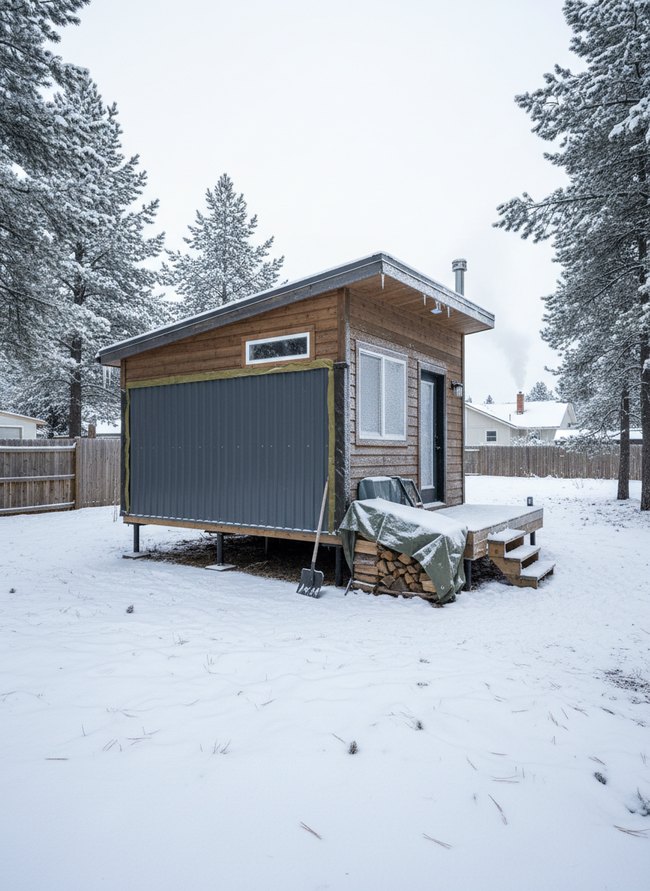
A dark gray corrugated metal skirt wraps around the timber building’s exposed foundation, blocking cold winter air from underneath the structure. Yellow insulation peeks out from the metal panels’ upper edge, adding an extra layer of warmth for your winterized ADU. The skirt keeps the floor warm and helps prevent frozen pipes.
9. Weatherproof Vent Cover
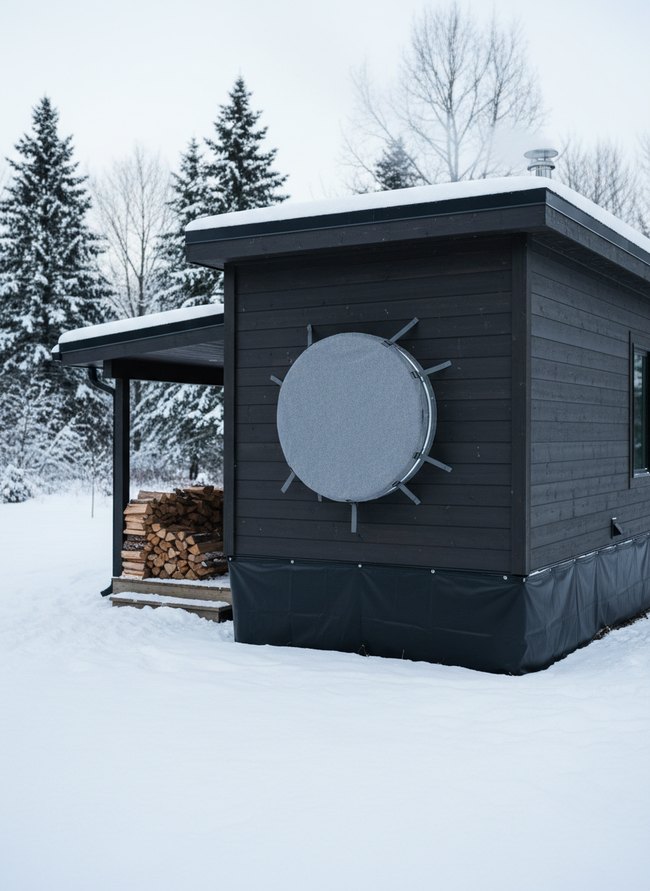
A large, round, gray vent cover protects a wall opening on the dark wood plank siding. The sturdy cover keeps cold winter air out of the small building. The cover insulates the interior, saving money on heating bills.
10. Portable Space Heater Placement
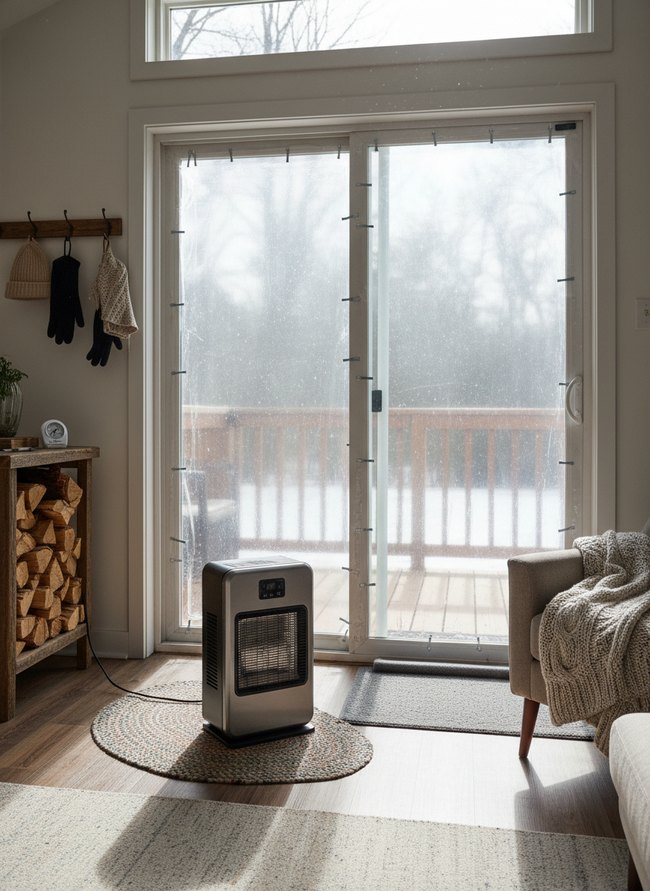
A tall silver space heater stands on a round woven rug near a large sliding glass door. The heater provides extra warmth, making the ADU cozy during cold months. You can safely place the device on a flat, non-flammable surface for efficient heating.
11. Drainage System Check
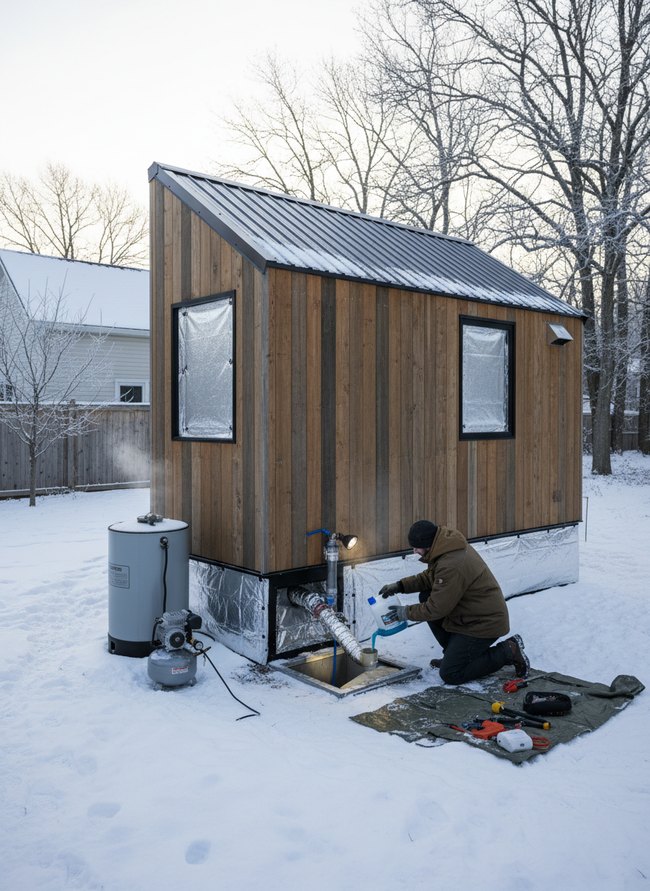
A person in a brown winter coat kneels beside a small wooden building, pouring blue liquid into a drain pipe. A gray water heater and a small air compressor stand nearby, connected by black hoses to the building’s exposed plumbing. Draining water lines and adding antifreeze to the system prevents freezing pipes.
12. Snow Load Roof Brace
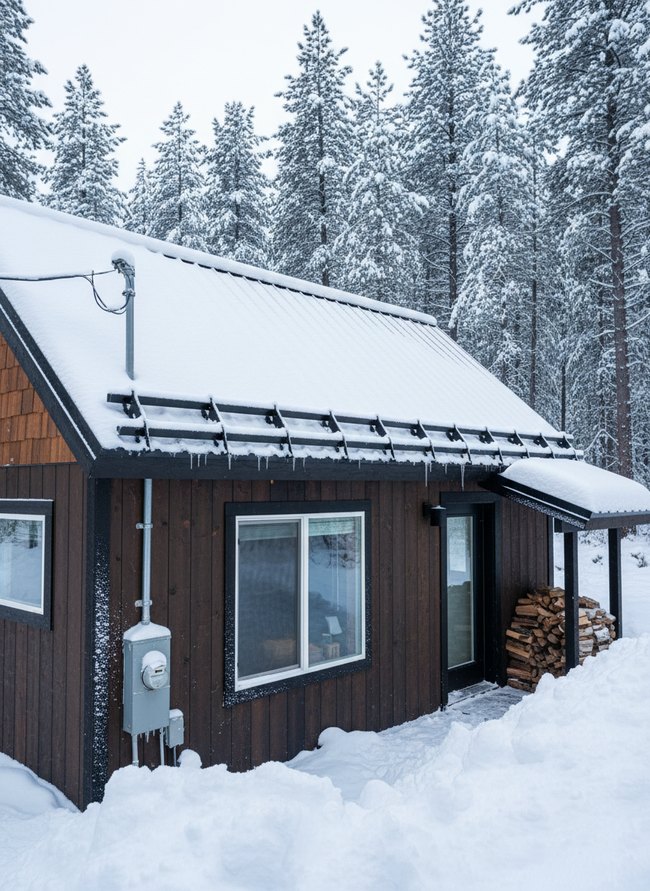
Dark brown metal snow guards on the corrugated roof hold thick snow in place, preventing a sudden heavy release. Sturdy black rails distribute the weight of accumulated snow across your roof, protecting the structure of your small accessory dwelling unit. The dwelling stays safe during heavy winter weather.
The ‘Hidden Cold Spot’ Audit: Finding and Fixing Thermal Bridges You Didn’t Know You Had
…plumbing lines freeze solid in winter. Infrared cameras reveal hidden cold spots in your accessory dwelling unit, showing exact areas needing insulation. You can rent a thermal camera for a small fee, which pinpoints missing insulation behind drywall or within floor joists. An exposed rim joist, a common oversight in older structures, leaks considerable heat, making your floor noticeably cold. Sealing these gaps with rigid foam board and expanding spray foam stops that heat loss, keeping your tiny structure warmer. Many guides suggest adding more attic insulation, but often the real problem lies with wall outlets. Each electrical box on an outside wall creates a small, rectangular hole for cold air, chilling the surrounding plaster. Foam gaskets behind outlet covers form a simple air barrier, blocking those icy drafts. Your baseboards might also let in frigid air. A bead of clear silicone caulk along the bottom edge of painted trim stops sneaky air movement, saving you money on heating bills. Drafts around window frames also steal warmth. New weatherstripping around old window sashes creates a tighter seal, trapping warm air inside your living space.
Beyond the Obvious: Protecting Your ADU’s Plumbing from Freezing, Even When It’s Unoccupied
Still, a simple drip from your faucet won’t save unheated pipes in a vacant accessory dwelling unit. You need more robust strategies for truly cold weather. One smart thermostat, a white plastic square, offers remote control. That device can maintain a low ambient temperature, preventing water inside your PVC pipes from freezing solid. Many people suggest draining your water lines completely. However, this common advice often falls short because small pockets of water remain trapped within low points or fixture traps. These isolated water pockets can still expand, cracking a dark gray pipe or a shiny brass valve. Instead, consider adding foam pipe insulation, a gray cylindrical sleeve, around any exposed sections. This affordable material adds an extra layer of thermal protection. Heat tracing cables, thin black wires, provide targeted warmth. These specialized cables wrap around vulnerable areas, like a section of copper pipe near a concrete wall. You turn these cables on during deep freezes. They keep water moving smoothly. A single small burst pipe causes extensive water damage. Protecting these systems saves significant money.
Which Idea Will You Try First?
That’s 12 different takes on winterize adu. The best ideas above are usually the smallest moves — one material, one layout shift, one piece of furniture in the right place. Pick whichever room feels closest to your space and start there before tackling the rest.
Found an idea worth keeping? Save this post to your Pinterest board so it’s waiting for you when you’re ready to start your own project.