ADU vs Tiny Home: Which Is Right for Your Property?
An extra space, a small unused patch of green lawn, can really nag at you. Your mind keeps running through various possibilities for the vacant corner, weighing options like a redwood deck or a garden shed. Many homeowners consider adding another structure, hoping for rental income or a handy place for visiting relatives to stay. Property expansion brings big questions about building types and zoning rules. Understanding the differences between an ADU and a tiny home helps clarify your path forward. The guide breaks down common concerns, helping you choose the right dwelling for your specific backyard.
1. Rural Detached ADU Comparison
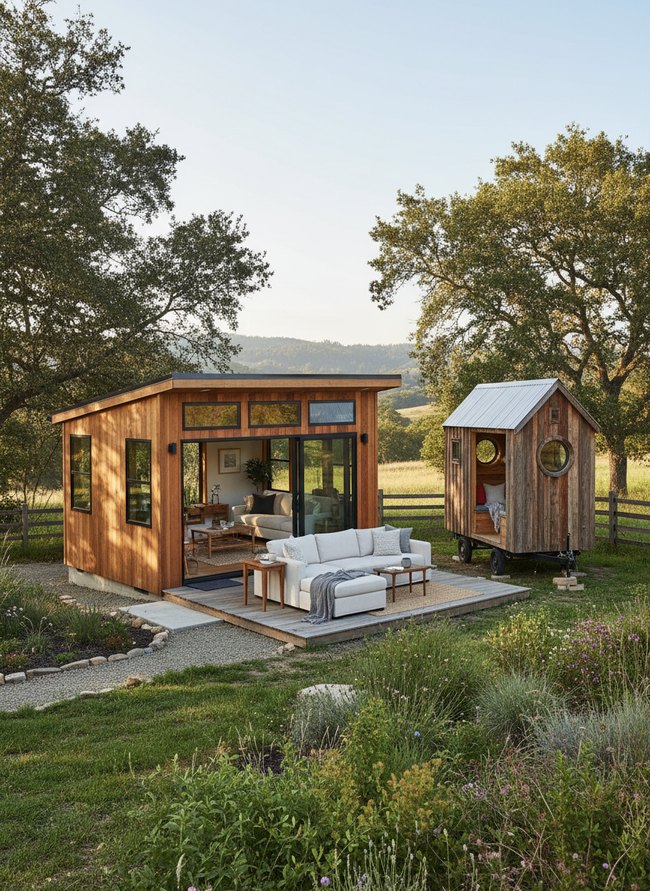
The rectangular cedar-sided ADU features a flat black roof and multiple large glass windows, bringing natural light inside. A wide wooden deck extends from the main structure, holding a cream-colored outdoor sectional sofa and two small wooden side tables. A tiny rustic wooden shed on wheels with a round window sits next to the deck, offering extra space. The setup works well for creating a private, functional extension of your living area.
2. Urban Backyard Tiny Contrast
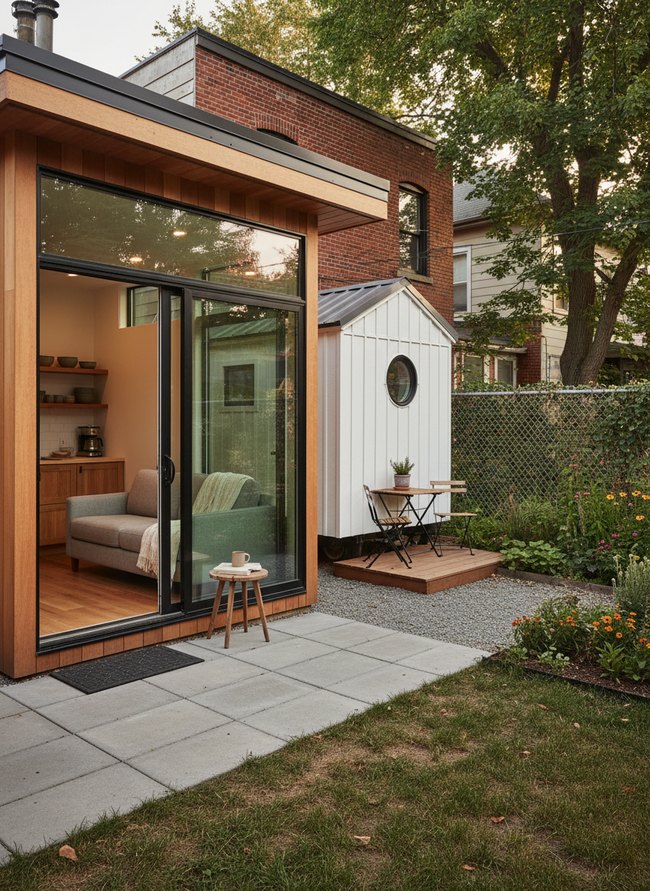
A modern cedar-clad structure with full-height glass doors opens to a small concrete patio, extending the living space outdoors. White vertical siding on a smaller adjacent structure creates a garden shed, providing handy storage right in your backyard. The ADU vs tiny home setup shows creative use of a compact footprint.
3. Modern Prefab ADU Analysis
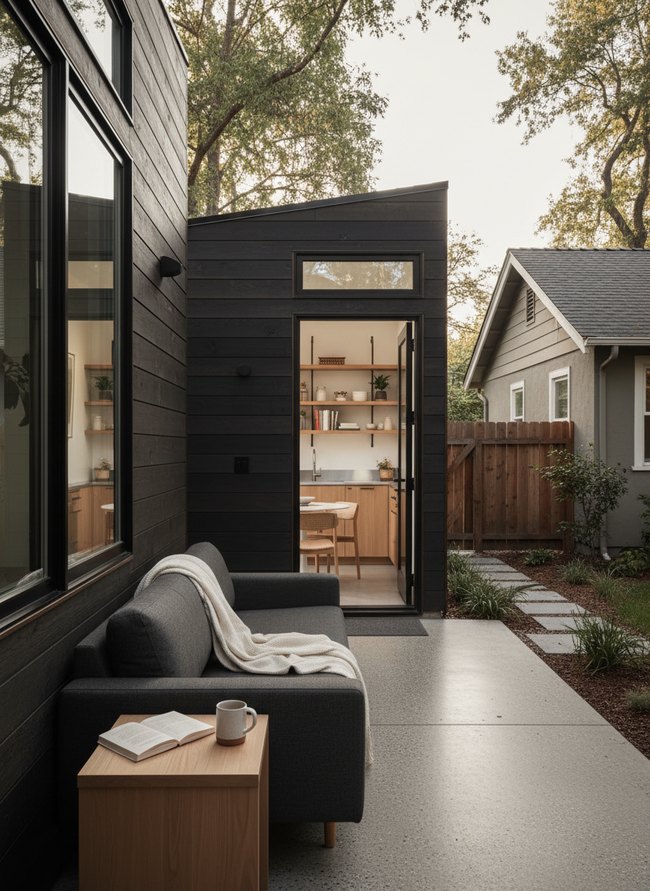
A dark timber-clad ADU features a large glass door and a small window, offering a view of the light wood kitchen inside. A gray patio couch with a cream throw blanket sits outside, providing a comfortable outdoor living space. The layout helps you enjoy both indoor comfort and fresh air easily.
4. Wheeled Tiny Home Review
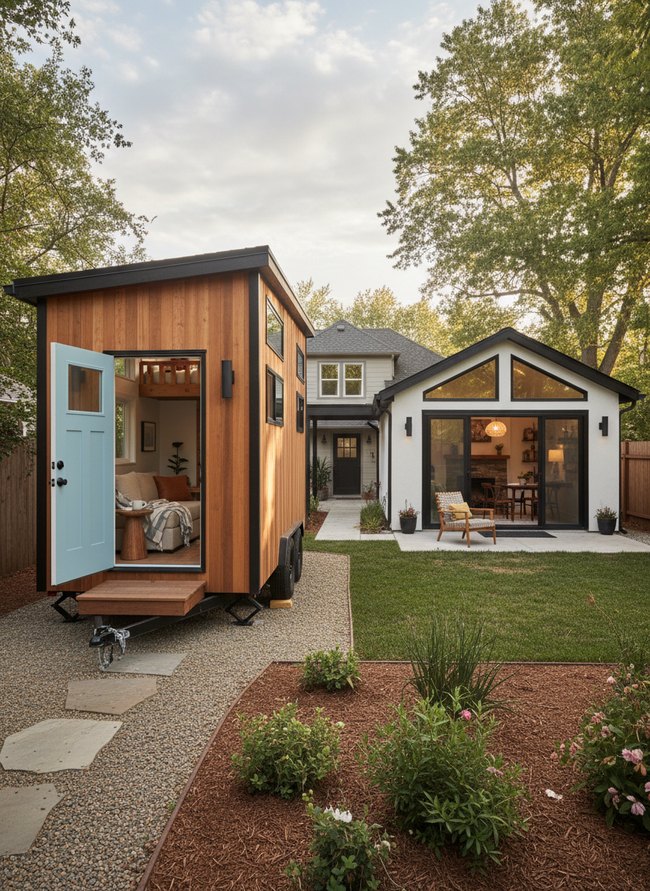
A brown cedar tiny home with a light blue door sits on a gravel patch beside a green lawn. Natural wood stairs lead into the small structure, revealing a beige sofa inside. The wheeled home offers a flexible living solution, easily moved to different locations.
5. Compact Foundation ADU Study
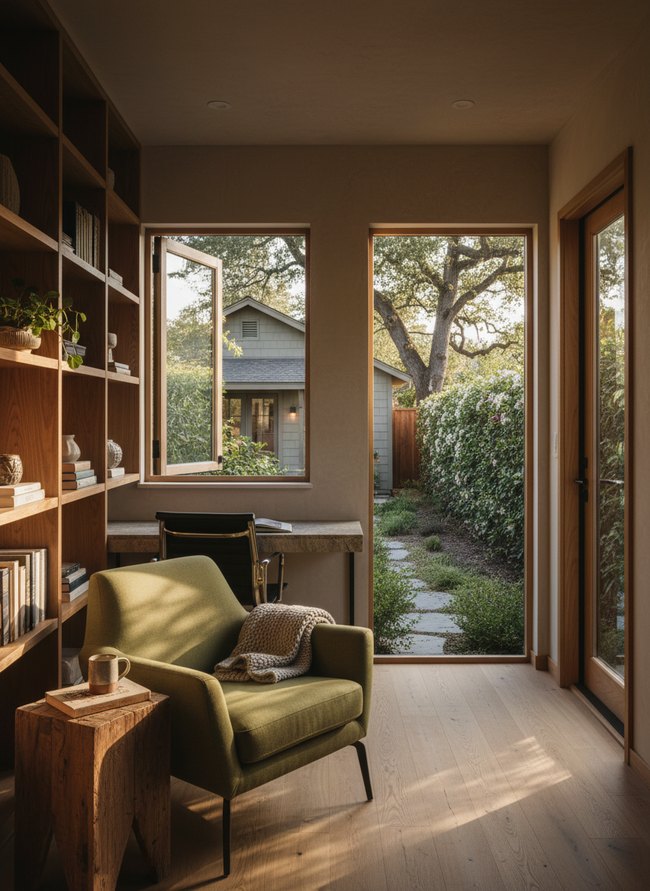
Pale wood flooring stretches through the bright room, providing a clean, warm base for the green velvet armchair. A built-in oak bookshelf fills the left wall, offering ample storage for books and decorative objects. Large wooden-framed windows look out onto a small garden path, connecting the indoor space with surrounding nature.
6. Off-Grid Tiny Living Choice
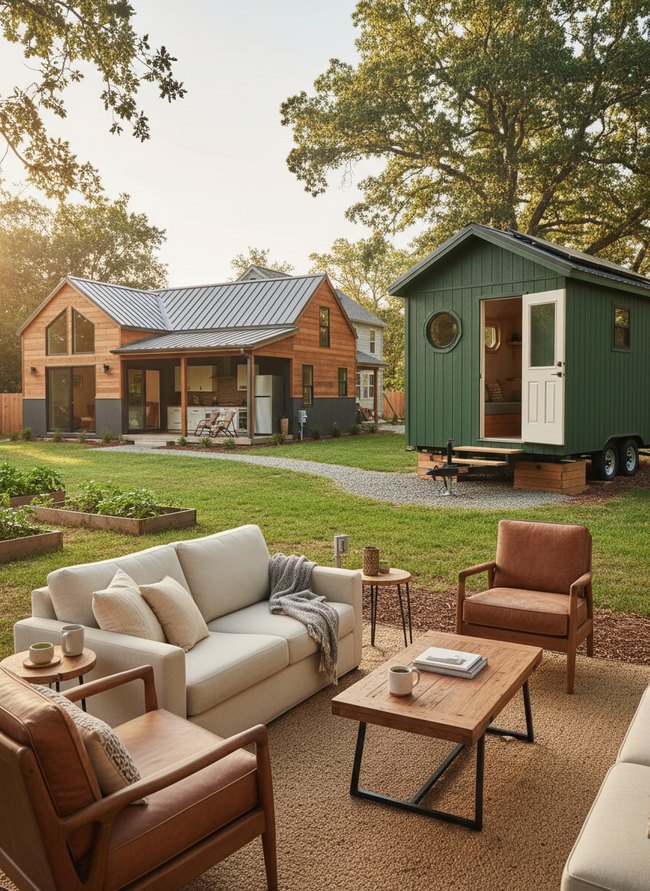
A deep green tiny home on wheels with a white entry door offers a flexible living solution. Solar panels on the dark roof provide independent power for off-grid living, giving occupants freedom. The movable home provides a self-sufficient option for your property.
7. Rental Income ADU Comparison
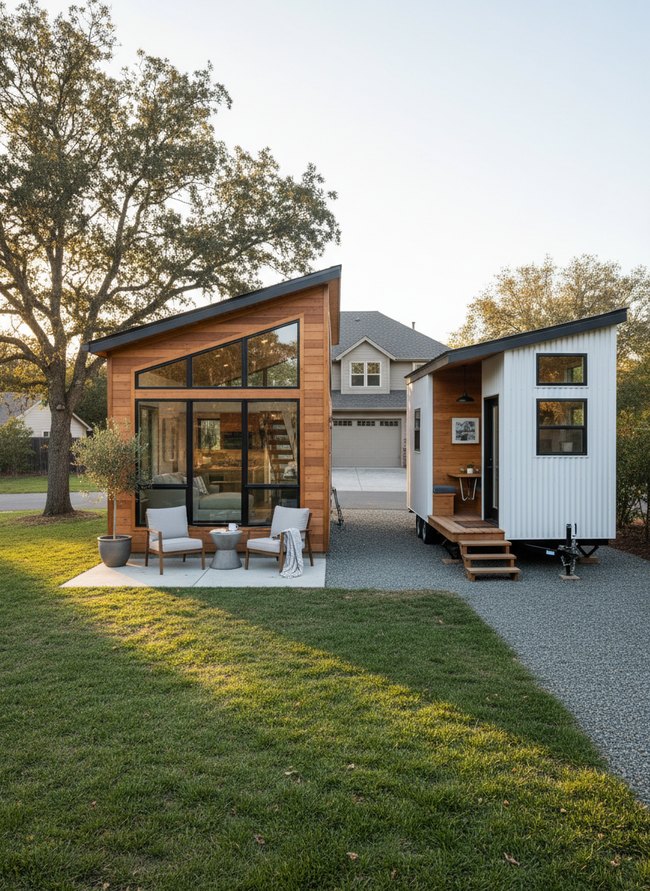
A natural wood ADU stands tall with a dark gray slanted roof and large black-framed windows, offering a stationary rental option in your backyard. A white corrugated tiny home on wheels with a small wooden porch and steps sits on a gravel patch, providing a mobile income opportunity. Property owners gain flexibility with these two distinct choices for ADU vs tiny home income.
8. Minimalist Tiny Dwelling Option
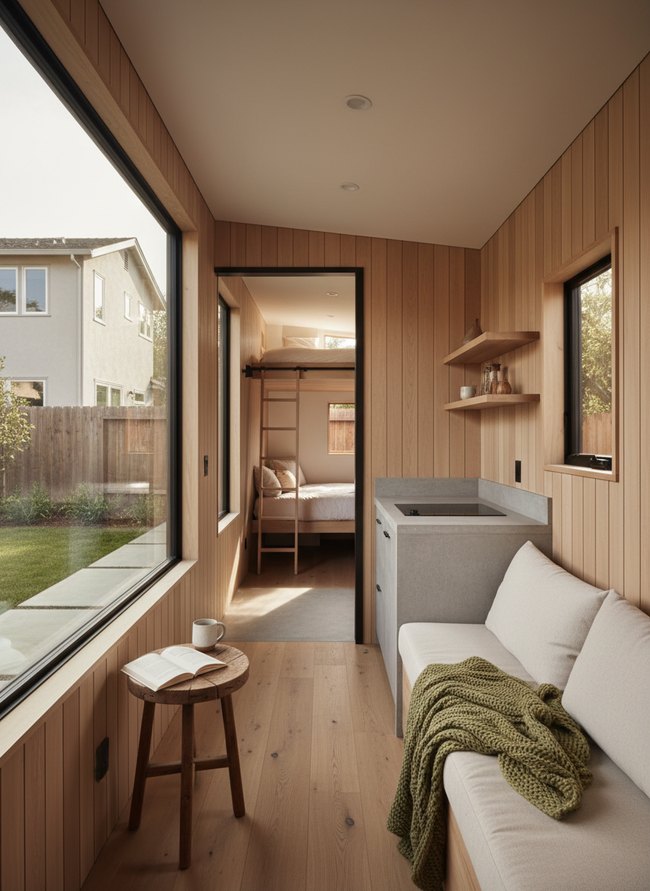
Blonde wood planks line the walls and floor, creating a warm, continuous surface throughout the compact ADU. A concrete countertop with an integrated sink and cooktop provides a functional kitchenette area. The minimalist tiny dwelling offers a streamlined living experience, maximizing space with clever built-in features.
9. Flexible Studio ADU Verdict
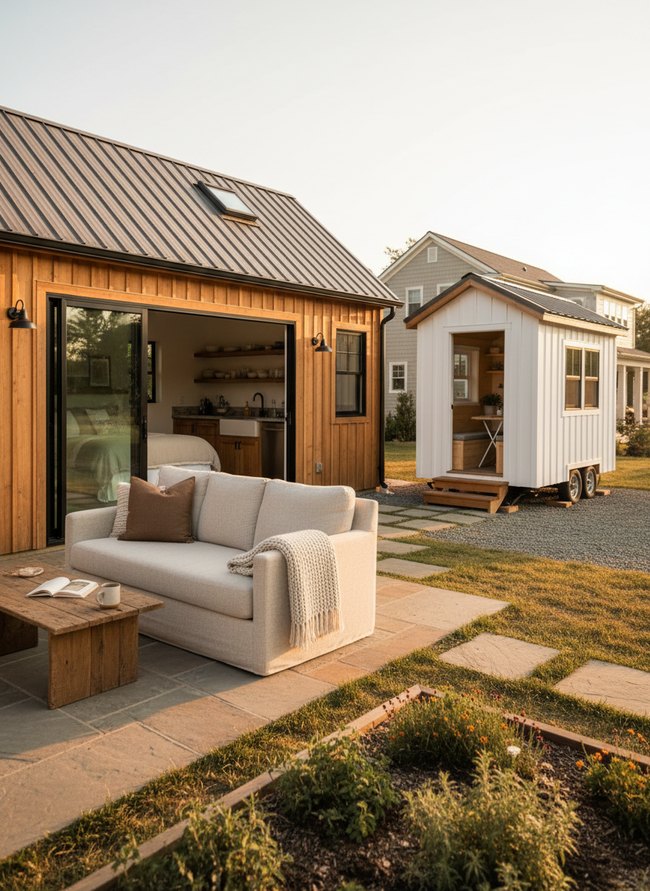
A light brown wooden accessory dwelling unit offers a spacious living area with large glass sliding doors for indoor-outdoor flow. An adjacent white tiny home on wheels presents a compact, movable option for extra space on your property. The setup provides flexible living arrangements, allowing adaptation to changing needs with ease.
10. Relocatable Tiny House Insight
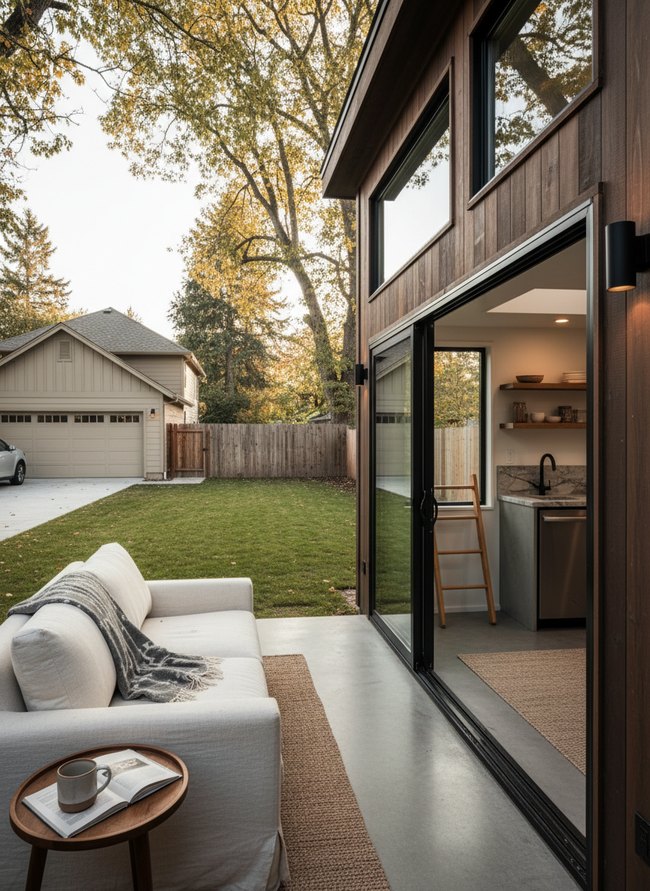
Dark wooden siding rises tall, creating a private living space. Large black-framed glass doors open the compact interior to the outside concrete patio, offering a seamless flow. The design maximizes usable square footage while keeping the structure easily relocatable.
11. Permanent Structure ADU Guide
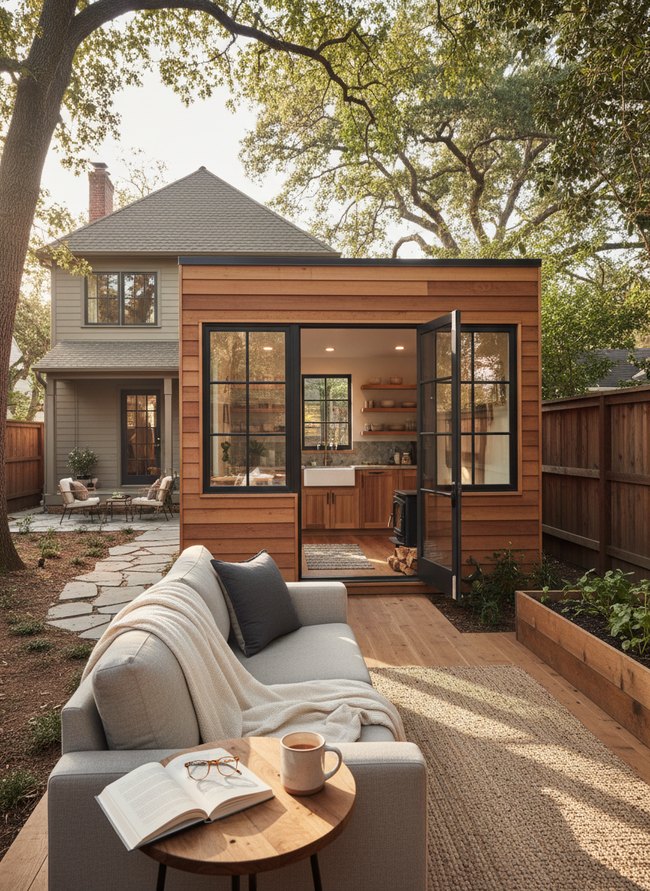
A light brown wooden accessory dwelling unit sits next to a larger, two-story house. Large black-framed glass doors open onto a small outdoor deck, creating an open-air living space. The permanent structure extends your living area with a functional design.
12. Compact Living Footprint Debate
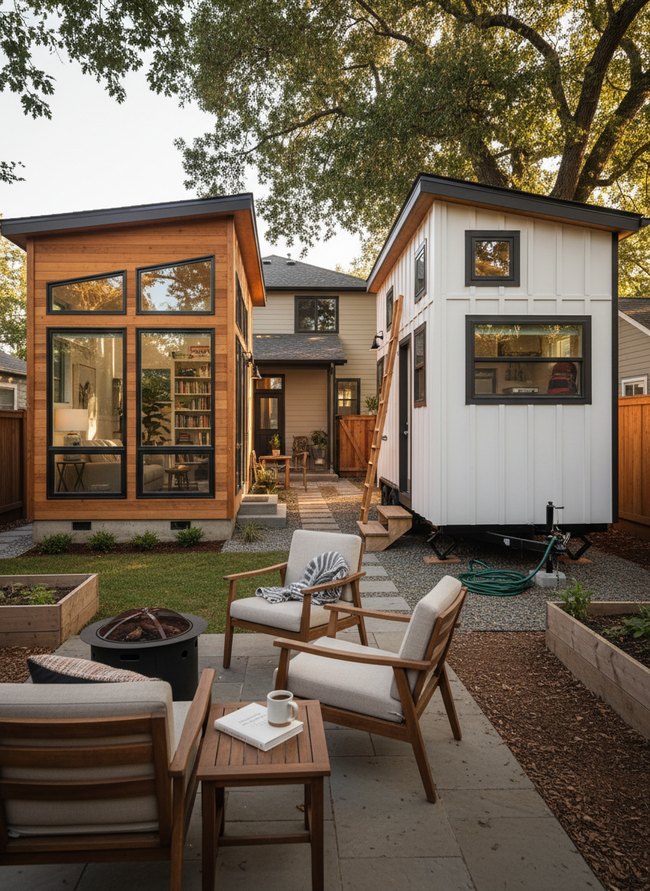
A wooden ADU with black-framed windows stands on the left, offering a fixed, modern living space for your property. Next to the ADU, a white tiny home on wheels presents a mobile housing option, giving you flexibility to move the structure as needed. The outdoor patio furniture and fire pit between the two structures provide a cozy gathering area, enhancing the living experience for both compact living choices.
Navigating Local Zoning Ordinances: The Unseen Hurdles for ADUs and Tiny Homes
Plus, your city’s planning department holds the real answers for any new backyard structure. Many homeowners assume online searches give a full picture of local rules. That common advice falls short because internet information often lags behind current zoning updates. A quick phone call to your local planning office provides the most accurate, up-to-date details on accessory dwelling units. You get specific codes for your exact property address. Every municipality creates distinct rules for building sizes, setback distances, and utility connections. Your project needs to follow these exact guidelines. A standard ten-foot side yard setback might be required for any new construction. Building permits become necessary for almost any permanent structure. Permits ensure your new ADU meets safety standards. You want a legal, safe dwelling. Different zones have varying restrictions on the number of bedrooms or maximum height. A two-story backyard house might not fit in a residential single-family zone. Local ordinances even dictate exterior finishes, like requiring certain roof materials or siding colors. You avoid costly rebuilds by checking first. Researching these local laws protects your investment.
Resale Value & Investment Strategy: How Each Option Impacts Your Property’s Future
Still, a small ADU, like a detached backyard studio with a vaulted ceiling, adds solid value to your property. That structure, a permanent addition, becomes part of the main property deed. Home appraisals reflect the extra living space, especially if the ADU features a full kitchen and a three-piece bathroom. A tiny house, however, often stays personal property, like a large RV. This means a tiny house on wheels, even a custom cedar-sided model, typically does not boost your home’s appraisal figure. You need to consider the long-term financial picture. Many homeowners seek future rental income; a fixed ADU, maybe a compact two-story unit with a private wooden deck, generates consistent monthly revenue. A tiny house, conversely, presents challenges for rental on a residential lot due to local zoning laws. Renting out a tiny house on wheels often requires an RV park spot or a separate parcel of land. Think about your goals for the property. A permanent dwelling, perhaps a 400-square-foot brick ADU with a standing seam metal roof, offers a more predictable return on investment than a movable structure.
Which Idea Will You Try First?
That’s 12 different takes on adu vs tiny home. The best ideas above are usually the smallest moves — one material, one layout shift, one piece of furniture in the right place. Pick whichever room feels closest to your space and start there before tackling the rest.
Found an idea worth keeping? Save this post to your Pinterest board so it’s waiting for you when you’re ready to start your own project.