Detached vs Attached ADU: Which Is Better?
Building plan square footage numbers often mislead homeowners about actual living space. A vaulted ceiling in a compact room changes the feel dramatically more than extra floor tiles in a cramped corner. Homeowners considering a backyard cottage or an accessory dwelling unit (ADU) weigh subtle differences. A second structure, even a small, detached ADU, provides more than just extra rooms. Every option, from a stand-alone backyard house to an integrated garage conversion, brings distinct benefits and drawbacks to your property line. The side-by-side comparison reveals those important distinctions.
1. Integrated Garage ADU Comparison
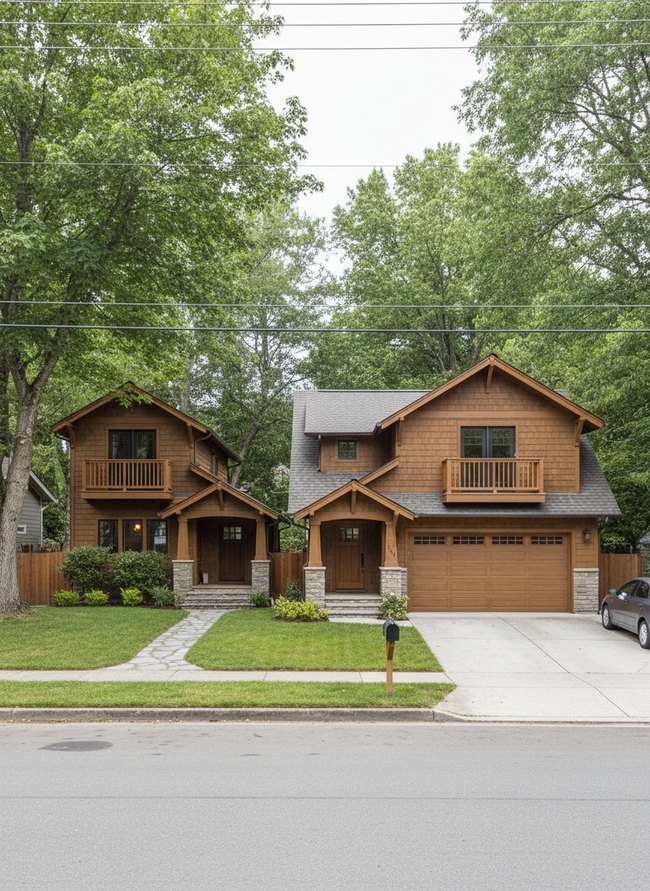
The detached garage ADU mimics the main house with matching cedar shingles and stone column bases, creating a cohesive property aesthetic. The visual unity helps the smaller dwelling feel like a planned extension, not an afterthought. Both brown craftsman-style houses share natural wood front doors and small second-story balconies. You can steal the consistent material palette for your own property.
2. Freestanding Backyard ADU
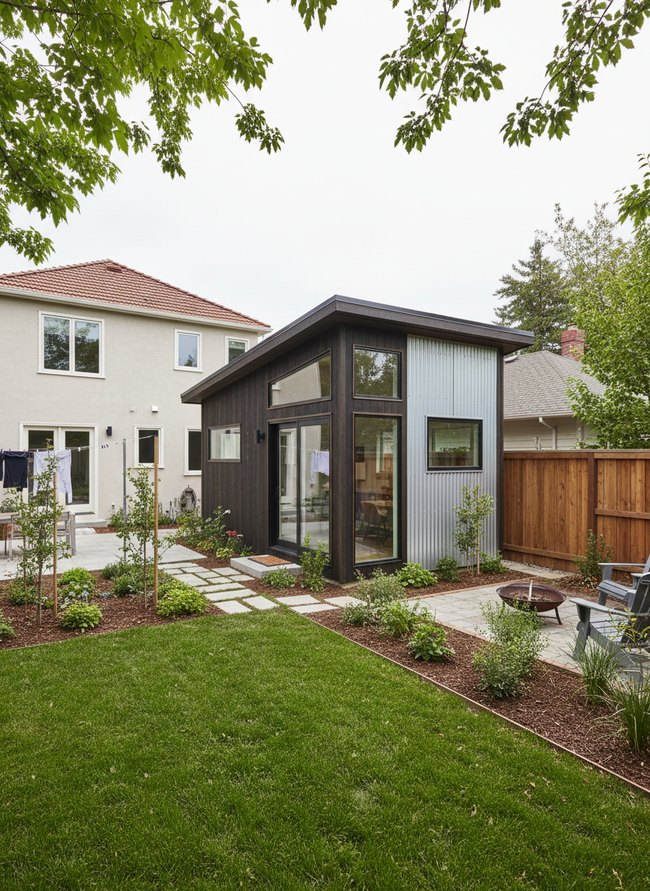
The backyard accessory dwelling unit (ADU) provides a clear separation from the main house, giving homeowners true privacy. A long concrete paver path creates a visual and physical divide between the two structures, emphasizing the ADU’s detached nature. Dark wood siding and corrugated metal panels give the small building a modern, industrial look, while the green lawn and surrounding trees soften the edges. Build a detached structure for maximum homeowner privacy.
3. Attached Side Entry Suite
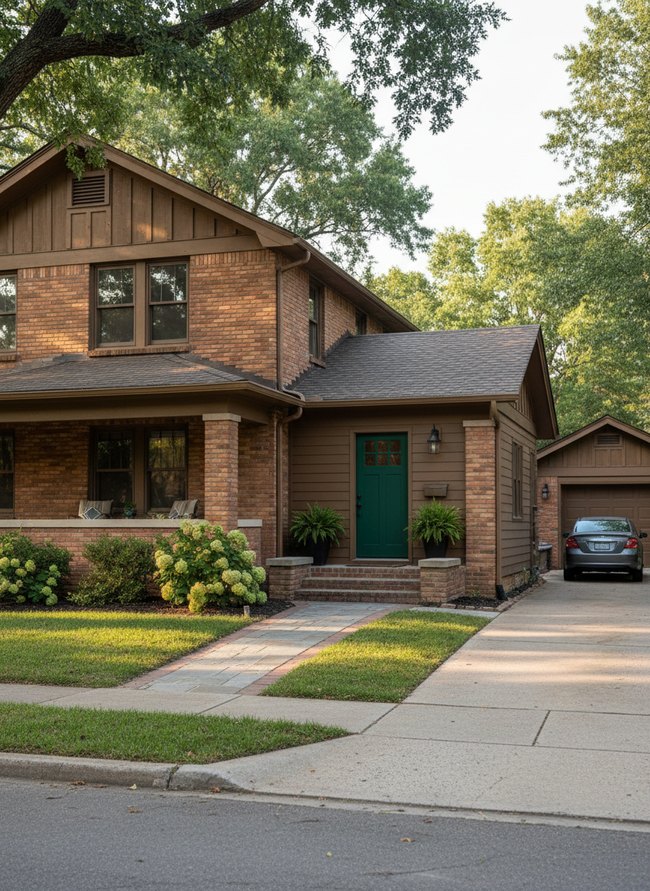
The detached single-car garage with a brown asphalt shingle roof creates a separate living space while maintaining visual harmony with the main house. Brown wooden siding on the accessory dwelling unit matches the main home’s gable ends, offering a cohesive look. A bright emerald green wooden door provides a welcoming entrance for the attached side entry suite. Matching materials create a visually unified property.
4. Separate Garden Cottage
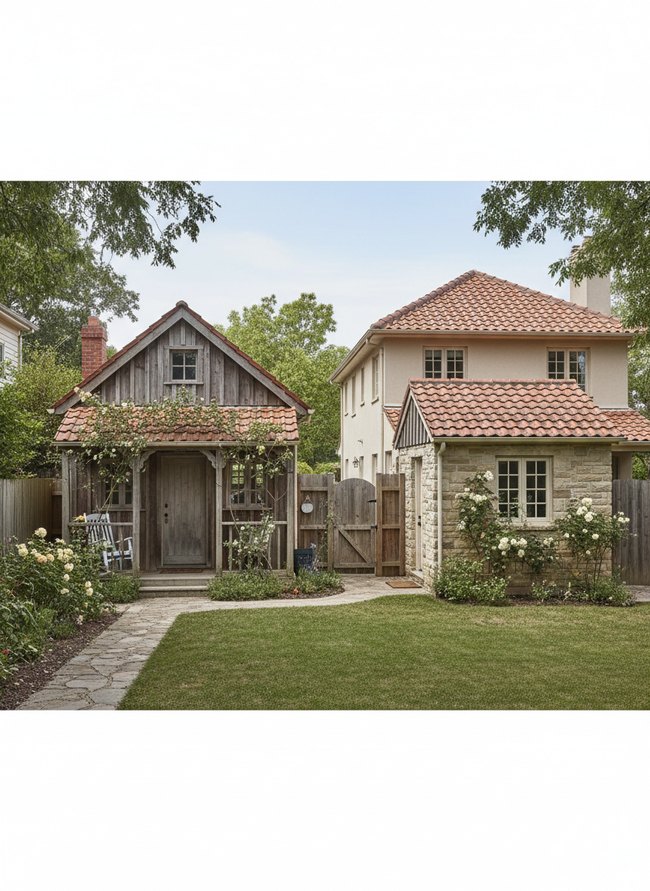
The separate garden cottage stands as a distinct structure, offering privacy and independence from the main house. The clever placement creates its own identity without overpowering the larger dwelling. A winding flagstone path leads to the wooden porch, while climbing white roses soften the stone walls. Steal the idea of using a distinct material palette for your detached structure.
5. Over-Garage In-law Unit
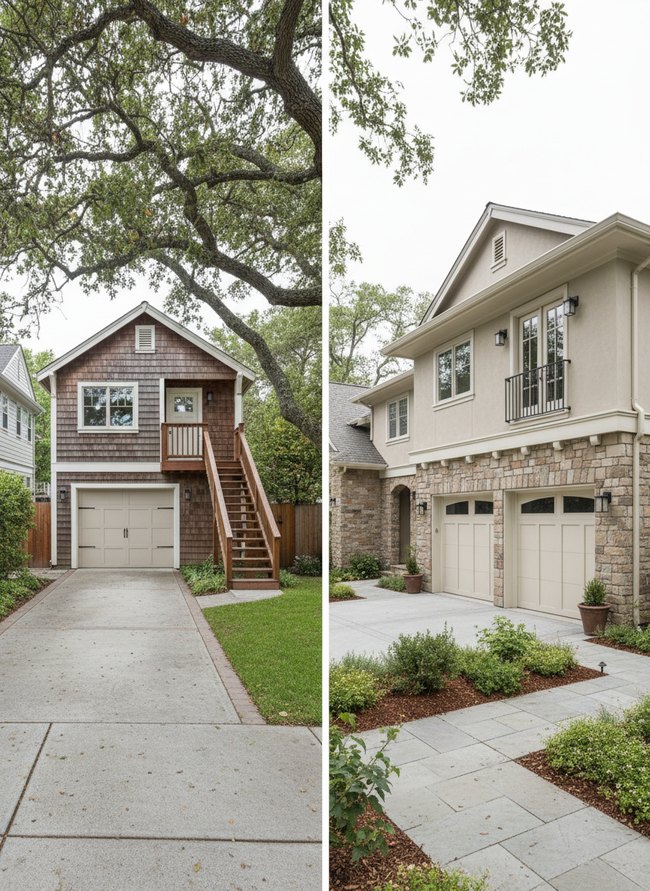
A detached garage with an exterior staircase provides independent access for an upstairs unit. The design choice separates living spaces effectively, offering privacy for both residents in a detached vs attached setup. Cedar shake siding on the garage complements the rich brown wooden stairs leading to the upper door. Homeowners can steal the idea of external stairs for true independent access.
6. Standalone Studio Backyard
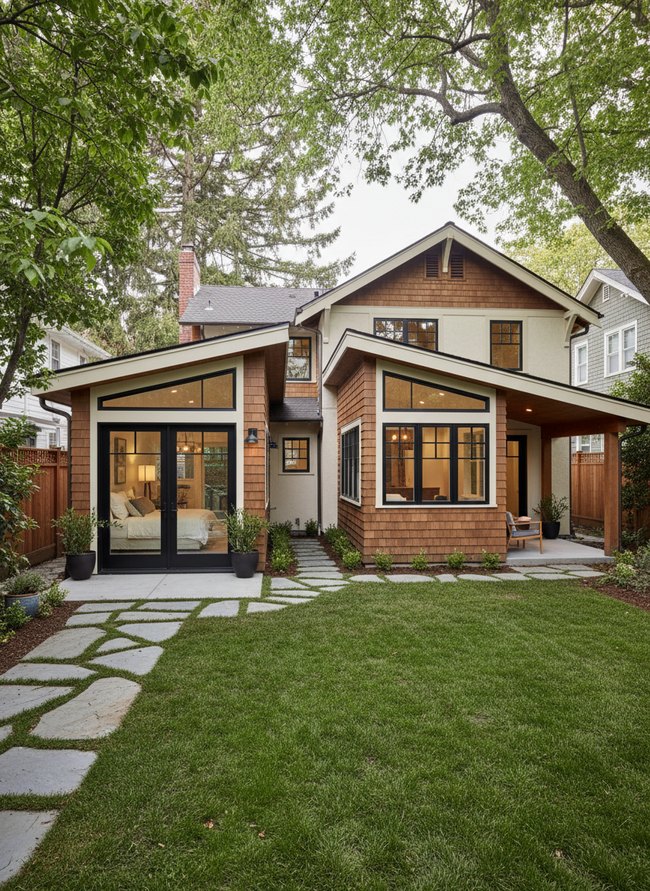
This standalone studio backyard brings detached vs attached to life with thoughtful styling and considered details.
7. Connected Basement Apartment
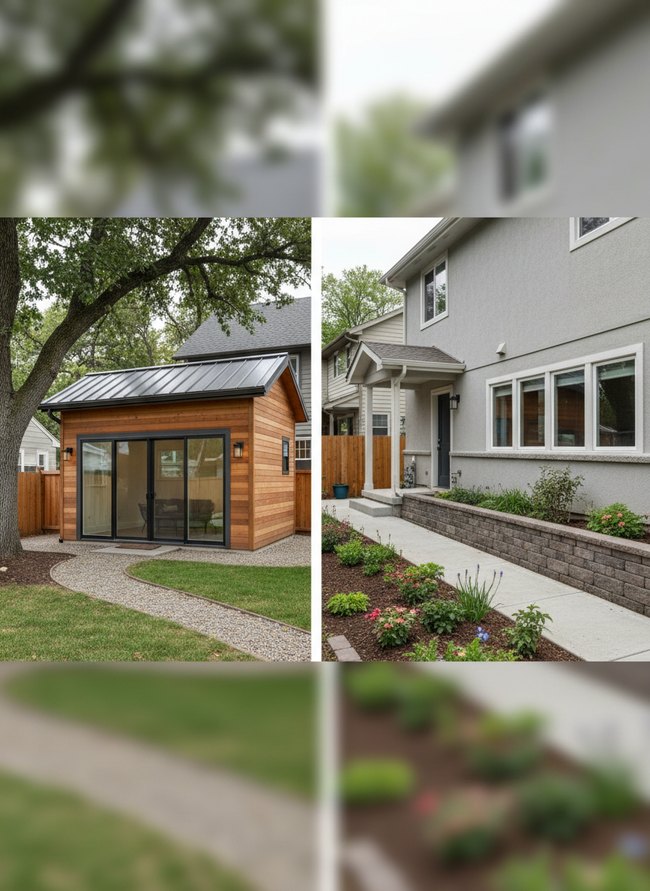
This connected basement apartment brings detached vs attached to life with thoughtful styling and considered details.
8. Detached Guest House Living
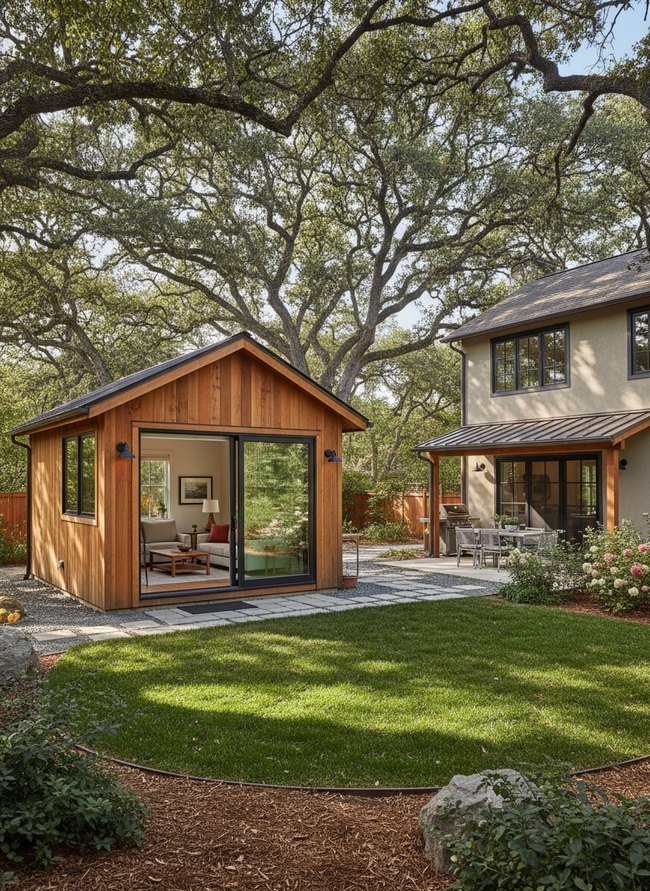
The wooden shed, separate from the main house, shows the advantage of detached construction. The separation gives a guest house privacy for visitors or a quiet workspace. Large sliding glass doors on the front facade and a tall window on the side wall pull natural light into the small interior. Locate the detached structure on a crushed gravel path with square concrete pavers.
9. Shared Wall ADU Design
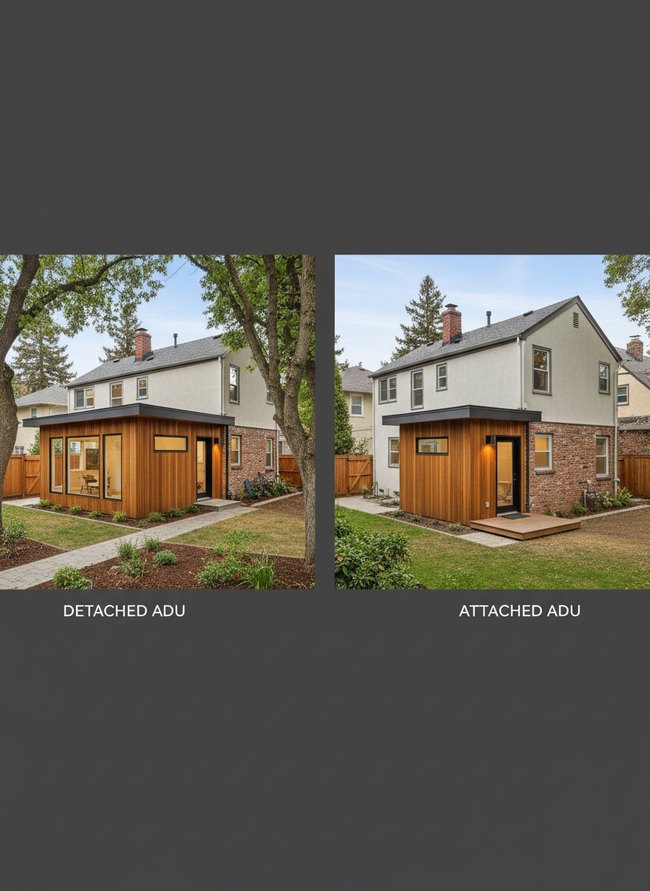
The shared wall ADU design on the right side connects directly to the main house with a dark flat roof over the golden wooden siding. The attached structure offers a compact footprint and direct access to existing utilities, making the addition a budget-friendly option for your property. A small wooden deck extends from the black entry door, providing a clear welcome to the new living space.
10. Independent Backyard Dwelling
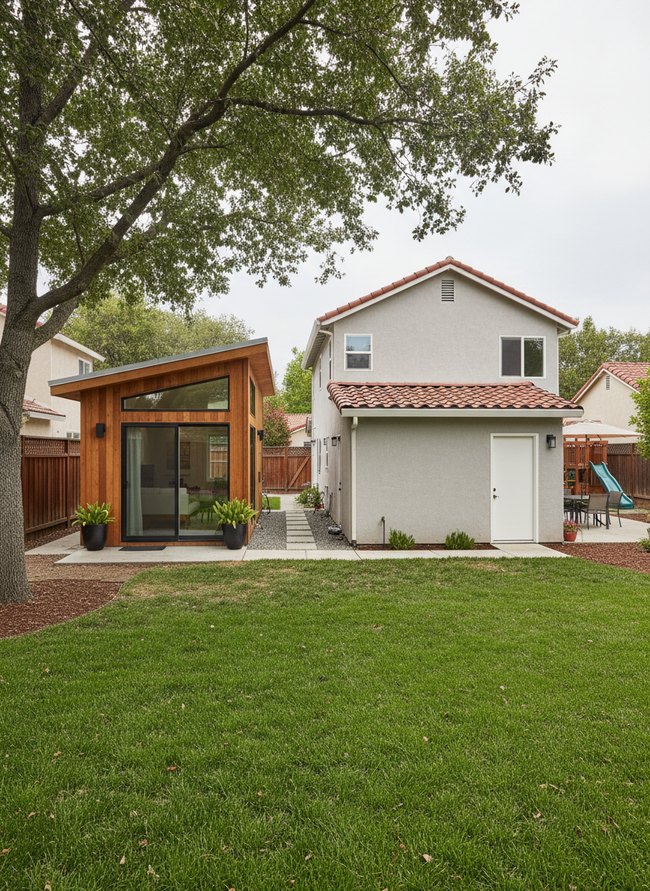
The detached structure features a high, sloped roofline, establishing a clear, modern identity separate from the main house. A clean concrete pad and dark gravel path connect the two backyard buildings. A large, mature tree with green leaves provides shade over the detached unit.
11. Carport Conversion Attached
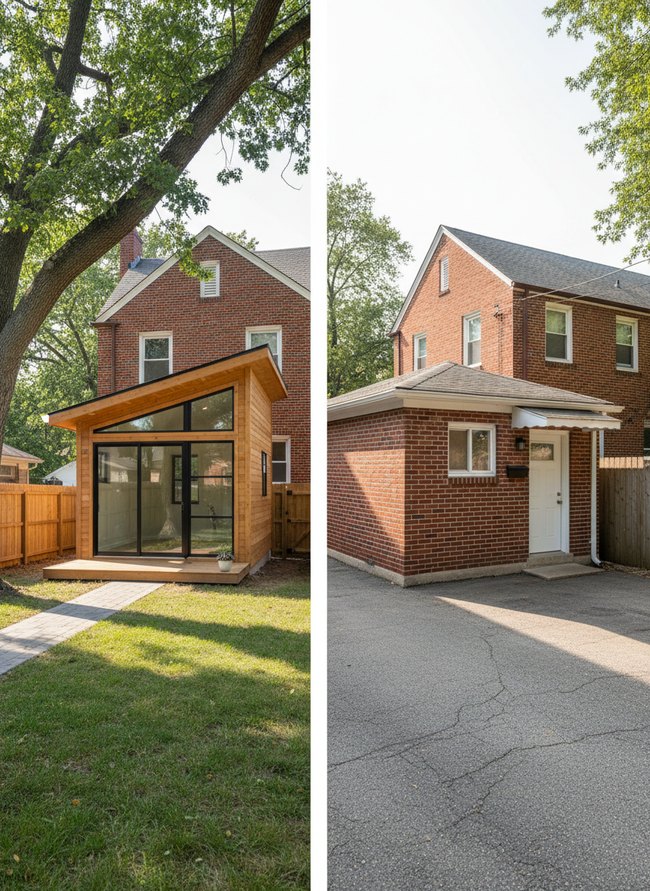
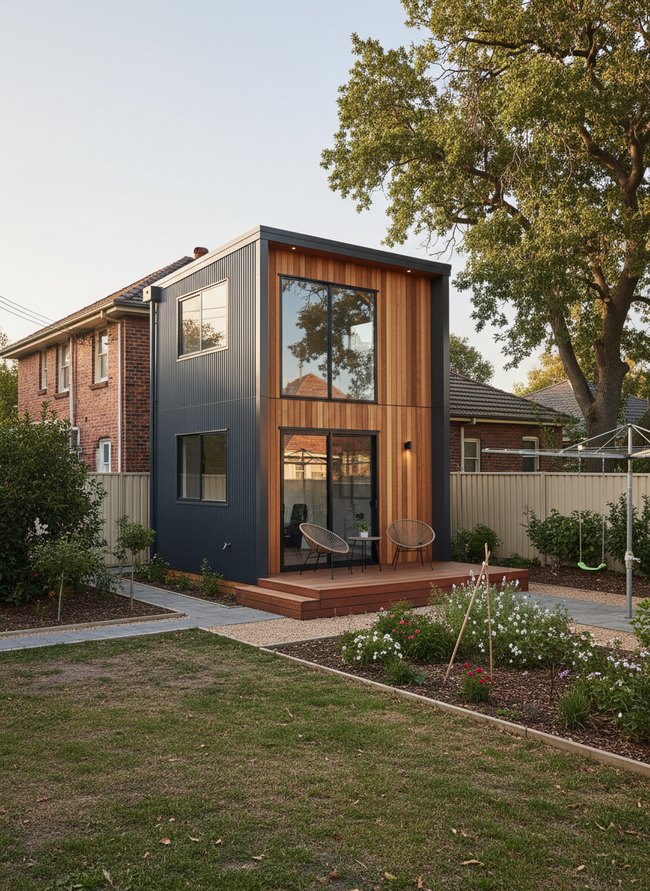
The left image shows a new wood-clad attached structure with large black-framed windows, contrasting with the brick main house. The attached unit offers a bright, modern aesthetic, providing extra living space without occupying separate yard footage. A small wooden deck and a paver walkway lead to the green lawn, while a tall wooden fence encloses the property. The right image shows an existing brick carport conversion attached to the same brick main house, featuring a white door and small rectangular windows. Consider adding a natural wood finish to your attached addition for a warm, inviting feel.
12. Remote Backyard Office
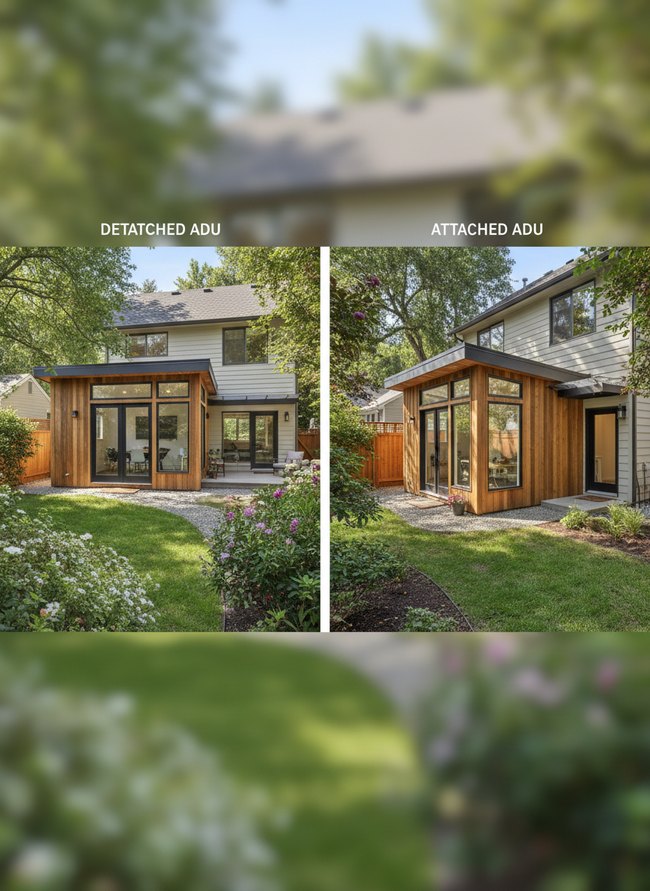
The detached accessory dwelling unit provides clear physical separation from the main house, offering privacy for a quiet workspace. Your home office then feels distinct, not just an extra room. Black-framed windows and warm cedar siding define the compact structure. The complete separation of the office structure from the main living space is a move worth stealing.
The ‘Shadow Line’ Effect: Quantifying Visual Cohesion in Attached ADU Design
Attached accessory dwelling units often gain visual cohesion through a shared roofline. A single sloping roof that extends from the main house over the new living space creates seamless integration. Many homeowners choose a flat roof for their ADU, which often interrupts the main structure’s visual flow. A gabled roof with matching dark asphalt shingles, however, continues the original home’s aesthetic. You want the new addition to appear as if it always belonged there, not like an afterthought. Different exterior materials, such as light gray stucco on the ADU and dark red brick on the main house, draw a stark visual border. Matching exterior siding, like warm cedar planks or cool painted clapboard, blends the two buildings together. The shadow line, where the two structures meet, should disappear with careful design. Your eye should glide across the entire facade without interruption.
Acoustic Attenuation in Detached ADUs: Mitigating Inter-Structure Sound Transfer via Material Science
Sound transfer between independent buildings needs focused material science. Double-stud walls with staggered timber frames greatly reduce noise travel. Many builders use single-stud construction, which allows more sound waves to pass through. You want a quiet living space inside your small secondary home. Dense mineral wool insulation packed between these double wood studs absorbs stray sound vibrations. Additionally, a one-inch air gap separating the two wall structures further disrupts sound energy. Thin drywall sheets offer minimal acoustic protection alone. Instead, consider installing two layers of 5/8-inch gypsum board, each layer offset from the other. This heavy mass significantly blocks airborne sound. Resilient metal channels can also decouple the drywall from the wood framing, stopping sound from vibrating through the building’s skeleton. Acoustic caulk seals small gaps around electrical outlets and light switches. A solid timber door with a perimeter seal stops sound from leaking around its edges. These construction choices create a peaceful detached living area.
Which Idea Will You Try First?
That’s 12 different takes on detached vs attached. The best ideas above are usually the smallest moves — one material, one layout shift, one piece of furniture in the right place. Pick whichever room feels closest to your space and start there before tackling the rest.
Found an idea worth keeping? Save this post to your Pinterest board so it’s waiting for you when you’re ready to start your own project.