How to Choose ADU Roofing for Long-Term Value
Building an accessory dwelling unit brings many big decisions. The new backyard structure needs a sturdy, long-lasting roof. Material choices for the ADU roofing affect your property’s value for decades. A strong roof protects the small dwelling from weather and keeps utility bills low. Picking the right materials means less upkeep later. Different roofing materials offer unique benefits and price points. Homeowners want a durable roof that matches their main house, yet stands on its own. Common options include asphalt shingles, metal, and clay tiles.
1. Durable Metal Standing Seam
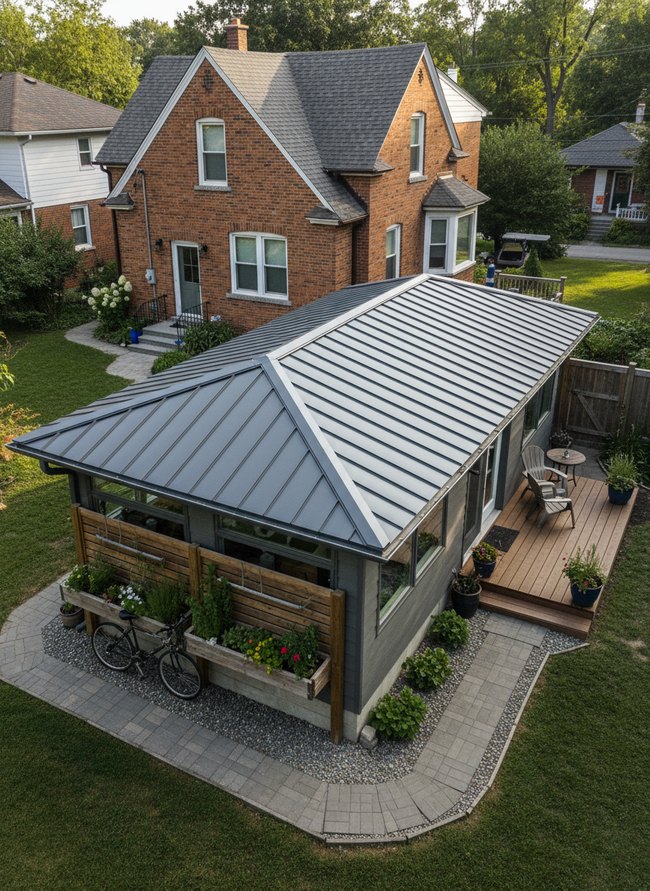
A charcoal gray standing seam metal roof covers the entire ADU structure, offering a sleek, low-maintenance surface. The roof’s clean lines and dark color provide a modern contrast to the older brick house behind. A metal roofing system offers superior durability and a contemporary aesthetic.
2. Classic Asphalt Shingle ADU
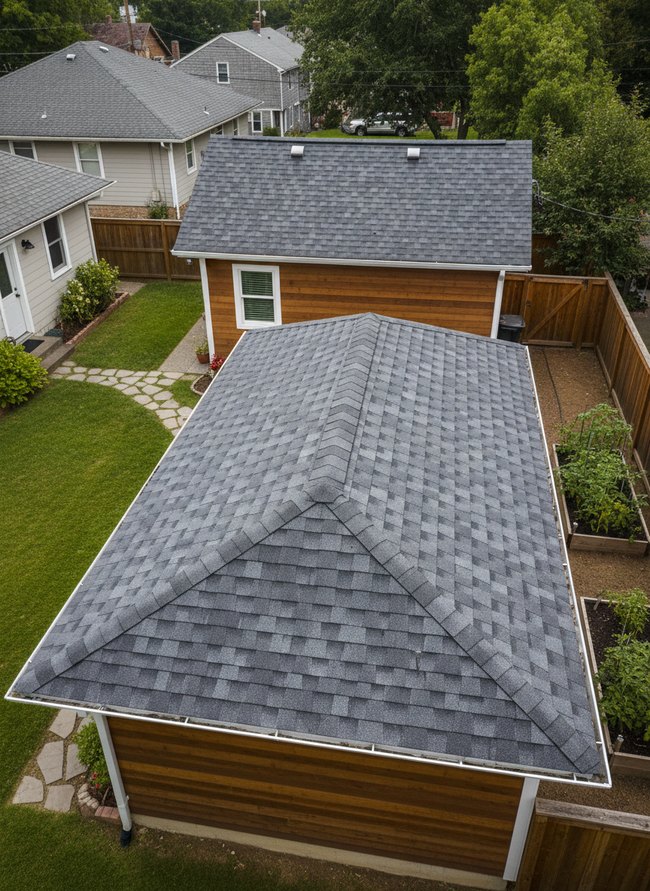
Classic gray asphalt shingles cover the steep roof pitch of the accessory dwelling unit. Light-colored gutters and downspouts guide rainwater away from the cedar-sided walls below. The durable roofing choice provides long-lasting protection against the elements.
3. Long-Lasting TPO Flat Roof
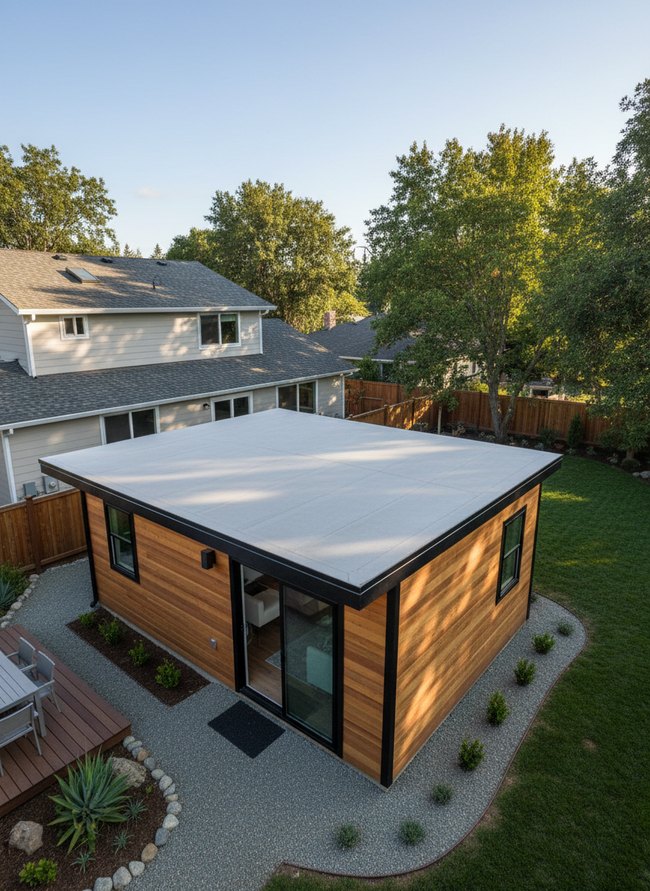
A bright white TPO membrane covers the modern ADU, offering a clean, flat roof surface. The light color reflects sunlight, helping keep the building cooler. A TPO flat roof offers durability and energy efficiency, providing long-term value for a backyard structure.
4. Eco-Friendly Green Roof System
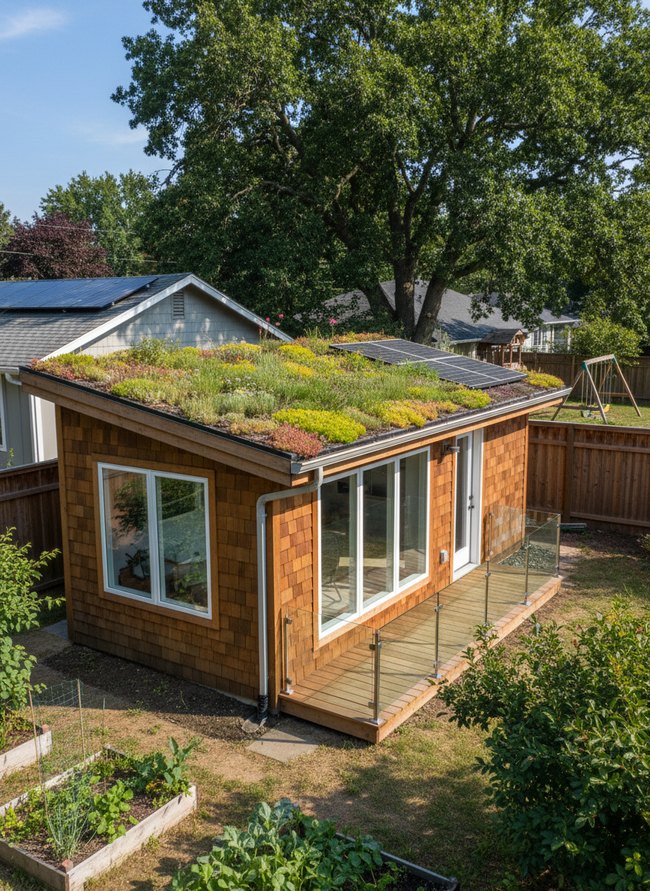
A vibrant green roof system covers the ADU, showcasing various low-growing plants in shades of green, yellow, and reddish-brown. Solar panels sit flat on the living roof, catching sunlight for energy. A green roof with solar panels creates a sustainable, energy-efficient accessory dwelling unit.
5. Terracotta Tile ADU Cover
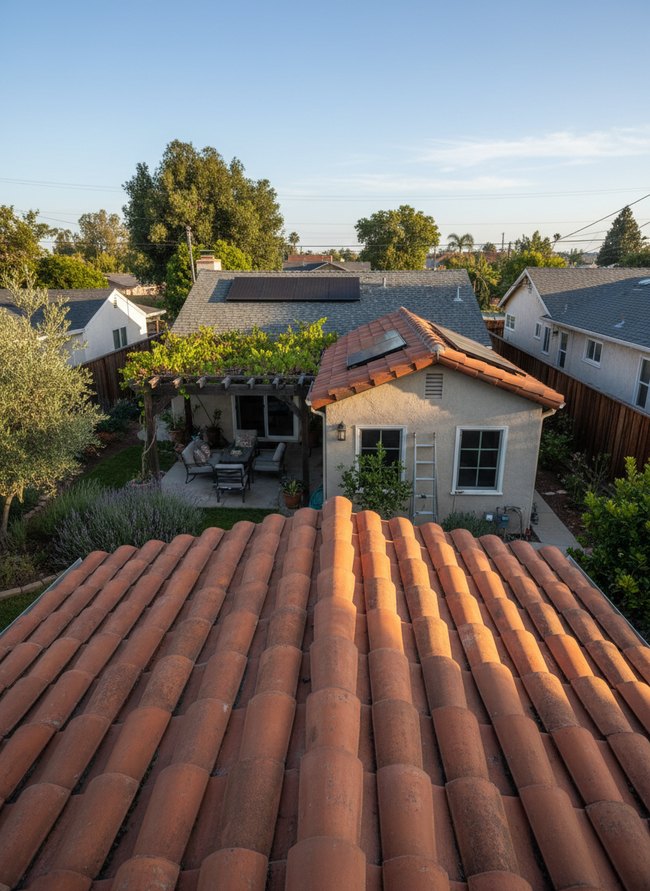
Burnt orange terracotta tiles cover the ADU roofing, creating a warm, classic look. Solar panels sit on the small roof side, collecting sunlight. Different roof materials can add both beauty and function to your ADU.
6. Rustic Cedar Shake Overlay
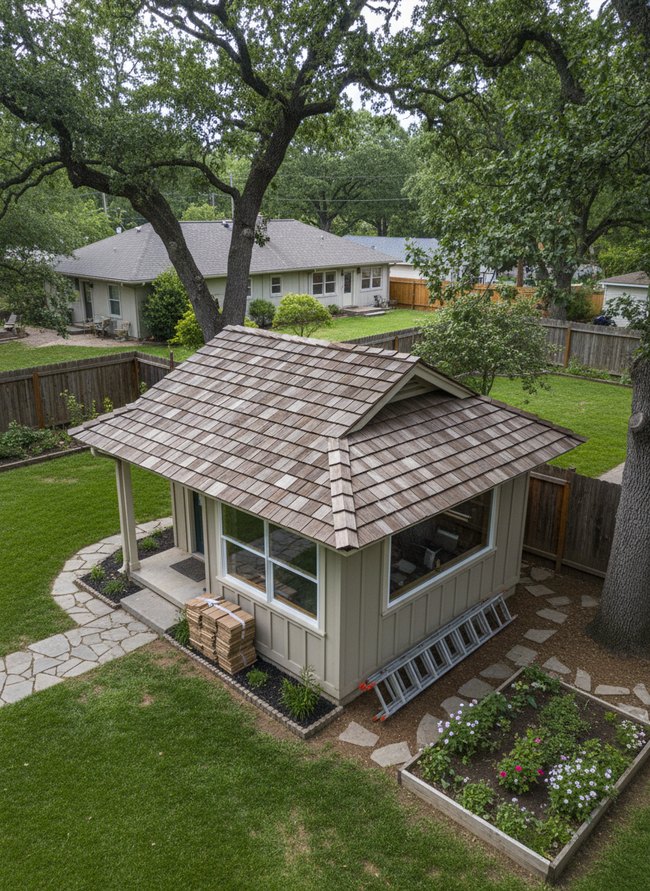
The small building features a light brown cedar shake roof with varying wood tones. Cedar shakes offer a rustic, textured look that blends well with surrounding green trees and grassy yard. Cedar shakes add natural visual interest.
7. Modern Composite Shingle Design
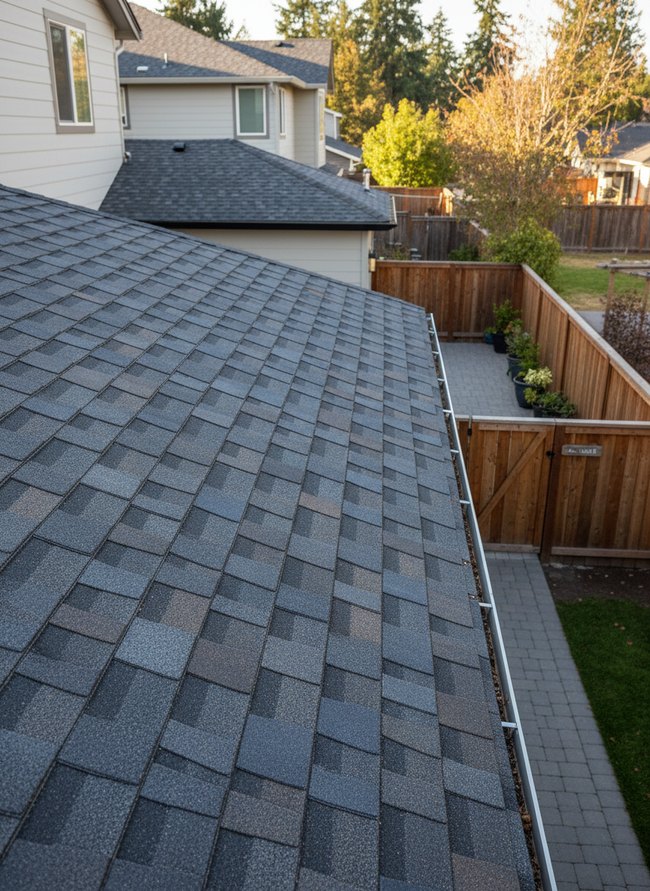
Charcoal composite shingles cover a steep roof pitch, showing various dark gray and brown tones. A clean white gutter runs along the roof’s edge, collecting water from the ADU roofing. Varied shingle colors can add visual interest to your home’s exterior.
8. Low-Slope EPDM Membrane
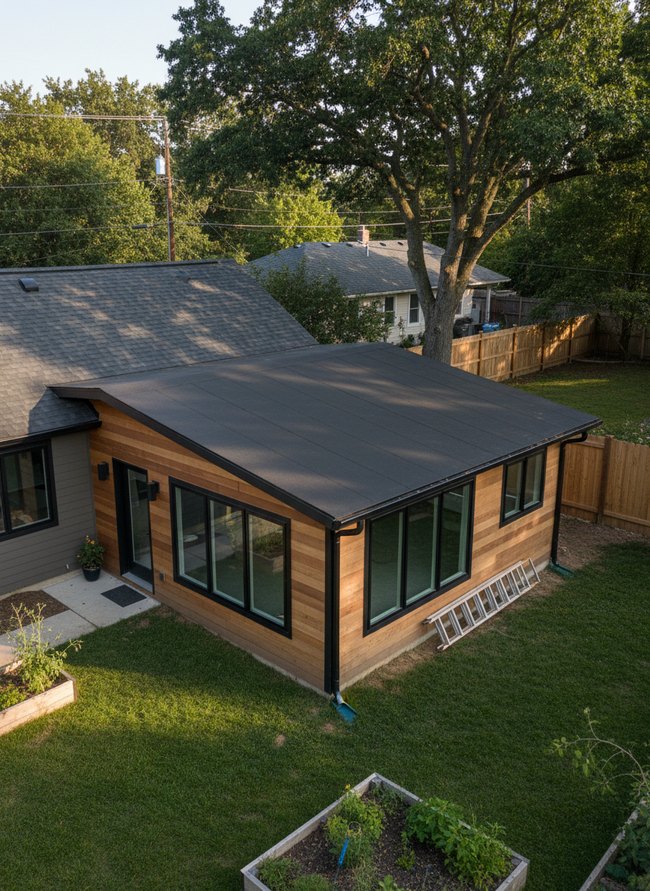
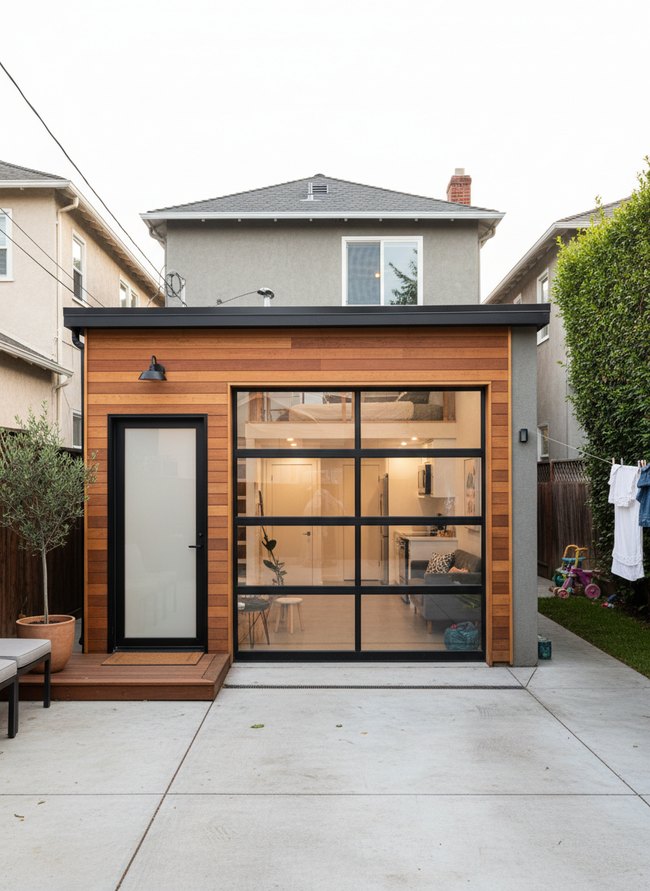
The new ADU roofing features a dark, low-slope EPDM membrane, providing a smooth contrast to the cedar-sided walls and black window frames. Your eye traces the clean, flat surface, which meets the existing gray shingle roof of the main house. The membrane offers a sleek, modern look for the ADU.
9. Sustainable Solar Panel Integration
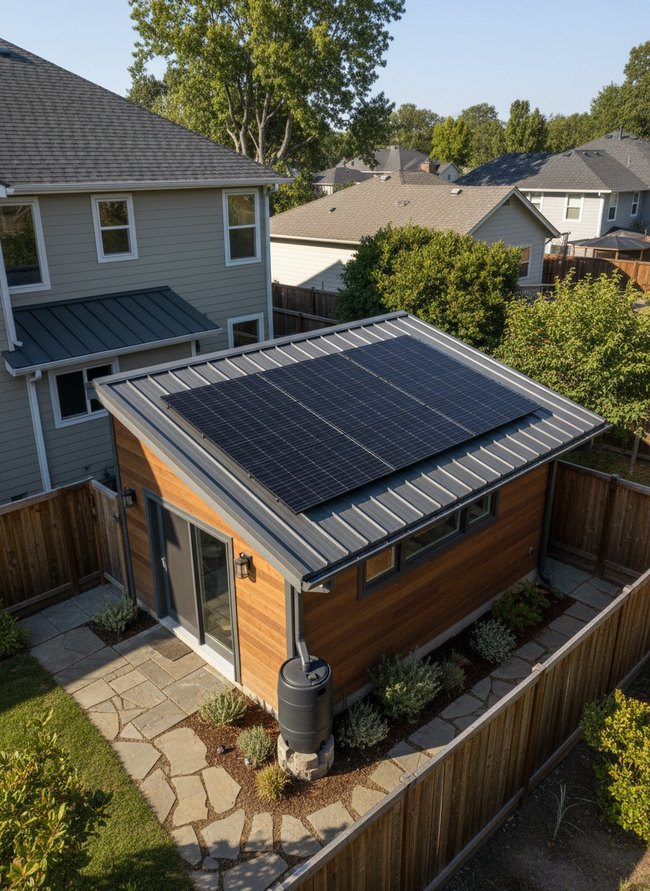
A dark gray metal roof on the small ADU supports several black solar panels. The shiny panels sit flat against the sloped roof, harnessing sunlight for energy. Consider adding the panels to your ADU roofing for long-term energy savings.
10. Architectural Shingle Longevity
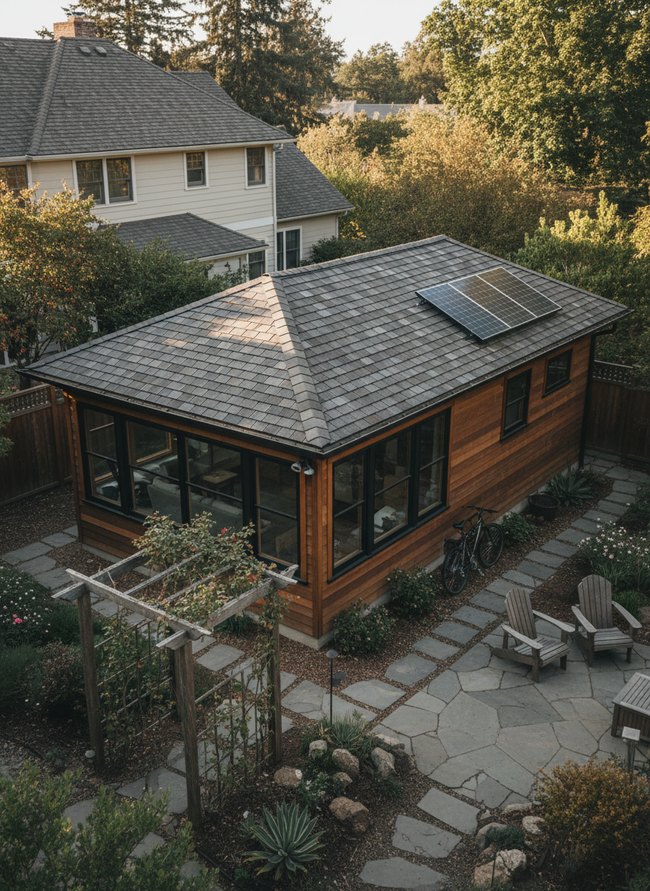
The small building features gray architectural shingle roofing with a single solar panel array. Rich wooden siding wraps around the structure, contrasting with the dark window frames. A durable roof choice impacts the overall look of your backyard building.
11. Resilient Synthetic Slate Look
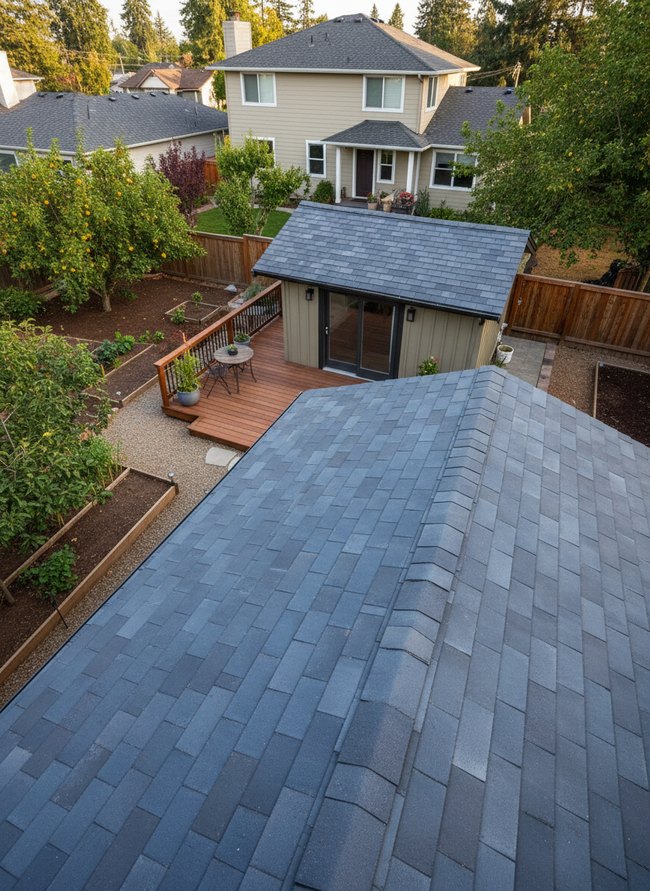
Dark gray synthetic slate tiles cover the ADU roofing, creating a clean, uniform surface. The smaller accessory dwelling unit also features the dark gray material, providing visual continuity across your property. Synthetic slate provides a durable, consistent look on your ADU.
12. Cost-Effective Corrugated Steel
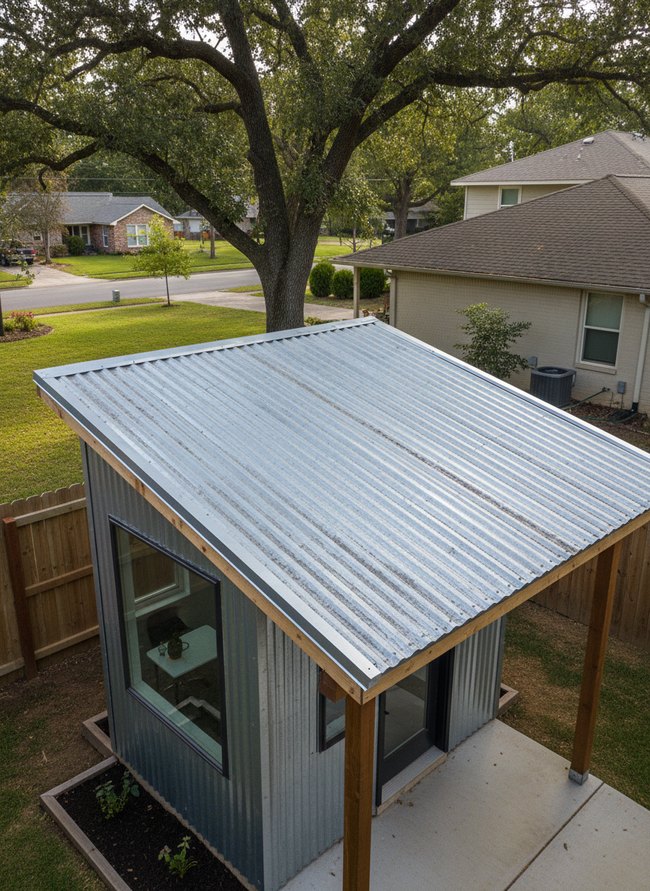
A galvanized corrugated steel roof covers the small backyard building, showing a shiny metal texture. The durable ADU roofing material works well with the gray corrugated metal siding and natural wood trim of the structure. Consider a metal roof for your next small building project because the material offers long-lasting performance.
Evaluating Climate-Specific Considerations for Your ADU’s Roof
Coastal ADUs endure harsh salt air. A metal roof withstands ocean spray. High winds require heavy asphalt shingles. You need a sturdy roofing material. Areas with heavy snow demand a low-slope roof pitch. Ice dams form on shallow slopes. Concrete tiles offer fire resistance in dry climates. Wood shakes ignite easily. Frequent hailstorms batter many roof surfaces. Impact-resistant shingles protect your home. Your local building codes might dictate material choices. Clay tiles shed desert heat. Dark asphalt absorbs sunlight. Consider your yearly rainfall totals. A standing seam metal roof sheds water quickly. Warm, humid regions encourage moss growth. Copper roofs naturally deter algae. Sun exposure fades some colors fast. Light-colored shingles reflect solar rays. Your ADU’s roofing must fit its environment.
Navigating Local Building Codes and HOA Regulations for ADU Roofing
Your city’s zoning department holds a complete list of ADU roofing regulations. Many municipalities mandate fire-resistant materials like Class A asphalt shingles or clay tiles for new construction. A simple internet search reveals your local government’s planning department website. You will find specific height limits and roof pitch requirements there. Some communities demand a unified appearance, meaning your ADU’s roof must match the main house’s charcoal asphalt shingles or dark gray metal panels.
Homeowners’ association covenants often impose even stricter rules on materials and colors. A quick call to your HOA management office provides the current design guidelines. Your new auxiliary dwelling unit must blend seamlessly with existing neighborhood homes. These guidelines might specify a cedar shake roof or a light brown composite shingle. Ignoring these regulations can lead to costly tear-offs and reinstallation. Local building codes prioritize public safety above all else. A licensed roofing contractor understands these complex requirements. They help you pick compliant options. Your permit application needs detailed material specifications.
Which Idea Will You Try First?
That’s 12 different takes on adu roofing. The best ideas above are usually the smallest moves — one material, one layout shift, one piece of furniture in the right place. Pick whichever room feels closest to your space and start there before tackling the rest.
Found an idea worth keeping? Save this post to your Pinterest board so it’s waiting for you when you’re ready to start your own project.