How to Build a Capsule Wardrobe for Tiny Home Living
Many people build a tiny home capsule wardrobe by simply cutting out pieces. A functional closet, however, adds specific items with purpose. Fewer charcoal shirts are needed when each item works harder. The guide shares a numbers formula for seasonal rotation. Warm plaid blankets fold into a small cedar chest when spring arrives. Cold weather sweaters, thick wool socks, and a heavy denim jacket trade places with light cotton blouses and airy linen trousers as the temperature climbs, all within a compact wardrobe footprint. Understanding the actual mathematics of clothing ensures every hanger holds a valuable piece. Discover how to build a flexible, efficient system.
1. Cozy Loft Living Essentials
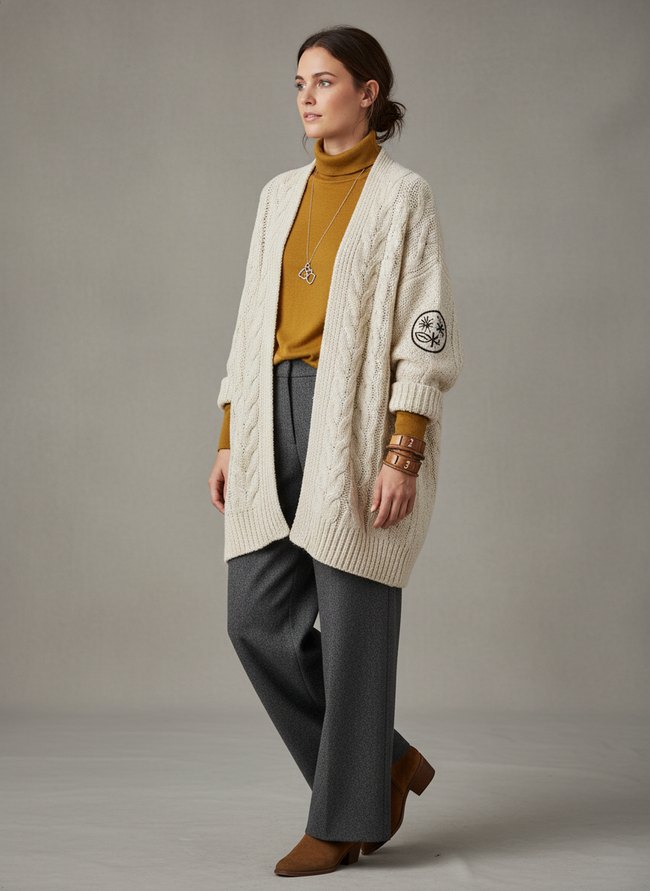
Layering a long cream cardigan over a fitted mustard turtleneck adds warmth and versatile style. The outfit creates varied textures with chunky cable knit and smooth dark trousers, offering comfort for small spaces. Brown leather bracelets and suede ankle boots finish the look with earthy tones. The long cardigan provides warmth and versatility.
2. Compact Kitchen Apparel Storage
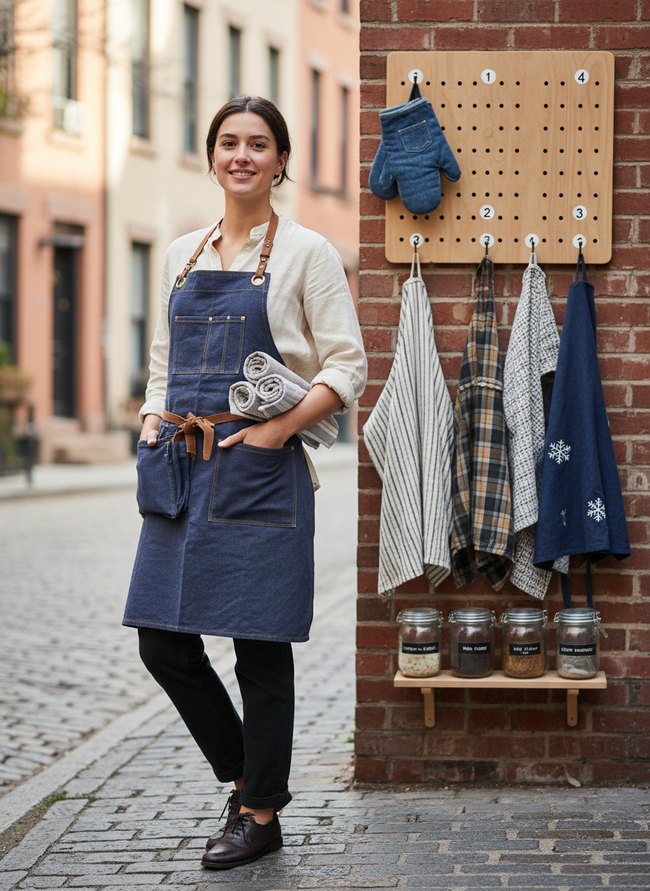
The pegboard display uses vertical space wisely, allowing for visible, organized storage of kitchen textiles. The strategy keeps frequently used items accessible without cluttering precious counter surfaces. Four striped and plaid fabric towels hang below a denim oven mitt, offering quick changes for daily kitchen tasks. The vertical pegboard storage works in any kitchen.
3. Minimalist Seasonal Layering Rack
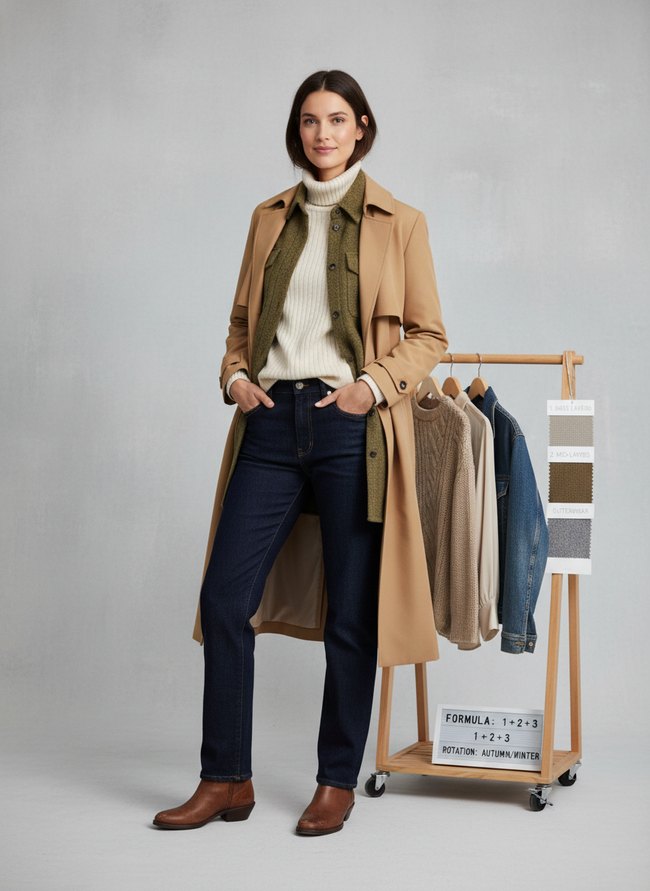
The rolling wooden clothing rack offers smart vertical storage for a tiny home capsule wardrobe, keeping seasonal items visible but contained. A small white letterboard clearly displays the 1+2+3 layering formula and the autumn/winter rotation, providing quick reference. Readers can steal the idea of a labeled, mobile wardrobe system to simplify daily outfit choices.
4. Convertible Outdoor Prep Uniform
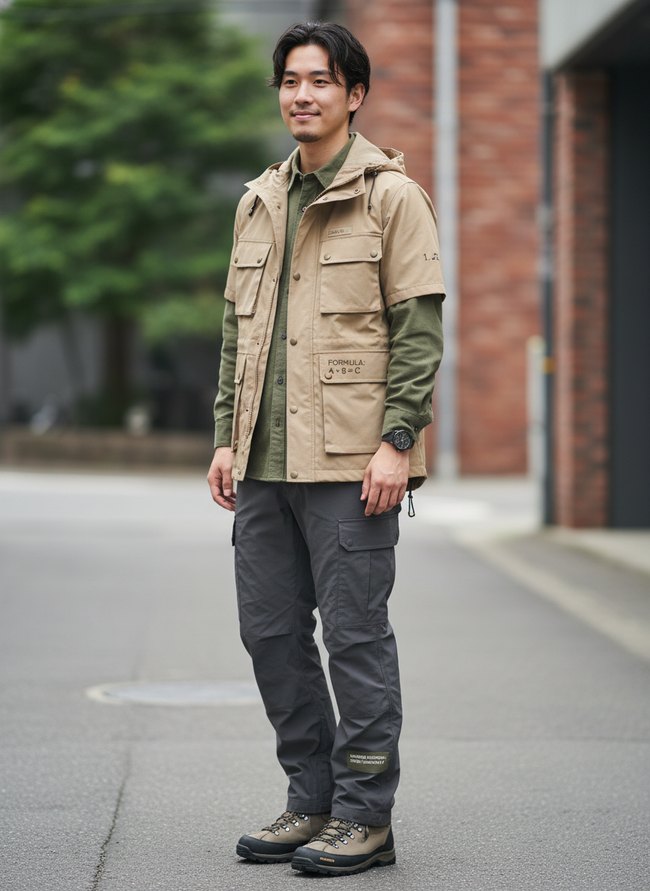
Layering a short-sleeved utility jacket over a long-sleeved shirt creates a versatile outfit for changing weather conditions. The strategy allows for easy temperature adjustment without carrying extra garments, a key consideration for small living spaces. Dark gray cargo pants with deep pockets offer practical storage, while sturdy hiking boots provide reliable footwear for outdoor tasks. Steal the convertible top layer.
5. Smart Under-Bed Organizer Drawers
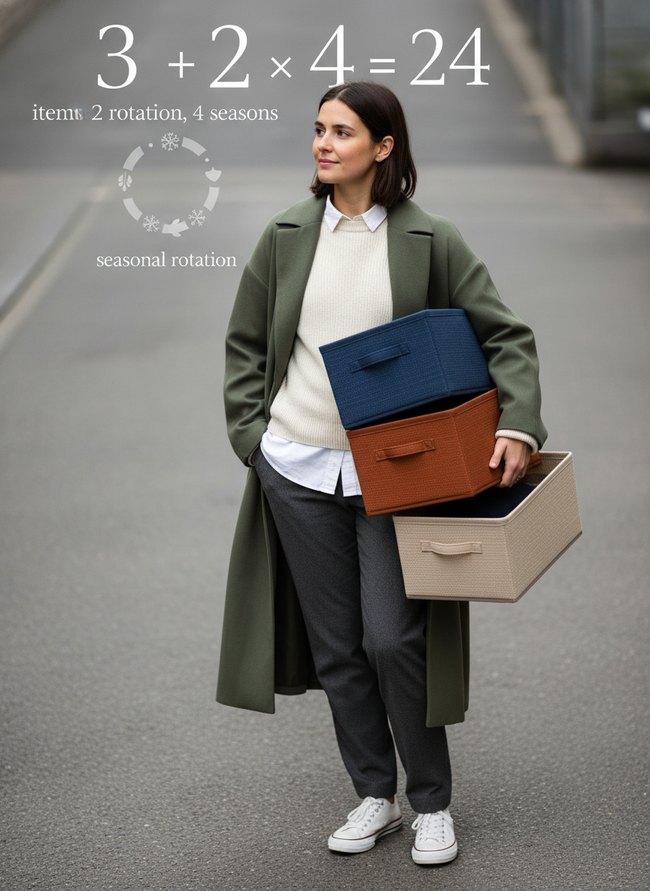
The woman carries three woven storage bins, showing how to organize clothing rotations. The textured fabric containers offer a tidy solution for stashing off-season garments under a bed or on a shelf. Her long olive green coat and grey trousers suggest a practical, layered approach to everyday dressing. Steal the idea of using matching storage bins for seasonal clothing changes.
6. Versatile Day-to-Night Ensemble
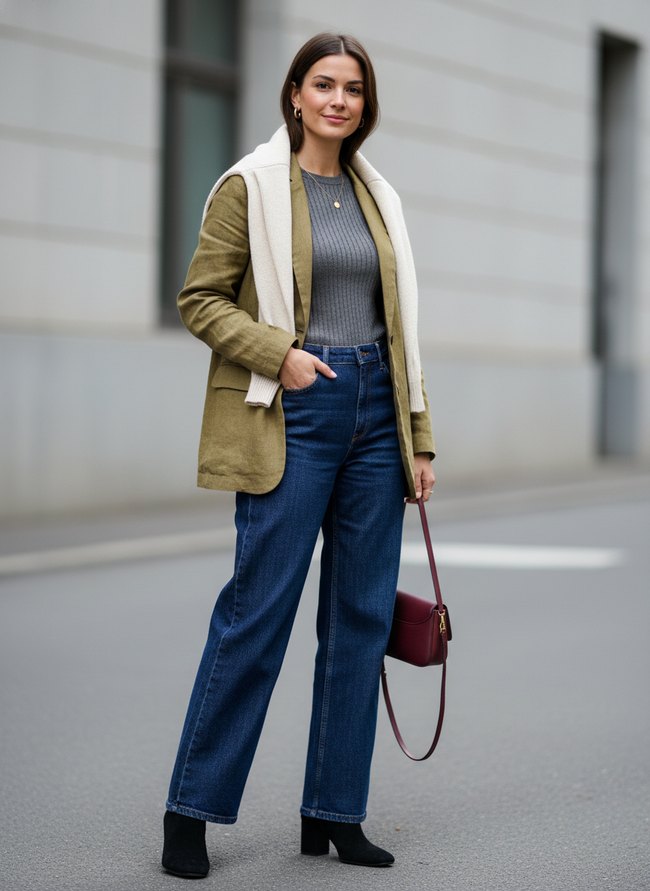
The olive green blazer creates a versatile day-to-night ensemble, because its structured linen fabric easily dresses up or down. A cream knit sweater draped over the shoulders adds a layer of warmth and texture, while dark wash denim jeans provide a casual base. Mixing tailored pieces with relaxed elements works well for a tiny home capsule wardrobe.
7. Streamlined Bathroom Towel System
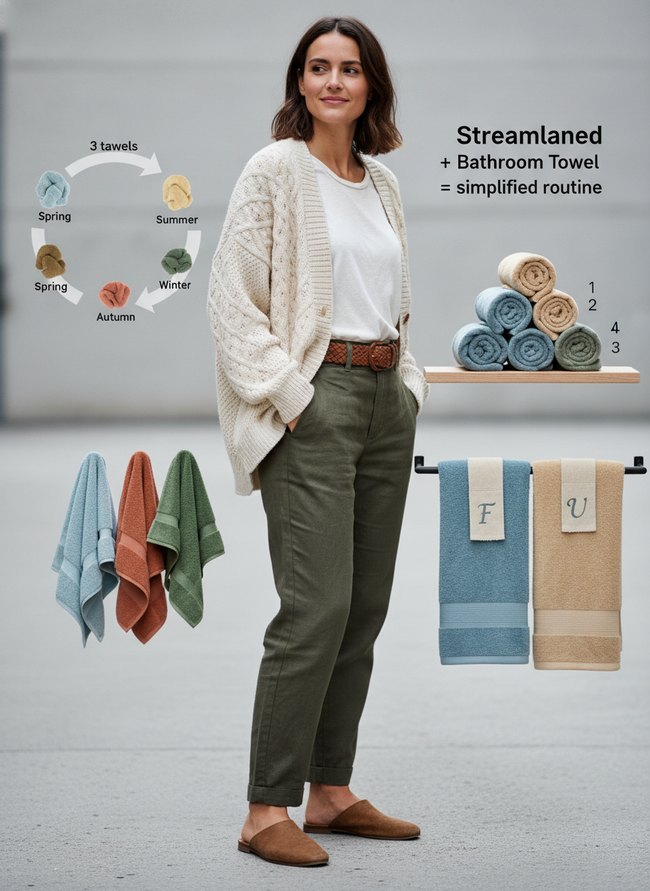
The image demonstrates a seasonal rotation of three hand towels. The system works by limiting the number of items needed at any one time, reducing clutter in a small bathroom space. A small wooden shelf also holds six rolled bath towels, neatly stacked in two color palettes. Adopt the three-towel seasonal rotation.
8. Efficient Entryway Shoe Solution
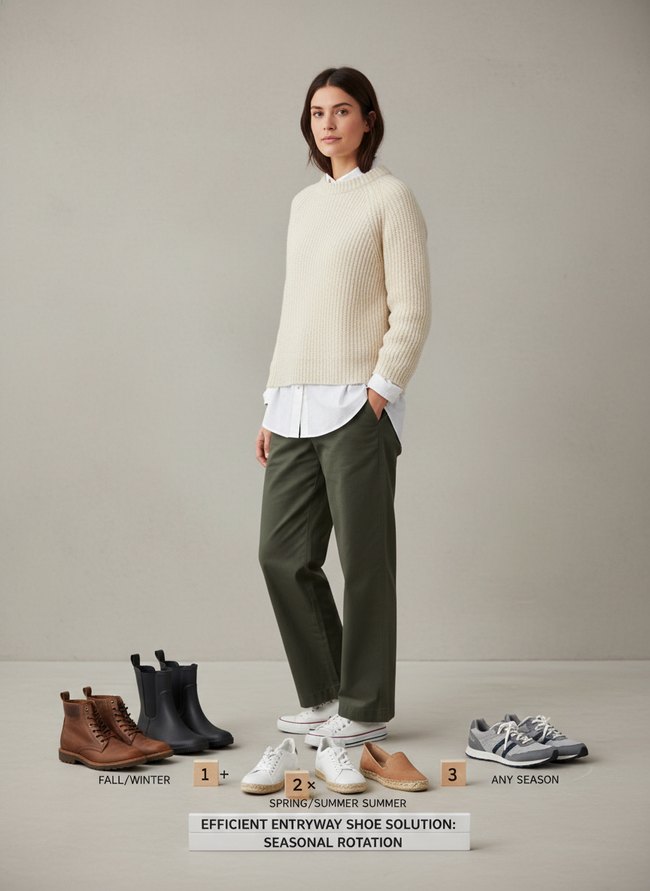
The seasonal rotation of footwear is the single design move making this entryway work. The approach reduces clutter by storing off-season shoes, keeping only current options by the door. Brown leather boots and black rain boots fill fall/winter needs, while two pairs of white sneakers and one pair of woven espadrilles cover spring/summer. Adopt the seasonal rotation to keep your small entryway organized.
9. Travel-Ready Laundry Capsule
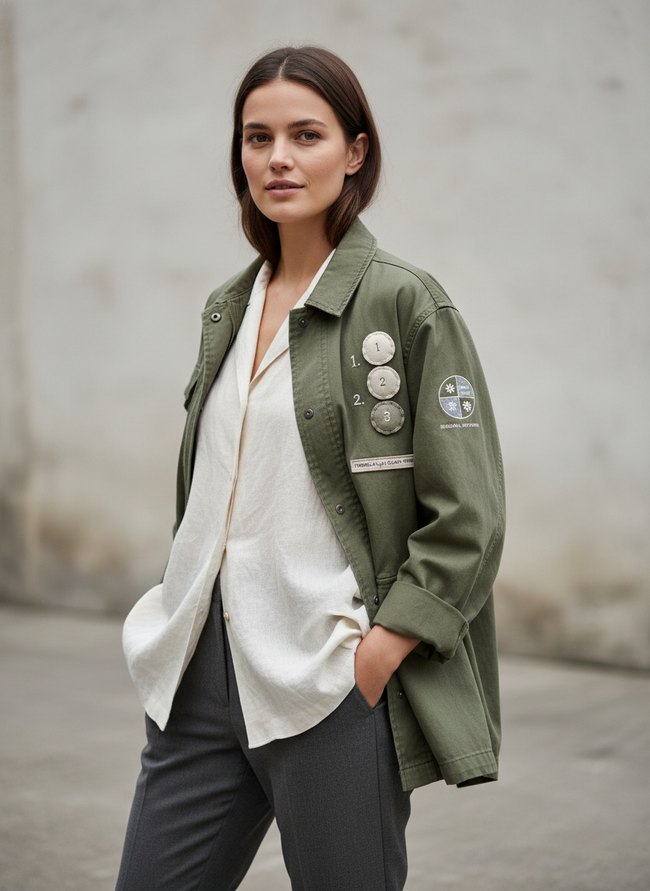
Numbered patches on the olive canvas jacket clearly show a seasonal rotation system, making laundry management simple. Patches on the sleeve display small, stylized icons for different seasons, offering a clear visual cue for clothing cycles. The woman’s relaxed posture and comfortable clothing suggest ease of wear for a tiny home capsule wardrobe. Steal the clear visual labels for your own laundry organization.
10. Foldable Wardrobe Garment Cube
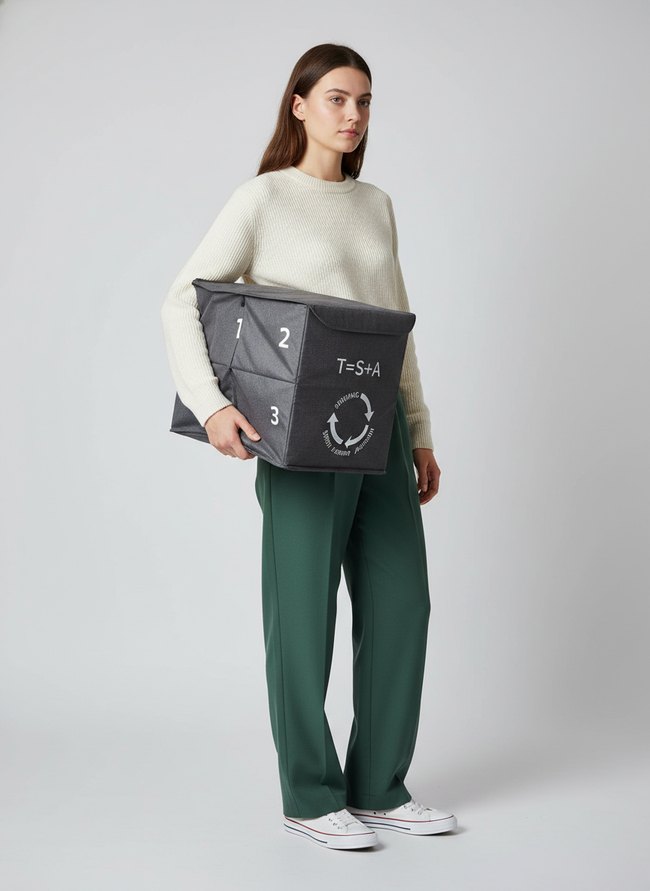
The designer uses a dark gray fabric garment cube with white numbers and a formula to categorize items, making seasonal rotations simple. The cube features three numbered compartments and a visual reminder for a “T=S+A” formula. The woman wears a cream ribbed sweater and wide-leg green trousers, showing the potential for stylish, comfortable clothing to fit inside. Steal the idea of using numbered compartments for clear organization.
11. Space-Saving Accessory Display

The olive green blazer features multiple gold pins and clips, displaying small accessories directly on the garment. The design choice works for a tiny home capsule wardrobe because the blazer integrates storage into clothing items, reducing the need for separate display furniture. A small brown leather wallet and a patterned black silk scarf hang from silver clips, providing quick access and visual interest. Displaying accessories on clothing is the move worth stealing.
12. Multi-Use Climate Comfort Kit
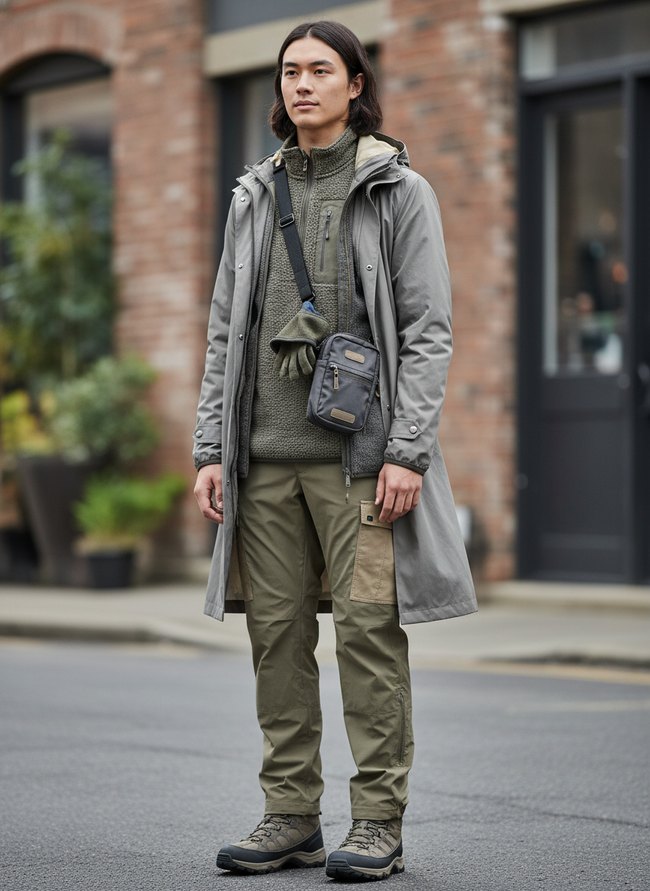
Layering multiple textures and weights of olive and grey fabrics builds a climate comfort kit for changing weather. The long silver-grey trench coat provides a wind-resistant outer shell over a thick grey fleece sweater and thin grey zip-up jacket. Olive cargo pants with tan knee patches and grey hiking boots complete the practical, multi-use ensemble. A consistent color palette with varied textures creates adaptable clothing.
Evaluating Garment Utility Across a 3-Season Climate Gradient: A Quantitative Approach to Multifunctionality Scores
Assigning a multifunctionality score to clothing helps you measure its real value. You can give each garment a number from one to ten, based on how well it works across different weather. A lightweight wool cardigan, for example, earns a high score. That soft gray cardigan provides warmth on a cool spring evening, then layers easily under a rain jacket during a damp autumn storm.
Consider instead a heavy, floor-length winter coat made from thick plaid wool. This long coat might score a ten for deep winter protection. However, the bulky garment receives a zero for summer or early fall use, making its overall utility lower for a year-round tiny home wardrobe. Your limited closet space demands items that pull double or triple duty through varying conditions.
Think about a pair of durable, dark denim jeans. These sturdy pants work well in spring, fall, and even mild winter days. The dark wash denim cleans easily after garden work, then looks sharp enough for a casual evening out. You avoid buying single-season items that just sit folded on a small pine shelf for half the year. Evaluating garment utility by season ensures every piece in your compact home earns its precious square inch.
The ‘Wear-to-Wash’ Cycle Coefficient: Deriving Optimal Garment Count for a 14-Day Cycle in 200 sq ft Dwellings
Understanding your personal “wear-to-wash” cycle directly impacts your capsule wardrobe size. A dark denim jean, worn for a casual afternoon, can easily offer three or four wears before needing a wash. Light linen shirts, however, typically require cleaning after a single wear, especially in warm climates. This difference in garment lifespan between washes establishes a core number for your clothing collection. You need enough clothes to last until your next laundry day.
Consider a tiny home with a small, under-counter washing machine or a laundromat visit every two weeks. Your clothing supply must cover all activity types for that full 14-day period. Many people mistakenly buy too few socks, forcing extra laundry cycles for only a few small items. Instead, count the exact number of charcoal wool socks you need for daily use over two weeks. This methodical approach prevents laundry pile-ups on your compact oak dresser.
A durable cotton t-shirt endures several wears for light activity, unlike a delicate silk blouse. Factor in your actual daily routines, whether you work outdoors or sit at a small pine desk. Each garment’s fabric and its expected use determine its place in your rotation. Your capsule wardrobe grows from this honest assessment of how long each item stays clean and fresh.
Which Idea Will You Try First?
That’s 12 different takes on tiny home capsule wardrobe. The best ideas above are usually the smallest moves — one material, one layout shift, one piece of furniture in the right place. Pick whichever room feels closest to your space and start there before tackling the rest.
Found an idea worth keeping? Save this post to your Pinterest board so it’s waiting for you when you’re ready to start your own project.