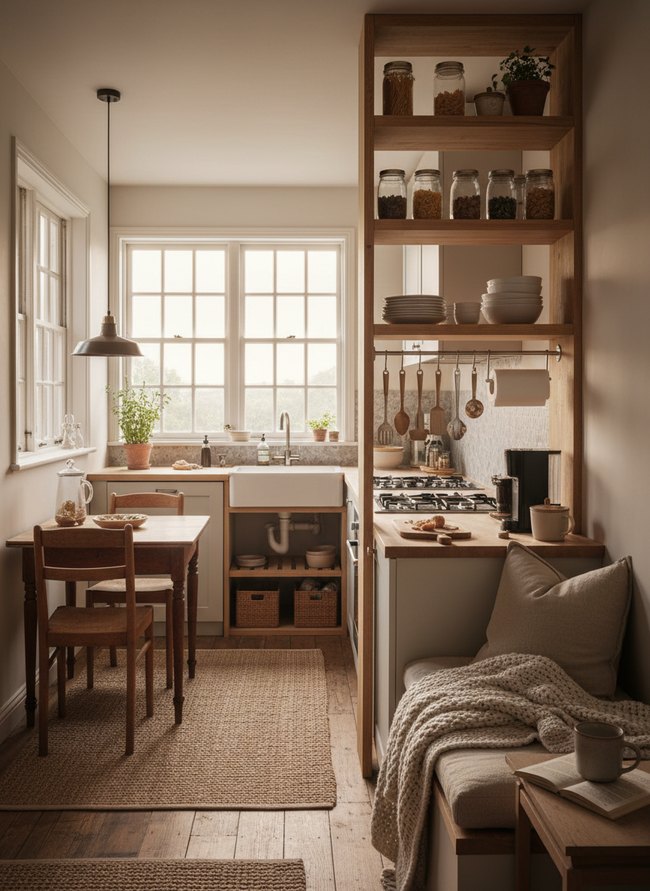
How to Use Vertical Space in a Tiny Home (Floor to Ceiling)
Floor area inside a small residence demands careful thought. Many homeowners choose between open floor plans and ample storage capacity. A homeowner gains spacious movement with fewer built-in units, but a lack of permanent fixtures limits personal belongings. Conversely, adding shelves and wall-mounted racks gives possessions a home, yet these additions can make rooms feel smaller. The right balance transforms a compact dwelling into an organized, efficient haven. Finding that ideal middle ground means weighing open air against the sheer volume of items owned. Each approach to using vertical space in a tiny home offers unique benefits and slight compromises. Consider these options.
1. Ceiling-High Ladder Shelf
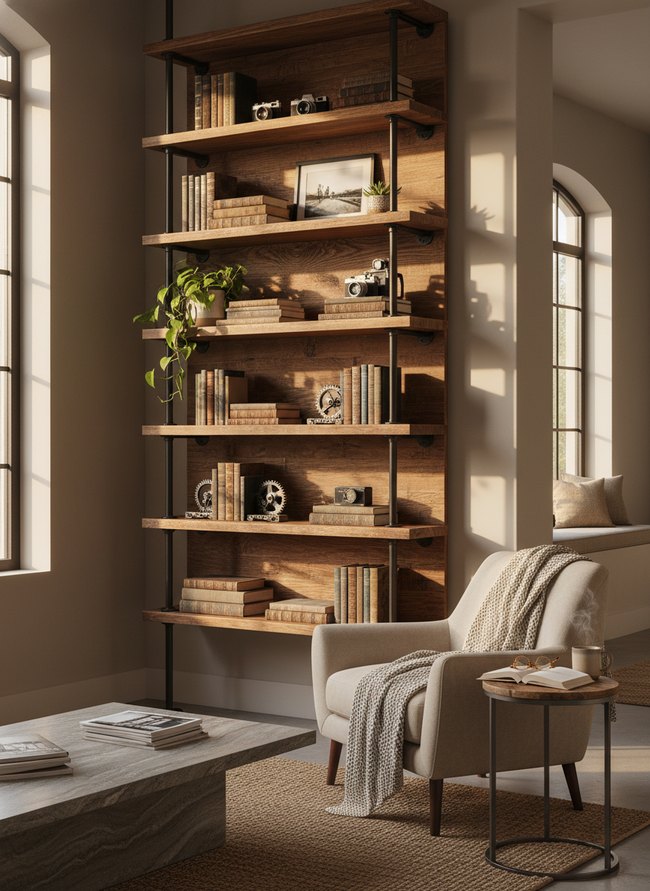
The honey-toned ladder shelf reaches from the floor to the high ceiling, offering ample storage. The tall shelving unit maximizes vertical space in the tiny home, displaying many old books and vintage cameras. A cozy cream armchair sits nearby, inviting relaxation.
2. Wall-Mounted Folding Desk
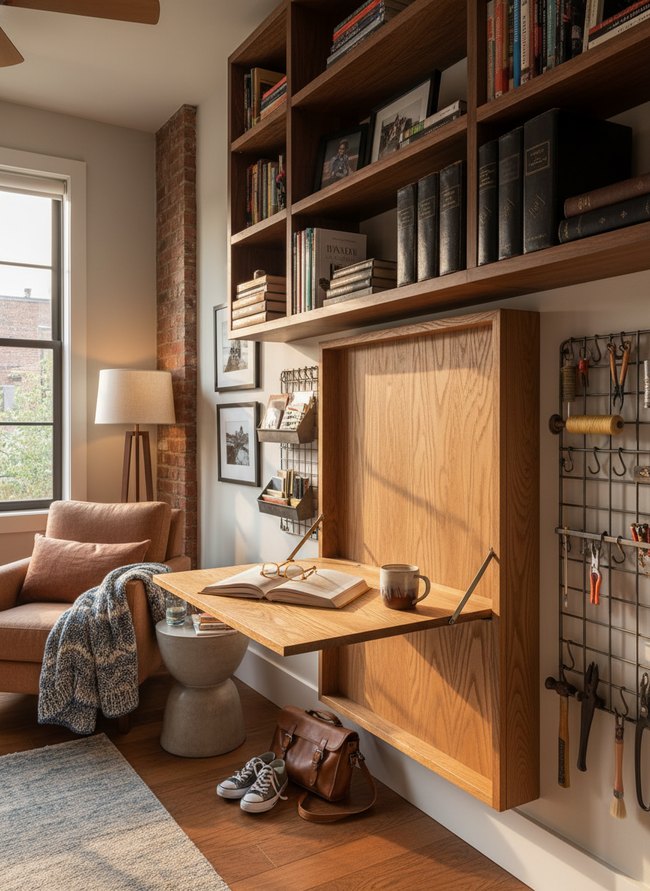
A light oak folding desk pulls down from a tall wall unit, offering a clear work surface. The clever design saves floor space, trading a fixed desk for flexible use. Dark wood shelves above hold many books, keeping your workspace neat.
3. Overhead Suspended Pot Rack
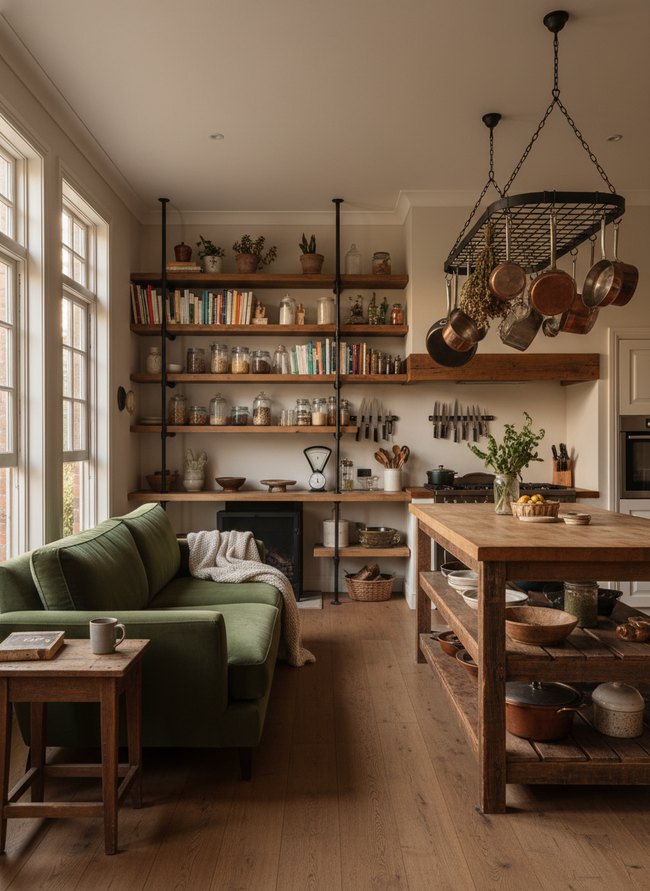
A black metal pot rack hangs from the high ceiling, displaying copper pans and dried herbs. The suspended rack saves valuable cabinet space in a vertical tiny home, keeping cooking tools ready at hand. The rack trades a clear overhead view for easily accessible kitchen essentials.
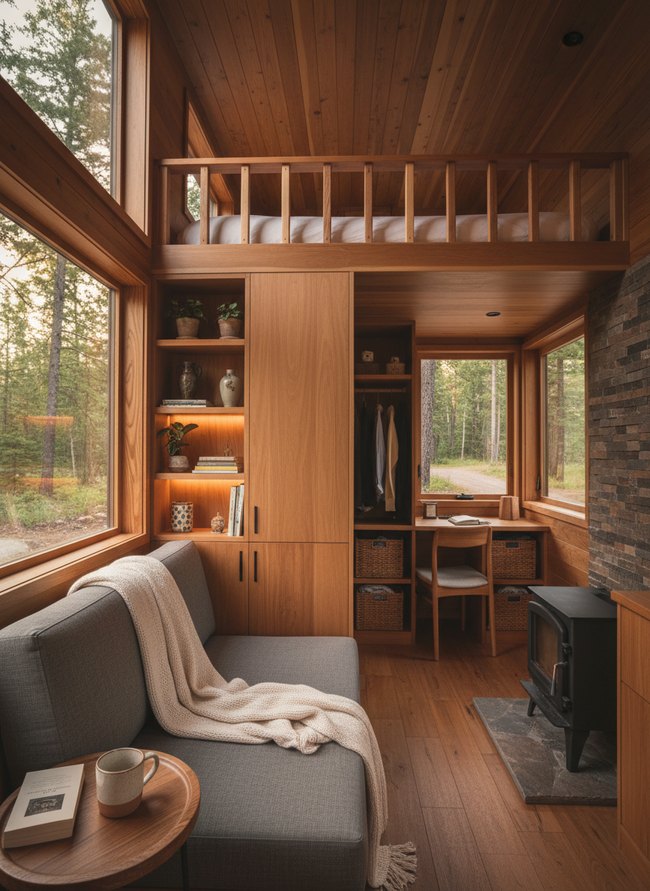
4. Lofted Sleeping Nook
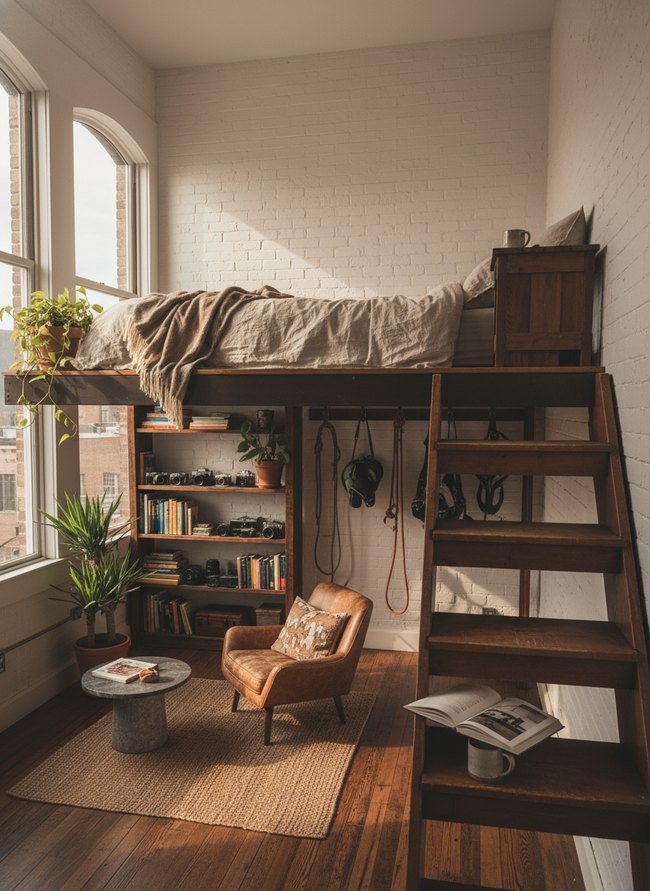
The wide wooden platform bed sits high, claiming the top half of the room for sleeping. Dark timber shelving underneath creates a cozy reading area, giving up some overhead clearance for a dedicated space below. The smart use of vertical space in the tiny home keeps the floor open while providing distinct zones.
5. Vertical Garden Wall
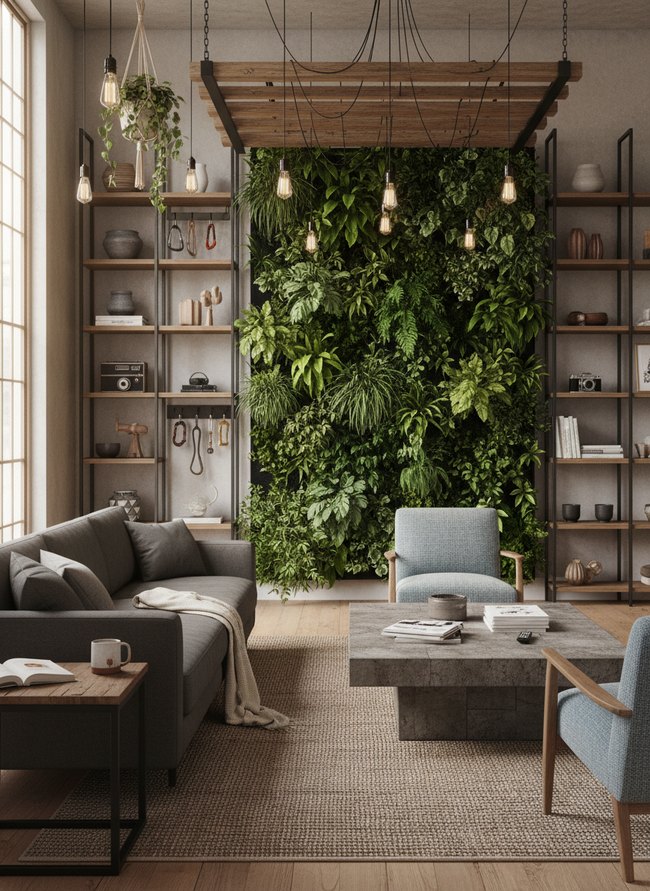
A tall living wall of lush green plants rises from the light wood floor, bringing a vibrant, organic feel into the room. The vertical space tiny home gains a dramatic natural focal point, trading away the option for more traditional wall art or shelving on that central wall. Exposed Edison bulbs hang from dark chains and a wooden trellis above the greenery, casting a soft, warm glow across the variegated leaves and light concrete wall.
6. Full-Height Pantry Cabinet
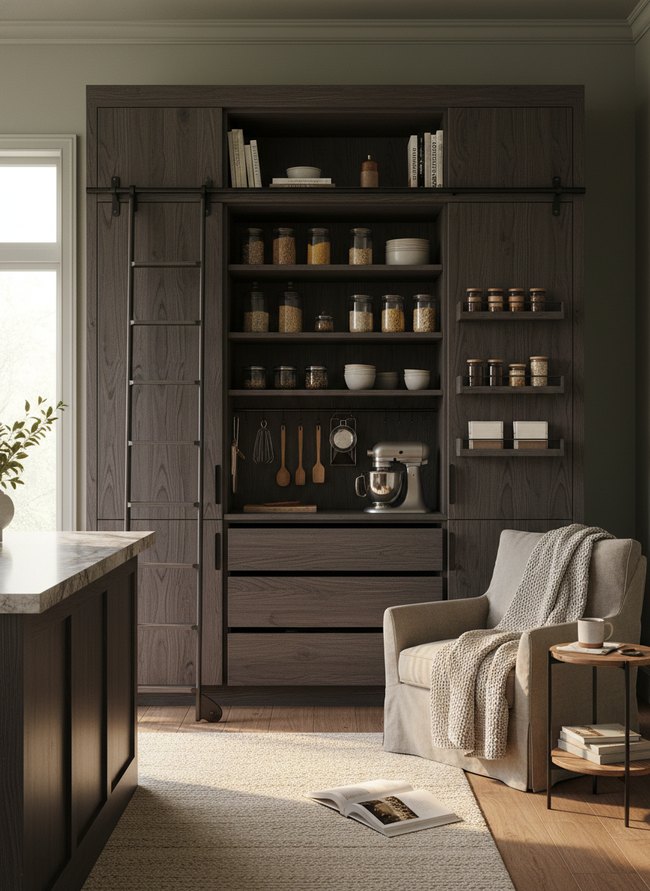
Dark wood shelves stretch from floor to ceiling, providing vast storage for a vertical space tiny home. A rolling metal ladder slides along a black track, giving easy access to every high compartment. The design trades open wall area for extensive, organized kitchen storage.
7. Stackable Modular Storage
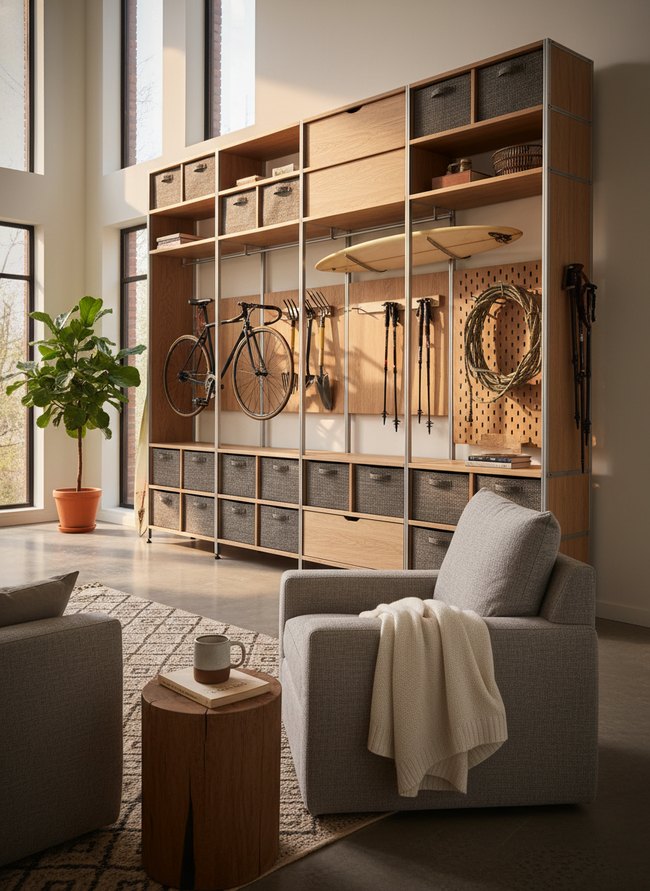
The tall, light oak shelving unit dominates the wide, sunlit wall. The expansive storage offers maximum organization, trading floor space for impressive vertical storage. Gray woven baskets fill many lower cubbies, offering enclosed storage for smaller items.
8. Floating Corner Shelves
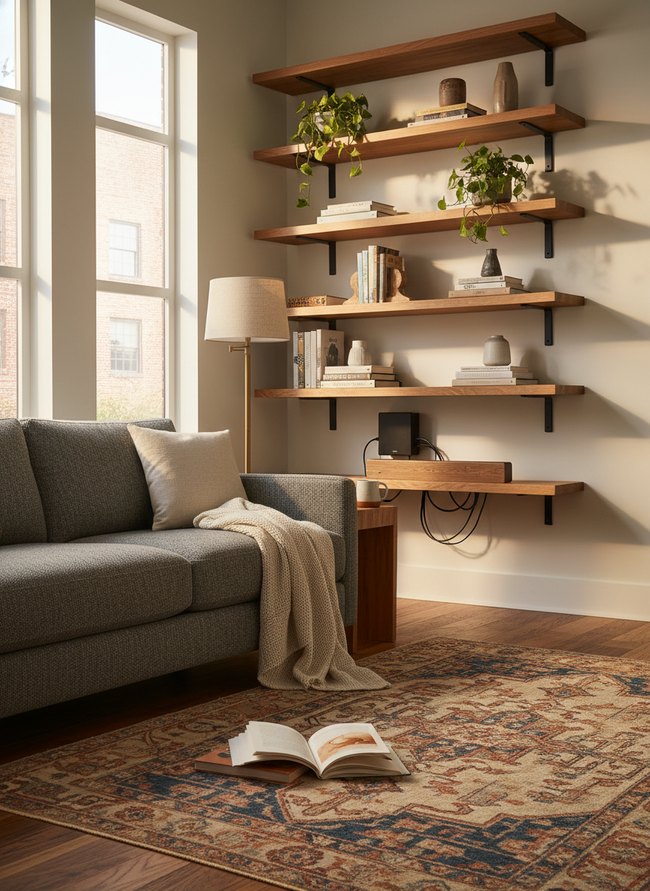
Five honey-toned wooden shelves stretch across the wall, holding small books and green potted plants. The built-in shelves provide expansive storage and display surfaces, giving up the ability to easily move them later. A gray sofa with a cream knitted throw blanket sits below the lowest shelf, creating a welcoming corner.
9. Under-Stair Storage Drawers
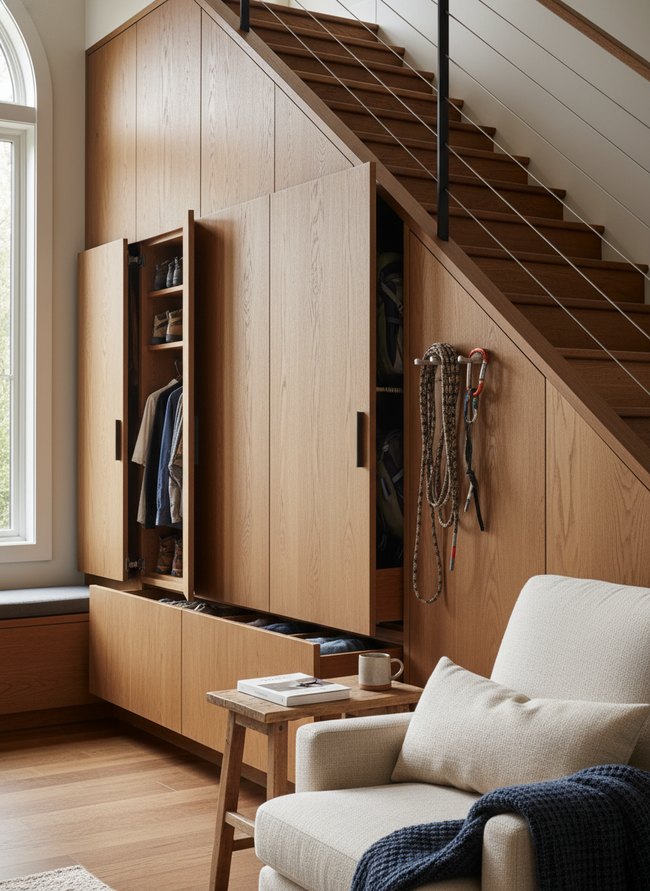
The pale oak cabinetry provides a smooth, continuous surface, making the storage feel like part of the wall itself. Deep drawers and tall cabinets under the wooden staircase offer hidden organization, trading open display for a clean, calm appearance. A light beige armchair nearby invites quiet relaxation in the vertical space.
10. Pegboard Craft Station
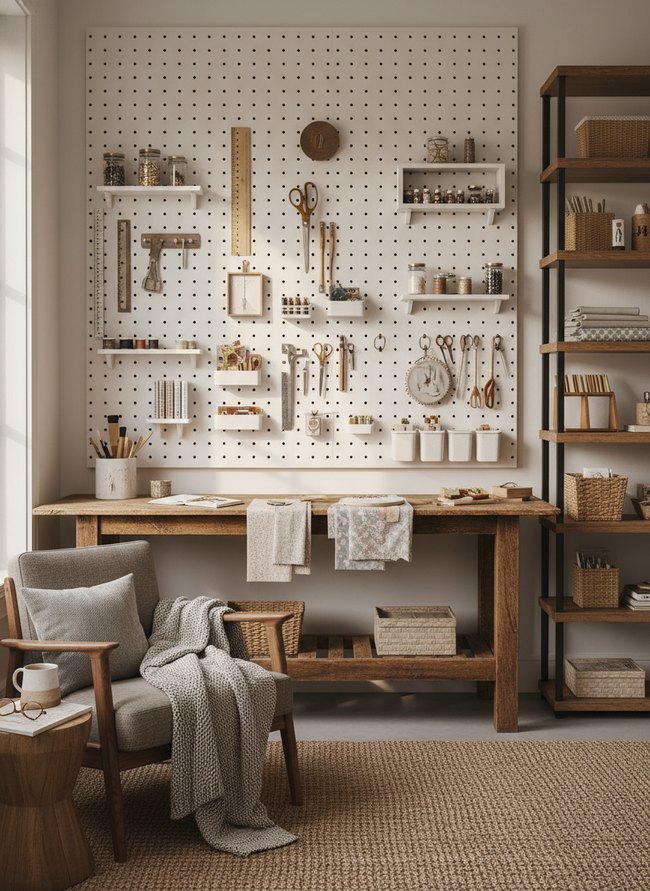
A large white pegboard covers the wall, holding many craft tools and small shelves. The pegboard keeps the workspace tidy over a long wooden table. The storage solution gains substantial storage but trades away a completely blank wall.
11. Hammock Chair Alcove
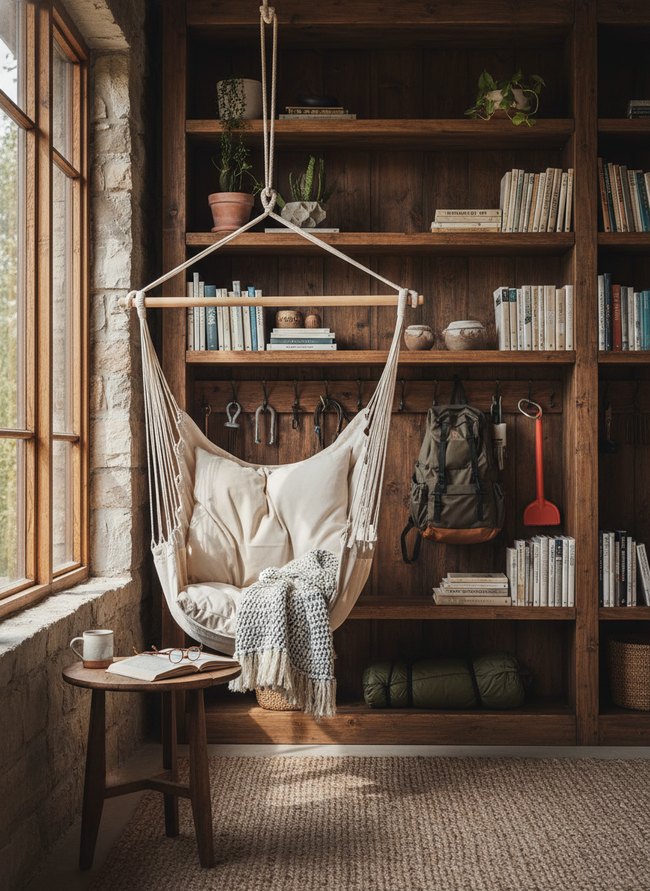
The cream hammock chair hangs from the dark wooden ceiling, offering a cozy spot for reading. Natural light streams through the tall window, illuminating the woven rug below. The chair creates a quiet, restful corner without taking up much floor space.
12. Tall Bookshelf Divider
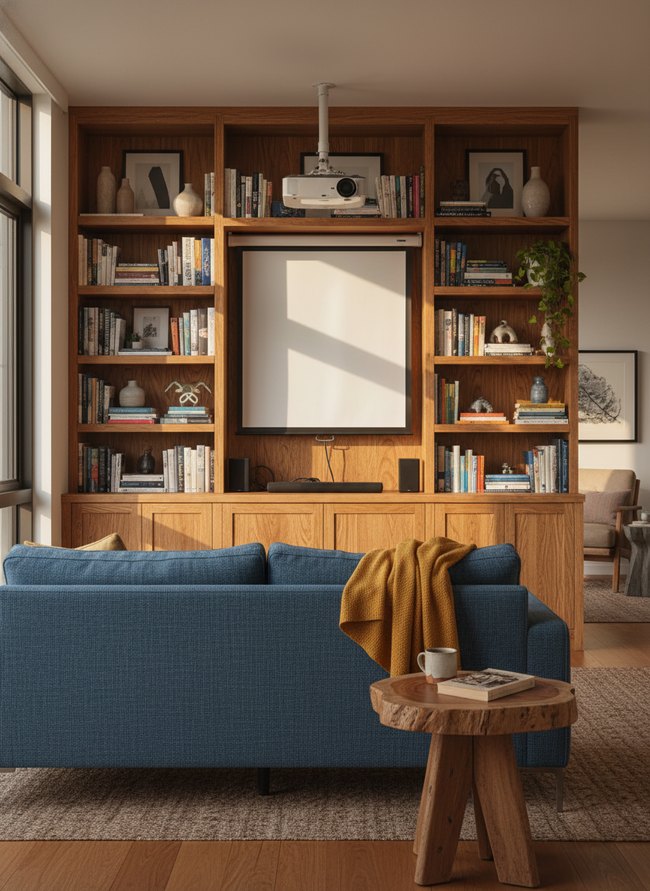
The wide oak bookshelf fills the entire wall, offering expansive storage for books and decorative objects. Homeowners could choose the design for a vertical space tiny home, trading an open layout for a dedicated media center and abundant display areas. A light gray projector screen pulls down from the top, creating a cinematic experience over the blue textured sofa.
Should I Build Custom Shelves or Buy Ready-Made Units?
Fabricating custom ceiling-tall shelving demands significant time or money. Pre-made units, however, offer immediate storage solutions. Consider your workshop skills or available budget for a carpenter. Your home’s unique wall angles might frustrate stock shelving. Manufactured pieces arrive in standard rectangular shapes, often leaving gaps against a sloped ceiling.
Custom bookcases allow you to specify honey-toned oak or dark walnut lumber. A skilled woodworker crafts each shelf to your exact wall dimensions. This precise fit maximizes every cubic inch of overhead storage. Expect a higher price tag for bespoke creations, reflecting labor and materials.
Ready-made metal shelving units cost less upfront. Flat-pack particleboard shelves assemble quickly with a screwdriver. These mass-produced items sacrifice specific dimensions for affordability. You accept a slightly less tailored look for lower financial outlay. Owners prioritizing quick setup and budget savings find pre-built options suitable. Tiny home dwellers with uncommon wall shapes or specific material preferences should choose custom fabrication.
Fixed or Flexible: Which Hanging System is Best for My Needs?
Selecting fixed shelving or a flexible hanging system requires careful thought about your tiny home’s evolving needs. Permanent wall-mounted shelving offers solid, unwavering storage for weighty items like stacked ceramic plates or a collection of hardback books. Builders install these sturdy wooden shelves directly into wall studs, providing reliable support for years. However, changing the layout of fixed shelves demands drywall repair and fresh paint, a significant undertaking.
Rail systems present a more adaptable alternative for your vertical storage. Movable hooks slide along a metal track, allowing you to reposition kitchen utensils or framed photographs effortlessly. Pegboards, constructed from thin perforated wood, provide endless configurations for small tools and craft supplies. You swap out pegs and baskets with minimal effort, adapting the wall’s function instantly.
Owners desiring a static, unchanging display for heavy, large possessions favor fixed, permanent solutions. Conversely, occupants who frequently rearrange decor or need to adjust storage for shifting hobbies find flexible systems far more practical. A young artist’s tiny studio benefits immensely from a reconfigurable wall for canvases and paintbrushes. A long-term resident with established furniture positions prefers the steadfast reliability of fixed shelving.
Which Idea Will You Try First?
That’s 12 different takes on vertical space tiny home. The best ideas above are usually the smallest moves — one material, one layout shift, one piece of furniture in the right place. Pick whichever room feels closest to your space and start there before tackling the rest.
Found an idea worth keeping? Save this post to your Pinterest board so it’s waiting for you when you’re ready to start your own project.