Tiny Bedroom Color Theory for Better Sleep
Morning light hits your small window, but your eyes still feel heavy. You roll over onto the soft mattress, wishing for a few more hours of sleep. A cramped room often brings restless nights. Four painted walls can feel like a cage. Your home environment directly impacts how well you rest. We all know the struggle of trying to unwind in a space that won’t let your mind calm down. Finding the right colors for your tiny bedroom makes a big difference. Certain paint shades and fabric hues promote deep relaxation. Understanding how paint affects your mood transforms your sleeping area. Calming colors will help you create a peaceful retreat, even in a small footprint.
1. Muted Blue Serenity Palette
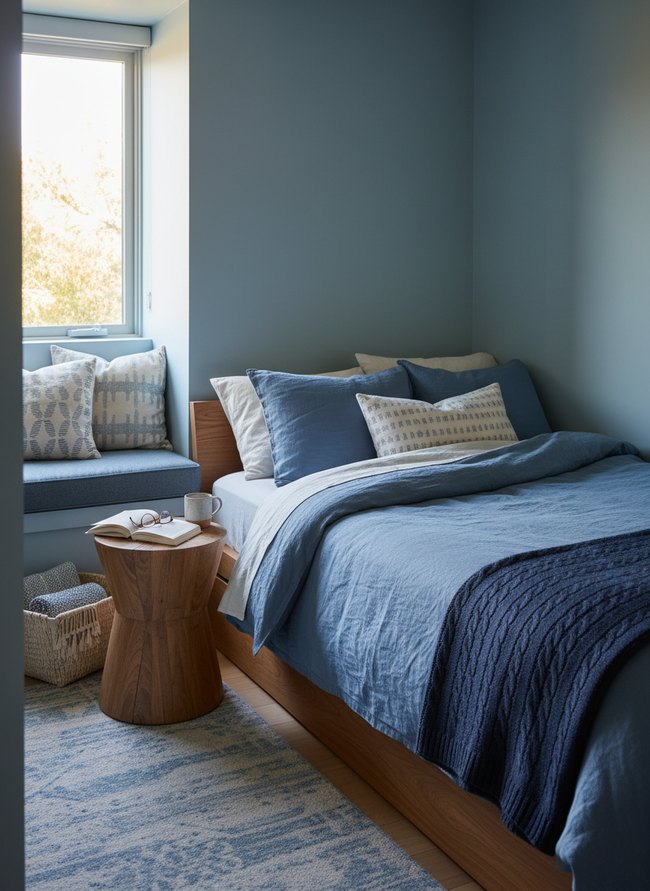
Light blue walls create a soft, airy feel, making the small space open. A wooden bed frame grounds the room, adding a natural touch to the calming colors. Layered blue bedding and patterned throw pillows offer a cozy, inviting atmosphere for deep rest.
2. Soft Sage Dream Scheme
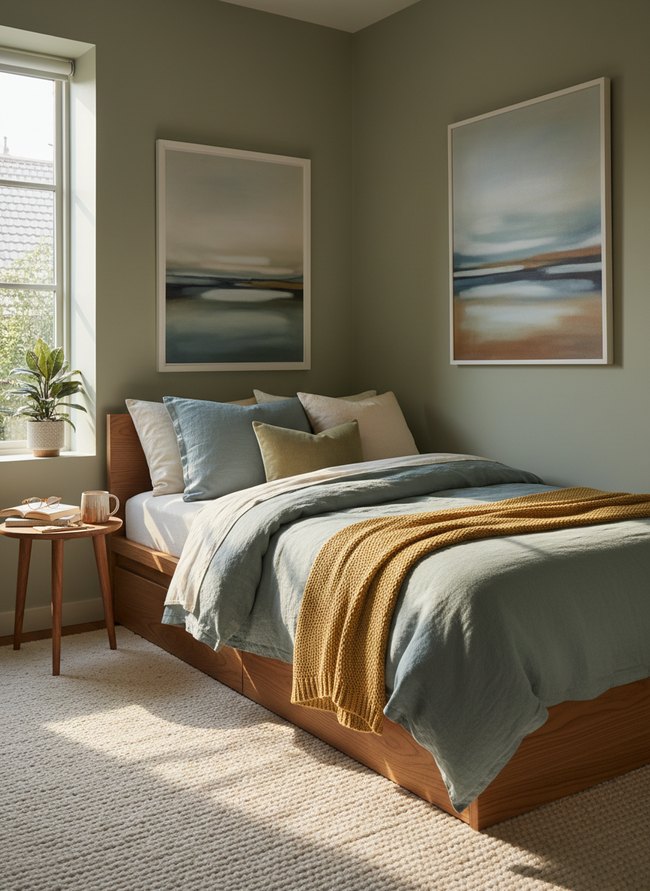
Soft green paint creates a calm backdrop, helping your tiny bedroom feel more open and peaceful. A light blue duvet and matching pillows add a gentle cool tone, making the bed a welcoming spot for rest. The warm wooden bed frame and small round side table bring an earthy balance to the calming colors.
3. Lavender Haze Comfort Blend
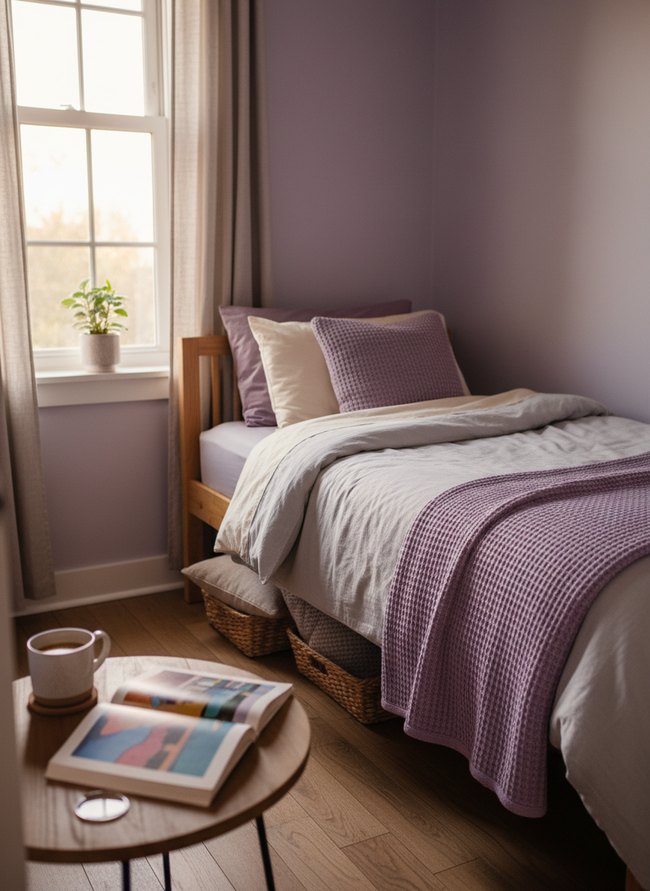
A pale lavender wall behind the wooden bed frame creates a soft, calming backdrop for the sleeping area. Light gray bedding, neatly folded, offers a peaceful contrast to the purple tones. A waffle-weave lavender throw blanket draped across the bed adds a cozy texture and deepens the tiny bedroom color theory.
4. Warm Gray Tranquil Tone
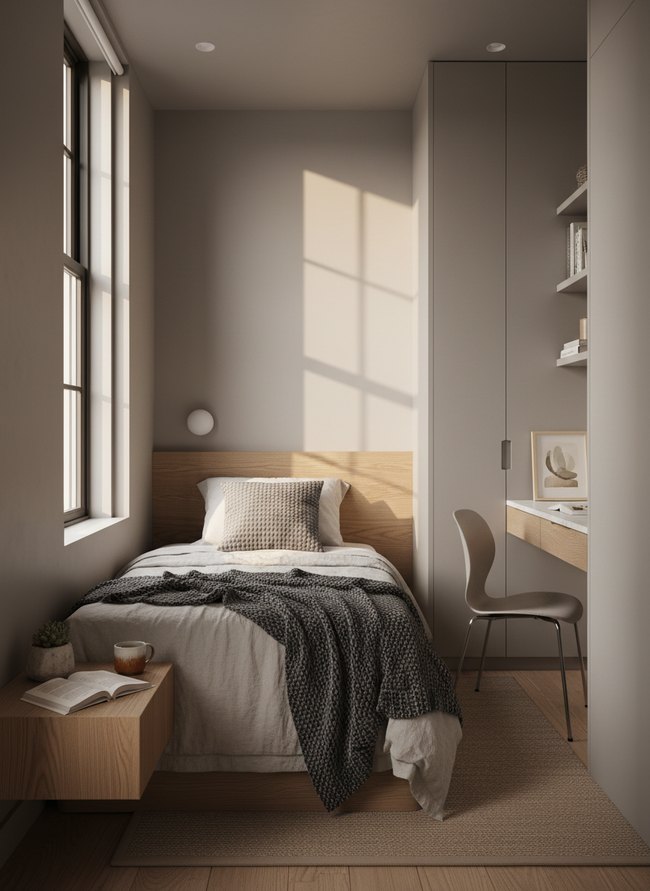
A single bed with a light wooden headboard sits against a warm gray wall, creating a peaceful backdrop for sleep. The soft, textured gray blanket draped across the bed adds a cozy layer, inviting you to relax. The tiny bedroom’s neutral tones help you feel calm and get better rest.
5. Pale Peach Soothing Hue
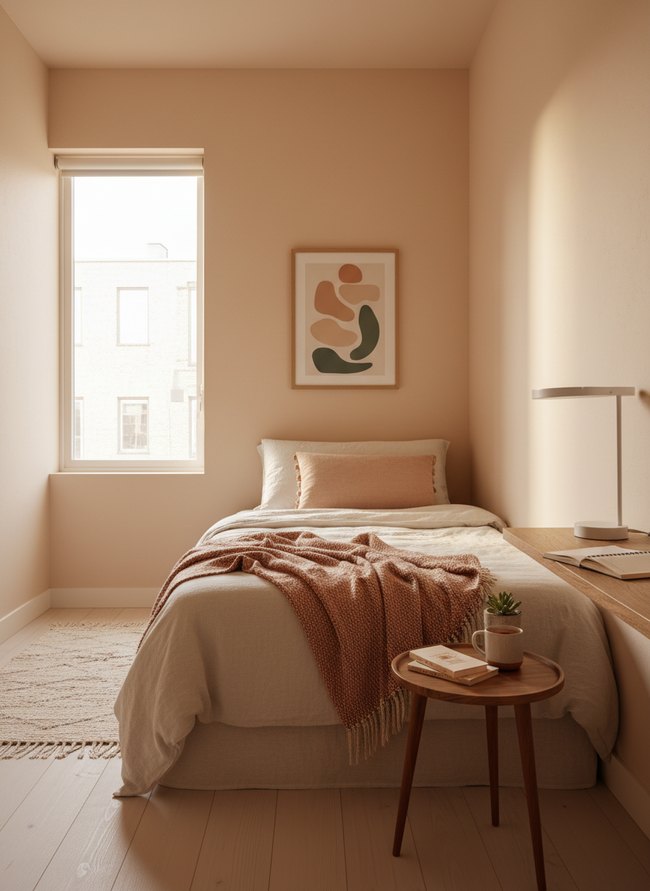
Pale peach walls make a small room feel open and bright. A light wooden bed frame and simple white bedding keep the tiny bedroom color theory restful. The overall feeling offers a calming backdrop for peaceful sleep.
6. Earthy Green Restful Ambiance
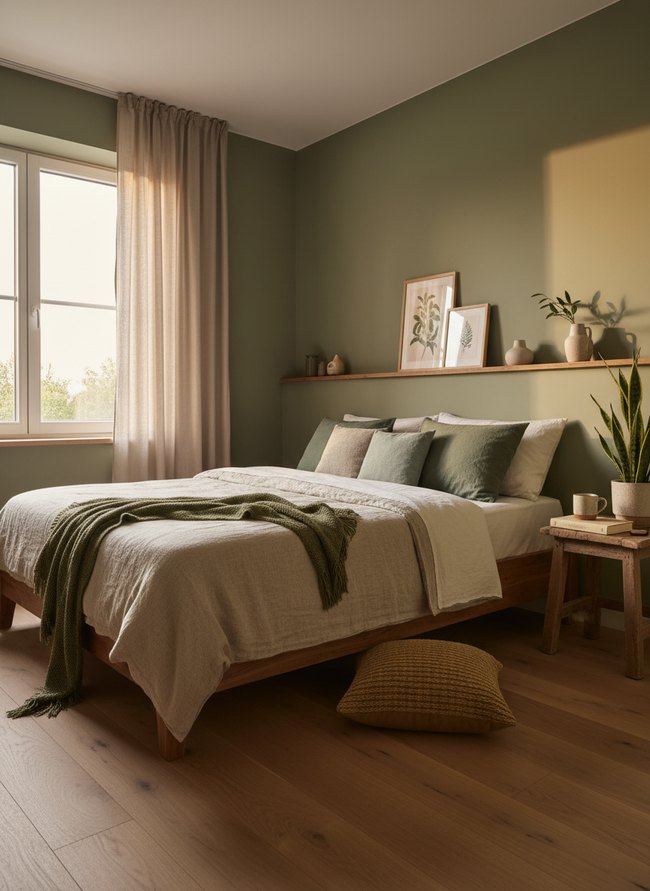
Olive-green bedroom walls surround a simple wooden bed frame, offering a grounded, natural feeling. Various pillows in lighter green and soft beige tones create a cozy sleeping space. A small wooden stool holds a potted snake plant and a warm beverage, completing the restful ambiance.
7. Dusty Rose Calming Effect
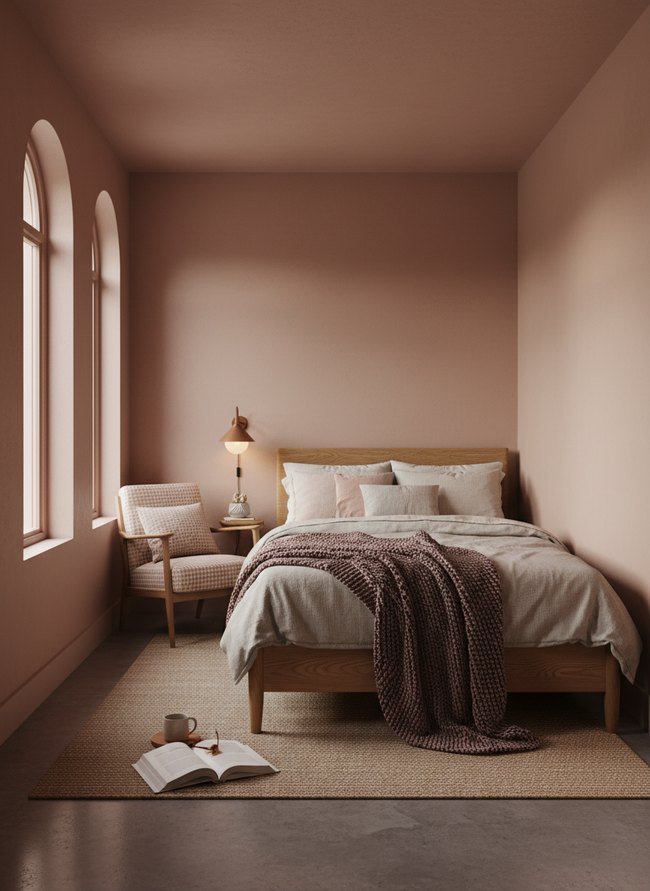
Dusty rose wall paint washes over the entire room, creating a soft, consistent visual field. A light wooden bed frame with a plain headboard brings natural warmth, grounding the soft pink hues. The knitted plum blanket draped over the bed adds a deep, rich texture, helping you feel cozy and relaxed.
8. Creamy White Peaceful Space
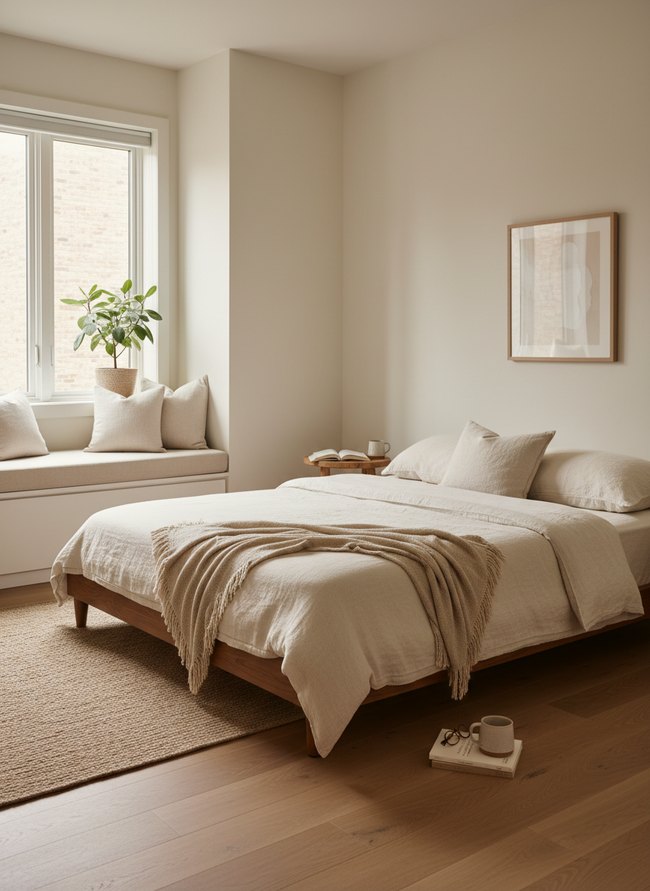
Creamy white bed linens spread across the low wooden platform bed, inviting relaxation. A soft, light beige throw blanket adds an extra layer of comfort, creating a calm feeling. Light oak wood floors and a jute rug ground the bright room, making it a peaceful space.
9. Aqua Marine Gentle Wash
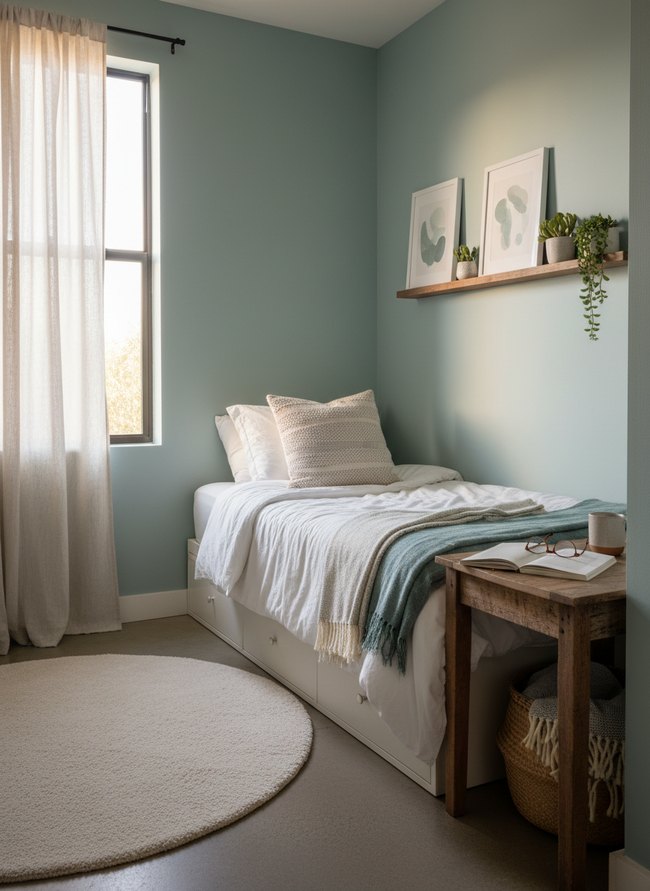
Pale aqua marine paint covers the bedroom walls, creating a soft, calming background. Sunlight streams through a tall window, highlighting the gentle color and making the small room feel more open. A light blue throw blanket draped across the white bed linens adds a subtle, cool accent, inviting you to relax.
10. Indigo Night Relaxation Plan
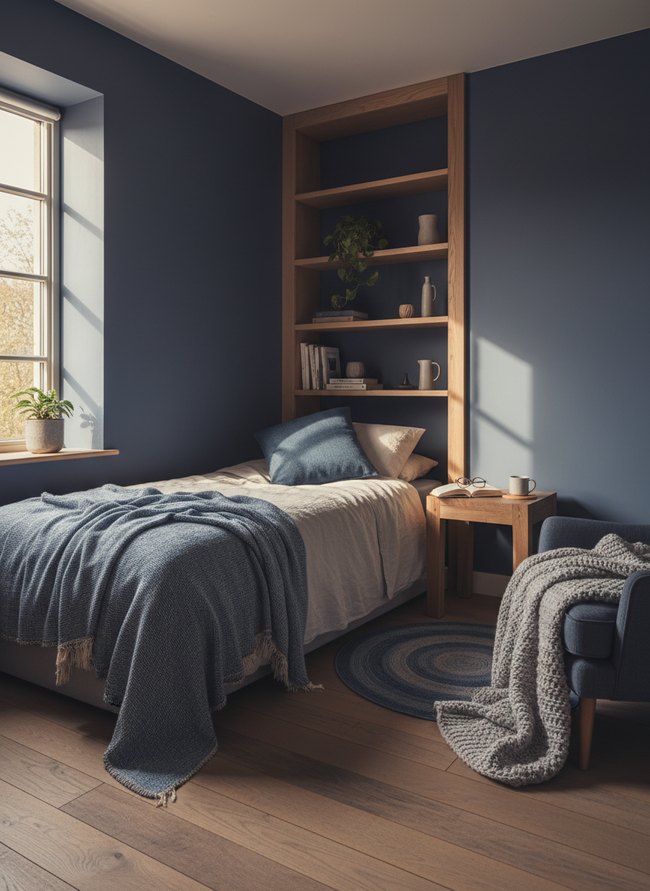
Deep indigo wall paint sets a calm, evening mood in the small sleeping space. A light wooden bed frame and matching bedside table add warm, natural tones to the dark blue color. The soft blue blanket draped over the bed offers cozy texture for unwinding.
11. Subtle Yellow Morning Calm
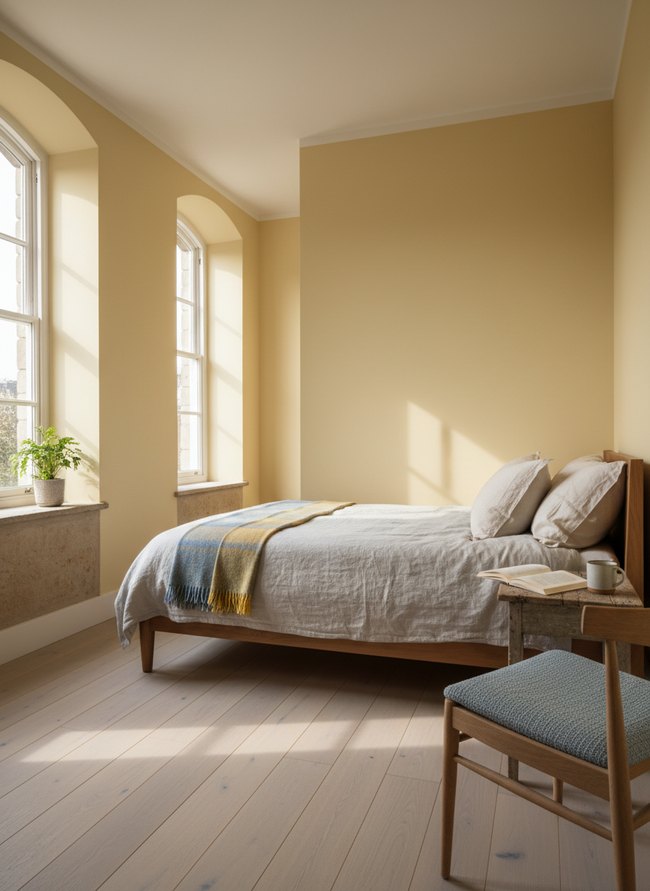
Pale yellow walls throughout the tiny bedroom bring a soft, inviting glow. A light wood bed frame holds a linen duvet and pillows, offering a clean, calm sleeping space. The subtle yellow color scheme helps you wake up feeling refreshed.
12. Greige Balance Sleep Theory
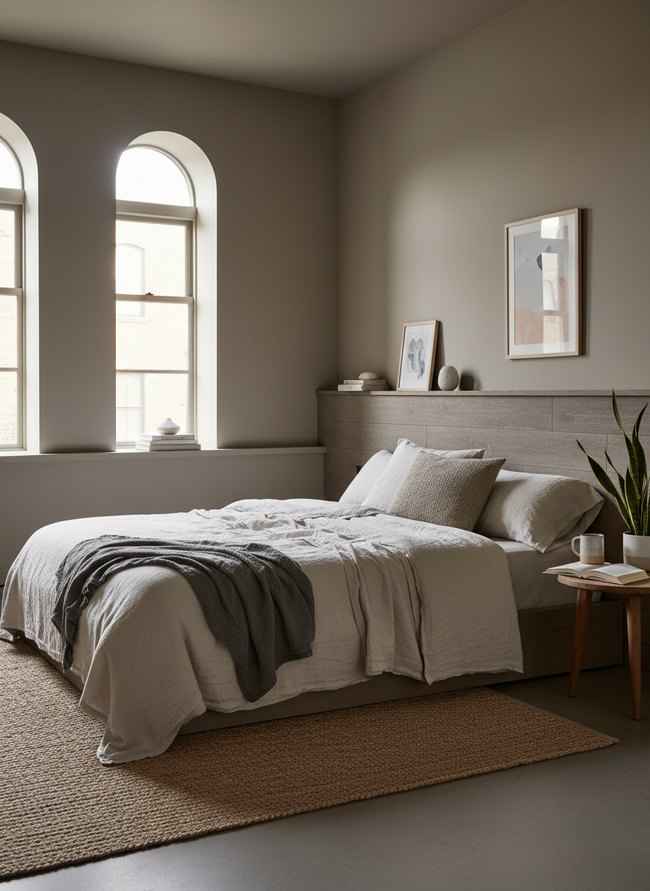
Warm greige paint covers the bedroom walls, offering a soft, neutral backdrop for rest. A light gray linen duvet and matching pillows on the bed provide gentle texture. The color scheme allows a peaceful tiny bedroom for better sleep.
Beyond the Hue: The Often-Overlooked Role of Undertones in Sleep Quality
However, true relaxation for sleep involves more than just a calming color on your bedroom walls; undertones hold subtle power. Neutral colors, like a soft gray or a pale beige, feature hidden cool or warm bases. A cool-toned gray, for example, contains blue or green pigments. This cool gray promotes slower brain activity. Warm gray, conversely, has yellow or red undertones. This warmer gray can subtly stimulate your senses. You need colors that signal rest.
Many people think any light color works. That idea misses the mark. Pale yellow walls, though light, often carry stimulating golden undertones. These golden undertones can keep your mind active. Instead, seek out colors with clear cool undertones. Your bedroom benefits from soft lavender walls. Lavender’s purple hue contains blue, a strong sleep signal. A light sage green also works wonders. Sage green offers cool, earthy tones. These earthy tones help your body wind down. Deeper blue walls provide a cave-like comfort. This deep blue tells your brain to power down. Choose paint swatches with visible blue or green casts for the best results.
The ‘Reflected Light’ Phenomenon: How Wall Finish Affects Perceived Color and Ambiance
Wall paint finish directly changes how colors appear, a huge factor in your tiny bedroom’s sleep comfort. Flat matte paint absorbs light, creating a deep, uniform color without harsh reflections. Glossier finishes like satin or semi-gloss bounce more light around the room. This increased reflectivity can actually make a soft blue wall seem brighter, even clinical, under a bedside lamp. Many people choose a shiny finish for easy cleaning, but that slick surface reflects every stray light source. Your eye registers those bright spots, potentially disrupting the calm feeling you want for rest.
A muted flat finish reduces glare. Smooth plaster walls with a low-sheen paint diffuse incoming light beautifully. This diffusion softens the color, making even a dusty rose shade feel more enveloping. Conversely, a high-gloss emerald green wall might look vibrant during the day but could produce sharp, distracting reflections at night. The goal is to minimize visual noise. A flat paint gives a uniform color field. This consistent visual input helps your brain relax instead of processing scattered light points. Pick the lowest sheen level you can manage for maintenance; your sleep will thank you.
Which Idea Will You Try First?
That’s 12 different takes on tiny bedroom color theory. The best ideas above are usually the smallest moves — one material, one layout shift, one piece of furniture in the right place. Pick whichever room feels closest to your space and start there before tackling the rest.
Found an idea worth keeping? Save this post to your Pinterest board so it’s waiting for you when you’re ready to start your own project.