Understanding Loft Bedroom Safety in Tiny Homes
Tiny house living often means sleeping up high. Loft bedrooms certainly save precious square footage. Wood ladders or steel rails usually provide access to these elevated spaces. Falls from a high sleeping platform are no joke. A simple slip on a narrow rung can lead to nasty bruises or broken bones. Understanding loft safety requirements prevents bad accidents. Building codes and smart design keep occupants secure. Each rough-cut timber or brushed aluminum handrail plays a big part. Occupants want to sleep soundly, not worry about tumbling out. Consider how to make those cozy sleeping nooks genuinely safe.
1. Integrated Staircase Tiny Home Rail
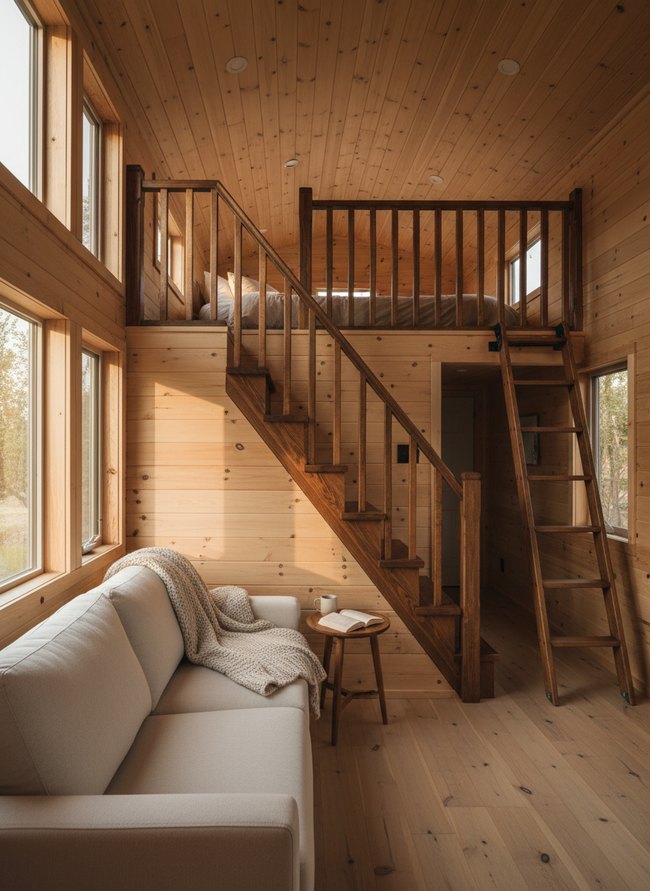
Two dark wooden handrails, one for the stairs and one for the ladder, offer strong support up to the sleeping loft. The design shows an integrated staircase rail that gives you two ways to reach your bed. Consider adding a gate at the top of a loft ladder if small children or pets will use the space.
2. Compact Loft Safety Barrier
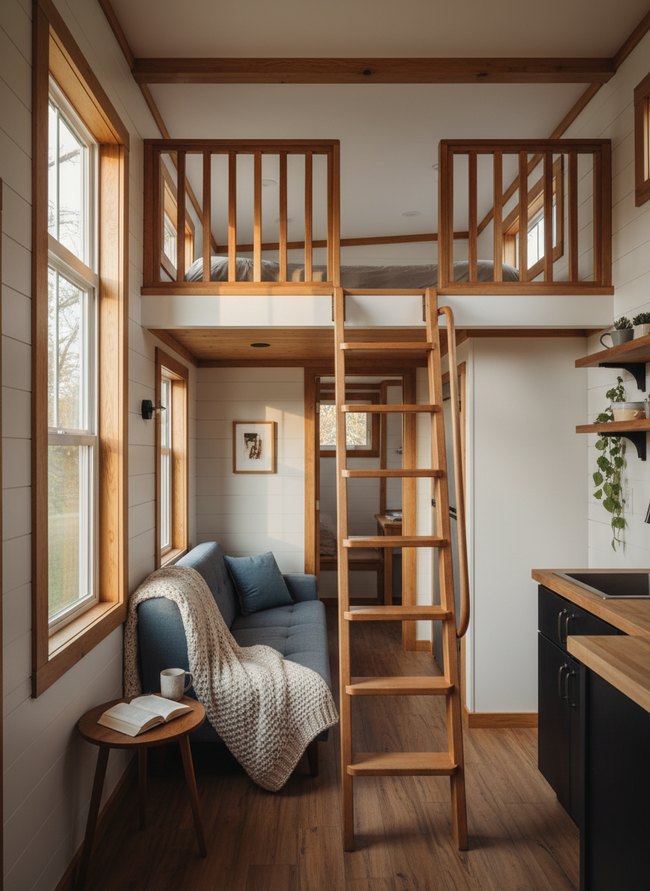
A light oak safety railing with vertical slats protects the open side of the loft bedroom. The compact barrier offers essential peace of mind, especially for homes with children or pets. Consider adding a sturdy wooden railing to your own loft for extra security.
3. Modern Fixed Ladder Guardrail
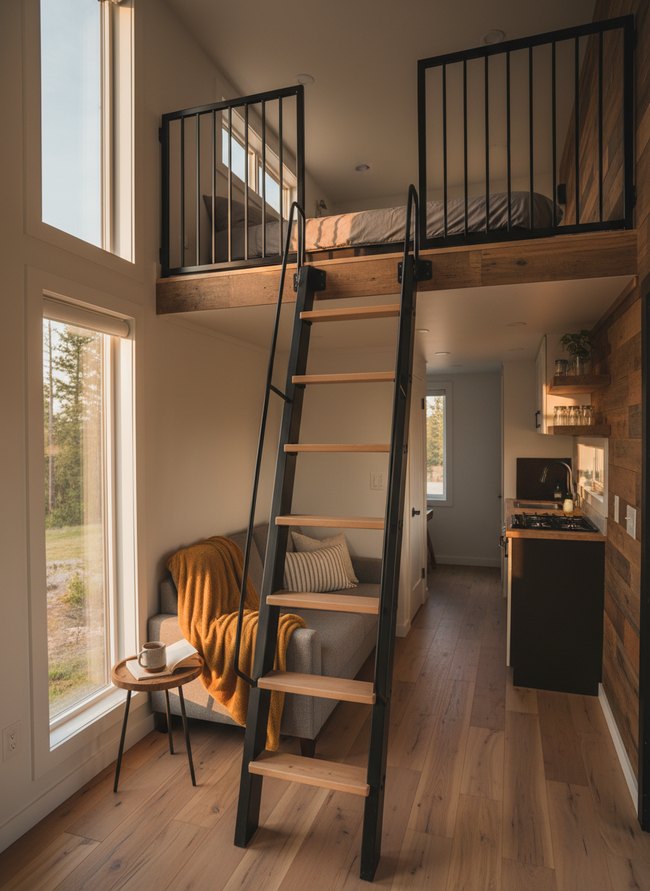
A black metal and honey-toned wood fixed ladder gives access to the sleeping loft in this tiny home. The ladder’s sturdy guardrail provides crucial loft safety for anyone climbing into bed. Always choose a fixed ladder with a secure top railing for maximum stability.
4. Retractable Loft Gate System
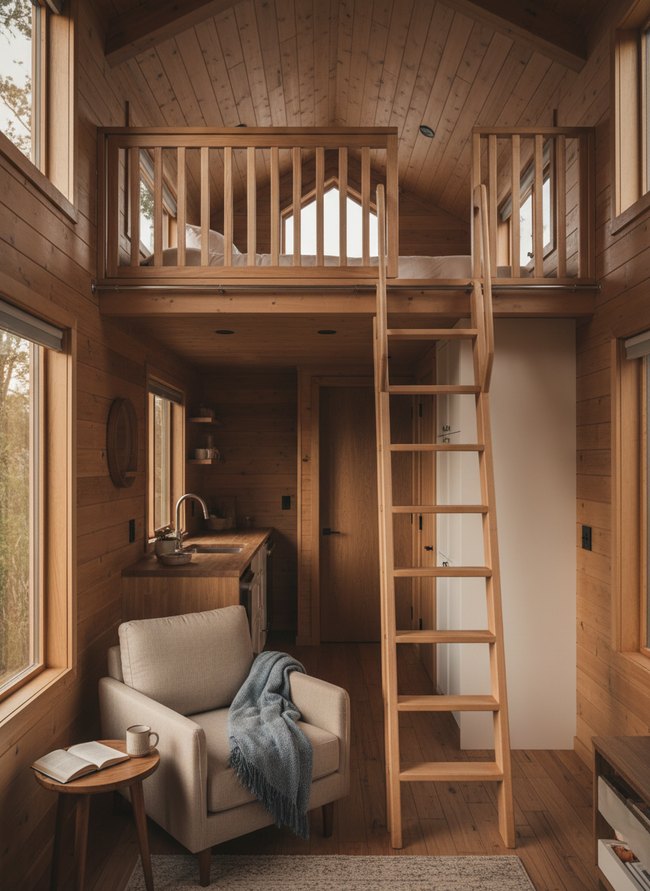
A blonde wooden handrail with vertical slats offers a half-wall of protection to the open loft bedroom. The simple wooden gate slides on a metal track, keeping occupants safe in the elevated sleeping area. Install a retractable system for easy access and peace of mind.
5. Secure Bunk Rail Loft
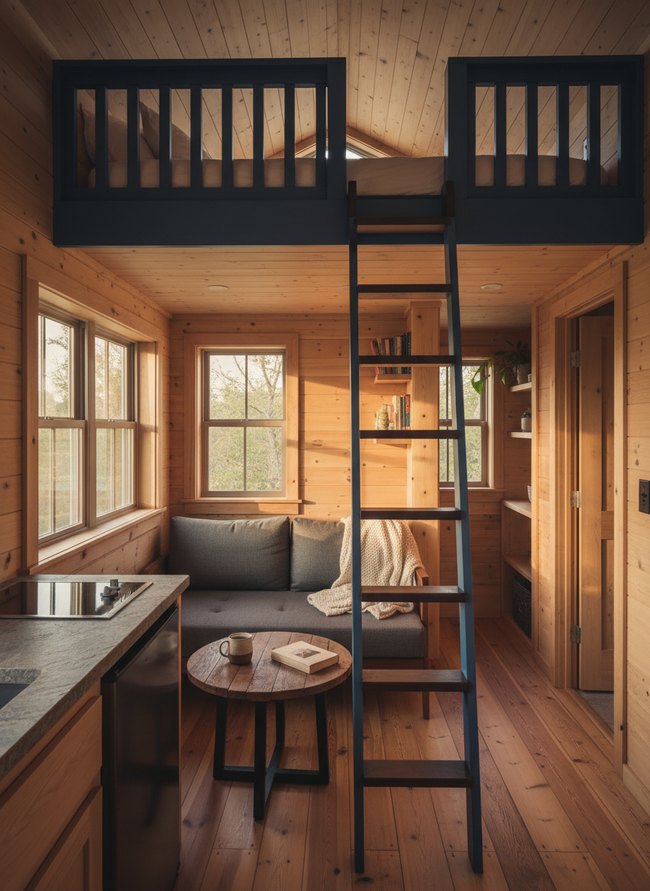
The dark blue loft railing provides a strong visual barrier, clearly marking the edge of the elevated sleeping area. The sturdy, dark blue banister prevents falls from the loft bed, making the tiny home much safer. Always choose a railing that extends high enough to prevent accidental tumbles.
6. Sleek Vertical Access Guard
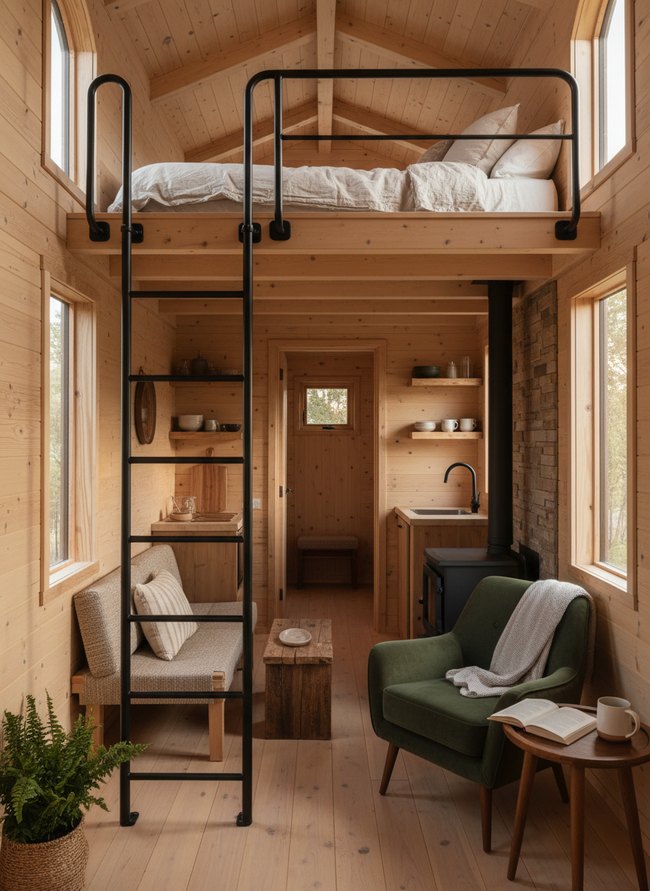
A black metal ladder with a fixed top rail offers secure access to the loft bed. The dark metal guardrail keeps occupants safe when climbing into the sleeping space. Consider adding a soft grip to the ladder rungs for comfortable hand placement.
7. Minimalist Code-Compliant Rail
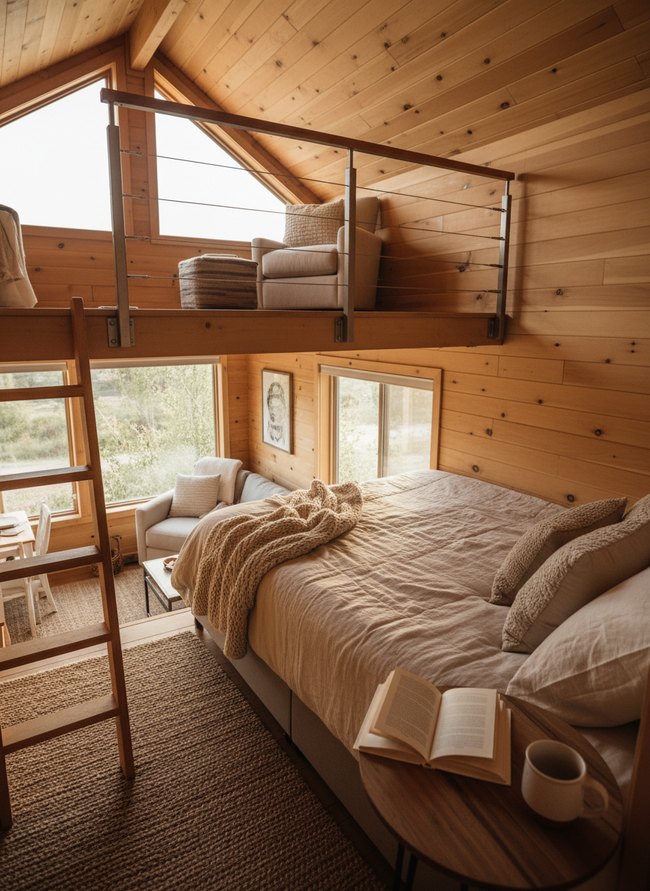
Metal posts and thin cable railing create a modern, open feel, letting light flow freely. Minimalist guard rails keep the loft bedroom safe without blocking views. A simple cable railing system keeps the tiny home feeling spacious and bright.
8. Fold-Away Loft Safety Panel
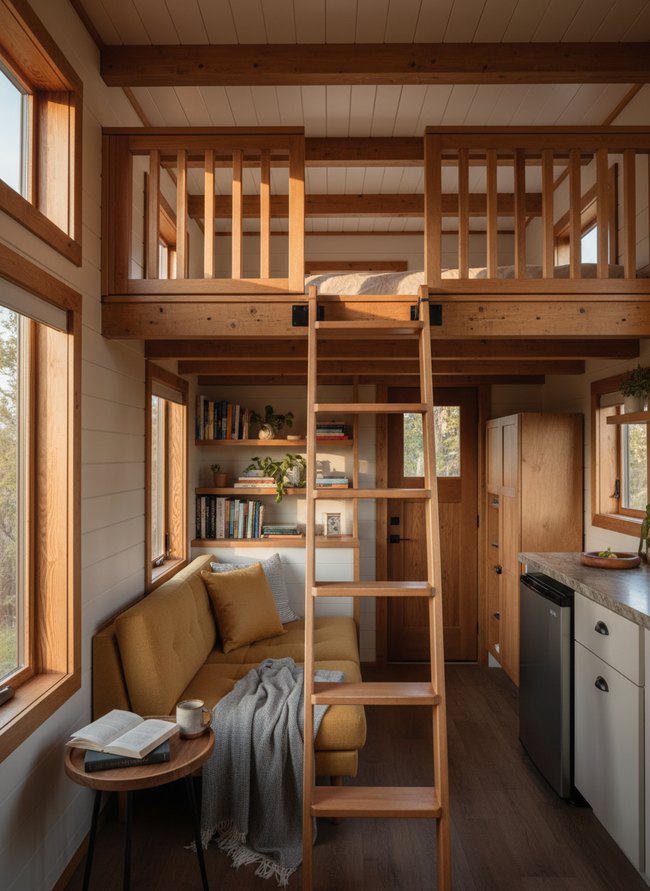
A sturdy wooden safety panel at the loft opening provides crucial protection. The half-wall of honey-toned oak planks prevents falls from the elevated sleeping area. Install a solid barrier like this in your own loft to secure the upper level.
9. Adjustable Loft Access Guard
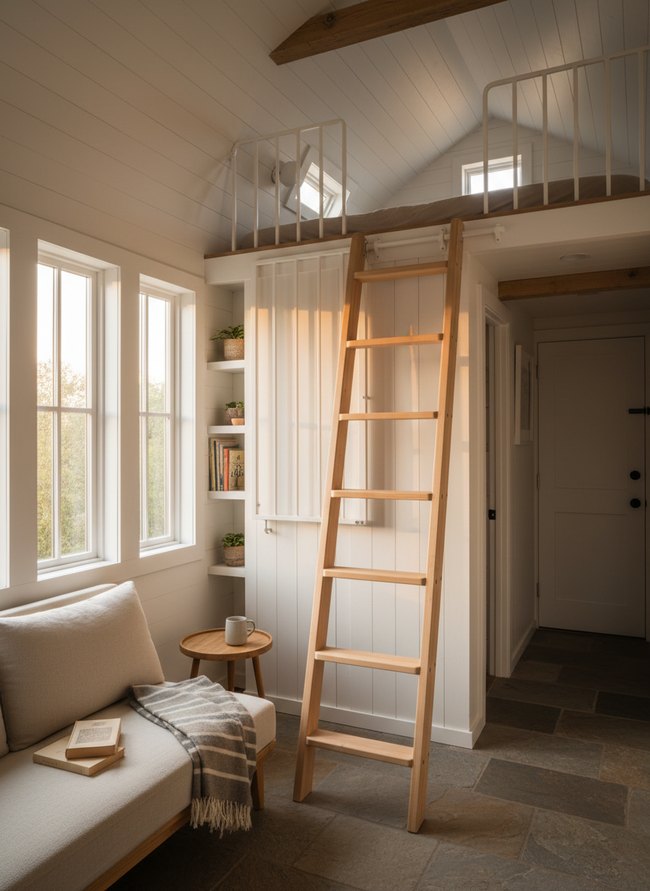
A light wood ladder leads to a loft bedroom, and a clever white gate can block the opening. The adjustable guard keeps your tiny home safe by preventing falls from the upper sleeping area. Install a sturdy gate at the top of any loft ladder to protect occupants.
10. Solid Wood Loft Railing
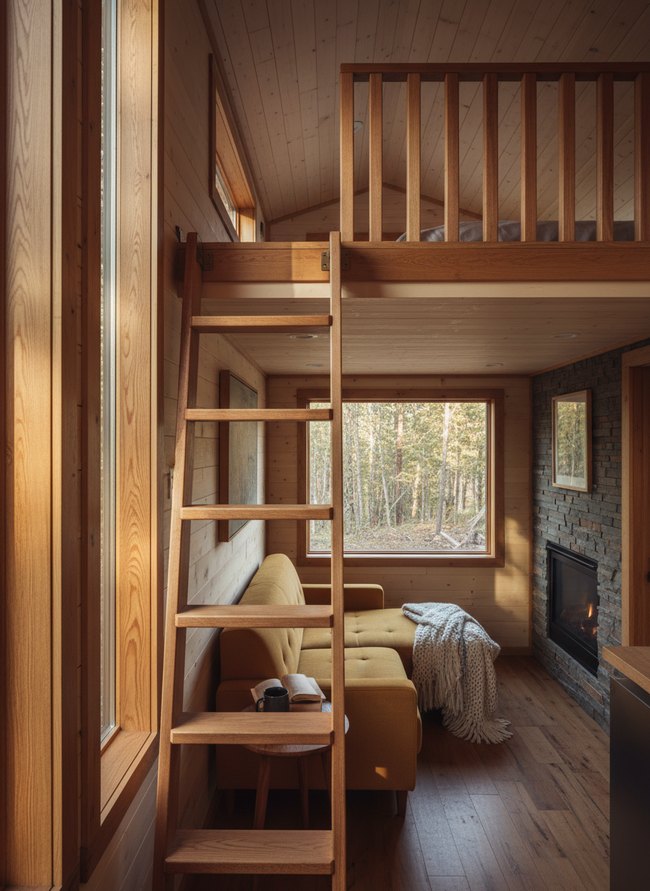
A light, honey-toned wooden railing with vertical balusters offers a sturdy barrier at the loft edge. The solid wood structure provides important safety, making the loft sleeping area much more secure. Always choose railings that firmly attach to the loft structure for maximum protection.
11. Metal Mesh Loft Enclosure
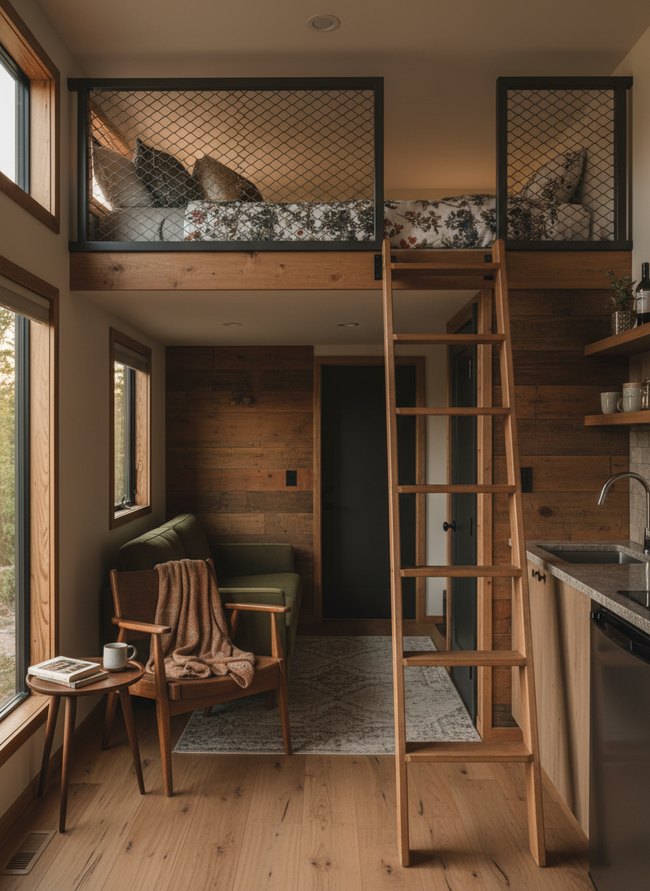
A dark metal mesh with a tight diamond pattern creates a secure loft safety tiny home enclosure. The strong wire barrier prevents falls from the upper sleeping area, offering peace of mind in a compact space. Consider installing robust wire mesh for a functional, light protective barrier in your own tiny home.
12. Clear Panel Loft Barrier
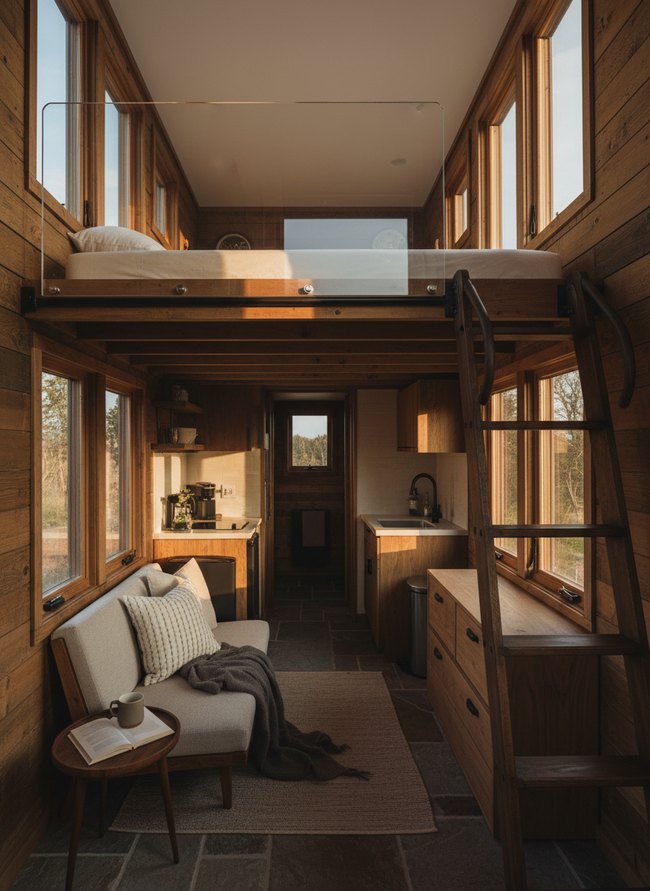
A clear acrylic panel barrier curves around the elevated bed, offering safety without blocking natural light or views. The transparent panel attaches securely with silver metal standoffs to the rich brown wood floor of the loft. Consider installing a clear panel to maintain an open feel in your loft safety tiny home while providing crucial fall protection.
My Tiny Home is Charming, But Will My Loft Ladder Actually Fit? (And Be Safe?)
Many people believe a straight ladder always saves space. Your knee will hit the ceiling on a truly vertical climb. Instead, consider a fixed, honey-toned oak ladder with a slight angle. A safer incline provides easier foot placement on each wide tread. You want at least 20 inches of head clearance above your top rung. Plenty of homeowners cram a steep ladder into a tight corner. A compact, three-tier spiral staircase with a charcoal steel frame provides better access. This design offers a natural handhold at every step. Most folks measure the floor area only. You must also account for shoulder room as you ascend. A custom-built, waist-high railing at the loft opening guides your body. This prevents a sudden fall onto the polished concrete below. Remember, a tiny home loft ladder needs careful measurement and planning.
Beyond the Code: Why Your DIY Railing Might Not Be as Secure as You Think
Many tiny home builders fasten a top rail with thin wood screws. Often, they believe a few screws into a softwood stud keep a loft bedroom railing secure. However, a single row of small fasteners offers little resistance against outward force. A child’s sudden impact or a sleepy adult’s lean can snap those screws clean.
Consider through-bolts instead. Install thick, galvanized steel bolts through the framing members. These strong bolts offer superior resistance to lateral pressure. For example, a 3/8-inch steel bolt holds much more than several 1.5-inch wood screws. Most people use narrow wood for vertical posts. Thin lumber splinters under stress.
Select a sturdy 4×4-inch timber for your vertical posts. Anchor each stout post directly to the floor joists with heavy-duty lag screws, not just to the subfloor. A common mistake involves using decorative spindles for strength. Fine, carved spindles break easily.
Choose substantial, solid wood for your spindles. Each spindle should be at least 1.5 inches thick. Securely attach every spindle with deep pocket screws or sturdy metal brackets. This method creates a robust barrier, unlike flimsy, decorative elements. Your loft bedroom will feel much safer with these strong connections.
Which Idea Will You Try First?
That’s 12 different takes on loft safety tiny home. The best ideas above are usually the smallest moves — one material, one layout shift, one piece of furniture in the right place. Pick whichever room feels closest to your space and start there before tackling the rest.
Found an idea worth keeping? Save this post to your Pinterest board so it’s waiting for you when you’re ready to start your own project.