How to Mix Textures in Tiny Home Decor for Depth
A small room sometimes feels flat, doesn’t it? Blank walls just stare back. A cozy couch suddenly looks stark. You want a warm space, a home with real feeling. Creating that deep, inviting atmosphere in a compact area means moving beyond just paint colors. Smart designers know adding different materials makes a room feel layered and lived-in. Wood grain against cool metal, soft fabric next to smooth ceramic – these combinations give a small footprint big impact. Layering tiny home textures transforms a simple box into a rich, comfortable dwelling. The guide shows you how five specific materials build visual interest and comfort, even in the tightest spaces.
1. Rustic Oak Grain Wall
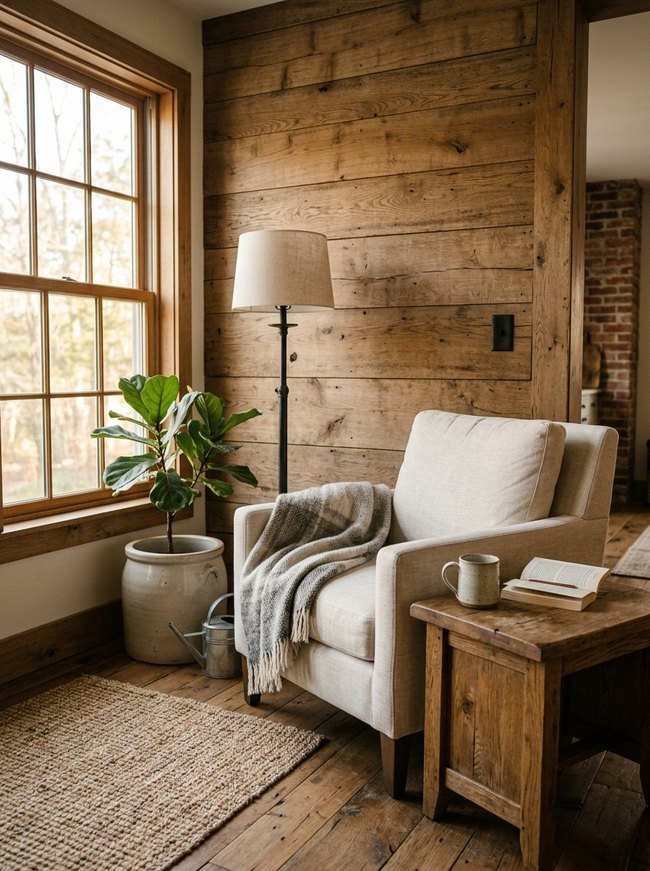
Rough-hewn oak planks clad the wall, offering a strong, earthy base. A soft, off-white armchair invites you to relax, draped with a gray plaid wool throw that adds subtle pattern. The natural wood grain and various textures create a welcoming, layered retreat.
2. Polished Steel Counter Depth
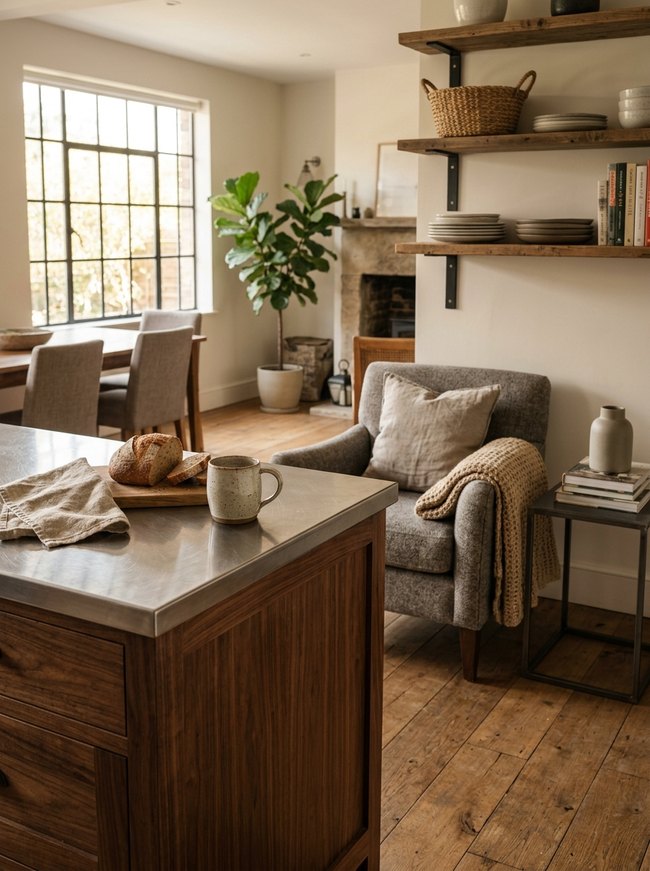
A brushed stainless steel countertop offers a cool, reflective surface that contrasts with warm wood cabinets. The smooth metal surface wipes down easily, making it a practical choice for busy kitchens. The pairing of these tiny home textures creates visual depth, balancing the space with rustic and modern elements.
3. Woven Linen Throw Detail
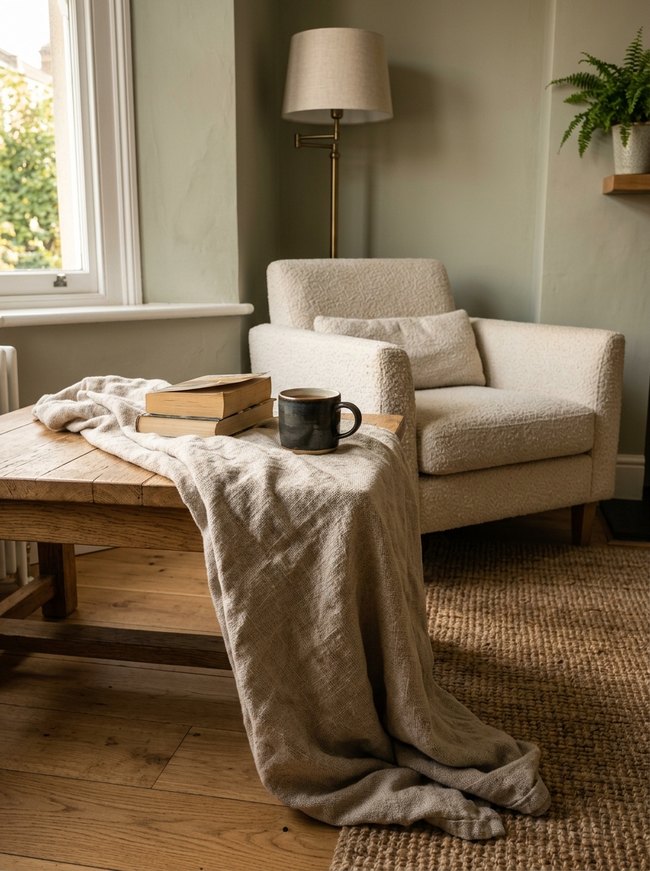
A light gray linen throw drapes across a rustic wooden coffee table. Natural fiber textiles soften hard surfaces, introducing gentle visual weight. The woven fabric texture creates a relaxed, inviting feeling for the small room.
4. Glazed Ceramic Tile Overlay
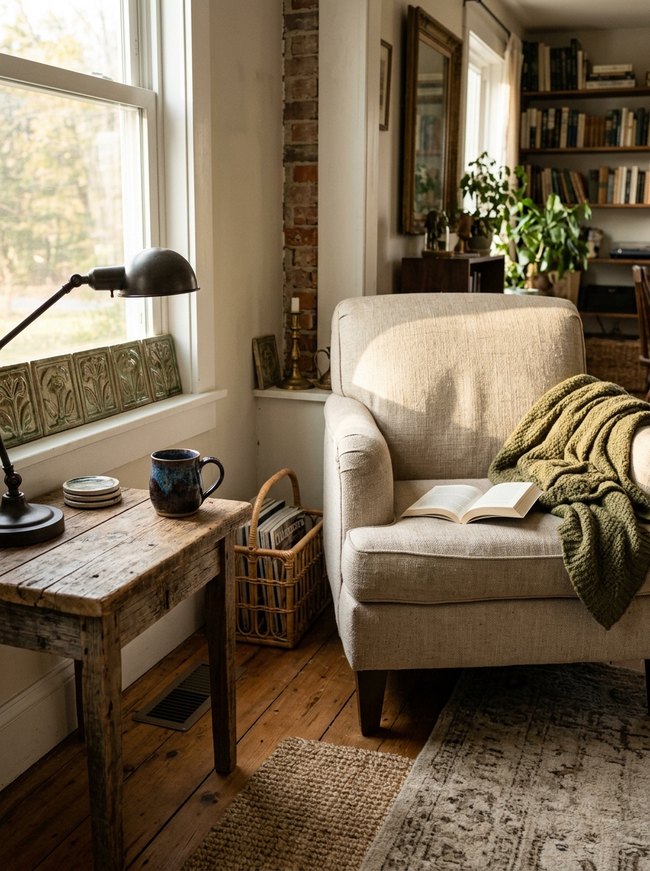
Glazed ceramic tiles line the sunny windowsill, their cool, smooth surfaces reflecting outdoor light. A distressed wooden side table offers a rough, tactile contrast next to the soft, oatmeal-colored armchair. The living space masterfully blends various tiny home textures, adding depth and visual interest.
5. Rough Jute Basket Accent
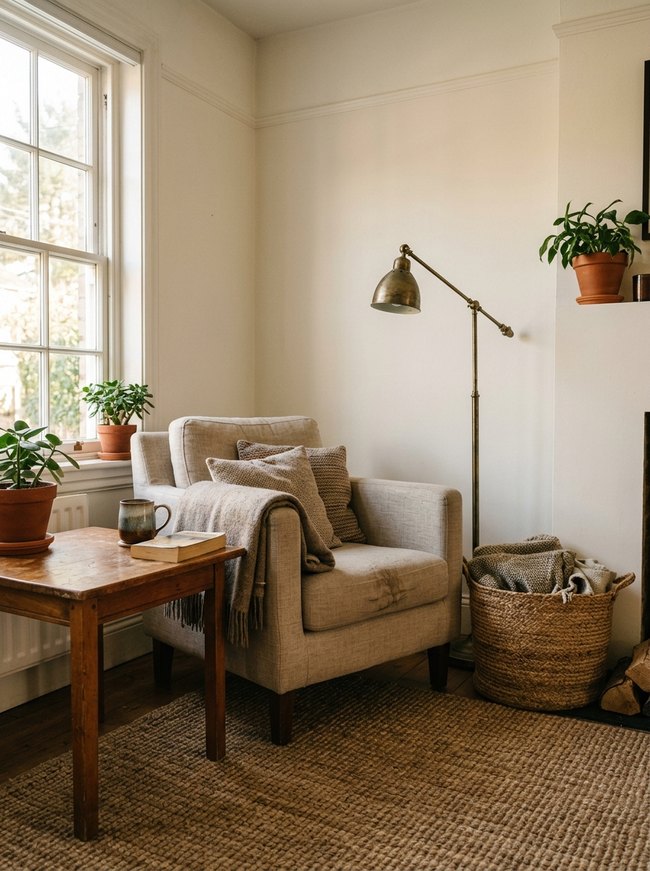
A woven jute basket on the right side holds chunky knit blankets, adding a soft, natural fiber element. The brown basket and its contents provide strong contrast against the smooth beige armchair fabric. Homeowners can easily add these tiny home textures to a space for immediate warmth.
6. Matte Black Metal Shelf
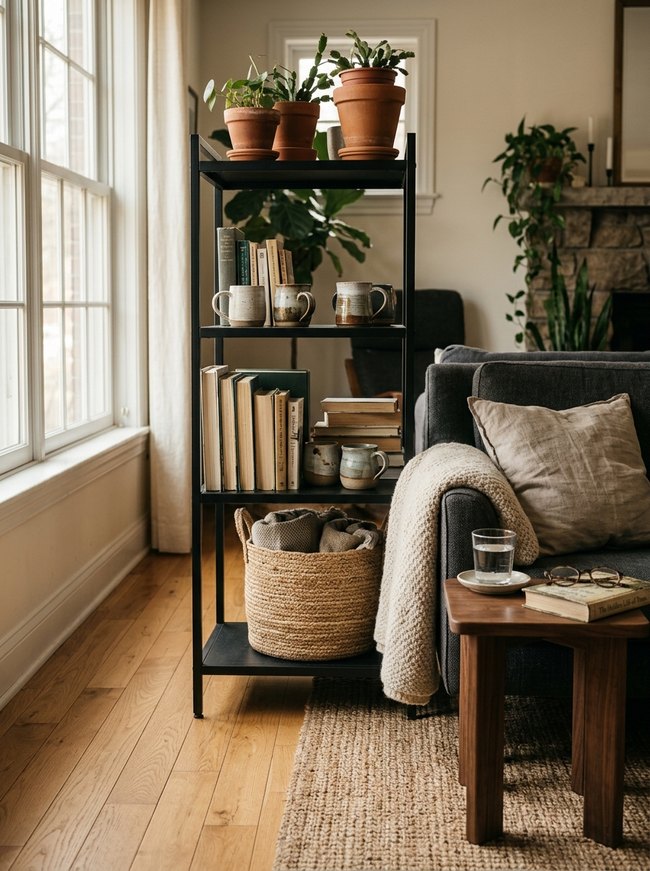
The tall matte black metal shelf provides strong, clean lines. Ceramic mugs and terra cotta plant pots on the shelves introduce earthy, handcrafted textures. Layering these tiny home textures creates visual interest.
7. Soft Velvet Cushion Cluster
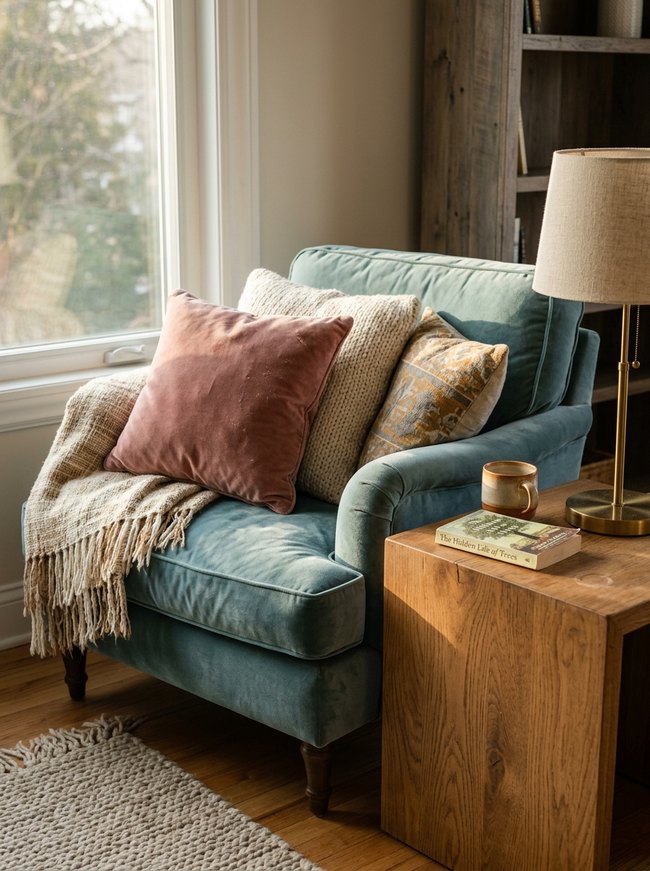
A teal velvet armchair invites relaxation, its plush fabric reflecting warm sunlight. A dusty rose velvet cushion, a chunky knit cream pillow, and a printed gold lumbar pillow all layer together, creating a soft, deep retreat. The arrangement of tiny home textures provides distinct visual interest and cozy comfort.
8. Terra Cotta Planter Display
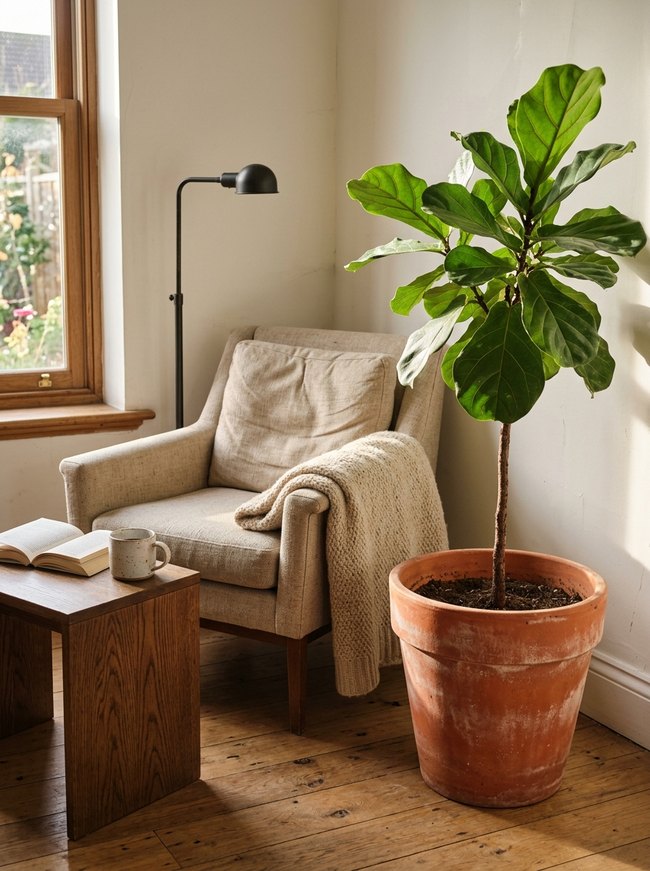
A large fiddle leaf fig tree with broad green leaves fills the corner, bringing natural texture into the tiny home. The tall terra cotta planter adds an earthy, unglazed surface to the warm oak floorboards. The overall presentation creates a balanced, inviting reading nook.
9. Braided Seagrass Rug
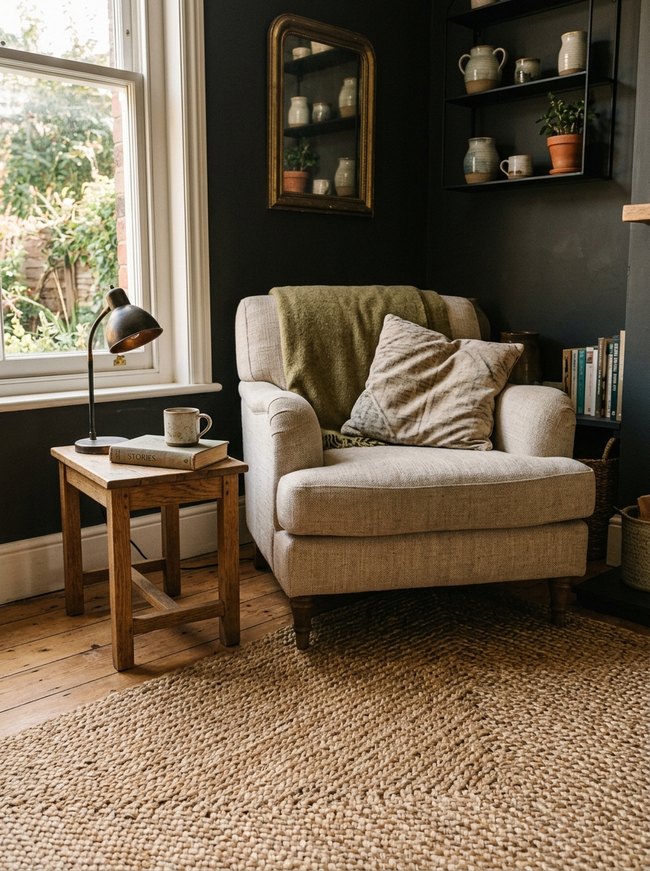
A thick braided seagrass rug fills the floor space with warm, natural fiber. The chunky knit pattern brings an earthy, organic feel to the small room. The rug adds a grounding texture, making the space feel more inviting.
10. Reclaimed Wood Panel Feature
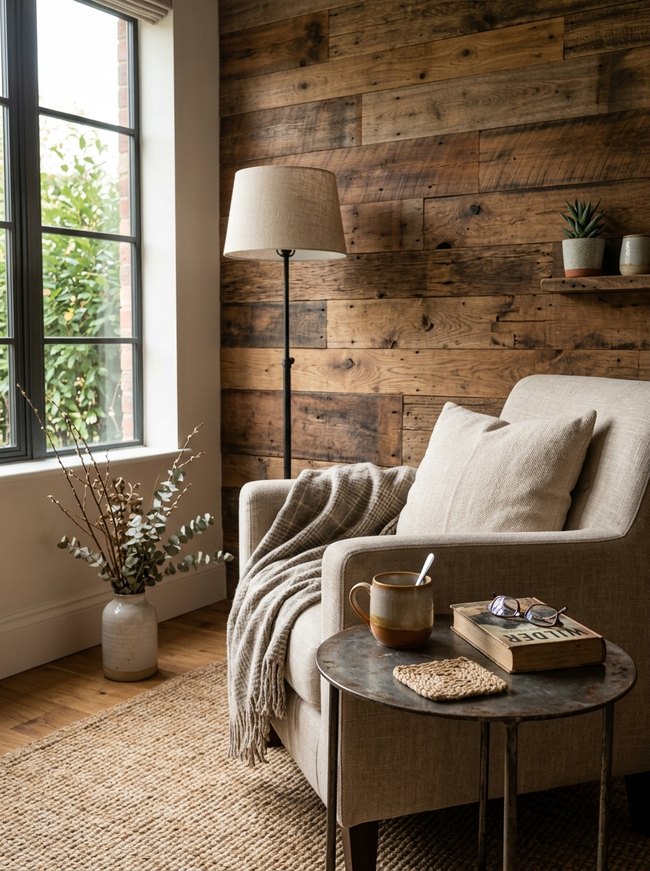
Warm reclaimed wood planks cover the entire wall, creating a rustic backdrop for the tiny home textures. A light beige armchair with a plaid wool throw offers a cozy spot, contrasting with the rough wooden surface. Various surfaces like a metal side table and a woven jute rug add more depth.
11. Brushed Brass Lamp Glow
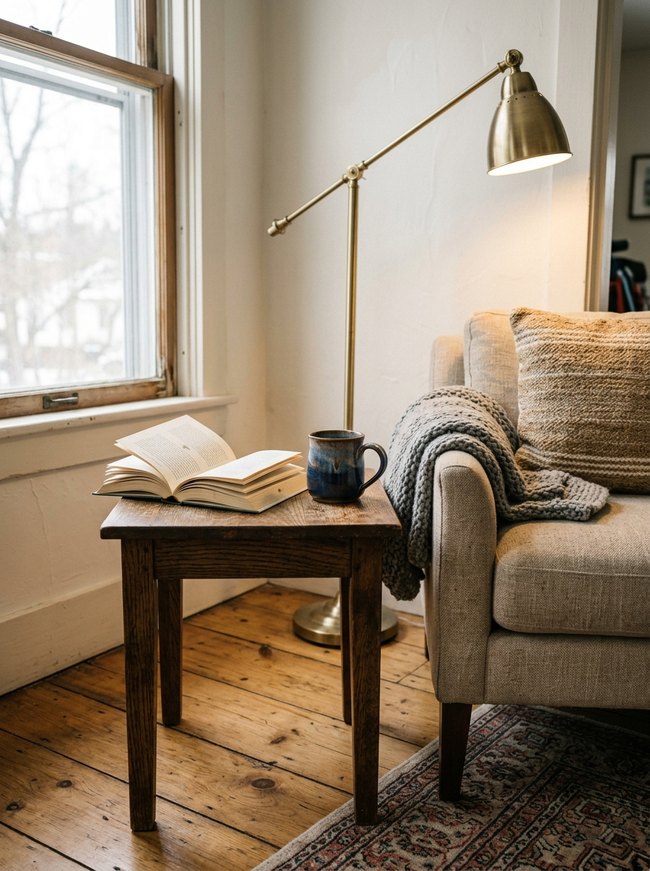
A brass floor lamp reaches over a tan armchair, its metal finish adding a bright, reflective touch. Old wooden floorboards with a warm, honey tone extend across the room, providing a rustic base. Pale wood and woven textures soften the tiny home’s interior.
12. Cozy Knit Fabric Drape
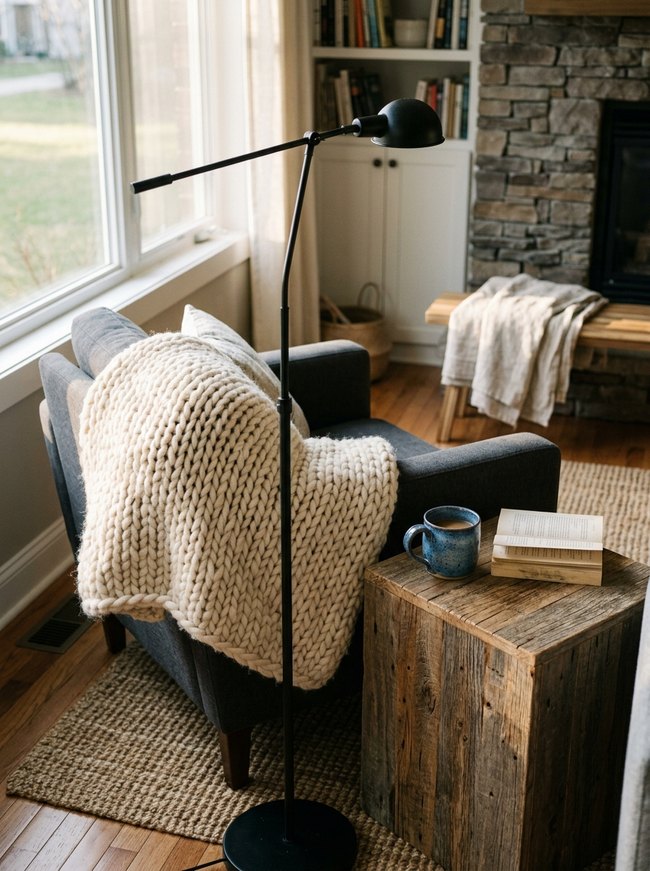
A chunky ivory knit blanket drapes over a charcoal armchair, adding soft, inviting texture to your room. Reclaimed wood on the side table shows rugged grain, contrasting with the smooth ceramic mug. The setting achieves a warm, layered look using different tiny home textures.
Beyond the Obvious: Pairing Grain Directions in Wood for Subtlety
Consider the grain direction itself. Many designers overlook how different wood grain directions create subtle visual texture, preventing a flat wooden surface. Vertical planks of knotty pine on one wall make a ceiling feel higher. Horizontal cedar shelves, perhaps a warm honey-toned shade, visually widen a narrow galley kitchen.
Another common mistake involves matching all wood species too closely; this actually flattens a room. Instead, introduce a dark walnut live edge countertop above light ash floorboards. The rich, deep brown wood offers a striking contrast against the pale, creamy timber. Furthermore, a smooth, straight grain on a small table clashes wonderfully with a wild, curly maple burl on a wall art piece. This variation keeps your eye moving around the small living area. You build visual interest without adding extra clutter. Imagine a chunky oak beam overhead; its rough-sawn texture feels different from a finely sanded cherry cabinet below. These deliberate wood pairings add depth and character.
The Silent Storytellers: Using Patina and Wear to Enhance Metal Texture
Instead of chasing shiny perfection, let metals tell an ongoing story with their surfaces. Patina, the subtle film on aged copper or bronze, adds deep, varied texture to your small living space. An old brass doorknob with its rubbed finish introduces warmth a new knob simply cannot. Many folks avoid rust, fearing damage or mess. However, a piece of raw steel with a controlled, sealed rust offers a beautiful earthy orange color. This natural wear shows history; it makes your tiny home feel lived-in and real.
Consider a hammered copper backsplash developing green and brown tones. That changing surface creates far more visual interest than a flat, new surface. A polished chrome faucet, while bright, lacks the nuanced texture of antique pewter. You want contrast. Place a smooth, dark iron trivet next to a pale, rough ceramic mug. The differences make both items stand out. Select metals like unlacquered brass or raw steel because they age gracefully. Lacquered metals stay the same. Their unchanging surface offers less depth over time. Let your metal items breathe and gather character. A charcoal steel lamp base with a mottled finish feels solid and honest. This approach challenges the common advice to keep everything pristine. Pristine finishes often feel sterile. A little honest wear makes your compact space truly yours.
Which Idea Will You Try First?
That’s 12 different takes on tiny home textures. The best ideas above are usually the smallest moves — one material, one layout shift, one piece of furniture in the right place. Pick whichever room feels closest to your space and start there before tackling the rest.
Found an idea worth keeping? Save this post to your Pinterest board so it’s waiting for you when you’re ready to start your own project.